
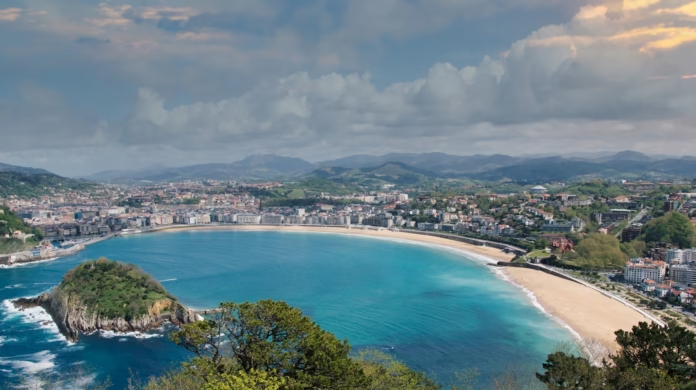
The Basque Country does not flatter you into a ride. It makes itself felt almost immediately. Roads tilt out of town, lanes curl into wooded hillsides, sea air sits heavy on the coast, and every route seems to contain at least one climb that looks manageable on paper but bites harder once you are halfway up it.
That is exactly why San Sebastián and Bilbao work so well for a cycling trip. This is not a destination built around one famous climb or one bucket-list loop. It is a region where the riding is everywhere. Coast roads, green hills, short Basque ramps, longer inland climbs, fishing towns, city cafés, pintxos bars and professional cycling history all sit close together.
For riders used to planning trips around the Alps, Girona, Mallorca or the Dolomites, the Basque Country offers something different. The climbs are usually shorter, the gradients can be sharper, the weather is less predictable, and the riding feels more compact. You rarely need a huge transfer or an all-day expedition to find good roads. From San Sebastián or Bilbao, you can be into serious terrain within minutes.
The region also fits naturally into a wider Spanish cycling itinerary. It gives a very different riding experience from the sunnier training bases often associated with cycling in Spain, and that contrast is part of the appeal. This is greener, sharper, more Atlantic and more rhythmically demanding.
Why San Sebastián and Bilbao are such strong cycling bases
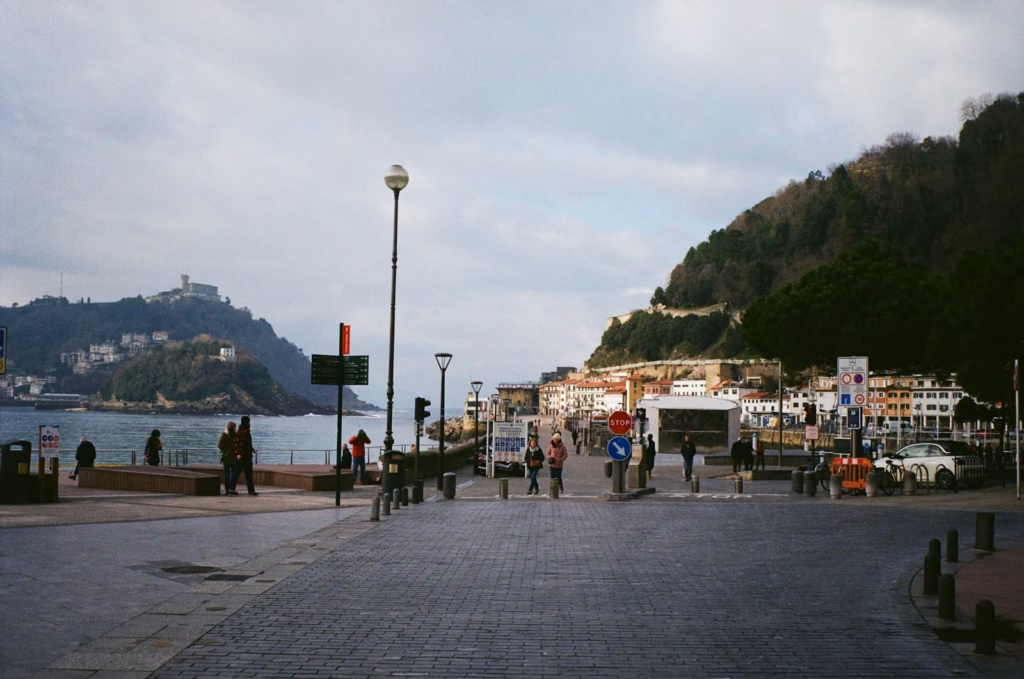
San Sebastián and Bilbao both work as cycling bases, but they do so in slightly different ways.
San Sebastián feels more immediately ride-friendly. The city is compact, the coast is close, and many of the classic routes begin almost as soon as you leave the urban centre. You can ride towards Jaizkibel, drop towards Hondarribia, follow the coast towards Zarautz and Getaria, or head inland into the rolling Basque lanes. It is easy to build a trip around San Sebastián because the riding and the off-bike appeal are both so strong.
Bilbao is larger, busier and more urban, but it opens up a different side of the region. The city gives access to the Biscay coast, the hills around Artxanda, the roads towards Gernika and Urdaibai, and tougher inland terrain once you move away from the Nervión valley. It also has the stronger big-city feel, with more transport options, a deeper hotel base and a very different cultural rhythm from San Sebastián.
Together, they make the region unusually flexible. You can stay in one city and ride from there all week, or split the trip between both and get two versions of Basque cycling: San Sebastián for coastal flow and race-history routes, Bilbao for hillier urban exits, rugged Biscay roads and a broader city break feel.
The climbs are short, sharp and rarely simple
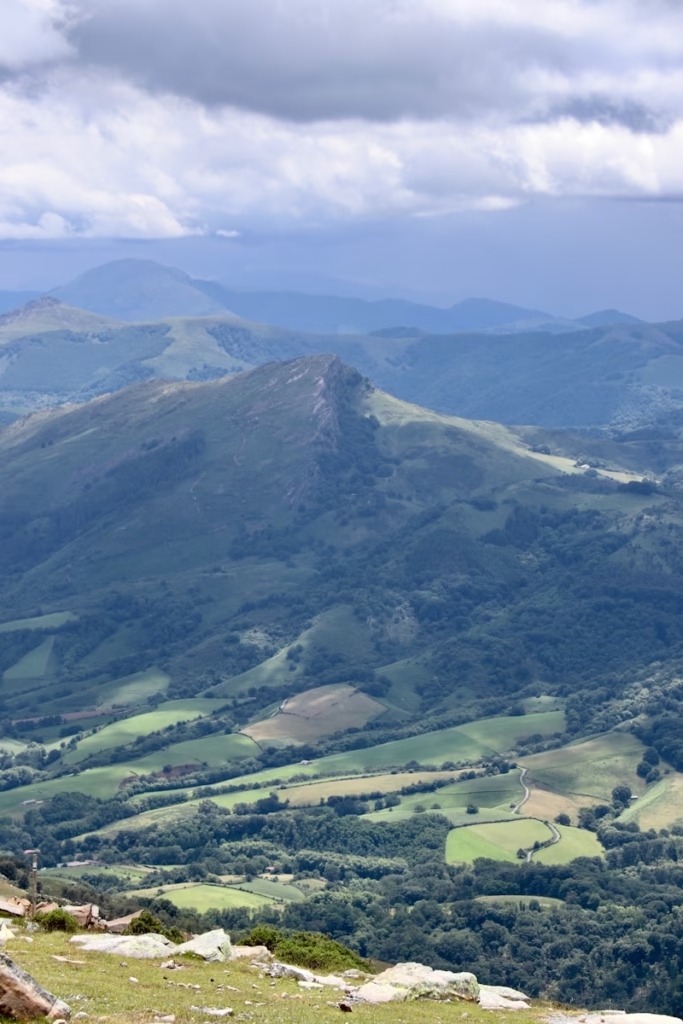
The Basque Country is not about endless Alpine altitude. Its difficulty comes from rhythm. Climbs arrive quickly, disappear, return again, then ambush you with a steeper section just when the road seems to be easing.
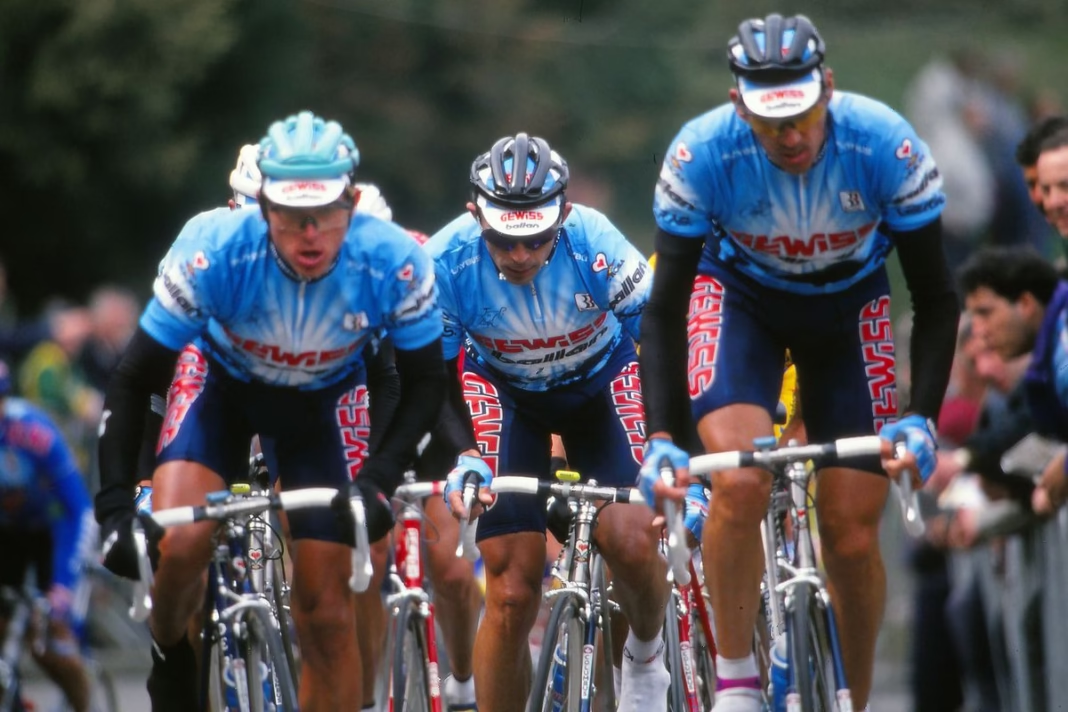
That makes the riding feel very close to the racing. Basque races are rarely settled by one long, measured climb. They are shaped by repeated efforts, narrow roads, weather, positioning and the inability to fully recover before the next rise. A cycling trip here gives you that same sensation, just without the race convoy behind you.
Jaizkibel is the most obvious reference point near San Sebastián. It is famous through Clásica San Sebastián and the wider Basque racing calendar, and it works perfectly as a visiting rider’s first major climb. It is long enough to feel significant, but not so extreme that it takes over the whole day. From the top, the view towards the coast gives it a natural reward.
Mendizorrotz, Erlaitz, Arkale, Aia and the climbs around Zarautz and Getaria all add to the same picture. None needs to be treated like a high-mountain expedition. But link them together and the day becomes brutally cumulative. That is the Basque way: not one enormous climb, but a constant argument with the landscape.
Around Bilbao, the climbs can feel more abrupt because they rise directly out of the urban fabric. You can be leaving traffic behind and climbing into quiet roads within a few kilometres. Artxanda is the obvious city climb, but the wider area quickly opens into harder terrain, especially if you ride towards the coast, Urdaibai or the interior.
San Sebastián gives you the classic cycling postcard
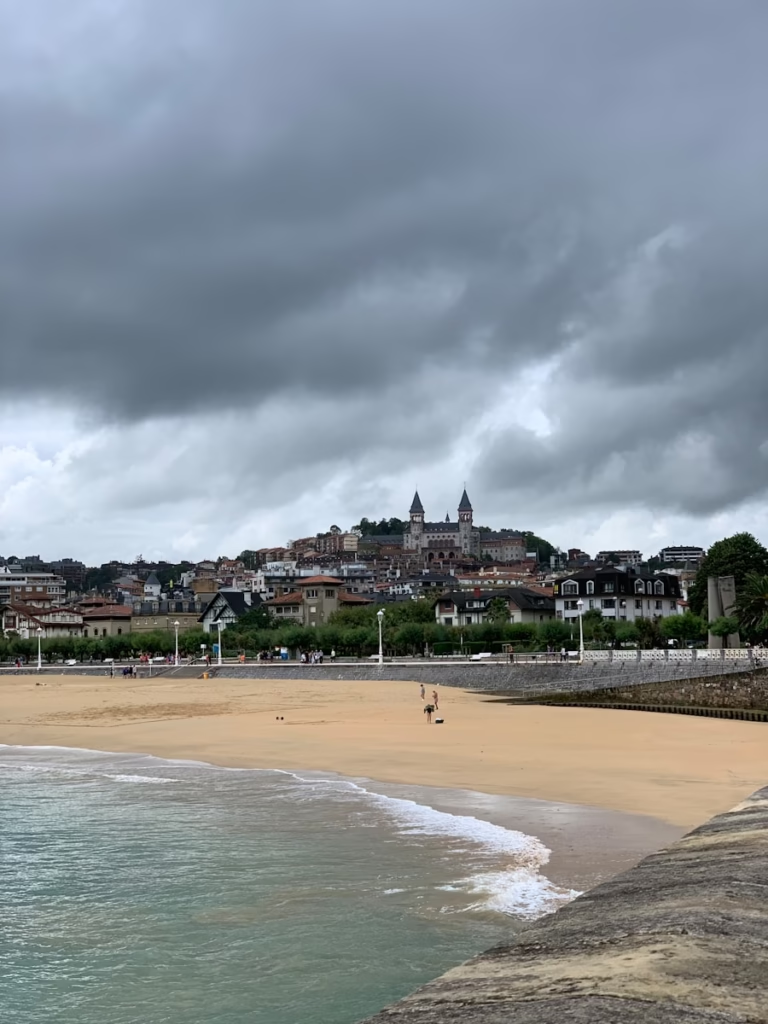
San Sebastián has a rare combination: world-class food, a beach-city atmosphere and genuinely serious riding within minutes. That makes it one of the most complete cycling bases in Europe for riders who want a trip to feel like more than training miles.
A typical ride might begin along La Concha, roll east towards Pasaia, climb Jaizkibel, descend towards Hondarribia, then return through rolling roads or coastal lanes. Another day could head west towards Orio, Zarautz and Getaria, with the sea constantly appearing and disappearing between the bends. Inland loops bring quieter lanes, heavier gradients and the kind of green, enclosed scenery that makes the Basque Country feel more Atlantic than Mediterranean.
The city itself makes recovery easy. San Sebastián’s pintxos culture is not just a nice add-on. It changes the rhythm of the trip. You ride in the morning, clean up, then drift through the Parte Vieja later in the day, building dinner from small plates rather than treating food as an afterthought.
For riders travelling with non-cycling partners, that is a major advantage. San Sebastián is not a cycling resort where the bike is the only reason to be there. It is a destination in its own right. Beaches, food, walking, sea views and city atmosphere all carry the trip when the riding is done.
Bilbao gives the trip more edge
Bilbao has a different energy. It is less obviously pretty at first glance than San Sebastián, but it has a stronger urban personality. The Guggenheim, the river, the old town, the metro out to the coast and the surrounding hills all give it a layered feel.
For cycling, that means the first few kilometres can require more navigation than in San Sebastián, but the reward is a wider spread of riding. You can climb out of the city, ride towards the coast, explore the roads around Getxo and Sopela, or head deeper into Biscay where the terrain becomes increasingly lumpy and rural.
Bilbao also makes sense for riders who want a trip with better transport options and a bigger-city base. The airport is convenient, accommodation choice is broad, and the city is well connected by public transport. It works particularly well as either the start or finish of a two-centre Basque trip.
The riding around Bilbao tends to feel less polished and more rugged. It is not always the smooth postcard version of cycling tourism, and that is part of the appeal. The roads can be steep, the weather can turn, and the climbs feel stitched into everyday life rather than presented as tourist set-pieces.
The coast makes the riding feel distinctive
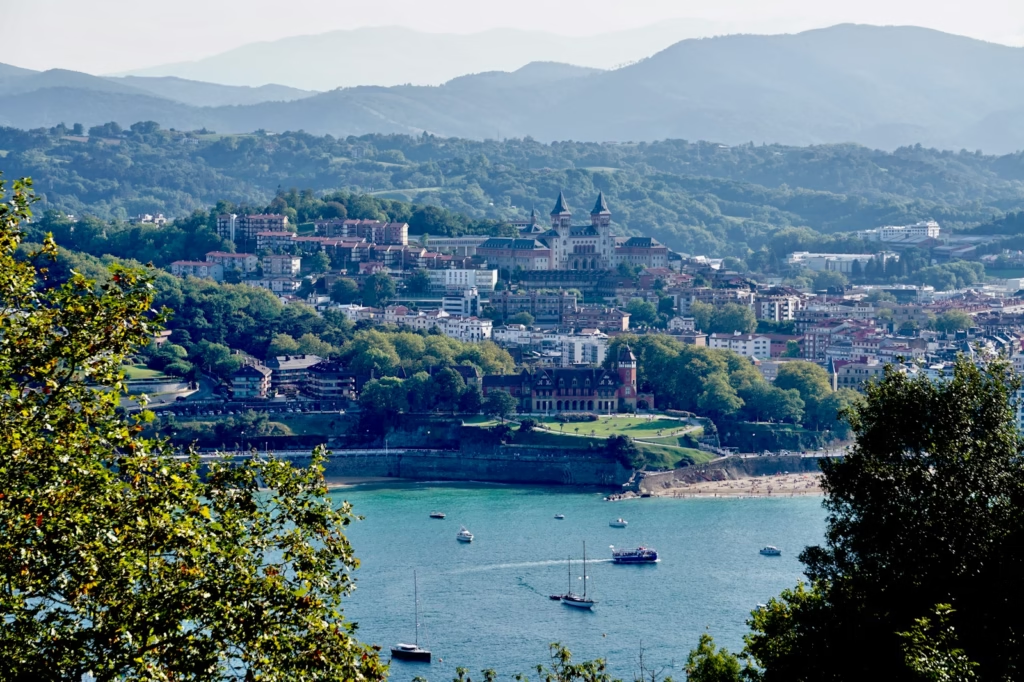
The Basque coast is one of the strongest reasons to ride here. It gives the region a visual identity that is completely different from the high Alps or the dry, open roads of Spain’s Mediterranean cycling destinations.
Between San Sebastián, Zarautz, Getaria, Zumaia and Deba, the road repeatedly shifts between sea views, cliffs, fishing towns and inland ramps. The coastline is not flat. It rises and falls constantly, and that makes even a supposedly moderate route feel alive.
Those coastal roads are also practical. They allow shorter rides that still feel memorable. You do not need 160km and 3,000 metres of climbing to justify the day. A 60km loop with one major climb, a few sharp ramps and a coffee stop in a fishing town can feel like a complete Basque ride.
The coast also gives the weather extra character. Mist, wind and showers can move in quickly. On the right day, the light is extraordinary. On the wrong day, it can feel grey and heavy. That unpredictability is part of the region’s cycling identity. This is not a place that promises endless blue skies. It promises atmosphere.
The racing history is everywhere
Cycling in the Basque Country feels different because the sport is visibly part of the culture. The roadside support at races, the orange Euskaltel-Euskadi legacy, the crowds at Itzulia Basque Country, the prestige of Clásica San Sebastián and the continued strength of local racing all give the region a depth that goes beyond tourism.
For a visiting rider, that history adds texture. Jaizkibel is not just a climb. It is a place repeatedly used to shape major races. The roads around San Sebastián carry the memory of late attacks, reduced groups and descents back towards the city. Bilbao, too, has had its moments in major race routes and remains one of the most recognisable urban centres in Spanish cycling.
That race connection helps explain why the roads feel so natural for cycling. The terrain encourages the same kind of riding that defines Basque racing: repeated accelerations, careful descending, strong positioning and the ability to handle constantly changing rhythm.
A trip here works particularly well for fans who want to understand why Basque races look the way they do on television. Ride the roads and the tactics make sense. There is rarely one clean moment. The terrain keeps asking questions.
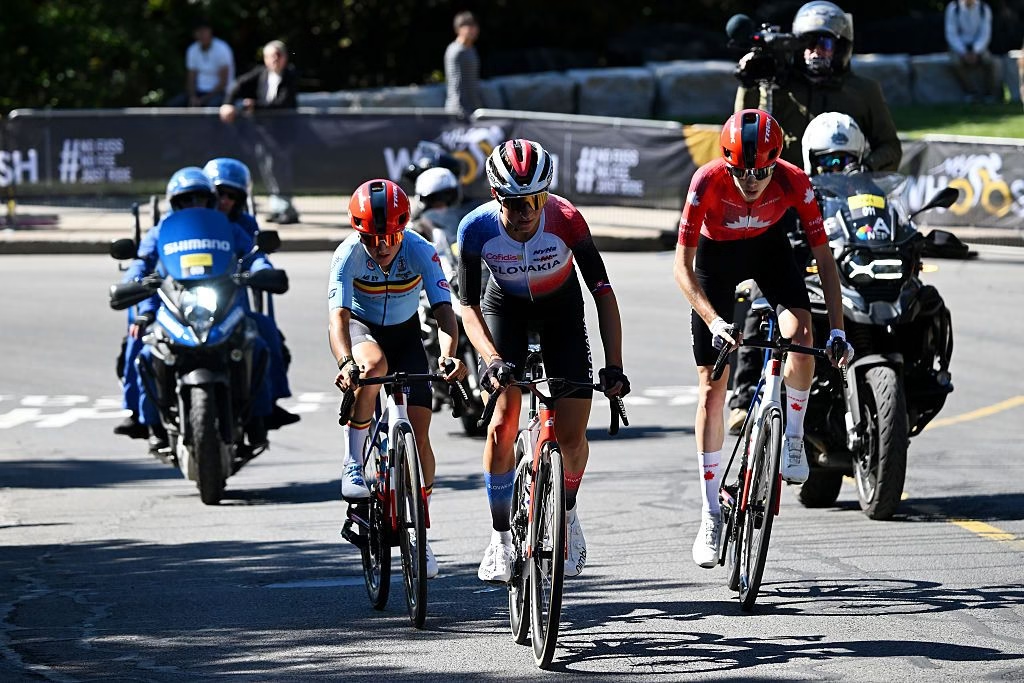
That is true in the women’s calendar as well. Recent editions of races such as Itzulia Women have shown how the Basque landscape rewards riders who can race through repeated climbs, technical roads and small gaps rather than waiting for one obvious summit finish.
Food and recovery are part of the appeal
A cycling trip lives or dies by what happens after the ride, and the Basque Country is exceptional in that regard. San Sebastián is the obvious food capital, but Bilbao and the smaller towns also give the trip a strong culinary identity.
Pintxos are ideal for cyclists because they allow flexibility. You do not have to commit to one huge meal every evening. You can move between bars, eat gradually, and build a recovery meal around whatever looks best: tortilla, anchovies, croquetas, grilled seafood, mushrooms, peppers, cheese, jamón and local specialities.
Coffee culture is easy, bakeries are useful, and the wider food scene means rest days do not feel empty. A non-riding day in San Sebastián or Bilbao can be built around walking, eating, museums, beach time, short transfers or a light spin.
That balance is one of the region’s biggest strengths. Some destinations are brilliant for riding but thin off the bike. The Basque Country is not. The riding justifies the trip, but the food and cities make it feel rounded.
The weather is a feature, not a footnote
The Basque Country is green for a reason. Riders planning a trip should expect changeable weather, especially compared with Spain’s drier cycling destinations. Rain is possible, cloud can sit low on the hills, and the Atlantic influence means conditions can shift quickly.
That does not make it a bad cycling destination. It just means it needs to be approached properly. A lightweight waterproof, arm warmers, a gilet and sensible tyre choice are more useful here than they might be on a high-summer trip to southern Spain.
Spring and early autumn can be excellent, but they require flexibility. Summer brings warmer weather and longer days, though it can also mean busier roads around the coast. Winter is possible for hardy riders, but it is less reliable as a pure cycling holiday period.
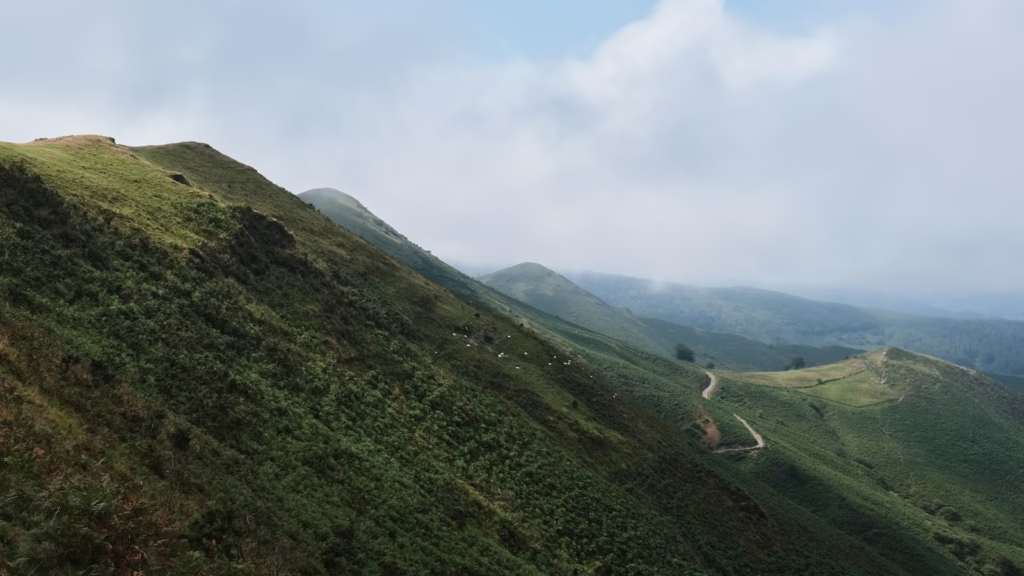
The weather also changes the mood of the rides. Mist in the hills, wet roads through forested valleys and sudden coastal brightness are all part of the Basque experience. This is a place where conditions add drama rather than simply providing a backdrop.
What kind of cyclist will enjoy it most?
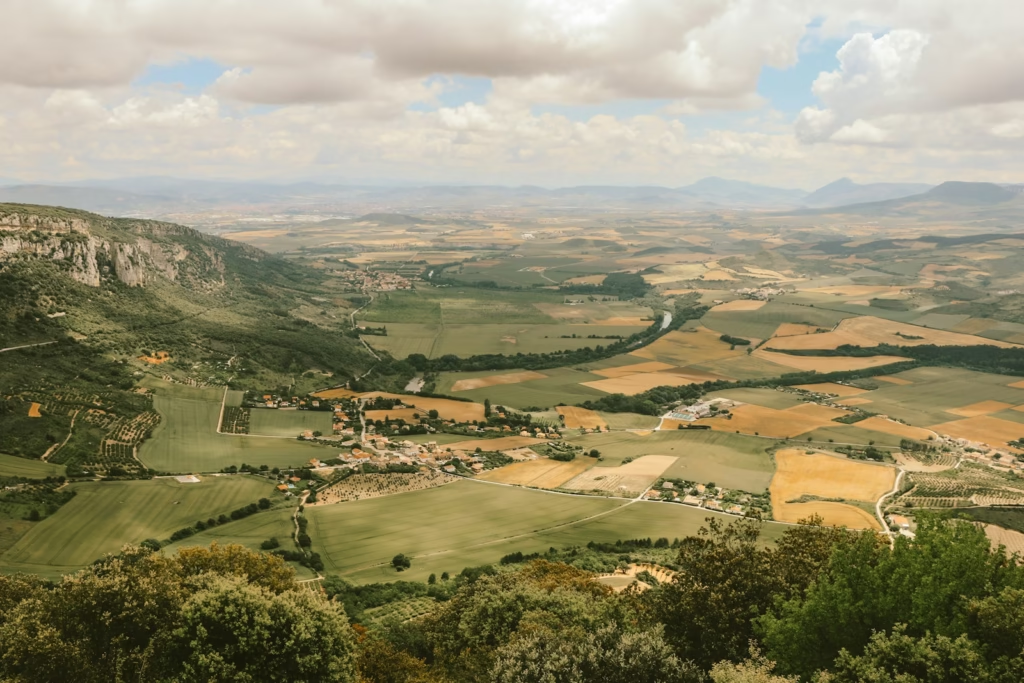
The Basque Country is best for riders who enjoy varied, rolling, punchy terrain. It rewards people who like climbing but do not necessarily need long Alpine passes every day. It suits riders who enjoy technical descents, compact routes, coastal scenery and café-to-climb transitions.
It is less ideal for beginners wanting flat, stress-free riding from the hotel door. There are easier routes, but the region’s default setting is lumpy. Even short rides can accumulate elevation quickly. The roads also require attention, especially in wet conditions or on narrower lanes.
For intermediate and experienced riders, though, it is superb. You can build rides of almost any length, from a sharp two-hour coastal loop to a full day linking climbs inland. Strong riders can make it very hard. More relaxed riders can choose one climb, one café stop and one scenic return.
It also works well for cycling fans who want a cultural trip rather than a training camp. The Basque Country is not just a place to ride. It is a place to understand a cycling culture.
San Sebastián or Bilbao: which should you choose?
San Sebastián is the easier recommendation for a first cycling trip. The riding is more immediately accessible, the city is compact, the coast is beautiful, and the off-bike experience is outstanding. It is the better base if you want a polished, scenic, food-led cycling holiday with famous race roads close by.
Bilbao is better if you want a bigger city, more transport flexibility and a slightly rougher, more urban edge. It works well for riders who are comfortable navigating out of a larger city and want to explore Biscay rather than staying focused on the Gipuzkoa coast.
The best option is to combine both. Start in Bilbao, ride the Biscay roads, then transfer to San Sebastián for the classic coastal and race-history loops. Or do it the other way around, beginning with the postcard version and finishing with the bigger-city contrast.
A split trip also makes the region feel more complete. San Sebastián shows the elegant, sea-facing side of Basque cycling. Bilbao shows the industrial, urban and inland side. Together, they explain why the region has such a strong identity.
Practical information
Location
San Sebastián and Bilbao sit in the Basque Country in northern Spain. San Sebastián is close to the French border and the Bay of Biscay, while Bilbao is further west, with strong air and rail connections. The two cities can be combined easily in one trip.
Riding
Expect short to medium-length climbs, sharp gradients, technical descents, rolling coastal roads and frequent changes of rhythm. Jaizkibel, Mendizorrotz, Aia, Erlaitz and the roads around Zarautz, Getaria and Hondarribia are all strong options near San Sebastián. Around Bilbao, routes towards Artxanda, the Biscay coast, Urdaibai and the surrounding hills give plenty of variety.
When to go
Late spring, summer and early autumn are the best periods for most riders. May, June, September and early October often offer a good balance of temperature and road conditions, though rain is always possible. July and August bring warmer weather and longer days but can be busier, especially near the coast.
Accommodation
San Sebastián is ideal for riders who want easy access to coastal routes, food and a compact city centre. Bilbao offers more big-city accommodation choice and better transport links. In both cities, look for somewhere with secure bike storage or enough space to keep a bike safely in the room.
Bike choice
A road bike is the natural choice. Use sensible gearing because the climbs can be steep even when they are short. Tyres in the 28mm range are a good fit for comfort and grip, especially if the roads are wet.
Difficulty
This is best suited to intermediate and experienced riders. Beginners can enjoy easier coastal sections and shorter routes, but the region is naturally hilly and the weather can make descents more technical. Route planning matters more here than in flatter cycling destinations.
-
 Photo Credit: Getty

Why the Basque Country belongs on a cycling travel list
The Basque Country works because it combines serious riding with a strong sense of place. The climbs are not anonymous. The towns are not just stopovers. The food is not a side note. The racing history is not decorative. Everything connects.
San Sebastián gives you the beauty: the bay, the pintxos, Jaizkibel, the road towards Zarautz and the feeling that a world-class ride can begin almost outside your hotel door. Bilbao gives you depth: bigger-city energy, tougher exits, rugged Biscay roads and a different version of Basque cycling culture.
It also pairs well with a wider northern Spanish racing and riding story. Riders following the calendar from Itzulia Women towards Vuelta a Burgos Feminas can see how varied Spanish terrain becomes once the season moves between Basque ramps, Castilian roads and more traditional summit finishes.
Together, San Sebastián and Bilbao make one of Europe’s most satisfying cycling trip bases. Not the easiest. Not the driest. Not the most predictable. But for riders who like their climbs sharp, their roads alive and their recovery built around some of the best food in Europe, the Basque Country is difficult to beat.

