
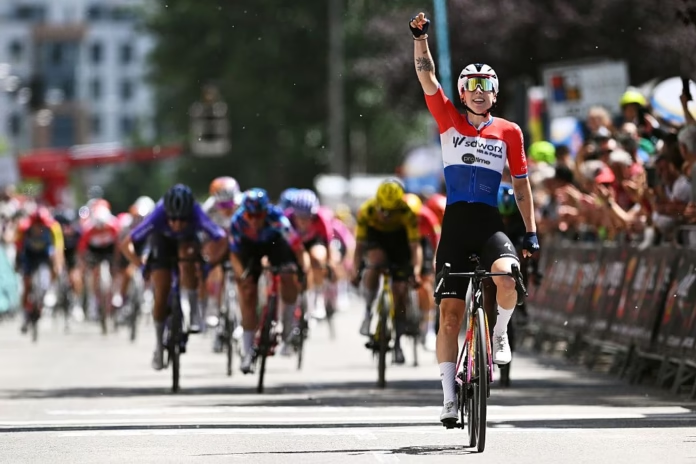
The Giro d’Italia Women 2026 will not be decided by the sprinters, but they should shape the opening rhythm of the race. With flat stages to Ravenna, Caorle and Brescello, plus a handful of more awkward days where a reduced sprint is still possible, the fast finishers have enough opportunities to make the maglia ciclamino one of the more interesting secondary battles.
The route is clearly weighted towards the general classification. The Nevegal uphill time trial, the Dolomite stage to Santo Stefano di Cadore and the Colle delle Finestre will matter far more for the overall title than the flat finishes. Yet that does not make the sprint stages filler. They will decide who takes early control of the race, who wears the first maglia rosa, and which teams are able to impose themselves before the mountains begin to narrow the field.
For the full shape of the nine-stage race, ProCyclingUK’s Giro d’Italia Women 2026 full route guide breaks down where the sprint stages, mountain days and general classification tests are likely to fall.
Where are the sprint chances at the Giro d’Italia Women 2026?
Stage 1 from Cesenatico to Ravenna gives the sprinters their first clear opportunity. It is a flat opening day and should produce an immediate fight between the fastest riders, although the first stage of a major race is rarely calm. Positioning, nerves and the desire to take the first leader’s jersey will make the run-in just as important as the final acceleration.
Stage 2 from Roncade to Caorle also favours the sprinters. The route is almost completely flat, with Ca’ del Poggio the only real interruption, and the sprint teams should see it as one of the cleanest chances of the whole Giro. If the wind does not interfere, this is the kind of stage where the pure sprinters have to deliver.
Stage 6 from Ala to Brescello is the third obvious sprint day, but it comes with a different kind of pressure. By then, the riders will already have dealt with the uphill time trial to Nevegal and the mountain stage to Santo Stefano di Cadore. That makes it less about fresh legs and more about recovery. A sprinter who is still sharp in Brescello will have shown more than straight-line speed.
Stage 3 to Buja and stage 7 to Salice Terme are more complicated. Both include terrain that should encourage attacks or reduced groups rather than a full bunch finish, but they still matter for the fast riders with enough resilience. This is where the race begins to separate pure sprinters from riders who can survive a harder day and still finish quickly.
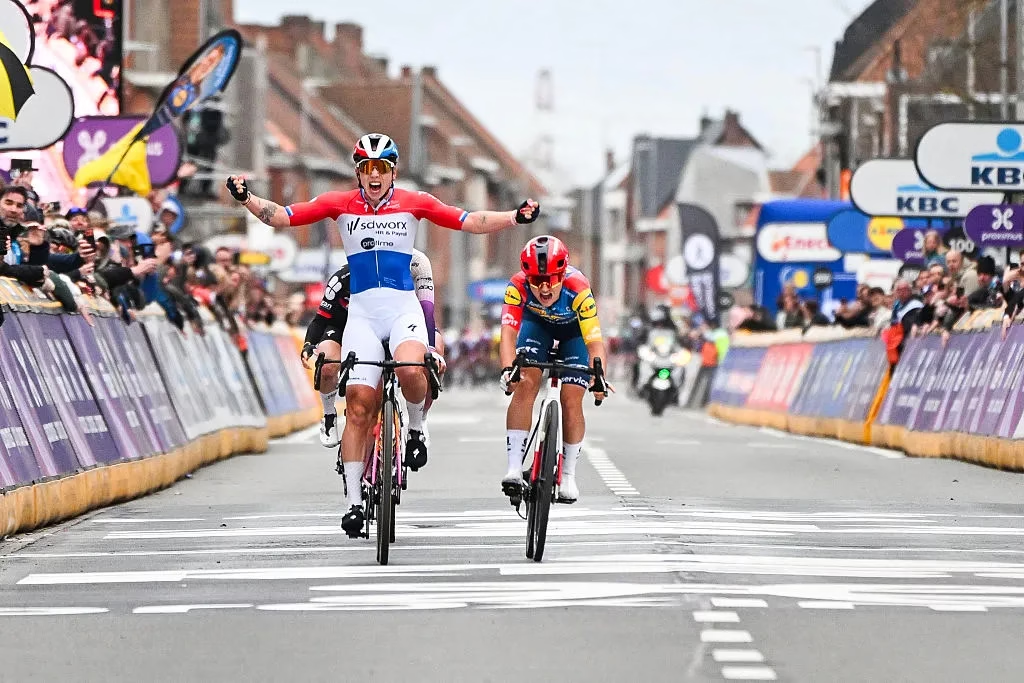 Photo Credit: Getty
1. Lorena Wiebes
The sprint benchmark is still Lorena Wiebes. In a field with several fast finishers, she remains the rider everyone else has to measure themselves against. Her acceleration, positioning and ability to finish off a team effort make her the safest pick whenever the Giro arrives in a proper bunch sprint.
There is also strong Giro evidence behind her. Wiebes won the points classification at the 2025 Giro d’Italia Women and has continued to show that she can carry sprint speed through difficult stage-race terrain. That matters here because the race does not offer a long run of straightforward sprint days. She will need to take the early chances, stay efficient through the harder stages and keep collecting points when the race becomes more selective.
SD Worx-Protime give her another advantage. The team can support her on the flat finishes while still carrying major general classification ambitions through Demi Vollering, Marlen Reusser and Anna van der Breggen. That balance can sometimes be awkward, but Wiebes is used to racing inside a team with several leaders. On the sprint days, she should still have the clearest winning expectation.
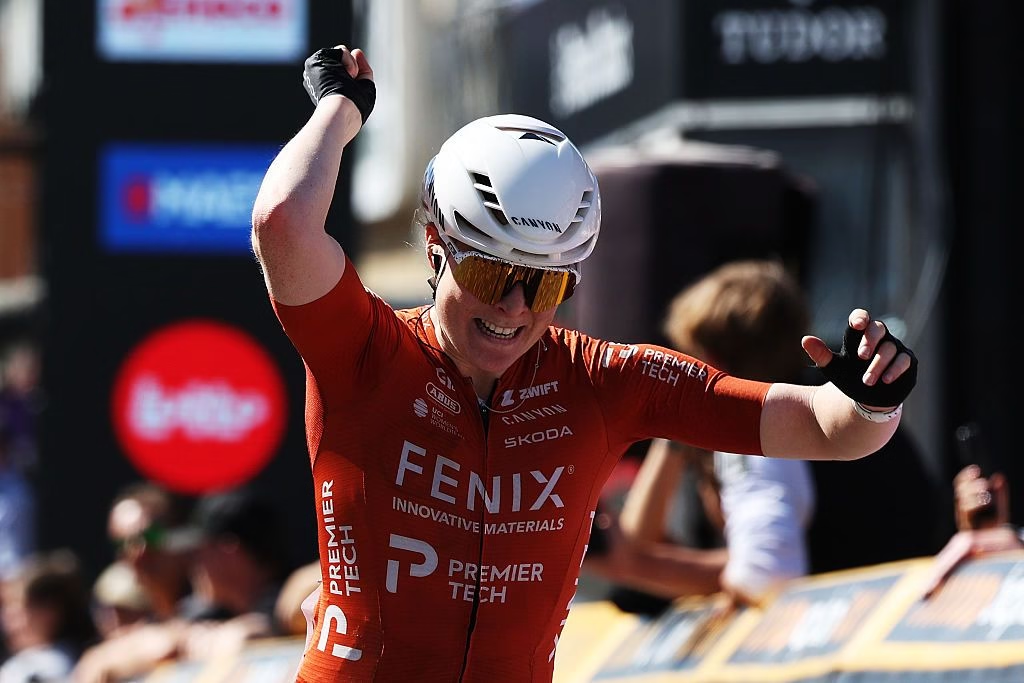
2. Charlotte Kool
Pure top-end speed makes Charlotte Kool the most obvious rider capable of beating Wiebes in a full sprint. At her best, she can win against anyone, and the flatter Giro stages should give her genuine opportunities if Fenix-Premier Tech can keep her well placed into the final kilometre.
The question is not whether Kool is fast enough. It is whether the race gives her enough clean finishes. Stages 1, 2 and 6 all look relevant, but the middle and final sections of the Giro are less naturally suited to a pure sprint approach. If she wants to challenge for multiple wins, she may need to make the early opportunities count before the race turns towards the climbers.
Kool is dangerous because she does not need a complex tactical scenario. She needs position, timing and a clean launch. If Wiebes is boxed in, isolated or forced to open too early, Kool is the rider most likely to punish it.
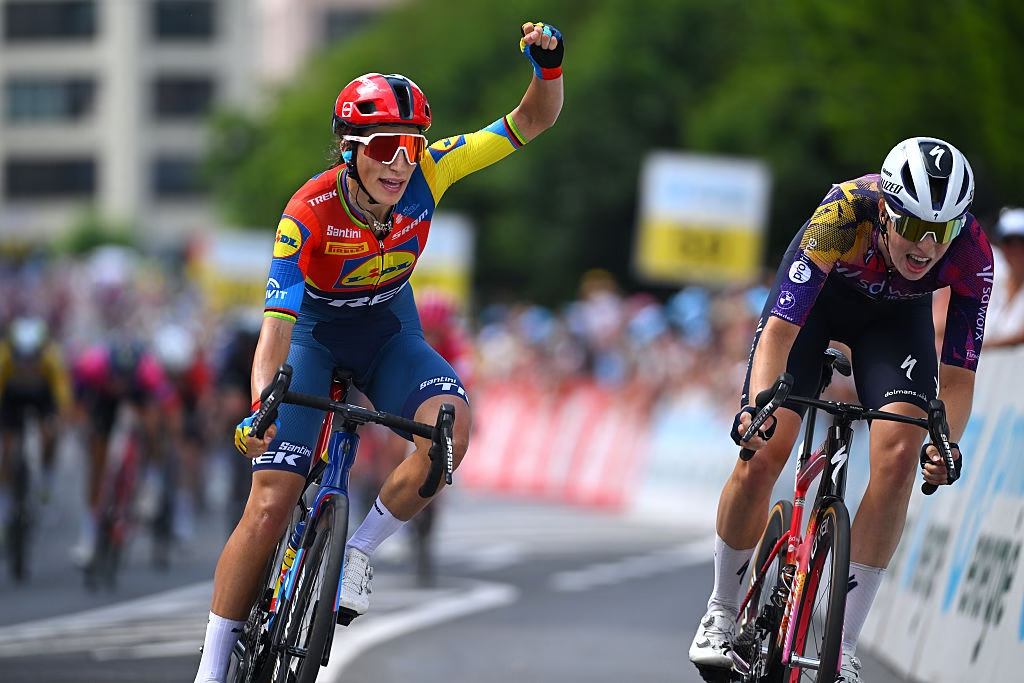
3. Elisa Balsamo
A slightly more adaptable sprint profile brings Elisa Balsamo firmly into the conversation. She is fast enough to win from a bunch, but her real value comes from being more resilient than many pure sprinters. A harder approach, a messy run-in or a reduced group does not automatically take her out of contention.
That could make Balsamo particularly useful on this route. The Giro offers obvious sprint stages, but it also has transitional days where the final group may be smaller and more tired. Balsamo’s ability to survive those situations gives her more routes to a result than a rider who needs a completely controlled lead-out.
For Lidl-Trek, she also provides balance. The team can chase sprint wins without making the whole race revolve around bunch finishes. If the Giro becomes chaotic, that may help her. Balsamo does not need the perfect sprint-train scenario every time. She can win from disorder.
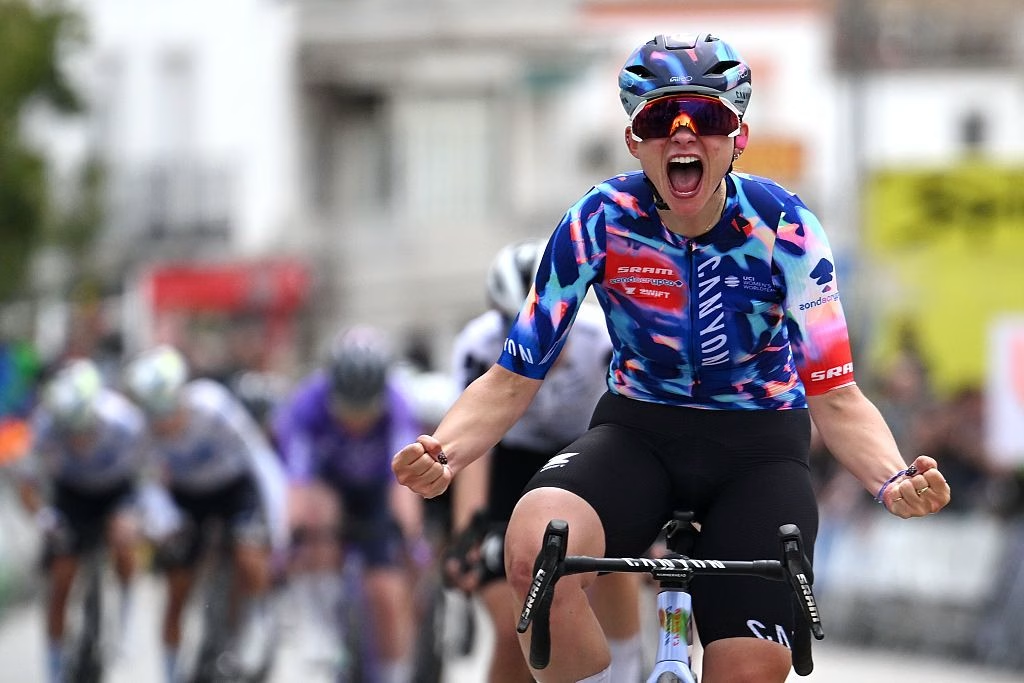
4. Chiara Consonni
Few riders in this field are as comfortable in a messy finale as Chiara Consonni. She is one of the most technically sharp sprinters in the race and should be a genuine threat if Canyon SRAM zondacrypto can deliver her into the right position. She has the speed to compete with the best, but her race often depends on timing and space rather than a long, dominant lead-out.
Consonni’s advantage is that she can be extremely efficient when sprint trains begin to break apart. If a stage becomes messy, with riders launching early or teams losing control, she is capable of finding the right wheel and using her acceleration late. That makes her particularly dangerous in finishes where road furniture, corners or tension disrupt the clean lead-outs.
The challenge is the level of opposition. Against Wiebes and Kool, she may need a slightly imperfect sprint from the favourites to win. The Giro can provide that. Opening-week nerves, narrow run-ins and tired teams often create the kind of uncertainty that suits a rider with her instincts.

5. Georgia Baker
Liv AlUla Jayco have a useful fast-finishing card in Georgia Baker. She may not begin the Giro as the fastest rider in a straight-line contest against Wiebes or Kool, but she has the track background, finishing speed and durability to be a serious factor on the flatter days.
Baker’s race could become more interesting as the Giro develops. If the pure sprinters are blunted by the climbing days or if a sprint comes from a reduced peloton, she has the resilience to move up the pecking order. Stage 6 to Brescello, coming after two difficult GC days, could be particularly relevant if fatigue has changed the sprint hierarchy.
Liv AlUla Jayco also have Monica Trinca Colonel for the general classification, so Baker’s chances may depend on how the team balances stage hunting with GC support. On the days that are clearly for the sprinters, though, she gives them a credible route to victory.
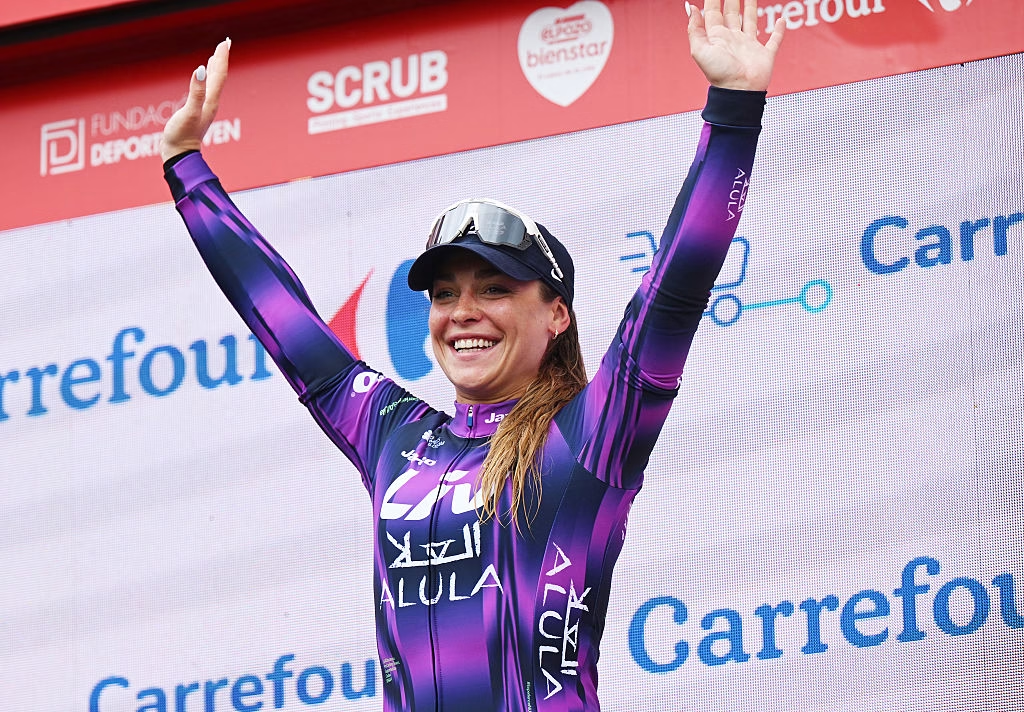
6. Letizia Paternoster
The borderline stages could be where Letizia Paternoster becomes most interesting. She has speed, but she is also useful in more selective finales, where repeated accelerations and positioning battles can remove some of the pure sprinters.
That makes her an appealing option on days such as stage 3 to Buja or stage 7 to Salice Terme. If either becomes a reduced sprint rather than a solo or small-group attack, Paternoster could come into the picture. She is unlikely to be the outright favourite in a flat, full-speed finish against Wiebes, but the Giro rarely gives sprinters a completely stress-free day.
Her best pathway is probably not domination across the sprint stages. It is choosing the day when the strongest sprint trains are disrupted, the peloton is reduced and the finish rewards instinct as much as raw power.

7. Clara Copponi
Lidl-Trek’s sprint depth does not stop with Balsamo, because Clara Copponi gives the team another fast option depending on how responsibilities are divided. She is quick, tactically useful and capable of being dangerous in finishes where the bunch is not perfectly organised.
That presence gives Lidl-Trek flexibility. Balsamo is the clearer sprint leader, but Copponi can cover moves, contest reduced finishes and offer a second route to a result if the race becomes unpredictable. In a stage race with only a few clean sprint opportunities, that kind of depth can be valuable.
Copponi may be especially useful if the race reaches a point where teams are tired and the final kilometres become less controlled. She is unlikely to be given every sprint as the first option, but she can still be one of the riders who shapes the sprint stages.

8. Rachele Barbieri
Home roads could add another layer of motivation for Rachele Barbieri. The Italian fast finisher has the track speed and finishing instincts to place well in bunch finishes, and she becomes particularly dangerous if the Giro’s sprint days turn less straightforward.
Her best chances may come from slightly disrupted finales rather than fully controlled lead-outs. Against the very fastest riders, she may need the race to become messy. That is not unrealistic at the Giro. Opening stages, nervous sprint days and flat finishes after hard terrain often produce exactly that kind of disorder.
If Barbieri is close to the front inside the final kilometre, she can be a serious top-five contender and a possible winner if the bigger sprint teams mistime their lead-outs.
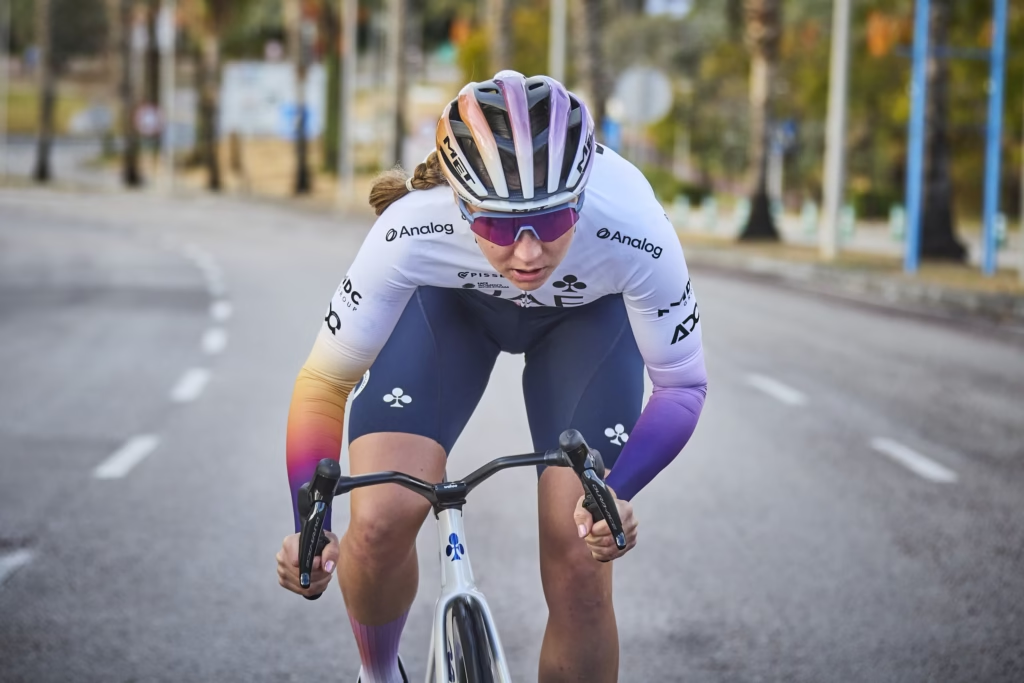
9. Megan Jastrab
One of the more intriguing sprint names on the startlist is Megan Jastrab. She has a strong fast finish, but she is also developing as a rider who can be useful across more than one kind of stage. That makes her valuable in a Giro where the line between sprint day and reduced-finish day is not always clean.
For UAE Team ADQ, the race will inevitably carry major general classification importance through Elisa Longo Borghini, but Jastrab can still be a stage option when the route allows. She may not have the same established Grand Tour sprint status as Wiebes, Kool or Balsamo, but she has enough speed to take advantage if the favourites hesitate.
Her best route to success may be from a reduced or chaotic finish rather than a perfectly ordered bunch sprint. If the race becomes more selective than expected on one of the flatter days, she could move into contention.
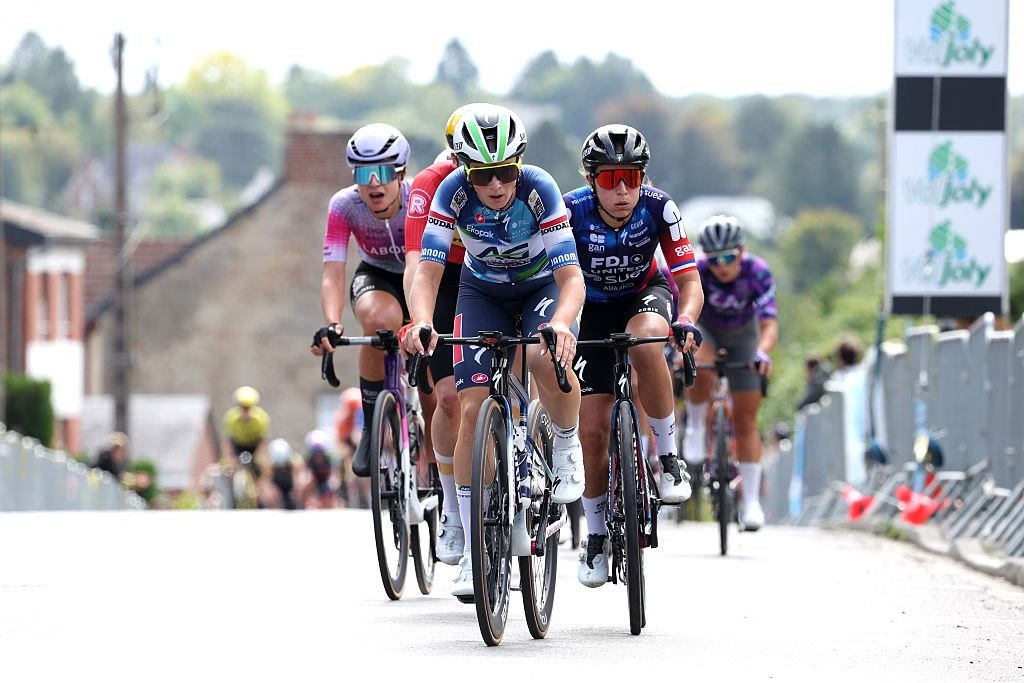
10. Gladys Verhulst-Wild
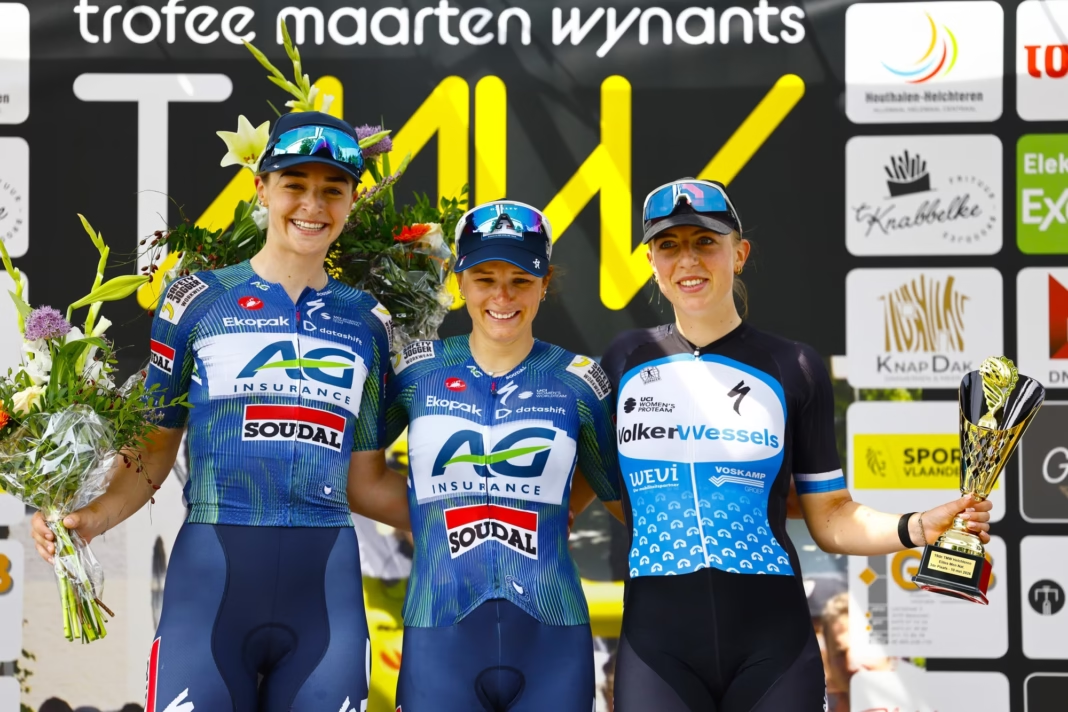
AG Insurance-Soudal’s most likely fast-finishing option is Gladys Verhulst-Wild. The team’s wider ambitions may be shaped more by climbing and general classification support, but she gives them a credible route into the top 10 on stages where the race does not fully break apart.
Her best chance may come on a stage that is too difficult for a completely controlled sprint but not hard enough for the climbers to dominate. That is often where riders with endurance, positioning and enough speed can outperform the bigger names.
In a race with limited pure sprint opportunities, riders like Verhulst-Wild matter because they can change the balance of a stage. She may not be the headline favourite for the flat finishes, but she is a credible top-10 and reduced-sprint threat.
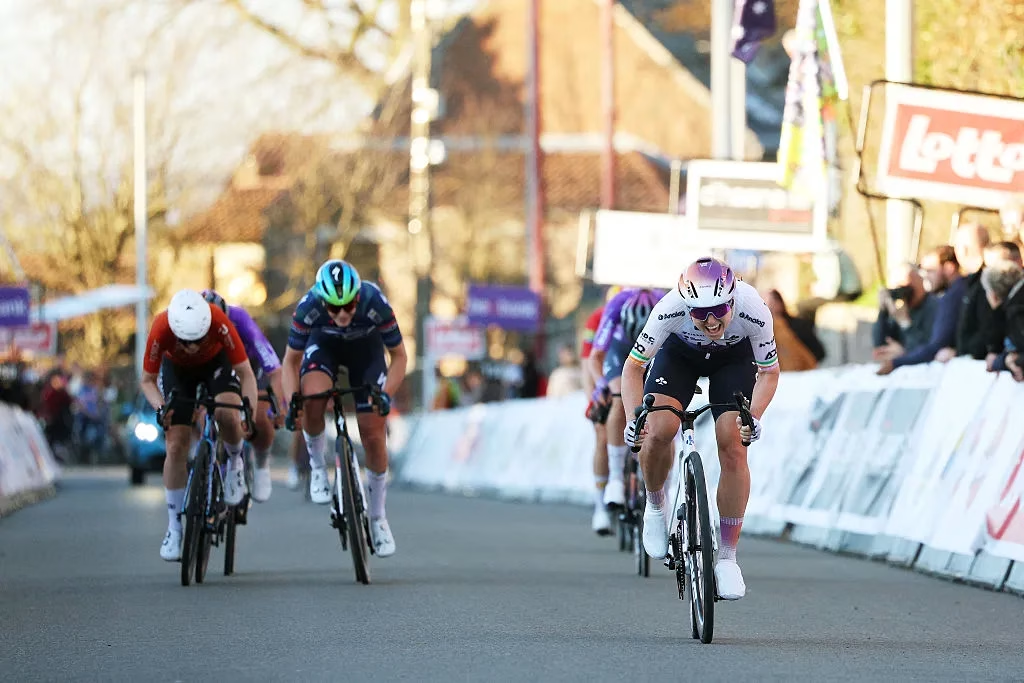
11. Lara Gillespie
Lara Gillespie deserves a place in the sprint conversation because she brings more than just finishing speed. UAE Team ADQ will naturally be built around Elisa Longo Borghini’s general classification defence, but Gillespie gives the team a lively option on flatter or reduced-finish days. Her track background shows in the way she handles speed, positioning and repeated accelerations, and that could be useful on Giro stages where the run-in is nervous rather than perfectly controlled. She may not be the first name listed alongside Wiebes, Kool or Balsamo in a pure bunch sprint, but if the peloton is reduced, the lead-outs are disrupted or the finish rewards a rider who can improvise, Gillespie has the tools to get involved.
Who is favourite to win the Giro d’Italia Women points jersey?
Wiebes is the obvious favourite for the points classification because she has the best combination of sprint speed, team support and proven stage-race finishing consistency. If she wins one or two of the early sprint stages, the competition could quickly start to bend in her favour.
The danger is the route. The Giro d’Italia Women 2026 becomes much harder after the opening sprint chances, and points may be available on days where the pure sprinters are no longer in the front group. That opens the door for more versatile riders, particularly Balsamo, Consonni or even GC riders who score regularly on selective stages.
The points jersey may therefore be decided by survival as much as speed. Wiebes is the fastest rider in the race, but she will need to keep collecting points after the Giro moves away from the flat roads. If she does, she should be very difficult to beat.
For a broader view of the current sprint hierarchy, ProCyclingUK’s guide to the best sprinters in women’s cycling right now explains why Wiebes remains the benchmark and where her closest rivals can still challenge her.
-
 Photo Credit: Cor Vos
Which sprint stage matters most?
Stage 2 to Caorle looks like the cleanest sprint opportunity. It is almost completely flat and comes before the race has accumulated much climbing fatigue. That makes it the stage where the pure sprinters should have the fewest excuses.
Stage 1 to Ravenna is also important because it sets the tone immediately. A win there brings the first maglia rosa as well as sprint points, which adds another layer of pressure. The opening stage of any Grand Tour-style race is often more nervous than a normal flat day, so positioning could be decisive.
Stage 6 to Brescello may be the most revealing sprint stage. It comes after the uphill time trial and a mountain stage, so recovery will matter. A rider who still has speed there will have shown more than pure freshness. That could be the stage that tells us who is truly in control of the sprint hierarchy.
Giro d’Italia Women 2026 sprint verdict
Wiebes starts as the clear number one. She has the speed, the team, the recent Giro points-jersey pedigree and the ability to finish off the stages that should suit her. If the race offers three bunch sprints, she will expect to win at least one of them and possibly more.
Kool is the main pure-speed threat, Balsamo is the most versatile danger, and Consonni is the rider most likely to profit from a messy finale. Behind them, Baker, Paternoster, Copponi, Barbieri, Jastrab and Verhulst-Wild give the sprint field real depth.
The Giro d’Italia Women 2026 will ultimately be decided in the mountains, but the sprinters will shape the first half of the race. The flat stages are not just pauses before the GC battle. They are where the first maglia rosa could be won, where the points jersey may begin to take shape, and where the fastest riders in the peloton get their chance to make the race theirs for a day.

