
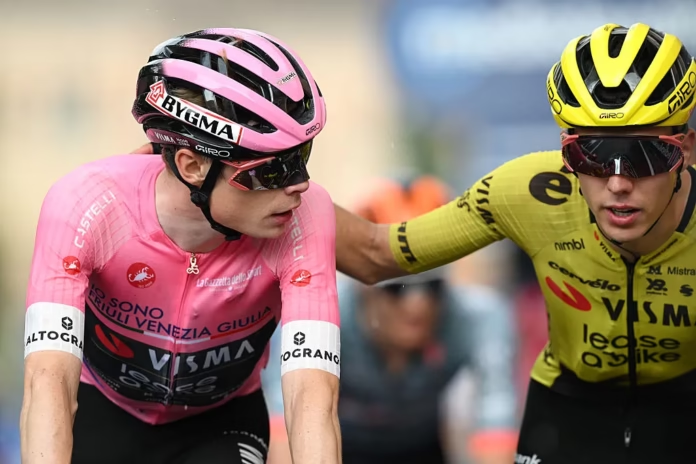
Giro d’Italia 2026 stage 19 takes the race deep into the Dolomites for one of the hardest days of the entire route. After Paul Magnier’s sprint victory on stage 18 in Pieve di Soligo, the peloton now faces a completely different test: 151km from Feltre to Alleghe, finishing at Piani di Pezzè after a brutal sequence of climbs and around 5,000 metres of elevation gain.
This is not just another mountain stage. It is a full Dolomite examination, with the Passo Duran, Coi, Forcella Staulanza, Passo Giau, Passo Falzarego and the final climb to Piani di Pezzè all packed into the final 100km. There are very few easy sections once the route begins to climb properly, and that should make stage 19 one of the decisive days of the final week.
Jonas Vingegaard starts the stage still in the maglia rosa, with a 4:03 lead over Felix Gall. Thymen Arensman is third at 4:27, Jai Hindley is fourth at 5:00 and Afonso Eulálio remains fifth at 5:40. Those gaps give Vingegaard room to defend, but this is exactly the kind of stage where a single bad moment can turn into several minutes.
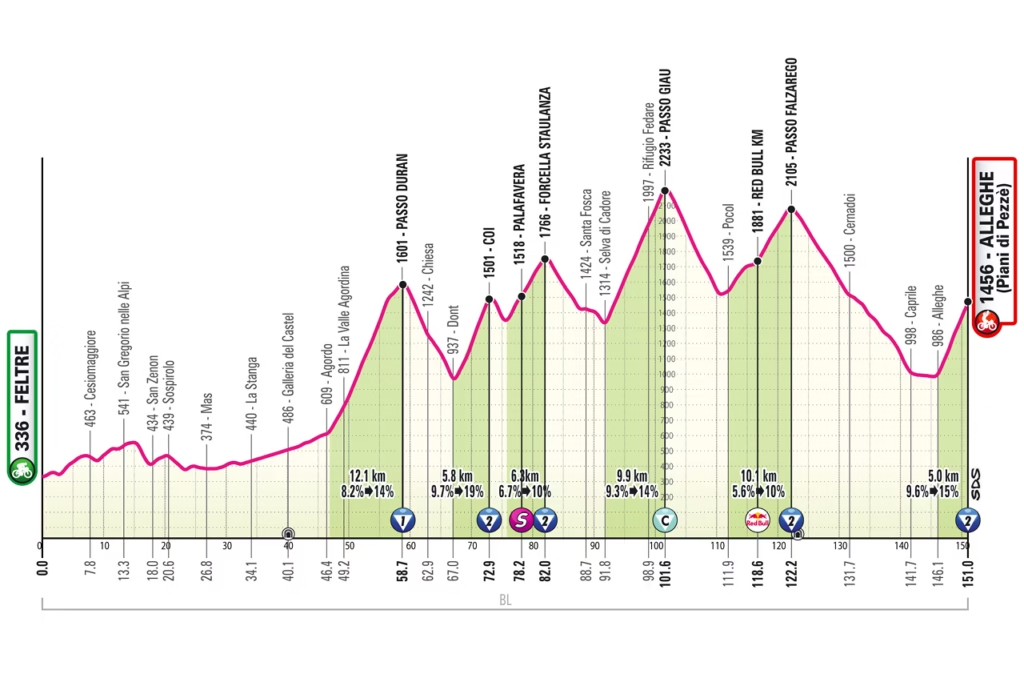
Giro d’Italia 2026 stage 19 route
Stage 19 begins in Feltre and finishes at Alleghe, with the line placed at Piani di Pezzè. The official distance is 151km, but the figure that matters most is the elevation gain. Around 5,000 metres of climbing makes this one of the most demanding stages of the race, and the distribution of that climbing gives the day its particular cruelty.
The opening section gives the peloton a short approach before the route becomes almost permanently mountainous. The final 100km contain the heart of the stage, and the climbs arrive in relentless succession. The Passo Duran begins the serious work, followed by Coi, Forcella Staulanza, Passo Giau, Passo Falzarego and then the last road up to Piani di Pezzè.
The stage is not built around one climb alone. It is the accumulation that matters. Riders will have to climb, descend, refuel, reposition and repeat, with very little time to reset. That is where fatigue becomes tactical. Teams who still have numbers after the Passo Giau could control the race, while isolated leaders may find the final 40km extremely difficult.
For the wider route picture, ProCyclingUK’s Giro d’Italia 2026 full route guide explains how this Dolomite stage fits into the final mountain block.
What’s on offer on stage 19?
- Stage: Stage 19
- Date: Friday, 29th May
- Route: Feltre to Alleghe (Piani di Pezzè)
- Distance: 151km
- Stage type: High mountain
- Elevation gain: around 5,000 metres
- Key climbs: Passo Duran, Coi, Forcella Staulanza, Passo Giau, Passo Falzarego, Piani di Pezzè
- Key feature: relentless final 100km through the Dolomites
- Expected stage start: around 11:30 BST
- Expected finish: around 15:54 BST
The Passo Duran starts the real race
The Passo Duran is where stage 19 should begin to take shape. It comes early enough in the decisive mountain sequence to encourage a strong breakaway, but it is hard enough to begin removing support riders from the GC groups. Any team wanting to make the stage difficult will see it as the first proper lever.
The gradients can reach double figures, with maximum sections around 14%, so this is not simply a long drag to soften the legs. It is a climb that can damage riders before the day has even reached its most famous point.
For the breakaway, the Duran is an opportunity to establish a serious selection. For the GC teams, it is the point where they must decide whether to ride defensively or begin testing rivals. A controlled pace here may keep the main contenders together, but a hard tempo could make the rest of the stage much more unpredictable.
Coi and Forcella Staulanza keep the pressure on
After the Passo Duran, there is no proper escape from the mountains. Coi adds another sharp and awkward climb, with maximum gradients reportedly reaching 19%. That kind of steepness can force riders out of rhythm, particularly if they are already carrying fatigue from the previous climbs.
The Forcella Staulanza then continues the pressure. It is not simply the steepest ramps that matter, but the way the climbs arrive close together. This part of the stage should be where domestiques begin to disappear, breakaway groups split and GC riders start to look around to see who still has help.
These middle climbs may not decide the stage outright, but they can decide who is still in position to contest it. A rider dropped here will have a long and painful road back, especially with the Passo Giau still waiting.
Passo Giau is the stage’s biggest mountain weapon
The Passo Giau is the Cima Coppi of the 2026 Giro d’Italia, and it should be the climb that gives stage 19 its greatest sporting weight. With maximum gradients around 14%, altitude, length and location all working together, it is the obvious place for the race to explode.
The Giau is hard enough to create real time gaps on its own, but it comes after a punishing sequence of earlier climbs. That makes it even more dangerous. By the time the riders reach it, the strongest teams may already be reduced, the breakaway may be broken into pieces, and the GC favourites may be isolated.
If Vingegaard’s rivals want to put him under pressure, this is the clearest place to start. Waiting until the final climb may not be enough, because the last ascent to Piani di Pezzè is only 5km. The Giau gives a much longer runway for an ambitious move, especially if the race situation has already become chaotic.
The final climb to Piani di Pezzè
The final 5km to Piani di Pezzè are short by Grand Tour summit-finish standards, but they are extremely demanding. The average gradient is around 10%, with the central section reaching 15%, and the road is narrow, winding and packed with hairpins.
That means the final climb is not just a finishing ramp. It is a place where tired riders can crack badly. After 5,000 metres of climbing, a 5km ascent at this gradient will feel much longer than it looks on the stage map.
The final kilometre remains consistently around 11%, so there is little chance for a rider to recover once the climb bites. If the GC group reaches the final ascent together, the stage could still produce meaningful gaps. If the race has already been split apart on the Giau, Piani di Pezzè will become the place where the damage is confirmed.
Why stage 19 matters for the general classification
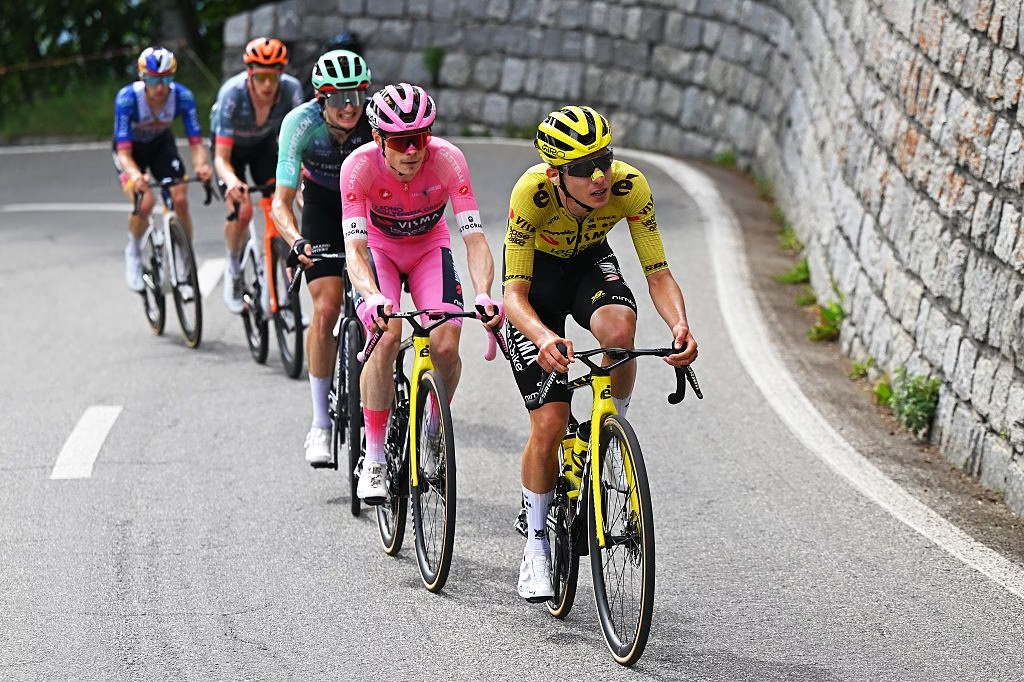
Vingegaard’s 4:03 lead means he does not need to attack. That is both a strength and a tactical challenge. Team Visma | Lease a Bike can ride defensively, but stage 19 is so hard that pure control may be difficult if rival teams decide to race aggressively from distance.
Gall, Arensman and Hindley all need to think about the podium as much as the maglia rosa. Gall has second place, but Arensman is only 24 seconds behind, while Hindley sits 57 seconds off the podium. That could make the battle behind Vingegaard more active than the fight for first overall.
Eulálio remains fifth, but the Dolomite stage is a huge test of whether he can hold that position after a difficult final week. Derek Gee, Michael Storer, Davide Piganzoli, Damiano Caruso and Ben O’Connor are all still close enough to make the lower top 10 volatile if the stage becomes brutal.
 Photo Credit: Getty
Can anyone put Vingegaard under pressure?
The honest answer is that it will be difficult. Vingegaard has looked like the strongest climber in the race, and his advantage is large enough that he does not need to respond emotionally to every move. He can allow some attacks to go, rely on teammates where possible and measure his effort carefully.
The problem for his rivals is that he has also shown the ability to turn defensive days into attacking days. If the pace becomes hard and the group thins out, Vingegaard may decide that the best way to protect the maglia rosa is to ride away again.
The more realistic path for his rivals is to isolate him, force Team Visma | Lease a Bike to work earlier than planned, then attack each other as much as him. A long-range assault on the Giau could make the stage difficult, but it would require commitment, teammates and the courage to risk everything before the final climb.
Riders to watch on Giro d’Italia stage 19
Jonas Vingegaard is the obvious reference point. He does not need to win the stage, but he has already shown across this Giro that when the road gets steep and sustained, he is the rider everyone else has to follow. If the pace is high on the Giau or the final climb, another Vingegaard stage win is entirely possible.
Felix Gall has been the closest consistent climbing challenger and starts the day second overall. He may not need to attack Vingegaard immediately, but he does need to defend his podium place from Arensman and Hindley. The repeated climbing should suit him, especially if the race becomes attritional.
Thymen Arensman sits third overall and has a clear opportunity to pressure Gall. He has the diesel climbing style for long mountain stages and should be one of the riders most interested in a hard, grinding race rather than a short final-climb sprint.
Jai Hindley is close enough to the podium to make stage 19 a major opportunity. The Australian has already shown strong climbing form in the mountains, and the Dolomite sequence gives him the kind of terrain where he can use endurance and tactical timing rather than relying on one explosive acceleration.
Michael Storer remains one of the most interesting stage-hunting options if the breakaway is given enough room. He climbs well enough to survive a day like this and has the tactical instincts to make a move count if the GC teams hesitate.
Giulio Ciccone could be central if the mountains classification becomes active. The Passo Giau and the earlier climbs offer major points, and Ciccone has every reason to chase them if he still believes the maglia azzurra is reachable.
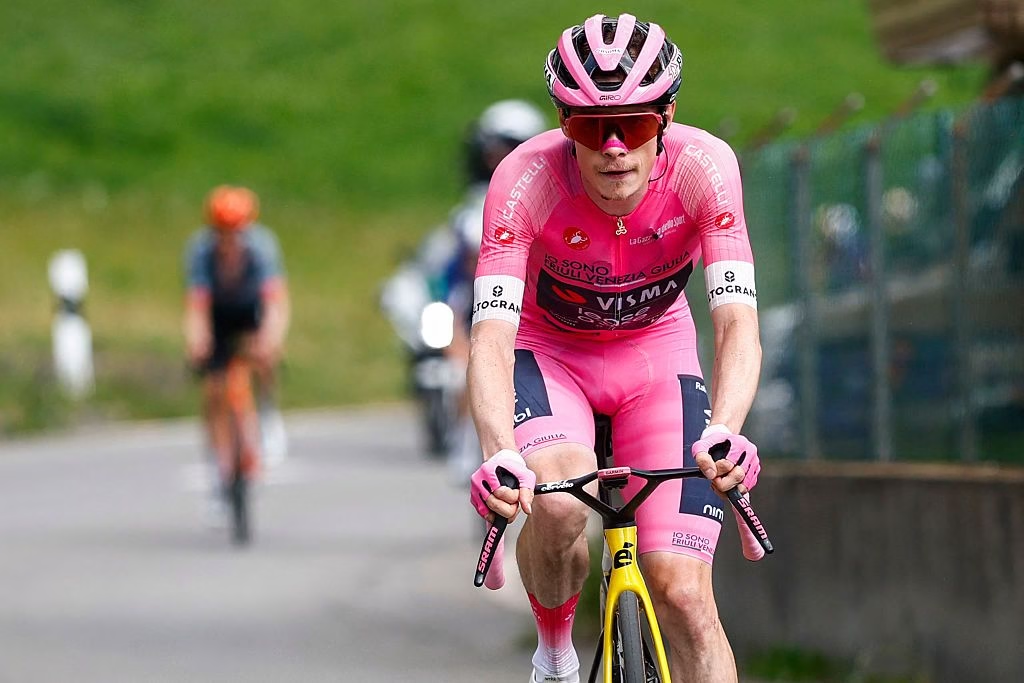 Photo Credit: Getty
Could the breakaway win?
A breakaway win is possible, but the route makes it complicated. The stage is hard enough for a strong group to survive, especially if Team Visma | Lease a Bike decide they only care about defending the race lead. Yet the GC stakes are so high that the favourites may naturally bring the race back together on the major climbs.
The composition of the break will matter. A group filled with riders far down on GC and strong climbers could go deep into the stage. A move with anyone close enough to threaten the top 10 may be treated much more cautiously.
Stage 17 showed that breakaway riders can still win in the final week, but stage 19 is different. The climbs are so hard and so decisive that the GC battle may swallow the stage race entirely.
Key tactical question: when does the race open?
The biggest tactical question is whether the GC race waits for Piani di Pezzè or begins on the Passo Giau. Waiting for the final 5km is safer, but it may not be enough for riders who need to take significant time. The final climb is steep, but short. The Giau gives more space to create chaos.
Teams with podium ambitions may therefore need to make the race hard before the final ascent. That does not necessarily mean a long solo attack. It could mean sending teammates into the break, setting a high tempo on the Duran or Staulanza, or forcing Vingegaard’s support to work earlier than expected.
If everyone waits, Vingegaard will be comfortable. If the race opens early, the stage becomes harder to control and much more dangerous for every rider still fighting for the top 10.
Giro d’Italia 2026 stage 19 prediction
This is the queen-stage style test of the final week, and it should reward the strongest climbers rather than opportunists alone. A breakaway may go deep, but the Passo Giau and the final climb to Piani di Pezzè should bring the GC contenders into the centre of the race.
Prediction: Jonas Vingegaard
Vingegaard does not need to attack from distance, but he has the climbing level and race control to finish the job if the stage comes back to the main favourites. The final 5km are steep enough for him to make another difference, and the earlier climbing should remove many of the riders who might otherwise complicate the finale.
-
 Photo Credit: A.S.O./Gaëtan Flamme
How to watch Giro d’Italia 2026 stage 19 in the UK
UK viewers can watch Giro d’Italia 2026 stage 19 live on TNT Sports and HBO Max. The stage is expected to start at around 11:30 BST, with the finish due at around 15:54 BST.
For full broadcast details across the race, ProCyclingUK’s how to watch Giro d’Italia 2026 in the UK guide explains the TV and streaming options for British viewers.
Giro d’Italia 2026 stage 19 verdict
Stage 19 is one of the hardest and most important stages of the Giro d’Italia 2026. It has the elevation gain, the Dolomite setting, the Cima Coppi on the Passo Giau and a steep final climb to Piani di Pezzè. It is exactly the kind of day where fatigue, altitude and accumulated pressure can expose even riders who have looked safe until now.
For Vingegaard, it is a chance to move even closer to overall victory. For Gall, Arensman and Hindley, it is one of the last major opportunities to reshape the podium. For everyone else in the top 10, it is a survival test as much as a chance to gain ground.
The final week has already given the race a clear leader, but stage 19 still has the terrain to change the order behind him. If the Giro is going to produce one last major mountain shake-up before Rome, the road to Piani di Pezzè is the obvious place for it to happen.

