

The Men’s Tour de France 2026 will be the 113th edition of cycling’s biggest race, and it arrives with a route that feels both familiar and unusually sharp. It begins outside France with a Grand Départ in Barcelona, returns through the Pyrenees, Massif Central, Vosges, Jura and Alps, and finishes in Paris on the Champs-Élysées. The race runs from Saturday, 4th July to Sunday, 26th July, with 21 stages and two rest days.
For new viewers, the Tour de France can look complicated at first. There are daily stage winners, several jerseys, team tactics, mountain points, sprint points, time gaps, breakaways and race radios all shaping the same three-week story. But the central idea is simple: the rider with the lowest overall time after all 21 stages wins the yellow jersey.
The 2026 route gives that yellow jersey battle a demanding shape. There are 7 flat stages, 4 hilly stages, 8 mountain stages, 5 summit finishes, 1 team time trial and 1 individual time trial. That balance means the race should test almost every part of a Grand Tour rider’s skillset: team strength, climbing, descending, recovery, time-trialling and the ability to survive chaotic early stages.
For wider race coverage, our Tour de France hub brings together route guides, stage previews, live viewing information and the latest updates across the build-up to July.
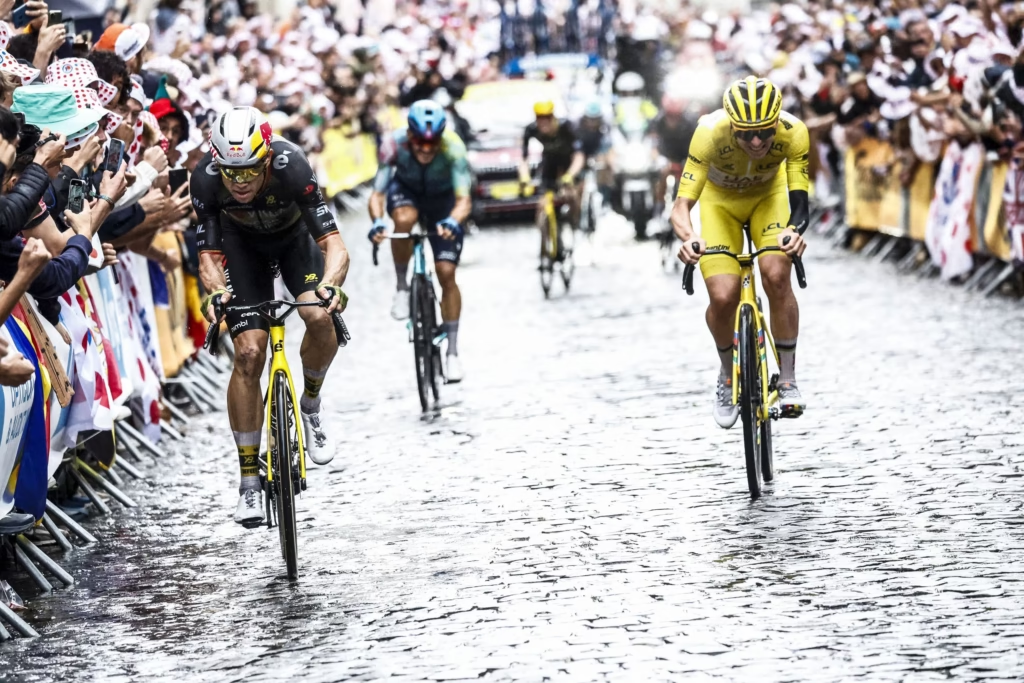
What is the Tour de France?
The Tour de France is the most important race in men’s professional cycling. It is a three-week stage race, meaning the riders race one stage per day, with their times added together across the whole event. The winner is not necessarily the rider who wins the most stages. It is the rider who completes the full route in the least total time.
That is why the Tour can produce several different races at once. A sprinter might be targeting flat stage wins and the points jersey. A climber may focus on mountain stages and the polka dot jersey. A young rider could be racing for the white jersey. Meanwhile, the general classification contenders are thinking about the yellow jersey every day, even on stages they have no intention of winning.
The Tour also matters because of its scale. It is not only a cycling race, but a travelling national event. It moves through cities, mountains, vineyards, coastal roads, small towns and historic regions, with the whole race shaped by the geography of France and, in 2026, by the opening stages in Catalonia.
When is the Men’s Tour de France 2026?
The Men’s Tour de France 2026 runs from Saturday, 4th July to Sunday, 26th July.
The race begins in Barcelona, Spain, before crossing into France and building towards the traditional final stage in Paris. The 2026 edition starts with a 19km team time trial in Barcelona and finishes with a 130km flat stage from Thoiry to Paris Champs-Élysées.
The race includes two rest days, which are important because the Tour is as much about recovery as peak performance. A rider can look strong for one week and then lose everything if fatigue, illness, crashes or poor recovery begin to accumulate.
Where does the 2026 Tour de France start?
The 2026 Tour de France starts in Barcelona. It is the 27th Grand Départ outside France and the third time the race has begun in Spain, after San Sebastián in 1992 and Bilbao in 2023.
Barcelona gives the race a spectacular opening setting, but it also gives the first week real sporting importance. Stage 1 is a team time trial, which means the GC riders will be under pressure immediately. There is no gentle introduction. Teams with strong time-trial depth can gain early time, while weaker squads may already be chasing before the road stages have properly begun.
Stage 2 then runs from Tarragona back to Barcelona, with a hilly route that should keep the race nervous. Stage 3 starts in Granollers and finishes in Les Angles, taking the Tour towards the mountains early rather than waiting until the second week.
How does the yellow jersey work?
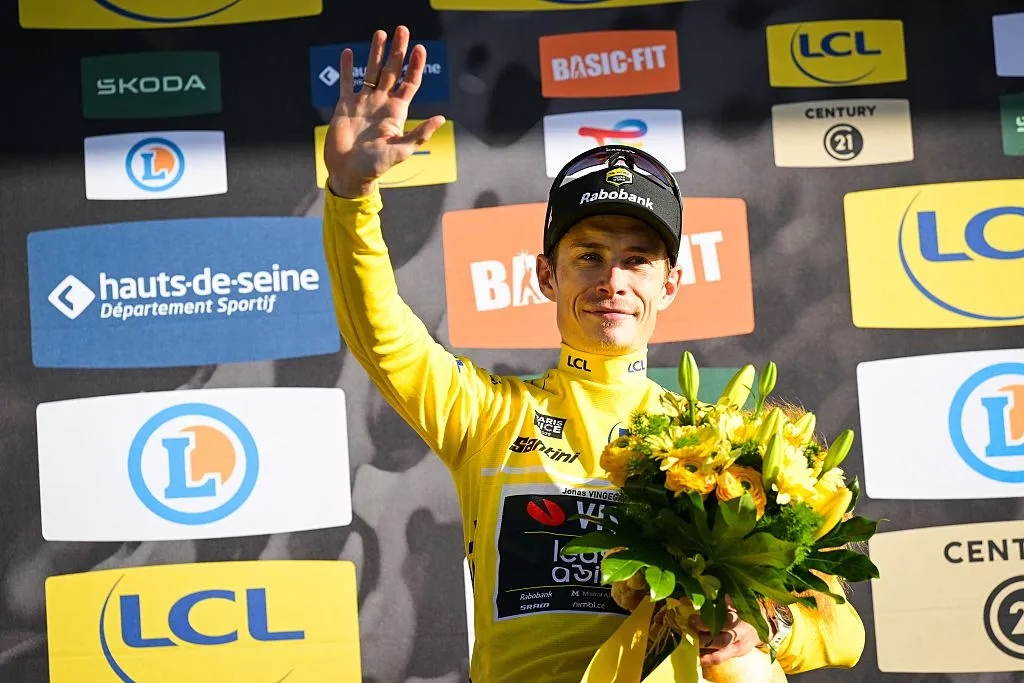
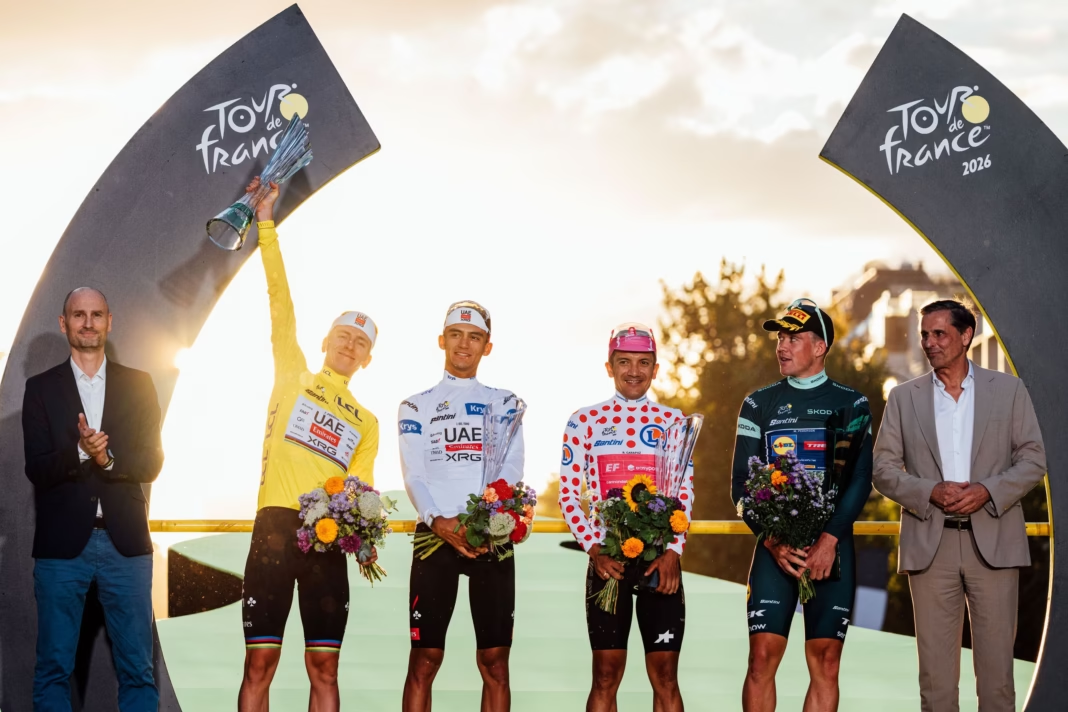
The yellow jersey, or maillot jaune, is worn by the rider leading the general classification. This is the main competition in the Tour de France.
Every stage time counts. If a rider loses 30 seconds on a mountain stage, those 30 seconds are added to their overall time. If they gain 20 seconds in a time trial, that advantage carries forward. Over three weeks, those differences build into the final GC result.
A typical yellow jersey contender needs to be strong in the mountains, disciplined in time trials, well protected by their team and consistent enough to avoid bad days. The Tour is rarely won by one great performance alone. It is usually won by stacking strong days together and avoiding collapse.
In 2026, the yellow jersey battle should be shaped by the opening team time trial, the Pyrenean mountain stages, the individual time trial in the Alps and the double visit to Alpe d’Huez late in the race.
 Photo Credit: Getty
What are the other Tour de France jerseys?
The Tour de France has several jersey competitions running alongside the yellow jersey.
The green jersey is the points classification. It is usually targeted by sprinters and fast finishers, although consistent all-round riders can also become contenders if they score on hilly and intermediate days. Points are awarded at stage finishes and intermediate sprints.
The polka dot jersey is the mountains classification. Riders score points over categorised climbs, with bigger climbs usually offering more points. It can be won by a pure climber, a breakaway specialist or sometimes a GC contender if the hardest mountain stages carry enough points.
The white jersey is the young rider classification. It works like the general classification, but only for eligible younger riders. The best young rider on overall time wears white.
There is also a team classification, calculated by adding the times of a team’s best-placed riders on each stage, and a combativity prize, which rewards aggressive racing.
What makes the 2026 route important?
The 2026 Tour de France route is demanding because it spreads the difficulty across several types of stages. It is not simply a race that waits for one mountain block. The opening team time trial creates immediate GC pressure, the Pyrenees arrive early, the Massif Central, Vosges and Jura keep the middle of the race awkward, and the Alps deliver a very hard final week.
The route includes 8 mountain stages and 5 summit finishes, with finishes at Gavarnie-Gèdre, Plateau de Solaison, Orcières-Merlette and Alpe d’Huez twice. That is a serious climbing load, especially when combined with the team time trial and the 26km individual time trial from Évian-les-Bains to Thonon-les-Bains later in the race.
For beginners, the key thing to understand is that the route creates several turning points. The race can be shaped in Barcelona, tested in the Pyrenees, unsettled through the middle stages, then decided in the Alps.
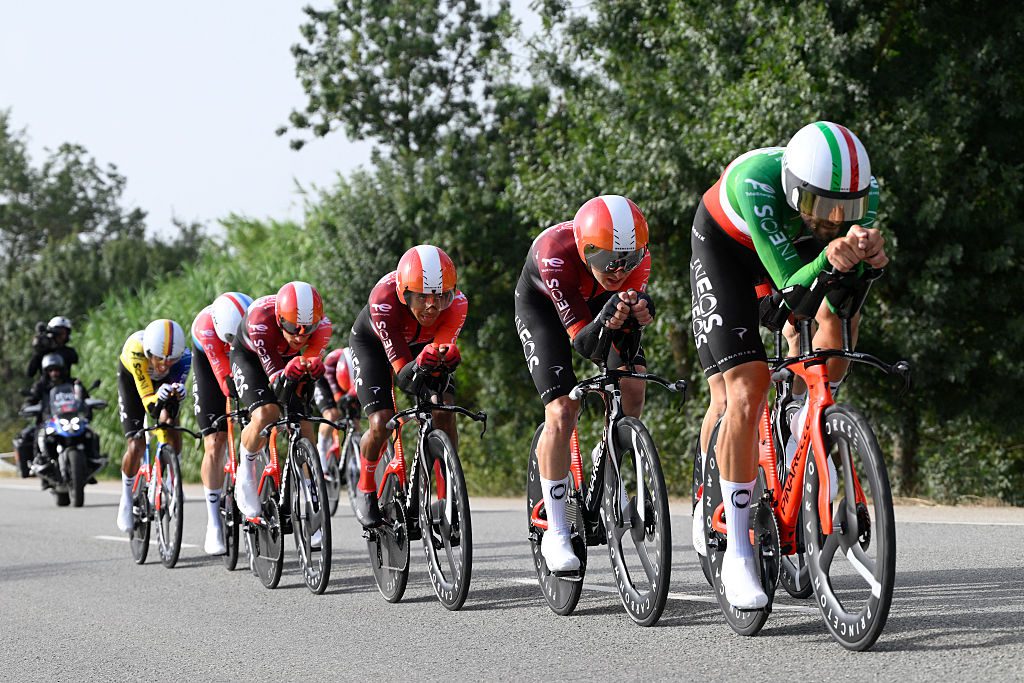 Photo Credit: Getty
Why is the team time trial important?
The 2026 Tour starts with a team time trial in Barcelona. This is significant because team time trials are rare in the modern Tour, and they immediately make the race collective as well as individual.
In a team time trial, each squad rides together against the clock. The strongest teams rotate at high speed, using aerodynamics and teamwork to protect their leaders. A well-drilled team can gain time without attacking anyone directly. A weaker team can lose time simply because it lacks the same depth or organisation.
This matters for the general classification. A GC favourite with a strong time-trial team can start the Tour with a useful advantage. A climber on a weaker team may need to regain time later in the mountains.
It also creates tactical tension. Riders must balance the team’s time with the leader’s needs. The Tour’s opening stage is only 19km, but it can still establish early momentum.
Why do the mountains matter so much?
The mountains are where the Tour de France most often becomes decisive. Climbs expose differences that flat roads can hide. A rider who can sit safely in the bunch on a sprint stage may suddenly lose minutes when the road rises for an hour.
In 2026, the mountains are especially important because they come in several phases. The Pyrenees arrive in the opening week, including the stage to Gavarnie-Gèdre. The Massif Central, Vosges and Jura add difficulty through the middle of the race, while the Alps bring the final major selection, including Plateau de Solaison, Orcières-Merlette and two consecutive finishes at Alpe d’Huez.
For new viewers, mountain stages are often the easiest part of the Tour to understand visually. When the road gets steep, the group becomes smaller. Domestiques drop away. Leaders become isolated. Attacks are easier to see, and time gaps often grow quickly.
The trick is to watch not only the rider attacking, but the riders who cannot respond. In the Tour de France, losing contact can be just as revealing as making the move.
What is a breakaway?
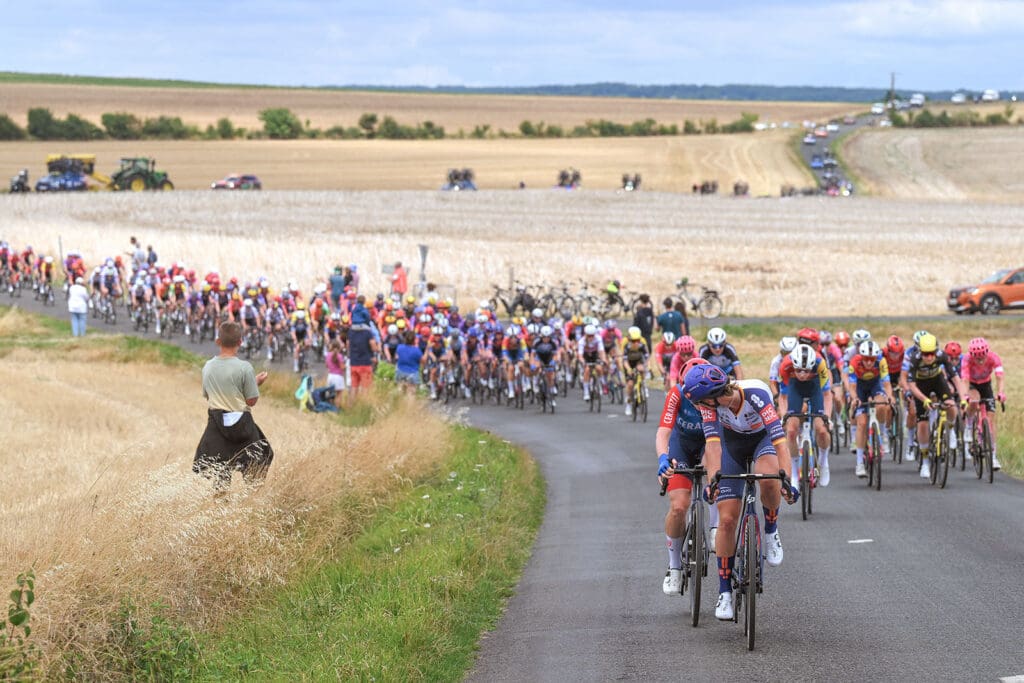
A breakaway is a group of riders who attack away from the main peloton. Breakaways are central to Tour de France racing because they give riders outside the GC battle a chance to win stages.
On flat stages, the breakaway is often controlled by sprint teams and caught before the finish. On hilly or mountain stages, a strong breakaway can survive, especially if the GC teams are more focused on each other than the stage win.
Breakaways also shape the mountains classification. Riders targeting the polka dot jersey often go in early moves to collect climbing points before the favourites arrive.
For beginners, breakaways can seem confusing because the peloton sometimes allows them to build a big lead. That does not always mean the breakaway is winning. Teams calculate gaps based on distance, terrain, wind, rider quality and how much effort they are willing to spend chasing.
What is a domestique?
A domestique is a rider whose job is to work for a team leader. This can mean riding on the front, fetching bottles, chasing attacks, positioning a sprinter, pacing a climber or giving up personal ambition for the team’s main objective.
The Tour de France cannot be understood properly without domestiques. The yellow jersey winner may receive most of the attention, but they rarely win alone. Their teammates protect them from wind, guide them through dangerous roads and set the pace on climbs.
In the mountains, the final domestique is often crucial. If a GC leader still has a teammate near the front late in a climb, they can save energy and respond more calmly. If they are isolated, every attack becomes more dangerous.
What stages should beginners watch?
The simplest answer is to watch the first stage, the first big mountain stage, the individual time trial, the biggest Alpine stages and the final stage in Paris.
For the 2026 Tour, the key beginner-friendly viewing days should include:
Stage 1 in Barcelona, because the team time trial will immediately create time gaps.
Stage 6 to Gavarnie-Gèdre, because it should be one of the first major mountain tests of the race.
Stage 15 to Plateau de Solaison, because it brings a serious summit finish before the second rest day.
Stage 16 from Évian-les-Bains to Thonon-les-Bains, because the individual time trial can reshape the GC.
Stages 19 and 20 to Alpe d’Huez, because back-to-back finishes on one of cycling’s most famous climbs should define the final mountain battle.
Stage 21 to Paris Champs-Élysées, because it is the traditional final-day procession and sprint showcase.
Who usually wins the Tour de France?
The Tour is usually won by a complete Grand Tour rider. That means someone who can climb with the best, time trial well, recover across three weeks and avoid losing time through crashes or poor positioning.
Pure sprinters do not win the Tour overall because they lose too much time in the mountains. Pure climbers can win if they are strong enough against the clock and well supported by their team, but modern Tour winners usually need a wider skillset.
The strongest Tour contenders are normally riders who can do three things: limit losses on bad days, take time on their best terrain and stay consistent across the entire race.
In 2026, the route should reward riders who can climb repeatedly and still time trial effectively. The team time trial also means the strength of the squad could matter from the opening day.
How do sprint stages work?
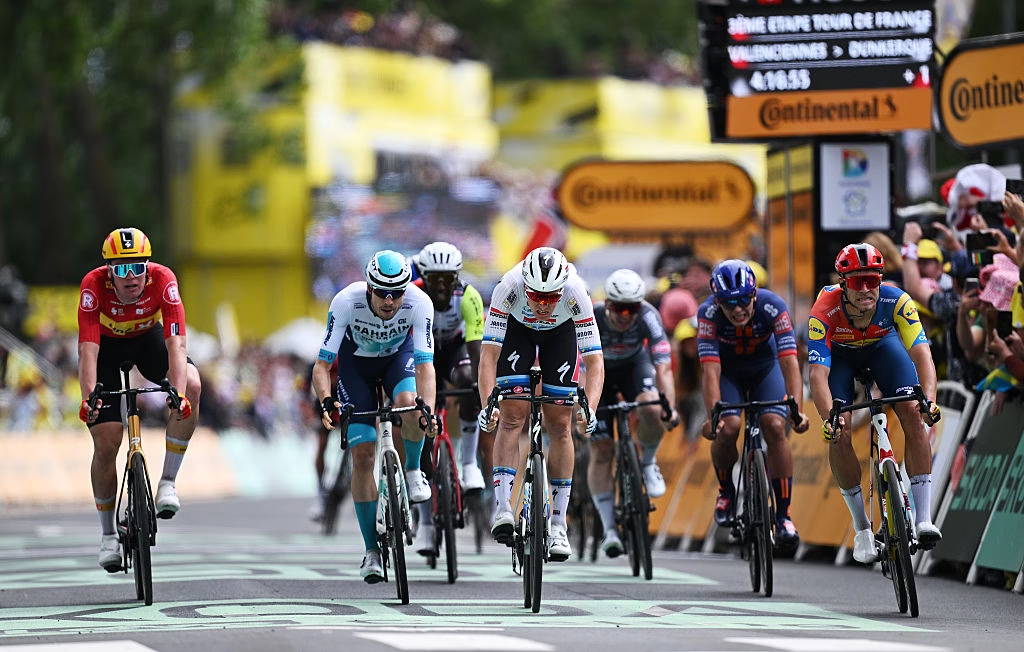
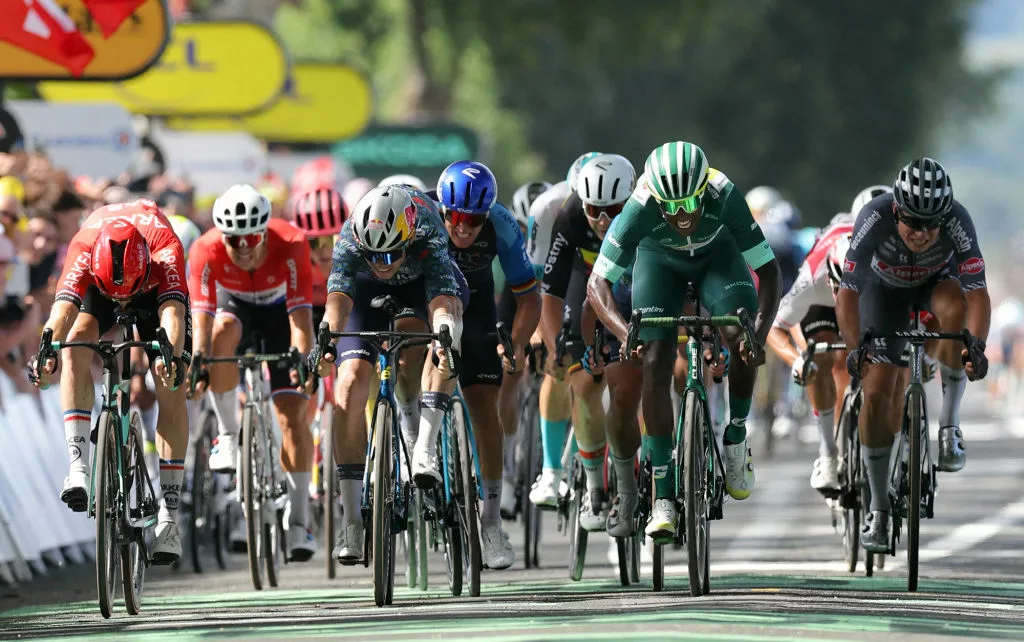
Sprint stages are usually flatter days where the fastest riders target the stage win. The peloton often allows an early breakaway to go, then the sprinters’ teams control the gap and bring the race back together before the finish.
The final 10km of a sprint stage can be chaotic. Teams form lead-out trains to position their sprinters, while GC teams try to keep their leaders safe near the front. Crashes are most likely when speed, stress and positioning all peak at the same time.
Even if a sprint stage looks quiet for much of the day, it still matters. A crash, split or crosswind can cost a GC rider time. The Tour is often lost on days that looked harmless in the route book.
How do time bonuses work?
Time bonuses are seconds awarded at certain stage finishes, usually to the first riders across the line. They can matter in a close race, especially in the first week or on punchy finishes where GC riders can sprint for small gains.
A rider who takes a 10-second bonus has effectively gained 10 seconds on rivals who did not score. That may sound small, but Tour de France podium places and even yellow jersey margins can be decided by less.
Beginners should think of bonuses as small but valuable tactical rewards. They do not replace climbing or time-trial strength, but they can change how aggressively riders approach certain finishes.
Why does the Tour finish in Paris?
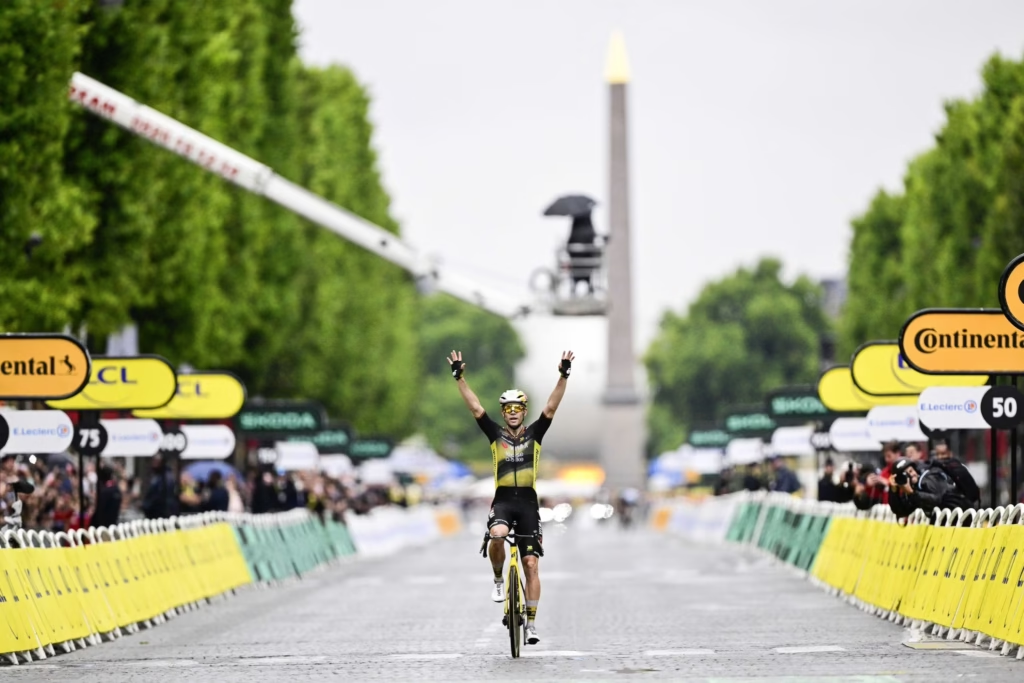
The Tour traditionally finishes in Paris, and in 2026 the final stage returns to the Champs-Élysées. The last day usually begins as a celebration for the overall winner, with the peloton riding more calmly before the race reaches the finishing circuit.
Once the race enters Paris, the atmosphere changes. The sprinters’ teams begin to organise, the speed rises, and the final stage becomes a prestigious sprint battle. Winning on the Champs-Élysées is one of the biggest achievements for a sprinter.
The yellow jersey is usually not attacked on the final day unless the race situation is exceptional. By then, the overall winner has normally been decided in the mountains and time trials.
Why the Men’s Tour de France 2026 should be worth watching
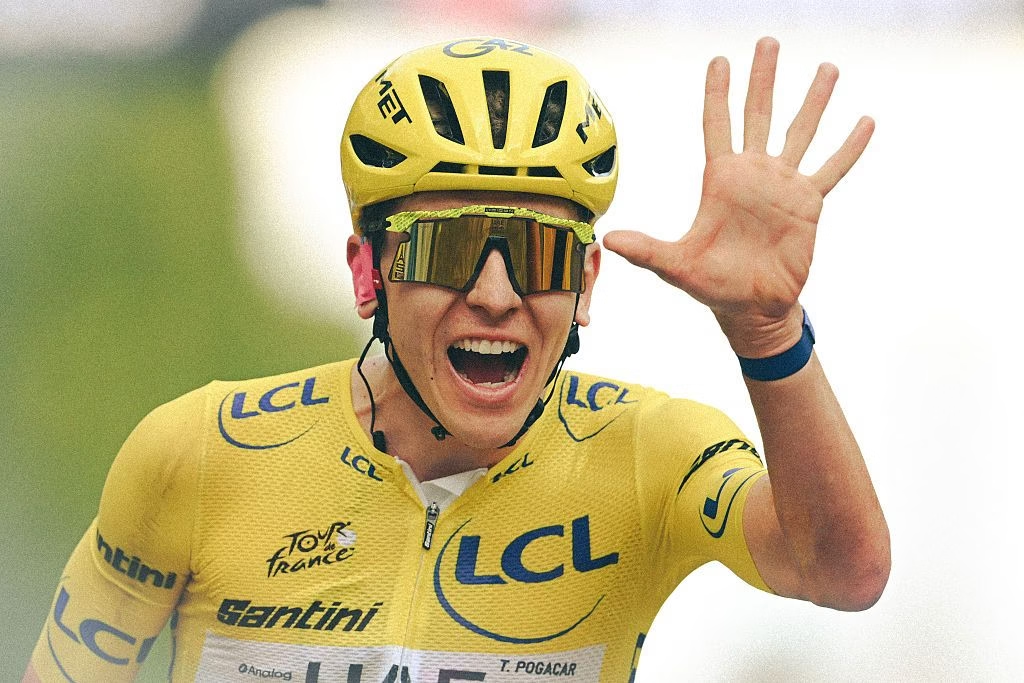
The 2026 Tour de France has the ingredients of a strong edition because it avoids being too one-dimensional. The race starts with a technical and tactical team test in Barcelona, moves into the mountains early, includes both team and individual time trials, and finishes with a heavy Alpine block.
The double visit to Alpe d’Huez gives the final week a clear headline, but the route should be interesting long before that. A poor team time trial could put a favourite under pressure immediately. The Pyrenees could expose early weakness. The individual time trial in Haute-Savoie could shift the race again. Then the Alps provide the final test of climbing strength and recovery.
For beginners, it should be a good Tour to learn from because each type of racing is represented clearly. There are sprint days, mountain days, hilly breakaway stages, a team time trial, an individual time trial and the traditional Paris finale. By the end of the race, the winner will have needed far more than one outstanding climb.
Beginner’s guide to Men’s Tour de France 2026 summary
The Men’s Tour de France 2026 runs from Saturday, 4th July to Sunday, 26th July, starting in Barcelona and finishing in Paris. It includes 21 stages, with flat days for sprinters, hilly stages for attackers, mountain stages for climbers and time trials for specialists.
The yellow jersey is the main prize and goes to the rider with the lowest total time. The green jersey rewards points, the polka dot jersey rewards climbing points, and the white jersey rewards the best young rider on overall time.
The key to watching the Tour is to understand that every stage matters in a different way. Some days decide the stage winner. Some days decide the jersey battles. Some days look calm until one crash, split or climb changes the whole race. The 2026 route should offer all of that, with Barcelona, the Pyrenees, the Alps, Alpe d’Huez and Paris giving the race a strong and readable shape from start to finish.

