
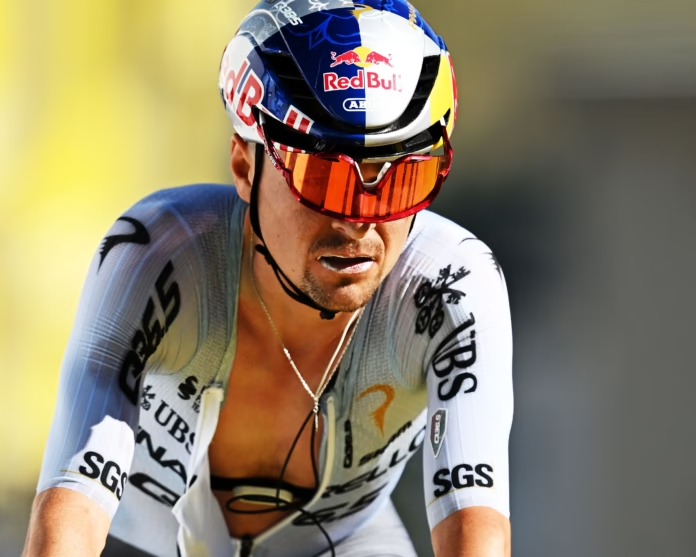
Tom Pidcock finished ninth overall at the 2026 Tour de France, completing the race 29:28 behind Tadej Pogačar and securing the first Tour de France top 10 of his career.
For a British rider whose Tour identity has often been built around spectacular stage hunting, descending and attacking rather than three-week consistency, ninth place matters. It does not suddenly turn Pidcock into a likely future Tour winner, but it gives him something he had not previously proved in France: he can arrive with GC ambitions, survive the race’s repeated mountain tests and still reach Paris inside the top 10.
That should change how his future Grand Tours are approached.
 Photo Credit: Getty
The Vuelta podium suggested it, the Tour has now backed it up
Pidcock’s third place at the 2025 Vuelta a España was the result that first forced a serious reassessment of his stage-racing ceiling. Before the 2026 Tour, the question was whether that performance could translate to a race with a deeper GC field, more controlled mountain stages and far less freedom once rivals considered him a genuine overall threat.
Our pre-race piece, Tom Pidcock at the Tour de France 2026: stage hunter or GC outsider?, argued that he had earned the right to start with GC respect without becoming trapped by it. A top 10 was realistic, but only if he could combine protection with the freedom to use the aggression and technical skill that make him dangerous.
The final result vindicates that approach. Pidcock did not challenge Pogačar or Evenepoel for the podium, but he lasted three weeks and finished ninth. Combined with the Vuelta podium, that is now evidence across two different Grand Tours rather than one breakthrough result.
Belfort briefly made the podium look possible
Pidcock’s Tour changed dramatically on Stage 13.
He started the day 10th overall at 11:49, went into the large breakaway and finished third in Belfort behind Mauro Schmid and Harold Tejada. More importantly, he gained enough time on the main GC group to jump to fourth overall, only nine seconds from the podium.
That created one of the most interesting tactical moments of the race. Pidcock had been allowed into the break because he began the stage far enough behind Pogačar to be considered manageable. By the finish, the same rider was suddenly a genuine podium threat.
Our analysis of why the Tour peloton allowed Pidcock to take so much time explained the calculation. UAE’s priority was yellow, while several of the teams that eventually had more to lose were caught between chasing Pidcock and protecting their own riders.
For a few days, the possibility of a British rider standing on the Paris podium was real.
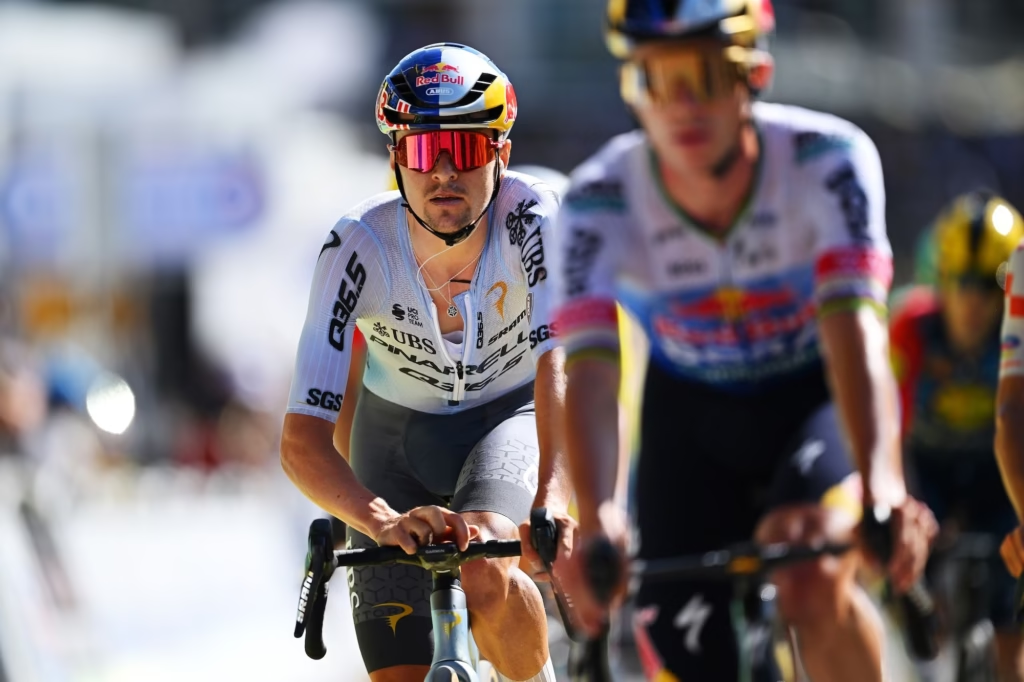
The Alps showed the difference between top 10 and podium level
The final mountain block eventually exposed the gap between being capable of a Tour top 10 and being ready to contend for the podium against the strongest stage racers in the world.
Pidcock suffered badly on the first Alpe d’Huez stage and slipped down the standings as the pure climbers came to the front. The second Alpine day, with the Croix de Fer, Télégraphe, Galibier and Sarenne before another finish at Alpe d’Huez, made recovering that ground almost impossible.
By the end of Stage 20, he remained ninth at 29:28, after finishing 16th on the day and more than nine minutes behind Richard Carapaz. The GC and jersey standings after Stage 20 reflected how sharply the final Alpine weekend had changed the tone of his race.
That does not make ninth a disappointment. Pidcock’s Tour had already demonstrated the tension that has always made his GC potential difficult to assess. His best qualities are explosive climbing, technical skill, aggression and an ability to exploit chaotic racing. Tour GC is often about doing almost the opposite: conserving energy, holding position and repeatedly surviving long climbs at a pace dictated by other riders.
He was good enough to combine those demands for most of the race. He was not yet good enough to do it all the way through the Alps.
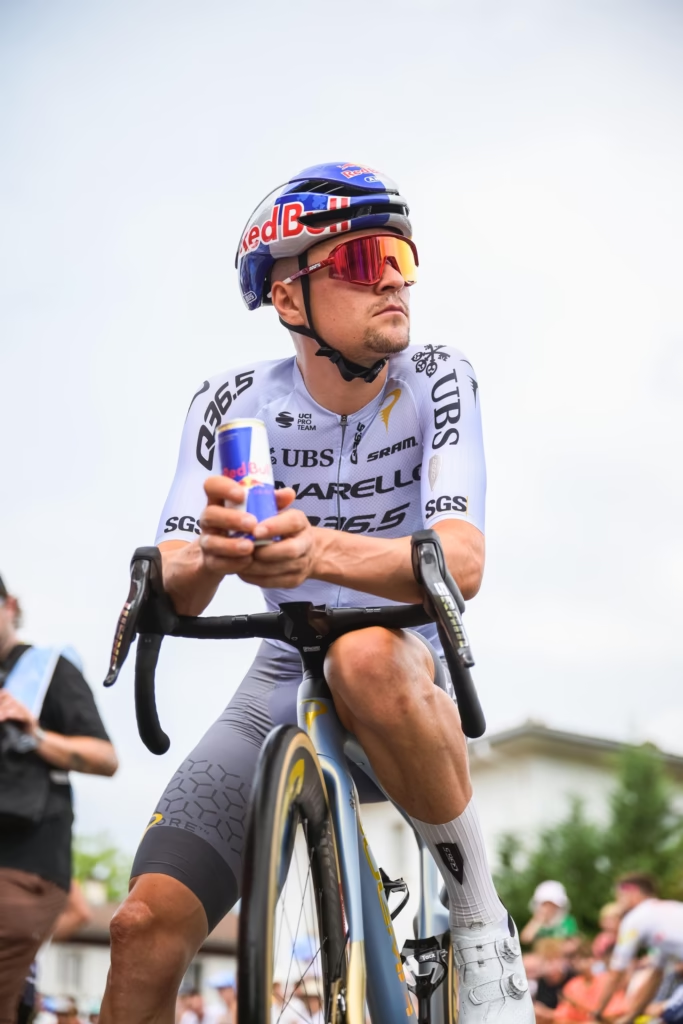
Ninth gives him options rather than forcing a decision
The temptation will be to treat the result as proof that Pidcock should now commit himself fully to Grand Tour GC.
That would be too simple.
His value as a rider still comes from the range that made him successful before he started chasing overall classifications. A future Tour where Pidcock finishes 15th but wins two major mountain stages would not necessarily be worse than one where he rides conservatively to eighth.
The significance of ninth is that the GC option can no longer be dismissed. Pidcock can start a Grand Tour with protected status and see where the race takes him. If he remains close after the first major mountains, there is evidence that a top 10 or even podium can survive into the final week. If he loses time, he still has the skill set to pivot immediately towards stage hunting.
That flexibility may suit him better than becoming a conventional GC rider.
The Q36.5 move looks increasingly important
Pidcock’s decision to leave Ineos at the end of 2024 was partly about creating space to race differently.
At Q36.5 he has been given the freedom to build a programme around his own ambitions rather than fit into a larger hierarchy, and the results have followed. The move itself was a major change in direction, covered when Pidcock signed for Q36.5 ahead of the 2025 season.
Since then he has produced a Vuelta podium and now a Tour top 10. For the team, ninth at the Tour is enormous. A squad that only recently moved into this level of Grand Tour ambition has finished inside the top 10 of the biggest race in cycling with its marquee rider.
For Pidcock, it strengthens the argument that leaving the larger British WorldTeam structure gave him the freedom he needed.
-
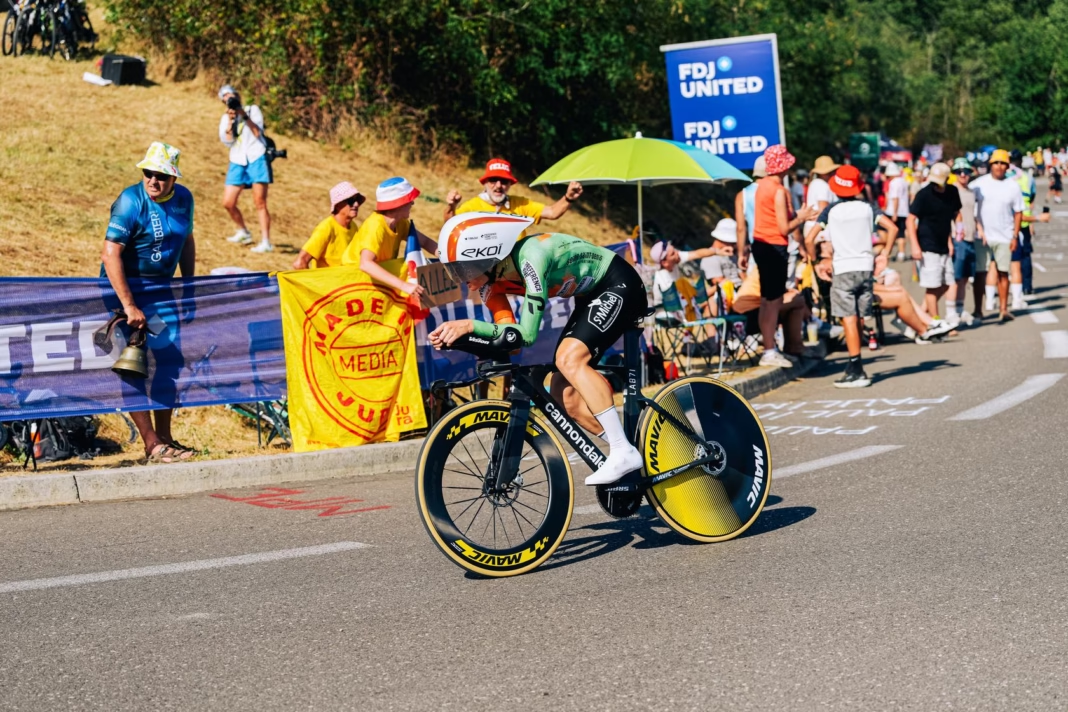
 Photo Credit: A.S.O./Gaëtan Flamme
Britain has another genuine Grand Tour GC rider
That is perhaps the strongest UK angle from Paris.
British cycling has spent much of the last decade measuring Grand Tour expectations against the era of Bradley Wiggins, Chris Froome and Geraint Thomas. Those years created an unusually high benchmark, where British success at the Tour meant winning yellow rather than simply reaching the top 10.
Pidcock’s ninth should not be judged against that era.
A first Tour top 10, following a Vuelta podium the previous season, establishes him as Britain’s strongest current evidence of a genuine Grand Tour GC contender. That does not mean he is ready to challenge Pogačar. Very few riders are.
It means a British rider can again start a major Grand Tour with the overall classification as more than a hypothetical objective.
The next step is not automatically eighth
Pidcock’s career has never developed in neat increments, and there is no reason to assume his Grand Tour progression will either.
He does not need to finish eighth next year, then sixth, then fourth. His route to a bigger result could come through a Tour where circumstances suit him better, a Vuelta with a less brutal collection of sustained climbs or a race where early time gains give him tactical leverage before the GC teams begin controlling him.
The 2026 Tour showed both sides of his potential. Pidcock could exploit a breakaway well enough to jump from 10th to fourth, but once he became a known podium threat, the freedom to race instinctively disappeared. That is the challenge he now has to solve.
Ninth overall does not answer whether Tom Pidcock can one day win a Grand Tour.
It makes the question worth continuing to ask.

