
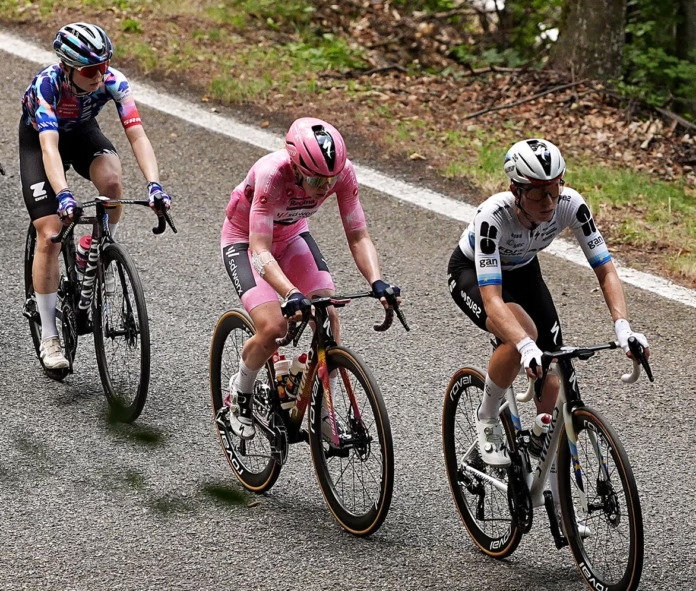
The Giro d’Italia Women 2026 ends on Sunday, 7th June, with a final stage that is anything but ceremonial. Stage 9 starts and finishes in Saluzzo, covering 145km and around 2,200 metres of climbing, with three climbs packed into a route that keeps the general classification alive until the final afternoon.
Demi Vollering’s stage 8 victory on Sestriere changed the tone of the race, but not the overall structure. She gained 10 seconds on Anna van der Breggen by winning the stage, yet the top four stayed broadly intact. Van der Breggen still leads the Giro, Vollering remains the main threat, and the final day now becomes a question of whether FDJ United-Suez can create something much bigger than a stage-win time bonus.
That is what makes stage 9 interesting. It is not a summit finish, but the climbs are hard enough to open the race if a team commits early. Montoso comes before the halfway point, the Colletta di Brondello is the final launchpad, and the long run back to Saluzzo means any attack has to be sustained rather than symbolic.
For wider context, our Giro d’Italia Women 2026 full route guide explains how the race has built towards this final weekend, while our Giro d’Italia Women 2026 stage 8 preview covers the queen stage that tightened the race but did not overturn Van der Breggen’s control.
What is the route for Giro d’Italia Women 2026 stage 9?
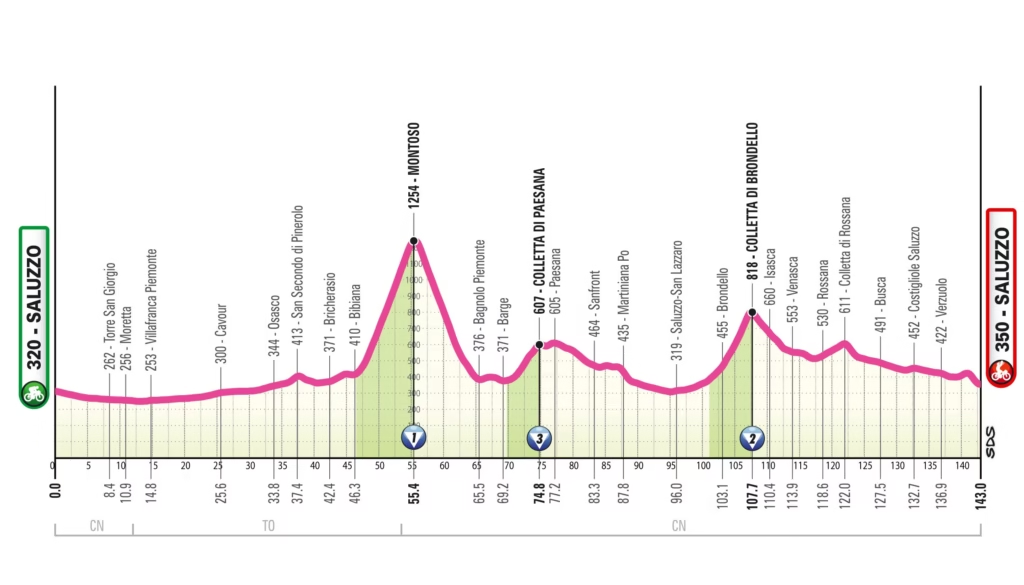
Stage 9 starts and finishes in Saluzzo, giving the Giro a final circuit-style mountain stage in Piedmont rather than a procession. The stage is 145km long and includes three climbs, with the route carrying around 2,200 metres of elevation gain.
The first major obstacle is Montoso, the hardest climb of the day. It comes after around 46km of flatter approach roads and is listed at 8.9km at 9.4 per cent. The opening kilometres are not the most severe part, but from around kilometre three onwards the climb becomes much steeper and more sustained.
After the descent, the Colletta di Paesana adds another 3.4km at 5.8 per cent. It is not the climb most likely to decide the stage on its own, but it keeps the pressure on and comes at a point where tired riders may already be paying for the effort on Montoso.
The final categorised climb is the Colletta di Brondello, 6.9km at 6.5 per cent. Its opening section is manageable, but the final 5km are harder, with the average rising towards 8 per cent and one 500-metre stretch around 10.4 per cent. From the summit, there are still 35.3km of flat to rolling roads, with a slightly downhill trend, back to Saluzzo.
Why stage 9 is not a parade
A final stage around Saluzzo changes the feel of the Giro. Instead of ending with a flat procession, the race finishes with a stage that can still affect the GC, the mountains classification, the top 10 and the final stage win.
The key is fatigue. By this point, the riders have already absorbed the Nevegal uphill time trial, the Dolomite stage to Santo Stefano di Cadore, the hilly stage to Salice Terme and the queen stage over the Colle delle Finestre to Sestriere. A climb like Montoso would be hard at any point in the race. On the final day, it becomes a test of recovery as much as climbing ability.
The long run after the Colletta di Brondello also makes the stage tactically awkward. A rider who attacks on the final climb still needs either a strong group or the ability to hold off the chase for more than 30km. That can encourage hesitation, but it can also reward riders who commit early and force others to organise behind.
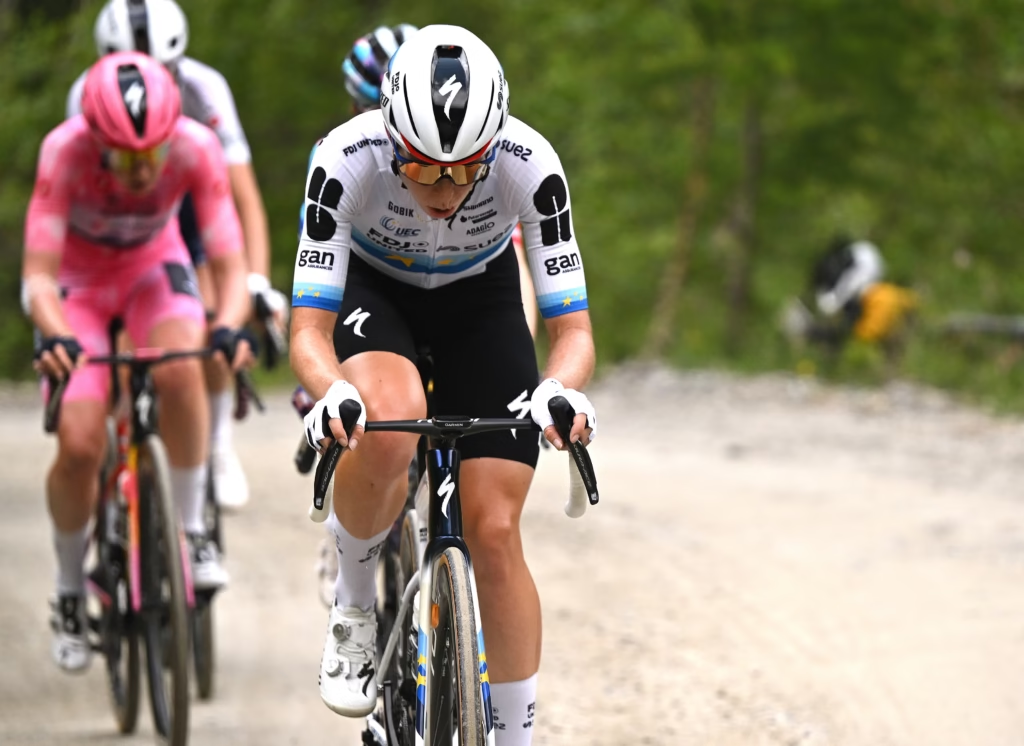 Photo Credit: Getty
Montoso gives the stage its first real selection
Montoso is the climb that gives stage 9 its weight. At 8.9km and 9.4 per cent, it is hard enough to split the peloton even though it comes before the halfway point of the stage.
The climb’s placement creates an important tactical decision. If Team SD Worx-Protime are strong, they may try to control Montoso and stop the stage becoming chaotic too early. If Vollering and FDJ United-Suez want to create a real final-day problem for Van der Breggen, this is the first obvious place to make the race difficult.
A hard pace here can remove domestiques, force dropped riders into a long chase and make the rest of the stage harder to manage. It may not be where the winning move goes, but it could be where the final day begins to unravel for weaker teams. Anyone already struggling after Sestriere will have very little time to hide.
Colletta di Brondello is the final launchpad
The Colletta di Brondello is the last clear place to attack on the stage. It is not as hard as Montoso on paper, but it comes later, after the riders have already climbed and descended through a demanding final day.
The final 5km of the climb are the important section. That is where the gradient becomes more selective and where a rider with fresh legs can make a difference. The 500-metre stretch at around 10.4 per cent near the top is especially useful for anyone trying to create separation before the final run back to Saluzzo.
The summit comes far enough from the finish to complicate the tactics. Vollering cannot simply attack over the top and expect the race to fall into her hands. A solo move needs commitment. A small group needs cooperation. A GC attack needs enough distance to gain meaningful time, but also enough strength to resist any organised chase behind.
Can the GC still change on stage 9?
Yes, but Vollering needs a proper race-changing move rather than a small acceleration. Her stage 8 win brought back 10 seconds on Van der Breggen, but it did not significantly alter the top of the standings. That leaves the final day with a clear tactical shape: Van der Breggen can defend, Vollering has to attack, and the rest of the podium group must decide whether to protect what they have or gamble for more.
Time bonuses keep the stage relevant, with 10, 6 and 4 seconds available at the finish, plus 6, 4 and 2 seconds at the intermediate sprint. But bonuses alone are unlikely to be enough for Vollering. She needs to create separation on the climbs and then keep the pressure on through the long run back to Saluzzo.
Antonia Niedermaier and Isabella Holmgren remain important because the top four did not shift dramatically on Sestriere. Both are still close enough to make the podium fight interesting, while Marlen Reusser, Elisa Longo Borghini and Niamh Fisher-Black all have reasons to use the final stage aggressively if the opportunity appears.
What does the stage mean for Anna van der Breggen?
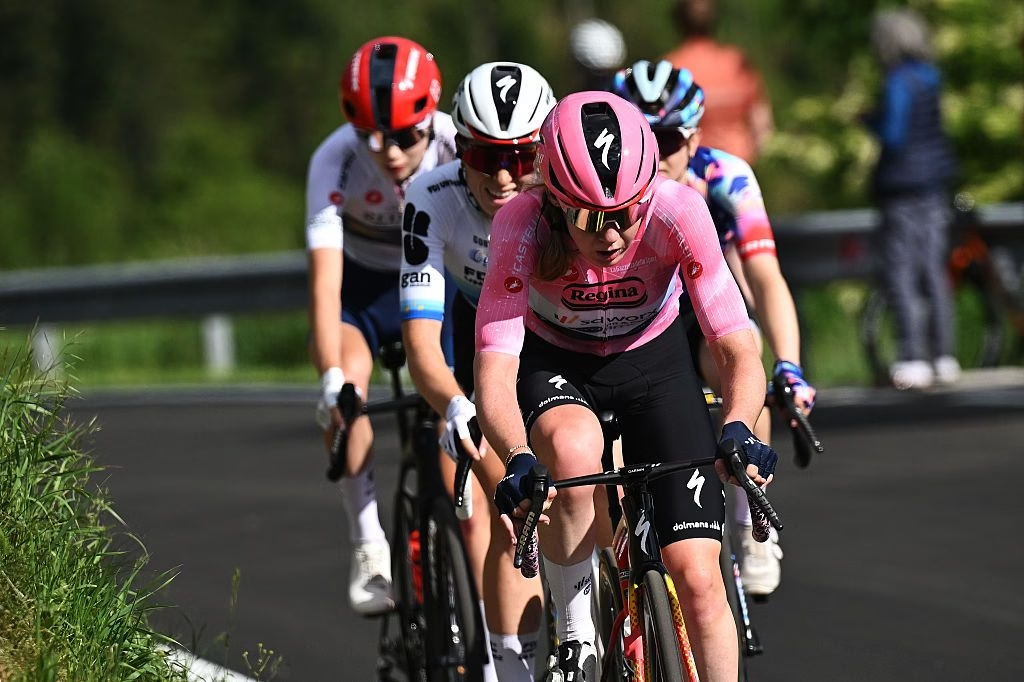
For Van der Breggen, stage 9 is about finishing the job. Sestriere tested her, and Vollering took 10 seconds back, but the maglia rosa remains in her hands. That gives Team SD Worx-Protime a clear objective: control the early danger, keep Van der Breggen surrounded for as long as possible and prevent Vollering from turning the race into a long-range fight.
That is not as simple as riding tempo all afternoon. Montoso comes early enough for FDJ United-Suez or another team to make the stage hard from distance, while the Colletta di Brondello gives attackers one final place to split the group. Van der Breggen cannot afford to be isolated at the wrong moment.
Her advantage gives her tactical room. She does not need to chase every stage-hunting move. She only needs to control the riders who threaten her overall lead. The difficulty is separating those two things when the race is tired, the roads are rolling and several teams may be attacking for different reasons.
Demi Vollering needs one more big effort
Vollering’s stage 8 win confirmed her climbing form, but the 10-second gain also showed the problem. She can beat Van der Breggen on a mountain finish, but she now needs to do more than win the stage sprint. Saluzzo gives her one last chance to make the Giro genuinely unstable.
The route is not built for a simple final-kilometre attack. Vollering will need the race to be hard before the Colletta di Brondello, ideally with Team SD Worx-Protime already reduced by the time the final climb begins. If she waits too long, Van der Breggen can mark the move, limit the gap and rely on the long run-in to bring things back under control.
Her strongest weapon is sustained pressure. FDJ United-Suez have to use the stage as a whole rather than just the final climb. If Vollering can attack over Brondello with support, or with another GC rider willing to cooperate, the final 35km become much more dangerous for the maglia rosa. If she is alone, the task becomes harder, but not impossible.
Elisa Longo Borghini has the right profile for this kind of stage
Elisa Longo Borghini looks particularly suited to a final day like this. She has already shown aggression in the race, and the Saluzzo stage rewards riders who can climb, descend, read the road and keep pushing after the summit.
This is not a stage where the best pure climber automatically wins. The final 35km after the Colletta di Brondello mean race craft matters. A rider who goes over the top with a small gap can use the rolling road back to Saluzzo, but only if they commit fully and force hesitation behind.
Longo Borghini’s best role may be as the rider who makes the finale harder for everyone else. If the main favourites are watching each other, or if teams are short of support after Montoso, she has the experience to turn a final-day opportunity into something bigger. She may not be the stage prediction here, but she remains one of the riders most capable of shaping how the race is won.
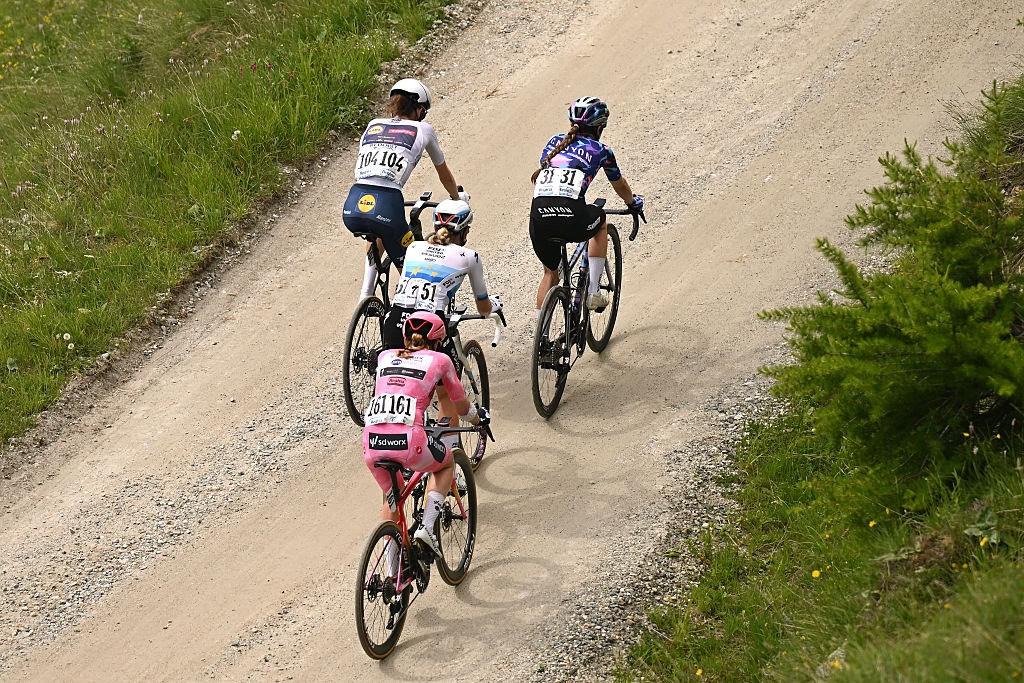
Antonia Niedermaier and Isabella Holmgren still have podium ambitions
Antonia Niedermaier and Isabella Holmgren could both be central to the final stage, especially with the top four still close after Sestriere. Niedermaier has climbed strongly throughout the Giro, and stage 9 gives her a route where she can either defend third or try to move higher.
Holmgren’s situation is especially interesting because she has been balancing the young rider classification with a genuine GC position. The final day around Saluzzo is another test of recovery and maturity. If she still has the legs after Sestriere, she has the climbing ability and confidence to stay involved when the race splits.
Both riders may benefit if the race becomes less controlled. If Van der Breggen and Vollering focus too much on each other, a move from a podium contender could become dangerous, especially on the Colletta di Brondello.
Marlen Reusser and Niamh Fisher-Black could shape the chase
Marlen Reusser’s engine makes her important on a stage with a long run-in after the final climb. She may not want repeated accelerations on Montoso or Brondello, but if she survives close to the front, the final 35km give her a way back into the stage.
That makes Reusser tactically awkward for rivals. If she is dropped slightly on the climb but not completely distanced, she can limit losses on the rolling road. If she is part of a front group, others may not want to carry her to a finish where strength and timing can matter.
Niamh Fisher-Black gives Lidl-Trek another climbing option alongside Holmgren’s white jersey defence. If the team wants to be aggressive, Fisher-Black can move before others are ready to chase. If Holmgren needs protection, she may become an important support rider instead. That balance will depend on how Lidl-Trek choose to defend the white jersey and chase a final stage result.
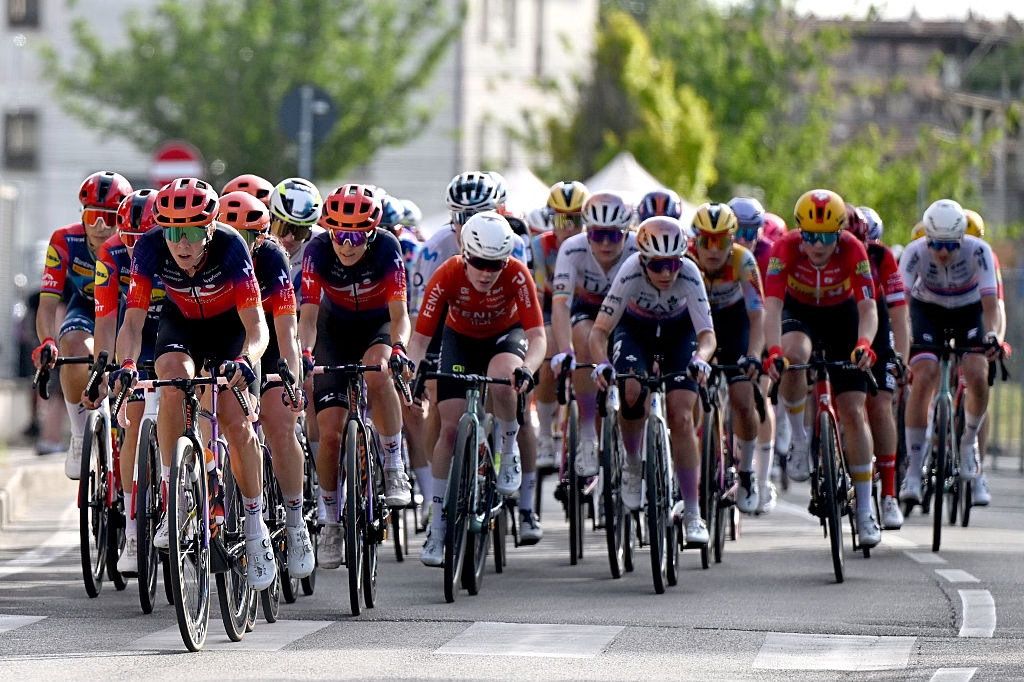 Photo Credit: Getty
Could a breakaway win the final stage?
A breakaway win is possible, but Vollering’s need to attack may make the day harder to control in a different way. If FDJ United-Suez make the race difficult early, a breakaway could be used tactically rather than simply allowed to ride away.
The best breakaway will need strong climbers who are far enough down on GC to be allowed room, but good enough to survive Montoso and Brondello. A rider who crests the final climb with a small advantage still has to handle the long run to Saluzzo, where cooperation will be essential.
The problem for the breakaway is the final-day stakes. The maglia rosa is not fully settled, the podium is still worth fighting for and the mountains classification may still be active. That gives several teams reasons to chase or attack behind, which reduces the chance of a straightforward breakaway success.
Could Elisa Balsamo score again?
Elisa Balsamo’s chances of contesting stage 9 depend on how hard the climbs are raced. On paper, this is too difficult for a pure sprint finish. Montoso alone should remove most of the fast finishers if the pace is serious, and the Colletta di Brondello gives climbers another chance to apply pressure.
Balsamo’s points classification position still matters, though. If the ciclamino jersey is secure, Lidl-Trek may prioritise Holmgren and Fisher-Black. If there are still points to defend, they may try to keep her in contention for intermediate points where possible.
A stage win from Balsamo looks unlikely on this terrain. A points-focused ride, survival into Saluzzo and a safe finish in the jersey battle are more realistic objectives.
Where will stage 9 be won?
Stage 9 could be won in several places, which is what makes it interesting.
Montoso can create the first major selection. The Colletta di Brondello is the final launchpad. The 35.3km after the summit will decide whether an attack survives or whether a chasing group comes back. The finish in Saluzzo could still produce a sprint from a reduced group if the strongest riders cancel each other out.
The most important moment may be just over the top of the final climb. If Vollering or another dangerous rider has a gap and commits immediately, the chase behind may struggle to organise. If the front group looks at each other, riders from behind can return and the stage can reset before the finish.
That makes this a stage for patience as much as aggression. Attacking too early may leave a rider exposed. Waiting too long may mean the last chance has already gone.
-
 Photo Credit: Getty

What kind of rider can win stage 9?
The winner needs to be a climber with endurance, or an all-rounder who can survive the hardest parts and still finish quickly. A pure sprinter is unlikely to be there. A pure climber can win, but only if they can make the difference before the final 35km.
That makes Vollering an obvious stage contender. She has the climbing form, she has the motivation, and she has no reason to settle for a passive final day. Longo Borghini, Niedermaier, Holmgren and Fisher-Black also fit the shape of the stage if the GC group decides the win.
Reusser could be dangerous if the race regroups after the final climb and the pace settles into a power-based run-in. A breakaway winner may come from slightly further down the standings, but the GC situation should keep the main favourites more involved than they might have been on a quieter final day.
Giro d’Italia Women 2026 stage 9 prediction
Stage 9 is difficult enough to change parts of the race, but the top of the GC now has a clearer shape after Sestriere. Vollering won stage 8 and clawed back 10 seconds, yet Van der Breggen still has the maglia rosa and enough of a cushion to make FDJ United-Suez take the risks.
That should make Vollering the most aggressive rider in the race. Montoso can thin the field, the Colletta di Brondello gives her one final launchpad, and the long run back to Saluzzo means any move has to be sustained rather than symbolic. She cannot rely on a late sprint alone, but she can use the stage to put Van der Breggen under pressure one last time.
Prediction: Demi Vollering to win stage 9 in Saluzzo after forcing the final selection on the Colletta di Brondello, with Anna van der Breggen defending the maglia rosa and securing overall victory.

