
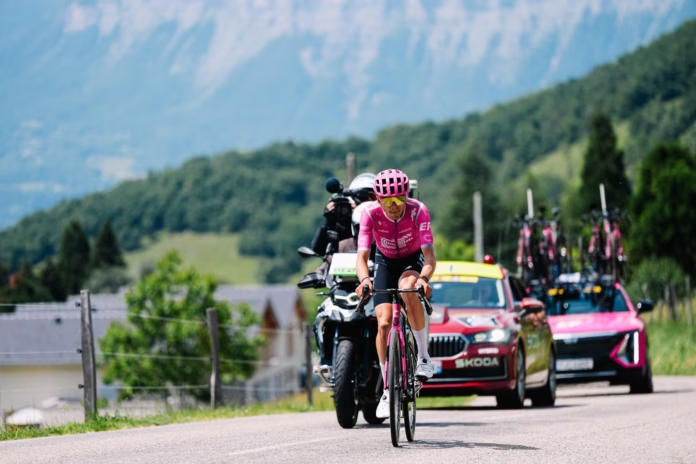
The Tour Auvergne – Rhône-Alpes 2026 continues on Monday, 8th June, with the longest stage of the race. Stage 2 takes the riders from Saint-Martin-le-Vinoux to Le Puy-en-Velay over 234.3km, turning the second day into a major endurance test before the team time trial in Perreux.
After a sharp opening stage to Saint-Ismier, this is a different challenge. The climbs are not as explosive as the final weekend mountain stages, but the distance, rolling profile and almost 3,700 metres of elevation gain should make it a tiring day for everyone. It is a stage that could suit a breakaway, a reduced sprint, or a late attack if the peloton is worn down before Le Puy-en-Velay.
Stage 2 is scheduled to roll out at 11:05 local time, which is 10:05 BST for UK viewers. The finish is expected at around 17:05 local time, or 16:05 BST, depending on the speed of the race.
UK viewers can watch the Tour Auvergne – Rhône-Alpes 2026 live through TNT Sports and HBO Max. For a full tactical look at the route, our Tour Auvergne – Rhône-Alpes 2026 stage 2 preview breaks down why this could be a harder day to control than it first appears.
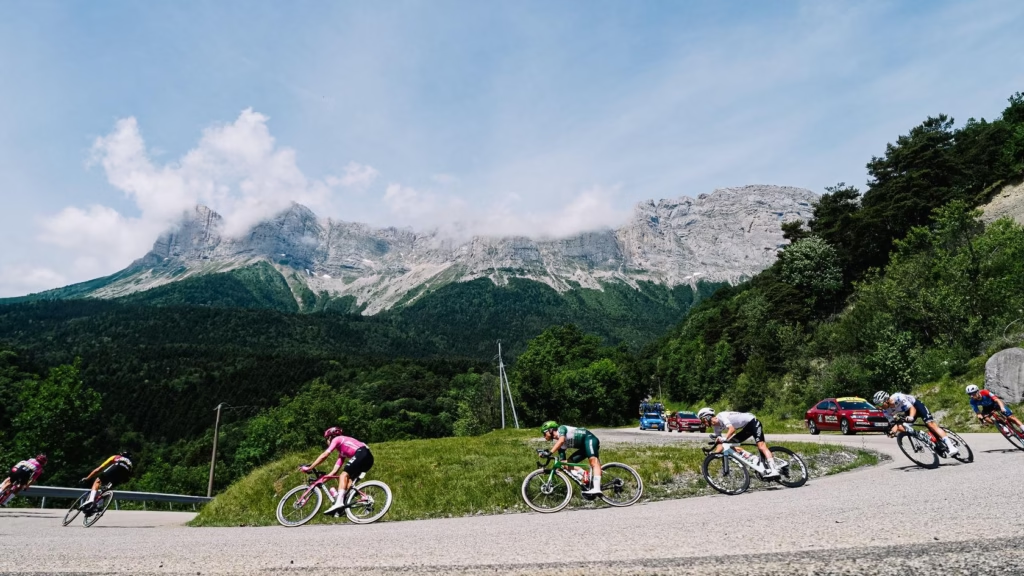 Photo Credit: A.S.O./Gaëtan Flamme
What time does Tour Auvergne – Rhône-Alpes 2026 stage 2 start?
Tour Auvergne – Rhône-Alpes 2026 stage 2 is scheduled to start at 10:05 BST on Monday, 8th June.
The riders will cover 234.3km from Saint-Martin-le-Vinoux to Le Puy-en-Velay, making it the longest stage of the race. The finish is expected at around 16:05 BST, although the exact timing will depend on how the peloton handles the long distance, rolling climbs and late approach into Le Puy-en-Velay.
The key stage 2 details for UK viewers are:
- Date: Monday, 8th June
- Stage: stage 2
- Route: Saint-Martin-le-Vinoux to Le Puy-en-Velay
- Distance: 234.3km
- Elevation gain: around 3,700 metres
- Stage type: hilly
- Scheduled start: 10:05 BST
- Expected finish: around 16:05 BST
- UK live coverage: TNT Sports and HBO Max
This is a long day, so the decisive racing may not come until the final hour, but the breakaway composition should be worth watching from early on.
How can UK viewers watch Tour Auvergne – Rhône-Alpes 2026 stage 2?
UK viewers can watch Tour Auvergne – Rhône-Alpes 2026 stage 2 live through TNT Sports and HBO Max.
TNT Sports is the linear TV option for subscribers, while HBO Max is the main streaming route for viewers watching on a laptop, mobile, tablet or smart TV.
Full broadcast details are available in our guide on how to watch Tour Auvergne – Rhône-Alpes 2026 in the UK.
The stage is also a useful one to follow through the live ticker if you cannot watch from the start. The early break may decide the whole shape of the day, especially if the GC teams decide not to spend too much energy chasing before stage 3’s team time trial.
Why stage 2 is worth watching live
Stage 2 is worth watching because it is awkward to control. At 234.3km, it is long enough to drain domestiques, discourage a full-day chase and create tired mistakes late in the stage. The climbs are not all brutal on their own, but they arrive across a very long route and build towards a finale where the peloton may already be reduced.
The timing also adds to the tactical interest. Stage 3 is a 28.4km team time trial around Perreux, so the GC squads will want to protect their leaders and keep their teams fresh. That could make them reluctant to chase all day unless the breakaway contains riders who are dangerous overall.
For stage hunters, this is one of the better chances in the first half of the race. If a strong move goes early, the peloton may have to decide whether it is worth using up riders before the race reaches one of its major GC checkpoints.
What is the route for stage 2?
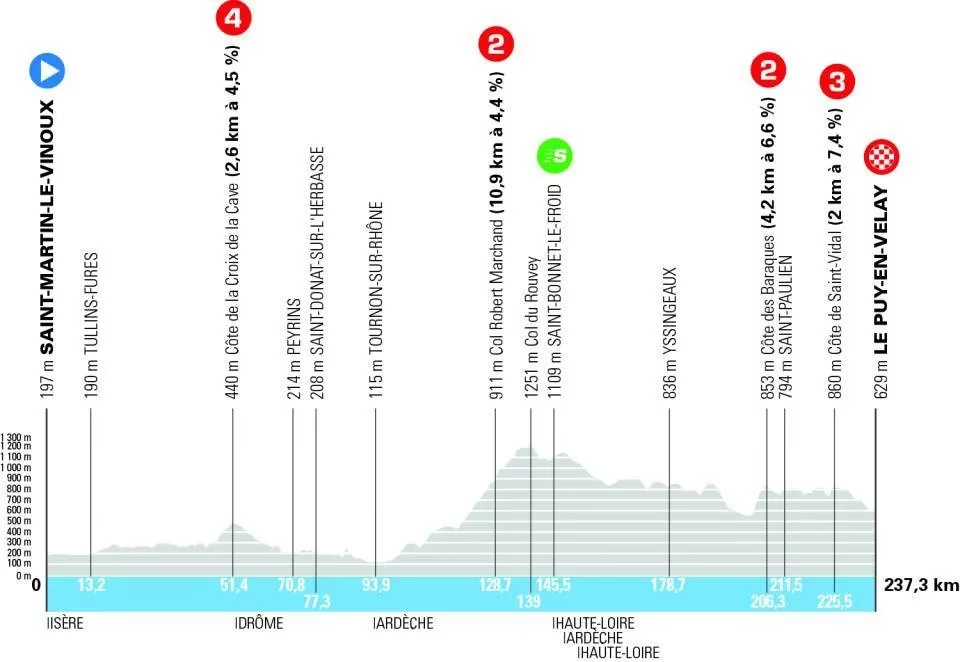
Stage 2 starts in Saint-Martin-le-Vinoux and finishes in Le Puy-en-Velay after 234.3km. It is the longest stage of the Tour Auvergne – Rhône-Alpes 2026 and comes with around 3,700 metres of climbing.
The opening section includes early climbing before the race settles into a long, rolling middle phase. The second half takes place on a plateau, with more climbing still left in the legs before the final descent and approach to Le Puy-en-Velay.
The finish is not a pure flat sprint. The final kilometre rises gently, which should suit riders who still have strength after more than 230km rather than the fastest pure sprinters. That makes the stage difficult to read. A breakaway can survive, a reduced group can sprint, or an attacker can use the final terrain to go clear.
What kind of race should viewers expect?
The most likely shape is an early breakaway, a long period of controlled riding, and then a decision point in the final 50km. The key question is which teams are willing to chase.
If sprint-oriented teams believe Wout van Aert or Michael Matthews can survive the route, they may help control the gap. If the breakaway contains no major GC threat and the peloton begins thinking about the team time trial, the escape could be given enough room to fight for the stage.
The late climbs and rolling roads also leave room for attacks from riders who do not want a reduced sprint. Ben Healy, Toms Skujiņš and Julian Alaphilippe are the sort of riders who can turn a long, messy stage into an attacking race if the bunch hesitates.
What does stage 2 mean for the GC riders?
For the GC contenders, stage 2 is about staying safe, saving energy and avoiding a careless loss before the team time trial. Nobody needs to win the race in Le Puy-en-Velay, but a long day like this can create problems if a rider is poorly positioned or isolated at the wrong time.
Paul Seixas, Isaac del Toro, João Almeida, Juan Ayuso, Matteo Jorgenson, Oscar Onley, Carlos Rodríguez and Santiago Buitrago should all want the same basic outcome: no crashes, no splits, no unnecessary energy spent, and no dangerous rider allowed to take too much time.
The final climbs may tempt attacks if the race is already reduced, but a full GC battle is more likely later in the week. Stage 2 is more about protecting the overall race than trying to win it.
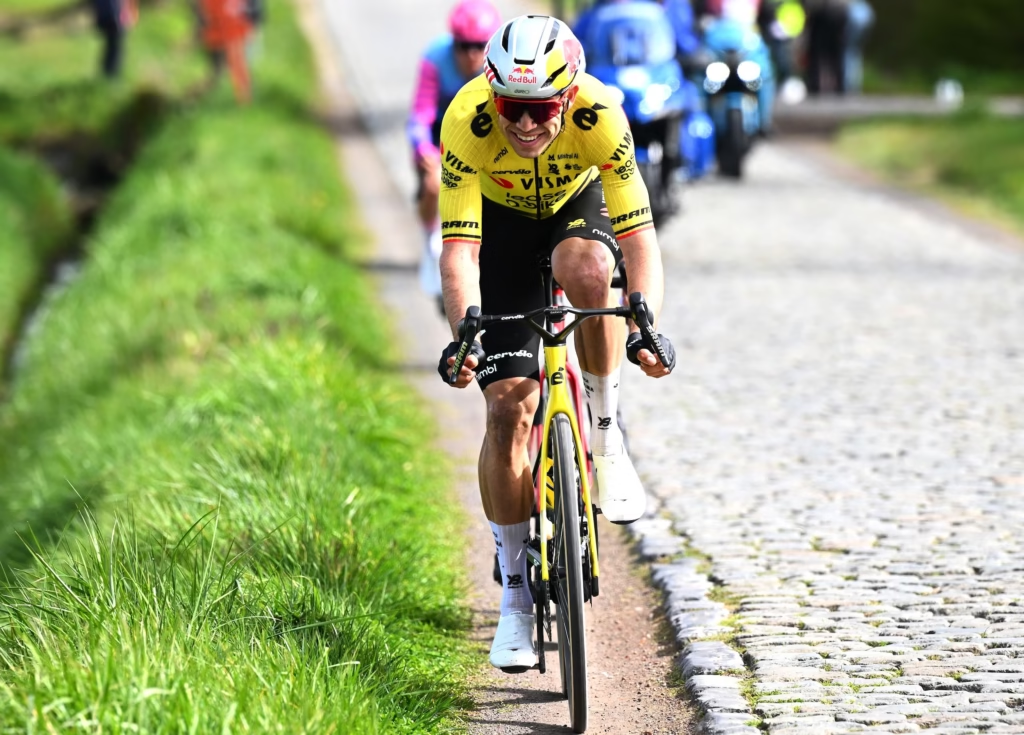 Photo Credit: Getty
Who are the riders to watch?
Wout van Aert is one of the obvious names if the stage comes back together. The distance, rolling terrain and uphill drag to the line are all within his range, especially if the pure sprinters are removed by the length of the day.
Michael Matthews also fits the profile. He is durable enough for long hilly stages and quick enough from a reduced group, which makes Le Puy-en-Velay a realistic target if Team Jayco-AlUla can help bring the race back under control.
Ben Healy, Toms Skujiņš and Julian Alaphilippe are dangerous if the race opens earlier. None of them needs a straightforward sprint to win. All three can attack on rolling terrain, work in a small group and punish hesitation if the peloton is tired after 200km.
The GC riders should also stay visible. Seixas, del Toro, Almeida, Ayuso, Jorgenson, Onley, Rodríguez and Buitrago may not be chasing the stage, but they cannot afford to drift too far back in the final hour.
Could the breakaway win?
Yes, and stage 2 may be one of the better early breakaway opportunities of the race. The distance is long, the terrain is awkward and the team time trial comes the next day, which may reduce the appetite for a full peloton chase.
The breakaway will need the right mix. It cannot be too dangerous on GC, but it also needs enough strength to survive the long middle phase and still climb well late in the stage. A group of strong rouleurs and climbing all-rounders could make the peloton work harder than it wants to.
If the gap is still healthy inside the final 50km, the advantage may swing towards the break. If the bunch brings the escape within reach before the last climbs, the stage starts to look better for Van Aert, Matthews and the attacking all-rounders.
When should you tune in?
The stage starts at 10:05 BST, but the decisive phase should come much later. For UK viewers, tuning in from around 14:45 BST should catch the key build-up to the final climbs and the run-in to Le Puy-en-Velay.
The expected finish is around 16:05 BST. The final 60-75 minutes should be the essential viewing window, especially if the breakaway still has a gap and the peloton is deciding whether to chase properly.
The early part of the stage is still important if you want to understand the race shape. The composition of the breakaway could decide whether the day becomes a chase, a stalemate or a late attacking race.
-
 Photo Credit: A.S.O./Gaëtan Flamme
What comes next after stage 2?
Stage 3 brings the 28.4km team time trial around Perreux, one of the most important early GC checkpoints of the race. That stage will test team depth, time trial organisation and the ability of GC squads to keep their leaders protected at speed.
That makes stage 2 more than a standalone hilly stage. It is also the last road stage before the race against the clock, so teams must balance stage ambition with the need to protect riders for Tuesday.
After Perreux, the race still has the major mountain block to come, including Crest-Voland, Grand Colombier and Plateau de Solaison. Stage 2 may not decide the overall, but it can add fatigue that shapes how riders handle the rest of the week.
Tour Auvergne – Rhône-Alpes 2026 stage 2 live viewing summary
Tour Auvergne – Rhône-Alpes 2026 stage 2 takes place on Monday, 8th June, with 234.3km from Saint-Martin-le-Vinoux to Le Puy-en-Velay. The stage is scheduled to start at 10:05 BST, with the finish expected around 16:05 BST.
UK viewers can watch the stage live on TNT Sports and HBO Max. The route is long, hilly and difficult to control, with around 3,700 metres of climbing before the finish in Le Puy-en-Velay.
Wout van Aert and Michael Matthews are dangerous if the race comes back together, while Ben Healy, Toms Skujiņš and Julian Alaphilippe can make the stage harder to manage. The breakaway also has a real chance, especially with the team time trial waiting on stage 3.

