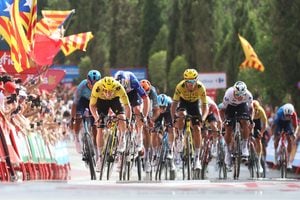
The Tour de France 2026 has plenty of serious route features before it reaches the Alps. The Barcelona team time trial, the early mountain stage to Les Angles, the first summit finish at Gavarnie-Gèdre, the mid-race mountain block through the Massif Central, Vosges and Jura, and the stage 16 individual time trial all have the potential to shape the general classification before the final weekend.
Yet the defining image of the race is already obvious. The Tour will finish on Alpe d’Huez on both stage 19 and stage 20, giving the most famous climb in the race back-to-back summit finishes at the point where the yellow jersey battle should be at its most fragile.
That is not just a route-design flourish. It changes how the final week is raced. Stage 19 offers a shorter, sharper mountain day from Gap to Alpe d’Huez. Stage 20 follows with the queen stage from Le Bourg-d’Oisans to Alpe d’Huez, taking in the Col de la Croix de Fer, the Télégraphe-Galibier combination, the Col de Sarenne and one last climb to the ski station. Together, those two days could decide not only who wins the Tour, but how the whole race is approached beforehand.
For the wider route picture, the Tour de France 2026 full route guide gives the full stage-by-stage breakdown, while the Tour de France 2026 route analysis looks at the broader pattern of where the race can be won and lost.

Alpe d’Huez is more than a summit finish
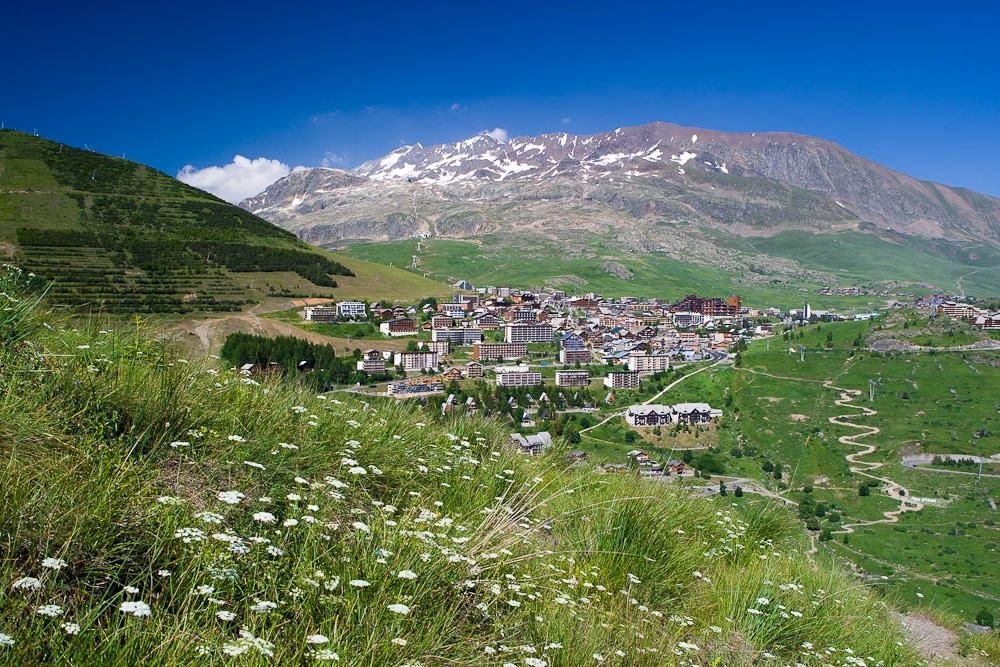
Alpe d’Huez carries a different weight from most Tour climbs. Part of that is history. Part of it is the road itself. Part of it is the setting: the crowd, the heat, the noise, the flags, the camper vans, the exposed hairpins and the sense that every rider is climbing inside a theatre rather than on a normal mountain road.
That matters tactically because Alpe d’Huez is rarely a quiet climb. It pulls emotion out of the race. Riders who feel strong want to attack there. Riders who feel weak can unravel quickly because there is nowhere to hide. The climb is open enough for rivals to see each other, famous enough for everyone to understand the stakes, and hard enough to make a small weakness turn into a visible gap.
In 2026, that pressure is doubled. The riders do not just face Alpe d’Huez once. They climb it on consecutive days at the end of the race, with Paris waiting the following day. That turns the climb from a single set-piece finish into a two-day examination of legs, recovery, team strength and nerve.
Stage 19 is the warning shot
Stage 19 from Gap to Alpe d’Huez is 127.9km. On paper, that is short by Tour mountain-stage standards. In practice, that makes it more dangerous.
Short mountain stages can be explosive because there is less time for the race to settle. Teams cannot rely on a long, slow build-up. Breakaways can form under pressure, leaders can be isolated earlier than expected, and the final climb can arrive with the peloton already thinned out. By the third Friday of the Tour, there is no such thing as an easy 128km mountain stage.
Stage 19 also comes after the stage 16 time trial and the summit finish to Orcières-Merlette on stage 18. That sequence is important. The time trial will have reset the GC. Orcières-Merlette will have given climbers their first chance to respond. Alpe d’Huez then arrives as the next test, before anyone can fully recover.
That makes stage 19 a tactical trap. A rider who needs time may attack there because waiting until stage 20 could be too risky. A rider who already has the lead may be forced to defend harder than planned. A team with several riders high on GC could use stage 19 to test rivals before the bigger queen stage.
It may not be the decisive day on its own, but it can make stage 20 much harder. If a contender cracks slightly on the first Alpe d’Huez finish, the second could turn that weakness into something far more costly.
Stage 20 is the real final exam
Stage 20 is the stage that gives the back-to-back concept its full force. The route from Le Bourg-d’Oisans to Alpe d’Huez is 170.9km and includes the Col de la Croix de Fer, the Télégraphe-Galibier combination, the Col de Sarenne and the final climb back to Alpe d’Huez.
This is not simply a second finish on the same climb. It is a much bigger mountain stage, placed on the penultimate day, with several places where the race can be broken apart before the final ascent. The Galibier, at 2,642m, is the highest point of the 2026 Tour and awards the Souvenir Henri Desgrange. That alone gives the day altitude, prestige and tactical weight.
The Col de Sarenne is also important. It changes the approach to Alpe d’Huez and prevents the stage from becoming a simple repeat of the day before. By the time riders reach the final climb, they will already have endured a huge Alpine route, accumulated fatigue from nearly three weeks of racing, and the psychological pressure of knowing this is the final real GC day.
That is why stage 20 looks like the race’s final examination. It asks every question at once: can a leader survive when isolated, can a challenger attack from distance, can a team still control the race, can a climber handle altitude, and can anyone still produce one final acceleration after the Galibier and Sarenne?
The double finish changes how teams race stage 19
The most interesting part of back-to-back Alpe d’Huez finishes is not only what happens on stage 20. It is how stage 20 affects stage 19.
A team defending yellow on stage 19 has to make a choice. Ride hard and shut everything down, or keep something back for the queen stage? Chase every dangerous move, or allow some riders up the road if they are not direct GC threats? Use domestiques early, or save them for the next day’s bigger test?
Challengers have similar questions. Attack hard on stage 19 and risk paying for it on stage 20, or wait and hope the queen stage gives enough road to make a difference? A rider who is 30 seconds down may be patient. A rider who is two minutes down probably cannot afford to wait.
That tension could make stage 19 more aggressive, not less. The existence of stage 20 does not automatically encourage caution. It may instead force riders to act earlier because everyone knows the next day will be brutal. If a contender can put a rival into difficulty on the first Alpe d’Huez stage, the recovery cost may carry straight into the queen stage.
This is where the route becomes psychological. Stage 19 is not just about time gained or lost on the day. It is about what riders carry into stage 20.
 Photo Credit: A.S.O./Charly López
Recovery becomes part of the GC battle
Back-to-back summit finishes on the same iconic climb make recovery a central part of the Tour. The strongest rider on Friday may not be the strongest rider on Saturday. A rider who limits losses well on stage 19 may still have a chance to attack on stage 20. A rider who goes too deep on the first Alpe d’Huez finish may feel the cost the next morning.
That is especially important after the race’s previous demands. The riders will have already dealt with the Barcelona team time trial, early Pyrenean climbing, the Gavarnie-Gèdre summit finish, the Massif Central, the Vosges, the Jura, an individual time trial and Orcières-Merlette. By the time they reach Alpe d’Huez, there will be no fresh legs left.
Recovery is not only physical. It is also tactical and emotional. A rider who loses 20 seconds on stage 19 may handle it calmly and reset. Another may panic and waste energy trying to repair the damage too quickly. A team that loses two domestiques early on Friday may find itself unable to protect its leader properly on Saturday.
That is what makes the double Alpe d’Huez finish so dangerous. It does not allow riders to draw a line under one bad day. The next test comes immediately.
Team depth could matter more than one explosive attack
Alpe d’Huez is often remembered for individual attacks, but the 2026 double finish could be decided by team depth. Stage 20 in particular is too big to reduce purely to one leader’s acceleration in the final kilometres.
A team with riders still present over the Croix de Fer, Galibier and Sarenne will have options. It can chase, bluff, place satellite riders in the breakaway, pace a rival into trouble, or launch attacks before the final climb. A leader with no support will be far more vulnerable, especially if rivals begin racing before Alpe d’Huez itself.
Stage 19 also tests depth in a different way. A short mountain stage can burn through domestiques quickly if the race starts hard. If a team spends too much on Friday, it may pay on Saturday. If it saves too much, it may concede time before the queen stage even begins.
This is why the back-to-back finish suits the strongest complete teams. The winner will still need the legs, but the route makes it hard for a leader to survive on talent alone. The Tour de France winners list shows how often the race has rewarded not just the best rider, but the rider with the structure to protect him across the decisive days.

The Col de Sarenne stops stage 20 feeling like a repeat
One risk with using the same summit finish on consecutive days is repetition. The 2026 route avoids that by making stage 20 a very different kind of test.
Stage 19 is the shorter Alpe d’Huez day from Gap. Stage 20 is the deeper Alpine stage from Le Bourg-d’Oisans, with several major climbs before the final ascent. The Col de Sarenne is central to that difference because it changes the approach to the final climb and adds another layer of fatigue before the famous road returns.
The Sarenne is not just decorative. It can break rhythm, disrupt team control and add fatigue at the exact point when riders are trying to prepare for Alpe d’Huez. A leader who wants a controlled final climb may not get one if the race has already been stretched by the Sarenne.
That makes the second Alpe d’Huez finish feel less like a replay and more like the conclusion of a harder, stranger mountain stage. The first day is about the famous climb as a direct summit finish. The second is about reaching it after a much more complex Alpine route.
The final weekend changes the whole race before it arrives
Back-to-back Alpe d’Huez finishes will not only define the final weekend. They will influence how riders race earlier in the Tour.
A pure climber may look at stages 19 and 20 and see opportunity, but the stage 16 time trial complicates that. If he expects to lose time against the clock, he may need to attack before the Alps. A time triallist may see stage 16 as a chance to gain time, but he then has to survive two Alpe d’Huez finishes immediately afterwards.
The same applies to team strategy. A squad with a strong mountain train may try to keep the race under control until the final weekend. A more aggressive team may decide that waiting is dangerous because the final Alpine block is too obvious and too heavily marked.
That is the strength of the route design. The double Alpe d’Huez finish creates a huge final target, but it does not make the earlier stages irrelevant. Instead, it makes them part of the calculation. Riders need to arrive at stage 19 close enough to matter, but fresh enough to survive both days.
For UK viewers, those stages should also be the clear weekend priority. The How to watch Tour de France 2026 in the UK guide explains the TNT Sports and HBO Max picture, while the wider Tour de France archive will carry stage-by-stage previews, viewing updates and race reports as the race approaches.
Alpe d’Huez gives the race a final image
The Tour de France is not only about route design. It is also about memory. Certain climbs give the race a clearer final image, and Alpe d’Huez is one of them.
In 2026, that image is unusually strong. Two consecutive summit finishes, on the most recognisable climb in the Tour, with the second coming on the penultimate day. It is easy to see why the route will be remembered through that lens. Whatever happens elsewhere, the race will be framed by whether a rider survives or breaks on Alpe d’Huez.
That does not mean the rest of the route is secondary. The race may be shaped by Barcelona, Les Angles, Gavarnie-Gèdre, Plateau de Solaison, the stage 16 time trial or Orcières-Merlette before the final weekend. But Alpe d’Huez gives all of that pressure somewhere to land.
The best routes often do that. They create tension across three weeks, then offer a stage where the accumulated stress becomes visible. In 2026, that place is Alpe d’Huez.
Why the back-to-back Alpe d’Huez finishes could define the Tour
The back-to-back Alpe d’Huez finishes could define the Tour de France 2026 because they combine symbolism, difficulty and timing. Stage 19 is short enough to be explosive. Stage 20 is hard enough to be decisive. Together, they turn the final mountain weekend into a two-day test of recovery, team depth and nerve.
The first Alpe d’Huez finish can expose weakness. The second can punish it. The first can force teams to spend. The second can show who still has anything left. The first can create the emotional shock. The second can deliver the final result.
That is why the 2026 Tour cannot be read only as a race with a famous climb near the end. It is a race that asks the peloton to climb Alpe d’Huez, sleep on the consequences, and then do it all again after the hardest mountain stage of the race.
Paris comes the next day, but for the yellow jersey contenders, the Tour’s real finish line may arrive one stage earlier, on the upper slopes of Alpe d’Huez.