

The Tour de France Femmes 2026 has been designed as the hardest and most complete edition of the modern race so far. Across nine stages from Lausanne to Nice, the route gives almost every type of rider a chance, but it clearly leans towards the strongest all-round GC contenders. There are three flat stages, three hilly stages, two mountain stages and one individual time-trial, with a record total distance of 1,175km and a record 18,795m of climbing.
That balance matters. This is not a route built around one symbolic mountain finish with a few sprint stages attached. It starts in Switzerland, uses the Lake Geneva region to create immediate tension, crosses into France through the Jura, adds a 21km individual time-trial in Burgundy, moves through Beaujolais and the Massif Central, then finishes with Mont Ventoux and a brutal final day in Nice. The yellow jersey should not be decided by one climb alone.
The headline is obvious: Mont Ventoux appears on stage 7. But the full route is more subtle than that. Stage 1 in Lausanne is officially flat but has a late sting. Stage 3 to Poligny brings the Jura. Stage 4 gives time-trialists a serious opening. Stage 5 and stage 6 are hilly enough to create breakaway and GC movement. Stage 8 is the longest stage of the race. Stage 9 around Nice means the race can still change after Ventoux.
For broader women’s race context, see our Tour de France Femmes race hub, women’s cycling route guide hub, women’s cycling race hub and how to watch Tour de France Femmes 2026 in the UK. The official race route is available through the Tour de France Femmes 2026 overall route page.
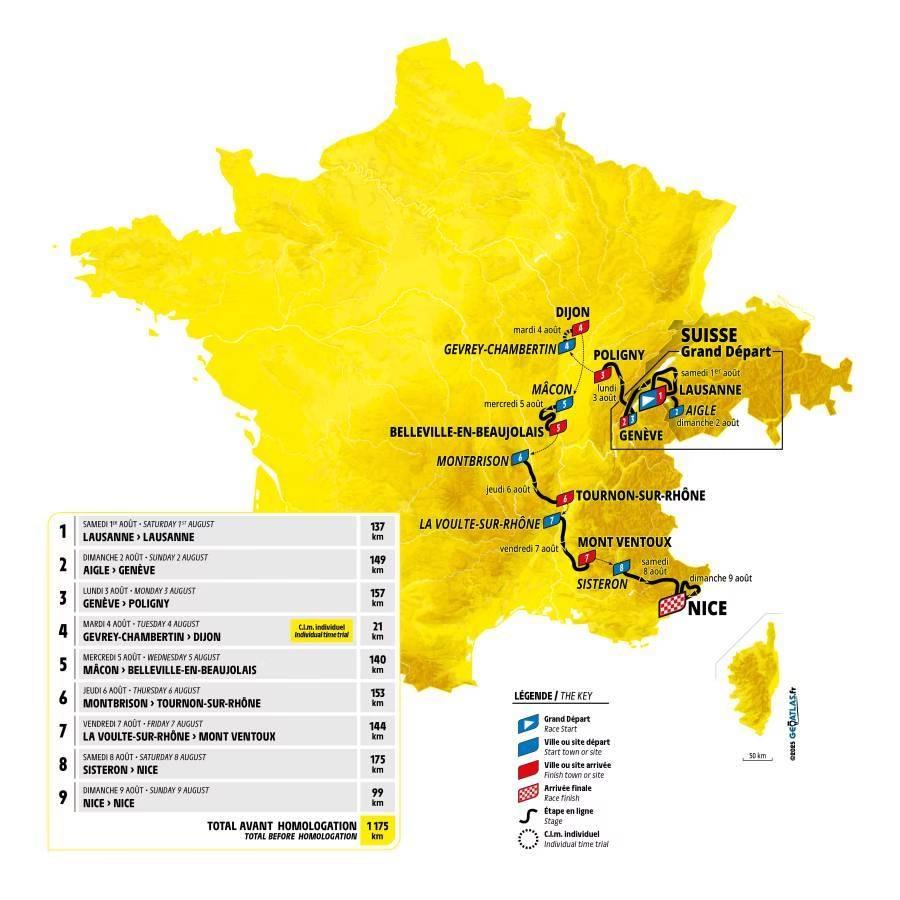
Tour de France Femmes 2026 route overview
The 2026 edition runs from Saturday, 1st August to Sunday, 9th August. It begins in Lausanne, Switzerland, and finishes in Nice, France. It is the fifth edition of the modern Tour de France Femmes avec Zwift and the second modern edition to begin outside France, after the 2024 Grand Départ in Rotterdam.
The route covers two countries and then crosses three major mountain or upland zones: the Jura, the Massif Central and the Alps. That gives the race a rolling progression rather than a single decisive shift. The first two days in Switzerland offer early yellow jersey and sprint opportunities, but with enough climbing to make both stages more complicated than the word “flat” might suggest. Stage 3 then carries the race into the Jura. Stage 4 gives the first major GC sorting point with the 21km time-trial to Dijon.
The middle section is awkward. Stage 5 from Mâcon to Belleville-en-Beaujolais is hilly. Stage 6 from Montbrison to Tournon-sur-Rhône keeps the road rising and falling before the race reaches its decisive mountain phase. Stage 7 finishes on Mont Ventoux. Stage 8 is the longest stage, 175km from Sisteron to Nice. Stage 9 is a short mountain stage around Nice, with enough climbing to make the final day a genuine GC threat.
The headline numbers tell the story neatly: 1,175km, 18,795m of climbing, 9 stages, 26 categorised climbs, and a summit finish on the Giant of Provence. It is a race built for riders who can climb, time-trial, recover and stay alert through terrain that refuses to settle.
For more on the route announcement and its place in the wider calendar, see our report on Mont Ventoux and the Swiss Grand Départ headlining the 2026 Tour de France Femmes route and our feature on how race routes are shaping women’s cycling in 2026.
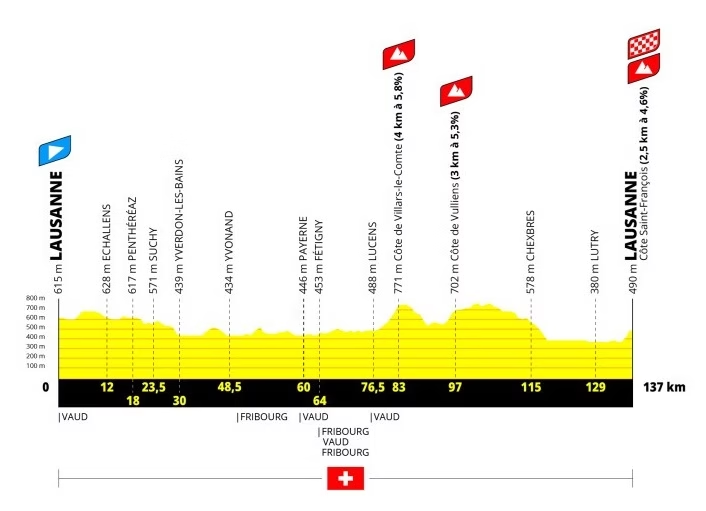
Stage 1: Lausanne to Lausanne, 137km
The 2026 Tour de France Femmes starts in Lausanne with a 137km loop around the Olympic capital. It is officially classified as flat, but that label should not make anyone think this is a harmless opening day. The full stage information is available on the official Tour de France Femmes stage 1 page.
The route begins by Lake Geneva, heads towards Lake Neuchâtel, then returns through terrain that gradually asks harder questions. The race passes the Lavaux vineyards and comes back towards Lausanne with a late sting: a final rise towards Place Saint-François. That final 2.3km climb at around 5.4 per cent is enough to make the first yellow jersey fight more selective than a pure sprint.
This is a stage for riders with a fast finish who can climb a little. A pure sprinter may survive if the pace is controlled, but the finale looks more puncheuse-friendly than straightforward. Teams with riders who can handle a late rise will want to make the final harder, especially because bonus seconds and the first yellow jersey are available.
The opening stage should immediately separate the race into two stories. One is the fight for the first jersey. The other is the first test of GC nerves. No overall favourite should lose serious time here, but a badly timed position error, crash or late split could already force a rider onto the back foot.
Best suited to: puncheurs, fast all-rounders, GC riders who sprint well
GC danger rating: 5/10
Sprint certainty: 6/10
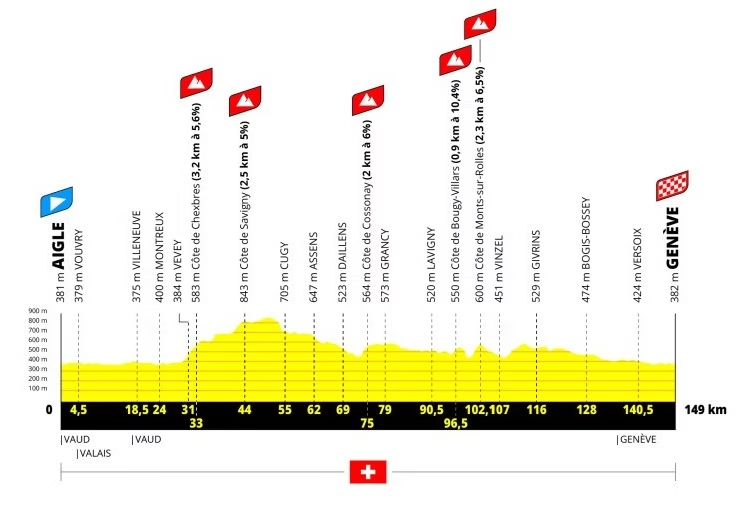
Stage 2: Aigle to Genève, 149km
Stage 2 starts in Aigle, close to the UCI headquarters and World Cycling Centre, and finishes in Geneva after 149km. It is another officially flat stage, but again, it is not completely simple. The official race page for stage 2 from Aigle to Genève gives the full race details.
The route traces part of Lake Geneva, moves through Montreux and Vevey, and includes a rise towards Lac de Bret before heading back towards Geneva. The final 35km should give the peloton enough road to bring the race together, so this looks like the clearest sprint opportunity of the Swiss Grand Départ.
That matters because the sprinters do not have many obvious chances in the 2026 race. With only three flat stages, every sprint day becomes valuable. Stage 2 may be the best early opportunity for the pure fast riders before the route turns into hilly and mountainous terrain.
The finish in Geneva also gives the race a strong visual setting. After the hillier and more technical opener in Lausanne, this is the day when the sprint teams should take greater control. If they fail, it will say a lot about how hard the opening weekend has already been.
For UK viewers, this should be one of the easier early stages to follow tactically, and our how to watch Tour de France Femmes 2026 in the UK guide explains the broadcast routes.
Best suited to: sprinters, fast classics riders
GC danger rating: 3/10
Sprint certainty: 8/10
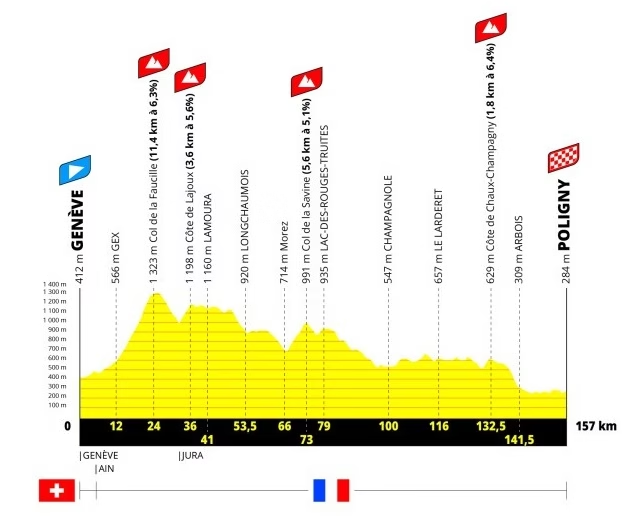
Stage 3: Genève to Poligny, 157km
Stage 3 takes the race from Switzerland into France, finishing in Poligny after 157km. It is the first hilly stage of the race and the first day where the Jura begins to shape the overall picture. The official race page for stage 3 from Genève to Poligny sets out the route profile.
This is the sort of stage that may look like a breakaway opportunity on paper, but could also become a GC stress test if the strongest teams decide to make it hard. The route enters terrain that does not give riders many places to relax. The climbing is unlikely to create huge gaps between the main favourites, but it can thin the peloton, expose weak positioning and reward aggressive racing.
Poligny also has a certain Tour de France feel. It is not a summit finish, but it sits in a region where roads roll, twist and rise often enough to make control difficult. The sprint teams may struggle if the race is hard from the start. Breakaway riders will look at this stage with serious interest.
For the GC riders, stage 3 is about avoiding problems. It comes before the time-trial, so no contender will want to waste energy unnecessarily. But if the race becomes selective, it could create the first meaningful gaps among second-tier GC hopes and support riders.
Best suited to: breakaway riders, puncheurs, resilient all-rounders
GC danger rating: 6/10
Breakaway rating: 8/10
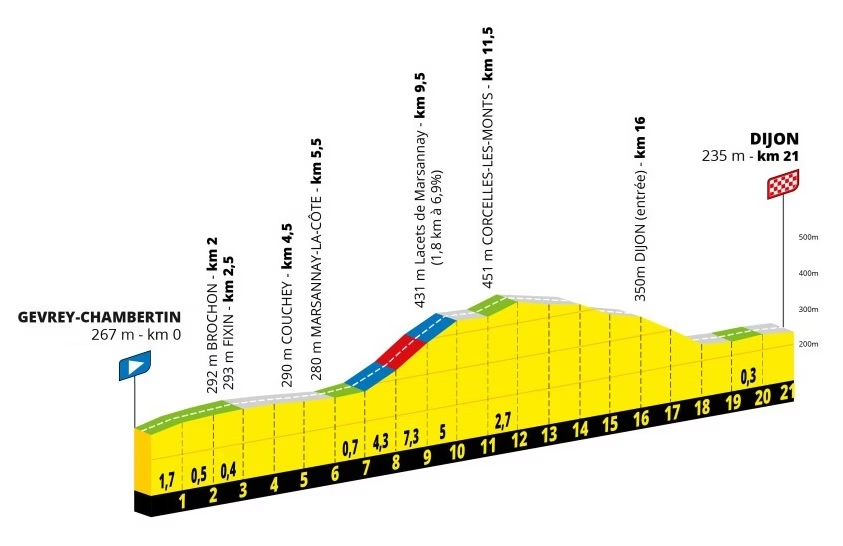
Stage 4: Gevrey-Chambertin to Dijon, 21km individual time-trial
Stage 4 is the first truly decisive GC day. The 21km individual time-trial from Gevrey-Chambertin to Dijon gives the strongest riders against the clock a chance to reshape the race before the mountains arrive. The official race page for stage 4 from Gevrey-Chambertin to Dijon confirms the time-trial format.
This is a crucial addition to the 2026 route. It prevents the race from being decided only by climbing and gives riders such as Marlen Reusser a much clearer way into the overall conversation. It also forces the pure climbers to think differently. They cannot wait only for Mont Ventoux. If they lose too much time in Dijon, they will have to race aggressively later.
The course is not simply a short flat test. It has enough variation to make pacing important, and at 21km it is long enough to create real gaps. In women’s stage racing, that kind of time-trial can be decisive. A rider who gains 40 seconds or a minute here may force others to chase for the rest of the week.
The GC picture after stage 4 should look very different from the one after the opening three stages. Riders who can combine time-trialling with climbing will be in the strongest position. Those relying only on Ventoux will already be under pressure.
Tour de Suisse Women 2026 gave a recent example of how decisive a time-trial can be, with Reusser’s Aarburg ride helping set up her overall victory. That race is covered in our Tour de Suisse Women 2026 stage 4 report and updated season form guide after Tour de Suisse Women 2026.
Best suited to: time-triallists, complete GC riders
GC danger rating: 9/10
Time gap potential: 9/10
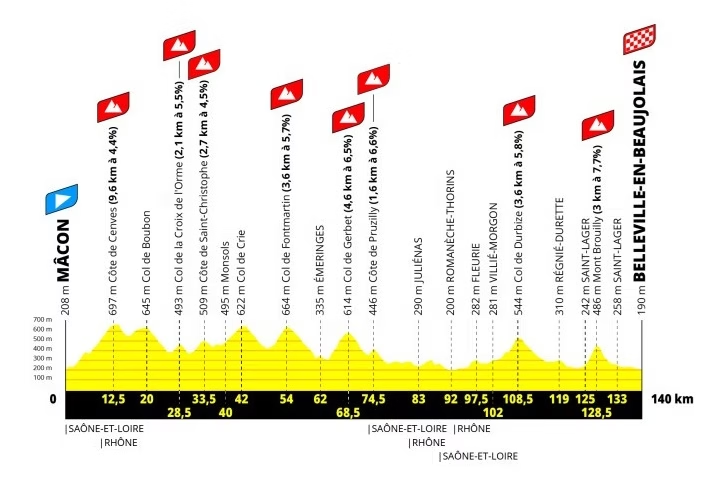
Stage 5: Mâcon to Belleville-en-Beaujolais, 140km
Stage 5 moves the race into Beaujolais with a 140km hilly stage from Mâcon to Belleville-en-Beaujolais. The official stage 5 page gives the route detail, and this is where the race becomes awkward again after the time-trial.
The stage should be ideal terrain for attackers. Beaujolais roads rarely allow the peloton to simply settle into a straight chase. The climbs are not likely to resemble a high-mountain stage, but repeated rises can quickly drain support riders and create selection. A rider who lost time in the Dijon time-trial may see this as a chance to begin recovering ground.
This stage could go several ways. A strong breakaway may survive if the GC teams hesitate. A reduced group could contest the finish if the race is controlled but hard. A late attack could stick if the road structure encourages hesitation behind.
For the overall contenders, stage 5 is about tactical sharpness. The day after a time-trial can be strange. Some riders will be confident, others frustrated. A team with the race lead may want control, but the hilly terrain gives rivals plenty of ways to test that control.
This is also the type of stage that suits riders who thrive when routes are no longer cleanly divided into sprint days and mountain days. That wider shift is explored in our feature on how race routes are shaping women’s cycling in 2026.
Best suited to: puncheurs, breakaway riders, aggressive GC outsiders
GC danger rating: 7/10
Breakaway rating: 8/10
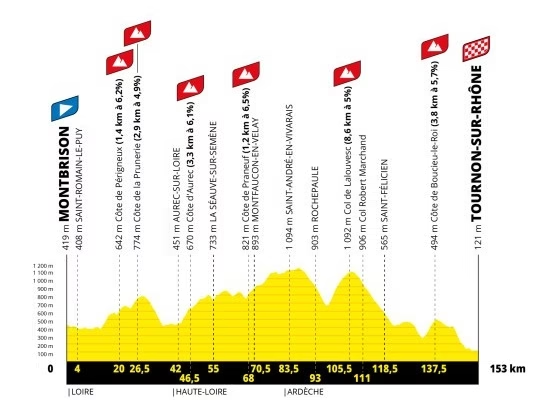
Stage 6: Montbrison to Tournon-sur-Rhône, 153km
Stage 6 from Montbrison to Tournon-sur-Rhône is another hilly stage, and it may be one of the most important transition days of the race. The official stage 6 page gives the full profile, while the stage’s position immediately before Mont Ventoux changes every tactical calculation.
At 153km, this is long enough to matter. The route crosses terrain that should favour strong breakaway riders and all-rounders, especially those who can climb repeatedly without needing a full mountain finish. Sprint teams will have very little interest in controlling everything if the road is constantly rising and falling. GC teams may prefer to save energy before Ventoux, but they cannot ignore the risk of a dangerous move getting away.
This is where the race could become layered. Breakaway riders chase the stage. Polka-dot riders chase points. GC teams protect their leaders. Riders who lost time in Dijon or Beaujolais may try to force a move before the obvious Ventoux battle. If the race is ridden hard, stage 6 could create more fatigue than the results sheet shows.
The finish in Tournon-sur-Rhône also places the peloton close to the Rhône Valley and the approach towards the Giant of Provence. The psychological effect matters. Everyone knows what comes next. That can make some teams conservative, and others more willing to exploit that caution.
Best suited to: breakaway riders, hilly classics types, GC opportunists
GC danger rating: 7/10
Breakaway rating: 9/10
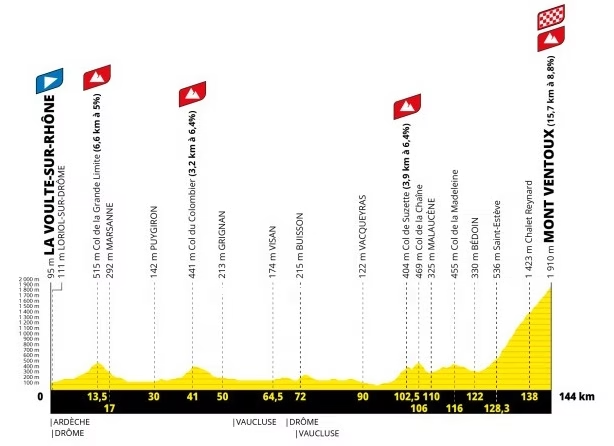
Stage 7: La Voulte-sur-Rhône to Mont Ventoux, 144km
Stage 7 is the queen stage. The race heads from La Voulte-sur-Rhône to Mont Ventoux over 144km, finishing at the highest point of the 2026 Tour de France Femmes. The official stage 7 page confirms the summit finish on one of cycling’s most famous climbs.
Mont Ventoux changes the identity of the race. It is not just a climb. It is one of cycling’s great landmarks: exposed, psychologically heavy and brutally simple in its final logic. By the time the riders reach the upper slopes, tactics become less important than legs, pacing and resistance.
The official route lists 3,565m of climbing on the stage, making it the hardest climbing day of the race by vertical gain. The final climb will demand patience. Anyone who attacks too early risks paying for it in the exposed upper section. Anyone who waits too long may run out of road. Ventoux has a way of punishing ambition and hesitation equally.
For the GC riders, this is the most obvious day to make a major difference. Climbers who lost time in Dijon will need to use the mountain. Time-triallists who gained time earlier will have to defend. All-rounders who have been waiting for the race to become truly selective cannot hide any longer.
The stage may not settle the Tour completely because Nice still waits, but it should create the clearest hierarchy so far. The rider who wins on Ventoux will not simply win a stage. She will make a statement about the whole race.
For wider climbing context, see our best women climbers in cycling right now guide.
Best suited to: pure climbers, elite GC riders
GC danger rating: 10/10
Queen stage rating: 10/10
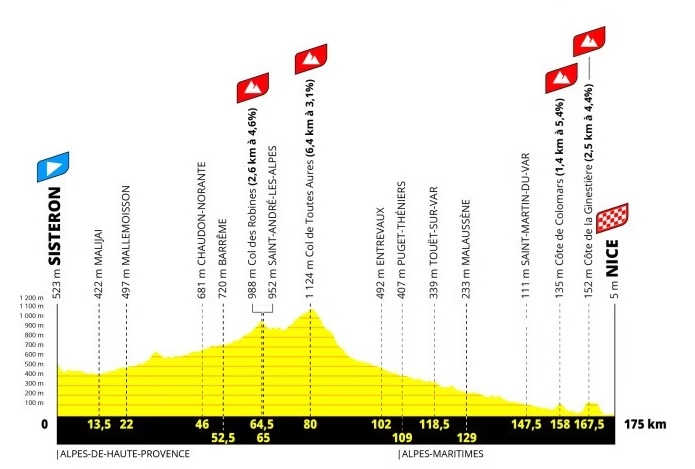
Stage 8: Sisteron to Nice, 175km
Stage 8 from Sisteron to Nice is officially flat, but its position in the race makes it more complicated than that. At 175km, it is the longest stage of the 2026 Tour de France Femmes, and it comes the day after Mont Ventoux. The official stage 8 page confirms the route into Nice.
That combination is dangerous. On paper, the sprinters may see this as one final chance. In practice, the peloton will be tired, the GC order will have been shaken, and teams will be calculating what they can afford before the final mountain stage in Nice. A long stage after Ventoux is never simply a flat day.
This is a stage where the breakaway could believe. Sprint teams may be weakened by the mountains. GC teams may not want to chase hard. Riders who are out of the overall battle may see this as one of the last chances to salvage a stage. The length alone makes it difficult to control.
Still, if the sprint teams have survived well enough, Nice is a huge prize. A flat-stage win at the end of the Tour de France Femmes carries serious prestige, especially when the sprint opportunities have been limited. The fastest riders will want it badly.
Stage 8 should therefore be one of the most tactically interesting days of the race. It is classified as flat, but the legs will not feel that way.
Best suited to: surviving sprinters, breakaway riders
GC danger rating: 4/10
Sprint certainty: 6.5/10
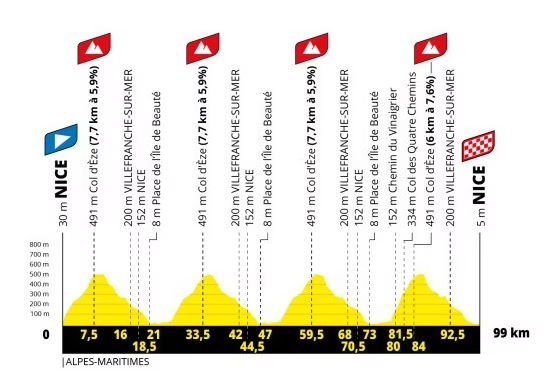
Stage 9: Nice to Nice, 99km
The final stage is only 99km, but it may be one of the hardest and most explosive final days in the race’s modern history. Nice to Nice is classified as mountain, and the repeated use of the Col d’Èze means the Tour can still change on the last day. The official stage 9 page gives the full final-stage profile.
This is an excellent final-stage design. It is short enough to encourage aggressive racing, hard enough to create real gaps, and technical enough to keep the pressure on during both climbs and descents. After eight days, including a time-trial, Ventoux and the longest stage of the race, the peloton will not arrive here fresh.
The Col d’Èze gives the race a completely different final flavour from a ceremonial sprint stage. There is no hiding in a mountain circuit around Nice. If the GC is close, attacks can come early. A leader with a narrow margin will need a team that can control repeated climbs. A climber who is still within reach will see this as one final chance to overturn the race.
The finish in Nice also links the Tour de France Femmes with a city that has become increasingly important in recent Tour route design. It gives the women’s race a grand final setting, but more importantly, it gives it a sporting finale. The yellow jersey should not be able to relax until the final descent and run-in are complete.
Best suited to: climbers, aggressive GC riders, strong descenders
GC danger rating: 9/10
Final-day drama rating: 10/10
The key stages for GC
Stage 4 is the first major GC checkpoint because of the 21km individual time-trial. It will give the strongest riders against the clock a chance to build a cushion before the mountains.
Stage 7 is the queen stage. Mont Ventoux should create the biggest single climbing gaps of the race, especially if the time-trial has forced pure climbers onto the offensive.
Stage 9 is the final trap. Nice and the Col d’Èze mean the race can still change after Ventoux, particularly if the leader’s margin is small.
Stage 5 and stage 6 also matter because they can soften the race before Ventoux. They may not produce the biggest gaps, but they can expose weak teams and tired legs.
The route therefore rewards riders who can manage the whole week. You cannot simply win the time-trial and defend everything. You cannot simply wait for Ventoux either. The winner will need to be present in Switzerland, good against the clock in Dijon, resilient in the hilly middle stages and still strong enough for the final two mountain days.
That wider GC logic also links back to the riders highlighted in our updated season form guide after Tour de Suisse Women 2026, where the value of combining climbing, time-trialling and recovery was especially clear.

What kind of rider can win?
The 2026 route favours a complete GC rider.
A pure climber can win if she takes major time on Ventoux and survives the time-trial, but the route does not make that easy. A pure time-triallist can gain time in Dijon, but stage 7 and stage 9 are too hard to bluff through. A puncheur can take time in Lausanne, Beaujolais or the Rhône stages, but the final mountain block will still demand real climbing depth.
The ideal winner is a rider who can time-trial well enough, climb Ventoux at the highest level, handle repeated hilly stages and descend confidently around Nice. That combination narrows the field.
Reusser-type riders will like the time-trial and the controlled early structure, but must survive Ventoux. Niewiadoma-Phinney-type riders will like the hilly terrain and final-day aggression, but must limit losses in the time-trial. Longo Borghini-type riders may see opportunities in stages 3, 5 and 6. Pure climbers will build everything around stage 7 and stage 9.
The route is not one-dimensional. That is its strength.
What the route means for sprinters
The sprinters have chances, but they are limited.
Stage 2 to Geneva is the clearest early sprint opportunity. Stage 8 to Nice is officially flat and offers another chance, but it comes after Mont Ventoux and over the longest distance of the race. Stage 1 may be too hard in the finale for the pure sprinters, although a resilient fast finisher could survive.
That means the green jersey battle could be messy. With only three flat stages and several hilly days, the points competition may favour riders who can sprint after climbing rather than pure flat-road specialists. Stage 1, stage 2, stage 5, stage 6 and stage 8 could all matter depending on how the points are distributed and how the race splits.
Fast all-rounders may therefore have a better route than pure sprinters. Riders who can survive a lumpy day and still sprint from a reduced group could score across more of the race.
For broader context on the direction of sprinting in the women’s peloton, see our feature on why women’s cycling sprint finishes are getting faster.

What the route means for climbers
Climbers have the biggest headline stage, but not a simple route.
Mont Ventoux is the obvious target. It is the stage where a pure climber can put serious time into the rest of the field. But the race will already have passed through a time-trial and several hilly days before that. Any climber who loses heavily in Dijon may need to race aggressively before Ventoux rather than waiting for one final climb.
Stage 9 in Nice gives climbers another chance. It may be shorter than Ventoux, but repeated climbs of the Col d’Èze can be brutal after a week of racing. If the GC remains close, the final day could become more chaotic than the queen stage.
The best climbers should love the final weekend. The biggest challenge is getting there close enough to use it.
For broader context on the climbing field, see our best women climbers in cycling right now guide.
What the route means for time-triallists
Stage 4 is essential for time-trial specialists.
A 21km individual time-trial is long enough to create meaningful gaps, especially in a nine-day race. It gives riders with power and position a genuine path into yellow. It also changes the tactical pressure for everyone else. Climbers cannot simply wait for Mont Ventoux if the strongest time-triallists have already taken a minute.
The stage is also well placed. It comes after the Swiss Grand Départ and the first hilly stage into Poligny, but before the route reaches its hardest climbing. That means it can set up the second half of the race rather than simply confirm what the mountains have already shown.
For riders like Marlen Reusser, stage 4 is the gateway to a serious GC challenge. For climbers, it is the day to survive.
Tour de Suisse Women 2026 gave a useful recent comparison, with Reusser’s time-trial forming the base of her overall win before she finished the job in the mountains. Read more in our Tour de Suisse Women 2026 stage 4 report.

The hardest stages ranked
- Stage 7: La Voulte-sur-Rhône to Mont Ventoux
The queen stage, the highest point of the race and the biggest single climbing test. - Stage 9: Nice to Nice
Short, explosive, mountainous and placed on the final day, with repeated climbing around the Côte d’Azur. - Stage 4: Gevrey-Chambertin to Dijon
A 21km individual time-trial that can create major GC gaps before the mountains. - Stage 6: Montbrison to Tournon-sur-Rhône
A hilly, difficult transition stage before Ventoux, perfect for breakaways and fatigue. - Stage 5: Mâcon to Belleville-en-Beaujolais
A hilly Beaujolais stage that can open the race after the time-trial.
Best stages for breakaways
Stage 3 to Poligny should be one of the first strong breakaway chances, especially if the sprint teams are already struggling with the climbing.
Stage 5 to Belleville-en-Beaujolais looks ideal for attackers because of its hilly structure and position after the time-trial.
Stage 6 to Tournon-sur-Rhône may be the best breakaway day of the race, with GC teams likely thinking about Ventoux and stage hunters sensing opportunity.
Stage 8 to Nice could also go to a breakaway because it comes immediately after Mont Ventoux and over the longest distance of the race.
These are the days where team strength, tactical patience and recovery may matter more than pure climbing. They also sit naturally within the kind of modern race design explored in our women’s cycling route guide hub.
-
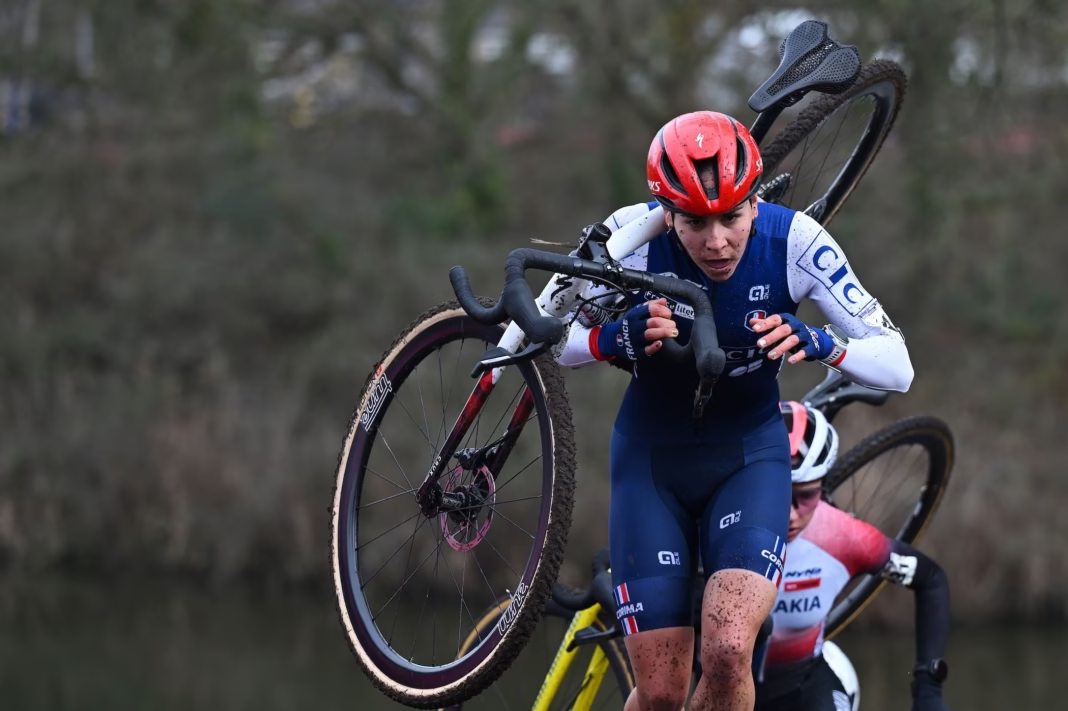
 Photo Credit: Luc Claessen/Getty Images
 -
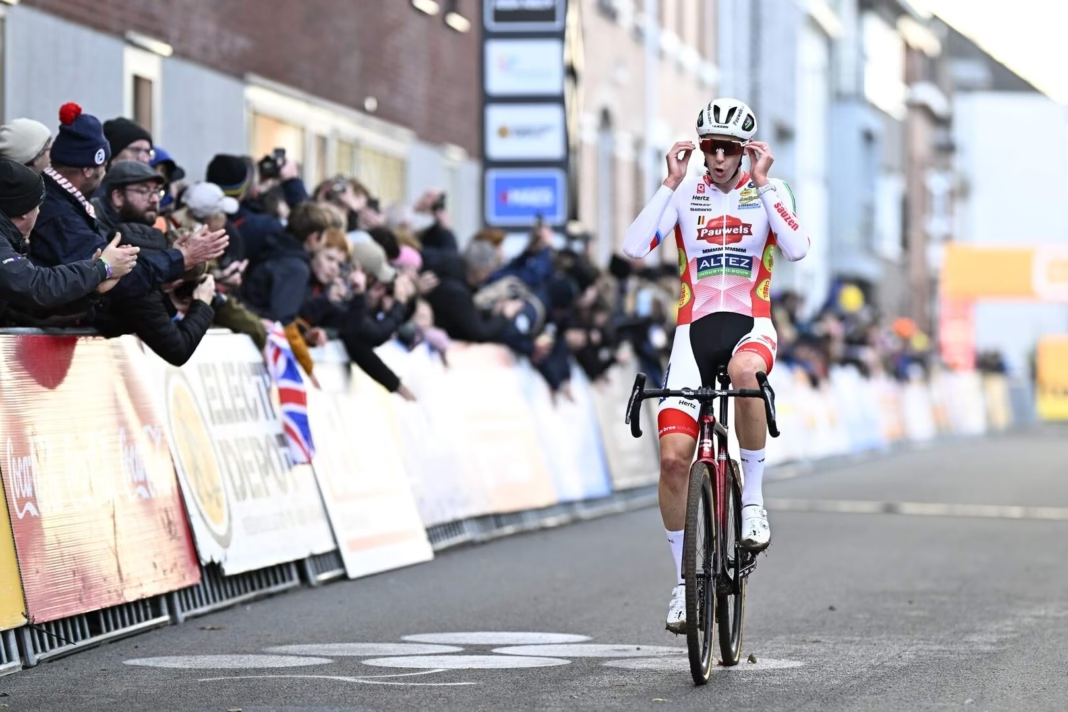
 Photo Credit: Telenet Superprestige
 -
 Photo Credit: Nieuwsblad

Best stages for roadside drama
Stage 1 in Lausanne should be spectacular, with the Swiss Grand Départ, Lake Geneva scenery and a late climb into the finish.
Stage 4 in Dijon will be excellent for fans who like time-trials and direct GC measurement.
Stage 7 on Mont Ventoux is the obvious pilgrimage day. It will be the most iconic roadside stage of the race.
Stage 9 in Nice may be the best racing spectacle, especially if the GC is still close. A final-day mountain circuit creates tension from the start.
For anyone planning to watch from home rather than roadside, the broadcast picture is covered in our how to watch Tour de France Femmes 2026 in the UK guide and women’s cycling TV guide hub.
Prediction
The 2026 Tour de France Femmes route should produce the most complete GC race of the modern edition so far.
Stage 1 can already create a selective opening. Stage 2 gives the sprinters their clearest early chance. Stage 3 starts the hilly race into the Jura. Stage 4 will sort the GC through the time-trial. Stage 5 and stage 6 will reward aggressive teams and riders who can handle repeated climbing. Stage 7 on Mont Ventoux should create the biggest gaps. Stage 8 may give the sprinters one last chance, but only if they survive the queen stage. Stage 9 in Nice means the race remains alive until the final day.
The key to the whole route is the combination of Dijon, Ventoux and Nice. A rider who is strong in only one of those places will struggle to win. A rider who can stay close in the time-trial, climb with the best on Ventoux and defend or attack on the Col d’Èze is the likely yellow jersey winner.
That makes the 2026 route tougher, more balanced and more tactically interesting than a simple mountain-finish Tour. It gives the race a clear identity: a full GC test across Switzerland, Burgundy, Beaujolais, the Rhône Valley, Mont Ventoux and the Côte d’Azur.
For viewing information, see our how to watch Tour de France Femmes 2026 in the UK guide. For more women’s race coverage, visit our women’s cycling race reports hub and Tour de France Femmes race hub.

