
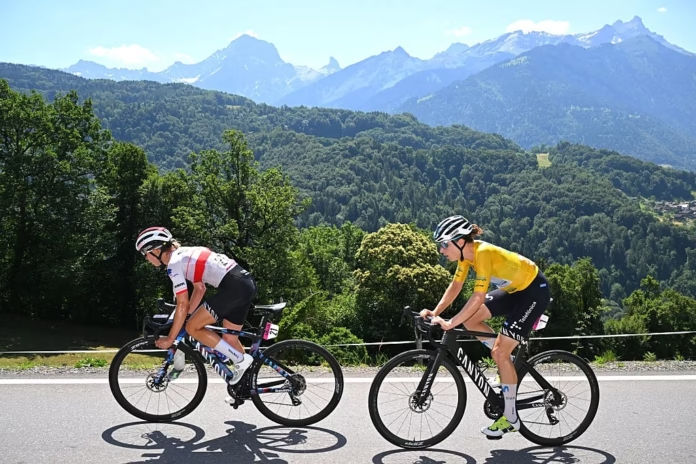
Tour de Suisse Women 2026 sharpened the women’s season picture at exactly the right time. In a compressed five-day race, it gave us almost every kind of useful form indicator: late attacks, a sprint, a major individual time-trial, a final mountain stage and a GC fight that changed shape twice in the final weekend.
Marlen Reusser left with the overall title, two stage wins and the clearest signal that she is one of the most complete riders in the peloton right now. Cédrine Kerbaol finished the race with her stock rising, Kasia Niewiadoma-Phinney rode herself onto the podium through aggression, Elisa Longo Borghini showed strength before cracking late, and Zoe Bäckstedt turned a sprint stage and a time-trial into a reminder of just how fast her development is moving.
The race also helped sort the next layer. Femke de Vries was one of the revelations of the week, Sarah Van Dam confirmed her consistency but still has another step to make in the hardest mountain finishes, and Kim Le Court once again showed the kind of late-stage resilience that makes her hard to dismiss in any selective race.
This is the updated season form guide after Tour de Suisse Women 2026, based only on riders who took part in the race.
For more race context, see our Tour de Suisse Women 2026 full route guide, Tour de Suisse Women 2026 contenders preview and the final-stage report on Marlen Reusser winning the mountain stage and overall title.
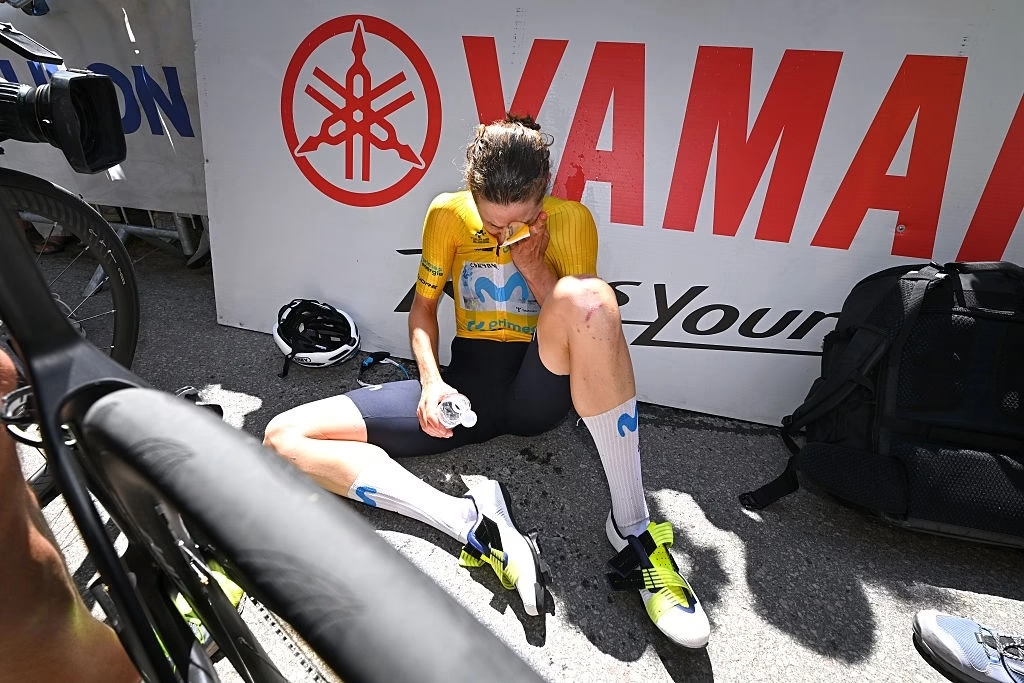 Photo Credit: Getty
Marlen Reusser is back at the centre of the GC conversation
Reusser did not simply win Tour de Suisse Women. She won it in a way that changes how her season should be read.
The stage 4 time-trial in Aarburg was the obvious platform. Reusser was expected to be the strongest there, and she delivered, taking yellow with the kind of precise effort that has long made her one of the reference points against the clock. That alone would have been enough to make her race a success, but the final mountain stage added another layer.
Villars-sur-Ollon was not a simple time-trial rider’s defence. Reusser had to manage attacks, isolation, heat, a fading Elisa Longo Borghini behind her and repeated pressure from Kasia Niewiadoma-Phinney. She was not the rider doing the most visible work on the final climb, but she was the rider who understood the race best. She followed, waited, let the situation develop, then attacked inside the final kilometre to win the stage and the overall.
That matters for the rest of the season because it confirms she is not only a rider who can dominate time-trials and survive climbs. She can still win a short stage race through calculation, patience and strength across different terrain. That is a dangerous combination.
The main question now is how she uses that form. If a route gives her a meaningful time-trial and climbing that is hard but not explosive enough to bury her, she is a major GC threat. If the route becomes a pure climbers’ contest, she may still have limits. But after Switzerland, those limits look further away than they did before.
Related reading: Tour de Suisse Women 2026 stage 4: Marlen Reusser wins Aarburg time-trial and takes yellow
Form rating: 9.5/10
Season direction: strongly upward
Best suited to: time-trial-heavy stage races, controlled mountain finishes, tactical GC fights
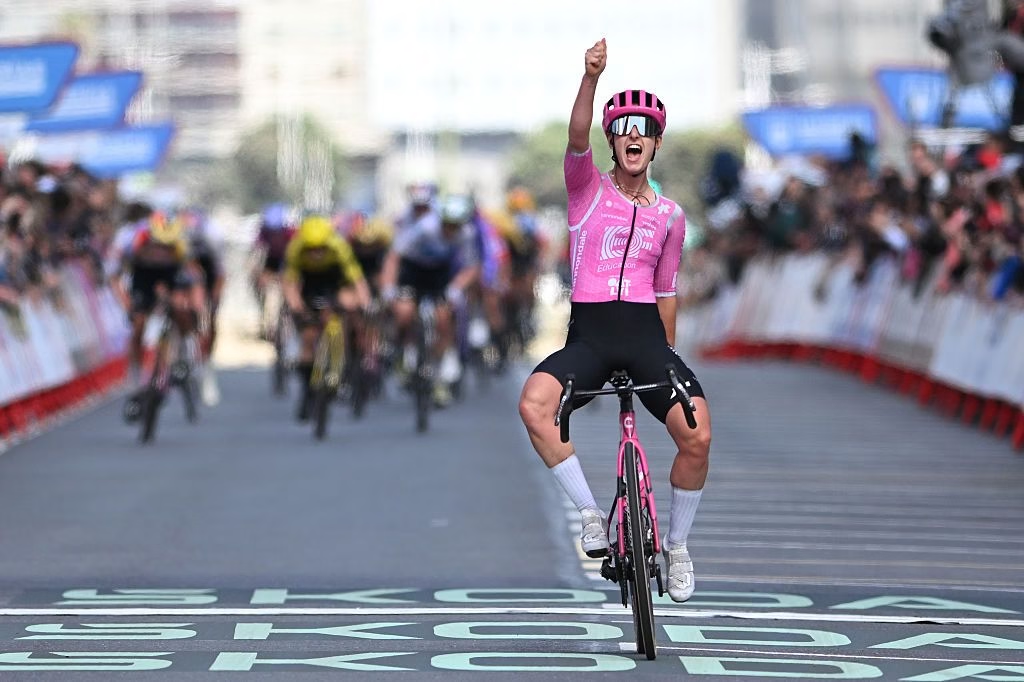
Cédrine Kerbaol looks like a rider moving up a level
Kerbaol’s Tour de Suisse was one of the most important rides of the week because it was not built around one isolated moment. She stayed in the GC fight, survived the decisive stages, then came through the final mountain test strongly enough to finish second on the stage and second overall.
That is the kind of result that changes a rider’s profile. Kerbaol has already shown climbing strength and stage-race potential, but a podium in a race with Reusser, Longo Borghini, Niewiadoma-Phinney, Sarah Van Dam and others gives the form a different weight. She was not sneaking into a result. She was directly involved in the decisive stage.
Her final day was especially impressive because she had to fight her way back. When Niewiadoma-Phinney began applying pressure, Kerbaol was distanced but did not panic. She returned before the final kilometre, then outsprinted Niewiadoma-Phinney for second on the stage. That resilience mattered as much as the result itself.
For EF Education-Oatly, Kerbaol’s trajectory is useful. She now looks like a genuine GC rider for hard stage races rather than simply a climber capable of a strong day. The next step is consistency across longer races, but Switzerland suggests she is moving towards that level.
Form rating: 9/10
Season direction: sharply upward
Best suited to: hard stage races, mountain finishes, aggressive GC days
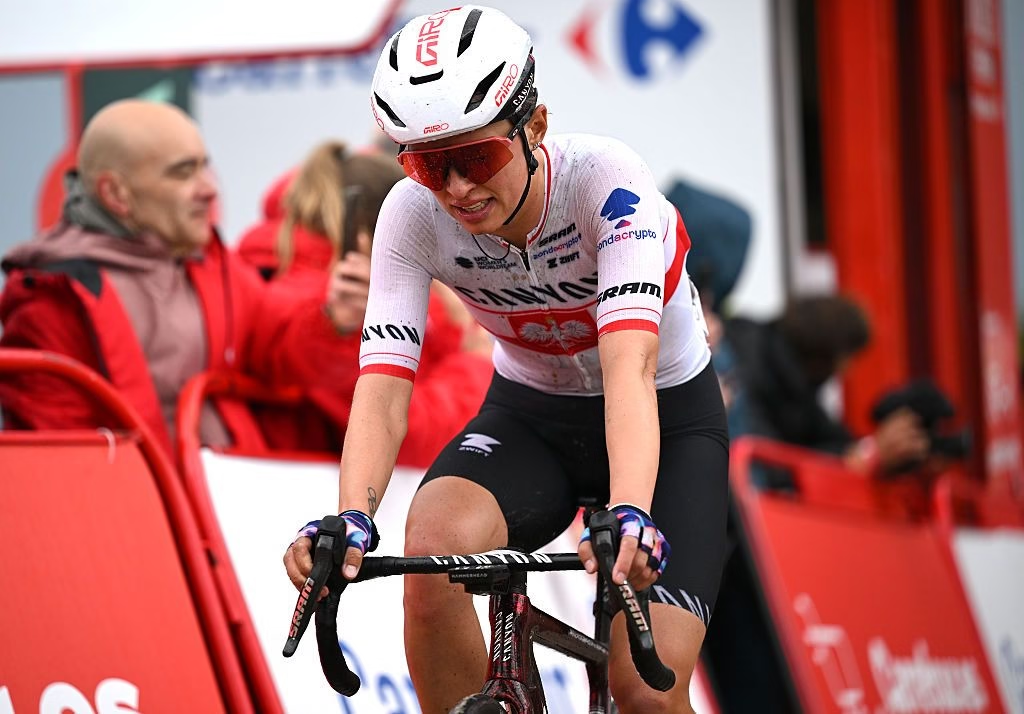
Kasia Niewiadoma-Phinney turns aggression into a podium
Niewiadoma-Phinney’s race was not perfect, but it may be more encouraging than a tidy podium would suggest.
The time-trial cost her. Reusser and Bäckstedt were clearly better against the clock, and that left Niewiadoma-Phinney needing something on the final stage. That response was exactly what you would want from her. She did not ride passively towards a decent placing. She made the final mountain stage harder, repeatedly applying pressure and forcing the GC group to respond.
That aggression moved her onto the final podium. It also gave Canyon SRAM a valuable reminder that her best route to results is still through racing that unsettles the field. She is at her strongest when she is not merely marking moves, but making the road awkward enough that others have to race on her terms.
The concern remains the same as ever: the time-trial. If she loses too much against the clock, she needs mountain and hilly stages to be hard enough to win back ground. But the final stage in Switzerland showed that she can still change a race when given the terrain.
She leaves Tour de Suisse with strong climbing form, a podium, and proof that her instinct to race aggressively is still one of her biggest strengths.
Related reading: How race routes are shaping women’s cycling in 2026
Form rating: 8.5/10
Season direction: positive
Best suited to: selective hilly stages, hard mountain finales, attritional one-day races
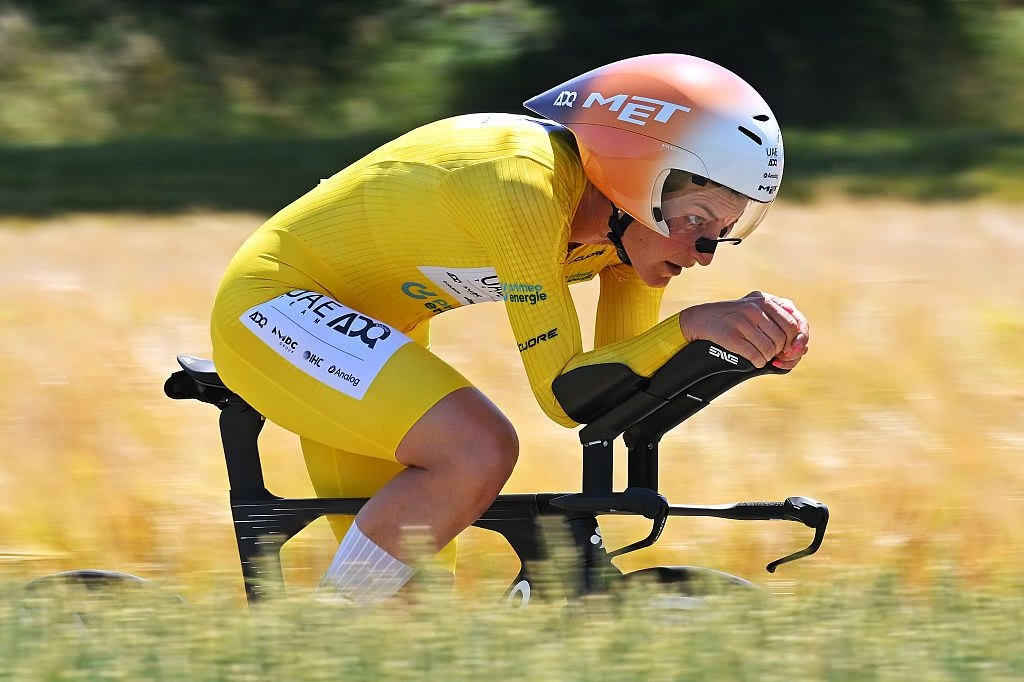
Elisa Longo Borghini showed strength, then faded at the wrong moment
Longo Borghini’s Tour de Suisse was two races in one.
For most of the week, she looked like one of the sharpest riders in the race. Her stage 2 attack in Locarno was vintage Longo Borghini: decisive, aggressive and timed well enough to win the stage and take the overall lead. She defended through stage 3, then entered the time-trial still in a strong GC position. After stage 4, she remained close enough to Reusser to keep the final mountain stage open.
Then stage 5 changed everything.
Longo Borghini started the final day just 10 seconds behind Reusser, but the last climb exposed her. While Reusser, Niewiadoma-Phinney, Kerbaol and De Vries shaped the front of the race, Longo Borghini slipped backwards and lost the podium. That was a significant late reversal.
It should not erase the positives. She still won a stage, wore yellow and looked strong across much of the race. But it does slightly alter the form reading. She is clearly competitive, but the final mountain stage raised a question about whether she can currently absorb the steepest final-stage pressure against the very best climbers and all-rounders in the race.
The season verdict is therefore mixed but not negative. Longo Borghini is in good shape. She is still a major race-shaper. But Tour de Suisse suggests she may need to choose her attacks carefully in the next major stage races, because the final mountain depth was not quite there in Switzerland.
Related reading: Tour de Suisse Women 2026 stage 2: Elisa Longo Borghini attacks late to win in Locarno and take race lead
Form rating: 7.5/10
Season direction: strong but with a warning sign
Best suited to: punchy GC stages, rolling attacks, selective one-day races
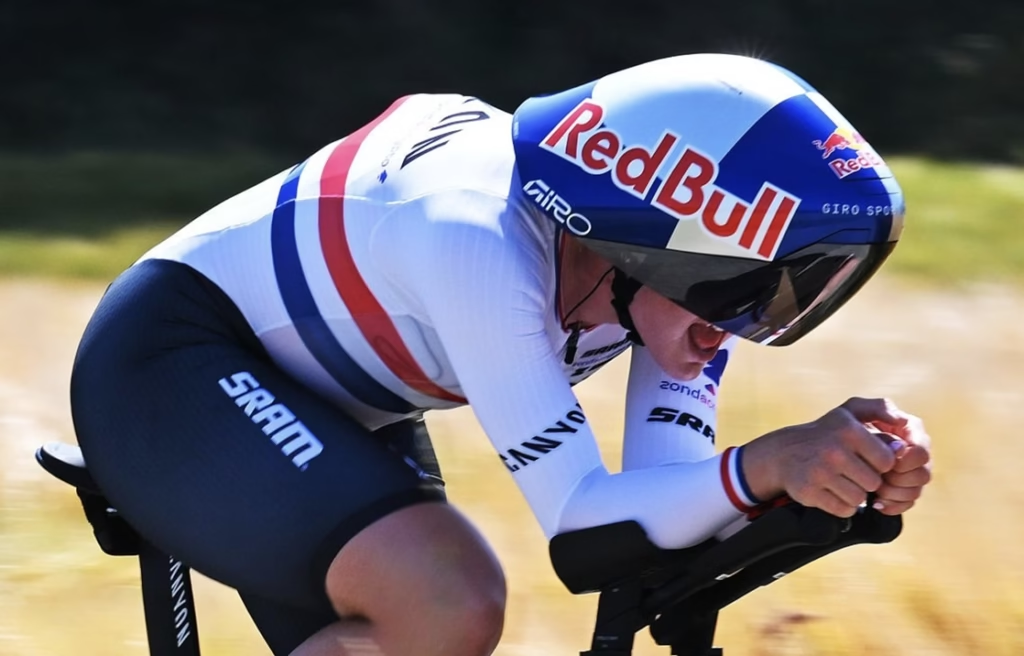
Zoe Bäckstedt’s range is becoming harder to ignore
Bäckstedt had one of the most eye-catching weeks in Switzerland, even if she was not a final GC podium rider.
Her stage 3 sprint win in Bad Ragaz was the obvious highlight. The way she launched from distance and won clearly showed that she is no longer just a future time-trial and classics rider being shaped gradually. She is already capable of taking WorldTour-level opportunities in different race situations.
Then came the stage 4 time-trial. Finishing second to Reusser, only 11 seconds down, was arguably just as significant as the sprint win. Reusser remains one of the best time-triallists in the world, and Bäckstedt was close enough to underline the scale of her own progression.
That combination is what makes her so interesting. Sprinting from a reduced or controlled group, time-trialling at elite level, handling harder terrain, and still being young enough to have clear development ahead. Canyon SRAM will not want to overdefine her too quickly, but the skill set is widening.
The question for the rest of 2026 is what kind of rider she becomes in the short term. She may already be a threat in time-trials, rolling stages and technical finishes. Longer GC ambitions can wait. For now, she looks like one of the form riders of the summer.
Related reading: Tour de Suisse Women 2026 stage 3: Zoe Bäckstedt powers to sprint victory in Bad Ragaz
Form rating: 9/10
Season direction: rapidly rising
Best suited to: time-trials, rolling sprint stages, technical finales, future GC development
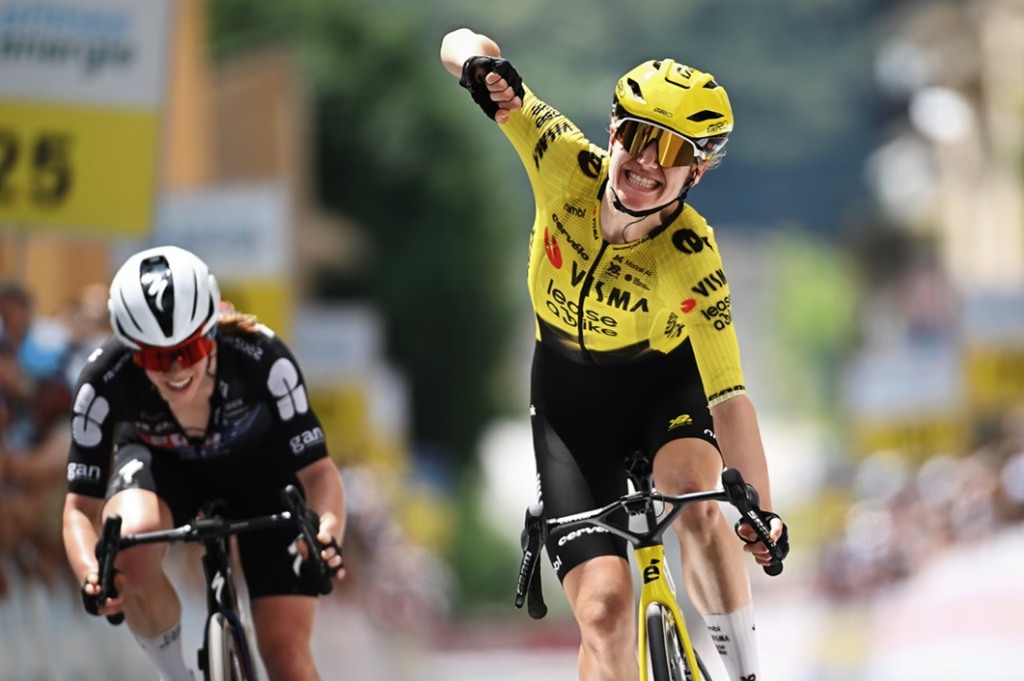
Femke de Vries was the breakthrough story
Femke de Vries was one of the clearest revelations of Tour de Suisse Women 2026.
Winning stage 1 from the breakaway gave her the first professional victory of her career and immediately changed the race. It was not only a nice early-week result. It put her into the leader’s jersey, gave the opening stage a proper story, and placed her in the middle of the GC and mountain classification fight.
What made her week more impressive was that she stayed relevant. She was active again on the final mountain stage, attacking in the GC group, helping shape the race and securing the mountain classification. That matters because early breakaway winners can sometimes disappear once the favourites start racing properly. De Vries did not.
Her final-stage riding suggests she has more than opportunism. She can climb, she can read the race and she appears willing to take responsibility when the stage demands it. That is a strong combination for Fenix-Premier Tech, especially in races where the biggest GC names are watching each other.
The next question is repeatability. A breakthrough week is one thing. Turning that into regular high-level results is the harder part. But Tour de Suisse was enough to put her into the group of riders who need to be watched more closely from here.
Related reading: Tour de Suisse Women 2026 stage 1: Femke de Vries takes first pro win after late move in Sondrio
Form rating: 8.5/10
Season direction: breakthrough confirmed
Best suited to: breakaways, mountains classification battles, rolling stage races
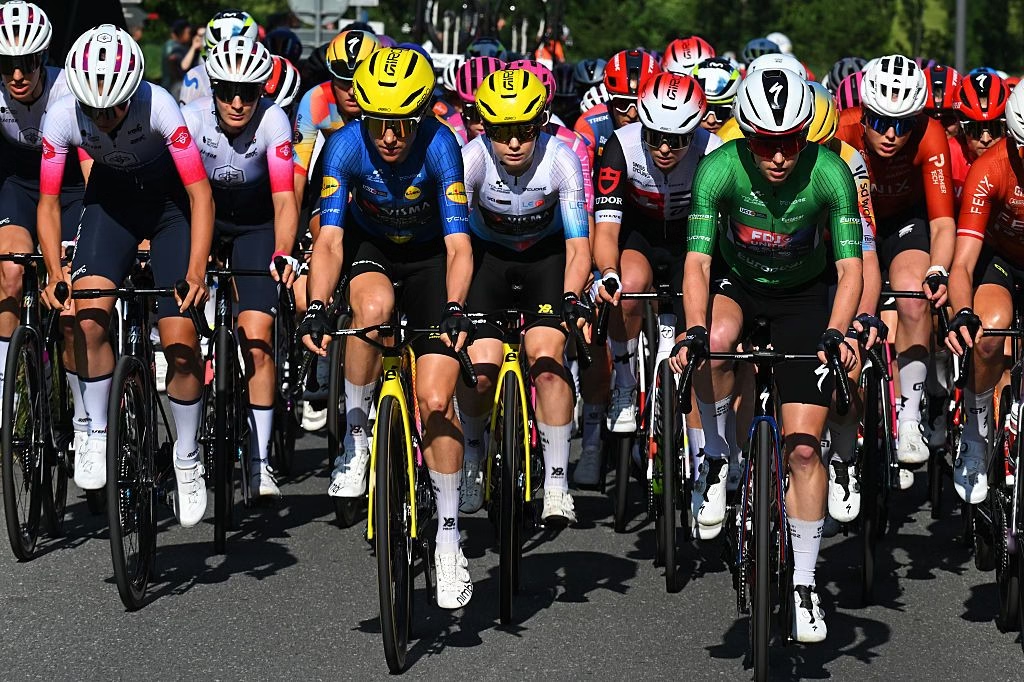
Lauren Dickson made the most of her opening-day chance
Lauren Dickson’s stage 1 ride deserves more attention than it may have received once the GC fight took over.
She was part of the decisive opening-day move, stayed with De Vries deep into the final, and came close to a career-shaping stage win. That kind of ride matters because it shows both judgement and strength. In a short stage race, the early breakaway is rarely a free gift. The move had to be made, committed to, and finished properly.
Dickson’s second place did not turn into a full GC story, but it was still one of the more important form signals from the lower-profile riders in the field. She showed that she could read a stage, follow the right move and remain strong enough to contest the finish.
For a team looking for opportunities in hard rolling races, that is valuable.
Form rating: 7.5/10
Season direction: positive
Best suited to: breakaways, rolling stages, opportunistic finales

Sarah Van Dam remains consistent but needs the next decisive step
Sarah Van Dam came into Tour de Suisse with a growing reputation as one of the more consistent riders of 2026, and she did enough to keep that picture intact.
She was close in the early GC battle, positioned herself well through the first half of the race and again showed that she is comfortable in demanding stage-race environments. That matters because consistency is often the first major step before a rider becomes a regular podium contender.
The limitation is that she did not quite produce the decisive moment when the race was at its hardest. Stage 5 was the point where the top of the GC shifted dramatically, and Van Dam was not able to turn that into a final podium. That does not make her race poor. It simply shows where the next step lies.
For her, the challenge is turning presence into separation. She is good enough to be in the right race. Now she needs to be one of the riders forcing the result, rather than one of the riders responding to the strongest moves.
The season remains clearly positive. She has built a strong run of results and remains one of the riders whose ceiling still feels open.
Form rating: 7.5/10
Season direction: steady upward
Best suited to: rolling stage races, GC support-to-leader transition, durable climbing days
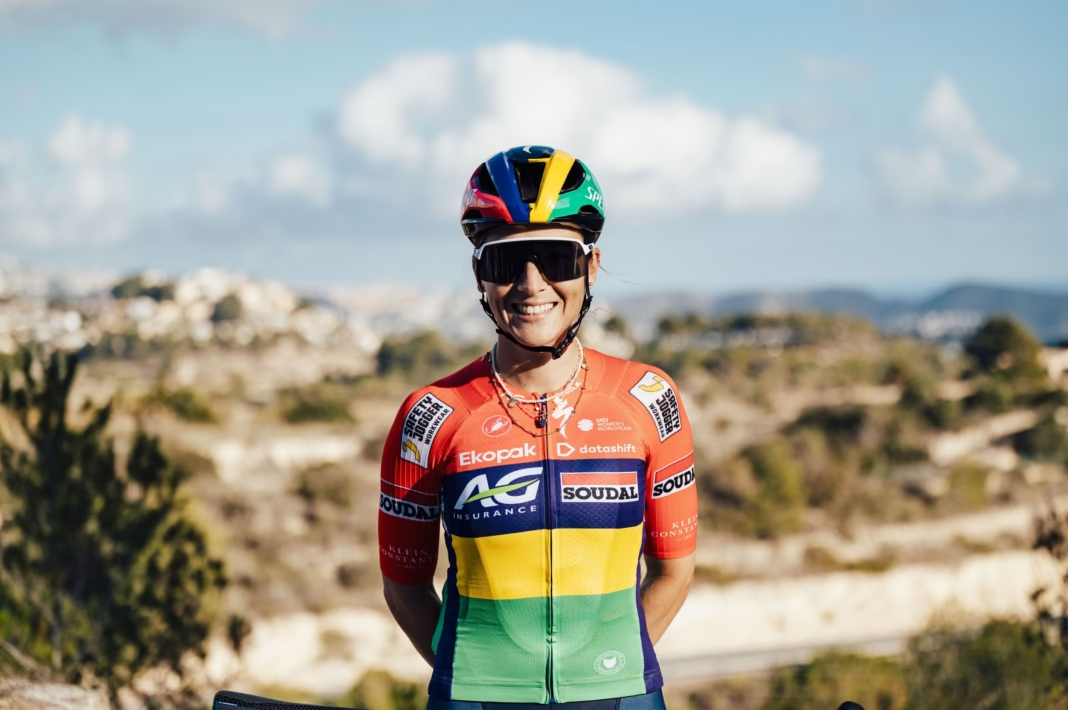
Kim Le Court keeps proving her late-race strength
Kim Le Court did not take the headline result in Switzerland, but her final-stage ride deserves attention.
Her late chase on the final climb was one of the strongest pieces of racing on stage 5. As the front group began looking at each other and the GC picture shifted, Le Court was closing rapidly from behind. She ran out of road to contest the podium sprint, but the move said plenty about her form.
That kind of late strength matters. Le Court has become increasingly difficult to ignore because she can keep producing efforts when races are already deep into the selective phase. That makes her dangerous in hard one-day races and rolling stage races where the finish comes after repeated fatigue rather than one simple climb.
Her challenge is still turning those strong late rides into wins or major GC results. But Tour de Suisse reinforced the idea that she belongs among the riders who can change a race if the front group hesitates.
Form rating: 8/10
Season direction: strong and reliable
Best suited to: hard finishes, late attacks, reduced groups
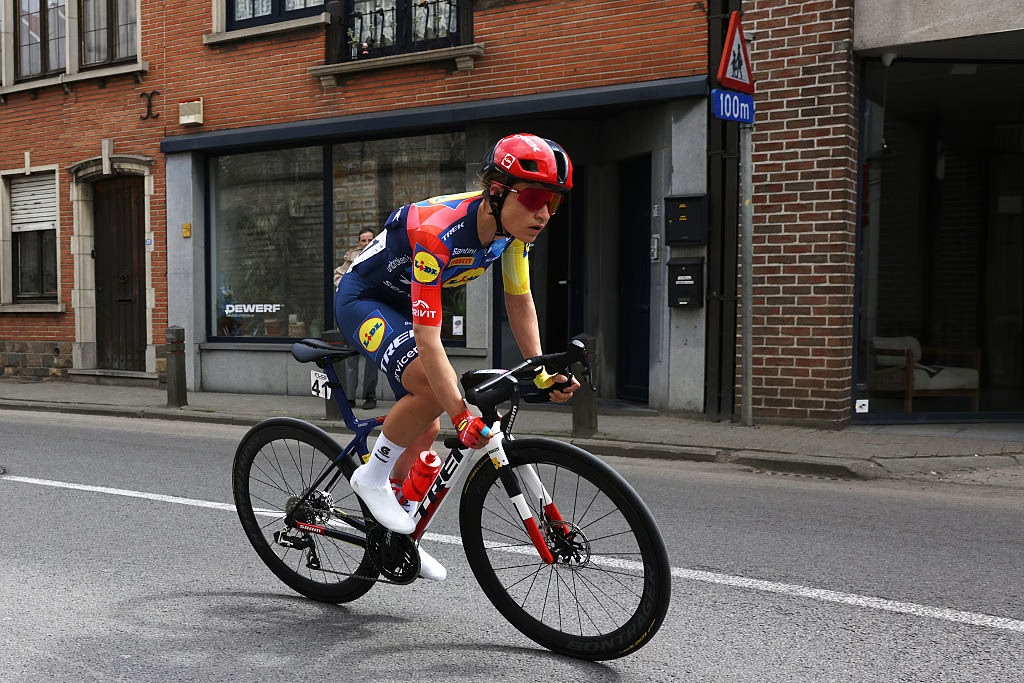 Photo Credit: Getty
Loes Adegeest quietly underlined her value
Adegeest’s third place in the stage 4 time-trial was one of the quieter but more useful signals from Tour de Suisse.
The Aarburg course gave the specialists a chance to measure themselves, and Adegeest’s ride behind Reusser and Bäckstedt confirmed that she remains one of the strongest time-trial and all-round engines in the peloton. In a race where the GC was shaped heavily by the clock, that performance mattered.
She may not have left Switzerland as one of the big headline names, but her value is obvious. Riders like Adegeest can change team tactics because they give a squad control, time-trial strength and options in rolling races. In a season where routes are becoming more complete, that kind of rider becomes increasingly important.
Her Tour de Suisse was not a breakthrough. It was a confirmation.
Form rating: 7.5/10
Season direction: solid
Best suited to: time-trials, rolling stage races, team control roles
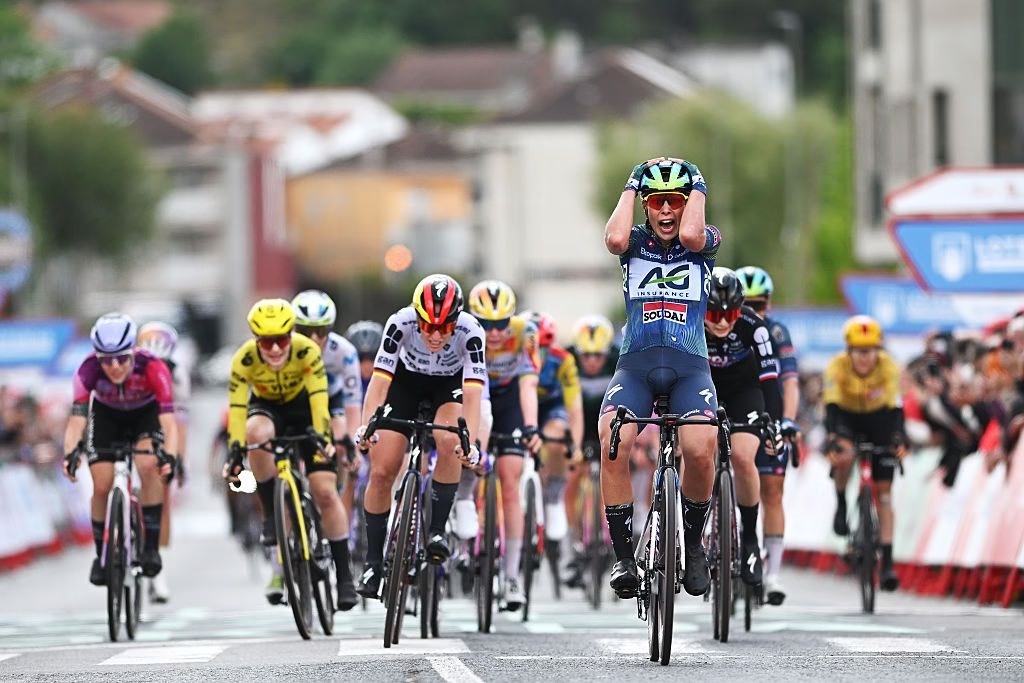 Photo Credit: Getty
Lily Williams and Shari Bossuyt show sprint-stage sharpness
The stage 3 sprint in Bad Ragaz was Bäckstedt’s day, but Lily Williams and Shari Bossuyt both left with useful form indicators.
Williams’ second place was another reminder that she can still compete when a fast, controlled finish emerges from a lumpy stage. Human Powered Health have used her well in these kinds of opportunities, and Switzerland showed that she can still place in quality company when the finale suits.
Bossuyt’s third place was also useful for AG Insurance-Soudal. She was beaten by a rider who launched a huge sprint, but she was still there at the sharp end. In a calendar where sprint chances are often interrupted by terrain, riders who can finish well after a hard but controlled day remain valuable.
Neither result changes the hierarchy of the season, but both riders leave with form that can translate into future stage opportunities.
Form rating: Williams 7/10, Bossuyt 7/10
Season direction: positive sprint-stage signs
Best suited to: controlled finishes after rolling terrain
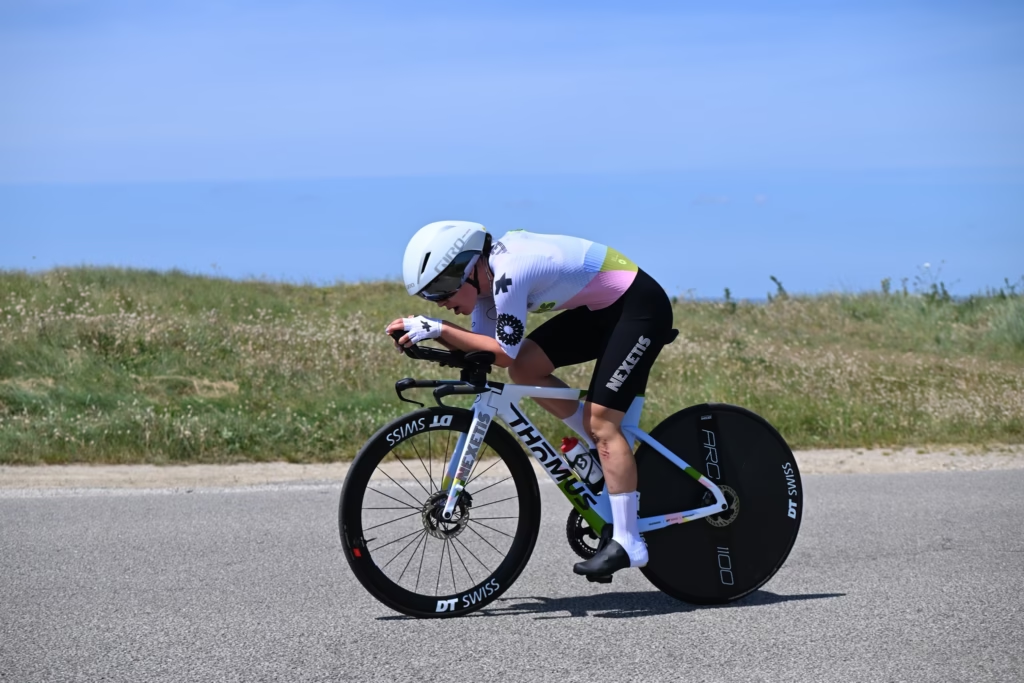
Jasmin Liechti, Marta Lach and Letizia Paternoster showed useful depth
The stage 3 sprint also gave a useful reading of the riders just behind the podium.
Jasmin Liechti finished fourth on the stage, showing that she could position herself well in a fast finish after a race that had not been completely flat. That sort of result is easy to lose in the bigger picture, but it is useful when assessing form in the middle of the season. It shows sharpness, confidence and the ability to contest a WorldTour finish.
Marta Lach and Letizia Paternoster were also in the top 10 in Bad Ragaz, reinforcing the depth of the sprint-stage field at Tour de Suisse. Neither rider left the race with the biggest headline, but both showed enough to be noted for future rolling or controlled finishes.
The lesson from that stage was not simply that Bäckstedt won. It was that several riders in the field had enough speed to matter when the race offered a sprint from a reduced or managed group.
Form rating: 7/10 group
Season direction: steady
Best suited to: reduced sprints, rolling finishes, opportunistic stage racing
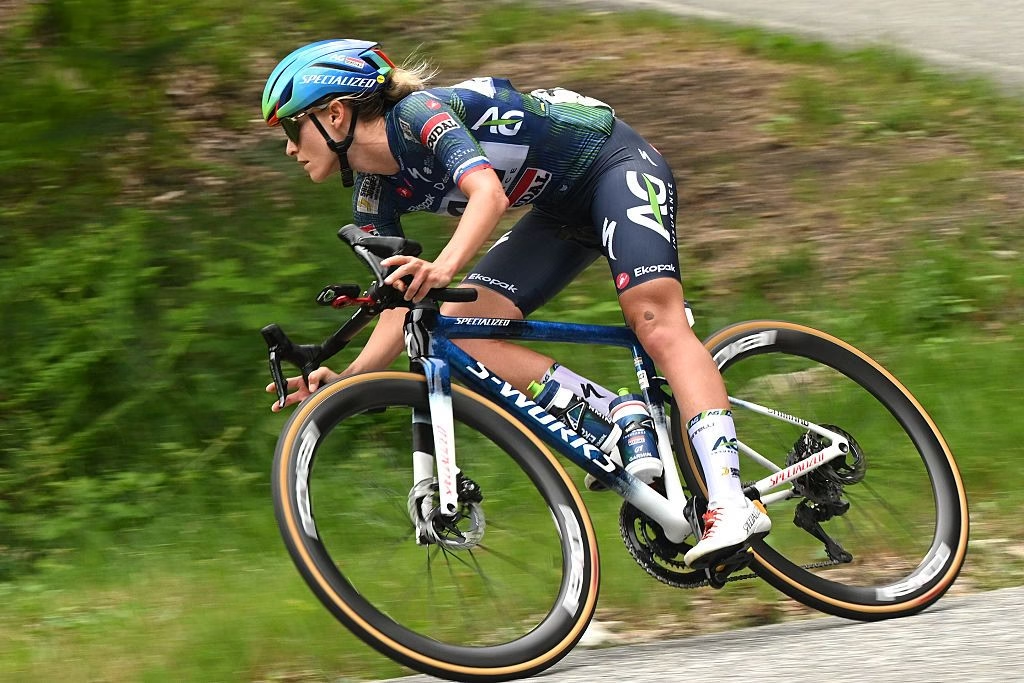
Urška Žigart’s crash changed her race
Urška Žigart’s Tour de Suisse was shaped by her crash on stage 2.
She had been part of the wider climbing and GC conversation coming into the race, but the fall in Locarno and the fractured jaw that followed changed her week completely. It was a reminder that form guides can only go so far when race incidents intervene.
From a season-form point of view, it is hard to draw a clean conclusion. The crash gives no useful performance reading beyond the obvious disruption. It does, however, matter for how her next races are viewed. Recovery, confidence and the timing of her return will be more important than any result line from Switzerland.
Form rating: impossible to judge fairly
Season direction: interrupted
Best suited to: reassessment after recovery

Steffi Häberlin showed another useful sign of consistency
Steffi Häberlin’s Tour de Suisse should not be overlooked.
She was present near the front of the race on stage 2, finishing close enough to the key move to remain part of the early GC conversation. She then stayed high enough overall to underline the sense that she can be a reliable presence in hard stage races. Not every rider in this kind of race needs a stage win to improve their standing.
For Häberlin, the value was in consistency. She handled the race well enough to remain relevant through changing terrain, even if she did not make the decisive final podium move. In a race with time-triallists, climbers and aggressive GC riders, that is still a respectable marker.
Form rating: 7/10
Season direction: steady
Best suited to: support roles, selective stage races, consistent GC riding
The updated form ranking after Tour de Suisse Women
- Marlen Reusser
Reusser is the biggest mover at the top. A time-trial win, mountain-stage win and overall victory at home make this one of the clearest form statements of the season. She now looks like a complete stage-race threat whenever the route includes both climbing and a serious time-trial. - Cédrine Kerbaol
Second overall in Switzerland feels like a genuine step forward. She climbed well, recovered when distanced and delivered under pressure on the final stage. Her GC standing for hard stage races has improved. - Kasia Niewiadoma-Phinney
The time-trial still cost her, but her final mountain stage was exactly the response required. She remains one of the most dangerous riders when the route rewards repeated pressure and aggressive climbing. - Elisa Longo Borghini
Still clearly in form, but her final stage raised a question. The stage 2 win showed sharpness, while the loss of the podium showed vulnerability on a steep final mountain day. - Zoe Bäckstedt
A sprint win and second in the time-trial make her one of the riders with the clearest upward curve. She is no longer just developing quietly. She is winning and threatening in multiple ways. - Femke de Vries
The breakthrough rider of the week. Stage 1 win, mountain classification impact and active final-stage racing make her one of the most improved names after Switzerland. - Kim Le Court
Her final climb chase showed how much strength she still had late in the race. She remains one of the hardest riders to ignore in selective finales. - Sarah Van Dam
Consistent again, but the race still asks for one more decisive step. She remains on an upward path but did not quite turn Switzerland into a podium-level breakthrough. - Loes Adegeest
Her time-trial reinforced her value as one of the strongest engines in the peloton. Not a headline GC ride, but a strong form confirmation. - Lily Williams
Second in the Bad Ragaz sprint was a useful sign that she can still take high-level opportunities when the race gives her a controlled finish.
What Tour de Suisse tells us about the rest of the summer
Tour de Suisse Women 2026 made one thing clear: the riders who can combine time-trialling, climbing and calm tactical decision-making are becoming increasingly hard to beat.
Reusser was the clearest example. She did not need to be the most aggressive rider on every climb because the route gave her multiple ways to win. Longo Borghini had the punch. Niewiadoma-Phinney had the aggression. Kerbaol had the resilience. But Reusser had the complete week.
That has implications for the rest of the summer. Routes with individual time-trials will favour riders who can manage both disciplines. Hard summit finishes will still give pure climbers a way back. Rolling stages and technical finales will reward riders like Bäckstedt and Le Court, who can use strength before the final climb or sprint.
It also shows how compressed stage races can produce very honest form indicators. With only five stages, there was no long procession. Every day mattered. A rider could not hide for a week and wait for one mountain stage. The structure forced them to show something almost immediately.
For more on how route design is changing the women’s peloton, see our feature on how race routes are shaping women’s cycling in 2026.
Who gained the most?
Reusser gained the most at the top level. She moved from obvious favourite to confirmed reference point. Her time-trial was expected, but the final mountain stage win made the victory feel much more complete.
Kerbaol gained the most in terms of status. Second overall at Tour de Suisse is a result that changes how she should be treated in future stage races. She now looks more like a genuine GC contender than an outsider who needs the right day.
Bäckstedt gained the most in terms of range. Winning a sprint and pushing Reusser in the time-trial is a powerful combination for a young rider. It gives Canyon SRAM more ways to use her and gives rivals more reasons to watch her.
De Vries gained the most in terms of visibility. A first pro win, mountain classification presence and final-stage aggression make her one of the week’s clearest breakthrough stories.
-
 Photo Credit: quentinphotographiebe

Who leaves with questions?
Longo Borghini leaves with the biggest mixed reading. She was good enough to win stage 2 and take yellow, but the final climb changed the race against her. That does not make her form poor, but it does raise a question about her ability to absorb the steepest late-race pressure right now.
Van Dam also leaves with a question, but a different one. She is clearly consistent, clearly progressing and clearly useful in GC races. The question is when consistency becomes a decisive winning move.
The sprint-stage picture also leaves a few open questions. Bäckstedt, Williams, Bossuyt, Liechti, Lach and Paternoster all showed something in Bad Ragaz, but the race did not offer enough pure sprint opportunities to fully settle that hierarchy.
Final verdict
Tour de Suisse Women 2026 has moved Marlen Reusser firmly into the top tier of current season form. She was the strongest time-triallist, managed the final mountain stage with intelligence, and finished the week by winning both the stage and the overall.
Kerbaol and Niewiadoma-Phinney leave with major positives. Longo Borghini leaves with both proof of sharpness and a warning sign. Bäckstedt leaves with one of the best all-round form signals of the race. De Vries leaves as the breakthrough name. Van Dam, Le Court and Adegeest all remain riders to watch as the summer calendar tightens.
The updated form picture is built from Tour de Suisse itself rather than the wider peloton. On that basis, Reusser looks like the most complete rider coming out of Switzerland. Kerbaol looks ready for a bigger GC role. Niewiadoma-Phinney looks dangerous again when the road gets steep and tactical. Bäckstedt looks like one of the most exciting riders in the race, not for the future, but for now. De Vries showed that a well-timed breakthrough can still change the entire feel of a WorldTour week.
For more women’s race coverage, see the women’s cycling race reports hub, women’s cycling route guide hub and our Tour de France Femmes race hub.

