There is a point in every dominant Tour de France when the question changes.
At first, it is tactical. Who is leading? Who is chasing? Where can the time be taken back? Then, if the strongest rider keeps imposing himself, the question becomes historical. Not just whether he can win this Tour, but what the victory would mean.
Tadej Pogačar has reached that point at the 2026 Tour de France.
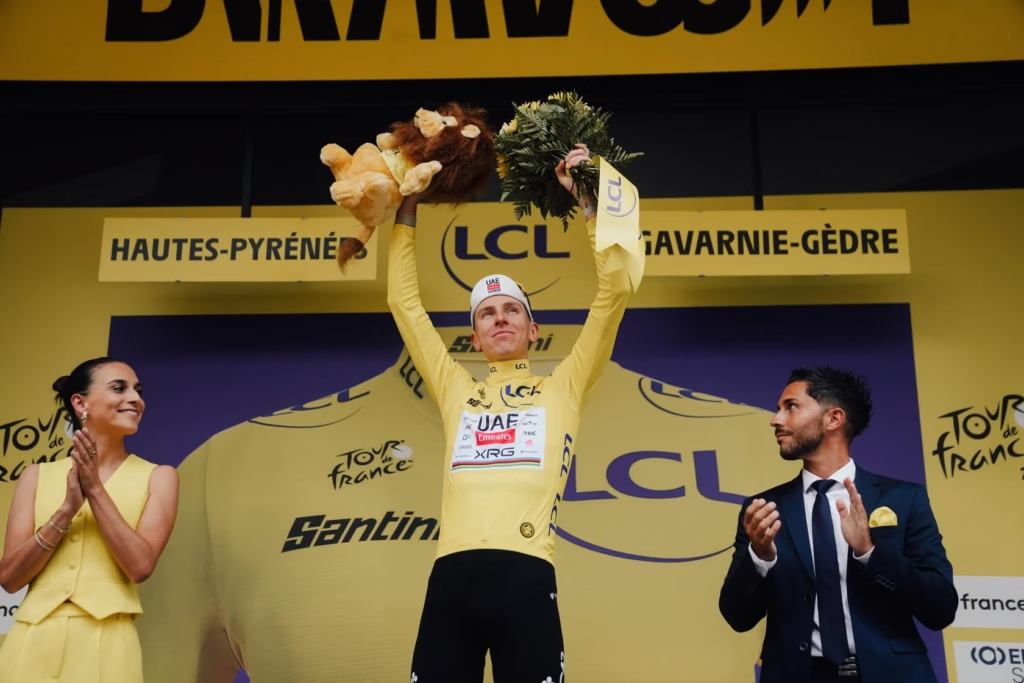
He goes into the first rest day in yellow, 2:42 ahead of Jonas Vingegaard, after already making the first decisive mountain statement of the race. He has not yet won the Tour. The Alps still wait. So do heat, crashes, bad days, team weakness and the possibility that Vingegaard finds the kind of high-mountain response that has defined his best Tour performances.
But Pogačar is now riding with the race in his hands. If he carries it all the way to Paris, he will move into the space cycling keeps for its rarest names.
The five-time club is the point of reference
Five Tour de France wins is not just a number. It is a threshold.
Jacques Anquetil, Eddy Merckx, Bernard Hinault and Miguel Induráin are the names that define the top of the Tour’s winners list. They are not grouped together because their careers were identical. They are grouped because five Tours changes the category of the rider. It takes a champion out of a single era’s argument and places him into the permanent architecture of the sport.
Pogačar is chasing that now.
He already has four Tour victories. A fifth in 2026 would not merely make him the dominant rider of his generation. It would give him the same Tour total as the riders who have long stood as the race’s upper limit.
That is why this Tour feels larger than another yellow jersey campaign. Pogačar is not just defending a status he already owns. He is moving towards a club that has always been used as cycling shorthand for greatness.
The question is whether he is joining it as another member, or reshaping how that level of dominance is understood.
Why Pogačar’s dominance feels different
Pogačar’s route to this point does not quite resemble the old patterns.
Anquetil was control, calculation and time-trial authority. Merckx was conquest. Hinault was force and pride. Induráin was suffocation by tempo, time trialling and altitude-proof calm. Pogačar contains pieces of all of them, but never sits neatly inside one type.
That is what makes him feel different.
He can win the Tour like a climber, but he is not only a climber. He can win time trials, but he is not only a time-trial weapon. He can punch on short climbs, attack from distance, sprint from small groups, ride classics-style finales and turn mountain stages into one-rider statements. His dominance is not built on one repeatable method. It is built on the awkward fact that almost every type of racing can be made to suit him.
That is why his stage 6 win at Gavarnie-Gèdre mattered so much. It was not simply a strong day in the mountains. It was a reminder that Pogačar does not need to wait for the obvious final climb. He can break a race earlier, carry the move and then leave everyone else trying to explain how the GC has suddenly changed.
The great Tour winners often made the race narrow. They found the terrain that suited them and kept forcing rivals into it. Pogačar’s particular threat is that the race feels wide. There are too many places where he can hurt you.
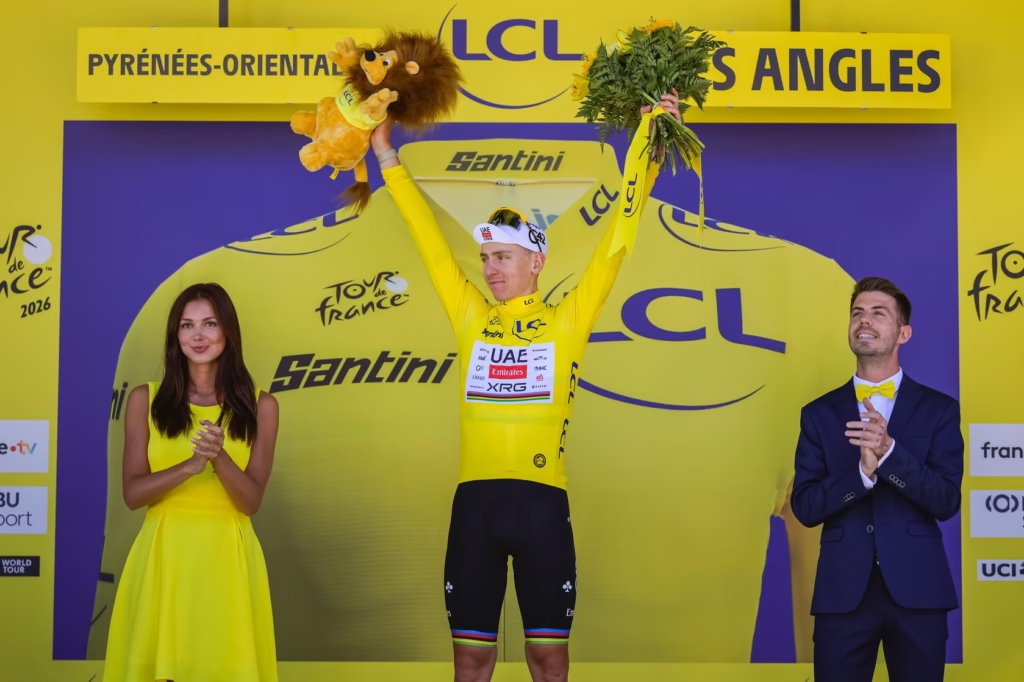 Photo Credit: A.S.O./Charly López
The Tour is not over, but it has a centre of gravity
The race is not finished.
That needs saying clearly, because history is not written on the first rest day. A 2:42 lead is significant, not final. Vingegaard is still second overall. Isaac del Toro, Remco Evenepoel and Juan Ayuso are packed closely behind. The route still has enough climbing to change the Tour, and the conditions have already been harsh enough to make any sense of security look fragile.
But the Tour now has a centre of gravity, and it is Pogačar.
The GC and jerseys after stage 9 show the basic shape. Pogačar leads. Vingegaard chases. Del Toro holds third and the white jersey. Evenepoel and Ayuso remain close enough to keep the podium fight alive. But every tactical conversation now begins with the same starting point: what can anyone do to Pogačar?
That is a very different race from the one the Tour had before the Tourmalet. Then, the question was when the favourites would reveal themselves. Now, the question is whether anyone can disrupt the rider who already has.
Vingegaard keeps the story from becoming a procession
Dominance needs resistance to become compelling.
That is why Vingegaard still matters so much to the shape of this Tour. If Pogačar were leading by this margin over a field with no credible counterweight, the rest of the race would risk becoming ceremonial. But Vingegaard is not a decorative second place. He is a rider with the history, engine and mountain durability to make Pogačar defend properly.
The problem is that he has to change the race. He can no longer follow and wait. At 2:42 down, he needs pressure from Visma-Lease a Bike, difficult mountain stages, moments where UAE Team Emirates-XRG are reduced, and probably more than one attack. One perfect move may not be enough.
That is why the question of what Jonas Vingegaard needs to do to beat Pogačar is the tactical companion to this bigger historical piece. Pogačar may be riding towards immortality, but Vingegaard is the rider with the best chance of dragging the story back from history into live sport.
For Pogačar, that matters too. Greatness looks different when it has to be defended against someone capable of making it uncomfortable.
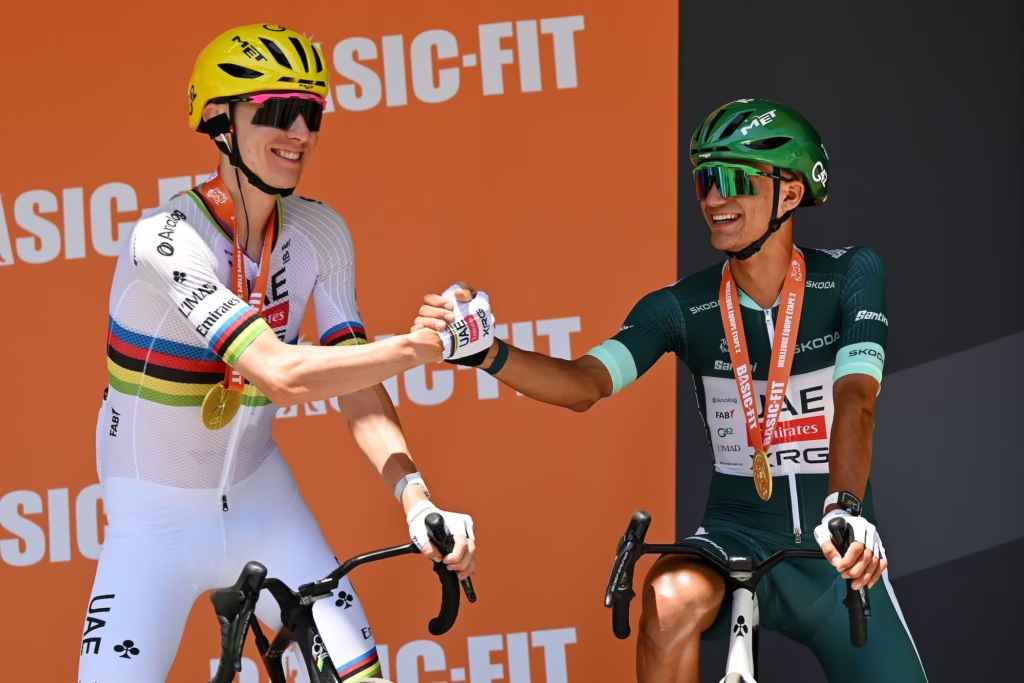
The second act starts immediately
The first rest day is not a full stop. It is an interval.
The race resumes with stage 10 to Le Lioran, a Massif Central stage with enough climbing, awkward roads and post-rest-day uncertainty to matter. It is not the grandest mountain stage of the Tour, but it is exactly the kind of day where a dominant race position can either harden or begin to fray.
Pogačar does not need to attack there. That is part of his advantage. He can let the breakaway go, defend with UAE, watch Vingegaard and keep the Tour moving towards terrain where his margin matters more.
But the danger of dominance is that every stage becomes a test of control. If UAE look stretched, if Vingegaard senses hesitation, if the podium fight sparks around them, the race can start to pull at Pogačar rather than simply follow him.
The stage 10 live viewing guide should be read in that context. Le Lioran is not just the next stage. It is the first chance to see whether the second act is a defence or another demonstration.
What could still go wrong?
Plenty.
That is the other reason not to turn this into a coronation piece. Pogačar has the lead, but the Tour is a machine for finding weaknesses.
The most obvious risk is Vingegaard in the high mountains. If Visma can make a long stage hard early, isolate Pogačar and force him into a sustained defensive effort, the race can shift. Pogačar’s lead is large enough to manage small losses, but not large enough to survive a full-scale mountain collapse.
The second risk is UAE’s workload. Pogačar may be the strongest rider, but even the strongest rider benefits from structure. If UAE are repeatedly asked to control breakaways, chase dangerous moves and protect both yellow and Del Toro’s white jersey position, the team’s balance could become more complicated.
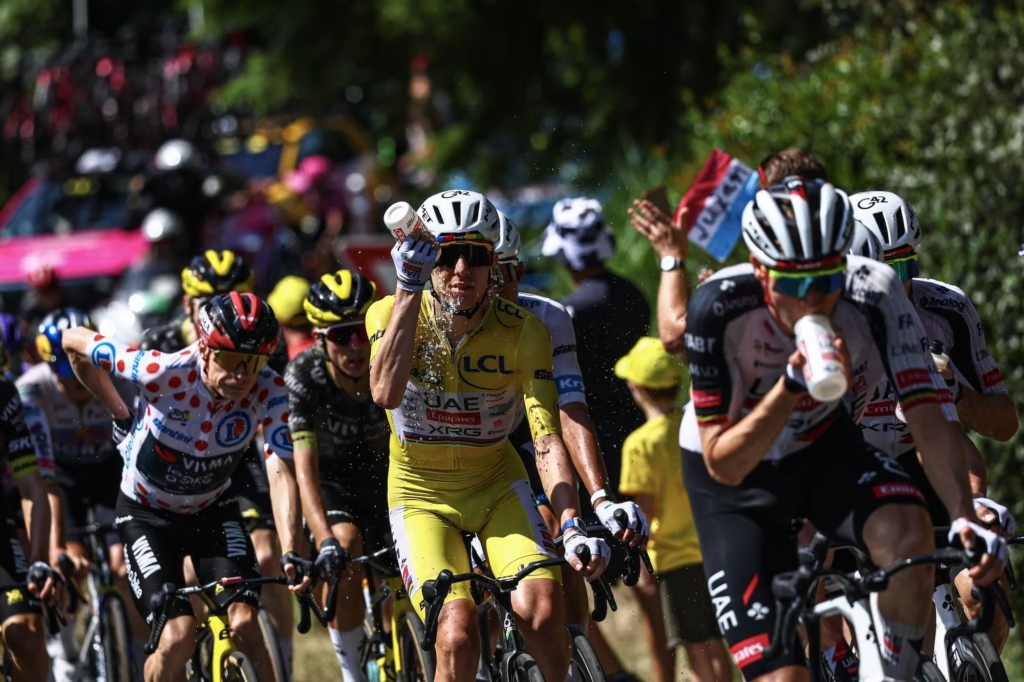
The third risk is the race environment itself. Heat has already changed this Tour. Stage 9 was shortened because of extreme conditions, and the Tour de France heat protocol is no longer a background issue. Heat affects recovery, cooling, sleep, fuelling and decision-making. A rider can look untouchable until the day his body stops processing the race cleanly.
Then there are the normal Tour dangers: crashes, illness, mechanicals, crosswinds, tactical mistakes and the mental weight of defending yellow for two more weeks. Cycling immortality is never reached by being strong for one week. It is reached by surviving everything that comes after looking strongest.
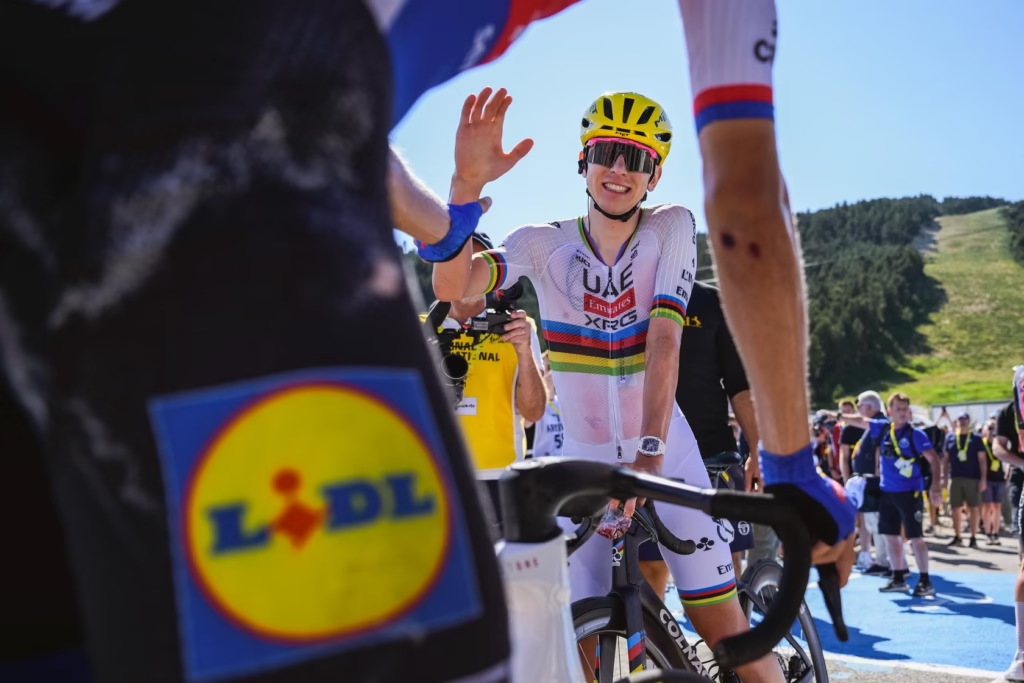
Why dominance can still be compelling
There is a lazy way to read a dominant race. It says the contest is less interesting because the best rider is already in front.
Pogačar complicates that.
His dominance is compelling because it is not passive. He does not simply sit on a lead and ask the race to run out of road. He attacks when he could defend. He turns transitional moments into opportunities. He gives the impression, sometimes dangerous, that he wants to win the race and explain it at the same time.
That is why his Tour is watchable even when he is in control. The suspense is not only whether he cracks. It is whether he attacks again when he does not need to. Whether he turns a defensive stage into another statement. Whether he rides like a man protecting yellow or a man aware that history rewards excess as much as efficiency.
Merckx is remembered partly because he made winning feel insufficient. Hinault is remembered because control and confrontation often looked like the same thing. Pogačar’s version of dominance has some of that same edge. He does not make the race smaller by leading it. He often makes it more unstable.
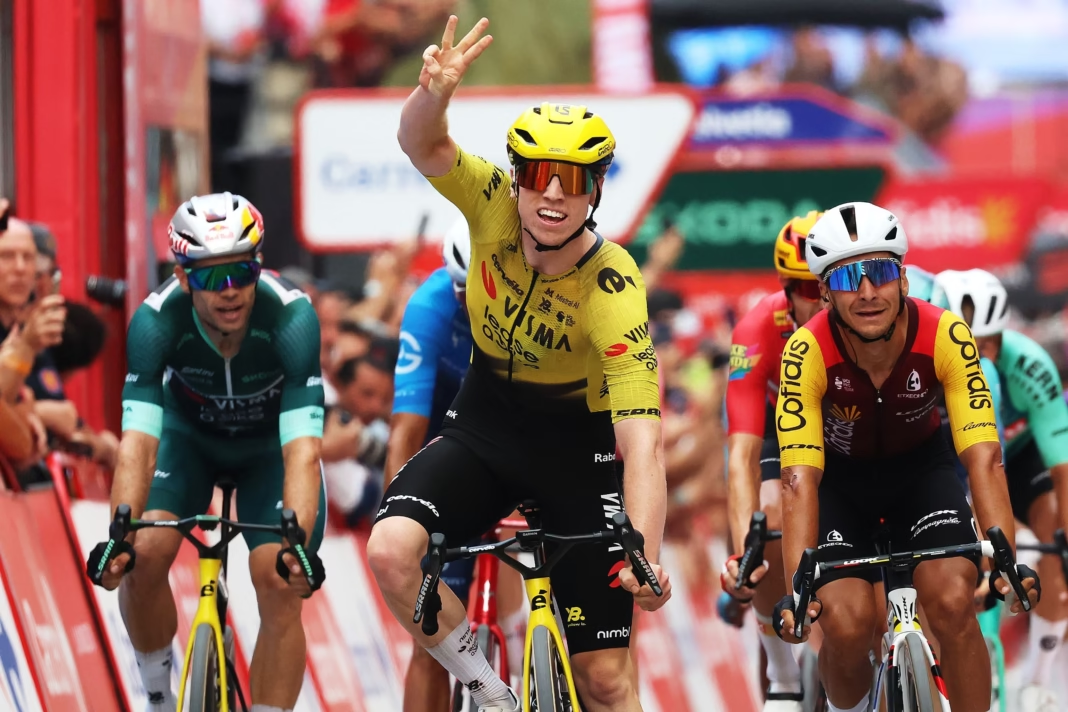
The fifth Tour would change the conversation
If Pogačar wins this Tour, the conversation around him changes again.
At four Tour victories, he is already one of the defining riders of the modern era. At five, he moves into the Tour’s most selective historical room. The argument stops being whether he is the greatest rider of his generation. It becomes how to place him among the sport’s largest figures.
That is not only because of the number. It is because of the way the number has been built. Pogačar’s career has not been confined to Tour management. He has made himself a Grand Tour rider, a one-day force, a climber, a time-trial threat, a classics winner and a rider whose season rarely feels narrow. His Tour dominance sits inside a broader all-round dominance.
That matters. Five Tours alone would be historic. Five Tours attached to this range of winning would be something heavier.
The verdict from the first rest day
So, is Pogačar riding towards cycling immortality at the 2026 Tour de France?
Yes, but not because the race is already over.
He is riding towards it because the terms are now visible. He is in yellow. He has made the first major mountain statement. He has a clear lead over the one rider most capable of troubling him. He is chasing a fifth Tour victory, a mark that would place him alongside Anquetil, Merckx, Hinault and Induráin. And he is doing it with a style that feels less like containment and more like expansion.
The Tour still has a second act. Vingegaard can still make it a race. UAE can still be tested. Heat can still distort everything. A bad day can still arrive without warning.
But the first week has moved Pogačar close enough to history that it is no longer hype to discuss it. The 2026 Tour is now about whether anyone can stop him before a fifth yellow jersey turns dominance into permanence.