
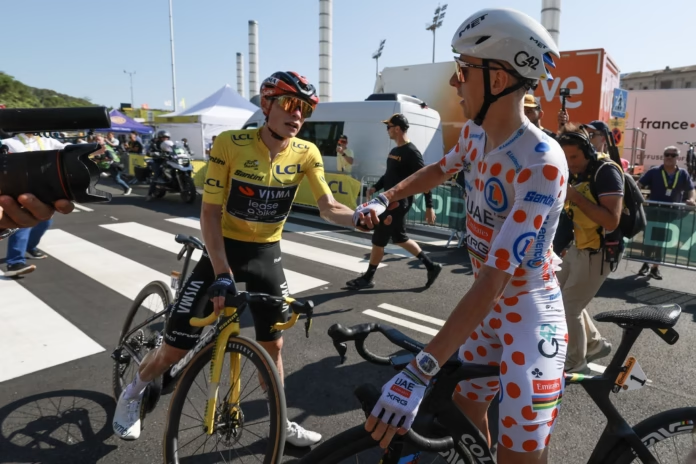
Jonas Vingegaard is not out of the 2026 Tour de France. But he is no longer in a race where following Tadej Pogačar is enough.
After stage 9, Pogačar leads the Tour by 2:42 over Vingegaard, with Isaac del Toro third at 3:27, Remco Evenepoel fourth at 3:30 and Juan Ayuso fifth at 3:34. The yellow jersey group came through the heat-shortened stage to Ussel without a major GC change, which means the race reaches its first rest day with a clear leader and an obvious challenger.
That is the key point. Vingegaard is close enough to keep the Tour alive, but far enough behind that he now needs a plan with several moving parts. One attack is unlikely to be enough. One climb is unlikely to be enough. One slightly better day is unlikely to be enough.
He needs repeated pressure, strong team support from Visma-Lease a Bike, moments where Pogačar is isolated, and at least one day where UAE Team Emirates-XRG cannot control the race on Pogačar’s terms.
This is the tactical roadmap.
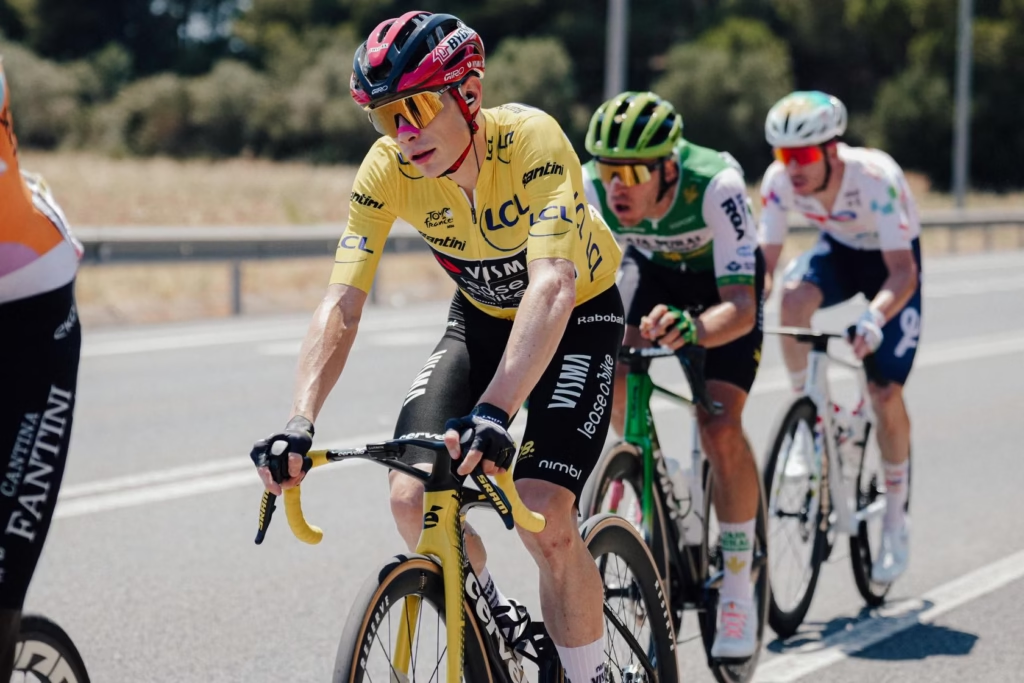 Photo Credit: A.S.O./Pauline Ballet
Vingegaard has to accept the race has changed
Vingegaard’s position is not desperate, but it is no longer passive.
A 2:42 deficit is manageable in theory because the Tour still has serious climbing to come. The problem is that Pogačar already has control, time, confidence and tactical freedom. He does not need to chase every stage. He does not need to attack every mountain. He does not need to take risks unless he chooses to.
Vingegaard does.
That changes the balance between them. If Vingegaard simply follows Pogačar through the next block, he loses. If he waits for one perfect day, he risks discovering that Pogačar never gives him one. If he attacks too early without isolating Pogačar first, he could burn matches and make the gap worse.
The first step is not aggression for its own sake. It is forcing the race into situations where Pogačar cannot ride the Tour like a controlled defence.
Visma need to make UAE work before Vingegaard attacks
Vingegaard cannot win this Tour by attacking from a fully controlled UAE train.
That is the central tactical issue. Pogačar is hard enough to beat one-on-one. He becomes even harder if UAE still have riders setting tempo, closing moves and positioning him before the decisive climb.
So Visma-Lease a Bike need to make the race expensive before Vingegaard moves. That means placing riders in breakaways, forcing UAE to decide whether to chase, using intermediate climbs to weaken support and refusing to let every mountain stage become a final-climb shootout.
This is where the race becomes more about team structure than individual legs. Visma do not just need Vingegaard to be strong. They need a stage design where Pogačar is asked questions before Vingegaard attacks.
The most useful Visma rider may not be the one who leads Vingegaard into the final kilometre. It may be the one up the road, forcing UAE to respond earlier than they want.
Our guide to how Tour de France teams work explains why these support roles matter so much once the GC race moves into the mountains.
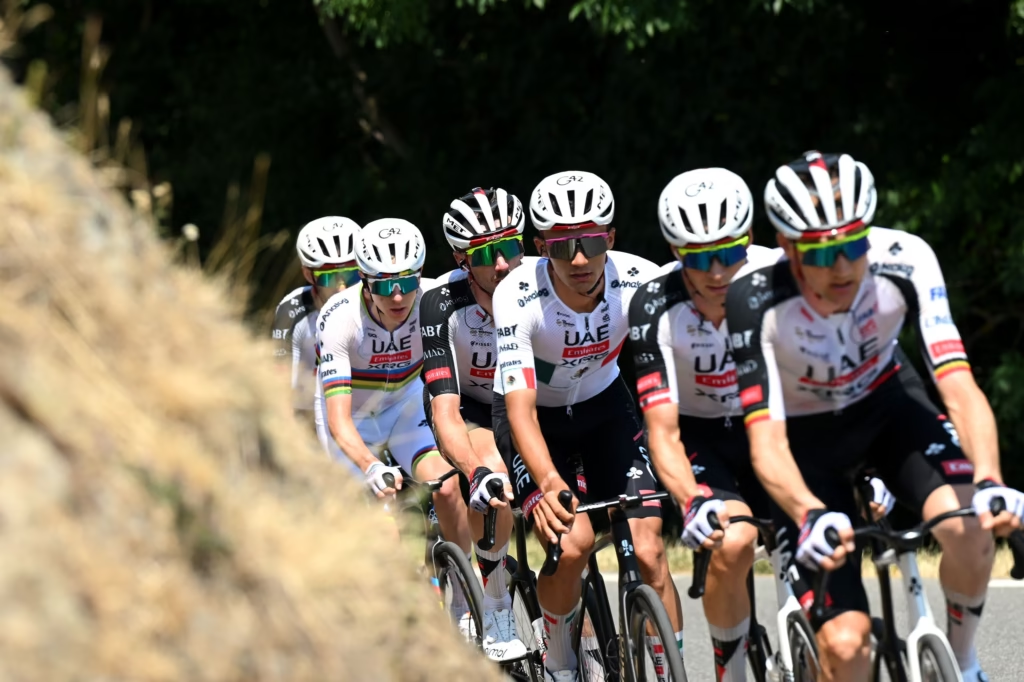 Photo Credit: Getty
Isolation matters more than surprise
A surprise attack sounds attractive, but isolation is more useful.
Pogačar is too sharp for most obvious ambushes. If Vingegaard attacks from a strong yellow jersey group, Pogačar can usually follow, wait, then counter or sprint. That is exactly the situation Visma must avoid.
The better objective is to leave Pogačar with fewer options. If UAE are reduced early, Pogačar has to close more gaps himself. If Del Toro is defending his own podium and white jersey position, UAE have to balance more than one internal objective. If a dangerous rider is ahead, Pogačar has to decide whether to chase personally or protect the yellow jersey margin.
That is where Vingegaard can create the conditions for time gain.
He does not need Pogačar to collapse. He needs Pogačar to be dragged into a race where he has to make decisions under pressure, without full team control around him.
Stage 10 is a test, not the whole answer
The first opportunity comes immediately after the rest day.
Stage 10 from Aurillac to Le Lioran is not the biggest mountain stage of the Tour, but it is awkward, steep and placed perfectly after the first rest day. The route has seven categorised climbs, 3,800m of climbing and a finale built around the Puy Mary, Col de Pertus and Col de Font de Cère.
This is not necessarily the day where Vingegaard wins the Tour back. But it is a day where he can start testing whether UAE are comfortable.
Visma should not need to launch an all-or-nothing move at Le Lioran. They need to see if UAE can control the break, the repeated climbs and the post-rest-day rhythm without leaving Pogačar exposed.
If Vingegaard can take even a small amount of time, the race changes. If he cannot, he still needs to make sure Pogačar and UAE have spent energy. The worst outcome would be a quiet stage where UAE defend easily and Vingegaard learns nothing.
Our stage 10 live viewing and start time update explains when the decisive Le Lioran section should arrive.
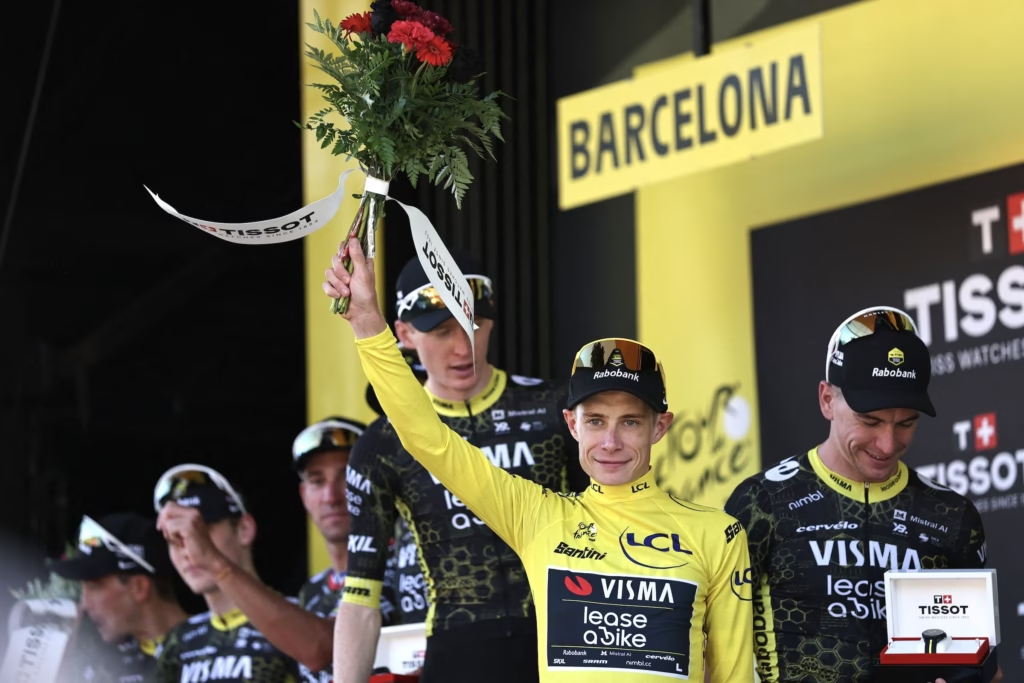 Photo Credit: Getty
He probably needs more than one attack
The gap is too big for one small acceleration.
Vingegaard can gain 10 or 15 seconds with a late move, but that alone does not change the race. He needs either one major day or several smaller gains. The second path is more realistic.
That means he needs to turn the next part of the Tour into a sequence of pressure points. Take a small gap on one stage. Force UAE to work on another. Put a satellite rider ahead. Attack over the top of a climb rather than waiting for a summit finish. Test Pogačar when the conditions are bad, not when the stage is perfectly controlled.
Pogačar’s advantage means he can afford to lose small amounts of time. Vingegaard’s challenge is to make those losses repeat. One 12-second gain is a warning. Three 12-second gains and a bad day from UAE becomes a race again.
This is why the best days for GC attacks at the Tour de France 2026 matter. Vingegaard cannot treat the route as a list of summit finishes. He has to use the stages where the terrain creates confusion.
The high mountains have to count
Sooner or later, Vingegaard needs time in the high mountains.
The Massif Central can create gaps, but the biggest opportunities still come when the race returns to longer climbs, altitude, heat, fatigue and repeated mountain days. That is where Vingegaard has historically been most dangerous: not simply on one steep ramp, but when the race becomes a test of sustained climbing, recovery and resistance.
Pogačar took his time on the Tourmalet stage to Gavarnie-Gèdre. Vingegaard now needs his equivalent day.
That does not mean copying the move. It means finding a stage where the rhythm suits him more than Pogačar: long climbs, hard team pacing, rivals isolated early, and enough road after the attack for the gap to grow.
Short explosive finishes often favour Pogačar. Long attritional mountain stages give Vingegaard a better chance to turn strength into time.
Our Tour de France 2026 mountain stages ranked by difficulty shows why the race still has enough terrain for a serious reset, even if Pogačar has the upper hand now.
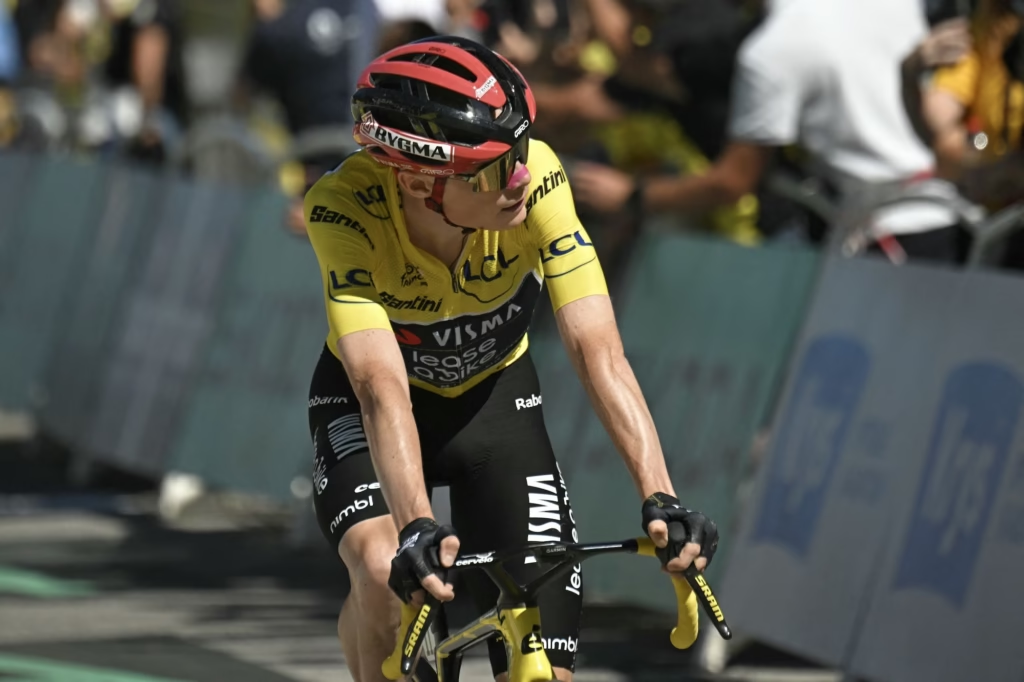 Photo Credit: Getty
Vingegaard must attack where Pogačar cannot simply sprint back
One of the problems with attacking Pogačar is that many attacks suit Pogačar too.
If Vingegaard waits for short, punchy finales, he may only create a situation where Pogačar follows and then outsprints him. If he attacks too close to the line, he reduces the potential gain. If he attacks on terrain where drafting matters too much, Pogačar can manage the effort without panic.
Vingegaard’s better chances come in places where the effort is long enough to become physiological rather than tactical. A 20-minute climb after a hard stage is better than a three-minute kick. A move over the top into a technical descent can be better than a summit sprint. A stage with a satellite rider ahead can be better than a clean head-to-head.
The goal is not to beat Pogačar in his strongest type of finish. It is to stop the race from arriving at that finish on Pogačar’s terms.
Other teams need reasons to race
Visma cannot do everything alone.
Evenepoel, Ayuso, Del Toro, Seixas, Lipowitz, Martinez and Skjelmose all have their own reasons to race. The podium and white jersey fights are tight enough that those riders and teams cannot simply sit behind UAE forever. If the race becomes active behind Pogačar, Vingegaard benefits.
That does not mean Vingegaard can rely on them. It means Visma should encourage a race state where other teams also want pressure.
Red Bull-Bora-Hansgrohe may want Evenepoel on the podium. Lidl-Trek have Ayuso and Skjelmose high overall. Decathlon CMA CGM have Seixas in the young rider fight. Bahrain Victorious have Martinez close enough to matter. The more those teams race for their own objectives, the harder it becomes for UAE to control everything with one tempo.
The podium fight is not separate from Vingegaard’s challenge. It can become part of it. The GC and jerseys after stage 9 show how tight the race behind Pogačar and Vingegaard remains.
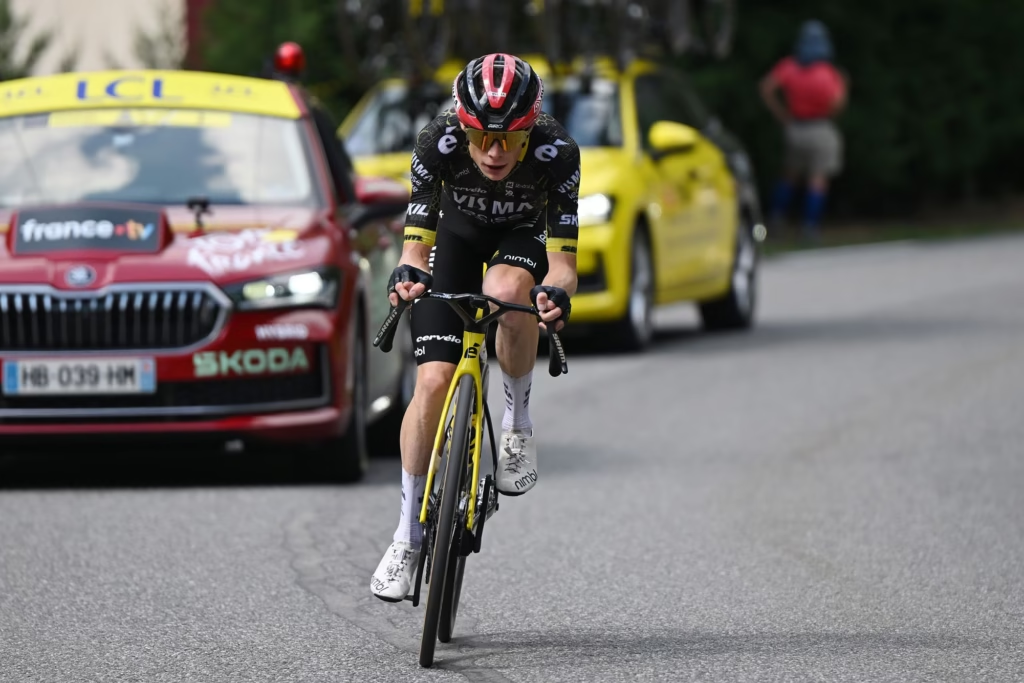 Photo Credit: Getty
He needs pressure, not wasted attacks
The obvious trap is impatience.
Vingegaard has to attack, but not every attack helps. A move that Pogačar closes immediately gives information, but it can also cost energy. A move launched when UAE are still strong may only set up a Pogačar counter. A move made without team support may leave Vingegaard isolated, exposed and vulnerable to losing more time.
The right attack needs at least one of three conditions: Pogačar isolated, UAE already working hard, or the road ahead favouring a sustained gap.
Without one of those, Vingegaard risks turning the Tour into a series of failed probes. The best version of his race is more patient than that. He needs pressure before attack, not attack as a substitute for pressure.
He still has to survive Pogačar’s best days
This part matters as much as gaining time.
Pogačar will almost certainly have more attacking days. He does not need to defend passively, and stage 6 at Gavarnie-Gèdre showed how quickly he can extend a gap when the race opens. Vingegaard cannot afford to chase time one day and then lose more the next.
That means Visma’s plan has to include damage control. If Pogačar attacks on terrain that suits him, Vingegaard may need to limit the loss rather than match every acceleration. If UAE control a stage perfectly, Vingegaard may need to accept that the opportunity is not there. If Pogačar sprints for bonuses, Vingegaard needs to avoid letting small losses accumulate too cheaply.
A comeback is only possible if the gap starts coming down. It cannot keep expanding.
Heat could still become a factor
The first week has already shown that conditions matter.
Stage 9 was shortened because of extreme heat, and that was not just an organisational footnote. Heat changes recovery, hydration, sleep, appetite, pacing and the risk of a sudden bad day. It can affect teams differently. It can make controlled racing harder. It can make a rider who looked comfortable one day vulnerable the next.
For Vingegaard, difficult conditions can be an opportunity, but only if Visma handle them better than UAE. That means cooling, feeding, rider positioning, bottle access and recovery become part of the tactical battle.
The Tour de France heat protocol explainer is not just a safety piece in this Tour. It is part of understanding how a GC rider might crack.
-
 Photo Credit: Cs-wolves / Wikimedia Commons, CC BY-SA 4.0
What success looks like before the final week
Vingegaard does not need to be in yellow immediately.
A realistic target is to reach the later mountain block with the gap reduced and the race mentally reopened. If he can cut Pogačar’s lead from 2:42 to something closer to 90 seconds, the pressure changes. If he can isolate Pogačar once, even without taking huge time, the race changes. If UAE look stretched on consecutive mountain days, the race changes.
The first objective is not the yellow jersey itself. It is to make Pogačar defend instead of choose.
At the moment, Pogačar has options. Vingegaard needs to remove them one by one.
Can Vingegaard still win the Tour?
Yes, Vingegaard can still win the Tour de France 2026.
But he cannot win it by waiting for Pogačar to make a mistake. He cannot win it by following. He probably cannot win it with one attack. He needs Visma to make the race harder earlier, use the high mountains properly, force UAE into long defensive efforts, and create repeated moments where Pogačar has to respond without full control.
Pogačar is the clear favourite because he already has the time, the jersey and the strongest race position. Vingegaard’s route back is narrow, but it exists.
The Tour is not finished. It has simply reached the point where Vingegaard has to start racing like a rider who needs to take 2:42, not protect second place.

