
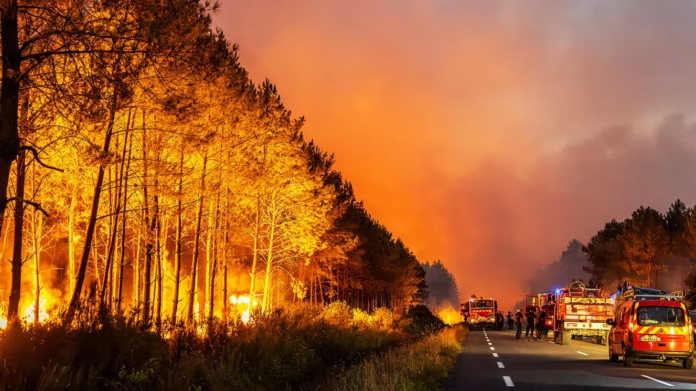
The 2026 Tour de France will end with one of the most unusual final stages in the race’s history after wildfires elsewhere in France forced organisers to dramatically redraw Stage 21.
Sunday’s finale has been shortened from 133km to 89km, with all competitive racing now taking place inside Paris.
The reason has nothing to do with a fire threatening the Tour route.
Instead, police and other internal security forces originally assigned to secure the race are being redeployed to support the national response to major wildfires, particularly the emergency in Gironde.
With firefighters, police and other emergency services already heavily committed, the Interior Ministry decided that maintaining the original race route from Thoiry through Yvelines and Hauts-de-Seine was no longer the priority.
The Tour still finishes on the Champs-Élysées.
Montmartre remains.
Almost everything before Paris has gone.
What is happening with the wildfires in France?
France is dealing with a serious period of wildfire activity during a summer already marked by extreme heat and dry conditions.
The most significant pressure this weekend has been around Gironde in south-west France, where emergency services have been heavily deployed to contain fires and protect affected communities.
That response involves much more than firefighters.
Police and other security personnel are also required for evacuations, traffic management, securing affected areas and helping protect homes and residents.
Those are some of the same public resources normally required to make a Tour de France stage possible.
That is where the problem for Stage 21 began.
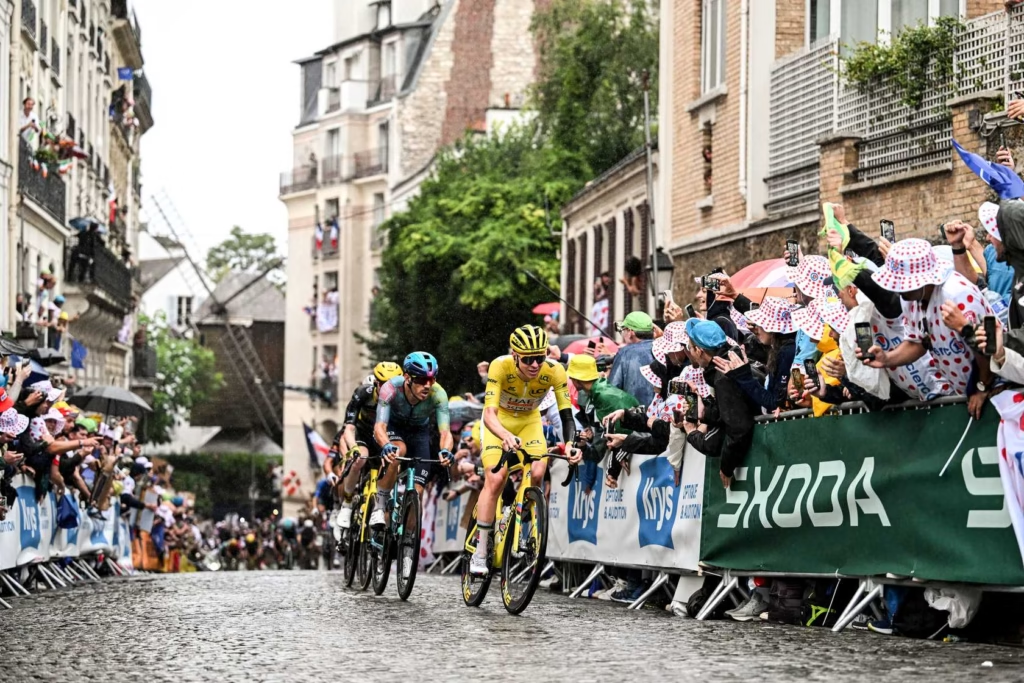 Photo Credit: A.S.O./Charly López
Why do wildfires far from Paris affect the Tour de France?
A Tour de France stage needs a huge security operation.
It is not simply about the police motorcycles travelling alongside the peloton.
Every part of the route needs to be secured.
Junctions have to be controlled.
Road closures need enforcing.
Spectators have to be managed.
The publicity caravan, team vehicles, race officials and peloton all need a protected corridor stretching across the stage.
The original Stage 21 was due to start in Thoiry and travel through Yvelines and Hauts-de-Seine before entering Paris.
That meant deploying personnel across a much larger area than the final Paris circuit alone.
With those same resources needed for the wildfire response, the Interior Ministry chose to redeploy part of the security force originally allocated to the Tour.
The race therefore had to change around the emergency.
Stage 21 has been cut from 133km to 89km
The biggest consequence is the distance.
The original 133km Thoiry-to-Paris stage has been reduced to 89km.
Thoiry still retains an important ceremonial role.
The Tour caravan will parade there, while the team presentation remains in place before the riders leave.
But the peloton will not race away from Thoiry.
Instead, the riders will board team buses and travel directly to Paris.
The competitive stage will begin from the Champs-Élysées at 17:50 local time, with an expected finish at around 19:45.
The full revised schedule and route are covered in our Tour de France 2026 Stage 21 preview.
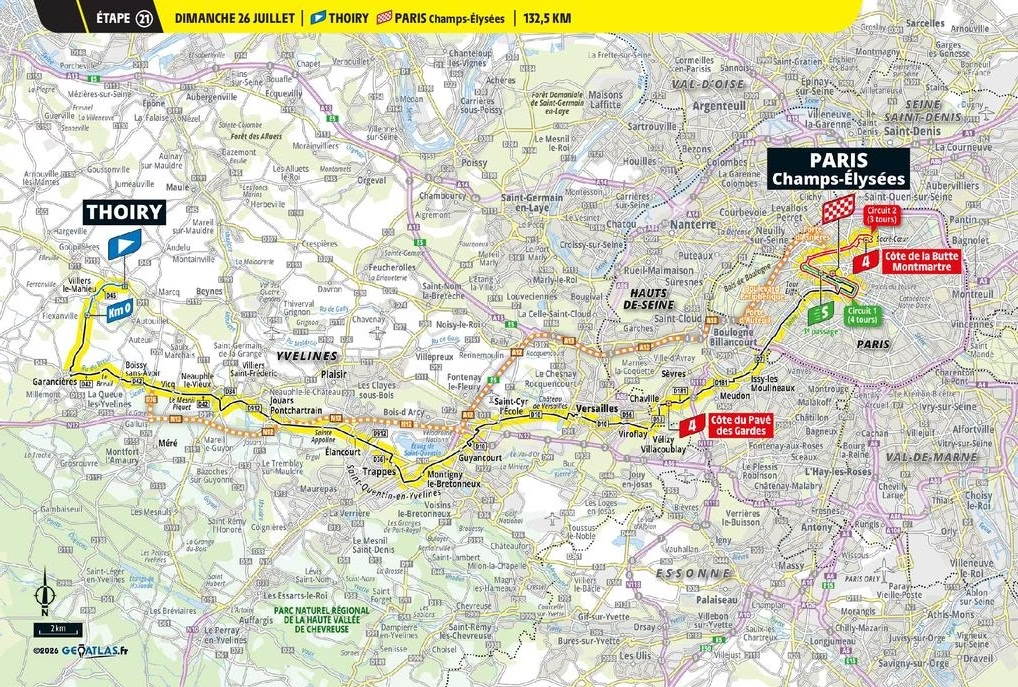
Yvelines and Hauts-de-Seine lose the race entirely
The suburban approach to Paris is the part of Stage 21 that has been sacrificed.
The race had been due to travel through Yvelines before continuing into Hauts-de-Seine and eventually reaching the capital.
Those sections have now been removed.
For spectators who planned to watch there, the Tour will no longer pass.
Thoiry keeps the ceremonial departure but loses the actual racing start.
From an organisational perspective, though, removing those kilometres drastically reduces the area that must be secured.
That frees personnel for the wildfire response while still allowing the Tour to complete its final stage.
Montmartre survives the emergency redesign
One of the biggest uncertainties on Saturday morning concerned Montmartre.
There had been speculation that the security pressures might also force organisers to remove the Rue Lepic circuit.
That would have fundamentally altered the sporting finale.
Instead, Montmartre remains part of Stage 21.
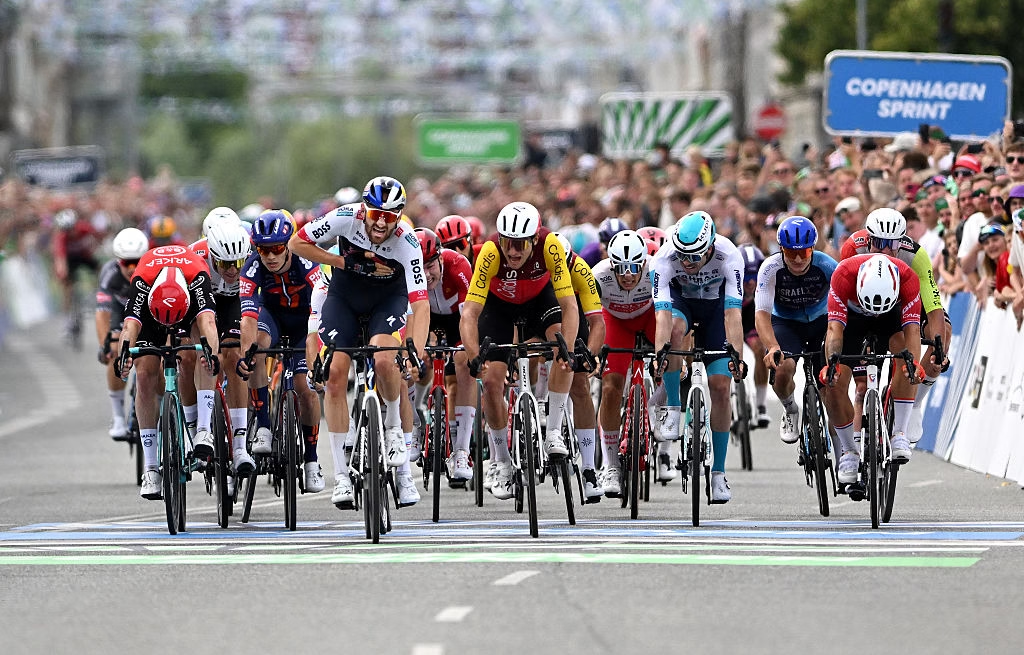
The peloton will start on the Champs-Élysées, complete additional laps there and then head towards Montmartre before returning for the finish.
That preserves the feature which transformed the Paris stage in 2025.
Our Montmartre Stage 21 guide explains why the short Rue Lepic climb has such a disproportionate tactical effect despite looking modest on paper.
The approach to Paris is gone.
The part most likely to decide the stage remains.
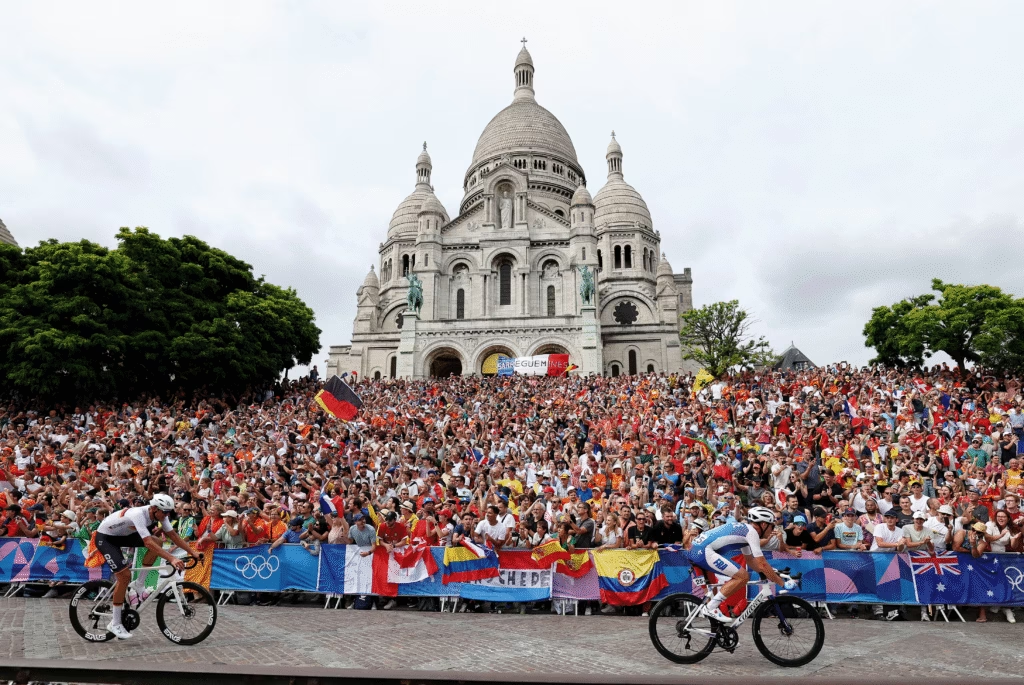
The wildfires may make Stage 21 faster
There is an interesting sporting consequence to the route change.
The riders will reach Montmartre with far less racing in their legs.
Nobody is genuinely fresh after three weeks of the Tour, particularly after the final Alpine stages, but an 89km road stage is exceptionally short.
Sprint teams should have more domestiques available late in the race.
Attackers should have more energy for Rue Lepic.
And the long ceremonial approach normally associated with Stage 21 has effectively disappeared.
Once the official start is given on the Champs-Élysées, there is little reason for the peloton to spend much time riding slowly.
The result could be a much more intense final stage compressed into a smaller window.
This is not the first weather disruption of the 2026 Tour
The Stage 21 change fits into a wider pattern from this year’s Tour.
Earlier in the race, Stage 9 had to be shortened because Corrèze was placed under a red heat alert.
That change reduced the stage and altered both the start and tactical picture, with ProCyclingUK’s Stage 9 preview focusing on how the shortened route and extreme heat changed the race.
The Stage 9 live viewing update also underlined the broader point.
A Tour stage does not only involve the riders.
It involves police, medical staff, volunteers, spectators, local authorities and roadside communities.
When extreme conditions make those wider demands unsafe or impractical, the race has to adapt.
Stage 21 is another example, although this time the emergency is happening elsewhere in France.

Why the Tour could not simply continue as planned
The Tour has enormous organisational resources behind it.
But it does not operate independently from the country through which it travels.
Police, gendarmes, emergency services, councils and national authorities all play a role in making every stage possible.
When those resources are required for a major emergency, the race becomes secondary.
That is the central point behind the Stage 21 decision.
The Tour has not been shortened because organisers believe the Paris route itself is unsafe.
It has been shortened because the personnel needed to secure dozens of kilometres of public road are more urgently needed elsewhere.
Removing part of a bicycle race is a relatively small sacrifice when those resources are required to protect communities affected by fire.
The Tour still gets its Paris finale
Despite the scale of the change, organisers have preserved the core sporting elements of Stage 21.
The race still finishes on the Champs-Élysées.
Montmartre remains.
The sprinters still have a chance to win one of cycling’s most famous stages.
Tadej Pogačar and the classics riders still have Rue Lepic as somewhere to attack.
The Stage 21 preview now looks at how the 89km format changes the balance between those attackers and the sprint teams.
What disappears is the journey into Paris.
Instead, the riders will complete their presentation in Thoiry, transfer by bus and begin racing from the Champs-Élysées itself.
It is a remarkable way for a three-week Tour to finish.
But the reason for it stretches far beyond cycling.
France’s emergency resources are needed where lives, homes and communities are under threat.
For once, the Tour has had to move around the needs of the country rather than expecting the country to move around the Tour.

