
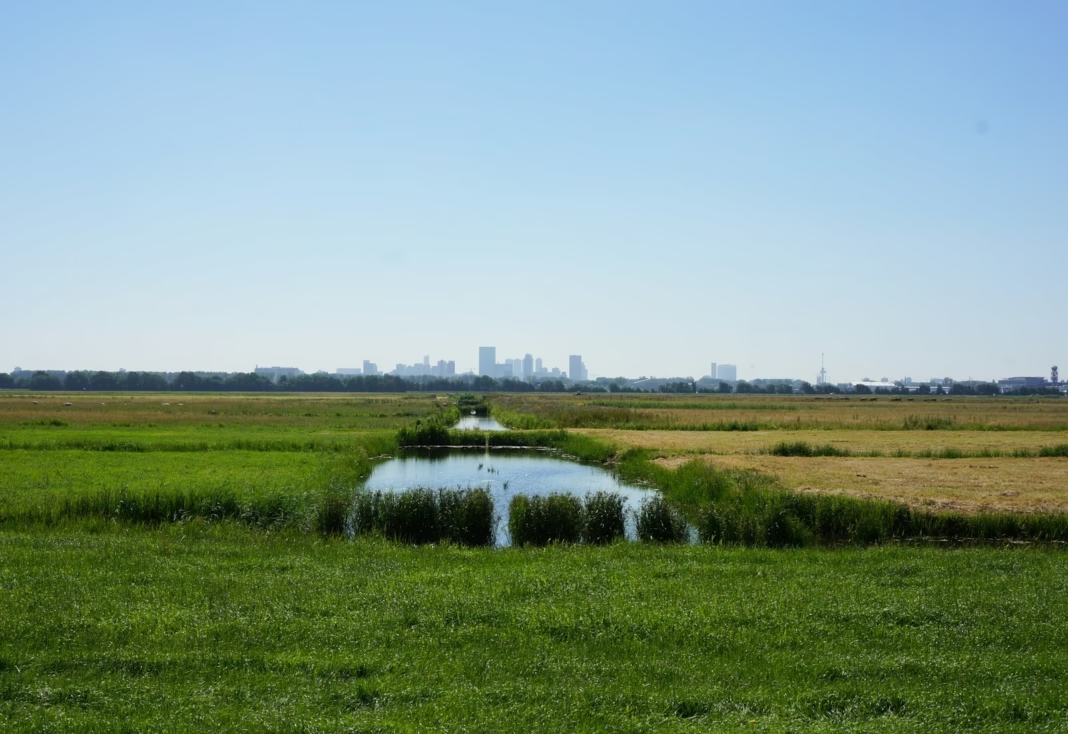
The Netherlands is often reduced to one cycling stereotype: flat roads, bike paths and a lot of wind.
That description is not wrong, but it is incomplete. For road riders and touring cyclists, the Dutch coast offers dunes, sea walls, long exposed causeways, ferry crossings, polder roads and carefully separated cycleways. Elevation is almost irrelevant, but that does not make the riding easy. The landscape is open, the wind has nowhere to hide and holding speed across 100km of exposed coastline can be harder than a hillier ride elsewhere.
The bigger attraction is how distinctive the landscape feels. In Zeeland, routes thread between islands, estuaries and dykes. Farther north, the road moves through North Sea dunes towards Den Helder, the IJsselmeer and the Wadden coast. Turn inland and the sea disappears, replaced by drainage canals, geometric fields, windmills and roads through reclaimed land.
It is a very different side of Dutch cycling from the short climbs and Classics rhythm of Limburg and the Amstel Gold region. Here, the challenge comes from distance, wind and exposure rather than gradient.
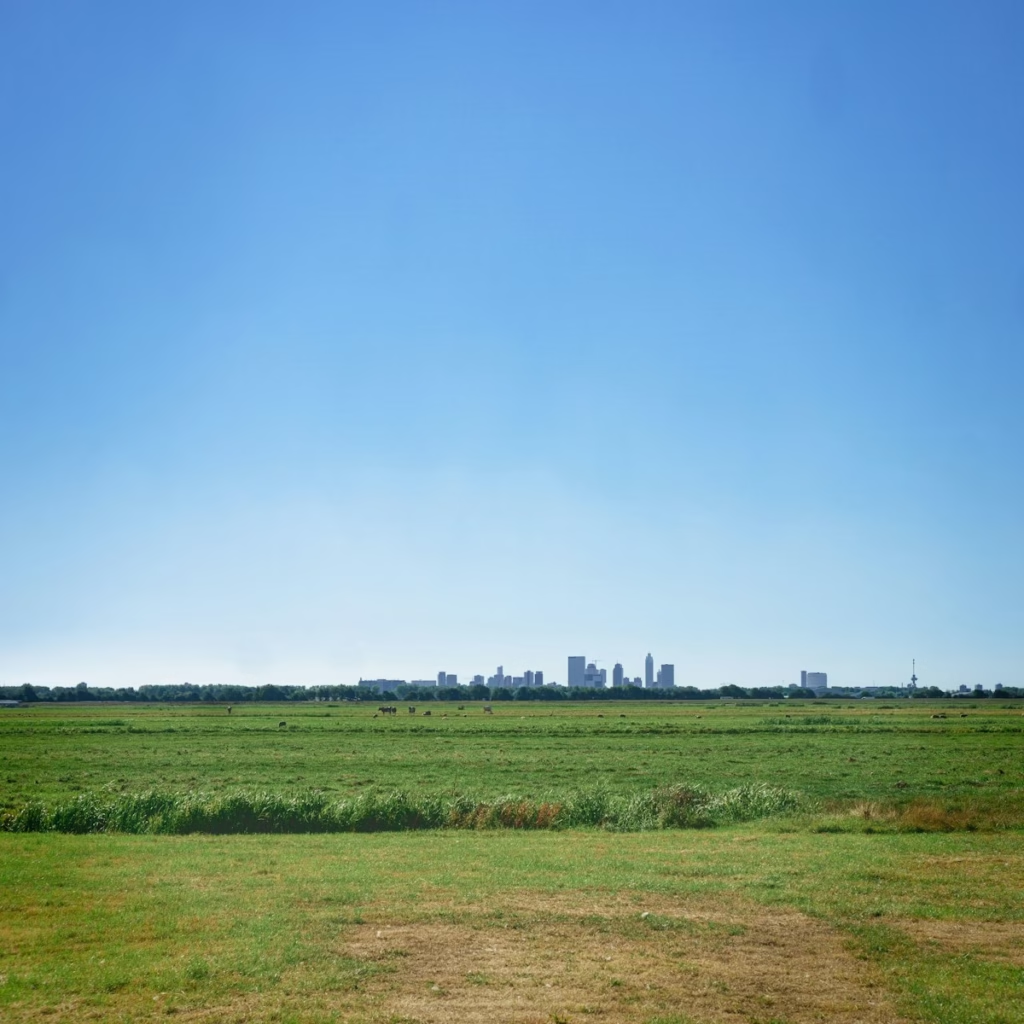
The Dutch coast is much more than a beach road
The Netherlands has a long-established coastal route running for around 610km between Zeeland in the south-west and Groningen in the north-east. Few riders will tackle all of it in one trip, and there is no need to.
The strength of the Dutch coast is that individual sections work well as standalone rides. A weekend around Zeeland feels completely different from several days between Haarlem and Den Helder, while Friesland and Groningen offer another style again.
Purpose-built paths frequently run parallel to roads or disappear into the dunes, allowing long periods of riding with little interaction with motor traffic. That makes the Netherlands a particularly strong option for endurance mileage and touring, fitting neatly into the wider range of cycling destinations across the rest of Europe.
Zeeland is the obvious place to start
If the aim is to understand Dutch coastal cycling quickly, Zeeland is probably the best first destination.
Almost every worthwhile ride is shaped by water. Routes cross islands, estuaries, dams and dykes, switching repeatedly between exposed coastline and sheltered agricultural land.
A 60km day can stay largely on one island, while a 120km route can link several using dams, bridges and causeways. A multi-day trip can work through much of the province without feeling repetitive.
Dykes make the riding more interesting than the profile suggests
On a route planner, Zeeland can look almost featureless. On the bike, it rarely feels that way.
Many routes allow you to ride either on the exposed sea side of a dyke or behind it. On top, you may have uninterrupted views across the water and an equally uninterrupted headwind. Drop behind the same structure and much of that wind can disappear.
That makes route choice tactical. In strong conditions, the quickest route is not always the shortest one, and a small deviation inland can save far more energy than trying to hold speed on an exposed sea wall.
This is flat riding where understanding the landscape matters as much as following the map.
The Oosterscheldekering is the Dutch version of a landmark climb
The Netherlands cannot offer a Stelvio or Ventoux, but it does have roads that feel significant because of where they go.
The Oosterscheldekering, part of the Delta Works, is one of them. Cycling across the huge storm surge barrier puts you directly into the landscape that defines Zeeland, with water on both sides and almost no shelter from the wind.
The challenge is exposure rather than elevation. A strong south-westerly can turn a straightforward crossing into prolonged threshold work, particularly when there is nowhere for a group to hide.
That is one of the recurring themes of Dutch coastal riding. You do not climb into difficulty. The weather brings the difficulty to you.
Schouwen-Duiveland and Walcheren make strong day-ride bases
North of the Oosterschelde, Schouwen-Duiveland is one of the best areas for a self-contained loop.
Renesse and Burgh-Haamstede provide access to the western dunes, while roads and paths continue east through polder country towards Zierikzee and the Oosterschelde. A 60-100km ride can pass through dunes, exposed farmland and dyke roads without needing major transfers.
Walcheren, around Middelburg, Vlissingen and Domburg, is equally useful. The western side gives direct access to the North Sea, while the interior provides flatter and more sheltered riding through farmland and villages.
Middelburg is probably the best all-round base, particularly for riders travelling by train rather than car.
Zeeland-Flanders adds a cross-border option
South of the Westerschelde, Zeeland-Flanders brings another mix of coast and polder roads.
The area around Breskens, Cadzand and Retranchement combines sea walls, farmland and quieter roads close to Belgium. A shorter ride can stay entirely within the Dutch coast, while a stronger rider can extend towards Knokke or even build a loop around Bruges.
That creates an unusual possibility: a ride can begin as a Dutch coastal route, cross into Belgium for coffee and return through the polders without turning into a major expedition.
For anyone already interested in riding Belgium, it provides a natural link between the Dutch coast and the more Classics-focused terrain covered elsewhere in the ProCyclingUK travel hub.
The Delta Works make excellent touring infrastructure
Zeeland is unusual because the engineering that protects the province also connects it.
Dams, barriers and bridges provide long links between islands that would otherwise require ferries or major detours. For cyclists, those structures create distinctive riding, often with water on both sides and several kilometres of complete exposure.
That makes Zeeland particularly good for a three or four-day tour.
For riders not used to consecutive long days, our guide to training for your first multi-day cycling holiday covers the durability, pacing and fuelling needed once the distances begin stacking up.
Dutch polders are more interesting to ride than they look
Move inland and the landscape changes from coastal engineering to agricultural engineering.
A polder is land enclosed by dykes where water levels are artificially controlled, often including areas reclaimed from lakes or the sea.
On a map, polder riding can look brutally simple: straight road, canal, right turn, another straight road.
In practice, it has a strange appeal. Horizons are enormous, roads run beside drainage channels and church towers can be visible long before you reach the village they belong to.
There is no climbing to break the rhythm.
You simply ride.
Beemster and Flevoland show the polder at different scales
North of Amsterdam, Beemster is one of the best places to understand the reclaimed landscape.
The former lake was drained in the early 17th century and laid out in an ordered pattern of roads, fields and canals. For cyclists, that creates simple navigation and easy links towards Edam, Purmerend and Alkmaar.
The attraction is not one specific road. It is realising that almost everything around you exists because water was deliberately removed from it.
For the more extreme version, head to Flevoland.
Much of the province did not exist as dry land until the 20th century. Roads, canals, fields and newer towns spread across enormous open spaces where distances can feel larger than they appear.
Flevoland is where you learn how hard flat cycling can become when the wind decides you are going in the wrong direction.
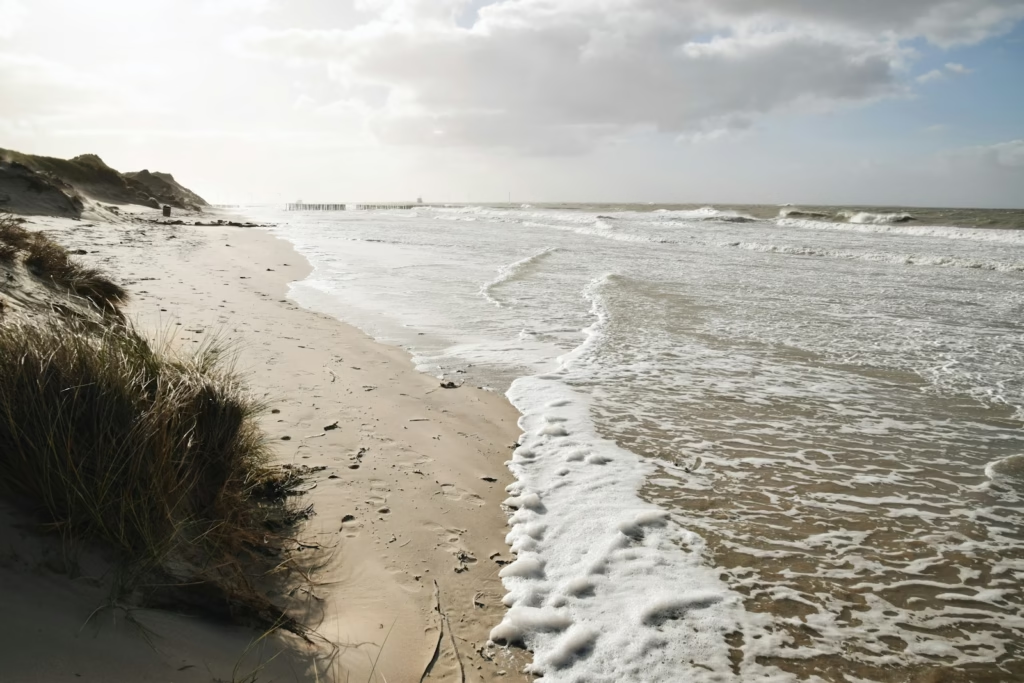
The wind is the Dutch climb
This is the most important lesson for anyone planning a serious coastal or polder ride.
Ignore elevation.
Check the wind.
A 100km Dutch ride with almost no climbing can be considerably harder than a hillier route elsewhere if half the day is spent riding into a strong headwind across exposed ground.
Groups become particularly valuable. Rotating turns can transform the effort, while riding alone may turn an apparently easy route into several hours of sustained work.
Professional Dutch racing has built an entire tactical culture around this terrain.
If you want to understand why echelons matter, ride beside the North Sea in a crosswind.
Plan around the forecast rather than fighting it
Route direction matters more here than in many cycling destinations.
If there is a strong westerly, it may make sense to ride into it early while fresh and use the tailwind to return. For a point-to-point route, the railway can sometimes make an even better option: travel upwind and ride back.
The reward for getting the direction right can be dramatic.
A strong tailwind on smooth cycle infrastructure makes long distances disappear unusually quickly.
The opposite is also true.
A 30km flat return into a headwind can feel longer than the first 70km combined.
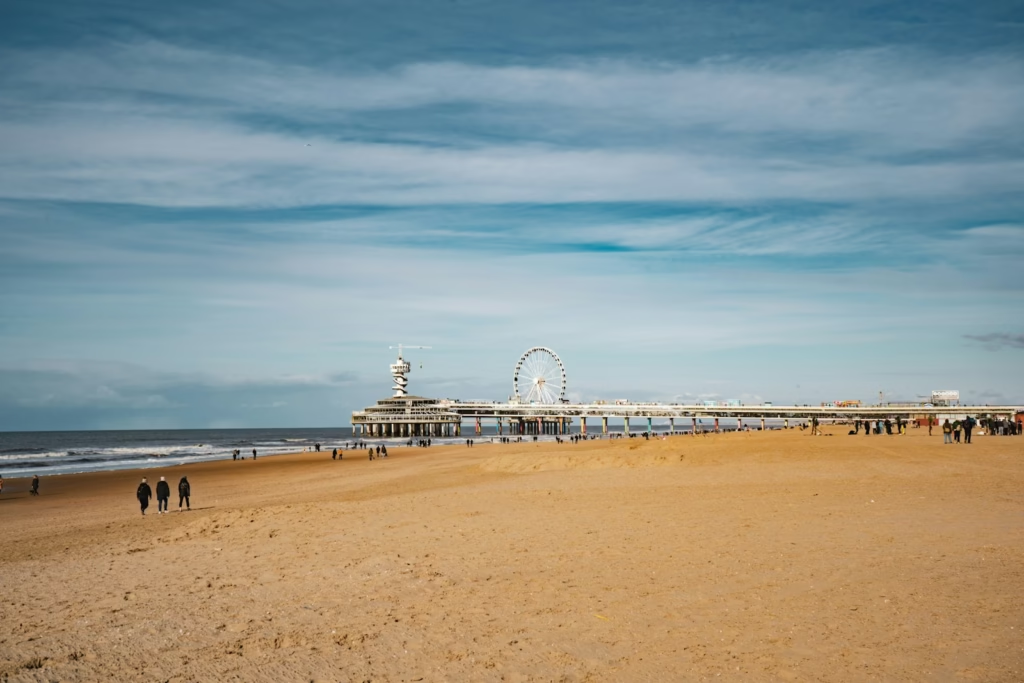
The dunes provide the best coastal riding
Not all Dutch coastal cycling is completely exposed.
The dune belts along large sections of the North Sea provide some of the best riding in the country. Cycle paths weave through dunes, scrub and woodland, often hidden from the sea despite being only a short distance from the beach.
The surfaces are generally good and long traffic-free sections make them ideal for steady endurance riding.
There are also more changes in gradient than many riders expect. Nothing qualifies as a serious climb, but the paths rise and fall enough to break up the rhythm.
For anyone imagining the Dutch coast as one uninterrupted sea wall, the dunes usually change their mind.
The Hague and Haarlem are excellent bases
For accessibility, The Hague is difficult to beat.
The city gives direct access north through the dunes towards Katwijk, Noordwijk and Zandvoort, while routes south can continue towards Hoek van Holland and Rotterdam.
Once inside the dune network, urban riding disappears quickly. A 100km coastal day is entirely realistic while still returning to a major city with plenty to do off the bike.
Haarlem is another strong option, particularly for the coast north of Amsterdam.
Zandvoort sits only a short ride away, after which the coastal paths continue towards IJmuiden, Castricum, Egmond and eventually Den Helder. Haarlem also gives easy access inland towards Beemster and Alkmaar, making it one of the best bases for combining coast and polder.
Den Helder and Texel add an island day
At the northern tip of North Holland, Den Helder marks a natural end to one section of the coast.
From here, ferries connect to Texel.
The island is large enough for a substantial day ride but compact enough that the route never needs to become complicated. Dunes, farmland, villages and sea walls make it feel like a compressed version of the wider Dutch coastal landscape.
For a multi-day trip, Texel works particularly well as a break in the journey north before continuing towards Friesland or turning back south.
The Afsluitdijk is unlike almost any other crossing
The Afsluitdijk separates the IJsselmeer from the Wadden Sea across more than 30km.
For cyclists, the attraction is obvious. It is an enormous, almost perfectly straight crossing through water, with few visual references for distance and little conventional scenery beyond dyke, horizon and sky.
Weather can completely determine the experience. With favourable wind, the crossing can disappear quickly. Into a headwind, it can feel endless.
Access arrangements have changed during long-running construction work, so anyone planning to include it should check the current cycling situation shortly before travelling.
Friesland and the Wadden coast feel much more remote
Once into Friesland, the landscape becomes even more closely linked with water.
Canals, lakes, farmland and historic towns create a network where almost every route crosses water repeatedly. The northern edge towards the Wadden Sea is particularly appealing for anyone continuing a coastal trip.
The Wadden coast through Friesland and Groningen contains some of the widest landscapes in the Netherlands.
Small villages, long dykes and huge skies can make it easy to forget how densely populated the country is elsewhere.
This is where an endurance road bike or touring setup makes more sense than a pure race bike.
The cycling becomes more about moving through the landscape than producing a perfect training loop.
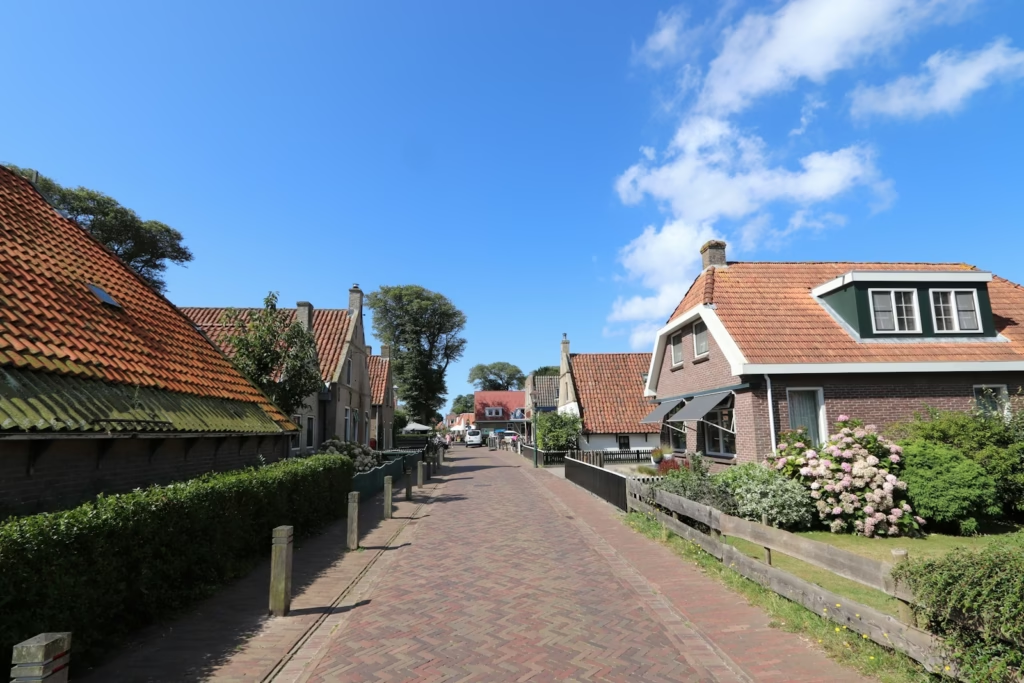
The junction network makes improvisation easy
One of the biggest practical strengths of cycling in the Netherlands is the numbered cycle-junction system.
Rather than committing to one named route, riders can link numbered junctions and change plans while already on the road.
That flexibility is particularly useful near the coast.
Feeling good and the wind has dropped? Add another loop.
The forecast has turned? Cut inland and use the dyke for shelter.
Few countries make spontaneous route changes this straightforward.
An endurance road bike is close to ideal
Most Dutch cycle paths are perfectly usable on a road bike.
An endurance setup with 28-32mm tyres is close to ideal because it keeps enough speed for long dyke roads while adding comfort on paving, rougher surfaces and tighter paths.
A gravel bike works equally well if you want more freedom to explore.
A deep-section aero race bike will obviously handle the riding, but its advantages can feel less important when the defining feature of the day is a gusty crosswind.
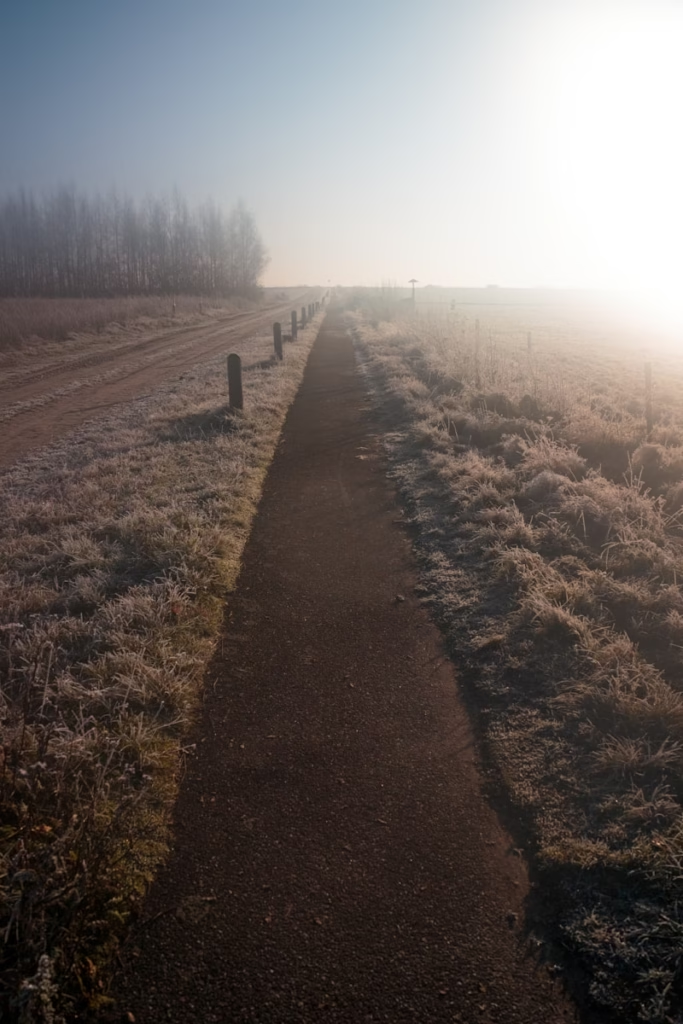
Dutch cycle paths are not training circuits
The quality of the infrastructure can create a false assumption that every cycleway is designed for fast road riding.
It is not.
The same paths are used by commuters, families, children, e-bikes, cargo bikes and touring cyclists.
Near towns and popular beaches, race pace can be inappropriate and sometimes impossible.
The best faster riding generally comes farther from urban areas, where paths become quieter and sight lines improve.
Near cities and resorts, patience is simply part of the trip.
Spring, summer and autumn all work differently
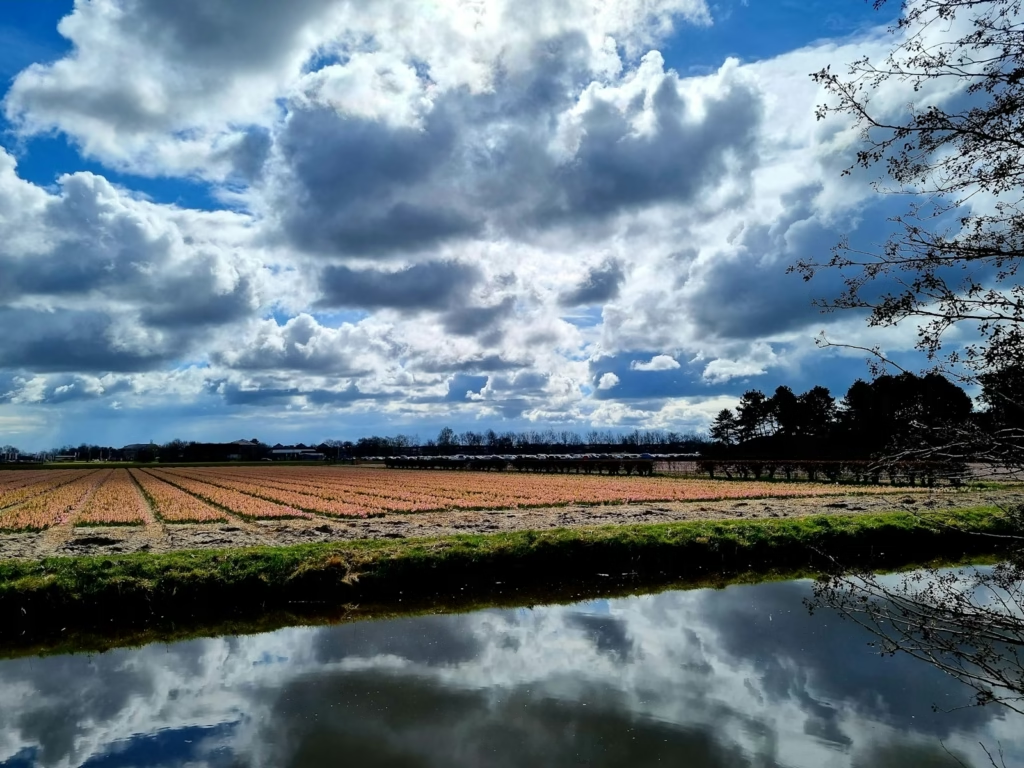
April and May are particularly attractive for coastal and polder riding. Temperatures are usually comfortable, summer tourism has not fully arrived and parts of North Holland gain the colour associated with the spring bulb fields.
June through August provides long daylight and generally warmer conditions, making multi-day touring straightforward. The trade-off is busier coastal paths around places such as Scheveningen and Zandvoort.
September and early October can be excellent for stronger riders. The coast becomes quieter, temperatures often remain comfortable and stronger winds turn flat routes into serious endurance training.
There is no single perfect season.
The wind will probably be part of the experience whenever you go.
A first Dutch trip should combine coast and polder
A first trip should include both landscapes.
Spend one day almost entirely beside the sea, then another riding inland.
The contrast explains the Netherlands better than either one alone.
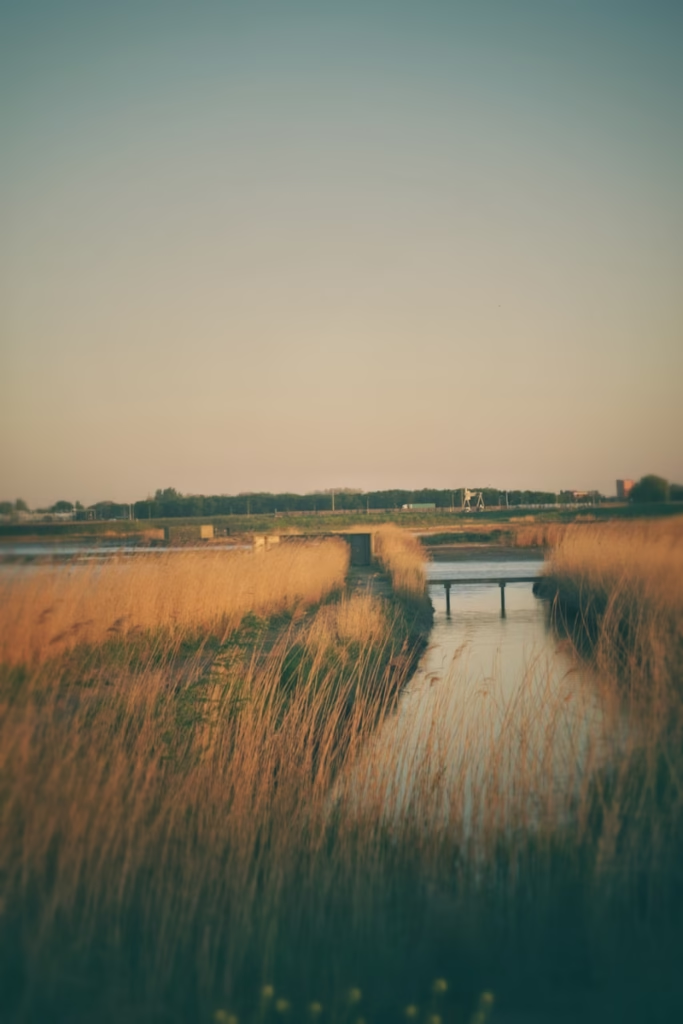
A coastal ride gives dunes, dykes, beaches and huge views across the North Sea. A polder ride gives canals, farms, windmills, straight roads and the slightly surreal knowledge that the landscape exists only because generations of engineering keep the water somewhere else.
Neither requires a mountain.
Both feel unmistakably Dutch.
Zeeland is best for variety
If choosing one area for a three or four-day cycling break, Zeeland probably gives the strongest introduction.
The coast is close, the polders begin immediately behind it and the Delta Works create memorable route objectives. Different islands make it easy to give each day a different purpose.
One ride can concentrate on the Oosterschelde.
Another can follow the North Sea dunes.
A third can head inland through Zuid-Beveland or Zeeland-Flanders.
For a country famous for flatness, Zeeland rarely feels repetitive.
North Holland works better with an Amsterdam trip
If cycling needs to fit around time in Amsterdam, North Holland is the easier option.
Base yourself outside the centre or use Haarlem and you can quickly reach the coast, Beemster, Edam and the roads towards Alkmaar.
That gives a particularly good mixture of urban Dutch cycling infrastructure and open countryside.
Within a relatively short ride, you can move from one of Europe’s busiest metropolitan areas into farmland where the main obstacle becomes the wind rather than traffic.
-
 Photo Credit: Getty
A multi-day coastal ride shows the country best
The strongest way to experience Dutch coastal cycling may be to travel through it rather than repeatedly returning to the same hotel.
A route beginning in Zeeland can work north through the Delta Works, The Hague, the dunes of North Holland and towards Den Helder. Continue farther and the landscape opens into Friesland and the Wadden coast.
The full journey is long enough to become a proper cycling holiday rather than a sequence of day rides.
There is almost no climbing to dictate the itinerary.
Distance, weather and how long you want to spend in each town become the main variables.
For more destination ideas built around that kind of travel-led riding, the ProCyclingUK travel section covers routes and bases across Europe and beyond.
Flat does not mean easy and it certainly does not mean dull
Dutch coastal and polder riding works because it removes one of the things cyclists normally use to define a good destination.
There are no major mountains.
Instead, the challenge comes from exposure, distance and wind. The scenery comes from dunes, water, huge skies and landscapes deliberately shaped to keep the sea under control.
The route itself becomes part of that story. You ride over barriers built to prevent floods, beside canals draining reclaimed land and along dykes that can either shelter you from the wind or put you directly into it.
The Netherlands is often treated as a place where cycling is good because the infrastructure is good.
Along the coast and through the polders, the riding is memorable because the bicycle lets you understand why the landscape looks the way it does.

