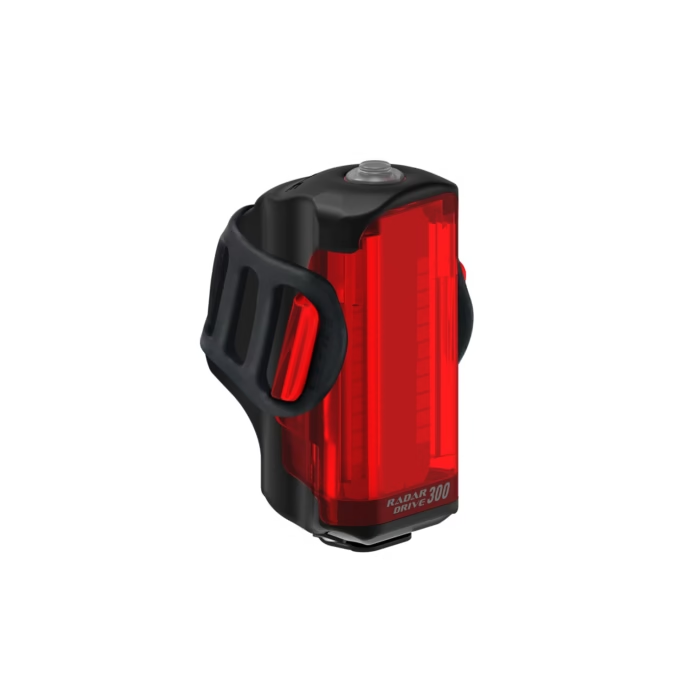
The Lezyne Radar Drive Rear enters a category that has become much more competitive in 2026. Garmin is no longer the only serious option, Wahoo has its TRACKR RADAR and lower-cost units from Magene and others have pushed rear radar below the old premium price point. Lezyne’s answer is different enough to deserve attention: it combines a 300-lumen rear light with 150-metre radar detection, app support and the option to work with a dedicated React Drive front light, so riders do not necessarily need a GPS computer to receive traffic warnings.
Independent testing has been consistently positive about the fundamentals. Radar detection is strong, the rear light is exceptionally visible and battery life is competitive. The compromises are more specific: the strap mount feels less convincing than the electronics, there is no brake-light function and one early BikeRadar test unit developed a rattle that Lezyne treated as a warranty issue. At its current UK selling price, though, the Radar Drive has become much easier to justify.
This article contains affiliate links. ProCyclingUK may earn a commission from qualifying purchases at no extra cost to you. The Lezyne Radar Drive Rear is currently available from Tredz, where it was listed at £131.99 against a £170 RRP when checked.
Lezyne Radar Drive Rear specifications
| Maximum light output | 300 lumens |
| Claimed radar range | Up to 150 metres |
| Radar field of view | 35 degrees |
| Side visibility | 270 degrees |
| Maximum claimed runtime | 20 hours |
| Connections | ANT+ and Bluetooth |
| Charging | USB-C |
| Water resistance | IPX7 |
| Weight | 144g |
| Dimensions | 78 x 48.9 x 47.6mm |
| Mounting | Seatpost strap with round, D-shaped and aero-post support |
Radar performance is the important part
A radar light only earns its place if the vehicle detection can be trusted. Lezyne claims approaching traffic can be detected from up to 150 metres away, with the system passing information to a compatible GPS computer, the Radar Ally phone app or the company’s React Drive front light.
The independent evidence is reassuring. BikeRadar measured detection beyond 140 metres and found the Radar Drive particularly good at seeing vehicles on twisting rural roads, including traffic that was still out of the rider’s direct line of sight. road.cc also rated its radar performance alongside the stronger established competitors, finding it broadly comparable with Wahoo’s TRACKR RADAR while Garmin’s Varia retained a small advantage in how early it sometimes raised an alert.
Cycling Weekly reached a similar conclusion in its 2026 radar comparison. The Lezyne was not the outright benchmark, but its accuracy and connection options made it one of the more convincing alternatives. That context matters more than a maximum-range figure in isolation. Consistent detection is what makes radar useful on fast B-roads and narrow lanes where closing speeds can change quickly.
A much brighter rear light than many radar rivals
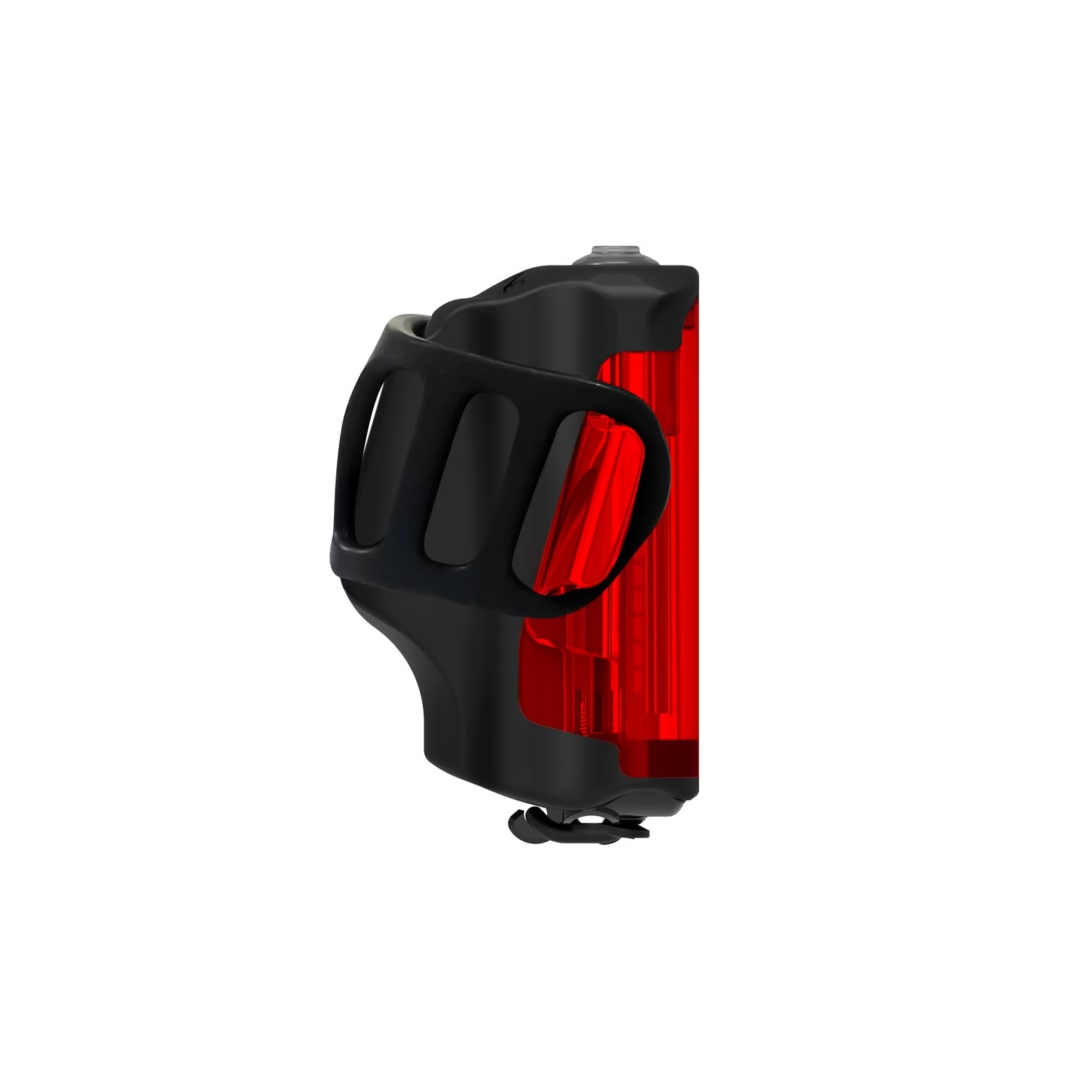
The Radar Drive’s other advantage is that Lezyne has not treated the light as an afterthought. Its maximum 300-lumen daytime flash is considerably brighter on paper than many radar lights, while the wraparound optics are designed to provide 270-degree visibility.
That side visibility drew particular praise in independent testing. BikeRadar found the light performance one of the strongest parts of the product, while road.cc also highlighted how conspicuous it is from angles rather than only directly behind. There are seven output modes, and the light can trigger a specific alert flash when the radar detects an approaching vehicle.
This makes the Lezyne particularly interesting for riders who would otherwise buy a powerful daytime rear light as well as radar. ProCyclingUK’s radar rear light versus normal rear light guide explains where that additional traffic information changes the proposition.
The React Drive option is genuinely different
Most radar lights assume the rider already owns a compatible head unit or is willing to mount a phone. Lezyne adds a third option. Pair the Radar Drive with the React Drive front light and the front unit provides visual and audible warnings for traffic approaching from behind.
That makes it possible to build a self-contained front-and-rear lighting and radar system. A smartphone is required for the initial pairing, but it does not need to remain on the handlebars during every ride. For riders who use a simple computer or no computer at all, that is a meaningful distinction.
It is not necessary to buy the complete system. The rear unit works with compatible ANT+ radar head units and Lezyne’s Radar Ally app. The standalone Radar Drive Rear therefore makes more sense if you already use a Garmin, Wahoo, Hammerhead or another compatible computer.
Battery life is competitive, with one usability quirk
Lezyne quotes up to 20 hours in its longest-running flash mode. BikeRadar recorded around seven and a half hours in a medium solid setting before the light automatically dropped into a lower-power mode, against a nine-hour claim for that setting. That is still enough for most training and commuting use without constant charging.
The more confusing part is standby. The light can enter a semi-active state rather than shutting down completely, allowing connected devices to wake or control it. BikeRadar found this could leave less battery than expected if the user assumed the unit was fully off. A longer button press shuts it down completely.
USB-C charging is welcome, particularly for riders trying to reduce the number of cables needed for cycling electronics. IPX7 water resistance is also appropriate for a device that sits directly in road spray through winter.
The seatpost mount is the obvious weak point
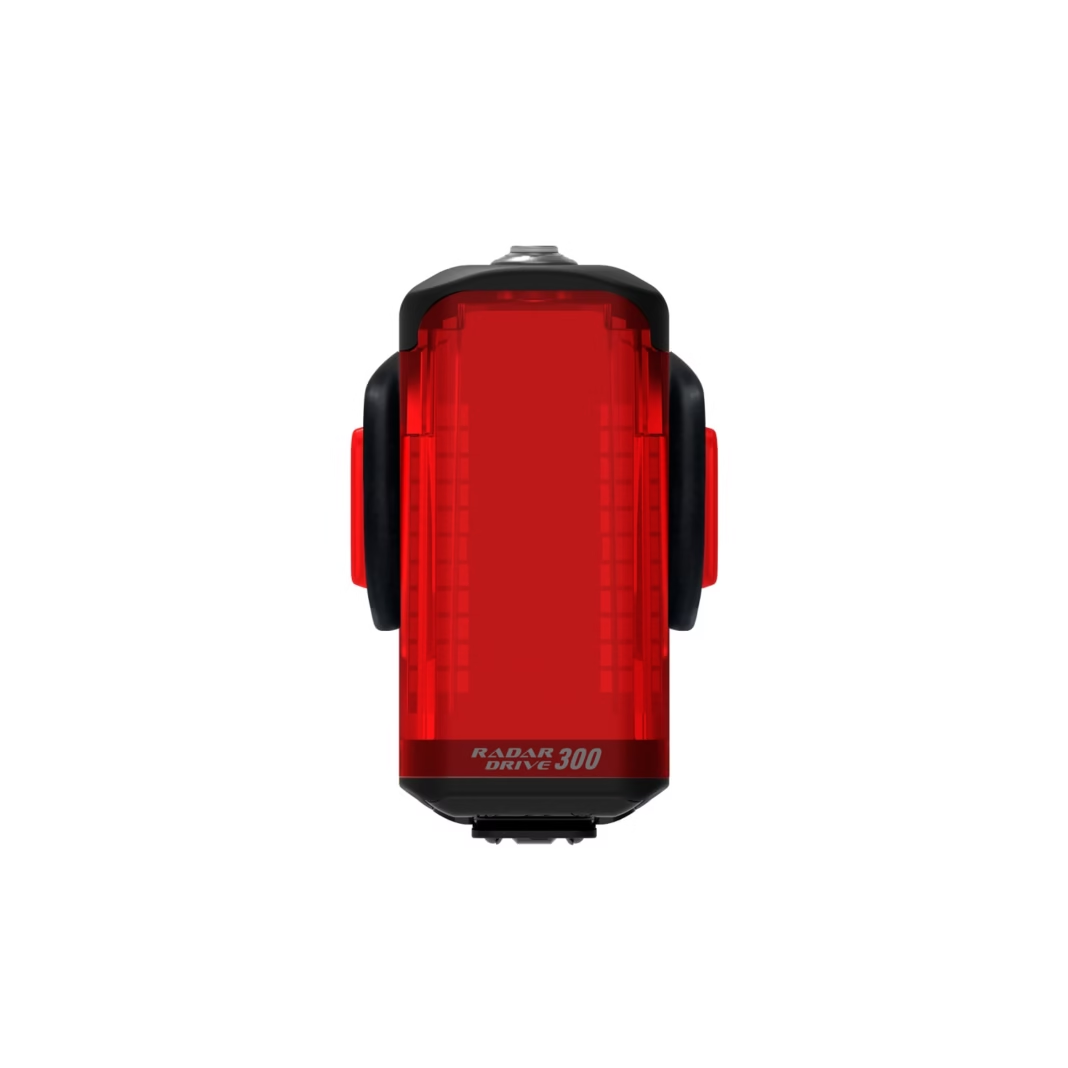
Lezyne supplies straps and adaptors for round, aero and D-shaped seatposts, which gives the Radar Drive useful compatibility straight from the box. The unit is also compact enough to fit beneath many saddles without consuming an excessive amount of exposed seatpost.
The problem is refinement rather than basic function. road.cc considered the strap cheap-feeling beside the rest of the unit, while Garmin’s quarter-turn ecosystem remains easier to adapt to unusual bikes and aftermarket mounting positions. Riders using a large saddle bag should also check that the radar retains a clear rearward view.
BikeRadar’s test was more positive about mount stability, but its early review sample developed an internal rattle. Lezyne said this appeared to be an issue with the damping insert on that sample, had not generated wider consumer reports and supplied a warranty replacement. With no evidence of a broad failure pattern, it is best treated as an isolated concern rather than a reason to dismiss the product.
How it compares with Garmin and Wahoo
The Garmin Varia RearVue 820 remains the premium reference point. Its newer radar technology can provide richer information with compatible Garmin computers, but it also costs substantially more. ProCyclingUK’s Garmin Varia RearVue 820 review explains why its strongest case is for riders already invested in the Garmin ecosystem.
Wahoo’s TRACKR RADAR is a closer comparison on price and core functionality. Independent tests differ slightly over the fine margins between them, but both sit in the group of radars that can credibly challenge Garmin on everyday detection. The Wahoo TRACKR RADAR review covers its narrower 35-degree beam and strong integration with ELEMNT computers.
The Lezyne’s argument is versatility. It offers a very bright rear light, a phone app, normal head-unit compatibility and the unusual React Drive front-light option. At the current Tredz price of £131.99, it also undercuts several premium rivals while remaining a much more substantial proposition than the cheapest radar lights.
Who should buy the Lezyne Radar Drive Rear?
It makes most sense for road riders, commuters and endurance cyclists who want radar but also place a high value on rear-light output. Riders without a sophisticated GPS computer have an additional reason to consider it because the Radar Ally app and React Drive front light provide alternative ways to receive alerts.
Garmin users who want the richest possible traffic information may still prefer the RearVue 820, while Wahoo users may value the simplicity of keeping everything inside the ELEMNT ecosystem. Riders who only want the cheapest route into radar can spend less again.
For riders building a broader lighting setup, ProCyclingUK’s best bike lights for UK commuting and dark lanes covers the front-light side of the equation as well.
Lezyne Radar Drive Rear verdict
The Radar Drive Rear is one of the more convincing signs that rear radar has moved beyond being a Garmin-dominated category. Its detection performance has stood up well across several independent tests, the 300-lumen light is unusually capable and the ability to receive warnings through a head unit, phone or dedicated front light gives it flexibility its rivals do not all match.
There are details Lezyne could improve. A better mounting system would suit a product at this level, a brake-light function would close another gap to premium competitors and the standby behaviour takes some learning. None of those issues undermines the core radar performance.
The current discount changes the value calculation most of all. At £131.99 rather than £170, the Lezyne Radar Drive Rear at Tredz sits close enough to budget radar territory while offering performance that independent testing places among the stronger units available. For UK road riders who want a bright rear light and dependable traffic alerts without paying top-end Garmin money, it is a particularly competitive option.