Jasper Philipsen won stage 4 of the 2026 Renewi Tour in Bilzen-Hoeselt, beating Olav Kooij in another photo finish and moving back into the overall race lead with one day remaining.
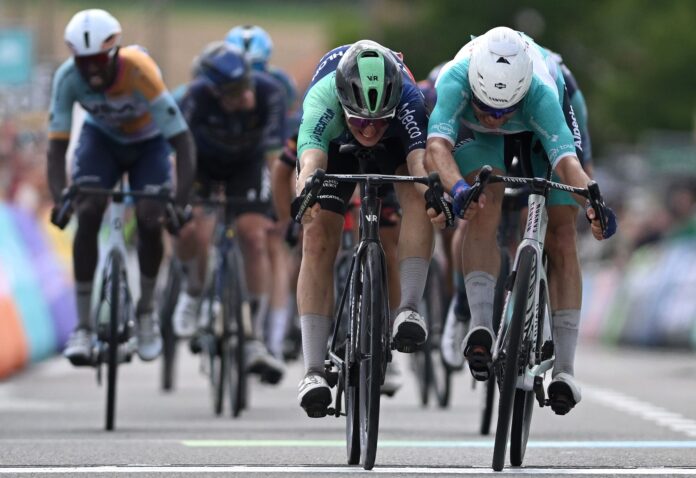
The Alpecin-Premier Tech rider came from Kooij’s slipstream in the final 75 metres and threw his bike on the line to win by the width of a tyre. Kooij was second for Decathlon CMA CGM, again denied in a tight sprint after already losing stage 1 to Jonathan Milan by a photo finish.
Alessandro Borgo finished third for Bahrain Victorious, ahead of Dylan Groenewegen of Unibet Rose Rockets and Luca Mozzato of Tudor Pro Cycling Team. Marijn van den Berg, Biniam Girmay, Tim van Dijke, Sam Bennett and Pavel Bittner completed the top 10.
The victory gave Philipsen his second stage win of the race after his success in Ardooie on stage 2. More importantly, the 10 bonus seconds moved him back ahead of Jenno Berckmoes in the general classification. Philipsen now leads by 4 seconds, with Kooij third overall at 10 seconds.
A Limburg stage that could not be treated as flat
Stage 4 took the riders from Riemst to Bilzen-Hoeselt over 187.3 kilometres, returning the Renewi Tour to Belgian Limburg after the Flanders-style stage to Geraardsbergen.
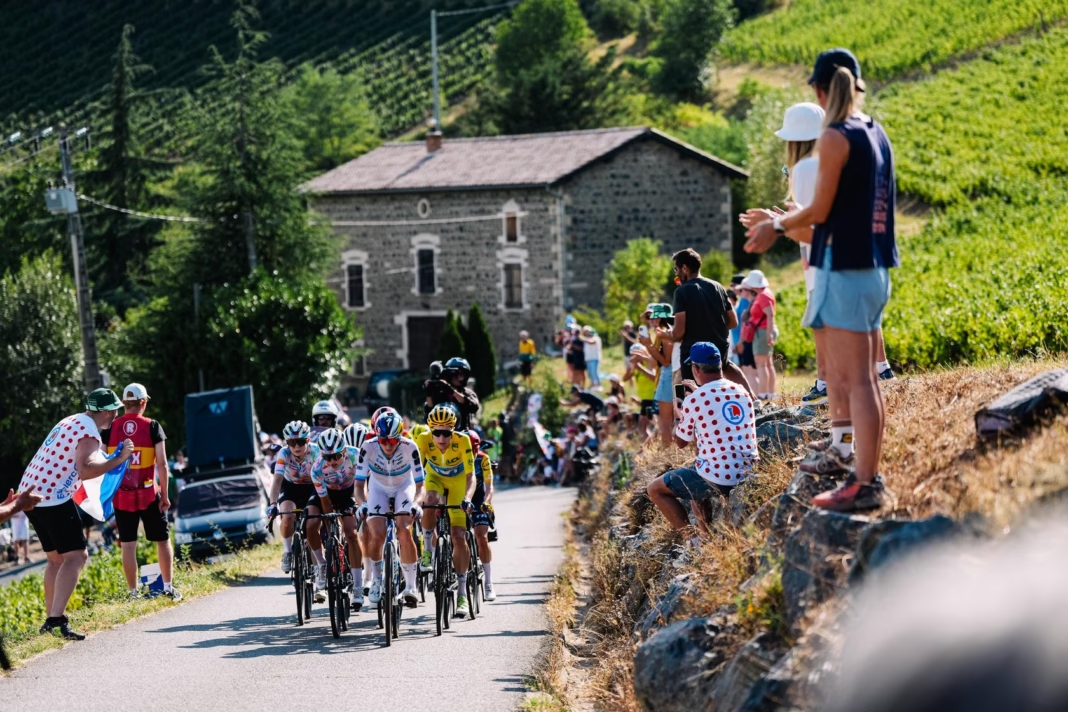
On paper, this was the sprinters’ clearest remaining chance before the final day in Leuven. In practice, it was not a simple flat stage. The route moved through rolling Limburg roads, with repeated short climbs and technical sections that kept the general classification riders alert.
The stage included a series of punchy ascents such as Côte Sur les Coteaux, Gousbeemdstraat, Keiberg, Brugstraat, Slingerberg and Letenberg. None was hard enough to force the kind of major split created by the Muur van Geraardsbergen on stage 3, but together they made the stage awkward to control.
That mattered because the overall standings were still very tight. Berckmoes started the day in the leader’s jersey after his late attack and bonus-second haul in Geraardsbergen, but Philipsen was only 6 seconds behind and Kooij was close enough to remain a serious threat.
Berckmoes starts the day under pressure
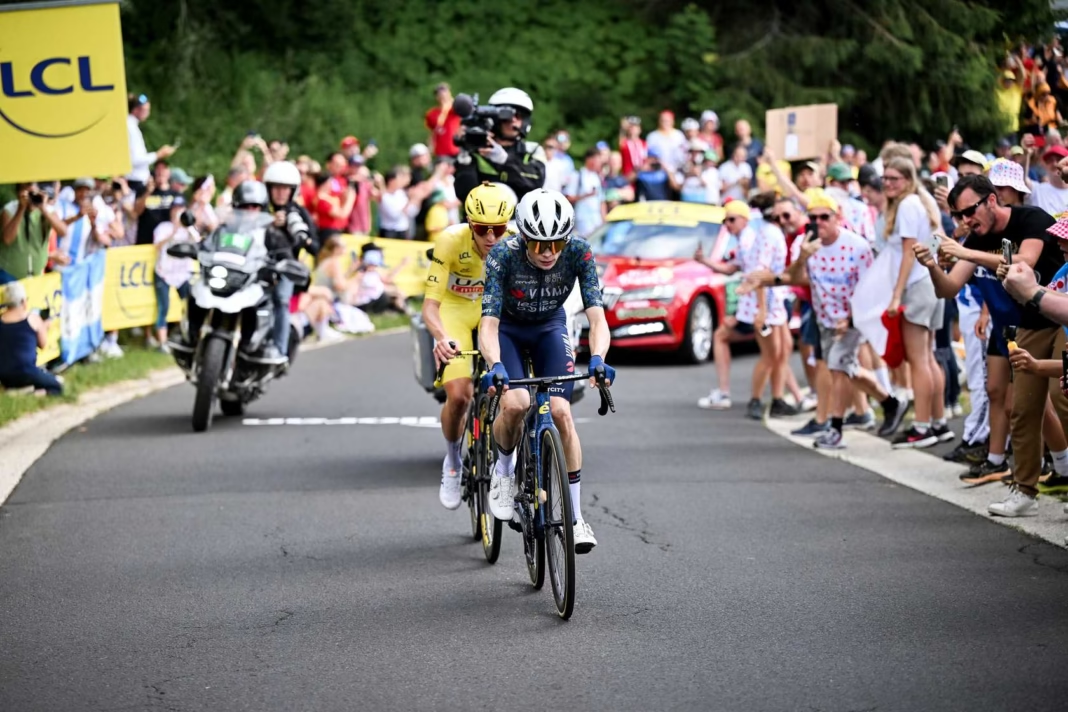
Berckmoes had earned the leader’s jersey the hard way on stage 3, attacking with Alec Segaert over the Muur van Geraardsbergen, collecting Green Kilometre bonuses on the Bosberg and then going solo on the cobbles of De Vesten.
Stage 4 gave him a different challenge. He did not need to attack to defend the jersey, but he did need to prevent Philipsen and Kooij from turning the finish bonuses against him.
That was difficult because the finish still favoured fast riders who could survive the rolling terrain. Philipsen had already shown in Ardooie that he was one of the best-positioned sprinters in the race, while Kooij had been consistently close across the opening stages.
Lotto-Intermarché therefore had two jobs: keep Berckmoes protected and try to use Arnaud De Lie as a second card in the finale. De Lie’s presence meant Lotto-Intermarché had a sprint option if the stage came back together, but Philipsen’s bonus threat was always the biggest danger to the jersey.
The climbs keep the race nervous
The route never produced the decisive long-range move that some teams might have hoped for, but the repeated climbs kept the stage tense.
The Limburg roads made positioning important throughout. Teams could not simply wait for the final 5 kilometres because the short climbs repeatedly forced the peloton to line out. Any hesitation, puncture or poor position risked leaving a rider behind a split.
That was particularly relevant after the opening three days, which had already been marked by crashes and repeated changes of race lead. Milan had won stage 1, crashed heavily on stage 2 and abandoned early on stage 3. Philipsen had taken over in Ardooie, only for Berckmoes to seize the jersey in Geraardsbergen. Nobody could treat stage 4 as routine.
The peloton did ultimately keep the race on a sprint trajectory, but it was not a calm procession. It was a stage where the sprinters’ teams had to survive the middle phase before they could think about the finish.
Lotto-Intermarché try to set up the final climbs
As the race moved towards the final repetition of the punchy climbs, Lotto-Intermarché tried to put Berckmoes and De Lie in the right place.
De Lie was used prominently before the final uphill sections, helping keep the pace high and making sure the race did not slip away in a move containing Philipsen, Kooij or another GC threat. The idea was clear enough: keep Berckmoes protected, avoid letting a dangerous group go clear and give De Lie the chance to sprint if the race remained together.
Berckmoes could not create separation from his main rivals. That was the key point of the stage. The terrain was hard enough to make the race nervous, but not hard enough for the leader to distance Philipsen or Kooij before the finish bonuses came into play.
Once the final climb had been cleared, the balance shifted back towards the sprint teams. Letenberg came far enough from the finish for the fast men to reorganise, and the final kilometres began to point towards another fight between the sprinters.
Groenewegen opens the sprint early
The run-in to Bilzen-Hoeselt was fast and tense, with the sprint trains trying to control position after a long day on rolling roads.
Groenewegen was delivered well and opened the sprint early after a strong lead-out from Unibet Rose Rockets. That move gave the Dutch sprinter a clear run, but it also exposed him to the riders waiting behind.
Kooij came off Girmay’s wheel in the final 200 metres and looked as though he had timed the sprint well. Most of the other contenders were beginning to fade, and the Decathlon CMA CGM rider had a straight line towards the finish.
Philipsen, though, had not gone. He was still tucked in the slipstream and waiting for the final opening.
Wærenskjold crashes inside the final 500 metres
The finale was not completely clean. Søren Wærenskjold crashed inside the final 500 metres, adding another incident to a Renewi Tour already shaped by crashes across the opening stages.
Most of the major sprint contenders avoided the fall and remained in contention, but it was another reminder of how fine the margins have been throughout the week. This has been a race of high-speed finishes, narrow roads, late fights for position and riders trying to protect GC ambitions at the same time as sprint results.
The crash did not stop the front of the race from contesting the stage, but it added to the sense that Bilzen-Hoeselt was being decided under pressure rather than through a perfectly organised sprint.
Philipsen waits until the final 75 metres
The winning move came late.
Kooij had already committed, Groenewegen was fading after opening early, and Borgo was coming through strongly on the opposite side. Philipsen waited until the final 75 metres before launching from Kooij’s slipstream.
It was a short, precise acceleration rather than a long sprint. Philipsen had judged the finish almost perfectly, but Kooij still had enough speed to make it desperately close. The two riders hit the line together, and the result had to be confirmed by photo finish.
The verdict went to Philipsen by the width of a tyre.
It was the second time in four stages that Kooij had been denied in a photo finish. On stage 1, Milan had beaten him by the smallest margin in Diest. In Bilzen-Hoeselt, Philipsen did the same.
Borgo takes surprise podium
Behind the two fastest riders, Borgo produced one of the best results of his young career by taking third.
The Bahrain Victorious rider came through late and beat Groenewegen to the final podium place. On a stage packed with established sprinters, that was a significant ride. Groenewegen finished fourth after opening the sprint, while Mozzato took fifth for Tudor Pro Cycling Team.
Van den Berg was sixth, Girmay seventh and Van Dijke eighth, with Bennett and Bittner rounding out the top 10. The result sheet reflected the mixed nature of the stage: sprinters dominated the front, but the rolling route and tense finish allowed a wider set of fast, durable riders to place high.
For Philipsen, the podium order was secondary. The victory itself was enough to change the race again.
Philipsen retakes the leader’s jersey
The 10 bonus seconds for the stage win were decisive.
Philipsen started the day 6 seconds behind Berckmoes. By winning the stage while Berckmoes finished outside the bonuses, he moved back into the overall lead by 4 seconds.
Kooij is now third overall at 10 seconds, still close enough to be dangerous if the final stage comes down to bonuses. Mike Teunissen is fourth at 26 seconds, with Matteo Trentin fifth at 28 seconds. Van den Berg and Van Dijke are both 31 seconds down, ahead of Bittner and Tomáš Kopecký at 34 seconds, with Quinten Hermans 10th at 38 seconds.
The gaps remain small, but the balance of the race has changed. Philipsen is now in control, and he has both the race lead and the fastest finish among the main contenders.
Berckmoes loses yellow but stays close
Berckmoes lost the jersey, but not the race.
The Lotto-Intermarché rider is only 4 seconds behind Philipsen, which keeps him within striking distance before the Leuven finale. That matters because stage 5 is not a guaranteed bunch sprint. Leuven has short climbs, technical roads and the kind of terrain where a late attack or Green Kilometre bonus can still decide the race.
Berckmoes showed in Geraardsbergen that he can turn a small gap into a race-changing move. He will need something similar again, or at least enough aggression to force Philipsen into a defensive race.
The challenge is that Alpecin-Premier Tech now have the simplest tactical position. They do not need to chase everything instantly, but they do need to keep Philipsen close enough to respond if Berckmoes, Kooij or another contender makes a move.
Kooij close again, but still without a stage win
Kooij’s week has been excellent and frustrating at the same time.
He was second to Milan in a photo finish on stage 1, then lost out again by a tyre-width to Philipsen on stage 4. He has been consistently present in the decisive finishes and remains third overall, but the stage win has still escaped him.
That makes the final day interesting. Kooij is 10 seconds down, meaning he needs more than just a standard stage win if Philipsen finishes near him. But if the race splits, if bonuses come into play or if Philipsen is forced into a messy defensive finale, Kooij still has a route back into contention.
His sprint speed is clearly there. The problem is that Philipsen has converted twice, while Kooij has twice been on the wrong side of the photo.
Philipsen’s second stage win changes the final day
Philipsen has now won two stages from four and leads the Renewi Tour into the final stage around Leuven.
That is a strong position, but not a safe one. The 2025 edition was decided on the final day when Arnaud De Lie used the Leuven stage to secure the overall victory, and the 2026 race again reaches the finale with only seconds separating the main contenders.
The final stage is likely to be more complex than a flat sprint. Leuven’s roads reward riders who can handle short climbs, positioning battles and late attacks. Philipsen has shown he can do more than sprint on flat roads, but defending a 4-second lead is still awkward.
Berckmoes only needs one moment. Kooij only needs a small swing in bonuses. Others are further back, but the race has already shown that crashes, splits and Green Kilometre seconds can change everything quickly.
Another stage decided by centimetres
The 2026 Renewi Tour has been built on tiny margins.
Milan beat Kooij in a photo finish on stage 1. Philipsen won clearly on stage 2 after chaos took several rivals out of contention. Berckmoes won stage 3 by attacking before the sprinters could reach him. Stage 4 then came down to another photo finish, with Philipsen beating Kooij by the width of a tyre.
That sequence explains the race perfectly. The Renewi Tour does not need mountain passes to create tension. It creates it through bonus seconds, positioning, short climbs, technical finales and finishes where centimetres decide seconds.
Philipsen was on the right side of those margins in Bilzen-Hoeselt. He won the stage, took the jersey and now heads to Leuven with the race in his hands.
Renewi Tour 2026 stage 4 result
| Position | Rider | Team | Time/gap |
|---|---|---|---|
| 1 | Jasper Philipsen | Alpecin-Premier Tech | 3:57:45 |
| 2 | Olav Kooij | Decathlon CMA CGM | same time |
| 3 | Alessandro Borgo | Bahrain Victorious | same time |
| 4 | Dylan Groenewegen | Unibet Rose Rockets | same time |
| 5 | Luca Mozzato | Tudor Pro Cycling Team | same time |
| 6 | Marijn van den Berg | EF Education-EasyPost | same time |
| 7 | Biniam Girmay | NSN Cycling Team | same time |
| 8 | Tim van Dijke | Red Bull-BORA-hansgrohe | same time |
| 9 | Sam Bennett | Pinarello-Q36.5 Pro Cycling Team | same time |
| 10 | Pavel Bittner | Team Picnic PostNL | same time |
Main photo credit: Getty