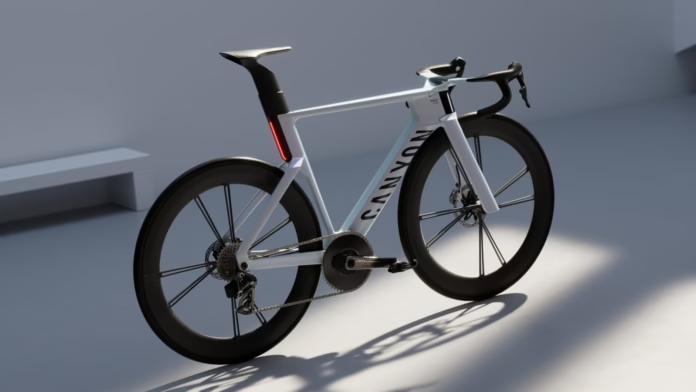
News piece: Canyon is taking its Predict intelligent road-bike safety concept to North America this week, bringing a combination of Edge AI, radar, cameras and an augmented-reality helmet to San Francisco Tech Week.
Canyon Predict itself is not a new production bike. The concept made its public debut at Eurobike in June, but its San Francisco appearance from 7 to 10 October is the first North American showcase and puts the technology in front of a very different audience of riders, engineers and technology investors.
The central idea is more ambitious than the rear-facing radar systems already familiar to cyclists. Predict is designed to build a live picture of what is happening around the rider and then anticipate hazards before they develop into an immediate problem.
How Canyon Predict works
The concept bike combines micro-radars, optical cameras and distributed sensors into a 360-degree sensing system. A multi-dimensional motion sensor in the wheel hub adds information about the bike itself, while the system also considers speed, steering and stability.
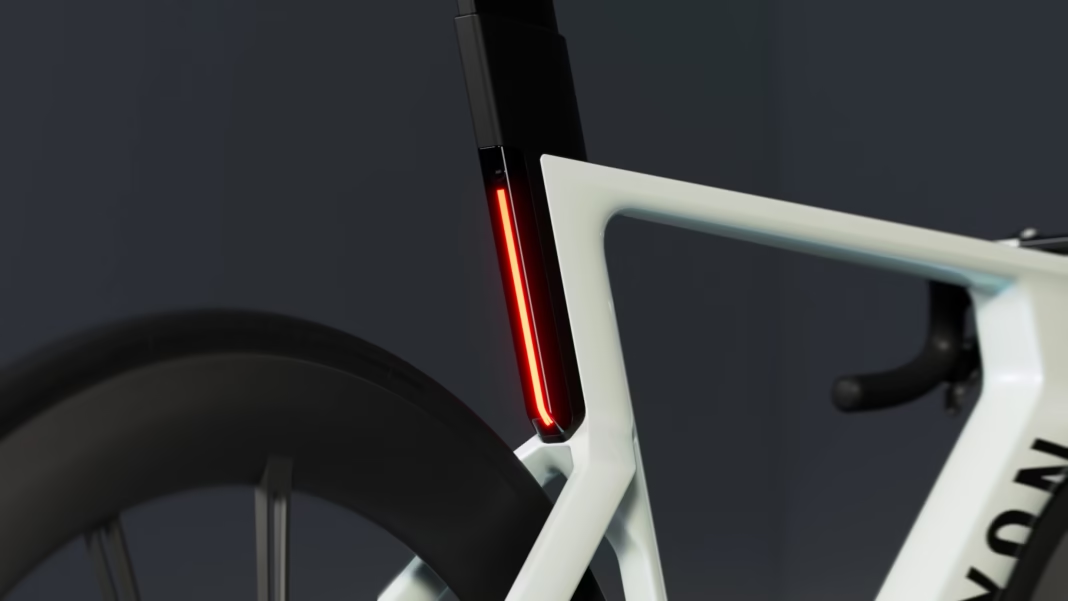
That data is processed locally using Edge AI rather than being sent to a cloud service. Canyon says this reduces latency and keeps the system functional without an internet connection, while also limiting the amount of riding data that needs to leave the bike.
The software then models the likely trajectories of the rider and nearby objects, assigns risk levels and can issue warnings through lights, haptic feedback and displays. Canyon groups the potential functions under Prediction Assist, Distance Assist, Terrain Assist and Group Ride Assist.
Radar is only one part of the system
Current cycling radar products primarily warn a rider that vehicles are approaching from behind. Predict is intended to go further by combining several types of sensor data and considering the context around them.
Canyon’s examples include recognising the behaviour of other road users, advising on following distance, identifying difficult road surfaces and monitoring group-ride dynamics. The concept even includes the possibility of automatically or remotely dropping the seatpost to lower the rider’s centre of gravity when extra stability is needed.
That distinction matters. A conventional cycling radar gives the rider additional information. Canyon is investigating whether a bike can interpret several streams of information together and decide which developing situations deserve attention.
Stingr Smart helmet puts warnings in the rider’s view
The second half of the concept is Canyon’s Stingr Smart helmet. Based on the existing Stingr aero helmet architecture, the prototype adds a retractable visor containing a heads-up display.
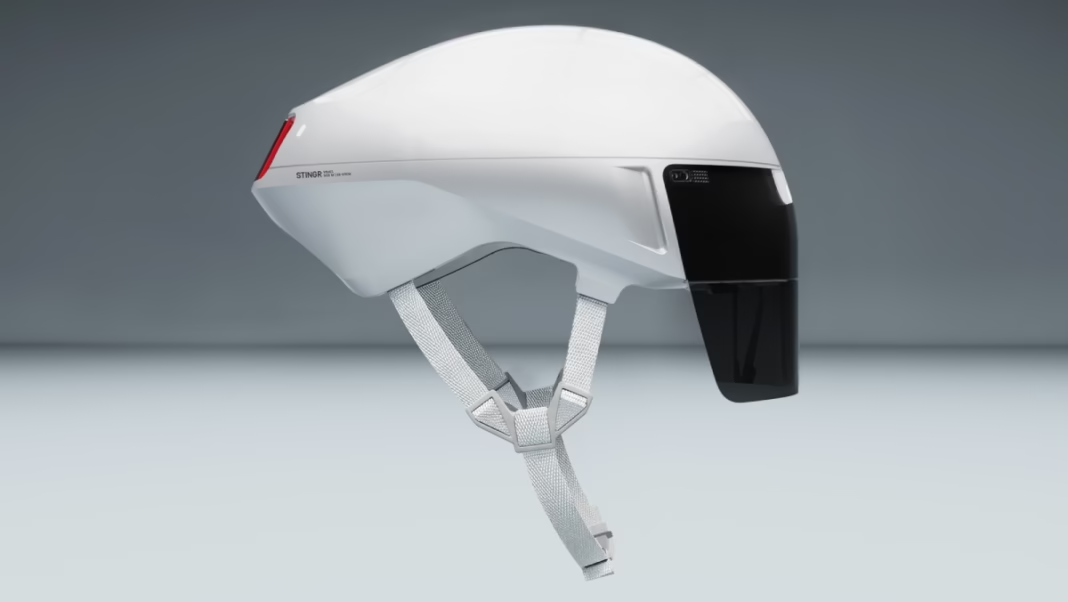
Safety information is intended to appear mainly in the rider’s peripheral vision, with more urgent warnings able to move towards the centre of the display and be reinforced through audio and customisable haptic alerts. The visor can retract into the helmet and passes a fixed wiper as it moves.
The helmet can also display more conventional cycling data including speed, distance, cadence, power, elevation and gradient. Canyon has explored direct heart-rate measurement and compatibility with Bluetooth and ANT+ sensors, while voice control and near-ear audio could handle navigation, calls and group communication.
The difficult part is deciding when to warn the rider
The hardware is eye-catching, but the more difficult problem is likely to be judgement. A system that warns too frequently risks becoming another source of distraction. One that filters too aggressively risks hiding information at precisely the wrong moment.
Canyon’s emphasis on predictive rather than simply reactive warnings is therefore important, but it is also the part that will require the most validation. Detecting a car with radar is comparatively straightforward. Correctly interpreting a road surface, another rider’s movement and the likely behaviour of traffic in enough time to give useful advice is a much larger task.
Will Canyon Predict become a production bike?
For now, Predict remains a technology study rather than a bike Canyon is offering for sale. The company is using the project to explore which parts of the system could eventually become practical on production bikes.
The San Francisco showcase runs at The Motoring Club from Wednesday 7 October until Saturday 10 October, with demonstrations intended to show how the bike responds to road hazards, group-riding situations and changing surface conditions.
The interesting question is not whether every element of this prototype reaches shops in its present form. It is whether radar, cameras and on-bike processing begin to converge in the same way they have in cars. If they do, the next generation of cycling safety electronics could move from telling riders what is behind them to trying to understand what happens next.