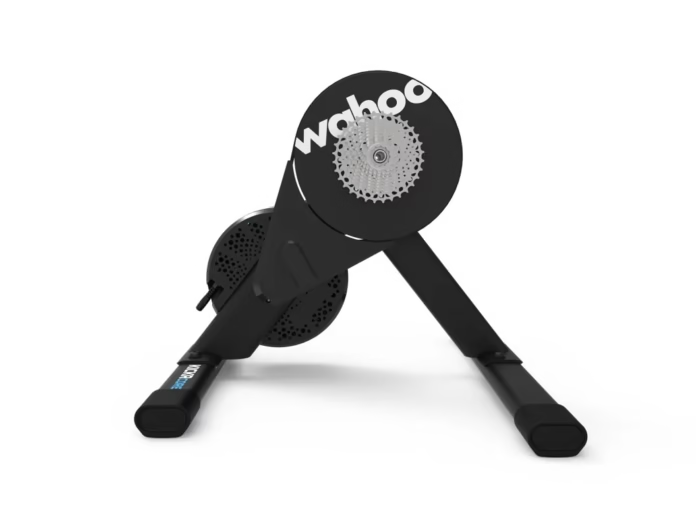
The Wahoo KICKR CORE 2 occupies one of the most competitive positions in indoor cycling. It is a direct-drive smart trainer designed to deliver much of the ride feel and resistance control of Wahoo’s more expensive KICKR models without the same outlay. The second generation adds modern connectivity and Race Mode to a platform that already had a strong reputation for dependable structured training.
The interesting question is not whether the CORE 2 is a capable trainer. It is whether its upgrades make a meaningful difference for riders choosing between a discounted original CORE, a competing mid-range trainer and a complete Zwift-ready set-up. For most cyclists building a permanent indoor training space, the answer depends on connectivity, gearing and the kind of riding they actually do.
The Zwift Cog and Click package makes the buying decision especially relevant. Instead of fitting a conventional cassette matched to one bicycle’s drivetrain, the single sprocket works with Zwift’s virtual shifting system. That can simplify sharing the trainer between compatible bikes, although it also creates a more platform-dependent arrangement than a standard cassette.
At its best, the CORE 2 is a practical training purchase rather than a flashy technology upgrade. The resistance range and accuracy are comfortably adequate for most training, while the new connections reduce friction in everyday use. Riders who already own a reliable direct-drive trainer may find the case for replacement less convincing.
This article contains affiliate links. Check current UK pricing for the Wahoo KICKR CORE 2 Zwift Cog and Click bundle at Tredz. Confirm the exact package before ordering.
Wahoo KICKR CORE 2 specifications
| Type | Direct-drive electromagnetic smart trainer |
| Claimed power accuracy | ±2% |
| Maximum simulated gradient | 16% |
| Maximum resistance | 1,800W |
| Connections | Wi-Fi, Bluetooth, ANT+ |
| Shifting package | Zwift Cog and Click virtual shifting |
| Key addition | Race Mode and updated connectivity |
Ride feel, power accuracy and resistance
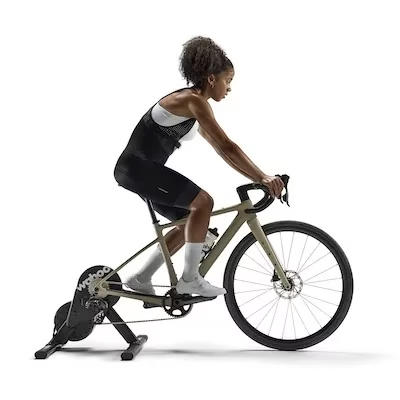
Compared with wheel-on trainers, direct drive brings more consistent tyre-independent resistance and avoids tyre wear and roller pressure adjustments. The bicycle’s rear wheel is removed and the frame attaches to the trainer, which also makes a stable permanent set-up easier to maintain.
Wahoo’s claimed accuracy of plus or minus two per cent is entirely respectable at this price. It is a manufacturer specification, not a guarantee that every unit will agree perfectly with a crank or pedal power meter in every situation. Calibration behaviour, drivetrain losses and differences between power measurement locations can still account for discrepancies.
The CORE 2 retains electromagnetic resistance control, supporting gradient simulation and ERG workouts. In ERG mode the trainer adjusts resistance to help hold a target power; in simulation mode it changes load with virtual terrain. Those are the two functions that matter most for Zwift racing, winter intervals and general indoor riding.
Race Mode is one of the more tangible upgrades. It can transmit power changes more frequently to compatible applications, making short surges and accelerations more responsive on screen. It will not add watts to a rider’s sprint, and the improvement depends on the receiving software and connection, but it addresses an area where racing enthusiasts notice delays.
Connectivity and Race Mode
Wi-Fi connectivity is the other headline improvement over the original CORE. A direct network connection can be convenient in homes where Bluetooth devices compete for connections, and it offers another route to maintain a stable link. Bluetooth and ANT+ support remain useful for head units, training applications and other existing equipment.
However, the extra connection options are not a promise of flawless networking. Independent reviewers have differed in their experience of initial pairing and connectivity. The practical advice is to check router coverage where the trainer will sit and keep the trainer firmware and training software updated.
Zwift Cog and Click: useful, but not universal
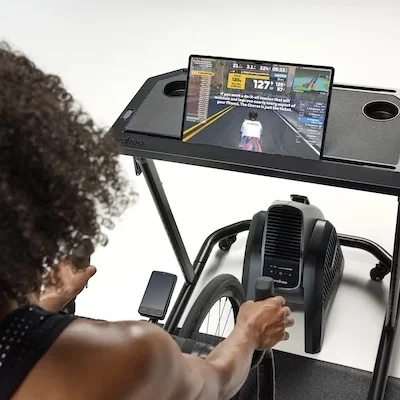
The Zwift Cog and Click bundle deserves particular attention. Virtual shifting is quiet, convenient and reduces the need to match cassette speed and gearing across bikes. The Click controller lets the rider change virtual gears without a mechanical derailleur shift, which can make indoor sessions feel simpler.
The compromise is compatibility. Virtual shifting works only with supported software and hardware configurations. A rider who uses several indoor platforms, or wants the trainer to behave like a conventional rear wheel in every application, should consider the cassette-equipped package instead. The trainer itself is versatile; the supplied shifting solution is more specialised.
Check the available KICKR CORE 2 packages at Tredz, taking care to select Cog and Click rather than a cassette-only variant.
Noise, fit and everyday set-up
Noise is generally well controlled because there is no tyre rolling against a resistance drum. That does not make an indoor bike silent. Chain condition, drivetrain alignment, vibration through flooring and cooling fans can be more noticeable than the trainer’s own resistance unit, particularly in flats or shared accommodation.
Set-up remains straightforward for anyone familiar with direct-drive trainers, but axle compatibility should be checked before purchase. Quick-release and common thru-axle standards are supported with the correct adapters; unusual frame spacing or axle arrangements deserve a closer look at Wahoo’s compatibility information.
The trainer is also relatively heavy and intended to stay in one place rather than be carried to every session. Stable feet and a suitable mat matter more than the appearance of the unit. Riders who sprint out of the saddle should pay attention to the full bike-and-trainer set-up, as reviewers have reported different impressions of stability under very hard efforts.
Alternatives and value
The first major alternative is the original KICKR CORE. If the price gap is substantial and a rider trains almost entirely in ERG mode over a reliable Bluetooth connection, the older unit still covers the essentials. The CORE 2’s value increases for anyone wanting Wi-Fi, improved pairing flexibility or more responsive race data.
Other mid-range direct-drive trainers can match or undercut the CORE 2 on resistance and claimed accuracy. The deciding factors then become software compatibility, after-sales support, included gearing and local price rather than a single headline wattage figure. The most expensive trainer is not necessarily the most useful for steady winter endurance work.
The CORE 2 is particularly suitable for riders entering indoor racing, cyclists following structured workouts several times a week and households sharing one trainer between compatible bicycles. It is also a sensible starting point for a Zwift-focused set-up where the buyer wants the Cog and Click system from the outset.
Compare the current price of the Zwift Cog and Click bundle before deciding between generations.
Who should buy it?
Riders who already have a capable trainer with reliable connections should be more cautious. The new model is a refinement rather than a transformation. Those who train mainly outdoors or use indoor cycling only occasionally may be better served by a cheaper direct-drive unit, especially if they already own a compatible cassette.
Price matters. The Tredz listing previously checked for this exact Zwift Cog and Click bundle was £449.99, against £499.99 at Zwift, although prices and stock can change. Check the full delivered price and confirm that the listing includes the desired Cog and Click hardware rather than a different cassette version.
The verdict is favourable, with conditions. Wahoo has improved a trainer that already did the fundamental work well. More connection choices and faster race data make it easier to recommend to committed indoor riders, while virtual shifting is a genuine convenience for Zwift users who understand its software dependence.
Verdict
The CORE 2 is not a reason for every original CORE owner to upgrade. It is, however, one of the more coherent options for a rider buying a first serious direct-drive trainer and wanting a straightforward route into regular indoor training. Choose the Cog and Click package for Zwift-first use; choose a conventional cassette if broader shifting compatibility matters more.
See current Wahoo KICKR CORE 2 availability at Tredz.
-
 Photo Credit: Luc Claessen/ISPA
 -
 Photo Credit: Unsplash / Chris Linnett