The Lezyne Strip Drive Pro 400+ and Exposure TraceR 4 are two credible answers to the same problem: making a rider conspicuous from behind without buying a radar system. They take noticeably different approaches. Lezyne uses a broad, ten-LED rear unit with a powerful daytime flash and a large battery. Exposure has kept its familiar small aluminium cylinder, added USB-C charging and increased output while holding weight to roughly half that of the Lezyne.
They are also closer on price than their specifications suggest. On 27 October 2026, Tredz listed the Lezyne at £43.99 with stock available, against £55 for the standard TraceR 4 bought directly from Exposure. The £11.01 gap is not enormous, but it reverses the assumption that the smaller British-made light must be the cheaper option. The decision is more about mounting, the kind of riding you do and how much rear-light bulk you will tolerate.
This is a comparison of published specifications, current UK retail listings and independent assessments, not a claim that ProCyclingUK has conducted a new side-by-side road test. Our separate Lezyne Strip Drive Pro 400+ review and Exposure TraceR 4 review provide more background on each model.
Lezyne Strip Drive Pro 400+ vs Exposure TraceR 4 specifications
| Specification | Lezyne Strip Drive Pro 400+ | Exposure TraceR 4 DayBright |
|---|---|---|
| UK price checked 27 October 2026 | £43.99 at Tredz, in stock | £55 direct from Exposure, in stock |
| Maximum claimed output | 400 lumens in Day Flash 2 | 200 lumens in DayBright pulse |
| Maximum claimed runtime | 80 hours in 5-lumen Femto mode | 40 hours in a low-output flash mode |
| Claimed weight | 71g | 35g |
| Side visibility | 270 degrees | 270 degrees |
| Charging | USB-C; cable not supplied | USB-C; cable supplied |
| Weather rating | IPX7 | IP67 |
| Mount supplied | Rubber ladder strap for seatposts | Standard seatpost bracket |
| Brake response / radar | Neither | Neither on standard DayBright model |
The headline figures are not like-for-like measures of everyday brightness. The Lezyne’s 400 lumens is a flashing peak, not its steady running output. Exposure’s 200 lumens is also a pulse-mode figure. Likewise, the maximum battery-life claims are achieved in lower-demand modes, not by leaving either light at its brightest setting. Those distinctions matter far more than the simple 400-versus-200 comparison.
Brightness and visibility in daylight
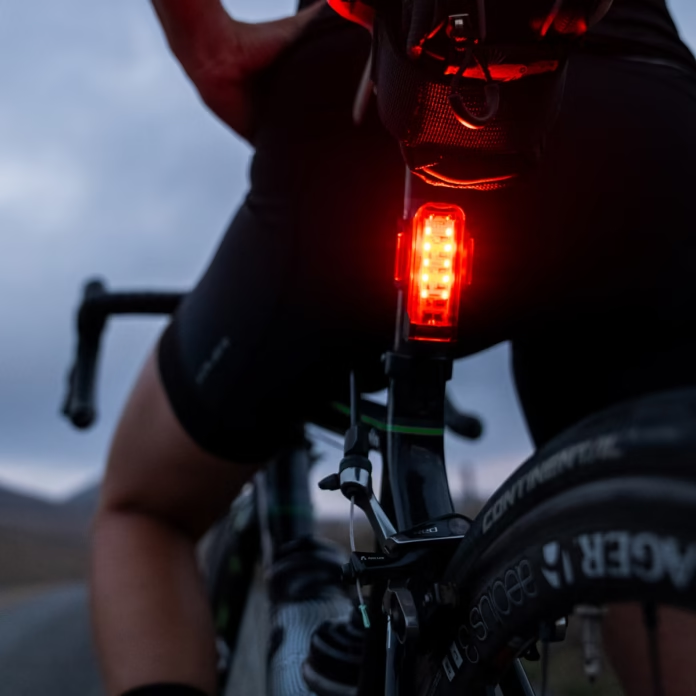
The Lezyne is the obvious choice if you want the highest specified flash output. Its ten LEDs are arranged in two columns of five, with optics intended to spread the beam across 270 degrees. It offers seven modes, including two dedicated daytime flash settings. Lezyne quotes 200 lumens for Day Flash 1 and 400 for Day Flash 2, which makes it possible to choose a less aggressive flash when full output is unnecessary.
That is useful on fast open roads where riders want a conspicuous signal in bright daylight. BikeRadar’s independent assessment praised the revised optics and output, while Cyclingnews found the wide side visibility effective. Neither finding should be stretched into a claim that twice the quoted lumens makes a rider twice as safe. Beam pattern, angle, traffic conditions and how the light is aimed all affect what a driver actually sees.
Exposure’s TraceR 4 has a different appeal. The fourth-generation DayBright model rises from the previous generation’s 120-lumen maximum to 200 lumens, yet remains exceptionally small. Exposure also claims 270-degree side visibility. For a rider wanting a compact rear marker that can stay fitted to a road bike, that is a more substantial upgrade than the raw number suggests.
The important distinction is that the standard £55 TraceR 4 is not the £75 ReAKT version. The more expensive model can respond to braking and ambient light, and includes Peloton dimming behaviour. Those functions are not present on the DayBright light being compared here. Neither of these two standard lights detects approaching vehicles or sends alerts to a cycling computer.
 Photo Credit: Exposure Lights
Battery life is not simply 80 hours against 40
Lezyne quotes a maximum of 80 hours from its 1,900mAh battery, but that applies to its five-lumen Femto setting. The more revealing figures are the ones riders are likely to use. The manufacturer claims 18 hours in the 400-lumen Day Flash 2 setting, 30 hours in the 200-lumen Day Flash 1 setting and five hours 30 minutes at its highest continuous output of 80 lumens. Those are useful numbers for commuters who want to know whether charging every few days will be necessary.
Exposure quotes up to 40 hours for the TraceR 4 in a low-output flash setting. It does not follow that the light can maintain 200 lumens for 40 hours. The compact battery and brighter DayBright mode will inevitably impose a different charging routine from the least demanding setting. Without a controlled comparison in the same kind of mode, declaring a battery winner from the maximum-runtime figures would be misleading.
Both now use USB-C. Exposure says the TraceR 4 takes around 90 minutes for a full charge and supplies a cable. Lezyne does not include a charging cable, though that may matter little if you already charge a computer, phone and front light over USB-C. A useful practical habit with either light is to check its remaining charge before a long ride rather than assume the quoted maximum will cover it.
Weight, shape and how they fit the bike
This is the clearest reason to buy the Exposure. The manufacturer claims 35g for the light, compared with Lezyne’s 71g. BikeRadar weighed a sample from the new Trace/TraceR 4 ReAKT set at 37g per light, without brackets. That is independent support for the compact platform, but it is not a measured weight for the exact standard DayBright unit and should not be presented as such.
A difference of around 36g will not transform a road bike, but shape and placement are more significant than grams. The Exposure’s narrow cylinder is unobtrusive on a conventional seatpost and easy to remove for charging or theft prevention. Riders with minimal seatpost space, a saddle bag or an aero frame may find that its small physical footprint is the more important advantage.
Lezyne’s broad, flat rear face is the trade-off for its ten-LED arrangement and larger battery. Its rubber ladder strap is designed for round and aero seatposts. Independent testers have found the light secure on ordinary posts, but the strap can become awkward on particularly deep aero sections. Before buying, check the actual depth and shape of your seatpost rather than assuming the words ‘aero compatible’ guarantee a fit.
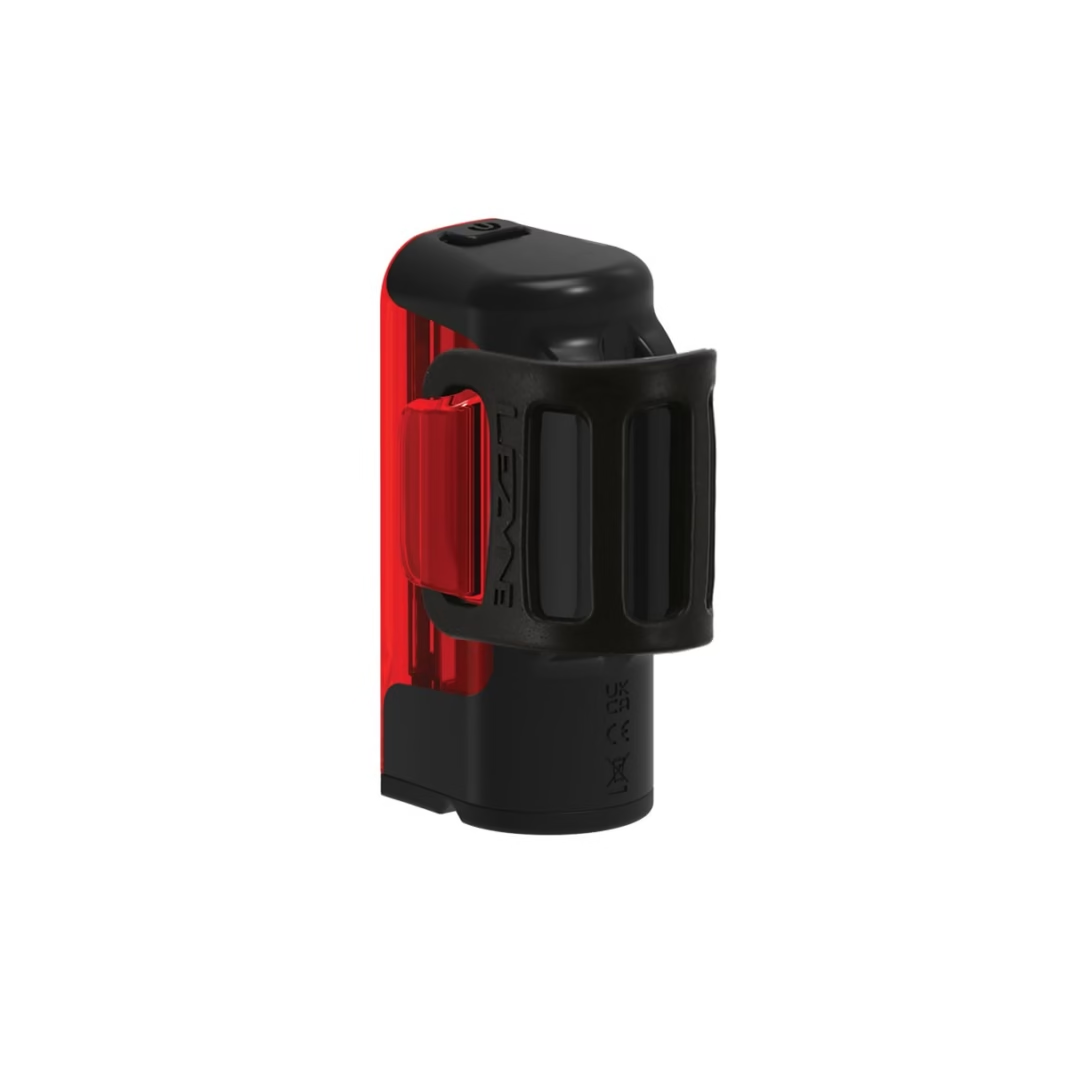 Photo Credit: Lezyne
Exposure includes a standard seatpost bracket with the TraceR 4. A dedicated aero-seatpost bracket is listed separately at £15, and a saddle-rail bracket at £10. Those accessories can solve a fitting problem, but they also change the real purchase price. The Lezyne is cheaper out of the box if its supplied strap fits; the Exposure can be neater when an appropriate alternative bracket is available.
Weather protection and construction
Both lights are designed to survive wet-weather riding, but their IP ratings describe different tests. Lezyne specifies IPX7, indicating protection against temporary immersion without a separate dust-ingress rating. Exposure specifies IP67, which includes dust-tight construction as well as immersion protection. For normal rain and road spray, neither specification alone establishes which light will last longer in service.
Exposure’s CNC-machined aluminium housing gives it a more substantial feel on paper than its weight suggests. Lezyne uses a durable moulded construction around its wider light array. Both are legitimate designs; a metal case is not proof that a light will be more reliable after years of charging cycles, mounting changes and winter grime. Keep charging contacts clean and avoid pressure-washing either unit directly.
What independent testing actually tells us
The Lezyne has the stronger body of directly relevant published testing. BikeRadar has reviewed the Strip Drive Pro 400+ itself, describing its mode selection and performance, and Cyclingnews has separately tested the same model. Their assessments broadly support its brightness and side visibility, while also flagging the mounting strap’s limited reach on deep aero posts. Those are meaningful observations because they relate to the exact product on sale.
The Exposure evidence is newer and narrower. BikeRadar examined the fourth-generation Trace and TraceR 4 ReAKT set in October 2026, confirming the size, USB-C update and measured sample weight. That is useful evidence about the shared hardware platform, but the hands-on unit was the ReAKT variant rather than the standard DayBright version compared here. There is not yet the same depth of independent long-term evidence for this exact £55 version.
For that reason, it would be premature to award either light a definitive road-test victory for durability, actual full-brightness runtime or real-world conspicuity. The buying recommendation here rests on clearly established specifications, practical fitting differences, current UK pricing and the limits of the available testing.
Price and UK availability
The Lezyne’s £43.99 listing at Tredz is for the exact Strip Drive Pro 400+ rear light, product 264302, shown in stock when checked on 27 October. Its original recommended price is £55, and other UK retailers may charge closer to that. The Tredz product page is a direct, non-affiliate link; the price and stock position can change.
The standard TraceR 4 DayBright was £55 and available directly from Exposure on the same date. Check the exact product name when comparing offers. Listings for the £75 TraceR 4 ReAKT, and packages combining front and rear lights, are not equivalent to the standard DayBright unit. The current £11.01 difference favours Lezyne, but the gap can disappear if one retailer changes its price.
Which rear light makes more sense for your riding?
For daylight road training and long solo rides, the Lezyne is the more convincing value choice. Its broad beam, high-output flash modes and published mode-specific runtimes give riders useful options. The two independent assessments of the exact model are reassuring, provided the strap fits the seatpost. If you regularly ride on exposed roads and do not mind a larger light, the lower current price makes it hard to ignore.
For a minimalist road bike, the standard Exposure TraceR 4 is the neater option. It is about half the claimed weight, charges over USB-C and has gained a meaningful brightness increase without abandoning its compact design. A rider who dislikes a large rear unit, removes lights frequently or needs a different bracket may prefer it even at £55. Factor in the cost of any optional aero or saddle mount before deciding.
For group riding, do not mistake the standard TraceR 4 for the ReAKT model. If automatic dimming around a following rider is a priority, that is a different £75 product to investigate. If you want radar alerts, neither the Lezyne nor this Exposure is the right purchase; a radar light is a separate category with its own compromises in cost, weight and battery life.
The decision therefore comes down to a straightforward trade-off. Choose the Lezyne Strip Drive Pro 400+ for higher specified daytime flash output, a wider physical light array and stronger value at the current UK price. Choose the Exposure TraceR 4 DayBright for its compact form, lower weight and straightforward operation. In either case, fit it where clothing or luggage cannot obstruct the beam, choose a mode appropriate to conditions and remember that a bright light is only one part of being seen on the road.
-
 Photo Credit: Chris Auld
-
 Photo Credit: Cor Vos
-
 Photo Credit: A.S.O./Billy Ceusters