A weekday commute through well-lit streets asks something very different of a front light from a fast ride down an unlit country lane. The Knog Blinder Pro 600 is a sensible place to start for the former. The Exposure Sirius 11 is designed to give riders significantly more light where streetlamps stop, but its asking price is substantially higher. The question is whether that extra performance will actually be used.
The gap is about beam shape and usable runtime as much as peak output. Knog quotes 600 lumens for two hours and offers a relatively broad road beam. Exposure delivers up to 1,300 lumens through a more focused optic, weighs less and charges faster, but lasts only an hour at its maximum setting according to the manufacturer. Someone riding across town should judge those compromises differently from someone descending unfamiliar lanes at night.
This is a comparison of manufacturer specifications and published independent tests, not a ProCyclingUK head-to-head ride test. Independent reviews refer to the Knog Blinder Pro 600; the current manufacturer listing may shorten the product name to Blinder 600. Check the exact specification and included mount before purchasing.
 Photo Credit: Exposure Lights
Knog Blinder Pro 600 vs Exposure Sirius 11: specifications
| Feature | Knog Blinder Pro 600 | Exposure Sirius 11 |
|---|---|---|
| Maximum light output | 600 lumens | 1,300 lumens |
| Manufacturer’s full-power runtime | 2 hours | 1 hour |
| Longest quoted runtime | 120 hours Eco Flash | 130 hours lowest programme |
| Beam | 22° road-focused optics, claimed 80m reach | 8° spot-focused beam |
| Modes | 6 | 9 programmes |
| Quoted weight | 155g | 90g |
| Charging | USB-C, approximately 4 hours | USB-C, approximately 2 hours |
| Ingress rating | IP67 | IP67 |
| UK price reference | £29.99 at Decathlon UK; delivery advertised | £120; manufacturer listed in stock |
| Likely priority | Everyday commuting | Fast night riding on dark roads |
Runtime figures refer to particular modes, not an interchangeable measure of endurance. Knog’s 120-hour Eco Flash is not 120 hours of useful road illumination. UK retail pricing also changes quickly: Decathlon was advertising the Blinder Pro 600 for £29.99 when checked in November 2026, while Knog’s own store showed the product as sold out.
Which light works better after dark?
The Knog is intended for road riding where useful visibility and straightforward controls matter. It combines wide and focused optics in a beam designed to reach around 80 metres. Under streetlights, that is a credible setup for identifying road furniture, broken tarmac and the edges of cycle lanes. It is less convincing for descending quickly on a completely dark road, where the next bend can arrive well before the rider expects it.
Road.cc’s test reflected that distinction. The reviewer rated the Blinder Pro 600 7/10, praising the brightness for commuting and its battery endurance, but did not consider it sufficiently powerful for their preferred unlit-road riding. That is a more useful purchasing clue than the absolute lumen number. A commuter travelling through a town has different needs from a rider covering rolling country roads at speed.
Exposure’s Sirius 11 is considerably more powerful at 1,300 lumens and uses a narrow, eight-degree central spot. The aim is to project useful illumination further ahead while maintaining enough peripheral visibility for road positioning. Its output is not something to leave pointed directly at oncoming traffic, especially on well-lit urban roads where the most intense setting may be unnecessary.
Both Cyclingnews and road.cc assessed the Exposure independently in 2026, with strong conclusions about beam performance and build quality. Road.cc awarded 9/10 and considered the light capable of serious road use. Those tests used different routes and procedures from the Knog reviews, so their scores cannot be treated as a controlled laboratory comparison. They do, however, support the conclusion that the Exposure makes more sense when substantial forward illumination is genuinely required.
Battery performance: higher brightness comes with a penalty
Knog quotes two hours for its 600-lumen high steady mode. Road.cc found that the light maintained its brightest setting for around that time, before automatically reducing output and running for a while longer. That is preferable to an abrupt loss of light, but the lower-power extension should not be counted as additional time at 600 lumens. Anyone relying on the full beam for an entire two-hour ride would have little spare capacity.
The other Knog steady settings are 300 lumens with a claimed four hours and 150 lumens with eight hours. It also has pulse, strobe and Eco Flash modes, the last quoted at up to 120 hours. Those lower outputs are realistic choices around lit streets and during daylight, rather than settings for negotiating a fast dark descent.
Exposure lists one hour at maximum output, with longer runtimes from its nine programmes. Cyclingnews recorded about an hour and a half during its testing of high output, but noted how temperature and the light’s electronic control influence operation. The Sirius 11 uses thermal management to protect its internals, and it is worth expecting brightness to be adjusted under some conditions rather than assuming a steady 1,300-lumen beam under every circumstance.
Exposure also quotes up to 130 hours in a low-power programme, but comparing that directly with Knog’s 120-hour Eco Flash would be misleading. The important question is whether a chosen mode provides enough light to see the road for the entire journey, with a sensible reserve. Both can meet an ordinary commute’s needs, but the Exposure’s greater high-output capability makes it more adaptable for occasional fast country-lane sections.
Charging speed may matter more than a headline runtime
Knog’s approximately four-hour USB-C charging time is one of its most tangible drawbacks. Road.cc highlighted the long wait during testing. If a cyclist rides to work in the morning and then joins an evening training ride, the battery may not recover quickly enough unless it is connected early in the day. For someone who simply charges overnight, the inconvenience is much smaller.
Exposure quotes approximately two hours to charge the Sirius 11 under appropriate conditions. That is a practical advantage for riders who use their lights frequently, forget to charge them or want a substantial top-up between sessions. Both lights still require proper cable and port care after wet rides, and a faster charger cannot compensate for an exhausted battery when halfway around a dark loop.
Knog’s colour-coded battery indicator is reasonably easy to interpret and gives the rider warning before the output falls away. Exposure relies on its compact control arrangement, which takes some familiarity. Whichever is chosen, selecting a suitable mode before leaving and checking the charge level is more reliable than waiting for a low-battery warning during the final miles home.
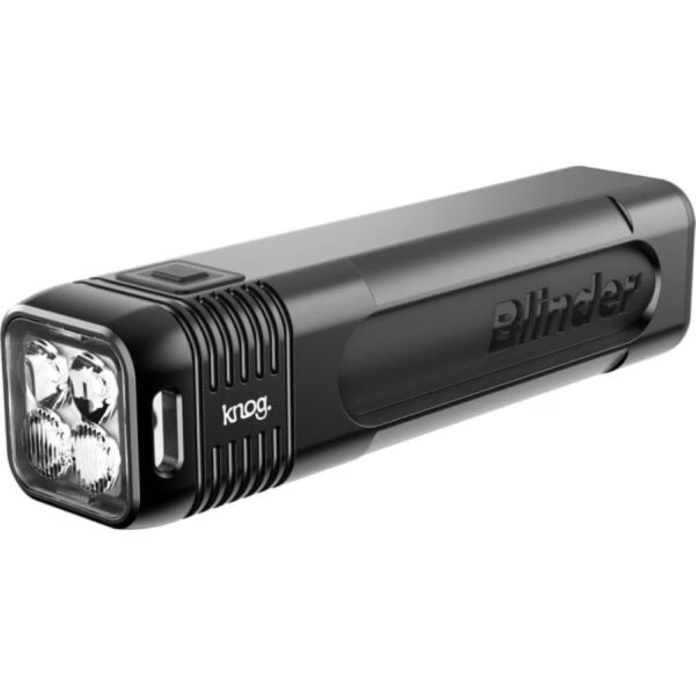
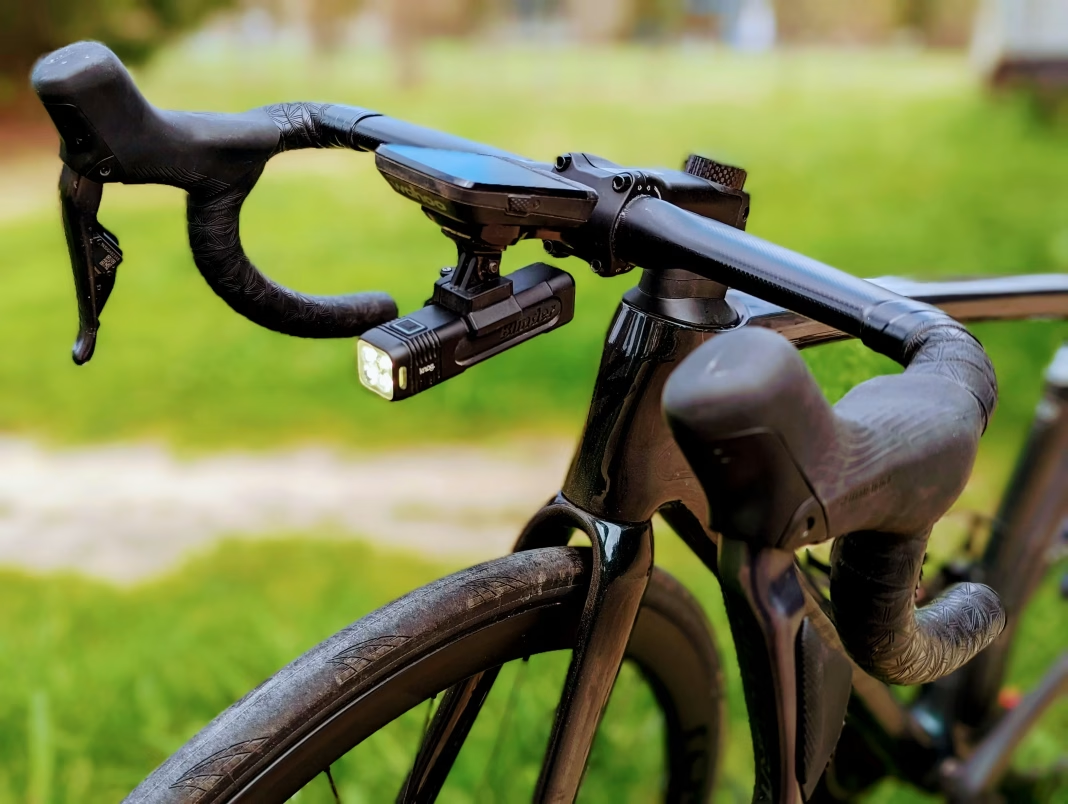 Photo Credit: Knog
Mounts and fit on modern road bikes
Knog supplies a bracket that accommodates different handlebar sizes, approximately 22 to 35mm, and offers above- or below-bar mounting. The flexibility is helpful when moving the light between a commuter and a road bike or fitting it beneath a compatible computer mount. It is a relatively unobtrusive design without requiring a complicated cockpit overhaul.
Its mounting security was also a recurring criticism. Road.cc found the bracket could feel vulnerable on rougher surfaces. That makes a difference on badly maintained urban roads, and potentially more on gravel. Check the fit, tighten it as intended and make sure the light does not tilt or rattle before assuming the mount is reliable for every ride.
The Sirius 11 also has mounting compromises despite its considerably higher price. Cyclingnews found that the body could twist within the fitting, changing the beam angle, and that the button could be awkward to reach when the light was installed underneath a computer on an integrated cockpit. A superb beam becomes less useful if the light points in the wrong direction.
Before buying either, check the shape of the bars, any cables beneath an out-front computer, and how much clearance remains above the front tyre. Riders using an integrated carbon cockpit should follow the mount manufacturer’s guidance rather than clamp an unsuitable universal bracket to a carbon section.
Weight, waterproofing and durability
Exposure claims a weight of 90g, against 155g for Knog. The lighter unit is also the more powerful one, making the Sirius particularly attractive on a performance road bike where cockpit clutter matters. Its machined aluminium construction and UK manufacturing are part of the appeal, as is the company’s focus on long product life and service support.
Knog’s aluminium body is hardly unsuitable for a commuter, and a difference of 65g will be irrelevant to most daily journeys. Both are rated IP67, reflecting resistance to dust and temporary immersion under defined laboratory conditions. This is reassuring for wet British winters but does not make it sensible to leave charging ports open or spray the electronics directly with a pressure washer.
Exposure additionally specifies IK09 impact resistance. That is another useful durability claim, not permission to treat the light carelessly. Batteries, rubber fittings and seals still age, and a replacement mounting component may eventually matter more than the original specification sheet.
Is the Exposure worth paying much more for?
At the time of checking, Decathlon UK displayed the Knog Blinder Pro 600 at £29.99, reduced from £59.99, with delivery indicated. Exposure listed the Sirius 11 at £120 and in stock on its UK website. That makes the Exposure around four times the price of the discounted Knog, not simply twice as expensive. Retail promotions and availability can change, so compare the current checkout price rather than assuming the discount will remain.
For a rider commuting mostly on lit roads, the Knog’s lower price changes the value calculation substantially. It has sufficient illumination for many city routes and an independently tested high-output runtime close to its claim. Its slower charging and bracket security remain real drawbacks, but buying the Exposure solely for an extra 700 lumens would be difficult to justify if the brightest setting is rarely needed.
On a fast winter club ride, especially one with poorly lit lanes, the Exposure has a clearer argument. Its strong central beam and quicker charging are qualities a rider will notice. It is not automatically the safer choice: beam angle still needs setting correctly to avoid dazzling oncoming traffic, and one hour at maximum output is not enough for every long evening ride.
The Knog product information and Exposure Sirius 11 product page provide the exact specifications. Neither is an affiliate link. Our published Knog Blinder Pro 600 review adds more detail on the smaller light.
Which should you buy?
Choose the Knog if the bike is used mainly on lit streets, familiar roads and ordinary commuting journeys. Its output and battery life are suited to that role, provided you are comfortable with the slow recharge and check the mount’s security. Availability is currently a more significant obstacle than its specification, so a buyer should avoid treating the manufacturer’s sold-out price as a confirmed deal.
Choose the Exposure if the same bike frequently heads onto dark, fast country roads. The stronger forward beam, lighter build and faster charging are worthwhile in those conditions. Be aware that it costs considerably more, the highest-output setting is not intended to last for hours, and the position of the control button may be inconvenient on some mounts.
For predominantly urban use, the Knog is the stronger value choice at its discounted UK price. For regular riding beyond streetlights, the Exposure’s extra beam reach and reduced weight make a persuasive case, provided its shorter full-power runtime fits the route.
-
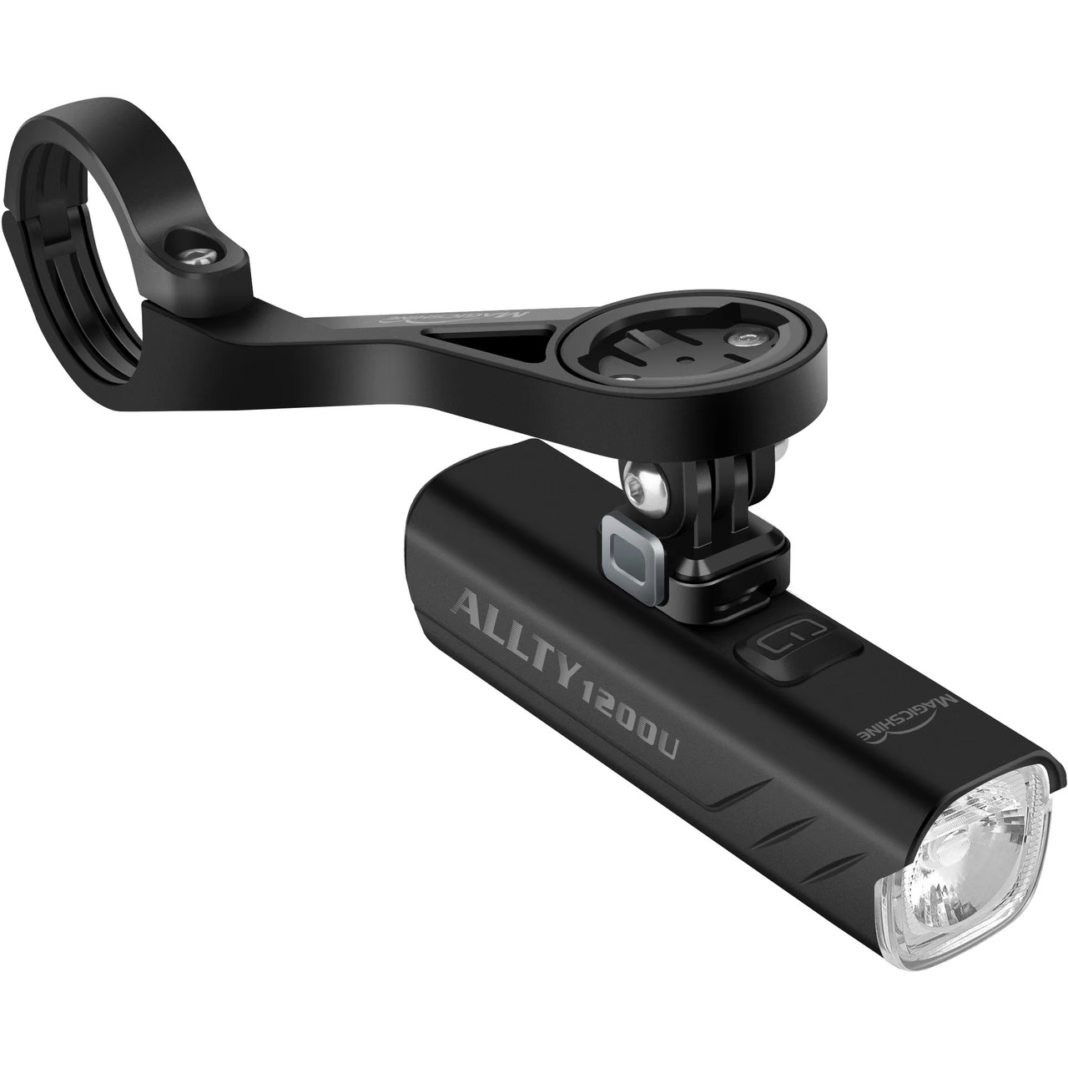
 Photo Credit: Magicshine
-
 Photo Credit: David Pintens / BELGA MAG/AFP via Getty Images
-
 Photo Credit: Luc Claessen / Getty Images