
Copenhagen Sprint Women is one of the newest races on the Women’s WorldTour, but it has already carved out a clear identity. It is Denmark’s modern sprint Classic, built around the cycling momentum created by the 2022 Tour de France Grand Départ in Copenhagen and designed to give both the women’s and men’s pelotons a major WorldTour-level race in the Danish capital.
The women’s race was launched in 2025, immediately joining the UCI Women’s WorldTour rather than growing gradually through lower categories. That matters. It meant Copenhagen Sprint Women arrived with top-tier status from day one, giving Denmark a major women’s one-day race and adding another fast, urban, sprint-friendly Classic to the highest level of the sport.
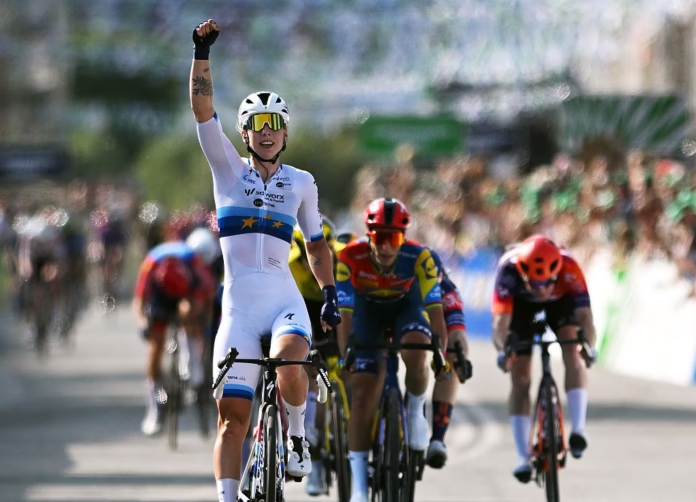
Its first edition did exactly what the name promised. Lorena Wiebes won the inaugural Copenhagen Sprint Women in 2025, beating Elisa Balsamo and Chiara Consonni in a high-speed finish in the Danish capital. That first podium immediately set the tone for the event: this is a race for elite sprinters, but it is not just a simple flat run to the line.
For a closer look at the current edition, ProCyclingUK’s beginner’s guide to Copenhagen Sprint Women 2026 explains the modern route, schedule and race format, while the wider 2026 Women’s WorldTour guide places it in the context of the top-level women’s calendar.
Why was Copenhagen Sprint Women created?
Copenhagen Sprint grew out of Denmark’s appetite for elite road racing after the country hosted the Grand Départ of the 2022 Tour de France. That weekend underlined how much support there was for cycling in Copenhagen and across Zealand, and the new race was designed to leave something more permanent behind.
The idea was straightforward but ambitious: create a WorldTour race that could showcase Danish cycling, use Copenhagen as a major finishing backdrop, and give both the women’s and men’s pelotons a race with the same broad identity. The women’s event was not added as an afterthought. It was part of the Copenhagen Sprint concept from the beginning, with the race immediately placed at the top level of the women’s calendar.
That makes it an important modern case study in how new races can be built. Rather than relying only on old traditions, Copenhagen Sprint Women uses recent momentum, city-centre racing and Danish cycling culture to create something new. Its history is short, but the foundation is strong.
When was the first Copenhagen Sprint Women?
The first Copenhagen Sprint Women took place in June 2025. The women’s race was held on the Saturday, with the men’s race following on the Sunday, creating a full weekend of racing around Copenhagen.
The inaugural women’s route started in Roskilde, one of Denmark’s most historic cities, before heading across Zealand and finishing with laps in central Copenhagen. That route design gave the race two useful identities at once. It had enough regional scale to avoid feeling like a short city criterium, but enough urban finish-line energy to make the final sprint feel like a proper showcase.
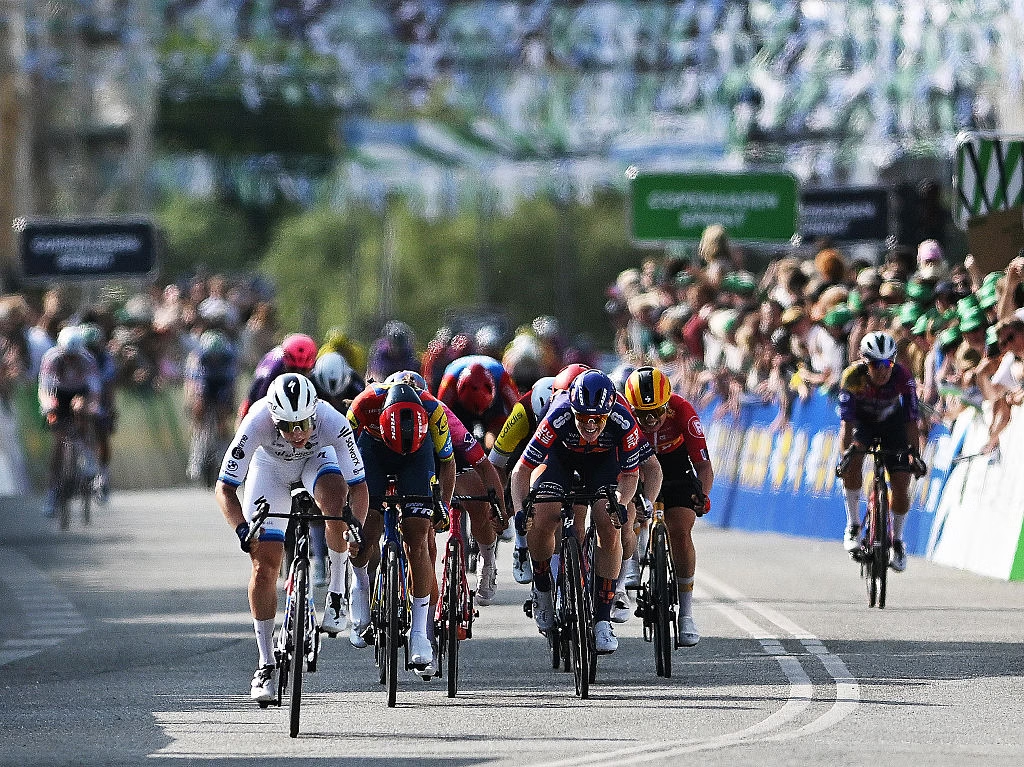
From the beginning, the race felt built for a sprint, but not a lazy one. The roads into Copenhagen, the finishing circuits and the pressure of a first edition all added tension. The sprinters had the advantage, but their teams still had to organise the chase, control the late kilometres and keep their leaders in position.
Lorena Wiebes wins the first edition in 2025
The first winner was exactly the kind of rider the race seemed designed to crown. Lorena Wiebes arrived as the strongest pure sprinter in the women’s peloton and finished the job with a dominant victory in Copenhagen.
Her win came ahead of Elisa Balsamo and Chiara Consonni, with Charlotte Kool and Nienke Veenhoven also inside the top five. That result gave the race an immediate sprinting pedigree. The first podium was not an accident of a reduced field or a surprise breakaway. It was a direct meeting of some of the best fast finishers in women’s cycling.
The 2025 race also showed that Copenhagen Sprint Women would not be a procession. There were crashes, chase dynamics and the normal instability that comes with a new race and a fast finale. ProCyclingUK’s report from the inaugural Copenhagen Sprint Women captured both Wiebes’ finishing dominance and the safety concerns that shaped the first edition’s wider story.
Why the race suits sprinters
Copenhagen Sprint Women is built around speed. The broad race concept, the flat-to-rolling terrain and the finishing circuits in Copenhagen all point towards a fast finish. That gives the race a clear place in the calendar for riders who do not always get enough WorldTour one-day opportunities designed around sprinting.
That does not make it easy. A sprint race at WorldTour level is still a tactical test. Teams need to control the breakaway, survive positioning battles, handle the pressure of city-centre roads and time the lead-out correctly. The final laps in Copenhagen make organisation especially important, because a badly placed sprinter can lose the race before the actual sprint begins.
For the women’s peloton, that identity is valuable. Many of the most prestigious Classics are built around climbing, cobbles, wind or repeated punchy efforts. Copenhagen Sprint Women gives the fastest riders a major target with WorldTour points, strong visibility and a finish that rewards speed without removing the tactical complexity of a one-day race. It also sits naturally alongside the broader conversation around the best sprinters in women’s cycling right now, because this is exactly the kind of race where that hierarchy is tested directly.
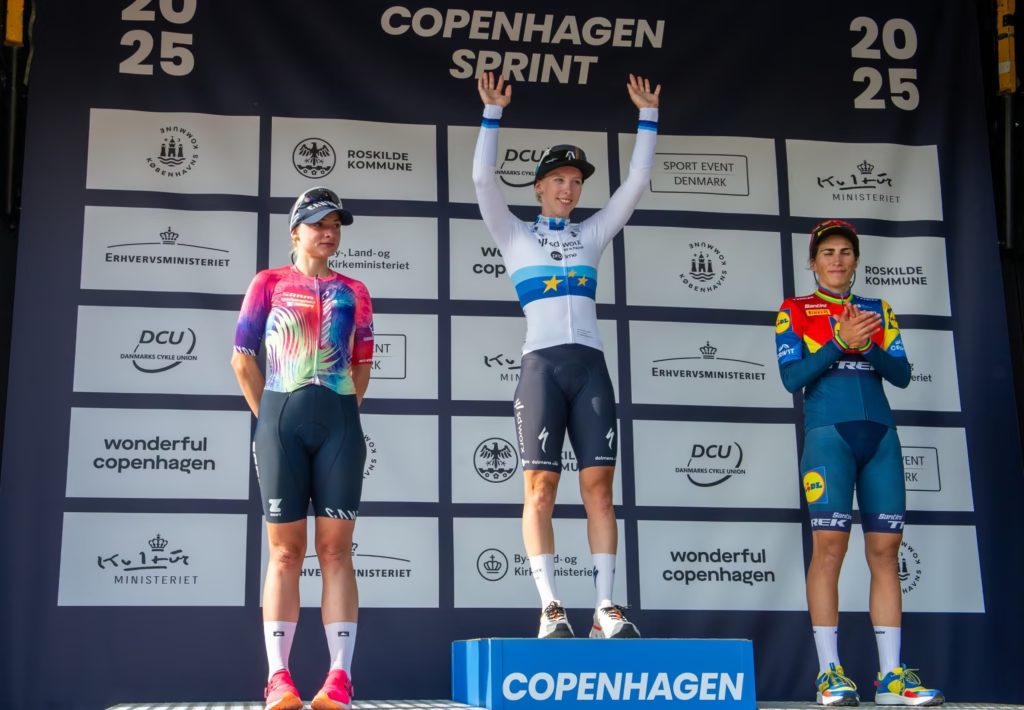 Photo Credit: Andreas Roungkvist
Why Copenhagen matters as a cycling city
Copenhagen is not just a backdrop. The city gives the race much of its appeal. Denmark has a strong everyday cycling culture, and Copenhagen’s reputation as a cycling city gives the event a natural public identity. The race can lean on that atmosphere in a way that feels different from many older European Classics.
The finish in the capital also makes the event accessible. City-centre circuits bring spectators close to the race, create repeated viewing points and make the finale easier to follow. For television, that matters too. A sprint finish in central Copenhagen gives the race a strong visual identity from the start.
Roskilde also gives the race historical depth. Starting there before moving towards Copenhagen allows the route to connect the wider Zealand region with the capital. It is a useful balance: heritage at the start, modern city energy at the finish.
How Copenhagen Sprint Women fits into the Women’s WorldTour
Copenhagen Sprint Women fills a useful space in the Women’s WorldTour. The calendar has grown significantly in recent years, but there are still relatively few top-tier one-day races that are clearly built around sprinters. That gives Copenhagen Sprint a distinctive role.
It sits after the Giro d’Italia Women and before the Tour de Suisse Women in the 2026 calendar, which gives it an interesting position. Some riders will arrive from stage-race efforts, while others will target it as a specific one-day opportunity. For sprint teams, it is an obvious goal. For all-rounders and attackers, it is a race where they need to disrupt the expected pattern before the final laps.
That calendar slot also helps the event stand out. It is not buried inside the spring Classics block, and it is not competing directly with the biggest summer Grand Tours. As the race develops, that could help Copenhagen Sprint Women become one of the clearest mid-season sprint appointments in women’s cycling.
What made the first edition important?
The 2025 edition mattered because it proved the concept quickly. A new race always has to do more than exist. It has to show that the course works, that the finish creates drama, that the crowds respond and that the event belongs at the level it has been given.
Copenhagen Sprint Women passed that first test. The race produced a logical winner, a strong podium and the kind of sprint finish its organisers would have wanted. It also put Denmark on the Women’s WorldTour map with an event that felt modern rather than borrowed from an older men’s race structure.
That is an important distinction. The best new women’s races are not only replicas. They need their own sporting reason to exist. Copenhagen Sprint Women’s reason is clear: a fast, high-profile, Danish WorldTour race with a capital-city finish and a natural home for the peloton’s quickest riders.
-
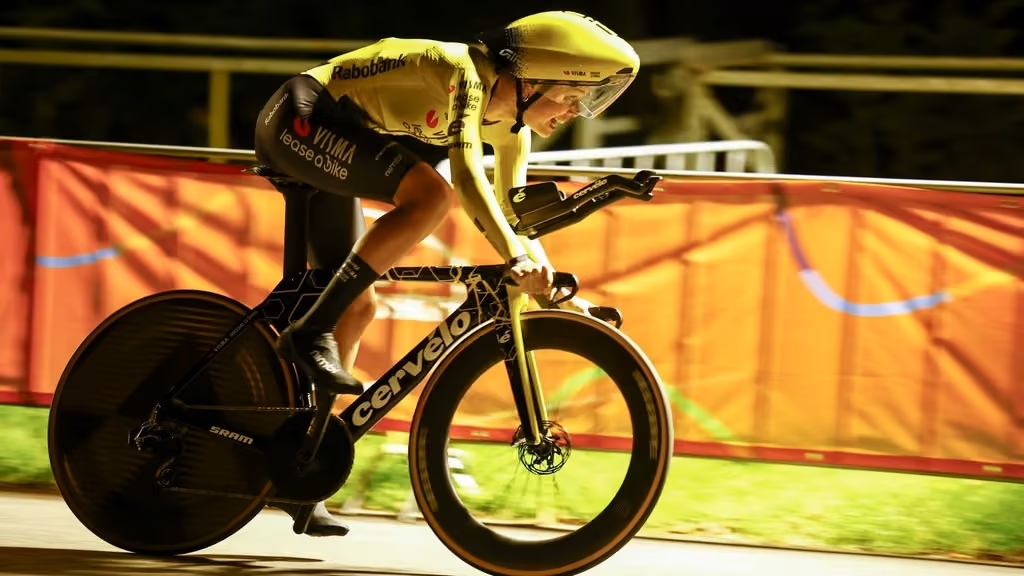
 Photo Credit: Cor Vos
 -
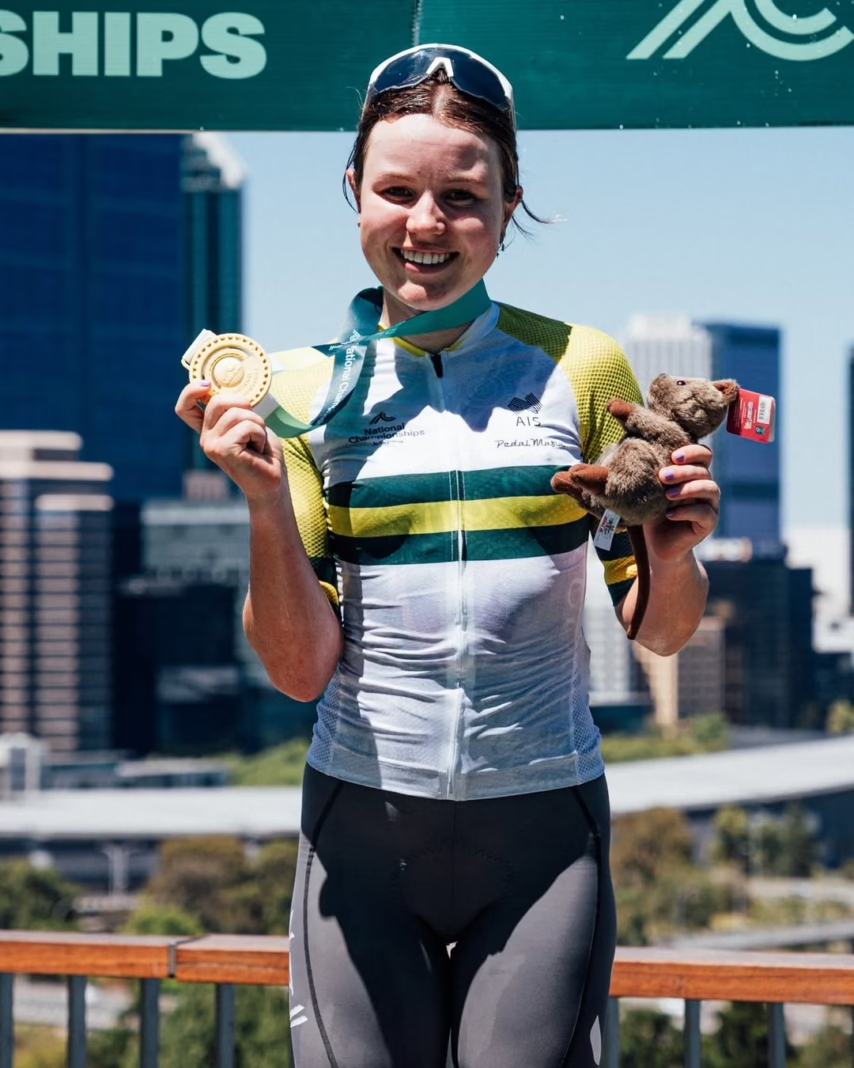
 Photo Credit: Zac Williams/AusCycling
Copenhagen Sprint Women winners
- 2025: Lorena Wiebes
The winners’ list is still short because the race is so new, but that can be part of its interest. Every edition in the next few years will help define what Copenhagen Sprint Women becomes. If the race keeps producing battles between the world’s best sprinters, its identity will harden quickly.
What could the race become?
The obvious future for Copenhagen Sprint Women is as one of the key sprint Classics on the Women’s WorldTour. Its route, finish city and early winner all point in that direction. The race does not need to become something more selective to be important. Its value comes from giving sprinting a major WorldTour stage.
There is room for tactical variation, though. Wind, crashes, team strength and late attacks can all change a race that looks straightforward on paper. The best sprint races often work because everyone knows what should happen, but the peloton still has to make it happen. Copenhagen Sprint Women should sit in that space.
Over time, the race may also become a reference point for Danish riders and Danish fans. A home winner would give it another layer, but even without that, the Copenhagen finish gives the event a sense of place that many new races struggle to establish.
Why Copenhagen Sprint Women already matters
Copenhagen Sprint Women matters because it represents a newer kind of race-building in women’s cycling. It arrived with WorldTour status, a clear identity, a major city finish and equal weekend visibility alongside the men’s event. That is a strong starting point for a race with only one edition behind it.
Its sporting identity is also clean. This is a race for sprinters, lead-out trains and teams that can stay calm at high speed. The inaugural edition confirmed that with Wiebes beating Balsamo and Consonni, three riders who gave the race instant credibility as a fast-finish Classic.
Some races need decades before their personality becomes obvious. Copenhagen Sprint Women did not. Its history is brief, but its direction is already clear: a modern Danish WorldTour race, shaped by speed, city-centre tension and the growing ambition of women’s cycling.

