
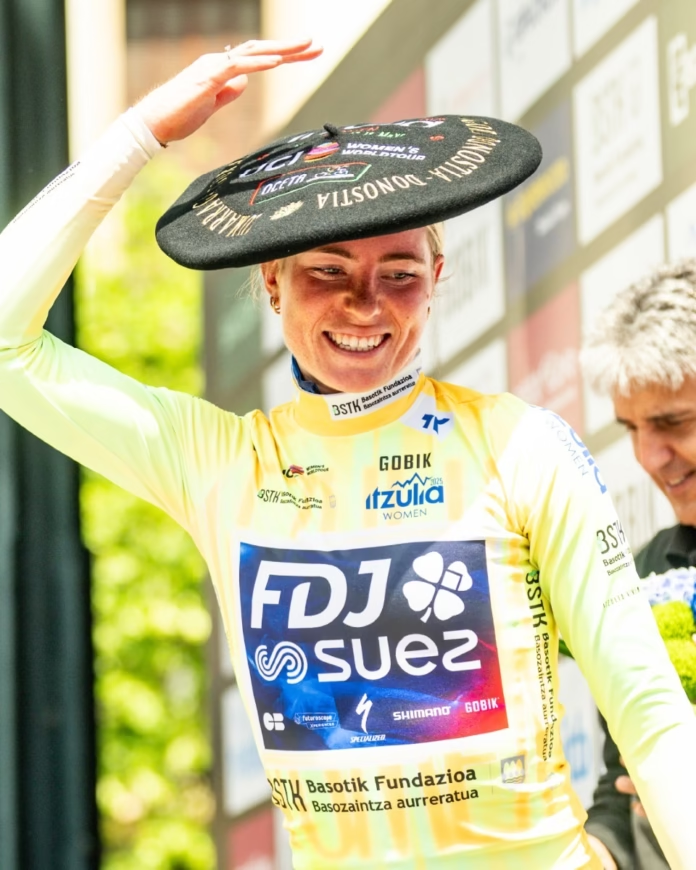
Itzulia Women is still a young race, but it already feels like one of the more important stage races in women’s cycling. First held in 2022, it brought a proper Women’s WorldTour stage race to the Basque Country, giving the women’s calendar a race built around the same kind of terrain that has long made the men’s Itzulia Basque Country so respected: short climbs, technical roads, aggressive racing and very little room to hide.
Its history is not long, but it is already distinctive. Itzulia Women has quickly become a race associated with hard routes, strong winners and the dominance of Demi Vollering, who won three of the first four editions. That makes it a useful race to understand, not because it has a century of tradition behind it, but because it shows how quickly a modern women’s race can establish an identity when the route, calendar slot and field quality all work together.
For readers placing the race within the wider Spanish stage-racing block, Itzulia Women sits naturally alongside ProCyclingUK’s Beginner’s guide to Itzulia Women 2026, Beginner’s guide to La Vuelta Femenina 2026 and Beginner’s guide to Vuelta a Burgos Feminas 2026.
 Photo Credit: Naikefotosport
How Itzulia Women began
The first edition of Itzulia Women was held in 2022, making it a relatively recent addition to the top level of women’s cycling. Its arrival gave the Basque Country a Women’s WorldTour stage race after earlier women’s events in the region had been built more around one-day racing.
That distinction helps explain the shape of the race. A one-day Basque Classic can be hard, but a stage race allows the region’s cycling character to show itself more fully. The climbs do not need to be Alpine in scale to hurt. The repeated ramps, technical descents and constantly rolling roads make Itzulia Women a race where positioning, recovery and team strength are tested from day to day.
The Basque Country has always suited aggressive racing. Roads twist, climbs arrive in clusters, and the weather can add another layer of difficulty. From the beginning, Itzulia Women used that landscape well. It did not feel like a token women’s event added to an existing calendar. It felt like a race with a clear purpose: to give the women’s peloton a demanding, top-level stage race on terrain that rewards strength and initiative.
Demi Vollering sets the early standard
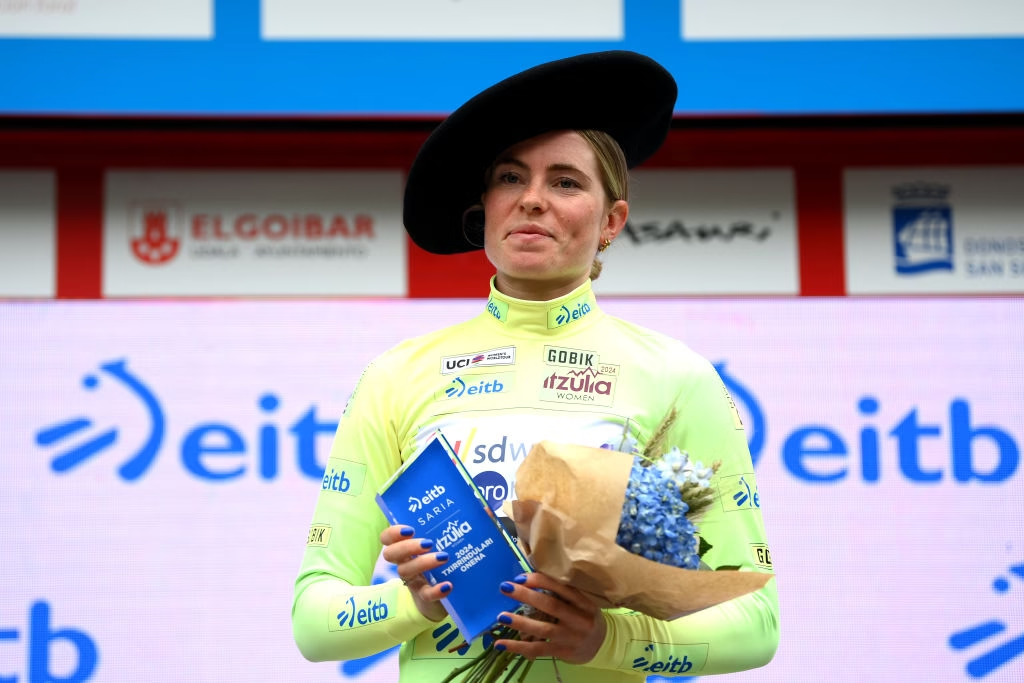
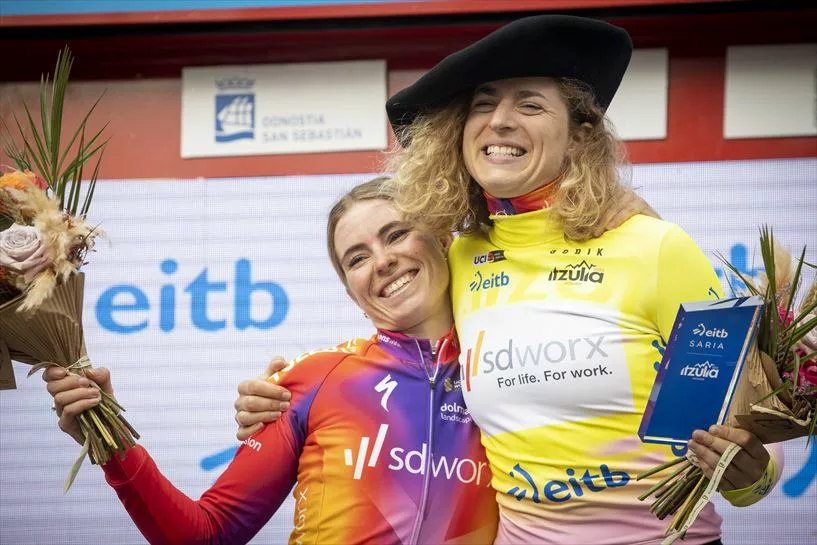
The early history of Itzulia Women is closely tied to Demi Vollering. She won the first edition in 2022, returned to win again in 2024, and then took a third overall victory in 2025 after moving to FDJ-Suez. That is a remarkable early pattern for a race still building its identity.
Vollering did not merely become one name on the honours board. She became the rider against whom the race’s first era is measured. Her repeated success also tells you what kind of rider Itzulia Women tends to reward: someone who can climb, recover, read rolling terrain and still make decisive moves late in a stage.
The 2022 edition immediately set that tone. Vollering won overall ahead of Pauliena Rooijakkers and Kristen Faulkner, giving the new race a high-quality first podium. It showed that Itzulia Women was not going to be a soft addition to the calendar. It was a race where the best stage racers and climbers could separate themselves quickly.
The SD Worx years
The opening editions were also shaped heavily by SD Worx. In 2023, Marlen Reusser won overall ahead of Vollering, with Olivia Baril third. In 2024, Vollering returned to the top step, with Mischa Bredewold second and Juliette Labous third. Across those early years, SD Worx were not just present. They were often controlling the race’s direction.
That dominance gave Itzulia Women a slightly unusual early identity. Many young races spend years searching for a defining rivalry or team pattern. Itzulia Women had one almost immediately. The question was often not whether SD Worx would influence the race, but how they would do it, and which of their riders would turn the terrain into a winning move.
Reusser’s 2023 victory added useful variety to the story. She was not the same kind of winner as Vollering. Her strength came from power, time-trialling depth and the ability to sustain pressure rather than only from explosive climbing. That made the race feel broader. Itzulia Women could reward the sharpest climber, but it could also reward a rider capable of turning rolling Basque terrain into a long effort of control and damage.
Why the Basque terrain gives the race its character
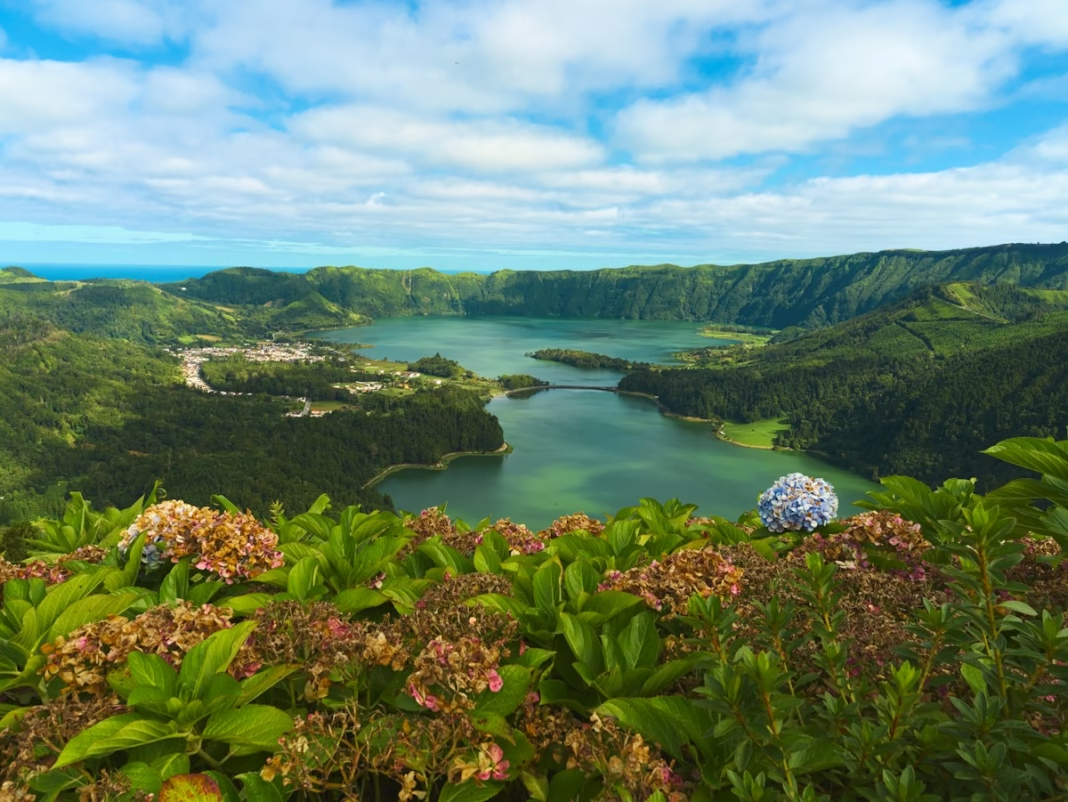
The landscape is central to why Itzulia Women has worked so quickly. The Basque Country does not need huge summit finishes to create racing. Its roads are difficult in a more layered way. Climbs arrive often, descents can be technical, roads can be narrow, and the peloton rarely gets the kind of long flat reset that makes a race easy to control.
That style suits modern women’s racing especially well. The fields are deep enough for big teams to control sections of the race, but the terrain constantly gives aggressive riders a chance to disrupt that control. A rider can attack over a short climb, force a split on a descent, or use a final ramp to change the general classification without needing a traditional high-mountain stage.
The race has also used well-known Basque cycling landmarks, including roads around Donostia and climbs such as Jaizkibel and Mendizorrotz. In 2025, Vollering made the decisive move on Mendizorrotz before winning the final stage around Donostia and securing the overall title. That kind of finale suits the race perfectly: hard enough for a clear selection, technical enough to reward skill, and close enough to the finish to make hesitation costly.
For readers who want to understand the tactical side of that terrain, ProCyclingUK’s How women’s cycling team tactics work and What do the jerseys mean in women’s stage races? help explain why repeated climbing days can create several races inside the same race.
-
 Photo Credit: David Magalhães / Unsplash

The 2025 edition and a new phase
The 2025 edition was important because it showed that Vollering’s relationship with the race had outlived her SD Worx years. Now riding for FDJ-Suez, she won the final stage and the overall classification, with Mischa Bredewold second and Sarah van Dam third overall.
That result did two things. It reinforced Vollering as the race’s defining rider, and it showed that Itzulia Women was no longer simply a story of one dominant team. FDJ-Suez could now use the race as a platform, while SD Worx-Protime still remained central through Bredewold. Sarah van Dam’s podium also added a fresh name to the race’s short but increasingly useful honours list.
By 2025, the race had already developed a clear competitive profile. It was not just a warm-up race or a passing stop between larger objectives. It had become one of the best mid-May tests for riders who wanted to prove stage-racing condition on difficult terrain.
The winners so far
The first four editions of Itzulia Women produced a compact but strong honours list:
- 2022 – Demi Vollering
- 2023 – Marlen Reusser
- 2024 – Demi Vollering
- 2025 – Demi Vollering
The podiums also show the level of rider the race has attracted from the start. Pauliena Rooijakkers, Kristen Faulkner, Olivia Baril, Mischa Bredewold, Juliette Labous and Sarah van Dam have all finished in the top three overall. That is a strong early record for a race still building its wider reputation.
Why Itzulia Women matters
Itzulia Women matters because it fills a valuable role in the women’s calendar. It is a short stage race, but not a light one. It comes in a part of the season where the peloton is moving from spring Classics form into the next stage-racing block, and it gives climbers, puncheurs and all-rounders a proper test across consecutive days.
It also matters because it gives the Basque Country a top-level women’s race that fits the region’s cycling culture. Basque cycling is built around hard roads, passionate crowds and races that reward aggression. Itzulia Women has quickly absorbed that identity. Even with only a few editions behind it, the race already feels like it belongs.
For newer fans, the easiest way to understand Itzulia Women is as a compact, high-quality stage race where the climbs are frequent, the racing is aggressive and the overall winner usually has to be complete rather than merely explosive. It does not yet have the long history of the Giro d’Italia Women or the Tour de France Femmes, but it has already built something valuable: a clear identity, a strong winners’ list and a route style that makes the racing worth watching.

