Scheldeprijs Women is one of the newer additions to the spring calendar, but it found its identity almost immediately. First held in 2021, it arrived later than many of the other major Flemish women’s races, yet it slotted neatly into a gap the calendar still needed. In a spring built around cobbles, bergs and selective classics, Scheldeprijs Women gave the fastest riders a clearer target of their own.
That late arrival matters because it explains why the race feels both new and familiar. New, because its history is still short. Familiar, because the sporting logic was obvious from the beginning. Scheldeprijs has long been associated with sprinting on the men’s side, and the women’s race inherited that same broad identity straight away – flat roads, nervous positioning and a finale where team control and pure speed usually matter more than climbing strength.
If you want the current race shape alongside the history, ProCyclingUK’s Scheldeprijs Women 2026 route guide and How to watch Scheldeprijs Women 2026 in the UK are the natural companion reads.
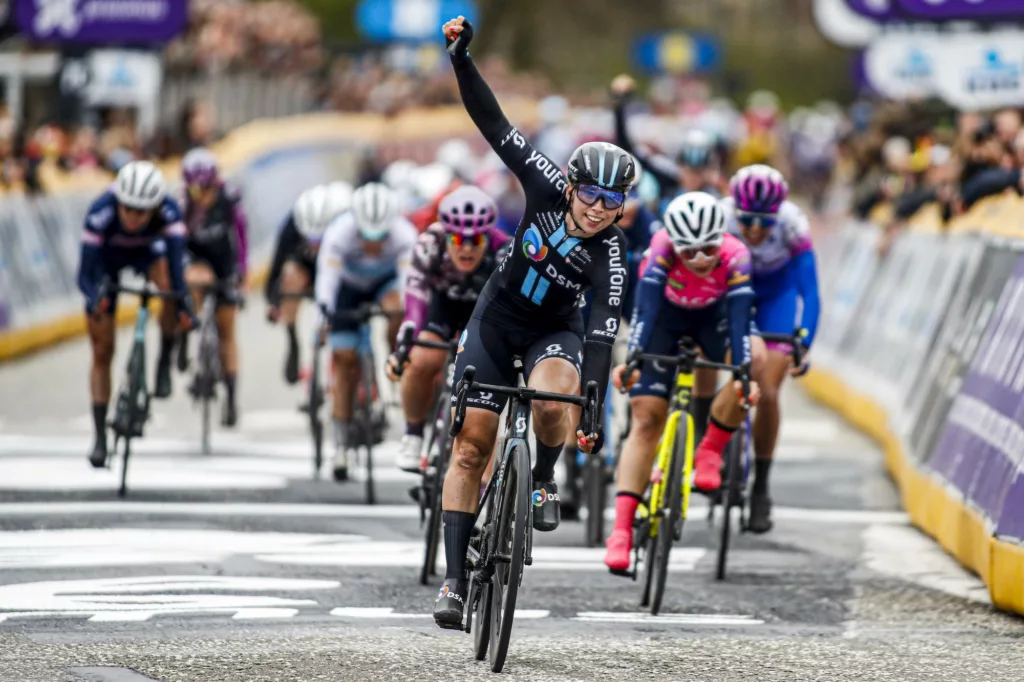 Photo Credit: Rafa Gomez/SCA/Cor Vos
Why the race arrived later than other classics
Scheldeprijs Women did not appear until 2021, and that delay is part of the story. The race had long looked like an obvious fit for a women’s edition, but the calendar needed to open up properly for it to happen. Once it did, the event quickly felt like a natural part of the Flemish spring rather than an experiment.
That is an important part of its history. Scheldeprijs Women was not built from nowhere. It was added to a long-established classic with a very clear identity, and that gave it a ready-made place in the season. Rather than needing years to work out what kind of race it wanted to be, it arrived with a purpose already attached.
A sprint classic from the start
From the first edition, Scheldeprijs Women established itself as a race for top sprinters. That was not just a pattern in the results, it was part of the race’s design. The route and the wider context of the calendar made it a race where fast finishers could realistically expect a clean shot at victory, provided they survived the stress that always comes with Belgian one-day racing.
That is what made the opening years so revealing. The race did not spend time drifting between identities. It quickly became one of the clearest sprint tests in women’s cycling, a race where lead-out quality, positioning and nerve in the final kilometres were often just as important as outright speed.
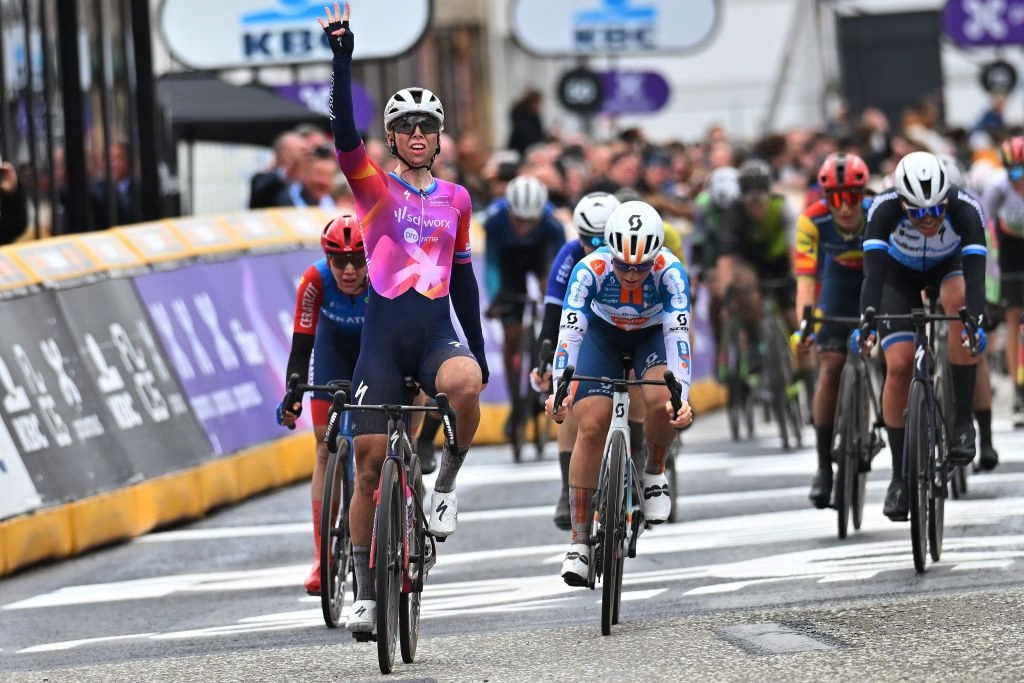
Previous winners of Scheldeprijs Women
The honours list is still short, but it already says a lot about the race:
- 2025 – Elisa Balsamo
- 2024 – Lorena Wiebes
- 2023 – Lorena Wiebes
- 2022 – Lorena Wiebes
- 2021 – Lorena Wiebes
That sequence tells the story of the race’s opening era very clearly. Lorena Wiebes won the first four editions and effectively defined what success in Scheldeprijs Women looked like. Elisa Balsamo’s victory in 2025 then mattered because it finally broke that run and showed that, while the race still strongly suits the same rider profile, it is not locked to one dominant name forever.
What the early winners tell you
A winner’s list this short can still be very informative. Wiebes and Balsamo are not identical riders, but both fit the same broad profile – fast finishers who can cope with the stress of a flat Belgian one-day race and still deliver when the road opens up in the final few hundred metres.
That consistency is useful because it confirms Scheldeprijs Women is not still searching for its identity. It already has one. In that sense, it resembles the men’s Scheldeprijs in spirit, even if the women’s edition is much younger. It is not a cobbled Monument, not a berg race, and not a semi-classic that only occasionally ends in a sprint. It is a sprint classic by design and, so far, by outcome.
-
 Photo Credit: Getty
 -
 Photo Credit: Getty
A race that is growing quickly
The other important part of Scheldeprijs Women’s history is how quickly its status has risen. For 2026, the race steps up to the Women’s ProSeries, which is a meaningful milestone in such a short lifespan. That move confirms that the event is no longer simply a useful addition to the calendar. It has already become one of the established sprint targets of the spring.
That matters because races do not always settle this quickly. Some need years to prove their value. Scheldeprijs Women made its case almost immediately. It offered a clear sporting role, produced recognisable winners and quickly became a fixture that made sense to riders, teams and fans.
What Scheldeprijs Women represents now
Scheldeprijs Women may still be young, but it already feels settled. It has a clear route identity, a recognisable roll of honour and a natural place in the spring. In a calendar full of selective terrain and hard classics, it offers something slightly different – a high-level flat race where the fastest riders can genuinely target a major result.
That is what makes its history worth noting, even at this early stage. Some races need time to discover what they are. Scheldeprijs Women found that out almost immediately. It is the women’s sprint classic of the Flemish spring, and its first few editions have only made that clearer.
For more on where it sits in the calendar, ProCyclingUK’s A brief history of Tour of Flanders Women, Beginner’s guide to Paris-Roubaix Femmes 2026 and In Flanders Fields Women 2026 route guide are the best next reads.