The Men’s Flèche Wallonne has built one of the clearest identities of any major one-day race. It does not have the sheer scale of Liège-Bastogne-Liège or the Monument status of Ronde van Vlaanderen, but it has something just as valuable – a route and finale that almost everyone in cycling can picture immediately. For modern fans, that means the Mur de Huy. For the race’s longer history, it means a shift from a broader Walloon Classic into one of the most specialised uphill one-day tests in the sport.
How La Flèche Wallonne began
La Flèche Wallonne was first held in 1936. It was created by the newspaper Les Sports, and the inaugural edition was won by Philémon Demeersman. In those early years, the race did not yet have the tight modern identity it carries now. The route changed direction and shape multiple times across the decades, with start and finish towns shifting as organisers looked for the best formula. What stayed constant was the Ardennes character – a race for riders who could handle repeated climbs rather than flat-out sprinters or pure diesel engines.
The race also established itself quickly as a major Belgian one-day event. Belgian riders dominated the early decades, winning the first 11 editions, and the race gradually became one of the key reference points of the spring in Wallonia. That early dominance matters because it gave Flèche a strong national identity before it developed the more internationally recognised Mur de Huy finish that defines it today.
How the race found its identity
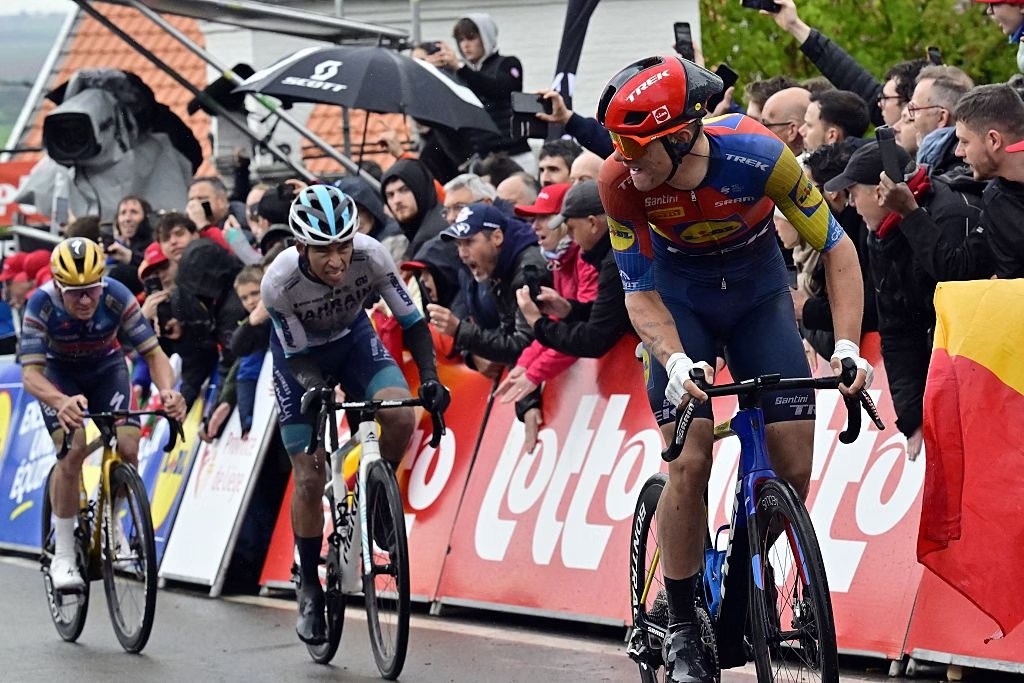
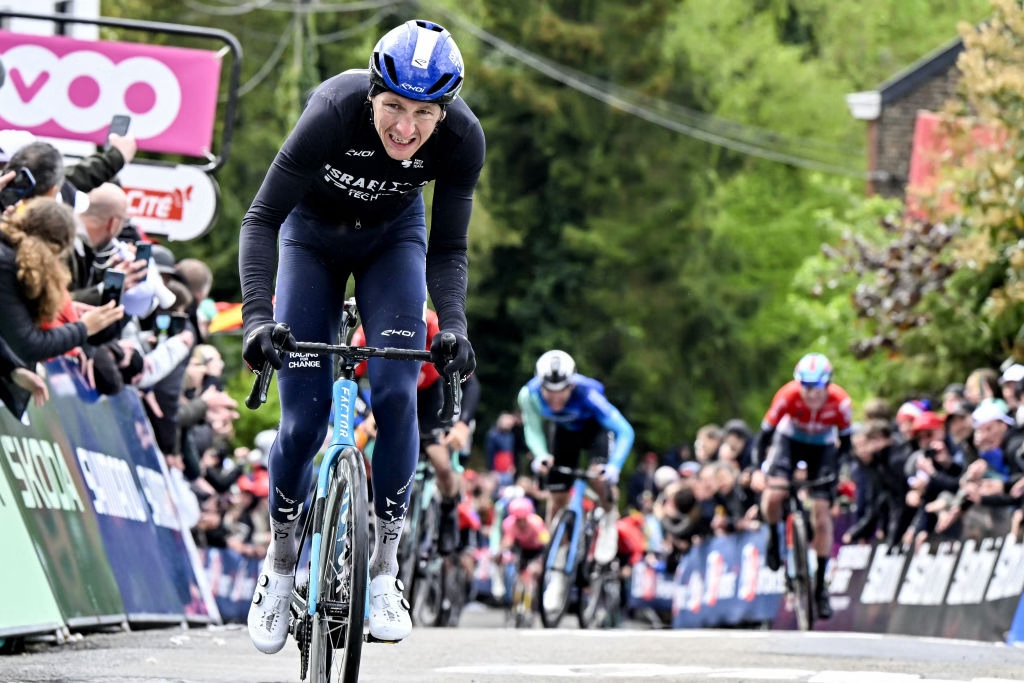
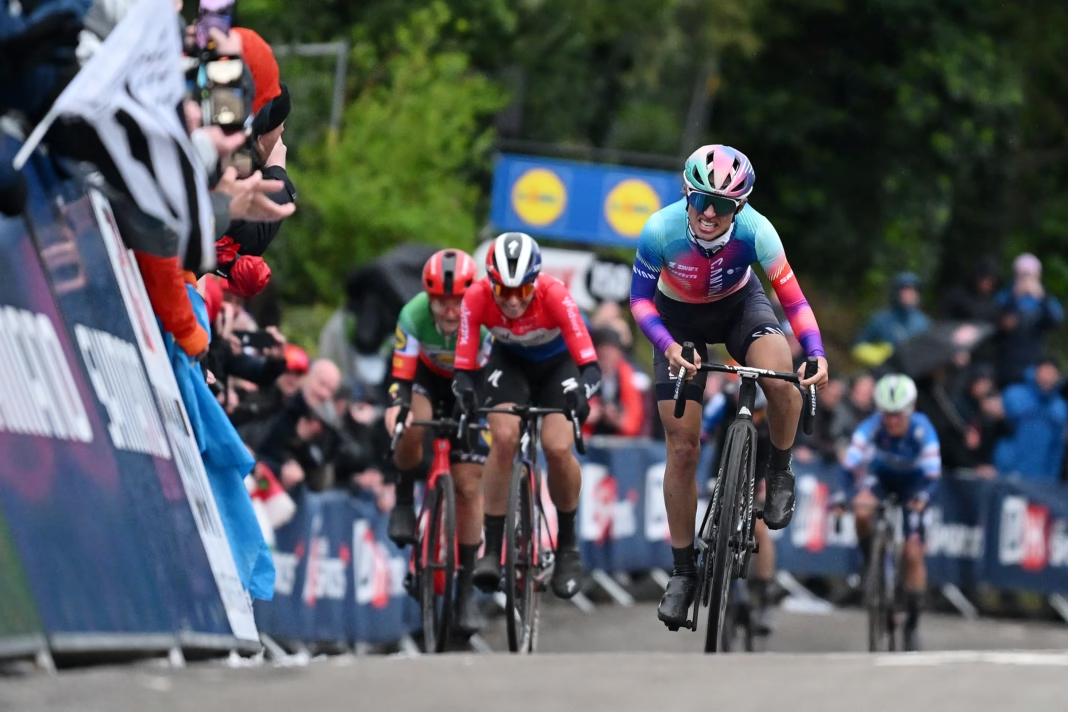
For much of its history, Flèche was important without being completely fixed in the way people now understand it. That changed when the race became tied to Huy and, in particular, to the Mur de Huy. Huy first appeared in the race in 1936, became a finish town in the 1980s, and the summit finish on the Mur transformed the race into something much more specific. Since then, La Flèche Wallonne has become the most concentrated expression of Ardennes punch in the men’s calendar.
That shift is what separates Flèche from the other big Ardennes races. Amstel Gold Race is often more open and tactical, and Liège-Bastogne-Liège is broader and more attritional. Flèche, by contrast, tends to funnel everything towards one final test. Riders still need to survive the wider route, but the Mur de Huy is where the race’s meaning is usually decided. The modern climb is around 1.3 kilometres long at an average gradient of roughly 9.6 per cent, with much steeper ramps inside that.
The great champions of Flèche
The winners list tells you a great deal about the race. This is not usually an event won by accident or through simple opportunism. It favours riders with timing, uphill explosiveness and enough calm to hold their effort until the steepest point matters most.
Alejandro Valverde remains the race’s greatest modern specialist, with a record five victories. His wins came in 2006, then from 2014 to 2017, and that stretch effectively made him the defining rider of modern Flèche Wallonne. Before him, a cluster of riders won the race three times, including Marcel Kint, Eddy Merckx, Moreno Argentin, Davide Rebellin and Julian Alaphilippe. That list is revealing in itself, because it mixes all-time great all-rounders with riders whose reputations were built specifically around one-day punch and Ardennes timing.
Merckx’s presence on that list matters because it links Flèche to the sport’s biggest names, while Argentin, Rebellin and Alaphilippe show how often the race has rewarded riders who made the Ardennes their natural home. More recently, winners such as Dylan Teuns, Stephen Williams and Tadej Pogačar have shown that the race still sits right at the centre of the spring conversation.
Why Flèche still matters
La Flèche Wallonne still matters because it offers a very specific kind of prestige. It is not the longest, hardest or broadest one-day race of the spring, but it is one of the clearest. Riders and fans both know what the race asks: survive the buildup, arrive at the Mur in the right place, then produce the sharpest uphill effort of the day. That makes it unusually legible as a sporting test, and unusually difficult to bluff.
It also matters because it sits in the middle of the Ardennes week, usually between Amstel and Liège, giving it a key role in how the spring narrative develops. A rider who wins Flèche is rarely doing so in isolation. The race tends to confirm which riders truly own that terrain in a given season, and that gives it importance beyond its single day.
A race defined by one climb
That is ultimately what makes the Men’s Flèche Wallonne so memorable. Many races are known for broad themes – cobbles, distance, weather and attrition. Flèche is known for one climb and the kind of rider who can master it. From its origins in 1936 to the Mur de Huy era that now defines it, the race has steadily become one of the most recognisable and specialised Classics in the sport.
It may not ask every question a rider can face in spring, but the one question it does ask is brutally clear.