
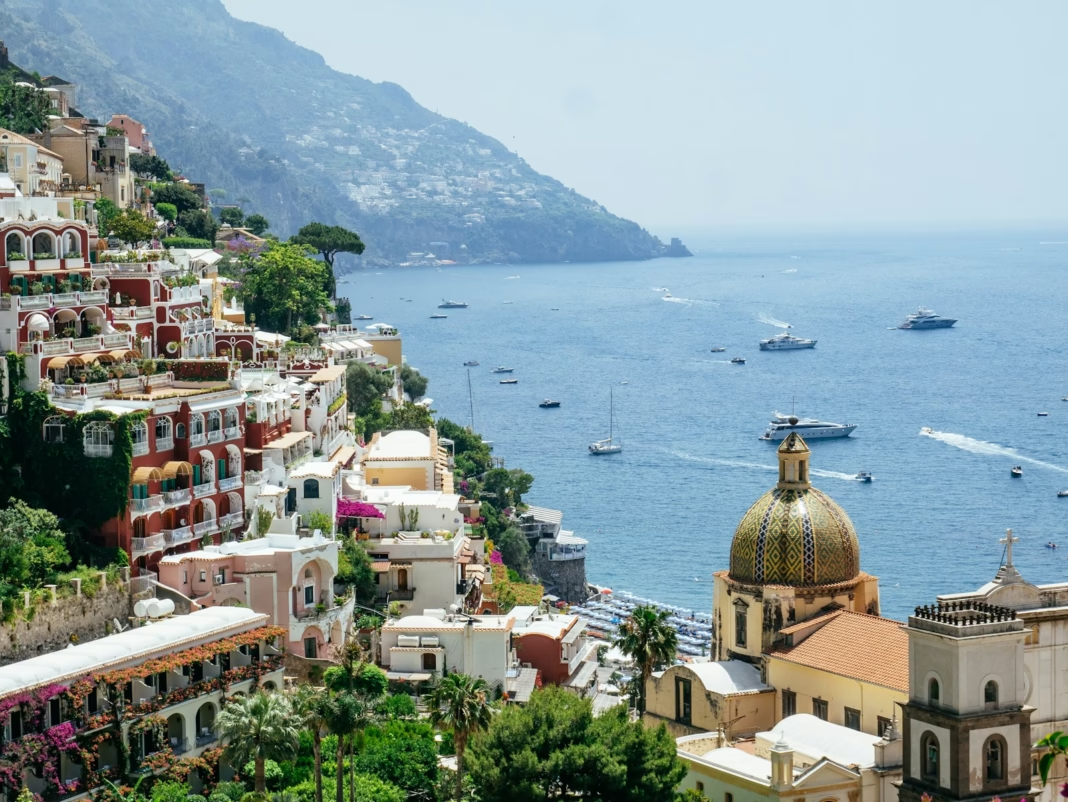
The Amalfi Coast and Sorrento Peninsula are not easy cycling destinations. That is exactly why they are interesting.
This is not Mallorca, Girona or the Alps with a clean cycling rhythm and obvious training-road logic. The roads are narrow, the traffic can be intense, the climbs are irregular, the villages sit awkwardly between sea and mountain, and the main coastal road can be beautiful and stressful in the same kilometre.
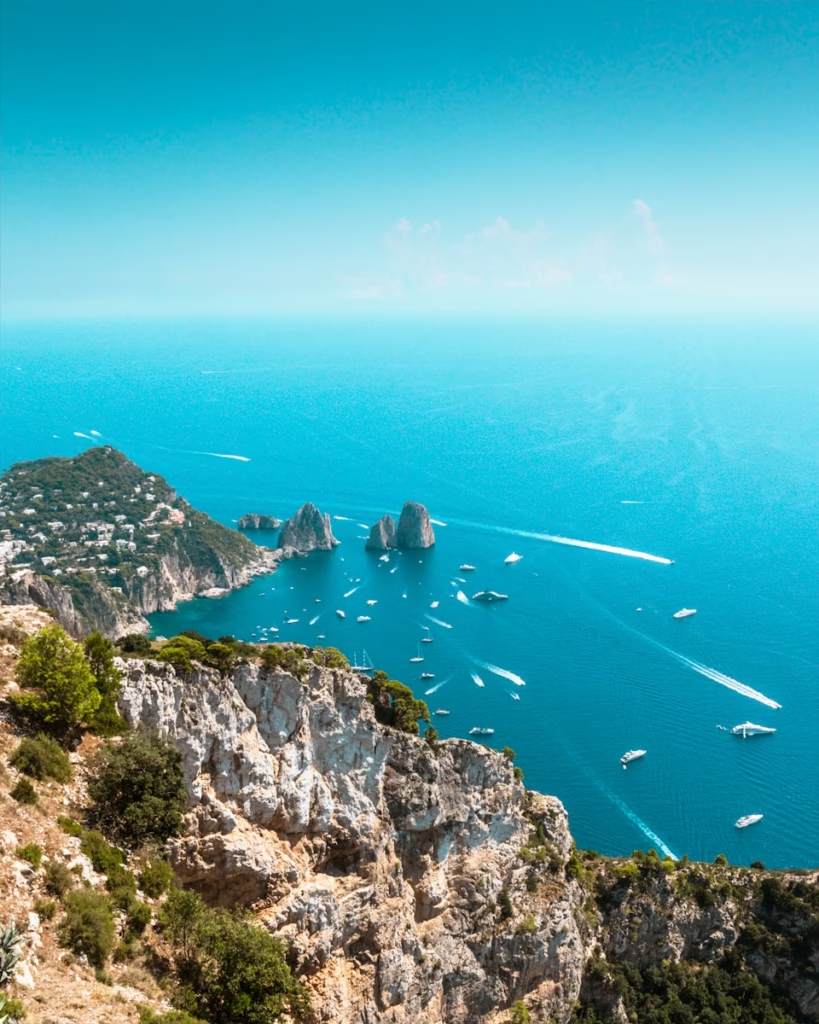
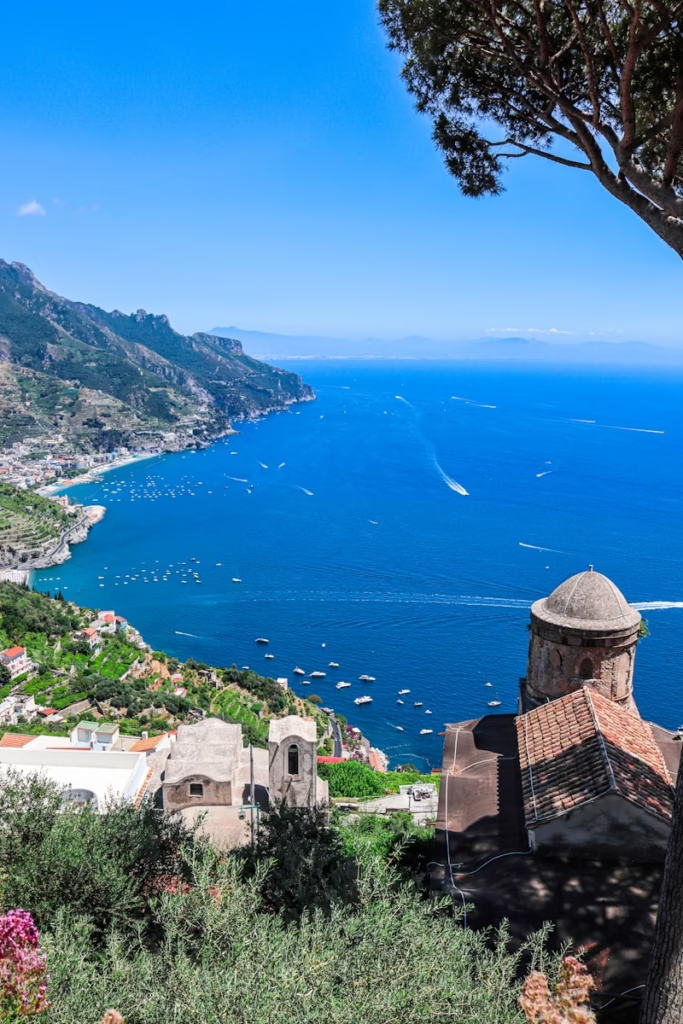
But get it right and this is one of the most memorable places in Europe to ride a bike. The rewards are obvious: cliff roads above the Tyrrhenian Sea, views to Capri, steep roads into lemon groves, climbs towards Sant’Agata sui Due Golfi, and the strange satisfaction of moving through one of Italy’s busiest tourist landscapes under your own power.
The key is planning. Ride early, choose the right base, do not underestimate the traffic, and treat the Amalfi Coast as a place for controlled exploration rather than pure training volume.
For riders comparing it with other European cycling trips, it sits closer to a scenic, technical holiday destination than a pure training camp. Our wider cycling travel guides cover more traditional riding bases, while this one is about making Amalfi and Sorrento work on their own terms.
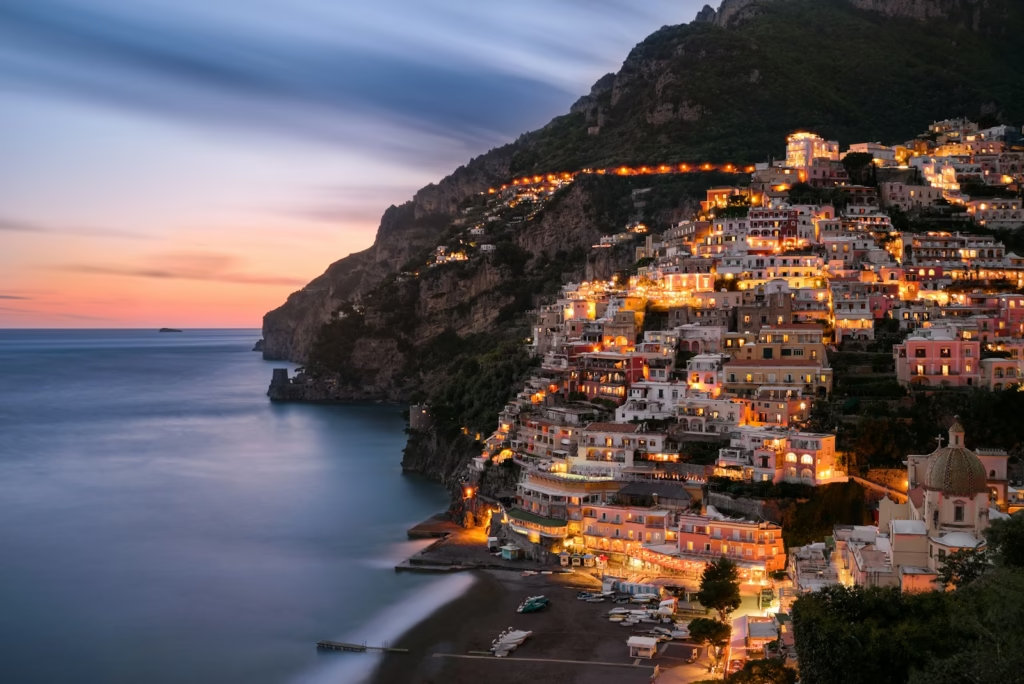
Quick answer: is the Amalfi Coast good for cycling?
Yes, but it is better for experienced cyclists than beginners.
The Amalfi Coast and Sorrento Peninsula offer spectacular road cycling, especially early in the morning and outside peak summer. The riding is hilly, scenic and technically engaging, but the roads are often narrow, busy and twisting, with limited dedicated cycling infrastructure.
For confident road cyclists, it can be superb. For nervous riders, families, or anyone wanting wide, quiet lanes, it can feel stressful.
Why Sorrento is the easier cycling base
Sorrento is the most practical base for most cyclists.
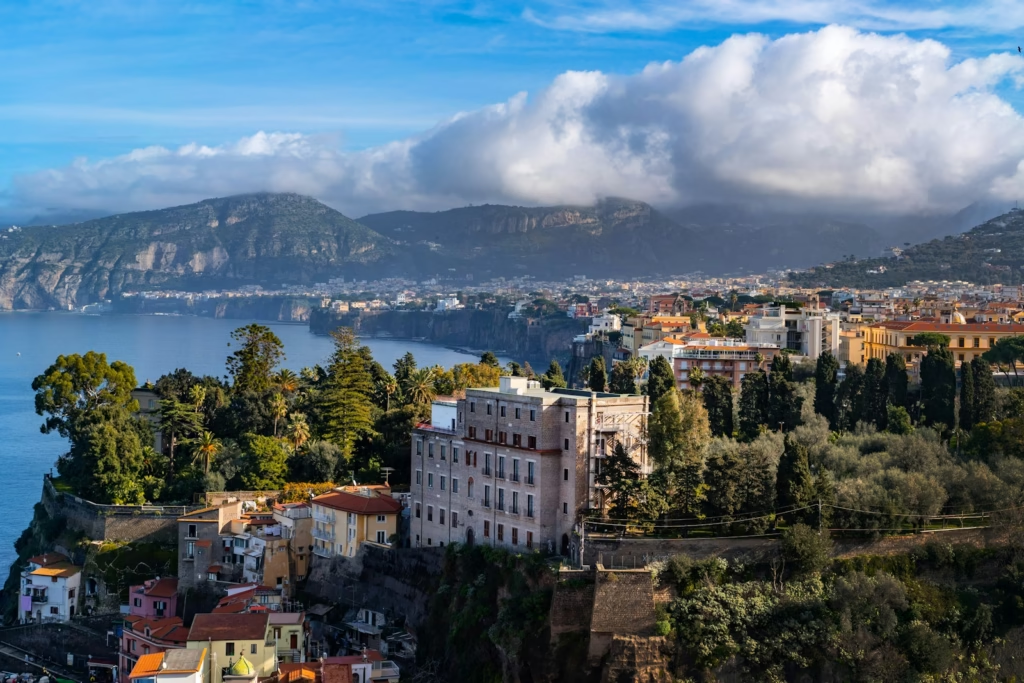
It gives you better access to the Sorrento Peninsula, routes towards Massa Lubrense, Sant’Agata sui Due Golfi, Termini and the views over Capri, while still allowing rides towards Positano and the Amalfi Coast. It also has more accommodation, food, transport and bike-hire options than smaller coastal villages.
The big advantage is flexibility. From Sorrento, you can ride loops without committing immediately to the busiest stretch of the Amalfi Drive. You can climb inland, drop towards coastal viewpoints, or build a harder route across the peninsula.
That makes Sorrento the sensible option if this is your first cycling trip to the area. It gives you room to learn the roads before deciding whether you want the full coastal-road experience.
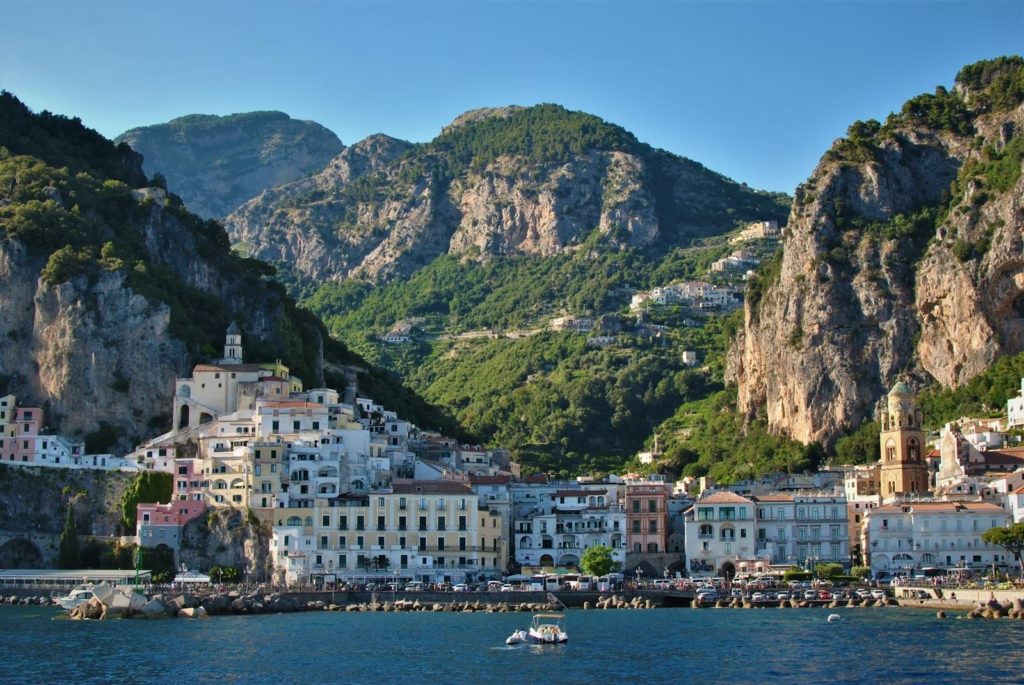
Amalfi is more dramatic, but less forgiving
Staying in Amalfi puts you closer to the classic coast road and climbs into Ravello, Furore, Agerola and the hills above the sea.
That is the romantic version of the trip. Wake up, ride out from the old maritime town, climb straight into the cliffs, descend back to the water, finish with coffee by the harbour. It sounds perfect, and on the right morning it can be.
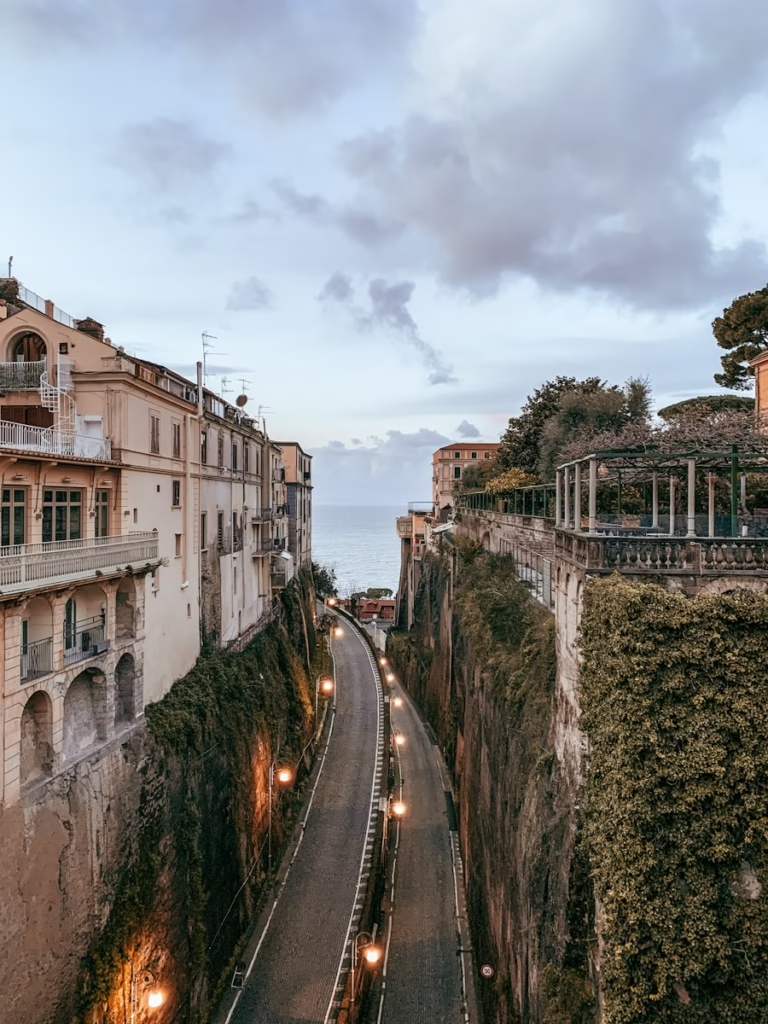
The trade-off is that Amalfi itself sits inside the most pressured tourist corridor. The SS163 Amalfitana is narrow, scenic and famous, but it is also the same road used by buses, scooters, taxis, delivery vans, day-trippers and rental cars.
Amalfi works best if you are already comfortable in tight traffic and if you plan to ride very early.
The SS163 is beautiful, but it is not a normal cycling road
The Amalfi Coast road, the SS163, is the road everyone imagines.
It runs along the cliffs between Vietri sul Mare, Amalfi, Praiano and Positano, with constant sea views and a rhythm of tunnels, bends, villages and balconies over the water. As a cycling experience, it is unforgettable.
It is also demanding in ways that do not show up in a route profile.
The road is not brutally steep in every section, but it is narrow, twisting and often enclosed by rock on one side and a drop towards the sea on the other. Traffic changes the character of the ride. A quiet 07:00 roll along the coast can feel magical. The same road at 11:30 in July can feel like survival between buses and scooters.
This is why the SS163 is best treated as an early-morning road. Ride it before tourist traffic builds, avoid weekend peaks where possible, and do not plan to set personal bests through the villages.
Road restrictions matter, even if you are cycling
The Amalfi Coast has used traffic restrictions on the SS163 to manage congestion, including alternating number-plate rules for cars during busy periods.
Bicycles are not the same issue as cars, but cyclists still need to care about these rules because they affect road behaviour. On restricted days, traffic patterns may change. On non-restricted windows, more vehicles may try to move at once. Around check-in times, cruise days or holiday weekends, the coast can still become heavily congested.
The practical point is simple: check local traffic rules before travelling, but do not assume restrictions make the road quiet enough for relaxed cycling. The best cycling window is still early morning.
Best time of year to cycle Amalfi and Sorrento
The best months are April, May, late September and October.
Spring gives you milder temperatures, greener hills and fewer extreme heat problems. Autumn brings warm sea air, softer light and less summer pressure once the main holiday crush has passed.
Summer is possible, but it is the hardest version of the trip. June to August can bring heat, heavy traffic, intense scooter movement and busy coastal towns. If you ride in summer, go early, keep rides shorter, carry more water than usual and avoid midday climbs.
Winter can be quiet and beautiful, but weather, wet roads, landslides, roadworks and limited services can be a factor. It is better for flexible travellers than those expecting a clean training week.
For comparison, destinations such as Tirol or the Bavarian Alps around Garmisch-Partenkirchen offer a more obvious summer climbing rhythm. Amalfi is more compact, hotter, busier and more technical.
Best time of day to ride
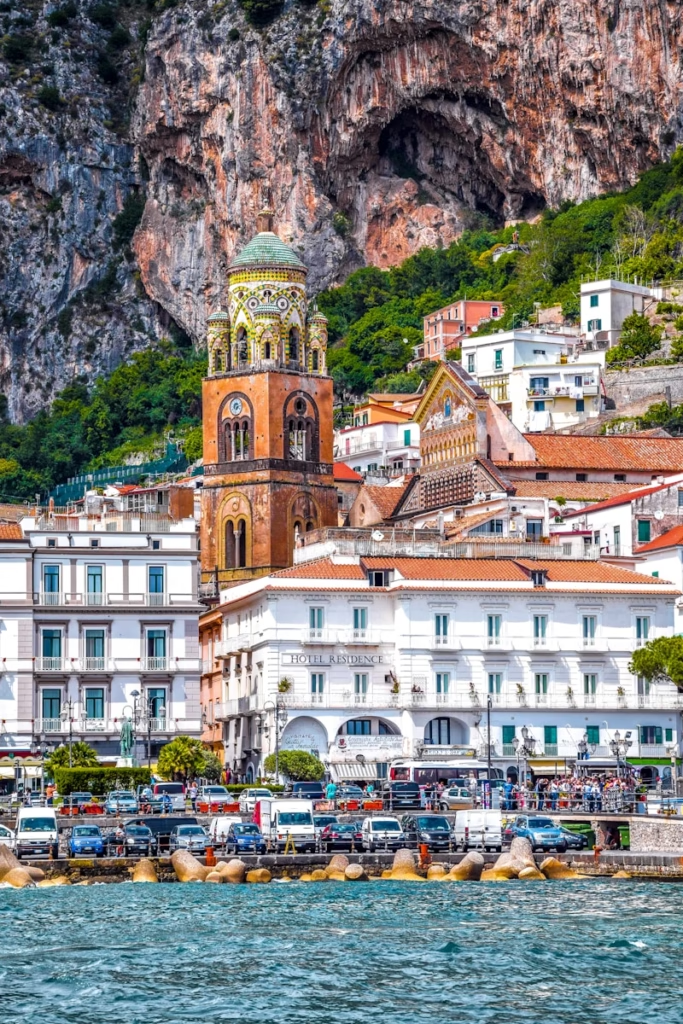
Ride early.
That is the most important piece of advice for the Amalfi Coast and Sorrento. A 06:30 start changes the whole trip. You get cooler air, clearer roads, better light and fewer tourist buses. By late morning, the coast can feel like a different place.
A good pattern is:
| Ride type | Best start time | Why |
|---|---|---|
| Amalfi Coast road ride | 06:00-07:00 | Beat buses, scooters and day-trippers |
| Sorrento Peninsula loop | 07:00-08:00 | Still quiet, less exposed to coastal traffic |
| Inland climbing route | 07:00-08:30 | Cooler for longer climbs |
| Short recovery spin | Before 09:00 | Avoid traffic build-up |
| Summer ride | As early as possible | Heat becomes the main issue by late morning |
Afternoon riding can work inland, but on the coast it is usually less enjoyable.
Best routes from Sorrento
Sorrento to Sant’Agata sui Due Golfi loop
This is one of the best introductory rides in the area.
From Sorrento, climb inland towards Sant’Agata sui Due Golfi, then use the peninsula roads to build a loop with views towards the Bay of Naples, the Gulf of Salerno and Capri. It gives you the shape of the region without immediately committing to the busiest Amalfi Coast road.
Expect steady climbing, narrow roads, olive trees, lemon groves and small villages. The gradients are manageable, but the road rarely feels flat for long.
| Route | Sorrento to Sant’Agata loop |
|---|---|
| Best for | First ride, orientation, views |
| Difficulty | Moderate |
| Road feel | Hilly, scenic, less intense than SS163 |
| Best time | Morning |
| Watch for | Narrow village roads, scooters, junctions |
Sorrento to Positano and back
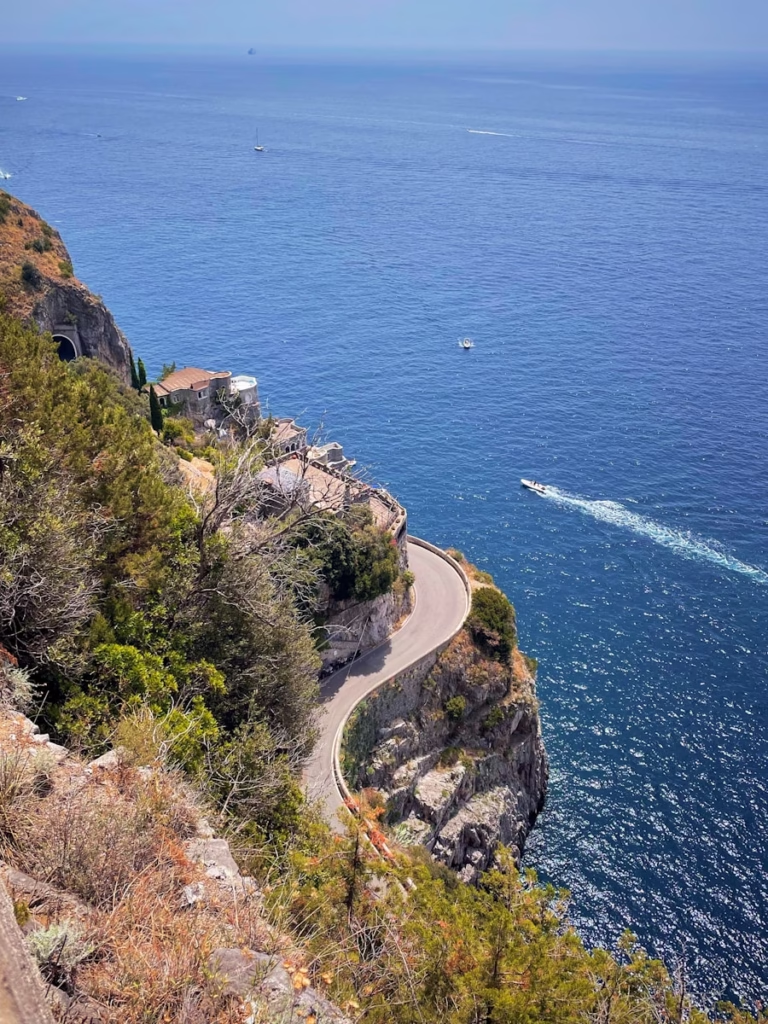
This is the classic ride most visitors think they want.
From Sorrento, you ride across the peninsula towards the Amalfi Coast side, then descend towards Positano. It is spectacular, but it is also one of the most traffic-sensitive options. Do it early, keep your expectations sensible, and remember that the ride back includes climbing.
Positano itself is not a cycling-friendly place to linger with a road bike. The roads are tight, parking is limited, and the town is built vertically. It is better as a viewpoint or coffee stop than a relaxed cycling destination.
| Route | Sorrento to Positano return |
|---|---|
| Best for | Classic Amalfi Coast views |
| Difficulty | Moderate to hard, depending on route |
| Road feel | Scenic but busier |
| Best time | Very early morning |
| Watch for | Traffic, buses, blind bends, crowded village approaches |
Sorrento to Termini and Massa Lubrense
This is a better ride for those who want coastal views without throwing themselves fully into the Amalfi traffic corridor.
The roads around Massa Lubrense and Termini can give views towards Capri and the tip of the peninsula. It is still hilly, but it often feels more like a local ride than a tourist procession.
This is a good option for a shorter day, a recovery ride, or a first test after hiring a bike.
| Route | Sorrento, Massa Lubrense and Termini |
|---|---|
| Best for | Capri views, shorter loops, quieter feel |
| Difficulty | Moderate |
| Road feel | Rolling, hilly, more local |
| Best time | Morning |
| Watch for | Short steep ramps, rough patches, local traffic |
Best routes from Amalfi
Amalfi to Ravello
Short, steep and memorable.
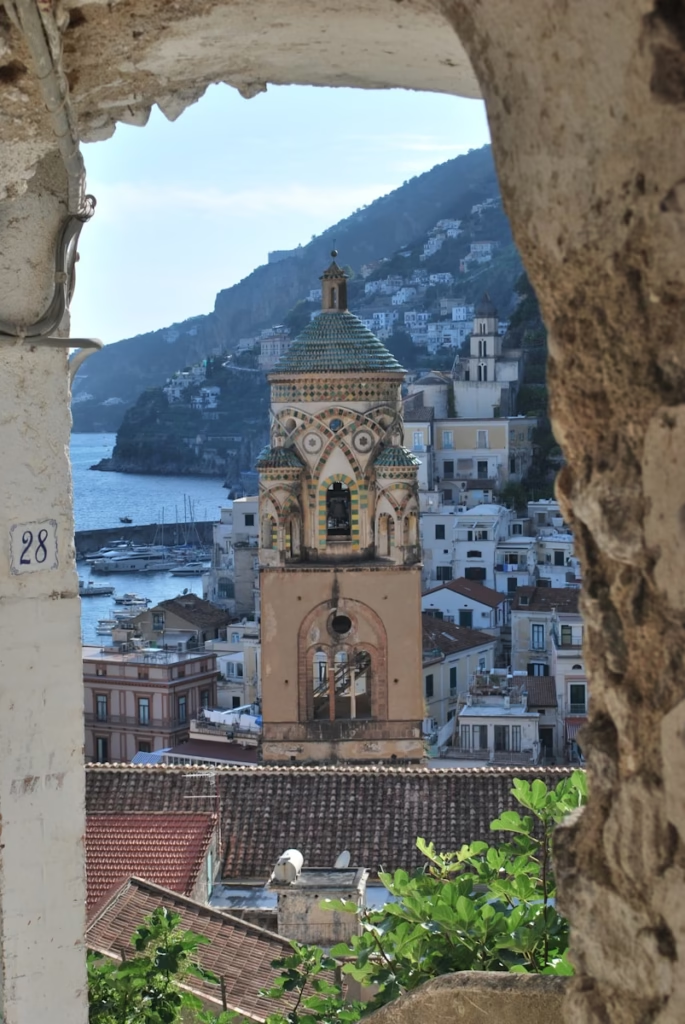
The climb from Amalfi towards Ravello is one of the obvious rides if you are staying on the coast. It is not long, but it gains height quickly and gives you a completely different view of the coastline. Ravello is also a better cycling stop than some of the tighter coastal towns because it feels calmer once you are up there.
This is a good ride if you want something short but meaningful.
| Route | Amalfi to Ravello |
|---|---|
| Best for | Short climbing ride, views, coffee stop |
| Difficulty | Moderate to hard |
| Road feel | Climbing, switchbacks, traffic-sensitive |
| Best time | Early morning |
| Watch for | Buses, village traffic, narrow bends |
Amalfi to Furore and Agerola
This is a more serious climbing option.
Furore and Agerola sit above the coast and give the ride a different character. You move away from the constant sea-level traffic and into a more mountainous feel, with steeper gradients and broader views.
Agerola is useful because it gives you height, food options and the possibility of building loops rather than simply riding out and back along the coast.
| Route | Amalfi to Furore and Agerola |
|---|---|
| Best for | Proper climbing day |
| Difficulty | Hard |
| Road feel | Steep, scenic, more mountainous |
| Best time | Morning |
| Watch for | Heat, exposed sections, descending traffic |
Amalfi to Positano and back
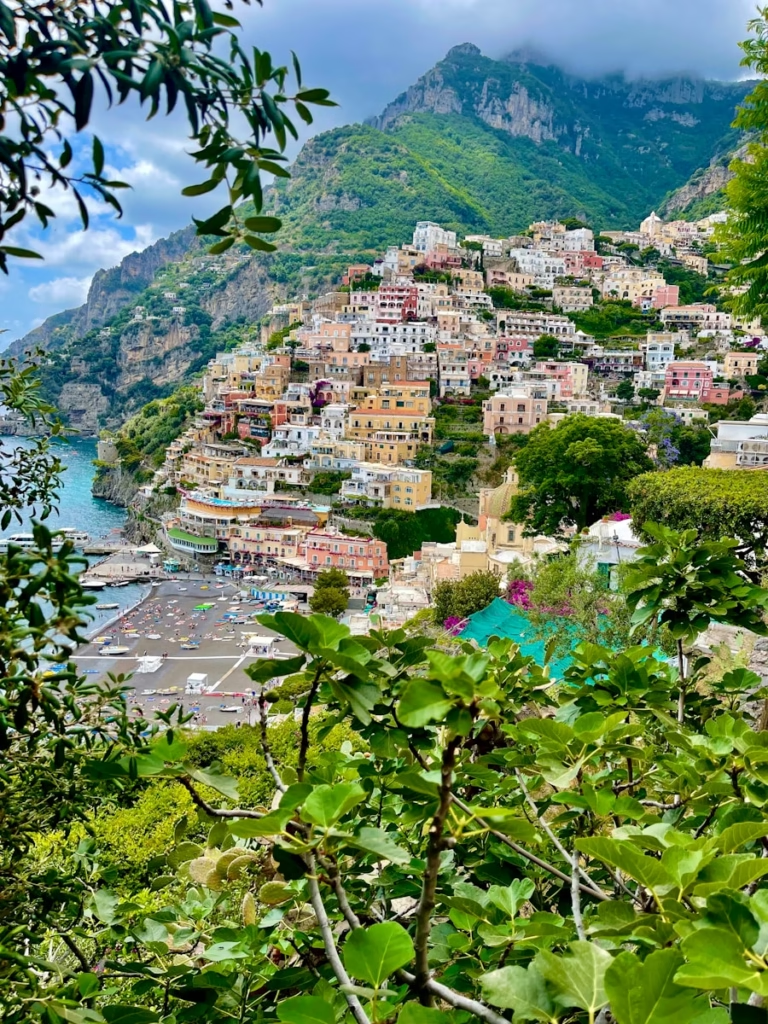
This is the famous coastal ride.
It is also the one where timing matters most. Amalfi to Positano along the SS163 is stunning when the road is quiet and frustrating when it is not. You are sharing the same narrow space as coaches, scooters, taxis, walkers near villages and drivers looking at the view.
Do it early, ride defensively and keep the distance modest. This is not the route for a nervous rider or a large group.
| Route | Amalfi to Positano return |
|---|---|
| Best for | Iconic coastal scenery |
| Difficulty | Moderate physically, harder mentally |
| Road feel | Narrow, twisting, scenic, traffic-heavy |
| Best time | Sunrise to early morning |
| Watch for | Buses, scooters, blind corners, tourist traffic |
Climbs that define the area
The climbs around Amalfi and Sorrento are not Alpine in scale, but they are constant enough to build a hard ride.
Expect short-to-medium climbs rather than one obvious giant. The difficulty comes from repetition, road surface, heat, tight corners and the fact that many climbs begin at sea level. Even a modest elevation gain can feel hard when it comes straight after a busy coastal section.
The most useful climbing areas are:
| Climb area | Why it matters |
|---|---|
| Sant’Agata sui Due Golfi | Best Sorrento-side climbing hub |
| Ravello | Short, classic climb from Amalfi |
| Agerola | Harder inland climbing and bigger loops |
| Furore | Dramatic roads above the coast |
| Massa Lubrense and Termini | Rolling peninsula terrain with Capri views |
The riding is punchy rather than rhythmical. Riders used to long, steady climbs may find the stop-start nature of the roads harder than expected.
If your idea of a cycling holiday is built around long, famous passes, the feel is closer to a compact version of southern European climbing than the sustained rhythm you get in places such as Andermatt and the central Swiss passes or Bourg d’Oisans and Alpe d’Huez.
Road surface and bike choice
A road bike is fine, but choose comfort over pure race set-up.
The roads can be rough in places, especially away from the main tourist routes. Corners are tight, descents are technical, and you may spend a lot of time braking, accelerating and avoiding poor lines. A lightweight climbing bike is useful, but wider tyres and sensible gearing matter more than aero gains.
Recommended set-up:
| Item | Recommendation |
|---|---|
| Tyres | 28mm if your bike allows it |
| Gearing | Compact or semi-compact with a wide cassette |
| Brakes | Disc brakes helpful for descending |
| Lights | Front and rear daytime lights strongly recommended |
| Computer | Useful, but do not stare at it on the coast road |
| Bottles | Two bottles, more in summer |
| Clothing | Lightweight layers outside peak summer, sun protection in summer |
An e-bike can be a good option for casual riders, especially because the terrain is hilly and the heat can make even short rides tougher.
Safety: what cyclists need to know
This is the section that decides whether you enjoy the trip.
The Amalfi Coast is not unsafe in a simple yes-or-no way, but it demands attention. Roads are narrow. Drivers can be impatient. Scooters move quickly. Buses need space. Corners are often blind. Villages create sudden pedestrian movement. The view can distract everyone, including you.
Practical safety rules:
| Rule | Why it matters |
|---|---|
| Ride early | Fewer buses, cars and scooters |
| Use lights | Tunnels, shade and bends reduce visibility |
| Descend cautiously | Corners are blind and traffic can cross the centre line |
| Keep groups small | Big groups are hard to manage on narrow roads |
| Avoid headphones | You need to hear traffic behind |
| Do not chase Strava times | Traffic and corners make that a bad idea |
| Be patient in villages | Pedestrians, cars and scooters all move unpredictably |
| Check weather and road updates | Rockfall, storms and roadworks can affect routes |
The most important mindset is defensive riding. Assume the road will narrow around the next bend. Assume a scooter will overtake. Assume a bus may need more room than it appears to have.
Is it good for beginners?
Not really.
A fit beginner might manage an e-bike tour or a short guided ride, but independent road cycling on the Amalfi Coast is better suited to confident riders. You do not need to be a racer, but you do need to be comfortable riding in traffic, climbing steadily, descending on technical roads and holding a predictable line.
Beginners should consider:
- guided e-bike tours
- quiet early-morning Sorrento Peninsula routes
- shorter loops around Massa Lubrense
- avoiding the SS163 at peak times
- hiring locally rather than travelling with a bike
A guided ride can make sense for the first day, even for stronger riders. Local guides know which roads are tolerable at which times.
How many days do you need?
Three to five riding days is enough for most cyclists.
This is not a place where you need a 10-day training camp unless you are deliberately building a hard climbing block. The terrain is compact, and the roads are mentally tiring. A few well-planned rides are better than trying to grind out volume every day.
A good cycling trip could look like this:
| Day | Ride |
|---|---|
| Day 1 | Sorrento, Massa Lubrense and Termini orientation ride |
| Day 2 | Sorrento to Sant’Agata loop |
| Day 3 | Early ride to Positano and back |
| Day 4 | Rest day, ferry, walking or Pompeii |
| Day 5 | Amalfi, Ravello or Agerola climbing ride |
| Day 6 | Short recovery spin or e-bike coastal ride |
The rest day matters. This is an area worth experiencing off the bike too.
Sorrento or Amalfi: which is better for cyclists?
For most cyclists, Sorrento is better.
It is easier logistically, gives more route options, and makes it simpler to avoid the most crowded sections when needed. It is also better if you are travelling with non-cyclists, because transport, restaurants and day trips are easier.
Amalfi is better if you want the full coastal experience and are comfortable riding straight into traffic-sensitive roads. It gives you immediate access to Ravello, Furore, Agerola and the Amalfi to Positano road, but it is less forgiving.
| Base | Best for | Cycling verdict |
|---|---|---|
| Sorrento | Flexibility, logistics, peninsula loops | Best all-round base |
| Amalfi | Dramatic coastal riding, Ravello and Agerola climbs | Best scenic base for confident riders |
| Positano | Views and atmosphere | Awkward as a cycling base |
| Ravello | Quiet, views, climbing | Beautiful but less practical |
| Massa Lubrense | Quieter Sorrento-side riding | Good relaxed alternative |
How to combine cycling with a holiday
The best Amalfi and Sorrento cycling trip is not all cycling.
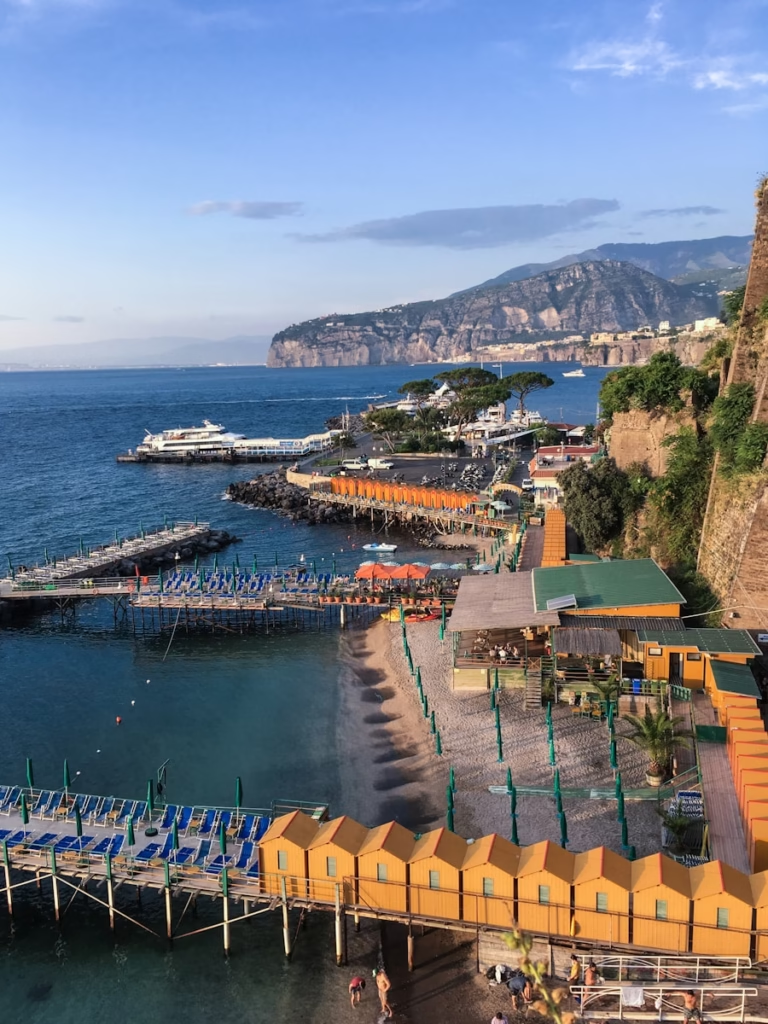
This is a place where riding early and using the rest of the day properly works well. Start at sunrise, finish by late morning, then eat, swim, take a ferry, visit Pompeii or walk around the towns. That rhythm also keeps you away from the worst traffic and heat.
Good non-cycling pairings include:
| Ride | Afternoon pairing |
|---|---|
| Sorrento loop | Ferry to Capri or swim |
| Positano early ride | Lunch back in Sorrento |
| Ravello climb | Gardens and coffee in Ravello |
| Agerola ride | Walk or food stop inland |
| Recovery spin | Pompeii or Naples day trip |
This is where the Amalfi Coast works better as a cycling holiday than a training camp. The bike gives you access and perspective, but the trip should not be reduced to kilometres.
For riders building a wider European cycling holiday, the Amalfi Coast pairs better with cultural travel than with a heavy training block. It is very different from a destination such as the Basque Country, where cycling, food and racing culture sit together in a more naturally rideable way.
Food, water and stops
Food is easy. Water planning needs more care.
There are cafés and shops in the towns, but some inland roads can feel quiet between villages. In summer, two bottles are essential, and you should refill whenever you can. Do not assume the next village is close just because the map looks compact. Elevation and traffic slow everything down.
Good ride stops include:
- Sant’Agata sui Due Golfi
- Massa Lubrense
- Termini
- Ravello
- Agerola
- Furore
- Amalfi, if you can find a practical stop
- Positano, only if you are comfortable with the traffic and crowds
A coffee stop is part of the ride here, but lock or watch your bike carefully in busy tourist areas.
Should you bring your own bike or hire?
Hiring is often easier.
Travelling with your own bike gives you comfort and fit, but transfers around Naples, Sorrento and the coast can be awkward. Hotel storage is not always simple, taxis may not take bike boxes easily, and coastal accommodation can involve stairs, tight streets or limited access.
Bring your own bike if this is a serious cycling trip and you are comfortable managing logistics. Hire if cycling is part of a wider holiday or if you only plan two or three rides.
Who should ride here?
The Amalfi Coast and Sorrento are best for:
- confident road cyclists
- riders who enjoy climbing and descending
- cyclists who like technical roads
- travellers mixing riding with food, views and culture
- couples or groups where some ride and others explore
- e-bike riders with a guide
It is less ideal for:
- nervous riders
- big cycling groups
- beginners on road bikes
- riders wanting quiet, wide training roads
- anyone uncomfortable with traffic
- riders who dislike technical descending
This is not a destination to bluff. If you are confident, it can be unforgettable. If you are anxious in traffic, choose a guided e-bike ride or base yourself somewhere calmer.
-
 Photo Credit: A.S.O./Billy Ceusters

Best ride: the practical recommendation
For most visiting cyclists, the best ride is a Sorrento-based loop towards Sant’Agata sui Due Golfi, Massa Lubrense and the views over Capri.
It gives you climbing, scenery and a strong sense of place without making the SS163 the whole experience. You can make it longer or shorter, add coastal viewpoints, or build towards Positano if conditions are good.
The Amalfi to Ravello climb is the best short ride if you are staying on the coast. The Amalfi to Agerola area is the best harder climbing option. The full Amalfi to Positano coastal road is the classic view ride, but only if you ride early and accept the traffic reality.
Verdict: is Amalfi and Sorrento worth it for cyclists?
Yes, but with conditions.
The Amalfi Coast and Sorrento Peninsula can be exceptional cycling territory, not because they are easy, but because they are vivid. The roads are tight, the sea views are constant, the climbs arrive quickly, and every ride feels like it belongs to the landscape rather than being imposed on it.
But this is not a place for casual assumptions. The SS163 is beautiful and busy. The climbs are short but testing. The heat can be serious. The traffic can change a ride completely. The best cycling happens early, with a sensible route, a calm attitude and a willingness to stop chasing speed.
Use Sorrento for flexibility, Amalfi for drama, Ravello and Agerola for climbing, and the coast road for one early, carefully timed ride rather than every day of the trip.
Get that balance right and the Amalfi Coast becomes much more than a postcard. It becomes one of the most distinctive cycling experiences in southern Europe.

