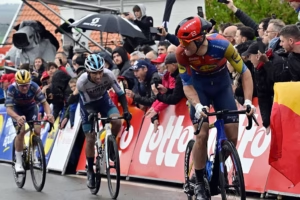
La Vuelta Femenina 2026 is one of the three biggest stage races in women’s cycling and, for many fans, the easiest place to see how the modern women’s Grand Tour-style calendar is taking shape. The race runs from Sunday 3rd May to Saturday 9th May, covers seven stages and sits on the UCI Women’s WorldTour calendar as one of the season’s headline stage races.
What makes La Vuelta Femenina especially useful for newer fans is that it usually offers a bit of everything in one week. There are chances for climbers, opportunities for punchier all-rounders, nervous road stages where positioning matters, and usually at least one day where the overall contenders have to show themselves properly. In 2026, that balance is still there, but the route leans more heavily towards climbers than usual, with back-to-back summit finishes in Asturias on Les Praeres and the Alto de l’Angliru to close the race.
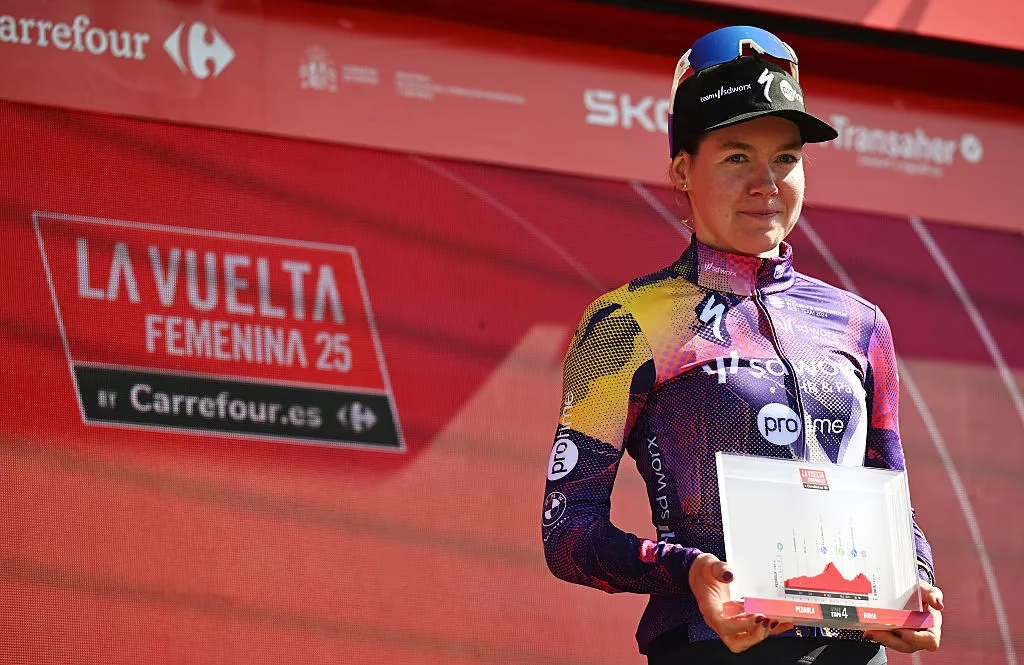
What is La Vuelta Femenina?
La Vuelta Femenina is the Spanish Women’s WorldTour stage race and one of the sport’s three biggest multi-day events alongside the Giro d’Italia Women and Tour de France Femmes. The current event is still relatively young in its modern form, but it has quickly become one of the most important markers of stage-race strength in the women’s peloton.
For beginners, the simplest way to think about it is this: if the spring Classics are about one-day explosiveness and tactical chaos, La Vuelta Femenina is about how riders manage effort across a full week. You are not only watching who can win one stage. You are also watching who can recover, limit losses, take time when the road suits them and survive the bad moments that come in every stage race.
When is La Vuelta Femenina 2026?
La Vuelta Femenina 2026 starts on Sunday 3rd May and ends on Saturday 9th May. It lasts seven days and seven stages, with the race beginning in Galicia before heading east and then finishing with two decisive mountain stages in Asturias.
That structure matters because it means the race should build rather than explode immediately. The first half looks more like a tense sorting process. The final weekend looks like the real GC reckoning.
What does the 2026 route look like?
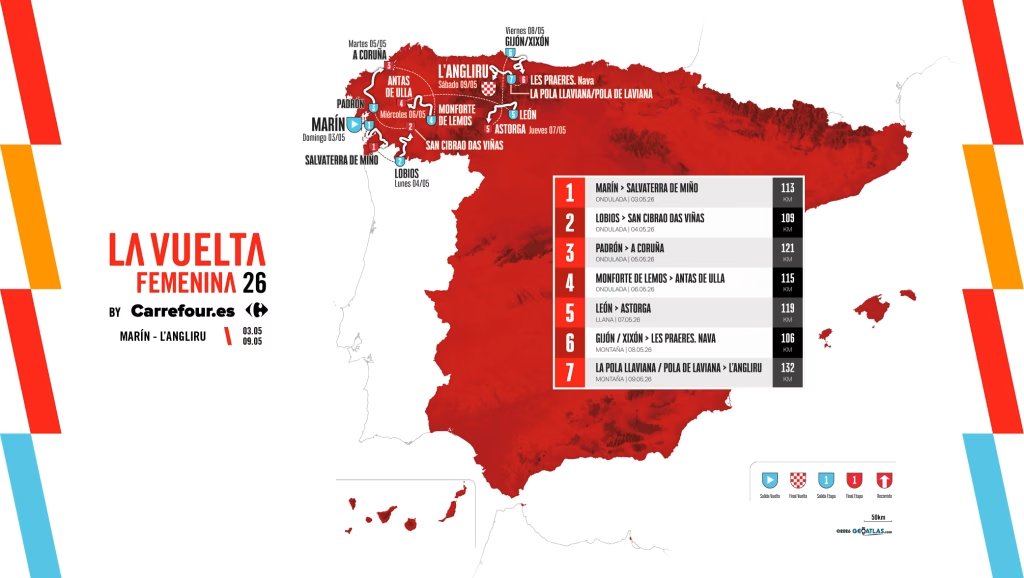
The official 2026 route begins with four hilly stages in Galicia, moves into a flatter day from León to Astorga on stage 5, and then finishes with stage 6 to Les Praeres and stage 7 to Alto de l’Angliru.
The broad reading of the route is fairly clear. The early stages are not flat processions. They are lumpy and potentially awkward, especially in Galicia, where the terrain can keep the race tense and stop the sprinters from feeling too comfortable. That matters because stage races are often shaped before the biggest climbs even arrive.
Then the race changes character. Stage 6 finishes on Les Praeres, which should be tough enough to expose anyone carrying even a small weakness. Stage 7 ends on the Alto de l’Angliru, one of the most famous and feared climbs in Spanish cycling. That gives the race a finale built for climbers and almost guarantees that the general classification cannot be defended through caution alone.
Why is Angliru such a big deal?
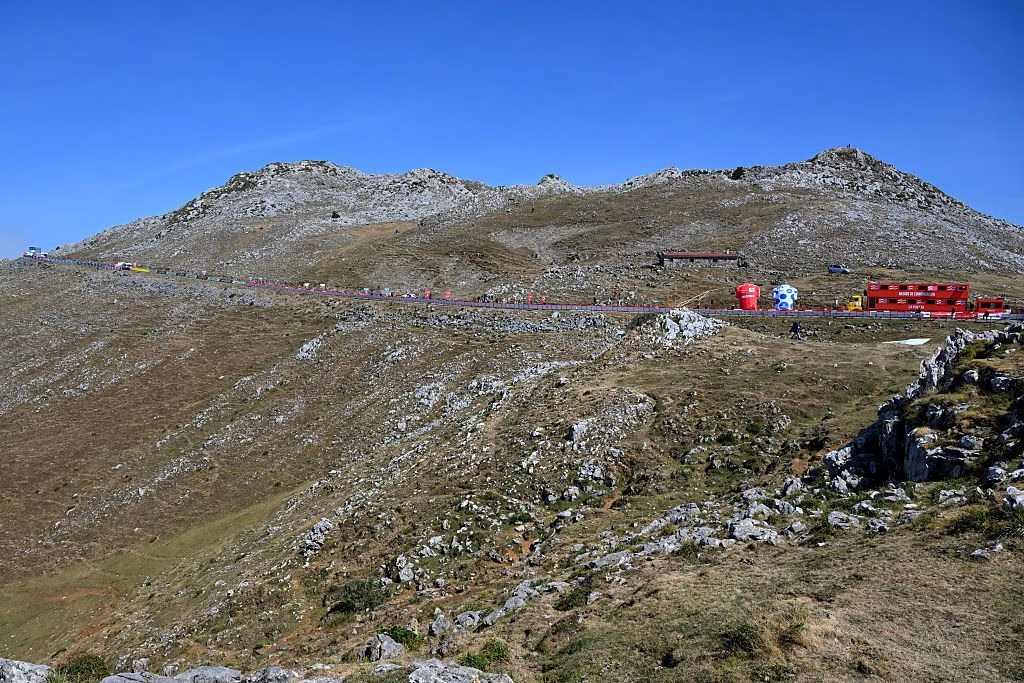
Angliru is the detail that gives this route its edge. Even casual cycling fans tend to know the name because of how often it has shaped the men’s Vuelta a España. It is steep, famous and intimidating in a way that instantly gives a race more gravity.
For La Vuelta Femenina 2026, that matters for two reasons. First, it gives the race a finale that is easy to understand even for newer viewers: the strongest climbers should have the clearest chance to make the biggest differences there. Second, it gives the week a natural narrative arc. The race does not just end on a climb. It ends on one of the climbs.
What should beginners watch for during the race?
The easiest mistake for newer fans is to think only the summit finishes matter. In reality, stage races are often decided by what happens before the biggest climbs. Positioning, crashes, time gaps in crosswinds, bonus seconds and small moments of hesitation can all shape the general classification before the mountains finish the job.
In the 2026 race, the key things to watch are how the likely GC teams handle the first four hilly stages, whether any favourites lose time on a day that looks easier on paper, and which riders arrive at Les Praeres still looking fresh rather than already under pressure. If a rider reaches the final weekend already chasing, the route does at least offer two mountain days to try to turn the race around.

What kind of riders usually do well in La Vuelta Femenina?
La Vuelta Femenina tends to favour riders who can climb well, recover quickly and handle varied terrain across a week. The route can sometimes leave room for punchier all-rounders, but the 2026 edition looks more tilted towards proper climbers than some recent versions because of the final weekend.
That does not mean the race belongs only to mountain specialists. A rider who can stay calm on the hilly opening stages, avoid time losses, and then climb strongly over the last two days could be in the best position. In that sense, the race is often won by the most complete stage racer rather than just the rider with the single best uphill acceleration.
Where does the race sit in the season?
La Vuelta Femenina comes after the spring Classics and before the heart of the early summer stage-race block. On the 2026 Women’s WorldTour calendar, it sits in early May before Itzulia Women, Vuelta a Burgos Feminas and then the Giro d’Italia Women.
For fans, that makes it a useful race to follow even beyond the result itself. Riders who look strong here often carry that form deeper into the summer, while teams can use it to show whether they really have a Grand Tour-level structure around their leaders.
Why La Vuelta Femenina 2026 looks especially worth watching
Every edition needs a hook, and in 2026 the hook is obvious. This route is harder than usual, the climbing total is high, and the final two stages should make it much harder for a rider to defend a lead through caution alone. The course is built for climbers, and the Angliru finish gives the race a recognisable and dramatic ending point.
For a beginner, that is good news rather than something intimidating. The shape of the race should be relatively easy to follow. The early days sort the field out, the flatter fifth stage offers a slight pause, and then the final weekend should decide the overall winner in a clear and dramatic way.
How does it compare with the other big women’s stage races?
La Vuelta Femenina sits alongside the Tour de France Femmes and the Giro d’Italia Women as one of the biggest prizes in women’s stage racing, but each tends to feel slightly different. The Tour often carries the broadest mainstream spotlight, the Giro usually has the deepest historical weight, and La Vuelta has increasingly become the race that can combine modern profile with a route that invites bold climbing tests.
That makes it particularly good for newer fans. It is big enough to matter immediately, short enough to follow without being overwhelmed, and structured in a way that usually produces a clear sporting storyline.
La Vuelta Femenina 2026 at a glance
- Dates: Sunday 3rd May to Saturday 9th May 2026
- Number of stages: 7
- Race type: UCI Women’s WorldTour stage race
- Opening terrain: mostly hilly stages in Galicia
- Key late stage: stage 6 to Les Praeres
- Final stage: stage 7 summit finish on Alto de l’Angliru