
Electrolyte tablets are an easy way to separate hydration from fuelling on the bike. They add sodium and other electrolytes to water without forcing you to take on the carbohydrate of an energy drink, which makes them useful for hot rides, indoor sessions, long endurance days and riders who prefer to get their fuel from gels or food.
For 2026, the useful comparison is not simply which tube is cheapest. HIGH5 ZERO and SiS Hydro suit everyday riding, Precision Hydration and STYRKR offer much stronger sodium options, while OTE, Nuun and Applied Nutrition sit between those extremes. The right choice depends on bottle size, conditions and how much salt you lose in sweat. Electrolytes can support hydration, but they are not a guaranteed cure for exercise-associated cramp, which can have several causes.
Check electrolyte tablets for cycling on Amazon UK
Best electrolyte tablets for cycling
For most cyclists, HIGH5 ZERO remains the easiest default recommendation. It is widely available, affordable, easy to drink and simple to dose. For heavier sweaters or riders doing hard summer rides, Precision Hydration PH 1000 or PH 1500 is the more serious option. For riders who want a cleaner flavour profile and a more premium feel, Veloforte’s hydration range is worth considering, although it is usually more expensive and often comes as powder sachets rather than traditional tablets.
The important point is that electrolyte tablets are not all doing the same job. Some are low-calorie hydration tablets. Some include caffeine. Some use higher sodium levels for heavy sweat loss. Some are closer to light drink mixes. That makes a simple “best overall” label less useful than matching the product to the ride.
Updated 30 September 2026 with current formulations, sodium figures and buying options.
Electrolyte tablets compared
| Product | Best for | Sodium when mixed as directed | Format |
|---|---|---|---|
| HIGH5 ZERO | Everyday riding and value | About 250mg in 750ml | Tablet |
| Precision Hydration PH 1500 | Very salty sweaters and pre-loading | 750mg in 500ml | Tablet |
| SiS Hydro | Training and racing | 345mg in 500ml | Tablet |
| OTE Hydro Tabs | Regular training | About 370mg in 500ml | Tablet |
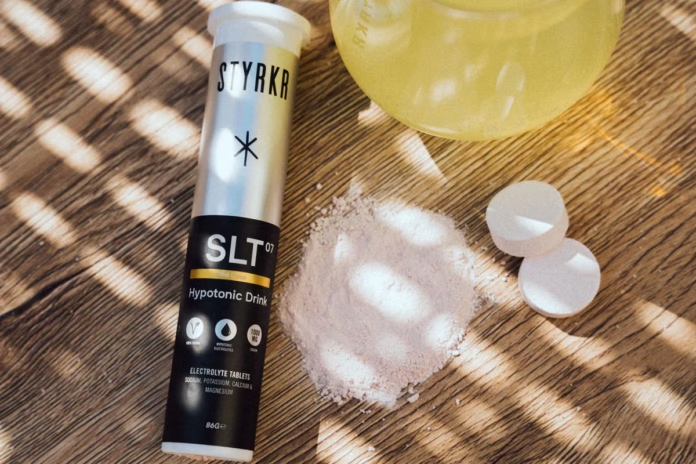
| STYRKR SLT07 Citrus | Highest-sodium option here | 1,000mg in 500ml | Tablet |
| Nuun Sport | Light flavour and steady rides | About 300mg per serving | Tablet |
| Applied Nutrition Endurance | Budget and mainstream availability | 270mg per tablet | Tablet |
| Veloforte Solo | Natural-ingredient powder alternative | 350mg in 500ml | Powder sachet |
Sodium figures are based on current manufacturer directions and can change with reformulations. Check the label on the product you buy, especially if you are comparing different flavours or caffeine versions.
Quick verdict
Best overall: HIGH5 ZERO remains the easiest default for most UK cyclists. It is widely available, inexpensive and mild enough for regular training, although its sodium concentration is much lower than the strongest options here.
Best high-sodium tablet: STYRKR SLT07 Citrus provides 1,000mg sodium in a 500ml bottle, making it the strongest single-tablet option in this guide.
Best for tailored hydration and pre-loading: Precision Hydration PH 1500 provides 750mg sodium in 500ml and sits within a 500, 1000 and 1500mg-per-litre range, which makes it easier to match sodium strength to your needs.
Best for racing and structured training: SiS Hydro provides 345mg sodium in 500ml and is Informed Sport batch-tested, making it a straightforward choice for riders who compete.
Best natural-ingredient alternative: Veloforte Solo is a powder rather than a tablet, but its 350mg sodium per 500ml serving and low-carbohydrate formulation make it a useful hydration-first alternative. Attivo is the better choice if you also want carbohydrate and caffeine.
Best budget alternative: OTE Hydro Tabs remain a good-value, low-calorie option for regular riding, while Applied Nutrition Endurance is widely available and currently undercuts several cycling-specific brands.
Reasons to use electrolyte tablets
- Simple way to replace sodium and other minerals lost through sweat
- Useful for hot rides, turbo sessions and long endurance miles
- Easy to carry in a jersey pocket, travel bag or desk drawer
- Low-calorie options work well when you want hydration without extra carbohydrate
- Caffeinated versions can help late in a ride or before hard efforts
- Can make plain water more drinkable over repeated bottles
Reasons to be careful
- Most tablets do not provide meaningful ride fuel, so you still need carbohydrate
- Some options are too low in sodium for very heavy sweaters
- Caffeine tablets can be overused if added to every bottle
- Flavour strength varies a lot between brands
- Artificial sweeteners can be divisive on long rides
What cyclists need from electrolyte tablets
The main electrolyte cyclists lose through sweat is sodium, which is why it deserves more attention than the broader “electrolytes” label. Potassium, magnesium, calcium and chloride can all appear in hydration products, but sodium is usually the key ingredient when the goal is maintaining fluid balance during exercise.
That does not mean every rider needs the strongest tablet available. A short recovery spin in mild weather does not place the same demand on hydration as a four-hour ride in July, an indoor threshold session or a hilly sportive. The right choice depends on duration, temperature, intensity, sweat rate and how much sodium you lose.
For typical UK road riding, one tablet in a 500ml to 750ml bottle is usually the most practical starting point. Riders who sweat heavily, cramp repeatedly in hot weather, or finish rides with visible salt marks may need a stronger sodium option. Riders doing low-intensity winter miles may need little more than water, especially if they are eating normally before and after the ride.
The key mistake is expecting electrolyte tablets to do the job of an energy drink. Most tablets are low-calorie or sugar-free. That is useful when you want hydration without extra sweetness, but it also means they will not provide enough carbohydrate for long or hard rides. For endurance rides over 90 minutes, tablets should usually sit alongside gels, bars, bananas, rice cakes or a separate carb drink mix.
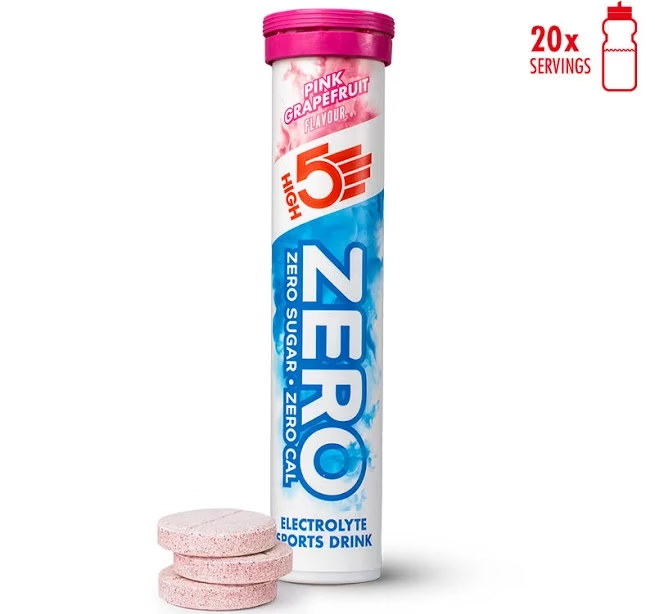
HIGH5 ZERO review: best everyday electrolyte tablet for cycling
HIGH5 ZERO is the easiest electrolyte tablet to recommend to most cyclists because it does the basics well and is available almost everywhere. It is sugar-free, low in calories, easy to dissolve and comes in a wide range of flavours. It is the tablet you are most likely to find in a bike shop, supermarket sports section or online multipack.
On the bike, its biggest strength is drinkability. Some electrolyte tablets taste aggressively salty or artificial, but ZERO is generally mild enough to get through several bottles without becoming a chore. That matters on long rides, because the best hydration product is the one you actually keep drinking.
The sodium level is sensible for everyday riding, commuting, steady endurance work and moderate summer training. It is not the most aggressive option for heavy sweaters, and riders doing long events in hot conditions may need something stronger. For regular UK road riding, though, it hits a useful middle ground.
HIGH5 ZERO is also good value. If you are stocking a cupboard for regular training, club rides and turbo sessions, it makes more financial sense than more boutique options. It is not the most exciting product here, but that is partly why it works. It is simple, familiar and dependable.
Check HIGH5 ZERO electrolyte tablets on Amazon UK
Best for: everyday road riding, commuting, steady training, summer bottles and riders who want a reliable default.
Not ideal for: very heavy sweaters, long hot sportives or riders who want a high-sodium tablet.
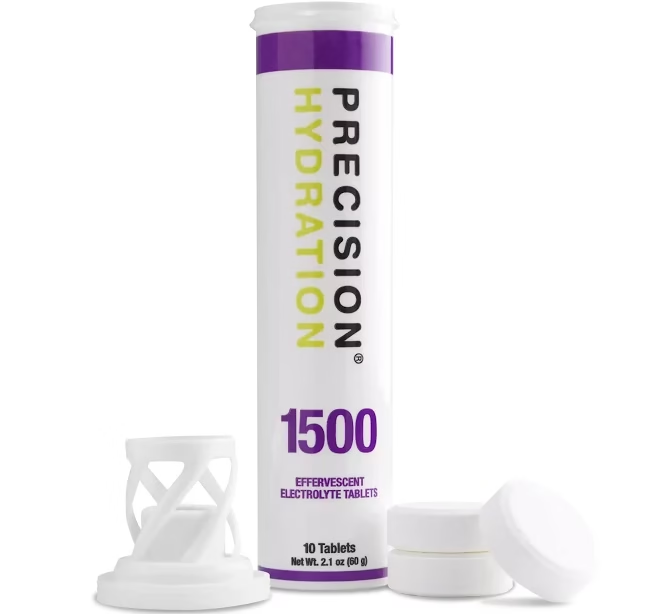
Precision Hydration PH 1500 review: best electrolyte tablet for heavy sweaters
Precision Hydration PH 1500 is a high-sodium option rather than an everyday default. One tablet mixed into 500ml gives 750mg sodium, or 1,500mg per litre, so it makes most sense for riders with high sweat-sodium losses, hot conditions and deliberate pre-ride hydration rather than short easy rides.
The key advantage is clarity. Precision Hydration builds its range around different sodium strengths, so riders can choose PH 500, PH 1000 or PH 1500 depending on need. That is more useful than a vague “electrolyte blend” because it helps you match the product to the conditions and your own sweat profile.
PH 1500 is not the tablet to throw into every bottle without thought. It is strong, and that is the point. It makes most sense as a pre-ride hydration drink, a hot-weather option, or a targeted tool for riders who know they lose a lot of salt. If you are a light sweater doing short rides in mild weather, it will probably be more than you need.
For cyclists who struggle in the heat or regularly finish rides with obvious salt marks on bib shorts and jerseys, Precision Hydration is one of the most useful ranges in this category. It is more expensive than HIGH5 or OTE, but the extra cost buys a clearly defined sodium concentration rather than just another flavoured tablet. It should not be treated as a guaranteed solution for cramp.
Check Precision Hydration electrolyte tablets on Amazon UK
Best for: heavy sweaters, indoor training, hot sportives, pre-loading before hard rides and riders who want specific sodium strengths.
Not ideal for: riders who only need a light everyday hydration tablet.
SiS Hydro review: best electrolyte tablet for racing and structured training
SiS Hydro is a familiar option for cyclists who already use SiS gels, bars or drink mixes. The current formulation provides 345mg sodium when one tablet is mixed into 500ml, alongside calcium, magnesium and potassium. It is low in calories and every batch is covered by the Informed Sport testing programme.
The biggest appeal is that it fits neatly into a broader cycling nutrition routine. If you already use SiS gels or carb drink mix, GO Hydro gives you a simple hydration-only option for rides where you want minerals but not extra carbohydrate. It also carries Informed Sport certification, which will matter to riders who compete and want stronger assurance around supplement testing.
In use, GO Hydro is straightforward. It dissolves easily, tastes clean enough for repeated bottles and is easy to carry. The caffeine version is useful for late-ride alertness or a pre-session lift, but it should be used deliberately rather than becoming the automatic choice for every ride.
Compared with HIGH5 ZERO, SiS GO Hydro often feels a little more performance-focused, partly because it sits inside SiS’s wider race and training nutrition range. Compared with Precision Hydration, it is less specific for heavy sodium replacement. That makes it a good middle-ground product.
Best for: riders who use SiS nutrition already, structured training, racing, sportives and riders who want Informed Sport certification.
Not ideal for: riders who want the strongest sodium replacement or the cheapest possible option.
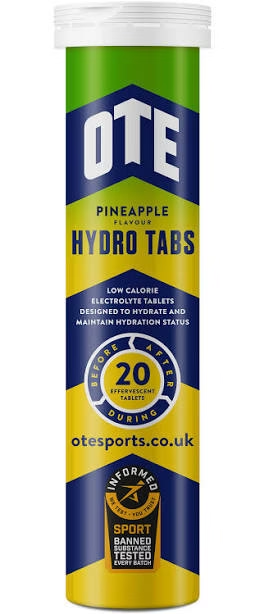
OTE Hydro Tabs review: best easy-drinking budget option
OTE Hydro Tabs are a strong option for riders who want something simple, pleasant and practical. They are low in calories, dissolve in water quickly, and provide the main minerals most cyclists expect from an electrolyte tablet, including sodium, potassium and magnesium.
The main selling point is ease. OTE’s flavours are generally light and drinkable, which makes them good for steady endurance rides, commuting and indoor sessions where strong-tasting drinks can become cloying. One tablet in 500ml is a simple format that suits most bottles and most riders.
They are not the most technical option here. If you want very specific sodium targeting, Precision Hydration is better. If you want the cheapest multipack, HIGH5 may be easier to find discounted. OTE sits somewhere between the two, with a slightly more natural-feeling flavour profile and a straightforward approach.
For UK cyclists who want a hydration tablet to keep in the cupboard for regular riding, OTE Hydro Tabs are easy to recommend. They are not dramatic, but they do the job well.
Best for: regular training, commuting, riders who prefer lighter flavours and anyone who wants a simple low-calorie hydration tablet.
Not ideal for: heavy sweaters or riders looking for high-sodium pre-load drinks.
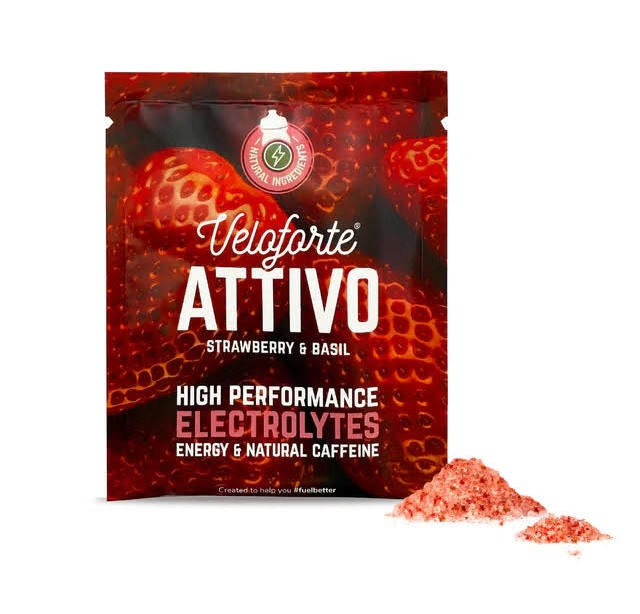
Veloforte Attivo review: best caffeinated powder alternative
Veloforte Attivo is slightly different from most products in this list because it is a powder sachet rather than a traditional tablet. It still belongs in the conversation because many cyclists shopping for electrolyte tablets are really looking for a convenient hydration product, and Attivo offers a more premium, natural-ingredient approach.
The mix includes fruit-based flavours, electrolytes and 75mg of caffeine per serving. That makes it more of a performance drink than a plain hydration tablet. It is useful before harder rides, during long sessions where alertness starts to fade, or as a more interesting bottle option when standard tablets feel too artificial.
The taste is one of the main reasons to choose it. Veloforte products generally feel less synthetic than many standard tablets, and Attivo follows that pattern. The trade-off is cost. It is much more expensive per serving than HIGH5, OTE or SiS tablets, so it is harder to justify as an everyday training cupboard staple.
It is also not a product to use casually late in the day unless you tolerate caffeine well. The 75mg caffeine content can be useful, but it also makes it a more specific tool. For riders who want a premium caffeinated hydration drink for big rides, it is a strong choice. For daily hydration, it is overkill.
Check Veloforte hydration powders direct
Best for: premium hydration, riders who dislike artificial flavours, pre-ride use and caffeine-assisted training.
Not ideal for: riders who want cheap everyday tablets or caffeine-free bottles.
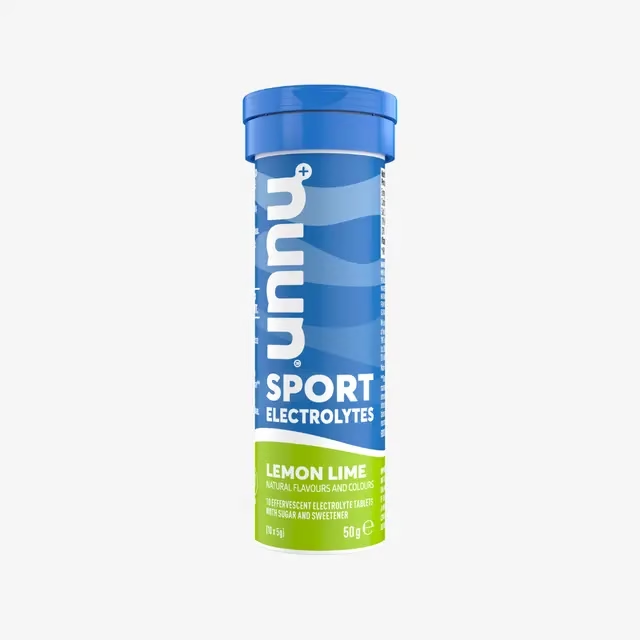
Nuun Sport review: best light and simple electrolyte tablet
Nuun Sport has a loyal following because it is light, simple and easy to drink. It uses a blend of sodium, potassium, magnesium, calcium and chloride, with a small amount of sugar rather than a fully sugar-free profile. That gives it a slightly different feel to tablets such as HIGH5 ZERO.
For cycling, Nuun works best on steady rides where the priority is hydration rather than fuelling. It is a good option for riders who find some tablets too sweet or too strong. The flavour profile is usually clean, and the 10-tablet tubes are easy to keep in a kit bag or desk drawer.
The drawback is UK availability and pricing, which can vary more than HIGH5 or SiS. It is also not a high-carbohydrate product, so it needs to be paired with food or separate fuelling on longer rides.
Nuun Sport is a good fit for everyday hydration and lighter training use. It is not the strongest cycling-specific option, but it is one of the easier products to drink consistently.
Best for: steady endurance rides, riders who prefer lighter flavours and cyclists who want a small amount of sugar rather than zero-calorie tablets.
Not ideal for: heavy sweaters, long hot rides or riders who want strong UK retail availability.
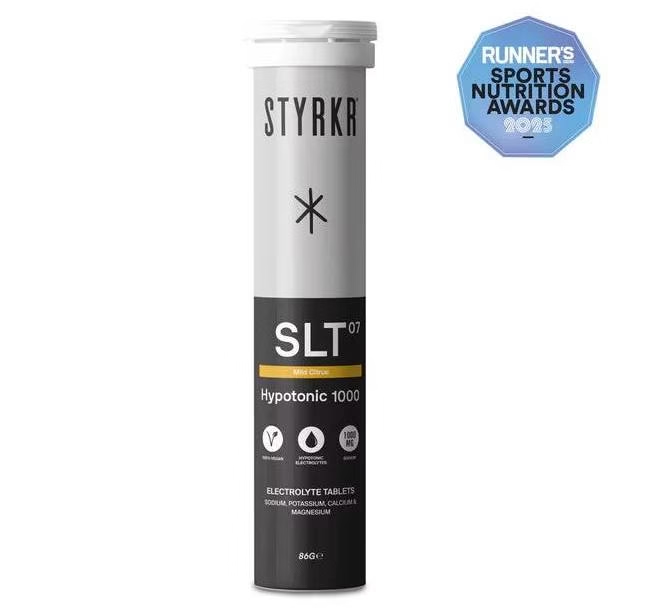
STYRKR SLT07 review: highest-sodium tablet in this guide
STYRKR SLT07 has become one of the clearest high-sodium options in this category. The Mild Citrus version provides 1,000mg sodium in a single tablet mixed with 500ml water, while the Mild Berry version uses a lower 500mg dose. That makes the range easier to separate by conditions than many generic electrolyte tablets.
For cyclists, its appeal is as an alternative to Precision Hydration when the goal is serious sweat replacement rather than a light flavour in the bottle. It suits long rides, warm-weather training, turbo sessions and riders who know that standard tablets do not quite cover their needs.
The flavour and strength may not suit everyone. Higher-sodium products often taste more functional than refreshing, and that can become noticeable over several hours. The benefit is that they do a more specific job.
STYRKR is worth considering if you want a higher-sodium option but do not want to default automatically to Precision Hydration. It is still more niche than HIGH5 or SiS, but that is part of the appeal for riders who are already paying close attention to hydration.
Best for: riders who want a stronger hydration tablet for harder sessions, warm weather and heavy sweat loss.
Not ideal for: riders who want the mildest-tasting everyday bottle.
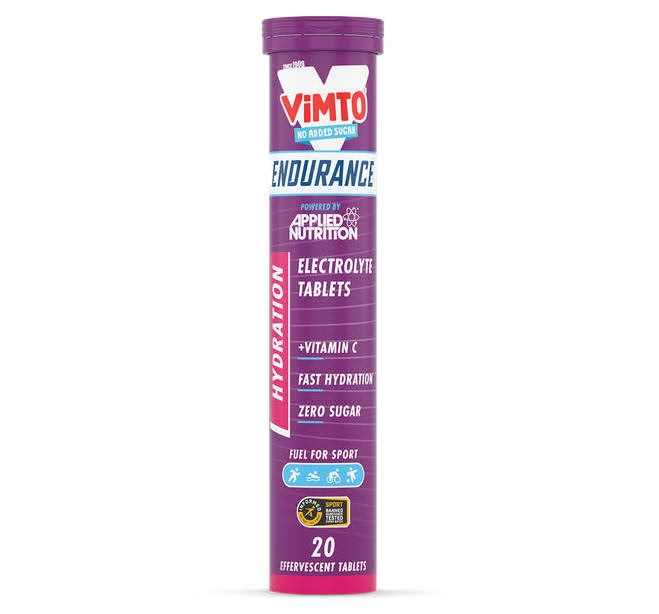
Applied Nutrition Endurance Hydration review: best budget supermarket-style choice
Applied Nutrition Endurance Hydration tablets are a useful budget alternative, especially when they are discounted or available through mainstream retailers. They are not as cycling-specific as SiS, Precision Hydration or HIGH5, but they can still work well for riders who want a basic electrolyte tablet for regular use.
The appeal is value. If you are using electrolyte tablets several times a week, cost per serving matters. Applied Nutrition can be a sensible cupboard option for commutes, short training rides, gym sessions and general hydration around riding.
The compromise is refinement. Flavour, dissolving quality and ingredient targeting may not feel as focused as the better cycling-specific products. For serious endurance use, especially in hot conditions, Precision Hydration or a more dedicated cycling brand is the better choice.
As a low-cost option, though, it makes sense. Not every ride needs a premium tablet, and not every cyclist needs a finely tuned sodium strategy. Sometimes the best electrolyte tablet is the one you will actually use regularly.
Best for: value-focused riders, commuters, gym users and cyclists who want a low-cost hydration tablet.
Not ideal for: race-focused riders, heavy sweaters or anyone wanting precise sodium targeting.
Powder alternatives if you do not need tablets
If tablet convenience is not important, powders can offer better value or a different ingredient profile. Veloforte’s hydration range is the premium natural-ingredient option: Solo provides 350mg sodium in a 500ml serving without added sugar, while Attivo adds 22g carbohydrate and 75mg caffeine for harder rides.
Bulk Electrolyte Plus is the more value-focused alternative, with 500mg sodium per serving plus potassium, magnesium, calcium and B vitamins. Powders make most sense if you are mixing bottles at home rather than carrying spare doses in a jersey pocket. For longer rides, it is also worth pairing hydration planning with a broader long-distance cycling fuelling and pacing strategy.
How to choose electrolyte tablets for cycling
The first thing to check is sodium content. For cycling, sodium is usually the most important electrolyte because it is the main mineral lost through sweat. A light everyday tablet may be fine for moderate rides, but heavy sweaters need to look for higher sodium options.
The second question is whether you want calories. Many electrolyte tablets are sugar-free or very low in calories, which is useful for hydration without fuelling. That is good for short rides, gym sessions, recovery spins and low-intensity training. It is not enough for longer endurance rides, where carbohydrate still needs to come from food, gels or drink mix.
Caffeine is the third decision. Caffeinated tablets can be useful before a hard session, during a long sportive or late in a ride when concentration drops. They can also interfere with sleep, increase jitters and become unnecessary if used too often. For most riders, it makes sense to keep both caffeine-free and caffeinated options available.
Taste matters more than many riders admit. A technically perfect tablet is useless if you stop drinking because the flavour is too strong, too sweet or too salty. For summer riding, light citrus and berry flavours often work better than heavy or overly sweet options.
Finally, think about packaging. Tablets are easy because they are portable and tidy. Sachets can be more expensive but useful for travel and events. Large tubs of powder can be better value but less convenient to carry.
Electrolyte tablets versus carb drink mix
Electrolyte tablets and carb drink mix do different jobs. Tablets mainly support hydration by replacing minerals lost in sweat. Carb drink mix provides energy, usually with electrolytes included. Confusing the two can lead to poor fuelling on longer rides.
For a one-hour easy ride, water may be enough and an electrolyte tablet is optional. For a two to four-hour ride, most cyclists will need carbohydrate as well. That could come from bottles, gels, bars or normal food. If you are building towards a longer event, our first sportive training guide covers the wider pacing and fuelling picture. The electrolyte tablet only solves the hydration side of the problem.
On very hot days, separating hydration and fuelling can work well. One bottle can contain electrolyte drink, while the other carries carbohydrate mix, or you can use electrolyte bottles alongside gels and food. This gives more control than relying on one drink to do everything.
For racing and high-intensity sportives, carb drink mix is often more useful than tablets alone. For commuting, endurance rides and indoor training where fuelling is handled separately, electrolyte tablets remain simple and effective.
-
 Photo Credit: quentinphotographiebe
 -
 Photo Credit: Getty


Best electrolyte tablets for different riders
Best for most cyclists: HIGH5 ZERO
Best for heavy sweaters: Precision Hydration PH 1500
Best for structured training: Science in Sport GO Hydro
Best budget option: OTE Hydro Tabs or Applied Nutrition Endurance Hydration
Best premium option: Veloforte Attivo or Veloforte Solo, depending on whether you want caffeine
Best light-tasting option: Nuun Sport
Best high-sodium alternative: STYRKR SLT07
Electrolyte tablets for cycling: FAQ
Do electrolyte tablets stop cramp?
Not reliably. Exercise-associated cramp can be linked to fatigue, pacing, heat, fluid loss and individual susceptibility as well as electrolyte losses. Replacing sodium can be useful when sweat losses are high, but tablets are not a guaranteed cramp cure.
How many electrolyte tablets should I put in a cycling bottle?
Follow the product directions rather than assuming every tablet is designed for the same bottle size. HIGH5 ZERO is commonly mixed into 750ml, SiS Hydro into 500ml and STYRKR SLT07 into 500ml. Changing the water volume changes the sodium concentration.
Do I need electrolytes for a one-hour bike ride?
Often not. In mild conditions, an easy hour with normal food and fluid intake around the ride may only require water. Electrolytes become more useful as duration, temperature and sweat rate increase, or during hard indoor sessions where sweat cannot evaporate as effectively.
Can I use electrolyte tablets without carbohydrate?
Yes. That is one of their main advantages. You can keep hydration in the bottle and take carbohydrate separately through gels, bars or food. On longer or harder rides, however, low-calorie electrolyte tablets do not replace the need to fuel.
Verdict
The best electrolyte tablets for cycling depend on the rider rather than the brand name on the tube. HIGH5 ZERO is the easiest all-round recommendation because it is affordable, widely available and works well for everyday road riding. It is the product most cyclists can buy without overthinking it.
Precision Hydration is the better choice for riders who know they sweat heavily or struggle in hot conditions. Its different sodium strengths make it more precise, and PH 1500 is especially useful before hard or hot rides. It is not the cheapest option, but it is one of the most purposeful.
Science in Sport GO Hydro, OTE Hydro Tabs and Nuun Sport all make sense for regular training, with small differences in flavour, certification, availability and feel. Veloforte is the more premium option, particularly if you want natural-style ingredients or caffeine, although it is harder to justify as an everyday tablet replacement.
The single biggest reason to use electrolyte tablets is simple: they make hydration easier to manage when sweat loss starts to matter. The single biggest reason to hesitate is that they do not replace fuelling. For long rides, the right answer is usually electrolytes plus carbohydrate, not one or the other.

