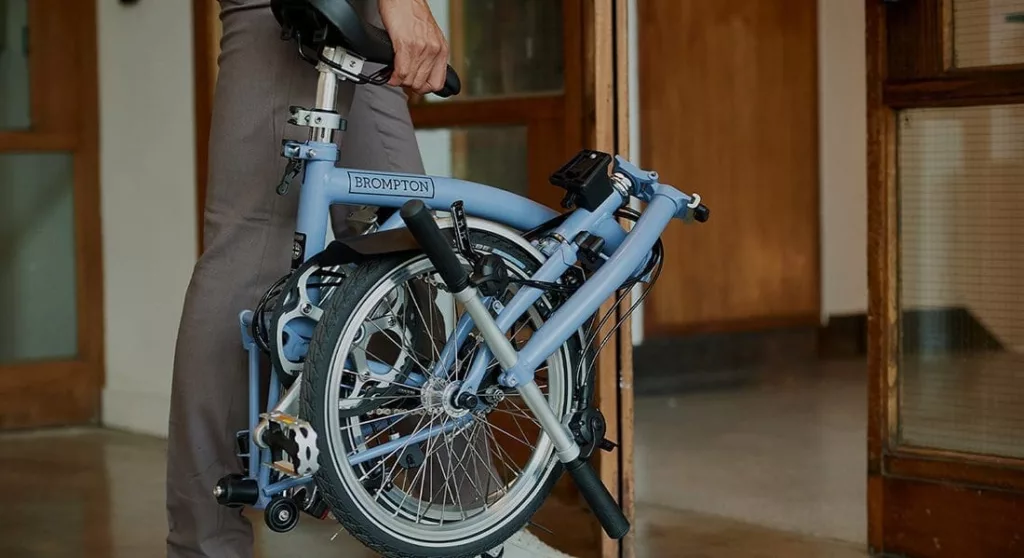
A Brompton makes most sense when the fold solves a daily problem: getting a bike onto transport, storing it indoors or carrying it through a building. The right model needs to work for those moments as well as the cycling between them. Test the folded weight and shape before buying, especially if stairs are part of your journey.
Brompton now covers more than one wheel size, frame construction and pedal arrangement. Instructions for an older steel bike do not describe every current model. The folding overview below is for a conventional 16-inch Brompton with the familiar frame hinges and left folding pedal; use the instructions supplied with your exact bike where the fittings differ.
What to check when choosing a Brompton
Start with the journey. A short, flat ride to the station places different demands on gearing and luggage from an all-day outing in hilly country. Try the bike with the sort of load you expect to carry, and make sure you can set a comfortable saddle height and reach without exceeding any adjustment limits.
The compact 16-inch format remains central to the range, while the G Line uses 20-inch wheels and folds into a larger package. Do not use one advertised folded measurement for every Brompton. Check the dimensions of the actual model against your storage space, together with any rack, bag or other fittings.
A lighter version may be valuable if you carry it frequently, but compare the full setup rather than the bare bike. Locks, tools and luggage still have to travel with you. For an electric model, include battery handling and charging in the decision, and check the rules of any transport operator you intend to use.
Before you start folding

Practise somewhere level with space around the bike. Take your time and watch where cables, mudguards and accessories move. If something catches, stop and check the position rather than forcing a hinge. The aim is a repeatable sequence you can manage calmly at a station, not the quickest possible demonstration.
Remove luggage if it obstructs the operation, and follow the battery-removal procedure for your electric model. Keep your fingers clear of closing hinges. The rear-frame release is not a wheel-removal fastening: you should not be loosening an axle to fold the bike.
How to fold a conventional 16-inch Brompton
1. Park the rear wheel. With the seatpost raised, release the rear-frame clip and lift the bike by the saddle so the rear wheel swings underneath. Let the bike settle on its supporting rollers.
2. Fold the main frame. Loosen the main-frame hinge clamp enough to disengage it. Bring the front wheel back alongside the rear, engaging the front fork’s retaining hook with the rear frame. Do not remove the hinge hardware.
3. Lower the saddle. Open the seatpost clamp, lower the seatpost fully and close the clamp. The lowered post helps retain the folded package.
4. Fold the handlebar assembly. Release its hinge clamp, lower the assembly and engage the retaining catch without trapping cables.
5. Finish at the pedal. Position the cranks for clearance and operate the left folding pedal’s release before folding it. Some models use a removable pedal instead; follow that model’s procedure.
Unfolding and the checks before riding
Support the bike while you unfold it, reverse the relevant operations and bring each hinge fully into its riding position. Raise and secure the seatpost before trying to swing the rear frame back out. Make sure the front retaining hook is clear before separating the folded sections.
Both hinge clamps must sit correctly and be tightened as instructed for your model. Check that the rear-frame latch has engaged, the seatpost is secure and the pedal is fully deployed or correctly reattached. A handle that looks closed does not by itself prove that the clamp beneath it is seated properly.
Before setting off, check the brakes, tyres and steering. If a hinge has play, a pedal will not lock or the bike no longer folds normally, have the cause investigated. Do not use extra force to compensate for a damaged or misaligned part.

Common folding problems
If the rear wheel will not swing, check the rear-frame release and seatpost position. If the front section will not move, check that the hinge clamp has disengaged and that luggage or cables are not in the way. If the package will not stay together, check the hook engagement and that the seatpost is fully down.
An aftermarket accessory can alter clearance even when it seems small. Repeat the full fold after fitting a new light, saddle bag or other attachment, before relying on it during a journey. Keep the hinges and catches clean and arrange servicing if their operation changes.
Living with a folding bike
Small wheels still need regular pressure checks. Use a gauge and the limits for your tyre and rim, rather than copying a pressure from someone else’s bike. Our guide to pumping up bike tyres covers valve identification and inflation.
A test ride and a folding demonstration are worth doing together. If you are shopping locally, our guides to Glasgow bike shops and Cambridge bike shops can help you find retailers and workshops, although you should confirm Brompton stock and model-specific service support before travelling.