
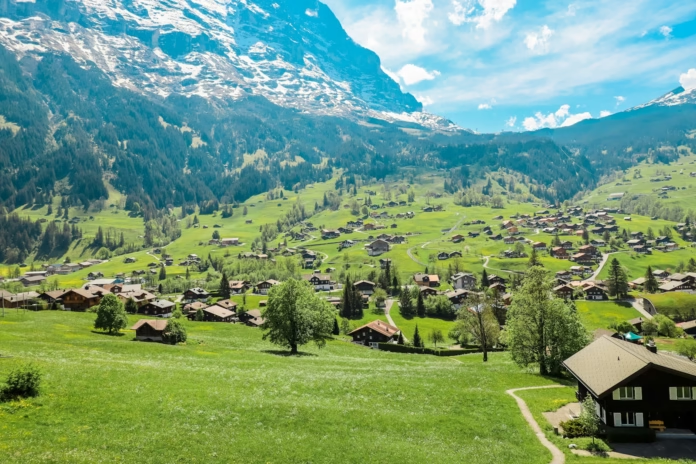
Cycling in the Bernese Oberland feels different because the mountains do not wait politely in the distance. They arrive early, fill the horizon, and keep reappearing at the end of every valley road, above every lake and behind every chalet roof. Around Interlaken and Grindelwald, the scale is immediate. Lake Thun and Lake Brienz sit in impossibly blue light, the Lütschine valley pulls you towards the high Alps, and the Eiger, Mönch and Jungfrau seem to watch over even the easiest ride.
This is not the quietest corner of Switzerland. Interlaken is busy, Grindelwald is famous, and the Jungfrau region is one of the great Alpine tourism names. But for cyclists, that does not make it less appealing. It gives the area a particular rhythm: smooth roads, serious climbs, practical transport links, reliable cafés, dramatic valley rides, and enough mountain spectacle to turn even a recovery spin into something memorable.
The riding here works because it offers layers. You can stay low and ride between lakes, using Interlaken as a gentle base. You can climb from valley floors towards Grindelwald, Lauterbrunnen or Mürren and feel the road tighten under the cliffs. You can target the Grosse Scheidegg for one of the finest road-cycling experiences in Switzerland. Or you can go further east towards Meiringen and the high-pass world of Grimsel, Susten and beyond.
The Bernese Oberland is not only about famous climbs. It is about how those climbs sit inside a landscape that feels theatrical without needing to be exaggerated. Water, rock, pasture, glacier and road are all close together. The riding can be hard, but the atmosphere is why it stays with you.
For more Alpine cycling context, this sits naturally alongside ProCyclingUK’s guides to cycling in Andermatt and the central Swiss passes, cycling in Aosta Valley and cycling in Briançon and Serre-Chevalier.
Why is the Bernese Oberland special for cycling?
The Bernese Oberland is special because it combines accessible riding with some of the most dramatic mountain scenery in Europe. Many Alpine regions have big climbs. Fewer give you this much variety within such a compact area.
Interlaken sits between Lake Thun and Lake Brienz, which makes it a natural base for easier days, lake loops and rolling endurance rides. You can start with flat or gently undulating roads, build towards Wilderswil or Brienz, then decide whether to keep the day light or turn towards the mountains. That flexibility matters on a cycling trip. Not every day has to be a pass day, but the pass days are always close.
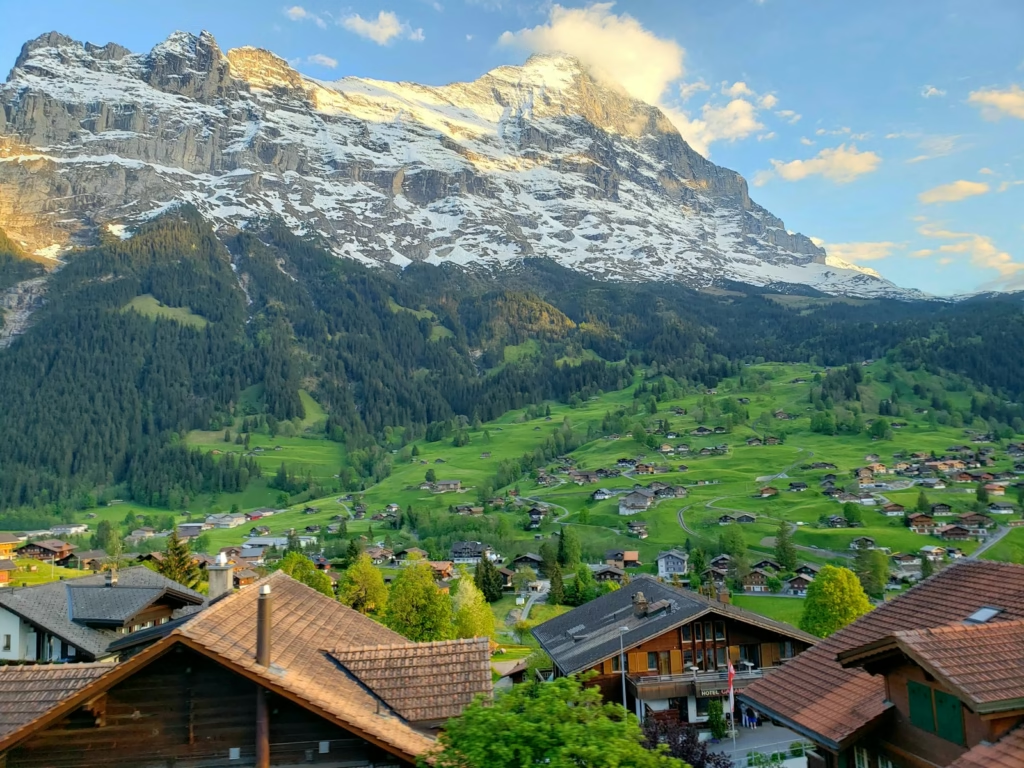
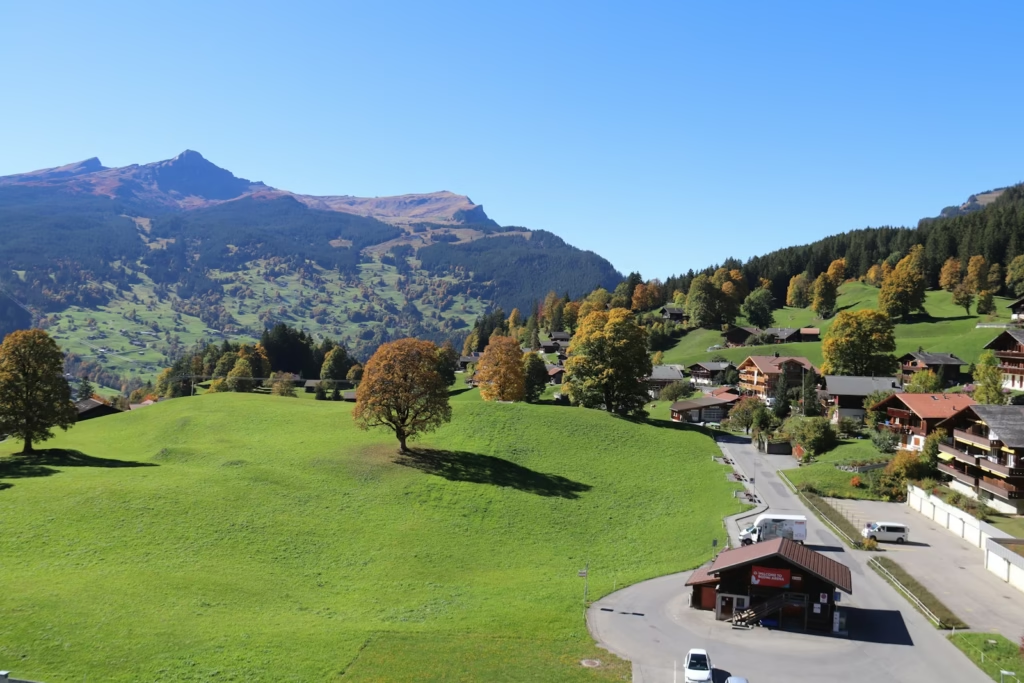
Grindelwald gives the area a different mood. It is higher, more enclosed, more obviously Alpine. The road into the valley feels like a gradual tightening of the landscape, with the Eiger’s north face becoming part of the ride rather than a distant view. The closer you get, the more the mountains seem to rise directly from the fields and village streets.
Lauterbrunnen adds another kind of drama. Its valley walls and waterfalls create a riding atmosphere that is more vertical than expansive. Even if you are not chasing elevation, the road feels as though it is travelling through a natural corridor. For riders who enjoy place as much as performance, that matters.
The best thing about the Bernese Oberland is that it lets you choose your level. You can ride lakes, valleys, gravel-style side roads, climbs to villages, car-restricted passes or full Alpine epics. The backdrop never feels ordinary.
For wider trip ideas, see our Travel and Riding Abroad hub and Cycling in Rest of Europe.
Interlaken as a cycling base
Interlaken is the practical base. It has the hotels, trains, shops, bike hire, cafés and transport links that make a cycling trip easier to organise. It is also central enough that you can ride in several directions without repeating the same road every day.
The town itself is not the reason to come here with a bike. The reason is what sits around it. Lake Brienz to the east gives you glassy water, wooded slopes and a quieter road feel once you are away from the main tourist pressure. Lake Thun to the west offers broader views and a more open, rolling character. The valley towards Lauterbrunnen and Grindelwald pulls you south towards the high Alps. Meiringen to the east opens the door towards the Grosse Scheidegg, Grimsel and the larger pass network.
That makes Interlaken especially good for mixed groups. Strong riders can go long and high. Less experienced riders can stay closer to the lakes or use e-bikes. Rest days are easy to fill without feeling like wasted time. Trains and lifts also make logistics more forgiving, which is useful in weather that can change quickly.
The atmosphere is busy but useful. Interlaken is an outdoor-sports town, and that gives it energy. Paragliders drift overhead. Tourists move between the stations and lake boats. Cyclists, hikers and trail runners all share the same sense that the landscape begins at the edge of town.
It is also a good place to compare with other European cycling bases. It has less of the pure high-pass concentration of Andermatt, less of the Mediterranean warmth of Aosta, and less of the dry southern Alpine feel of Briançon, but it has a rare combination of lakes, rail access, village climbs and one of Switzerland’s most atmospheric cycling passes.
Grindelwald and the Eiger road feel
Grindelwald is where the riding becomes more emotional. The road up the valley is not only a transfer from Interlaken. It is an introduction to the mood of the Jungfrau region.
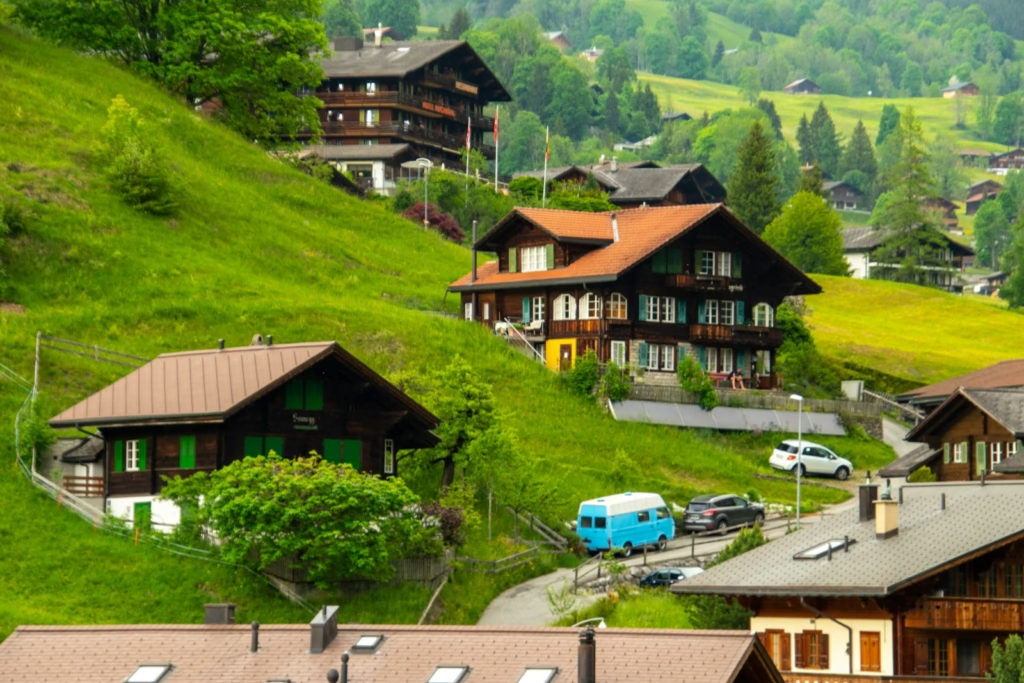
From the lower valley, the climbing can feel manageable at first, but the scenery keeps gaining weight. Chalets sit on the slopes, the river moves beside the road, and the mountains begin to close around the village. By the time you reach Grindelwald, the Eiger is not simply visible. It is part of the geography of the place.
This is what makes riding here different from some other Alpine bases. In Andermatt, the drama often comes from high passes and exposed road engineering. In Aosta, the mountains rise steeply from a strong valley floor. In Grindelwald, the atmosphere is more intimate. The climbs feel as though they are pressed into a working mountain village, with fields, hotels, lifts, barns and glacier views all competing for space.
The riding can be steep, especially once you start using the smaller roads above or beyond the village. This is not always smooth, wide pass riding. There are narrow lanes, bus routes, tourist traffic and sections where the gradient bites harder than expected. That makes gear choice important and patience even more so.
Grindelwald works best when you do not treat it as a place to hurry through. It is worth building a day around it, especially if you are riding towards the Grosse Scheidegg or using the village as the finish to a hard loop from Meiringen.
Grosse Scheidegg: the signature climb
The Grosse Scheidegg is the climb that gives the Bernese Oberland its road-cycling headline. It is not the highest pass in Switzerland, and it is not the longest climb in the Alps, but it has something many bigger roads do not: an extraordinary sense of place.
The pass links the Meiringen side with Grindelwald, climbing through a landscape that moves from valley road to pasture, forest, cliff and high mountain view. The road is narrow, often quiet, and largely free from normal through traffic, with buses being the main regular vehicles on the upper sections. That changes the feel completely. Instead of riding a busy Alpine artery, you are climbing a road that feels almost purpose-built for the bicycle.
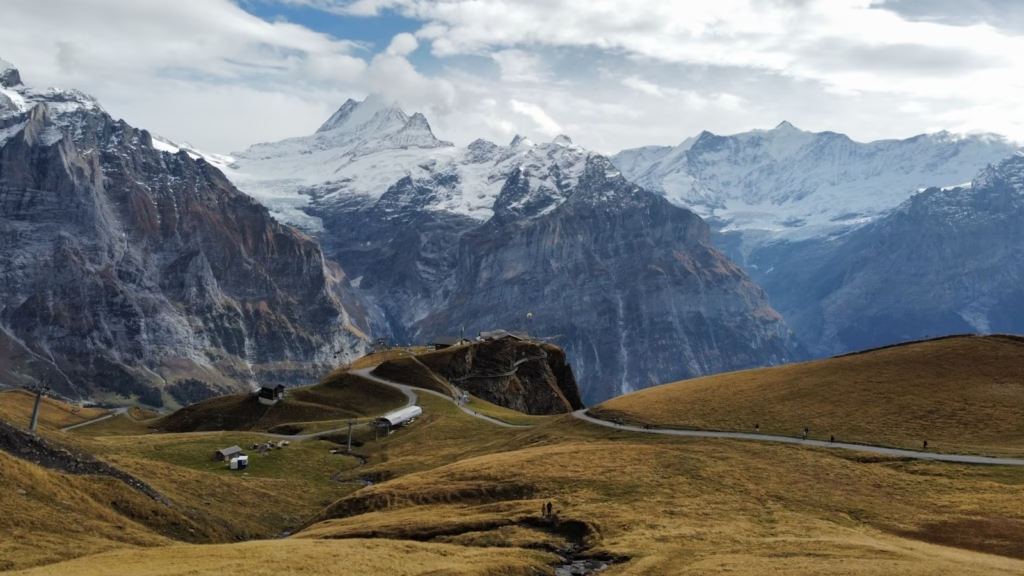
From the Meiringen side, the climb builds with a long, demanding rhythm. It is not simply a straight wall. It moves through changing scenery, with the Rosenlaui area, waterfalls, forest and high meadows making the climb feel like a journey rather than a workout. The upper road opens towards the Wetterhorn and the great north-facing walls of the Bernese Alps.
From the Grindelwald side, the experience is steeper and more immediate. The road rises out of the village and quickly begins to ask proper questions. Gradients can become severe, and the sense of riding beneath the Eiger and Wetterhorn gives the effort a kind of pressure that is hard to explain until you are there.
What makes the Grosse Scheidegg special is not just difficulty. It is the lack of normal traffic, the scale of the views and the fact that the climb feels Alpine without becoming impersonal. MySwitzerland’s Grosse Scheidegg cycling route describes the climb as car-free apart from PostBuses, with roughly 1,300m of climbing over 16km and ramps as steep as 12 per cent. That is exactly how it feels: beautiful, controlled, and earned.
The Meiringen side and the route through Rosenlaui
The Meiringen side may be the best way to experience the Grosse Scheidegg as a full road-cycling climb. It begins lower, builds gradually and allows the landscape to unfold.
Meiringen itself is a useful cycling town, sitting east of Interlaken and close to several important routes. From here, the road towards the Grosse Scheidegg quickly becomes more scenic, especially as it moves towards Rosenlaui. The valley narrows, the buildings thin out, and the ride begins to feel less like a pass approach and more like a mountain corridor.
Rosenlaui is one of the reasons this side stays in the memory. The scenery has that classic Swiss mixture of water, green pasture and harsh rock, but without losing its human scale. The road is narrow enough to feel intimate, and the rhythm of the climb gives you time to absorb the place. You are not just fighting gradients. You are moving through a landscape that keeps changing its texture.
As the climb rises, the road becomes more exposed and the views open. The effort becomes more serious, but the reward grows with it. In clear weather, the upper part of the climb is one of the finest cycling settings in the Alps.
The descent towards Grindelwald is equally memorable, but it deserves respect. The road is narrow, buses may be present, and the views can be distracting. This is not a descent to take casually, even if the surface and setting are beautiful.
Lake Brienz and Lake Thun: the easier riding days
The Bernese Oberland is not only about climbs. The lake roads around Interlaken are what make the area work for a full cycling trip rather than just one spectacular mountain day.
Lake Brienz has the more dramatic colour. On bright days, the water can look almost unreal, with a turquoise-blue tone that feels exaggerated until you are standing beside it. Riding along the lake gives a different kind of pleasure from the big climbs. The effort is lower, the views are wide, and the road often feels like a pause between harder days.
Iseltwald, Brienz and the roads above the lake can be used for scenic loops or steady endurance rides. Some sections are busier than others, and riders need to plan carefully around main roads, tunnels and shared paths, but the lake itself gives the ride a calming rhythm. It is the kind of route that lets you spin the legs while still feeling that the day has a strong visual purpose.
Lake Thun is broader, more open and more varied in its shoreline towns. It can be used for longer loops, rolling rides and café stops, especially if you want a day that feels less enclosed by the high mountains. The views back towards the Oberland peaks are often superb, especially when the weather is clear.
These easier rides matter because the big climbs around Grindelwald and Meiringen can be demanding. A good Bernese Oberland trip should not only be a list of hard days. The lakes give the region balance.
Lauterbrunnen and the valley of waterfalls
Lauterbrunnen is one of the most recognisable valleys in Switzerland, and even a simple ride there has atmosphere. The road runs into a valley framed by steep walls and waterfalls, with the village sitting beneath cliffs that make the whole place feel almost theatrical.
For road cyclists, the Lauterbrunnen valley is not a high pass in itself, but it is an essential ride because of the setting. It works as an easier extension from Interlaken or Wilderswil, especially if you want a day that is visually spectacular without committing to Grosse Scheidegg or the higher passes.
The valley also gives access to other possibilities. Mürren, Wengen and Kleine Scheidegg are tied into mountain transport and mixed-surface or bike-transport possibilities, though road-bike planning needs care. Not every mountain route here is a normal road ride, and some access depends on trains, lifts, local restrictions and bike-transport rules.
That is part of the character of the Jungfrau region. It is not a simple road-cycling grid. It is a mountain tourism landscape with roads, railways, cableways, trails and restricted routes all interlaced. Used well, that gives riders options. Used lazily, it can create route-planning mistakes.
For a straightforward road ride, Lauterbrunnen is best treated as a scenic valley ride and a way to add variety between bigger climbing days.
The road surfaces and traffic feel
The road quality in the Bernese Oberland is generally excellent, but the riding feel changes dramatically depending on where you are.
Around Interlaken and the lake roads, you will find a mix of bike paths, local roads, busier main roads and village sections. The biggest challenge here is not road surface. It is route choice. A badly planned line can put you on roads that feel too busy, while a better route can use marked cycling infrastructure, secondary roads and lakeside sections to make the same area feel much calmer.
Towards Grindelwald and Lauterbrunnen, traffic becomes more tourist-driven. Coaches, buses, hire cars and local vehicles can all appear, especially in peak season. The roads are still rideable, but they are not always tranquil. Early starts help. So does choosing shoulder-season periods rather than the busiest summer afternoons.
On the Grosse Scheidegg, the feel changes again. The restricted traffic gives the climb much of its magic, though yellow PostBuses remain part of the experience. That means riders need to stay alert on narrow sections and avoid treating the road as completely closed. The lack of normal car traffic makes the climb special, but it does not remove the need for caution.
Higher passes further east, such as Grimsel and Susten, have broader roads but more traditional Alpine pass traffic. They feel bigger, faster and more exposed than the Jungfrau valley climbs. They are magnificent, but they ask for a different kind of riding confidence.
The atmosphere: lakes, cliffs and glacier light
The atmosphere of the Bernese Oberland is what separates it from a purely athletic cycling destination.
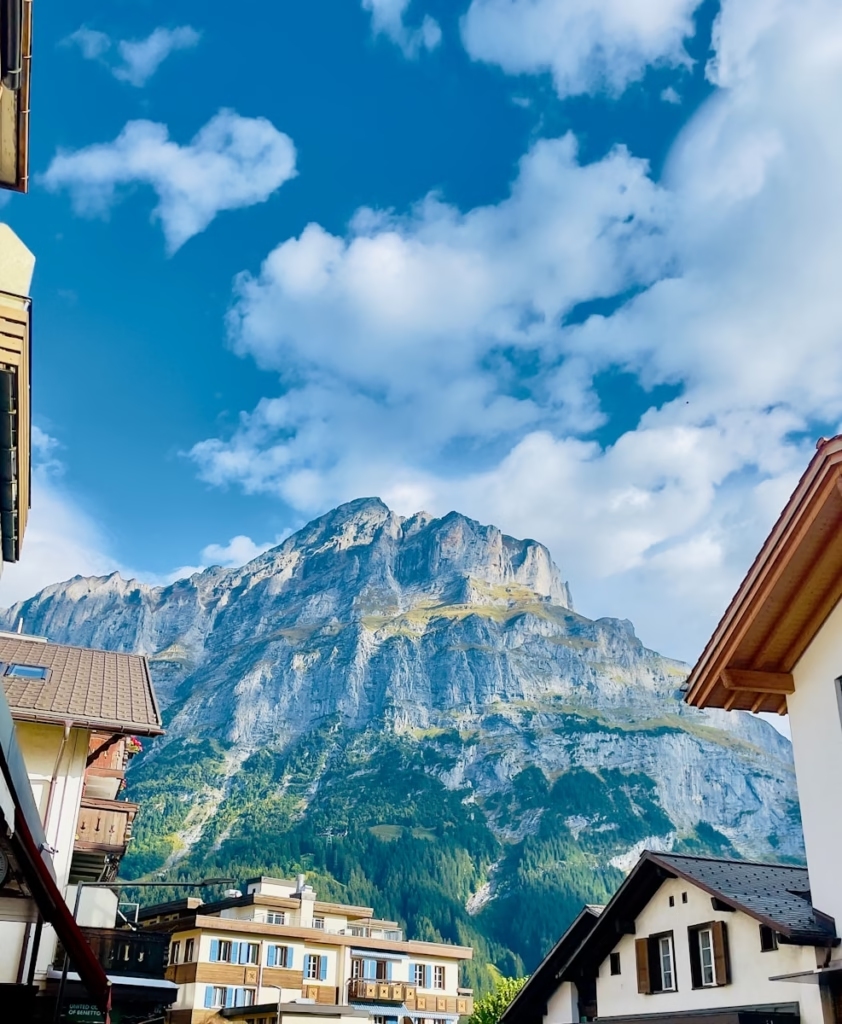
There is a particular kind of light around the lakes, especially in the morning. Lake Brienz can glow in a blue that seems to lift the whole landscape, while Lake Thun often feels broader and softer, with the mountains sitting further back. Between them, Interlaken has the slightly restless energy of a place where people are always leaving for somewhere dramatic.
Grindelwald has a sharper mood. The Eiger gives the valley weight. Even when the roads are busy, the mountains dominate everything. You can be riding past hotels, cafés and car parks, but the backdrop keeps pulling the scene back into something larger.
Higher up, the Grosse Scheidegg strips that atmosphere down. The road becomes narrower, the villages disappear, and the landscape feels more immediate. Cowbells, buses, tyres on tarmac, wind through grass, water running off the slopes, all of it becomes part of the ride.
The Bernese Oberland is not subtle, but it is not artificial either. Its beauty is obvious, but the roads make you work for the best parts. That is a good combination for cyclists.
How hard is cycling in the Bernese Oberland?
Cycling in the Bernese Oberland can be as easy or as hard as you want, but the serious rides are properly demanding.
The lake roads and valley routes can be manageable for a wide range of riders. Interlaken to Lauterbrunnen, sections around Lake Brienz, or gentler loops across the Bödeli can be used for relaxed endurance rides, e-bike days or recovery spins. These are still Alpine roads, so weather and traffic matter, but they are not brutally hard by default.
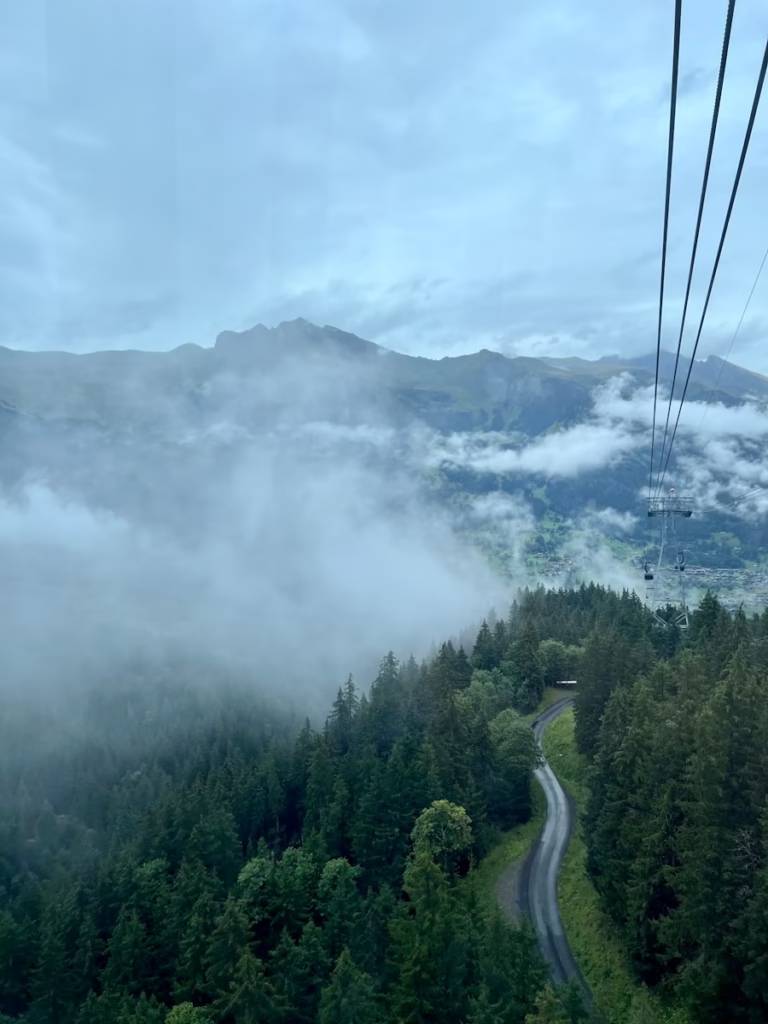
The climbs change the equation. Grosse Scheidegg is a serious road-cycling objective, especially if you ride it as part of a longer loop from Interlaken or Meiringen. The gradients can be steep, the total climbing is meaningful, and the descent needs concentration. Grindelwald’s upper roads can also bite hard, particularly if you are carrying fatigue from previous days.
The bigger high-pass loops further east are a different category again. Grimsel, Susten and related routes bring long climbs, altitude, weather exposure and sustained descending. They are not casual add-ons unless you are already well prepared.
The best way to ride the region is to build intensity gradually. Use a lake or valley day first, ride Grosse Scheidegg as a main objective, then consider the larger pass roads if conditions and legs are right.
How Bernese Oberland compares with Andermatt and Aosta
The Bernese Oberland is not the same kind of cycling base as Andermatt. Andermatt is more pass-focused, with Furka, Grimsel, Susten, Oberalp and Gotthard creating a dense high-road network. It feels like a hub for riders who want to climb big passes every day.
Interlaken and Grindelwald are more varied. The riding is split between lakes, valleys, tourist roads, restricted climbs and possible high-pass extensions. It is less pure as a road-cycling laboratory, but more atmospheric as a mixed Alpine trip. You can ride hard, but you can also build a holiday around trains, lakes, walking, mountain villages and shorter scenic routes.
Compared with Aosta Valley, the Bernese Oberland feels more polished and more visually theatrical. Aosta has a more rugged, Italian, valley-town character, with big climbs rising from a less obviously curated landscape. The Oberland is cleaner, busier, more ordered and more postcard-like, but the best rides still feel wild once you are above the tourist floor.
That makes it ideal for riders who want serious climbing without giving up convenience. It is a better mixed-trip base than many purer cycling regions, especially for couples or groups where not everyone wants to ride the hardest climb every day.
For a contrast with another type of Alpine base, see our guide to cycling in Cortina d’Ampezzo and the Dolomite passes.
Suggested ride ideas around Interlaken and Grindelwald
A good first day is a lake and valley ride. Start in Interlaken, ride towards Lake Brienz, use quieter sections where possible, and keep the effort controlled. This gives you the water, the views and the rhythm of the area without committing to a hard climb.
A second day could go to Lauterbrunnen. From Interlaken or Wilderswil, ride into the valley, take time in the village and return without trying to turn the day into a monster. It is scenic, accessible and perfect for getting used to the local traffic and road feel.
The Grosse Scheidegg should be the main climbing day. Strong riders can make a loop using Meiringen, Rosenlaui, the pass, Grindelwald and the return towards Interlaken. This is one of the great rides of the region and deserves fresh legs, good weather and enough time to stop.
A Grindelwald-focused day can be shorter but still hard. Ride from Interlaken up the valley, add climbing above the village if appropriate, and return before the traffic builds too much. It is a good option if the higher pass weather is uncertain.
A big extension towards Meiringen, Grimsel or Susten should only be planned with current pass status and weather checked. These are high Alpine roads, not guaranteed summer lanes. The Swiss Alpen-Pässe pass status page is useful before committing to any high-road day, especially early or late in the season.
What bike and gearing do you need?
A road bike with low climbing gears is the best choice for riders targeting the main paved climbs. The Grosse Scheidegg and the roads around Grindelwald can be steep enough that standard race gearing may feel punishing, especially if you are riding several days in a row.
A compact or semi-compact chainset with a wide cassette is sensible. Even strong riders will appreciate lower gears on the steeper sections, and there is no downside to having an easier option when the road tilts up late in a long day.
Tyres should be chosen for confidence rather than pure speed. Modern 28mm or 30mm road tyres are a good match for Swiss tarmac, mixed valley roads and long descents. If your routes include more rough paths, bike routes or shared surfaces, a slightly wider setup can make the trip more comfortable.
Brakes matter too. Disc brakes are helpful on long descents, especially if weather turns wet or you are coming down narrow roads with bus traffic. Switzerland’s roads are usually well maintained, but Alpine descents still demand attention.
For riders planning e-bike routes, the region is well set up, but range and charging need thought. A steep climb can drain a battery faster than expected, and not every route that looks short on a map is easy on the motor.
When is the best time to cycle in the Bernese Oberland?
The best period for serious road cycling is usually late spring through early autumn, with the most reliable high-pass access in summer. June, July, August and September are the main months for bigger rides, though conditions vary with altitude and weather.
May can be beautiful lower down, especially around the lakes and valleys, but high passes may still be closed or only recently cleared. Grosse Scheidegg and the larger Alpine passes follow seasonal access patterns, and riders should always check current status before planning a trip around them.
July and August offer the warmest conditions and the most reliable high-road access, but they are also busy. Early starts are useful, especially around Interlaken, Grindelwald and Lauterbrunnen. The road can feel completely different before the tourist day fully begins.
September may be the best compromise. The weather can still be good, the light is often beautiful, and the busiest summer pressure begins to ease. The risk is that higher mountain weather becomes less predictable later in the month.
Whatever the season, the rule is simple: check the forecast, check pass status, carry layers and never assume valley weather tells you the whole story.
-
 Photo Credit: quentinphotographiebe
 -
 Photo Credit: Getty

Practical information for cycling in Bernese Oberland
Location
The Bernese Oberland is in the Swiss canton of Bern. Interlaken sits between Lake Thun and Lake Brienz, while Grindelwald lies south-east of Interlaken beneath the Eiger and Wetterhorn. Lauterbrunnen, Meiringen and the Jungfrau region are all close enough to shape a multi-day cycling trip.
Riding
The area offers a mix of lake rides, valley roads, marked cycling routes, mountain climbs and high-pass extensions. The key road-cycling target is the Grosse Scheidegg, while Lake Brienz, Lake Thun, Lauterbrunnen and the Grindelwald valley provide easier or intermediate options. Riders looking for bigger Alpine days can extend towards Meiringen, Grimsel and Susten when conditions allow.
Difficulty
The region can suit many levels, but the serious climbs are demanding. Grosse Scheidegg, Grindelwald’s upper roads and the larger passes require good fitness, low gears and confident descending. Lake and valley rides are easier, though route choice and traffic still matter.
Traffic
Interlaken, Grindelwald and Lauterbrunnen can be busy in peak season. Early starts are strongly recommended. Grosse Scheidegg has restricted normal traffic, which makes it especially appealing, but buses and local vehicles still require care.
Weather
Conditions can change quickly. The valley may be warm while the upper roads are cold, wet or windy. Carry a rain shell or windproof layer, especially if descending from higher altitude. Check high-pass status before planning long routes east of the Jungfrau region.
Transport
The area has excellent rail connections. Interlaken has two main stations, with links towards Grindelwald, Lauterbrunnen, Meiringen, Bern and beyond. Some mountain railways and buses offer bike transport under specific rules, but this should be checked in advance, especially for e-bikes.
When to go
June to September is usually the best window for road cycling, with July and August giving the most reliable high-pass access but also the busiest tourist conditions. September is often the most appealing balance of scenery, weather and reduced crowds.
Accommodation
Interlaken is the most practical base for mixed riding and wider logistics. Grindelwald is more atmospheric if your focus is the Eiger, Grosse Scheidegg and mountain roads. Lauterbrunnen is scenic but more limited as a pure road-cycling base. Meiringen works well for riders targeting Grosse Scheidegg, Grimsel and larger pass routes.
Why Bernese Oberland deserves a place on your riding list
The Bernese Oberland deserves a place on a cyclist’s list because it delivers the full Alpine feeling without forcing every day to be extreme.
You can ride beside turquoise lakes in the morning, climb towards the Eiger in the afternoon, and sit in a village square with the mountains still filling the skyline. You can take on the Grosse Scheidegg as a serious objective, then recover the next day with a flatter ride along Lake Brienz. You can make the trip as hard as a training camp or as scenic as a riding holiday.
The best cycling places are not only defined by gradients. They are defined by how the road makes the landscape feel. Around Interlaken and Grindelwald, the road keeps returning you to the same idea: water below, cliffs above, glaciers in the distance, and a sense that even a short ride can carry more atmosphere than a much longer route elsewhere.
That is what makes the Bernese Oberland special. It is not the quietest Alpine base and not the purest high-pass hub, but it has one of the strongest combinations of scenery, accessibility and climbing anywhere in Switzerland. For riders who want lakes, villages, steep roads, mountain theatre and one truly unforgettable pass in the Grosse Scheidegg, it is hard to beat.

