
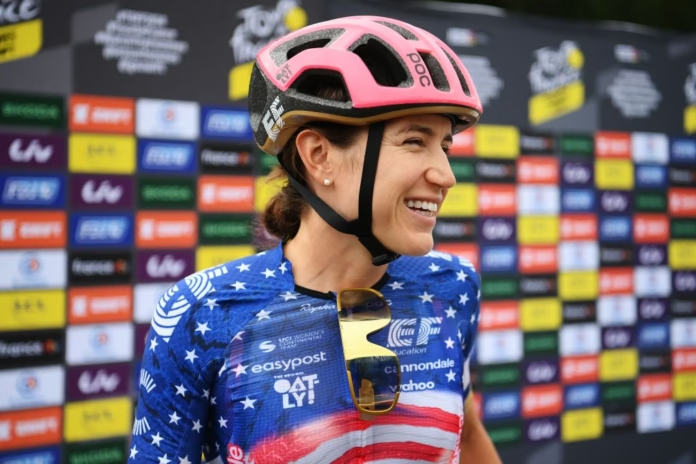
Four American riders are confirmed for the Tour de France Femmes 2026, with Kristen Faulkner, Lily Williams, Heidi Franz and Natalie Quinn representing the United States across the nine stages from Lausanne to Nice.
Faulkner gives the US contingent a very different profile to the other three. The Olympic road race champion is a genuine stage-winning threat through the time trial, breakaways and aggressive racing, while Williams is best suited to selective finishes and Franz and Quinn are more likely to find opportunities once the race opens up for breakaways.
There are still some notable American absences. Chloé Dygert is recovering from significant shoulder surgery alongside ongoing health investigations, Ruth Edwards is away from racing during her pregnancy, while Megan Jastrab has missed out as UAE Team L’IMAD prioritise a squad heavily weighted towards GC and climbing.
The Tour de France Femmes 2026 route should give the four starters enough opportunities to matter even without a clear American challenge for the yellow jersey.
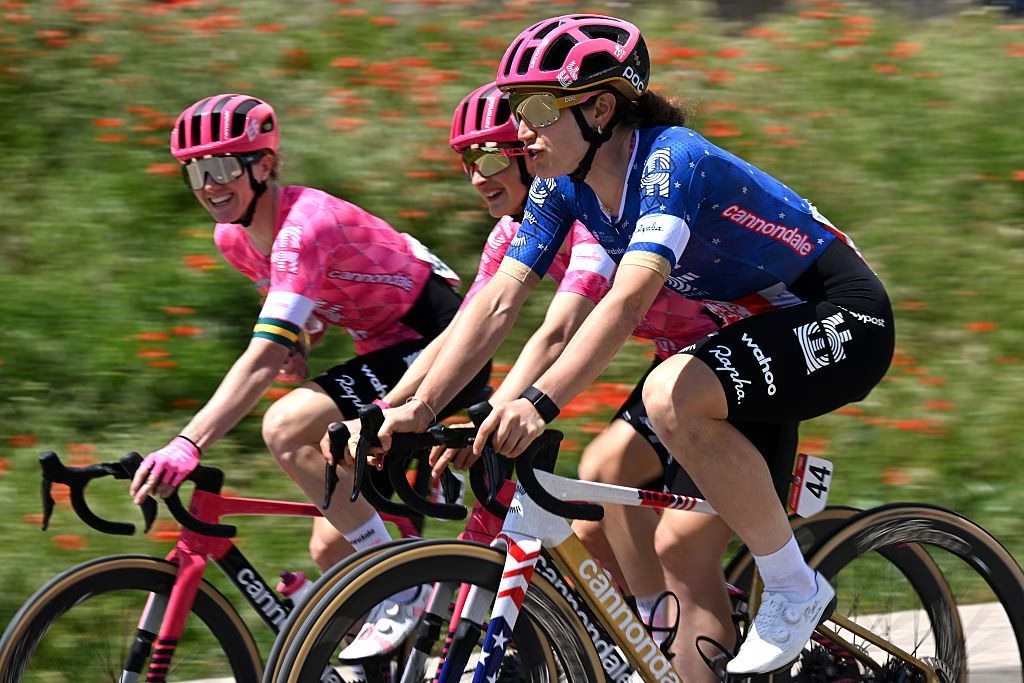
Kristen Faulkner gives the US a major stage-winning threat
Kristen Faulkner is the standout American rider on the start list and gives EF Education-Oatly one of the most versatile attacking options in the race.
Her biggest strength is that she does not need one particular kind of stage to create a result. Faulkner can challenge against the clock, attack from distance and turn a strong breakaway into a winning situation without requiring her team to control the race around her.
That fits EF’s wider structure particularly well. Cédrine Kerbaol provides the clearest GC option, while Noemi Rüegg and Magdeleine Vallieres can target selective stages. Faulkner can therefore be used aggressively without forcing the team to abandon its other ambitions.
She is already included among the riders to watch in our Tour de France Femmes 2026 breakaway specialists guide, and her presence gives EF another rider capable of forcing rival teams to take responsibility.
Dijon gives Faulkner an obvious individual target
The 21km Stage 4 time trial from Gevrey-Chambertin to Dijon immediately stands out for Faulkner.
Marlen Reusser and Zoe Bäckstedt begin among the strongest specialists, but Faulkner has the power to make herself relevant in that battle rather than simply treating the day as a GC checkpoint.
The time trial is only one part of her Tour, though. Faulkner’s Olympic road title in Paris demonstrated the value of her tactical aggression just as clearly as her raw strength, and that makes the harder transitional stages just as interesting as Dijon.
She is particularly dangerous once the GC teams begin hesitating over whether a move is worth chasing. Faulkner does not need much freedom to turn a small advantage into something significant.
Her inclusion is also notable after the shoulder problems that ended her 2025 season. Faulkner underwent surgery in September after a difficult year that included crashes at the Tour, with the setback covered in our report on Kristen Faulkner’s shoulder surgery.
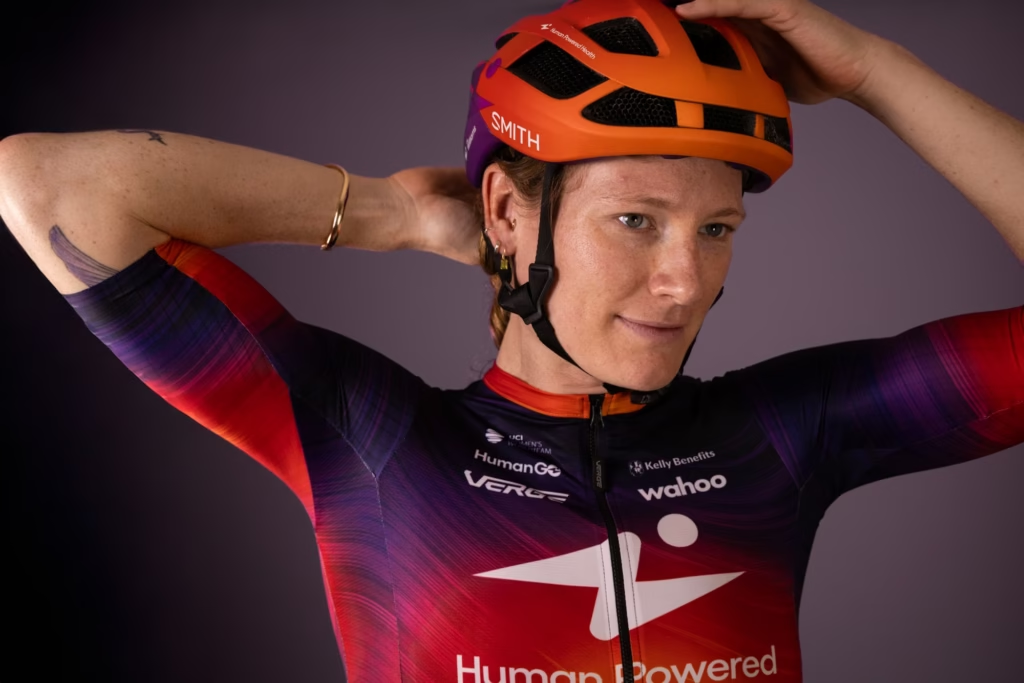
Lily Williams remains a strong reduced-group option
Lily Williams gives Human Powered Health a different route towards an American stage result.
Williams was part of the US team pursuit squad that won Olympic gold in Paris in 2024, but on the road she is at her best when a stage falls somewhere between a conventional sprint and a full mountain race.
She has enough climbing ability to survive terrain that removes some of the pure sprinters and enough speed to make herself dangerous once the group has been reduced. That means she does not need to beat Lorena Wiebes or Charlotte Kool in a straightforward bunch sprint to have a successful Tour.
Human Powered Health do not arrive with an overriding GC objective, which should also give Williams more freedom to chase her own opportunities.
If the race becomes selective without turning into a pure climbing contest, she has the profile to profit.
Faulkner and Williams give the US two very different ways to win
Faulkner and Williams overlap enough that both benefit from difficult racing, but their ideal scenarios are not the same.
Faulkner is the more obvious rider to attack from distance or build a stage around raw power. She also has the time trial as a genuine individual target.
Williams is more likely to benefit when the race arrives at the finish with a reduced group and her speed becomes more valuable.
That distinction gives the US two credible stage-winning routes rather than depending on one rider and one type of terrain.
Neither needs to be involved in the GC battle to leave the Tour with a major result.

Heidi Franz can build her race around breakaways
Heidi Franz brings experience and the freedom that comes from racing for a team without major yellow jersey ambitions.
St Michel-Preference Home-Auber 93 are unlikely to spend the Tour controlling the peloton for a GC contender. Their best route towards a high-profile result is to put riders into the moves that the strongest teams are prepared to let go.
Franz fits that approach well.
Her opportunities should increase as the race develops and the general classification begins to spread out. Once she is far enough behind the leading riders to pose no threat overall, the biggest teams have much less reason to chase her.
The difficult hilly stages are therefore more relevant than a pure sprint or direct mountain battle.
Franz does not need to be one of the strongest riders in the race. She needs to be in the right breakaway when the peloton decides not to bring it back.
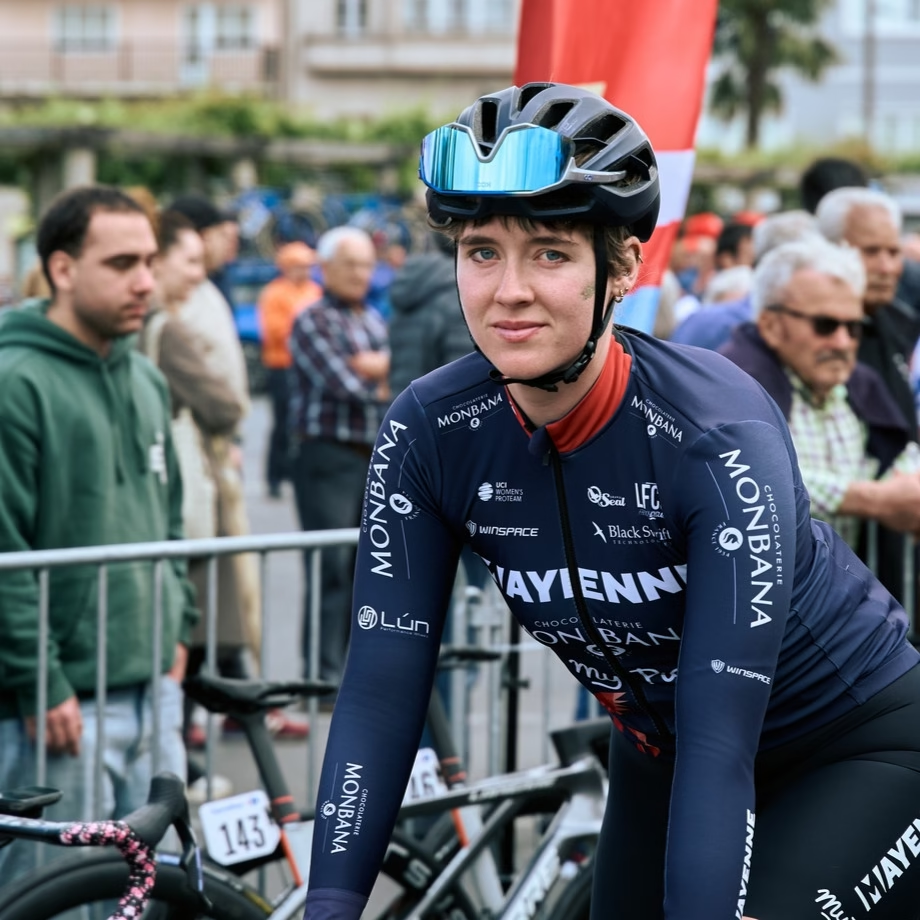
Natalie Quinn gets the biggest opportunity of her career
Natalie Quinn completes the four-rider American contingent for Mayenne Monbana My Pie.
At 24, Quinn enters from a different position to Faulkner and Williams. The Tour is an opportunity to establish herself at the highest level rather than a race where a stage victory should already be expected.
That does not mean her role has to be purely developmental.
Mayenne do not bring one of the main GC contenders or an elite sprinter capable of controlling the faster stages. Their best chance of making an impact is through aggressive racing, and Quinn can be part of that approach.
Once the gaps open, she can target breakaways on the hilly days without presenting a meaningful threat to the yellow jersey teams.
A prominent ride from the break would already represent a useful Tour. If that move receives enough freedom, the possibilities become much bigger.
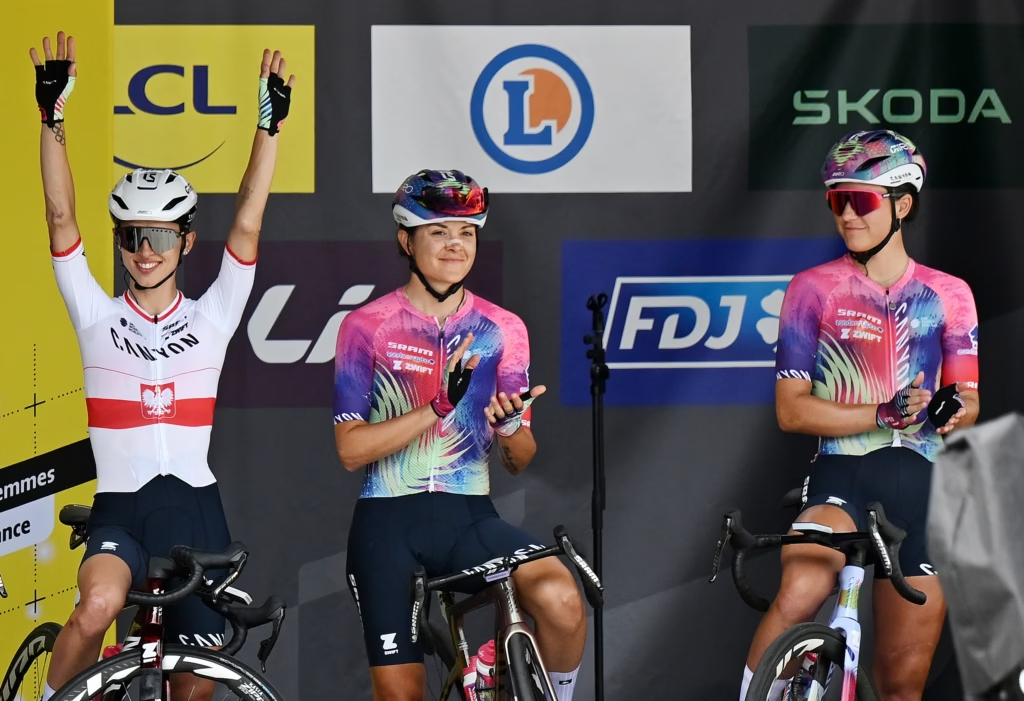 Photo Credit: Getty
Why isn’t Chloé Dygert racing?
Chloé Dygert is one of the most obvious American absentees, particularly because the Dijon time trial would normally make the former world champion one of the main contenders for a stage win.
Her absence is explained by a much broader health and rehabilitation situation rather than Canyon SRAM simply choosing another rider.
Dygert has spoken recently about years of symptoms that she struggled to explain medically, including the sense that she never fully returned to her previous level after the serious crash she suffered in 2020. She has described recent medical findings as validating after a long period of searching for explanations for how she was feeling.
Alongside that wider work, Dygert has recently undergone major shoulder surgery involving a rotator cuff repair, biceps tenodesis, labrum repair and cyst removal. Her initial rehabilitation has restricted active movement, making a Tour start impossible.
The absence therefore has little to do with the balance of Canyon SRAM’s seven. Dygert’s priority is recovering from significant surgery and addressing the longer-term health problems she has described.
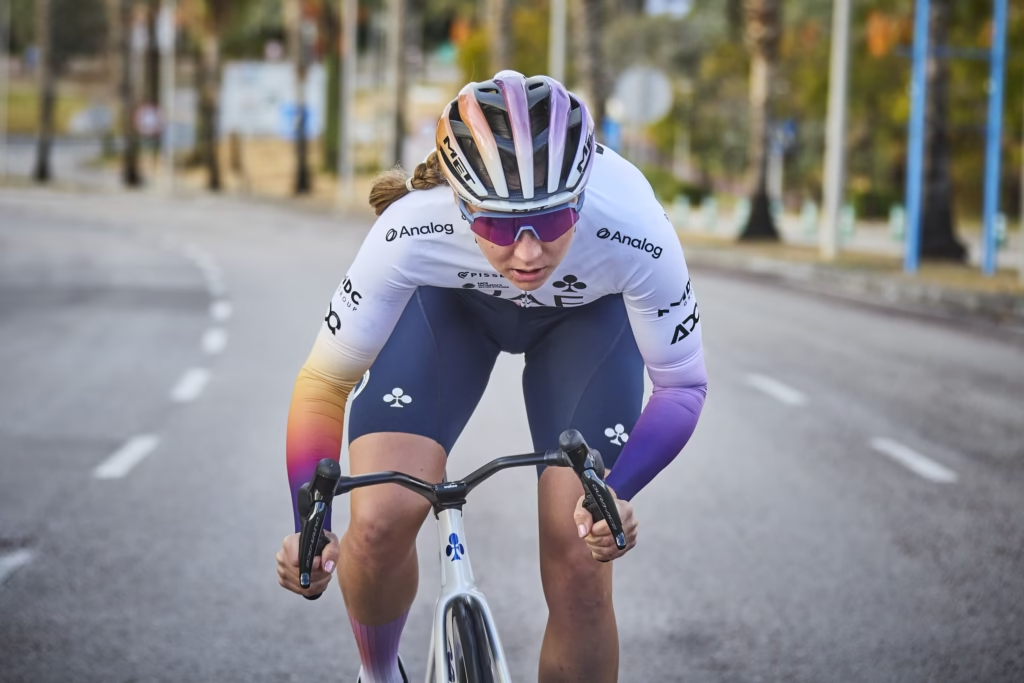
Why isn’t Megan Jastrab racing?
Megan Jastrab is a very different case.
Jastrab joined UAE for 2026 on a two-year contract after leaving Team Picnic PostNL, a move covered when UAE announced her signing.
Her omission is not easily explained by form or an obvious injury. Jastrab remains a strong Classics rider with enough speed to be useful on the quicker selective stages.
The issue is the type of squad UAE Team L’IMAD have chosen.
Their Tour seven contains Elisa Longo Borghini, Paula Blasi, Silvia Persico, Maëva Squiban, Dominika Włodarczyk, Brodie Chapman and Mavi García, giving them a team heavily weighted towards climbing, GC and difficult stage racing.
Jastrab could have added another option for faster finishes, but UAE have clearly prioritised their overall ambitions instead.
Her absence is therefore best viewed as a selection decision shaped by the team’s Tour strategy.
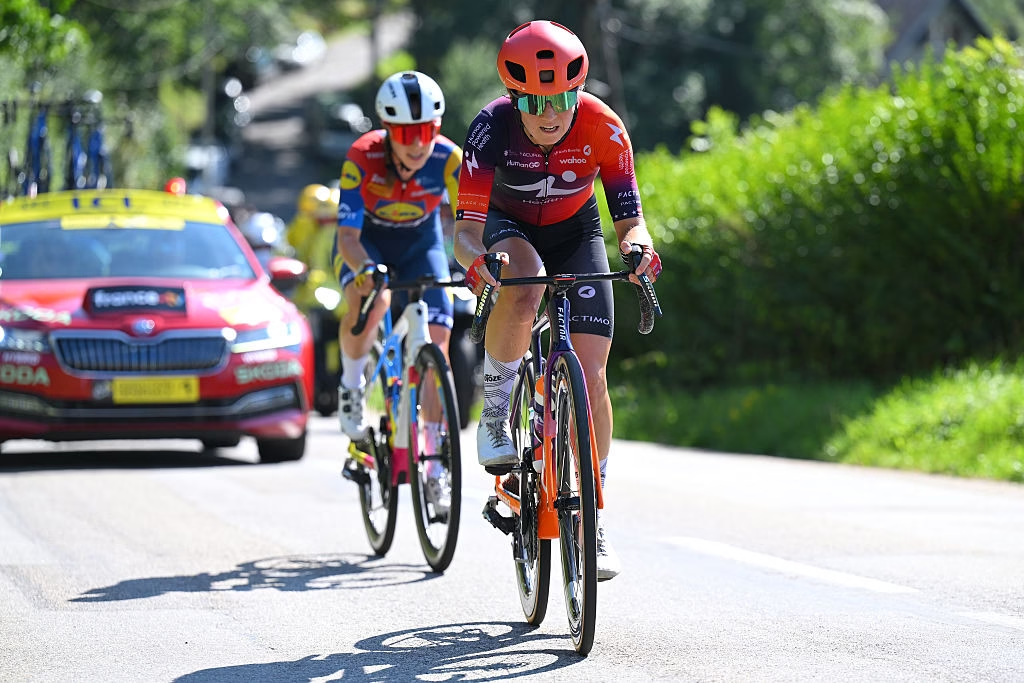 Photo Credit: Getty
Ruth Edwards is absent because of pregnancy
Ruth Edwards has the clearest explanation for missing the race.
Edwards announced in November 2025 that she was expecting her first child and is therefore away from competition during the 2026 Tour de France Femmes.
Her absence comes after an excellent 2025 Tour, where she finished third on Stage 7 into Chambéry after spending the day in the breakaway. That ride marked Human Powered Health’s first Tour de France Femmes stage podium.
Her pregnancy announcement followed a few months later, with the news covered in our report on Ruth Edwards announcing her pregnancy.
Unlike Dygert or Jastrab, there is no selection question here. Edwards is simply away from racing during her pregnancy.
Three major absences, three different explanations
The missing American names should not be treated as one story.
Dygert is recovering from major shoulder surgery while also working through longer-term health issues.
Jastrab has not been selected as UAE Team L’IMAD prioritise a climbing-heavy roster around their GC ambitions.
Edwards is away from competition during her pregnancy.
That still leaves the United States with more depth than the four-rider start list might initially suggest, but the actual Tour team is shaped as much by availability and team strategy as by the underlying strength of American women’s cycling.
There is no clear American yellow jersey challenge
Faulkner strengthens the US presence considerably, but she does not turn it into a serious GC campaign.
Her abilities are better used aggressively than by asking her to protect every second across nine stages. Kerbaol is EF’s clearer overall option, leaving Faulkner free to attack rather than becoming tied to an anonymous position on GC.
Williams, Franz and Quinn are even more obviously stage-focused.
That freedom can become an advantage. Riders who lose enough time to stop threatening yellow are much easier to allow into breakaways, particularly once the race reaches its hilly middle section.
The American Tour should therefore be judged more by stage results, attacks and time spent influencing the race than the final general classification.
-
 Photo Credit: quentinphotographiebe
 -
 Photo Credit: Getty
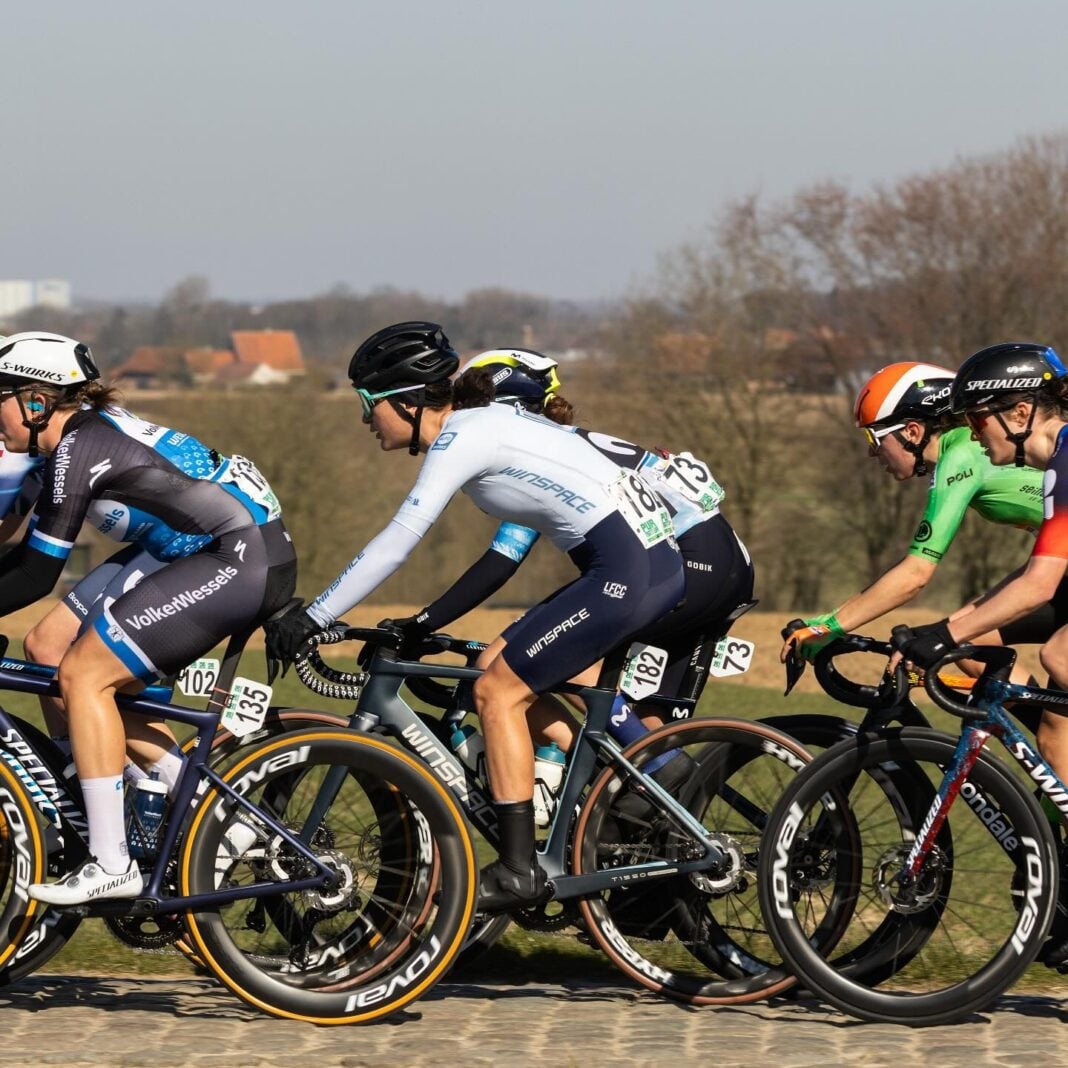
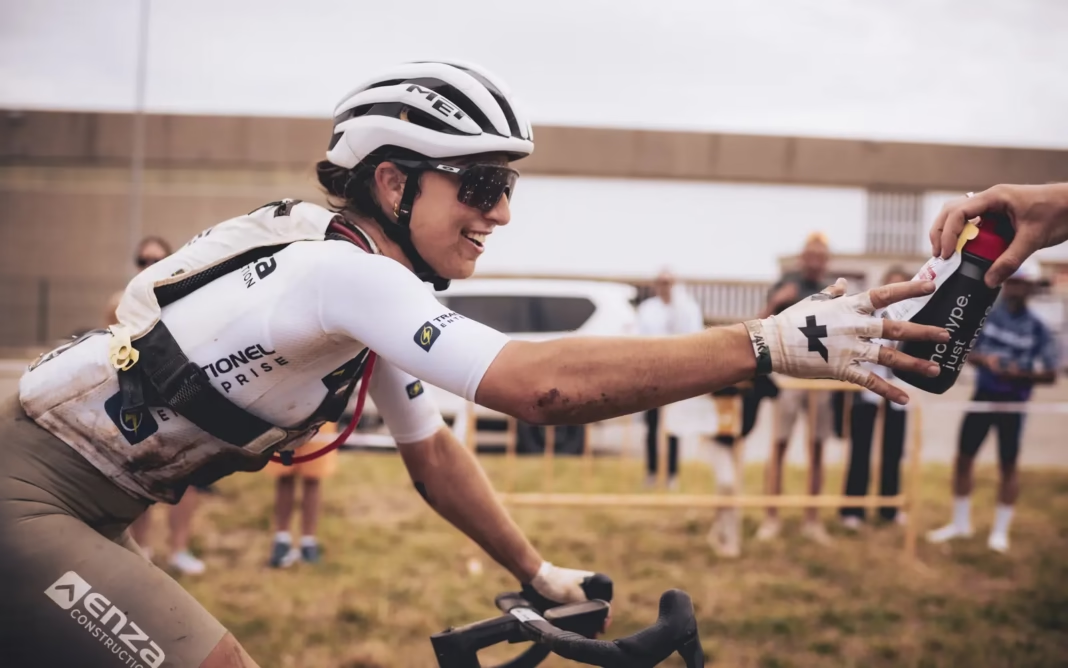
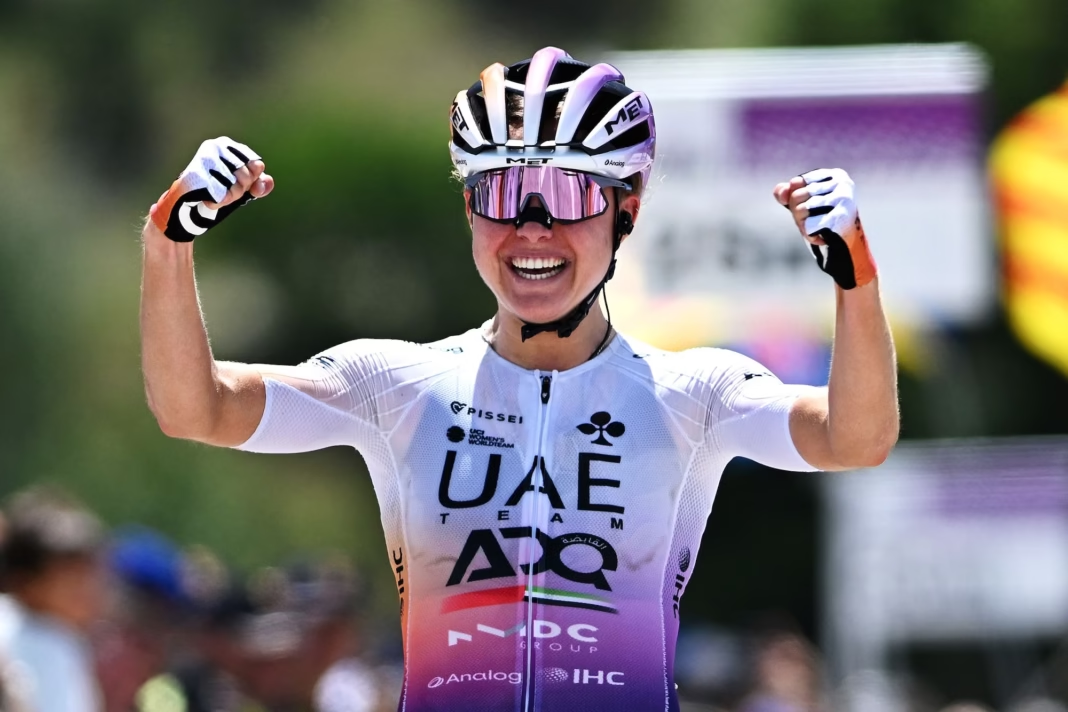
American riders at the Tour de France Femmes 2026
The four confirmed US starters are:
- Kristen Faulkner, EF Education-Oatly
- Lily Williams, Human Powered Health
- Heidi Franz, St Michel-Preference Home-Auber 93
- Natalie Quinn, Mayenne Monbana My Pie
It is still a relatively small contingent, but Faulkner gives it a genuine headline stage threat.
Williams adds another rider capable of converting a hard selective stage into a result, while Franz and Quinn have the freedom to build their races around breakaways rather than protecting GC ambitions.
There is no Dygert for the Dijon time trial, no Jastrab for the quicker selective finishes and no Edwards returning to the breakaway terrain where she reached the Tour podium last year.
But there is an Olympic road champion capable of winning in several different ways.
Faulkner gives the United States the best chance of a stage victory
Of the four starters, Faulkner is the clearest American candidate to win a stage.
The time trial is an obvious opportunity, but limiting her Tour to Dijon would miss much of what makes her dangerous. Her power and tactical aggression make the breakaway stages equally attractive, particularly once the GC teams start choosing which moves are worth controlling.
Williams provides the strongest alternative if a difficult stage finishes from a reduced group.
Franz and Quinn need more freedom, but both can benefit from being riders the yellow jersey teams have little reason to chase.
That gives the US a clear hierarchy without reducing the race to one rider.
Faulkner starts as the biggest threat, but the route offers all four Americans some way to become relevant.

