
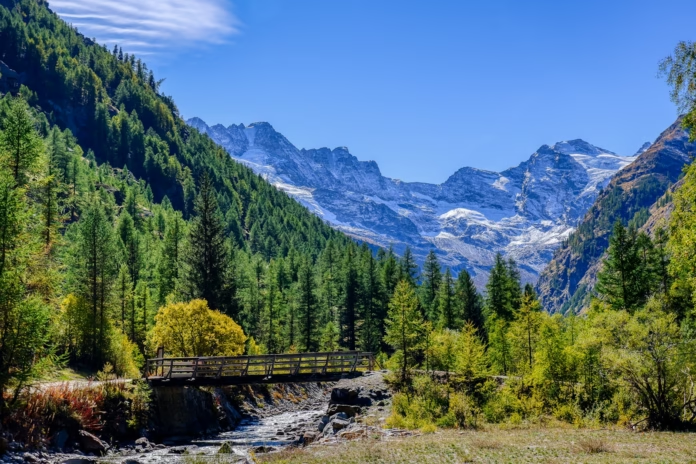
Aosta Valley does not feel like a place that slowly introduces itself. It hits you at once. The mountains rise too close, the valley narrows too quickly, and the road seems to carry the weight of everything around it: glaciers, stone villages, Roman walls, vineyards, castles, ski towns, tunnels, waterfalls and the long shadow of the high Alps.
For a cyclist, that is the appeal. Aosta Valley is not a broad cycling playground where every ride rolls easily into the next. It is compact, vertical and concentrated. The valley floor gives you a thread of gentler riding between orchards, vineyards and fortified towns, but almost every side road eventually points upwards. Some climb towards famous passes, others disappear into side valleys where the air cools, the traffic thins and the scale of the mountains begins to dominate the ride.
The region sits in the far north-west of Italy, tucked between France and Switzerland, with Mont Blanc, Monte Rosa, Gran Paradiso and the Matterhorn all shaping its horizon. That geography gives Aosta Valley its distinctive cycling character. It is Italian, but with a frontier feel. Road signs shift between Italian and French place names. The food feels Alpine as much as Mediterranean. The villages are built from stone and wood, not pastel stucco. The light can be soft and golden in the vineyards, then hard and white above the tree line.
It is a place for riders who like their climbing serious, their descents technical and their scenery close enough to feel almost physical. It also sits naturally alongside other major European riding destinations in our ProCyclingUK travel guide, where Aosta Valley belongs among the most rewarding bases for riders who want altitude, culture and proper mountain roads in the same trip.
Why Aosta Valley works so well for cycling
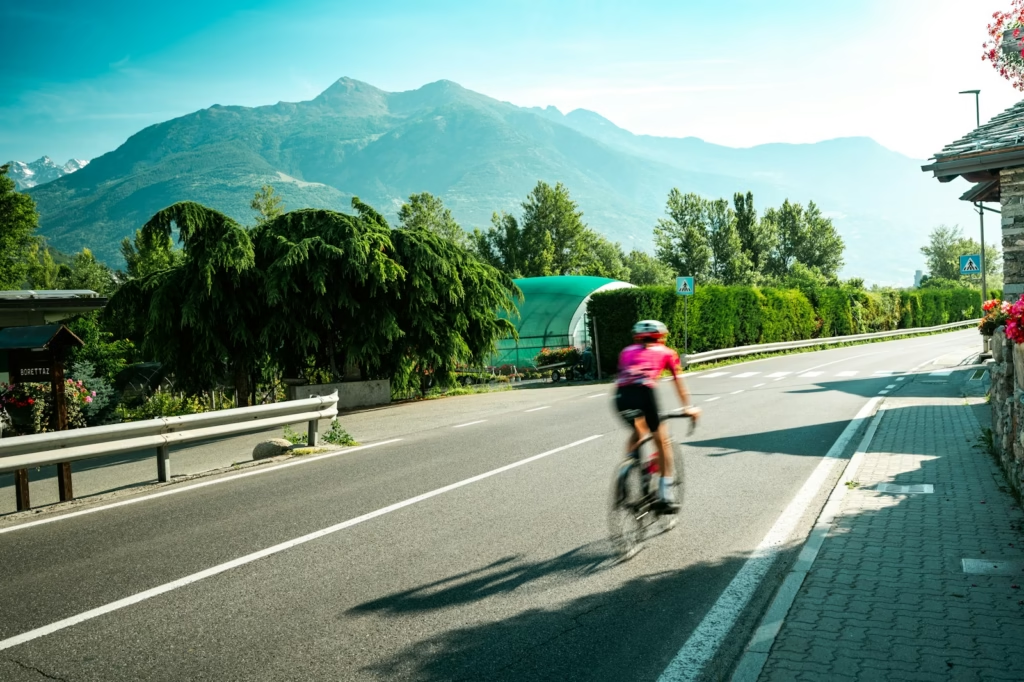
The first thing to understand about cycling in Aosta Valley is its layout. The main valley runs roughly east to west, with Aosta as the natural centre. From that spine, roads climb north towards Switzerland, west towards France, south into Gran Paradiso country, and into a series of steep side valleys that feel far more remote than their distance from town suggests.
That makes route planning unusually flexible. You can base yourself in Aosta and ride a different climb each day. You can stay around Courmayeur if you want Mont Blanc scenery and access to the western passes. You can use smaller towns such as Morgex, Saint-Vincent or Verrès if you prefer a quieter base and slightly different access to the climbs.
The valley floor is useful too. It gives riders a way to link climbs without every ride becoming a complete mountain expedition. There are cycle paths and quieter roads in places, with vineyards, castles and orchards breaking up the lower-altitude riding. That matters because the climbs are often long enough to need proper recovery. Not every day has to be a pass-bagging exercise.
Still, Aosta Valley is at its best when the road tilts up. The climbs here are not just training efforts. They are experiences. You ride through chestnut woods, past old hamlets, beside mountain streams and up into open alpine bowls where the air becomes thinner and the valley drops away beneath you. The reward is not only the summit. It is the changing atmosphere of the climb itself.
The Great St Bernard: the long road to Switzerland
The Colle del Gran San Bernardo is one of Aosta Valley’s great cycling tests. Starting from Aosta, it is a long and sustained climb towards the Swiss border, reaching high into the mountains on a road with genuine pass-road character.
This is not a climb that announces itself with one savage ramp and then relents. It builds gradually, taking you away from the bustle of Aosta and into a more open, increasingly alpine world. Early on, there is still the sense of valley life around you: houses, side roads, traffic, cafés, small patches of agriculture. Higher up, the road begins to feel more exposed. The mountains close in. The bends lengthen. The ride becomes less about fighting individual gradients and more about settling into the scale of the ascent.
The Great St Bernard is also a climb with history in the road. It has the feel of an old crossing, not simply a road engineered for convenience. The pass has connected Italy and Switzerland for centuries, and on the bike that sense of passage matters. You are not just riding to a viewpoint. You are climbing towards a border, towards a place where geography has always shaped movement.
For cyclists, the climb is best approached with patience. It is long enough to punish excitement. The lower sections can tempt you into riding too hard, especially if the weather is cool and the legs feel fresh. But the upper road asks for restraint. The gradient, altitude and distance combine steadily. By the time the scenery opens fully, you want enough left to enjoy it.
On a clear day, it is magnificent. The air feels sharper, the colours harder: grey rock, green pasture, white snow lingering high above the road. The descent demands attention, but it also gives that particular alpine pleasure of earned speed, the bike flowing through bends while the valley returns in layers.
Petit Saint Bernard and Colle San Carlo: two ways to climb west
To the west of Aosta, the road towards the Colle del Piccolo San Bernardo offers another classic high-mountain direction. The pass links Italy with France, climbing towards La Thuile and then on towards the border. It is a more open, expansive kind of climb than some of the tighter side-valley roads, and its upper slopes have that broad, wind-brushed feel of a true alpine crossing.
The main road can be busier in places, particularly lower down and around the approach to the Mont Blanc corridor. That is where Colle San Carlo becomes such an attractive option. From Morgex, it climbs steeply through quieter woodland before dropping towards La Thuile, acting as a tougher, more peaceful alternative to part of the main route.
Colle San Carlo is one of those climbs that feels almost deliberately uncompromising. It does not have the international fame of the great Tour de France passes, but it has a purity that many cyclists will prefer. The road narrows, the traffic fades, and the gradient becomes the main conversation. There are stretches where the trees close in and the climb feels private, as if the valley has let you into a side door rather than sending you along the obvious route.
It is harder than it looks on a map. The gradients bite, and because the road is quieter it can feel more isolated. That is part of the charm. You hear your breathing, the click of gears, the occasional rush of water below the road. Then, as you approach La Thuile and the larger road to the Petit Saint Bernard, the scenery opens and the effort begins to feel worthwhile.
Riding San Carlo and Petit Saint Bernard together makes one of the great Aosta Valley days. It combines steep, intimate woodland climbing with open pass-road grandeur. It also captures the region’s character perfectly: there is often a quieter, harder, more rewarding way through the mountains if you are willing to look for it.
Col de Joux and the climbs above Saint-Vincent
The Col de Joux is a different sort of Aosta Valley climb. It does not have the border-crossing drama of the Great St Bernard or the famous high-pass identity of the Petit Saint Bernard, but it offers something equally valuable: a beautiful, rideable, varied climb above Saint-Vincent, with the kind of road that makes you want to keep turning the pedals even when the gradient begins to hurt.
This is a climb for rhythm. It rises through villages and woodland, with enough changes in gradient and scenery to keep the effort mentally fresh. It is also a useful climb if you are based further east in the valley, or if you want a hard ride without committing to one of the biggest pass days.
The atmosphere here is slightly softer than on the highest roads. You feel more connected to the valley’s lived-in landscape. There are houses, meadows, forest edges, glimpses back down towards the main valley and moments where the road feels almost pastoral rather than severe. That can be deceptive. The climb still takes work, and on a hot day the lower slopes can feel heavy.
Its value is that it shows Aosta Valley is not only about the highest and most famous roads. Some of the best riding comes from these second-tier climbs, the roads that local riders know well and visitors sometimes overlook. They offer enough difficulty to make the ride memorable, but not so much logistical weight that the whole day becomes about one summit.
Breuil-Cervinia: climbing towards the Matterhorn
The road to Breuil-Cervinia is one of the most visually powerful rides in the region. The climb heads north from the main valley towards Valtournenche and then on to the ski resort beneath the Matterhorn, or Cervino as it is known on the Italian side.
This is a long valley climb rather than a compact pass ascent. It carries you gradually from lower Aosta Valley life into a much higher, more dramatic world. The road is not always quiet, and the ski-resort traffic can be noticeable depending on time of day and season, but the scenery becomes increasingly spectacular as the ride progresses.
The character changes as you climb. Lower down, the valley feels enclosed and inhabited. Further up, the mountains sharpen, the air cools, and the road begins to feel like it is heading towards a wall of rock and sky. The Matterhorn does not reveal itself all at once. It appears in fragments, then more insistently, until it becomes the dominant presence above the ride.
This is not necessarily the most peaceful climb in Aosta Valley, but it is one of the most memorable. It has that Grand Tour quality of scale: long valley, ski town, high finish, big mountain backdrop. It is the kind of climb where the final kilometres are shaped as much by atmosphere as gradient.
For a cyclist, Breuil-Cervinia works best when treated as a full-day objective. Start early, ride steadily, and allow time at the top. The descent is long enough to require concentration, especially if weather changes or traffic increases. But the reward is considerable: one of the great alpine silhouettes, reached by bike, from the warmth of the valley floor.
Pila and the Giro d’Italia feel above Aosta
Pila is one of the most accessible major climbs from Aosta itself, and that gives it a particular appeal. You do not need a long transfer, complicated route planning or a full pass-crossing day. You can start in the city and be climbing almost immediately, rising above the valley towards a ski area that gives big views back across the mountains.
The climb has also carried recent race relevance, with the Giro d’Italia 2026 stage 14 preview from Aosta to Pila showing exactly why this part of the valley suits hard racing. That stage used the Aosta Valley’s density brilliantly: Saint-Barthélemy, Lin Noir, Verrogne and the final climb to Pila turned a relatively short day into a sustained mountain test.
For riders visiting the region, Pila works well as a first major climb. It is hard enough to demand respect, close enough to Aosta to fit into a flexible day, and scenic enough to give you the full mountain experience without needing to cross into another valley. The gradient lets you settle into a proper climbing rhythm, while the views become broader as the city drops away below.
There is also a psychological pleasure in riding a climb that has recently been framed by professional racing. Watching how the peloton handled the same roads in the Giro d’Italia 2026 stage 14 live viewing guide adds another layer to the experience. You feel the difference between seeing a profile on a screen and discovering, bend by bend, how a climb actually behaves under your own effort.
The smaller roads are where Aosta Valley becomes personal
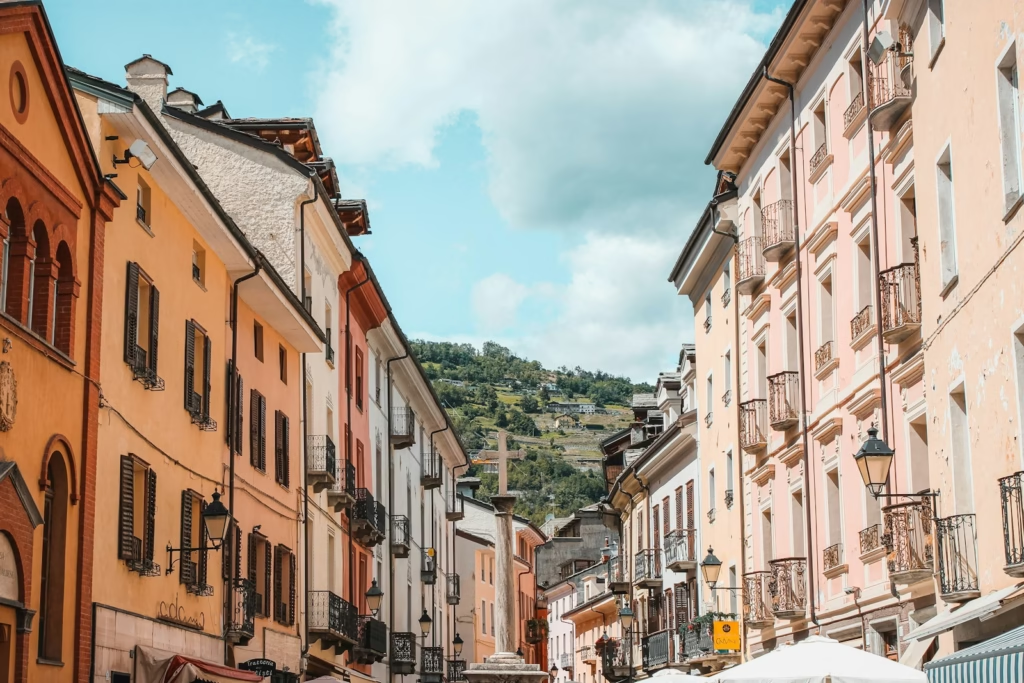
The famous climbs give Aosta Valley its structure, but the smaller roads give it character. There are countless side roads that rise towards villages, terraces, chapels, ski stations and dead-end valleys. Some are steep and rough. Others are smooth, quiet and almost impossibly scenic.
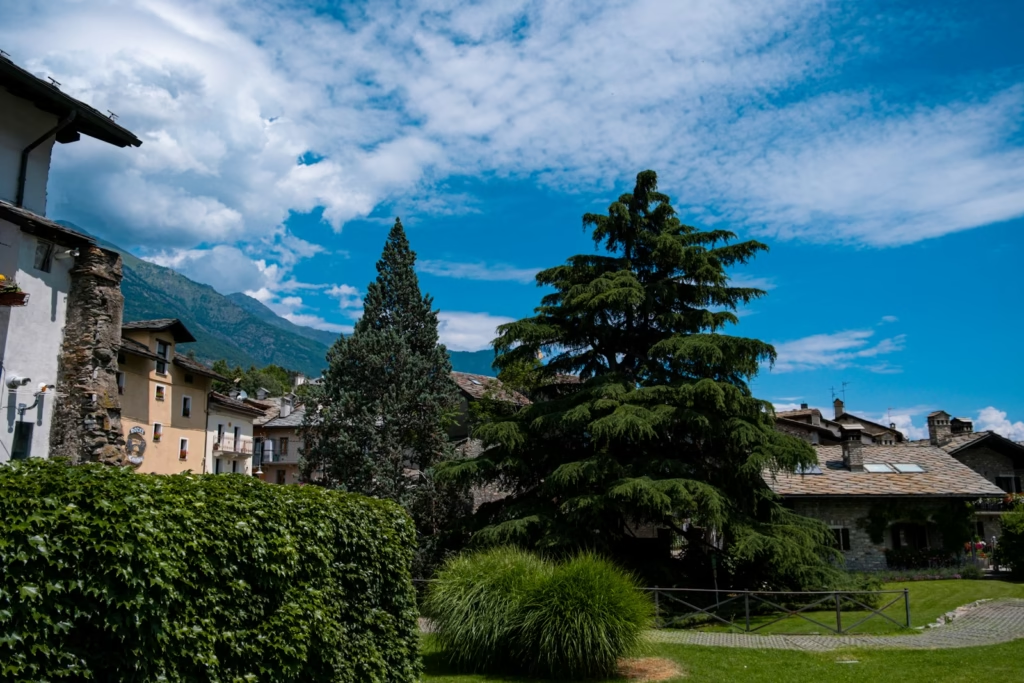
These are the roads where the region becomes more intimate. You pass stone roofs darkened by weather, balconies stacked with firewood, vegetable gardens behind low walls, and small churches with mountain backdrops that would look exaggerated if painted. The smell changes with altitude: warm dust and cut grass lower down, resin and damp woodland higher up, then cold stone and snowmelt near the upper roads.
Aosta Valley is not always gentle. Some roads are narrow, some surfaces can be imperfect, and the gradients can turn abruptly. But that is also why riding here feels authentic. It is not a manufactured cycling destination where everything has been polished smooth for visitors. It is a working alpine region, and the bike gives you a way to move through it at the right speed.
There is also a strong sense of layering. Roman Aosta, medieval castles, Alpine farming villages, ski resorts and high passes all sit close together. On one ride you can move from a valley town with cafés and traffic to a silent upper road where cowbells carry across a slope and the only sound is the wind moving through grass.
The atmosphere: Italian warmth, Alpine severity
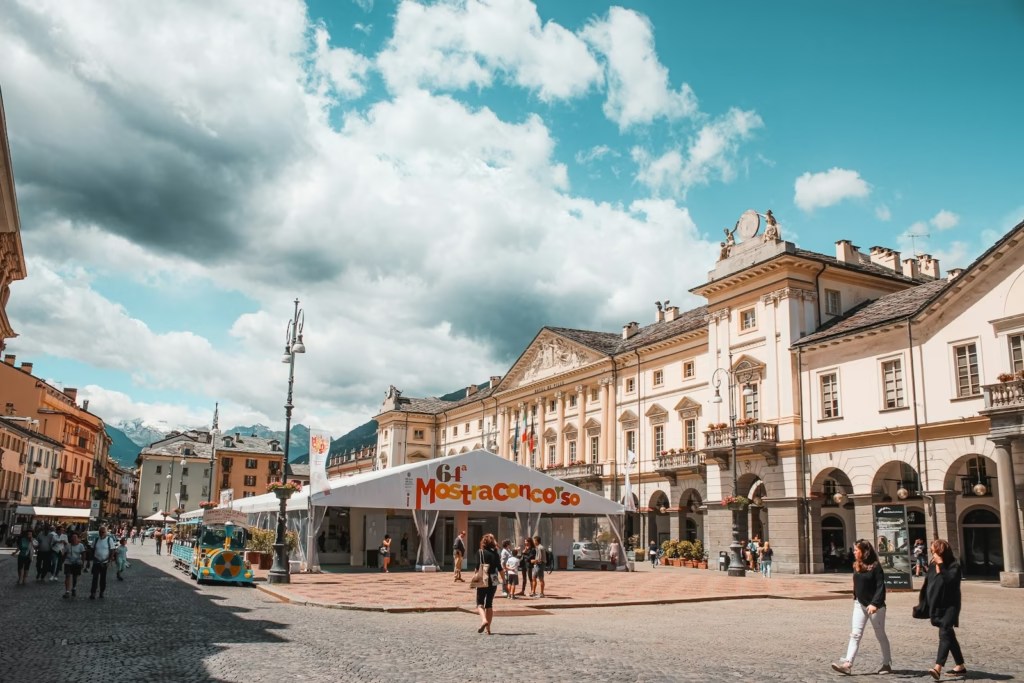
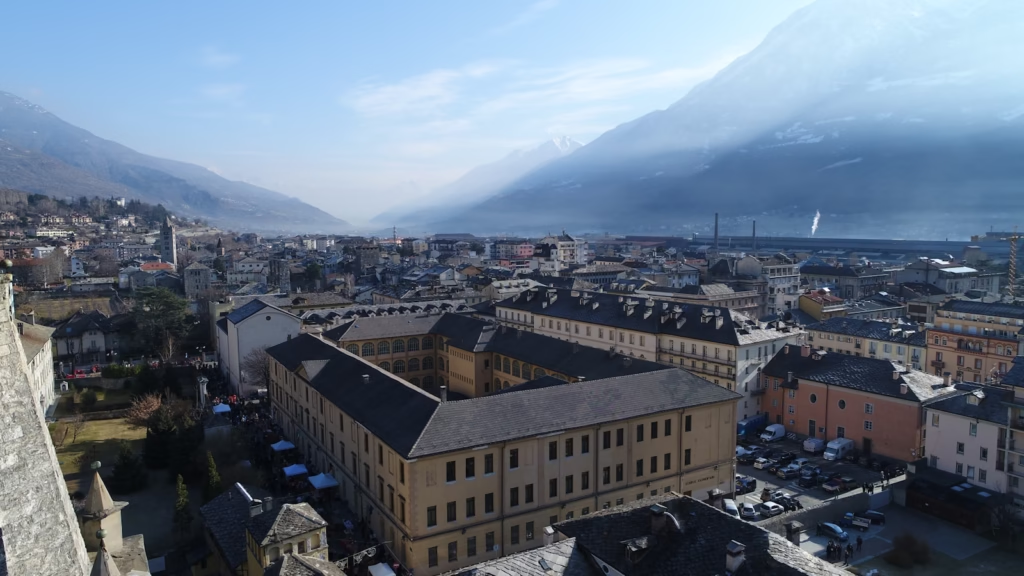
What makes Aosta Valley special is the contrast between warmth and severity. At valley level, it can feel unmistakably Italian: espresso at the bar, sun on stone, families in town squares, the smell of bread and cheese, the relaxed rhythm of late afternoon. Then you look up and the mountains remind you that this is not gentle country.
That contrast follows you on the bike. You might begin a ride in short sleeves beside vineyards and finish it pulling on a gilet under a pass sign, with snow still visible above the road. You might descend from a high climb into a village where the first thing you smell is woodsmoke or melted cheese. The riding is hard, but the recovery feels generous.
Food is part of the experience. Aosta Valley is known for Alpine dishes built around cheese, polenta, cured meat and mountain ingredients. This is not light coastal Italian cooking. It is food designed for altitude and winter, which also makes it deeply satisfying after a long ride. Fontina, polenta concia, carbonada, lardo from Arnad, dark bread and local wines all belong to the rhythm of the place.
The best cycling destinations have a feeling beyond the route file. Aosta Valley has that. The mountains create the drama, but the villages, food, language and road texture create the memory. It is very different from the softer lake-and-climb rhythm of northern Italy or the deep forest character described in our Black Forest cycling guide from Freiburg. Aosta Valley feels sharper, higher and more compressed, with less room between comfort and severity.
When to ride in Aosta Valley
The best period for road cycling in Aosta Valley is usually late spring through early autumn, with the highest passes most reliable in summer once snow clearance has opened the roads. June, July and September are often the most attractive months for serious riding, though conditions vary with altitude and weather.
June can be beautiful, with long days, green valleys and snow still visible high above the road. Some higher passes may still depend on seasonal opening and conditions, so flexibility matters. July and August bring the best chance of high-pass access but also more heat in the valley and more holiday traffic around major tourist routes. September is often superb: cooler air, quieter roads, stable light and a calmer atmosphere after the main summer rush.
Weather can change quickly. A warm valley morning does not guarantee a warm summit. Riders should carry layers even when the forecast looks settled, particularly for descents from high passes. A gilet, arm warmers and gloves can turn a miserable descent into a manageable one.
The climbs are long enough that pacing and fuelling matter too. Aosta Valley rewards riders who respect the terrain. Start too hard, underfuel, or underestimate the altitude, and the valley will let you know.
-
 Photo Credit: Zac Williams/AusCycling


Where to base yourself
Aosta is the most practical base for many riders. It offers good access to the Great St Bernard, the central valley, multiple side climbs and transport links. It also gives enough restaurants, shops and services to make a cycling trip straightforward.
Courmayeur is more dramatic and more focused on Mont Blanc, with excellent access to the western end of the valley, La Thuile, Val Ferret and the Petit Saint Bernard direction. It has a strong mountain-town atmosphere, but it is also more tourist-driven and can be busier in peak season.
Morgex and La Salle offer a quieter middle ground in the western valley, especially for riders interested in Colle San Carlo and the roads towards La Thuile. Saint-Vincent works well for Col de Joux and the eastern side of the valley, while smaller towns can suit riders who prefer peace over convenience.
The best base depends on the type of riding. For variety, Aosta is difficult to beat. For drama, Courmayeur is hard to ignore. For quieter riding and a slower rhythm, the smaller valley towns may be more rewarding.
Why Aosta Valley deserves a place on your riding list
Aosta Valley deserves a place on a cyclist’s riding list because it compresses so much into such a small region. It has famous passes, hidden climbs, valley-floor recovery roads, Roman history, Alpine villages, serious altitude and some of the most imposing mountain scenery in Europe.
It is not always easy. The roads can be steep, the weather can shift, and some approaches require careful planning. But that is part of its appeal. Aosta Valley feels like a place earned by the rider rather than simply consumed by the visitor.
The best rides here leave a deep impression. The Great St Bernard gives you the sensation of crossing into another country by effort alone. Colle San Carlo gives you steepness and silence. Petit Saint Bernard gives you open alpine space. Col de Joux gives rhythm and charm. Breuil-Cervinia gives you the Matterhorn at the end of a long valley road. Pila gives you a climb that starts almost from the city and quickly becomes something much bigger.
Together, they make Aosta Valley one of the most distinctive cycling regions in the Alps. It is compact but vast in feeling, tough but welcoming, dramatic but full of small human details. You go for the climbs, but you remember the way the mountains seem to lean over the road, the cold air on a descent, the smell of woodsmoke in a village, the first coffee before a long pass, and the feeling that every road out of the valley floor is asking you to find out how far you want to climb.
For more riding inspiration across Europe and beyond, the wider ProCyclingUK travel section brings together guides to mountain bases, classic cycling regions and destination rides, from the Alps and Pyrenees to North America’s forest roads and high passes.

