
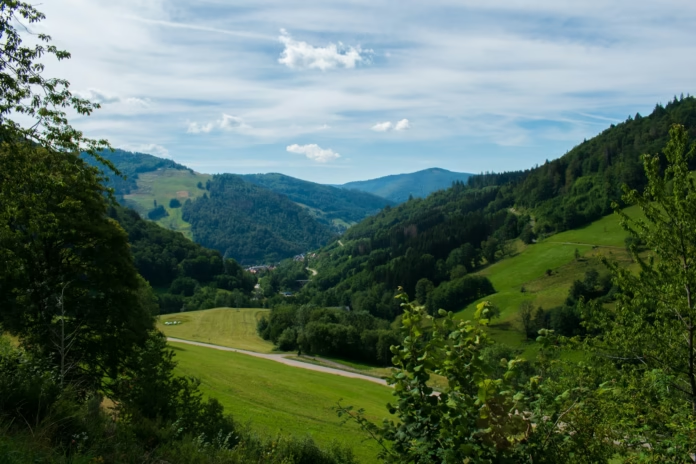
Freiburg is the kind of cycling base that changes the mood of a trip before the first climb has even begun. The city sits at the western edge of the Black Forest, close enough to the Rhine plain to offer warm, rolling recovery rides, but pressed tightly enough against the hills that a serious ascent can begin almost as soon as you leave the old town behind.
It is a place of contrasts. In the morning, the streets carry the smell of fresh bread, coffee and damp stone around the Münster. Tram bells ring through the centre, students cross the cobbles with bags over their shoulders, and the little Bächle channels cut through the lanes with a quiet trickle of water. Then, within a few kilometres, the noise thins out. The road lifts. The trees close in. Freiburg becomes a memory behind you, replaced by resin, wet leaves, cool air and the steady rhythm of climbing.
For road cyclists, that is the appeal of the Black Forest from a Freiburg base. It is not a single bucket-list climb destination in the way Alpe d’Huez, Sa Calobra or the Stelvio can be. It is broader than that. It is a region of repeated ascents, shaded roads, open ridgelines, steep forest lanes and long days that can feel much bigger than the distance on the computer suggests.
It also sits well alongside the best European cycling bases. Riders who enjoy the atmosphere of Girona and the Costa Brava, the mountain rhythm of Briançon and Serre-Chevalier, or the layered riding culture of the Basque Country around San Sebastián and Bilbao will recognise the same essential appeal here, even if the Black Forest expresses it in a quieter, greener and more enclosed way.
Why Freiburg works so well as a Black Forest cycling base
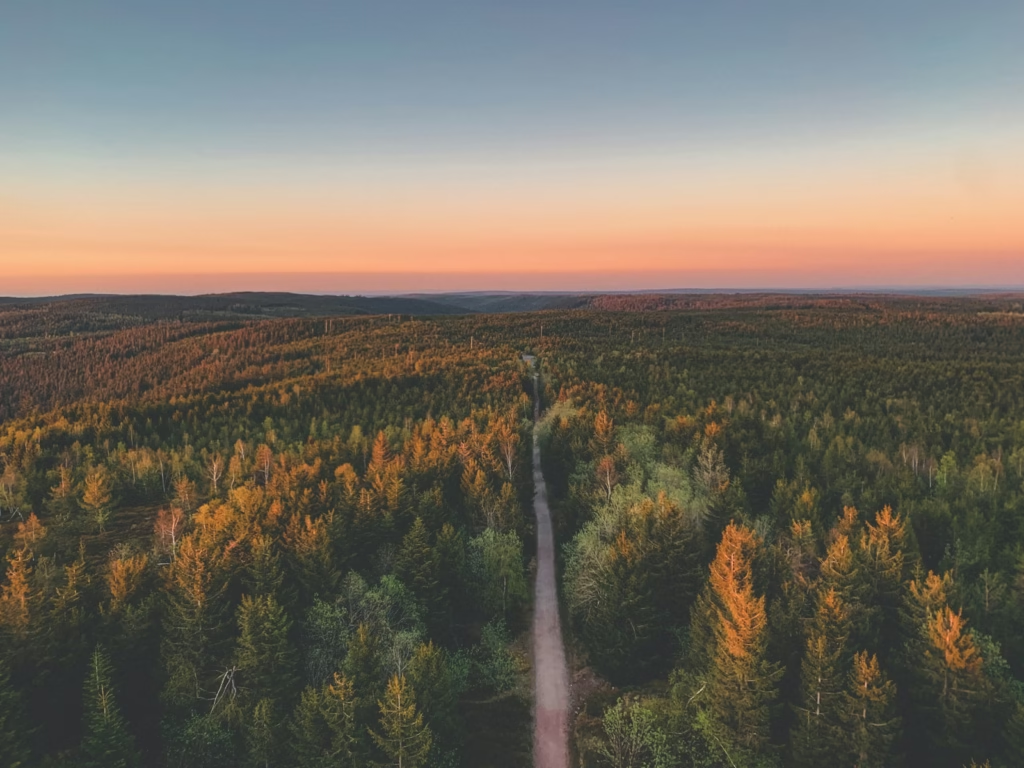
Freiburg’s greatest strength is that it lets you choose the kind of ride you want each morning. Head west and the landscape opens towards the Rhine plain, with easier roads, vineyards and a warmer feel. Head east or south-east and the Black Forest rises almost immediately, bringing long climbs, thick woodland and high roads that can feel far more remote than their distance from the city suggests.
That makes it a useful base for a mixed cycling trip. You can build a week around two or three serious mountain days, then recover on flatter roads through the Breisgau wine country. You can go short and steep when the weather is uncertain, or turn a clear day into a full mountain loop linking Schauinsland, Belchen or the deeper southern Black Forest.
The city itself also helps. Freiburg is compact, lively and easy to enjoy off the bike. It has enough places to eat well without feeling like a resort, enough bike culture to make riding feel normal, and enough practical infrastructure to make a cycling trip straightforward. After a hard day in the forest, rolling back into the old town for a beer, a plate of something warm and the hum of evening life gives the riding a natural rhythm.
This is not a place where the bike trip feels sealed away from real life. Freiburg is a proper city, but the mountains are always there, visible at the edge of the streets. That balance is what makes it such a strong addition to a broader cycling travel list.
Schauinsland: the classic climb from Freiburg
If there is one climb that defines cycling from Freiburg, it is Schauinsland. It is the city’s local mountain, the obvious first test, and the ascent that gives the clearest sense of how quickly Freiburg changes once the road begins to rise.
The climb is long enough to feel like a proper mountain effort. From the Freiburg side, the road climbs steadily through the forest, gaining height without the theatre of Alpine hairpins but with a persistent pressure that slowly settles into the legs. It is not a climb to attack blindly from the bottom. It is better ridden with patience, letting the gradient and the shade establish the rhythm.
The character is different from the exposed giants of the Alps. Schauinsland is more enclosed, more intimate. You climb through woodland, past mossy banks and dark conifers, with the temperature often dropping as the road gains height. On a warm day in Freiburg, the first ramps can feel heavy and humid, but higher up the forest cools the skin. The soundscape changes too. Traffic fades, birdsong becomes sharper, and the small noises of the bike become more noticeable: chain, breath, tyre noise, the occasional click of a shift under pressure.
There is a physical satisfaction in the climb, but also a mental one. Because the road is often wrapped in trees, you do not always see the full shape of the mountain. It asks you to concentrate on the present section rather than obsess over the summit. Bend by bend, the city slips further away.
At the top, the reward is not only the sense of height. The view opens towards Freiburg and the Rhine valley, and on clear days there is a feeling of being suspended between the Black Forest and the wider European landscape beyond. It is the kind of climb that makes sense as a first major ride of the trip, because it introduces the region’s personality so clearly: shaded, sustained, atmospheric and quietly demanding.
Belchen and the bigger southern Black Forest loops
Schauinsland may be the immediate classic, but Belchen gives a Freiburg-based trip its bigger mountain feeling. The Belchen area sits deeper into the southern Black Forest, where the roads feel more expansive and the riding more committing. A day built around Belchen is not usually a casual spin. It is the sort of ride that needs breakfast, layers, patience and a sensible attitude to pacing.
The distance can become substantial, and the climbing builds through repetition rather than one single headline moment. That is part of what makes it special. The Black Forest is rarely about one climb and one descent. It is about linking pieces together: a valley road, a shaded climb, a ridge, a fast descent, then another rise that feels steeper than expected because the legs are already warm.
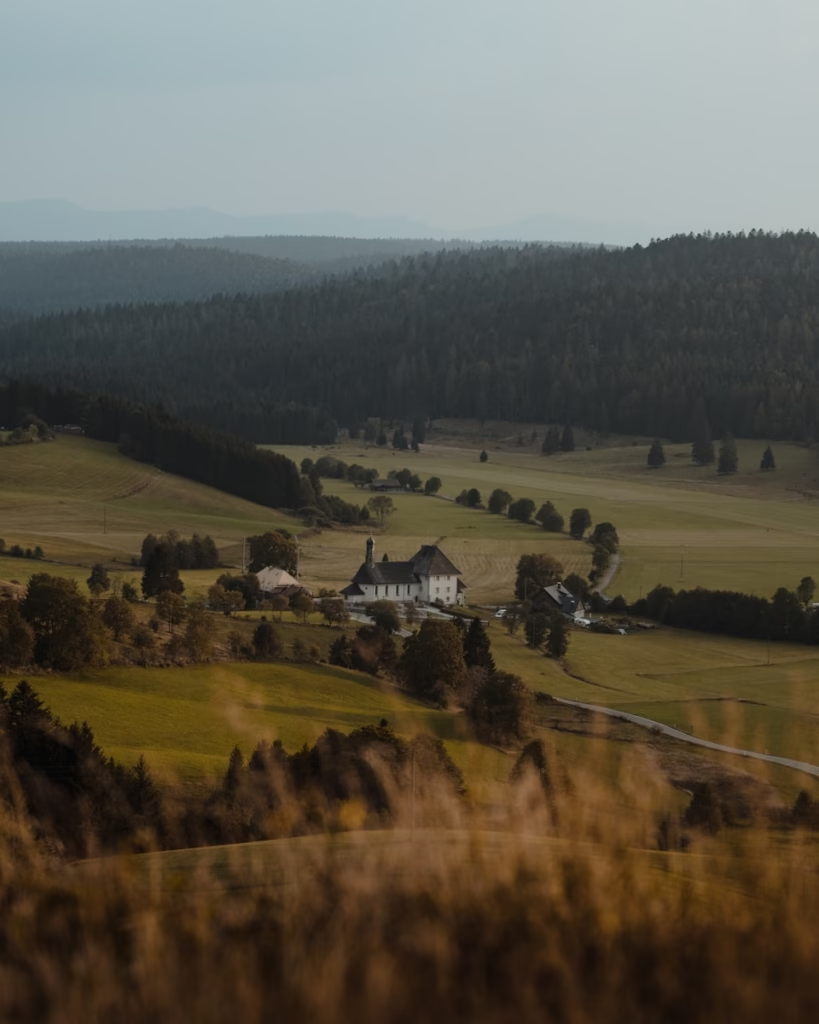
The forest here feels older and heavier. There are sections where the road is hemmed in by trees, the light coming through in silver strips across the tarmac. Then the landscape opens without warning, revealing pasture, farmhouses, wooden balconies and wide views across rolling ridges. The air smells different after rain, sharper and greener, with wet bark and earth rising from the roadside.
For riders used to the Dolomites or high Alps, Belchen and the surrounding roads may feel less dramatic at first glance. There are no endless walls of rock, no giant ski-station architecture, no constant sense of altitude pressing down from every angle. The difficulty is quieter. It is in the accumulation of climbs, the drag of the road, the way each descent seems to deposit you at the foot of another rise.
That makes the riding more meditative. You do not simply conquer one famous ascent and stop. You move through a landscape, slowly understanding its rhythm. It shares some of the immersive quality found in Cortina d’Ampezzo and the Dolomite passes, but with less spectacle and more forest silence.
Kandel and the steeper Black Forest character
North-east of Freiburg, Kandel adds another important texture to the region. It is one of the climbs that gives the Black Forest its sharper edge, with roads that can feel more rugged than the better-known routes closer to the city.
This is where the Black Forest stops feeling simply calm and shaded, and begins to bite. The Kandel area has the kind of gradients and enclosed valleys that make the legs feel boxed in. On humid days, the trees hold the heat. On cooler days, the descents can suddenly remind you that you are in proper mountain terrain, especially when the road drops through long sections of shade.
A Kandel loop can feel more exploratory than Schauinsland. It has less of the obvious city-to-summit neatness and more of the feeling that you are riding deeper into the region. You leave Freiburg’s ease behind and find yourself in villages where the roads narrow, the houses sit close to the hills, and the climbs rise with little ceremony.
This is where the Black Forest rewards riders who enjoy route planning. The best days are often not the most famous ones. They are the loops where a named climb connects with a quiet ridge road, a shaded descent, a small bakery stop and a final unexpected rise that was not the main event but ends up being the part you remember.
There is a similarity here with other European cycling regions that hide their best riding away from the obvious postcard roads. Limburg and the Amstel Gold region has that same quality in a different form: repeated climbs, constant rhythm changes and roads where the cumulative effort is more important than any one single ascent.
The roads: smooth, quiet and deceptively demanding
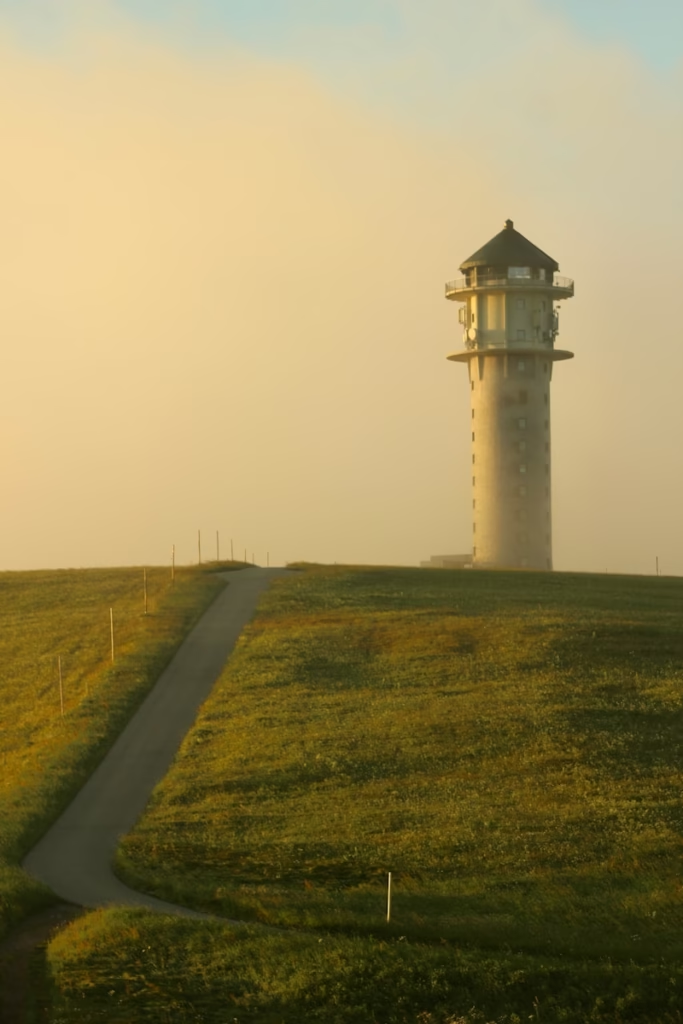
The Black Forest has a road character that suits disciplined riders. Much of the surface is good, especially on the more established routes, and many of the climbs have a steady, measured feel. That can make the riding seem easier than it is. The gradients may not always shout, but the metres build quickly.
The best roads are often the quieter connectors. They thread through woodland, skirt small villages and slip past meadows where cowbells occasionally cut through the stillness. In spring, the forest has a bright, damp freshness. In summer, the shade is a gift. In early autumn, the colours begin to soften and the air takes on that clean, slightly woody smell that makes a long descent feel almost cinematic.
There is also a deep sense of enclosure. In the Alps, you often climb with a view of what is above you. In the Black Forest, the trees can hide the shape of the road. You ride by feel. A bend arrives, then another. The gradient eases, then tightens again. Occasionally the forest opens and the whole landscape appears, but much of the riding is internal, focused, close.
That atmosphere is a major part of the appeal. The Black Forest is not simply a training ground. It is a place that changes the texture of the ride.
The atmosphere: forest silence, warm city evenings and a sense of old Europe
What makes Freiburg and the Black Forest special is not only the climbing. It is the contrast between the city and the mountains, and how naturally they sit together.
A typical day can begin with the warmth of Freiburg’s old town, the smell of roasted coffee and the sight of morning light on sandstone buildings. The city has a relaxed confidence to it. There is movement, but not the harsh rush of a larger city. Bikes are everywhere, used for life as much as sport, and that makes arriving with a road bike feel less conspicuous.
Then the ride pulls you upwards. The forest becomes cooler and quieter. The road darkens under the trees. You hear your breathing more clearly. On a long climb, the mind begins to wander. You think about the route, then about nothing at all. The body settles into effort. The forest takes over.
Later, returning to Freiburg feels almost theatrical. After hours of green shade, small villages and mountain air, the city comes back with colour and sound. The pavements are warm, glasses clink outside bars, and the smell of dinner drifts from side streets. There is a deep satisfaction in that return. The ride has had a clear shape: city, climb, forest, descent, city again.
That is why Freiburg works so well. It gives the cycling day a beginning and an ending. It is less grand than some mountain bases, but perhaps more liveable. You can ride hard and still enjoy the place afterwards, rather than feeling as though the entire trip exists only for the next climb.
How hard is cycling in the Black Forest?
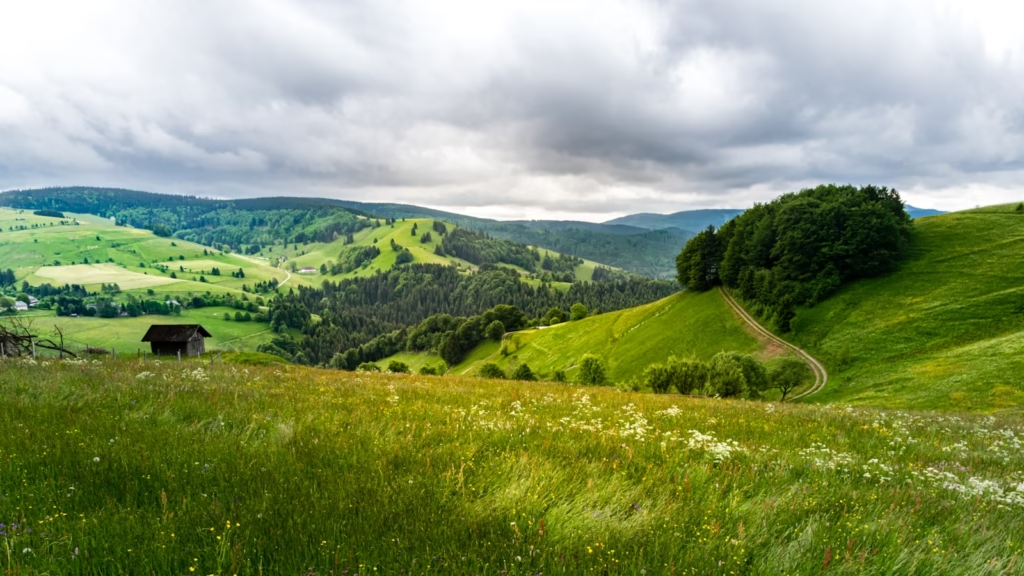
Cycling in the Black Forest can be as gentle or as severe as you make it, but riders should not underestimate it. The region’s height is lower than the Alps, but the routes can still carry serious elevation. A Freiburg trip can include relaxed vineyard rides, but it can also become extremely demanding if you start linking the bigger climbs.
The main challenge is cumulative. One climb may feel manageable. Two or three can turn the ride into something much harder, especially when the roads are warm, the descents are shaded and the route keeps rolling long after the major ascent has finished. The Black Forest does not always announce its difficulty. It lets the day build quietly, then asks for payment late on.
The weather also needs respect. Freiburg itself can be warm and sunny, but the higher roads can be cooler, damp or windy. A gilet or light jacket can be useful even on days that feel settled in town. Descents through shaded forest can be colder than expected, especially if you have climbed hard and arrived at the top soaked in sweat. The same basic lesson applies here as it does to much of Europe: dress for the descent as well as the climb. For kit planning, our guide to what to wear for cycling in changeable weather is useful even beyond the UK, because the same layering principles apply.
For gearing, most riders will be happier with compact or semi-compact options and a generous cassette. The Black Forest does not demand Alpine gearing on every climb, but there are enough steep sections to make low gears feel like good judgement rather than weakness.
When to ride from Freiburg
Late spring to early autumn is the most reliable window for road cycling from Freiburg. May and June bring long days, green landscapes and generally pleasant temperatures, though rain is always possible. July and August can be warm, especially in the city and lower valleys, but the forest shade helps. September is often one of the best months, with softer light, slightly quieter roads and enough warmth to make long rides enjoyable.
Winter riding is possible lower down, but the higher Black Forest roads can be cold, wet or affected by snow and ice. For a dedicated climbing trip, it is better to treat the main season as spring through autumn and check conditions carefully before heading high.
The best time of day is often morning. Leaving Freiburg early gives the climbs a calmer feel, keeps you ahead of the hottest part of the day, and leaves time for a relaxed return. There is something particularly satisfying about being high in the forest before the day has fully opened below.
How Freiburg compares with other European cycling bases
Freiburg is not as famous with visiting cyclists as Girona, Mallorca or the Dolomites, but that is part of its appeal. It feels less like a destination built around cycling tourism and more like a real city that happens to have excellent riding at its edge.
Compared with Lucca and northern Tuscany, Freiburg is cooler, greener and more enclosed. Compared with Girona, it feels less polished as an international training base, but more immediate in its access to forested climbing. Compared with Briançon, it lacks high Alpine drama, but compensates with a softer, more lived-in rhythm. Compared with the Basque Country, it is generally less chaotic on the road and less sharp in gradient, though Kandel and the deeper Black Forest routes can still ask serious questions.
The strongest comparison may be with riders who enjoy varied, repeatable trips rather than one-off landmark climbs. Freiburg is excellent for a week of riding because it offers contrast. You can climb hard one day, ride vineyards the next, head deeper into the southern Black Forest after that, then return to a shorter Schauinsland loop if the legs are tired.
It is not a destination that needs to overwhelm you on day one. It gets better as the week unfolds.
-
 Photo Credit: Zac Williams/AusCycling


Practical information
Location
Freiburg im Breisgau sits in south-west Germany, close to the French and Swiss borders. It is positioned on the edge of the Black Forest, with the Rhine plain to the west and the mountains rising to the east and south-east. That geography is what makes it such a strong cycling base: flat, rolling and mountainous terrain are all within reach from the city.
Riding
The essential Freiburg-based rides include Schauinsland, Belchen and routes towards Kandel, depending on time, fitness and weather. Schauinsland is the obvious first climb, Belchen gives a bigger southern Black Forest day, while Kandel provides a harder, more rugged climbing option north-east of the city.
Riders should expect a mixture of good roads, forest shade, small villages, longer climbs and occasional steep ramps. The terrain suits endurance riders, climbers and anyone who enjoys structured route planning. For broader destination planning, the Travel & Riding Abroad hub brings together more cycling-first guides across Europe and beyond.
When to go
The best months are generally May to September, with June and September particularly attractive for longer cycling days. Summer brings warmth and long daylight, but also the possibility of heat in the lower valleys. Higher roads can still feel cool, so packing a light layer is sensible.
Accommodation
Staying in Freiburg itself works well for riders who want evening atmosphere, food options and easy access to both climbs and flatter routes. The old town is the most atmospheric option, while locations on the eastern side of the city make it slightly quicker to reach the Black Forest roads. For a quieter trip, villages outside Freiburg can work well, but the city gives the best mix of riding access and off-bike life.
Bike and kit
A road bike with comfortable climbing gearing is the sensible choice. The Black Forest can be ridden on a wide range of setups, but a compact or semi-compact chainset with a generous rear cassette gives more freedom on steeper lanes and tired legs. Tyres in the 28mm range are a good fit for comfort and control, particularly on long descents or rougher connectors.
A lightweight rain shell, gilet, arm warmers and gloves are useful even in the warmer months. The city and lower valleys can feel summery while the higher forest roads are cool, damp or breezy. The most comfortable riders will be the ones who can adapt quickly without carrying too much.
Why the Black Forest deserves a place on a cycling travel list
The Black Forest does not need to imitate the Alps, the Pyrenees or the Dolomites. Its strength is different. It offers serious climbing without constant spectacle, beautiful roads without feeling over-curated, and a cycling atmosphere that blends effort, forest silence and warm city life.
From Freiburg, the region feels immediate. You do not have to transfer to the riding. You ride into it. One moment you are passing cafés and tramlines, the next you are climbing under trees with the sound of the city falling away behind you. The climbs are long enough to test you, the roads are varied enough to keep a week interesting, and the atmosphere has a depth that stays with you after the numbers have faded.
For cyclists who love the ritual of a proper ride, the slow build of a climb, the smell of woodland after rain and the pleasure of returning to a lively city at dusk, Freiburg is one of the most rewarding Black Forest bases. It is not loud about its appeal. It does not need to be. The road rises, the forest closes in, and the place explains itself.

