

Lanzarote is one of those cycling destinations that looks simple on paper and feels much more serious once you are out on the road. It is not a high-mountain island in the Alpine sense. It does not have endless cols, deep forests or long continental valleys. What it does have is something more distinctive: volcanic roads, constant exposure, rolling terrain, Atlantic wind, reliable warmth and a landscape that makes even a steady endurance ride feel memorable.
For UK riders in particular, Lanzarote has an obvious appeal. It is close enough for a manageable cycling holiday, warm enough to make winter training feel realistic, and varied enough to suit everyone from steady club riders to triathletes, sportive riders and experienced cyclists looking for proper training miles. It sits naturally within the wider appeal of cycling in the Canary Islands, but Lanzarote has its own identity: less about huge altitude, more about rhythm, resilience and exposure.

Quick answer: is Lanzarote good for cycling?
Yes. Lanzarote is one of the best year-round cycling destinations in Europe, especially for riders looking for warm-weather training, volcanic scenery, rolling roads and testing wind conditions without needing the long climbs of mainland Spain or the Alps.
| Best for | Why Lanzarote works |
|---|---|
| Winter training | Warm, dry conditions compared with northern Europe |
| Club riders | Manageable routes, good bike hire and varied terrain |
| Endurance rides | Rolling roads, exposed sections and steady climbing |
| Triathletes | Strong sports infrastructure and proven training culture |
| Scenic riding | Volcanic landscapes, coast roads, vineyards and viewpoints |
| Short cycling breaks | Compact island with plenty of route options close together |
Lanzarote is not easy, and that is the point
The mistake is to look at Lanzarote and assume it is gentle because it does not have Alpine elevation. The island works differently.
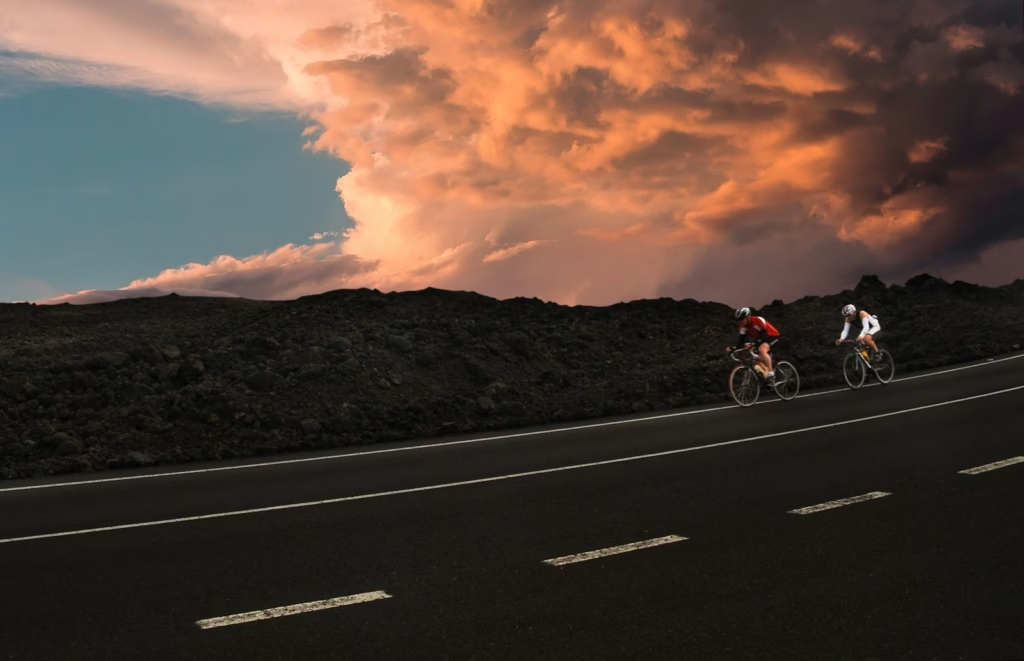
The roads rise and fall constantly. The gradients are often manageable, but they come with exposure. There are few places to hide from the wind, and that changes the feel of almost every ride. A route that looks modest on distance and elevation can become far more demanding when you are pushing into a headwind across open lava fields or trying to hold a rhythm on a long, shallow drag.
That is what makes Lanzarote so useful as a training destination. It rewards pacing, position and patience. You cannot simply attack every rise and expect to come home fresh. The island teaches controlled effort. It is a place where you learn to ride smoothly, fuel properly and respect the conditions.
For riders planning a week of consecutive rides, that durability matters more than peak fitness. The same principle applies to any trip with repeated riding days, which is why preparing properly for a multi-day cycling holiday is so useful before travelling.
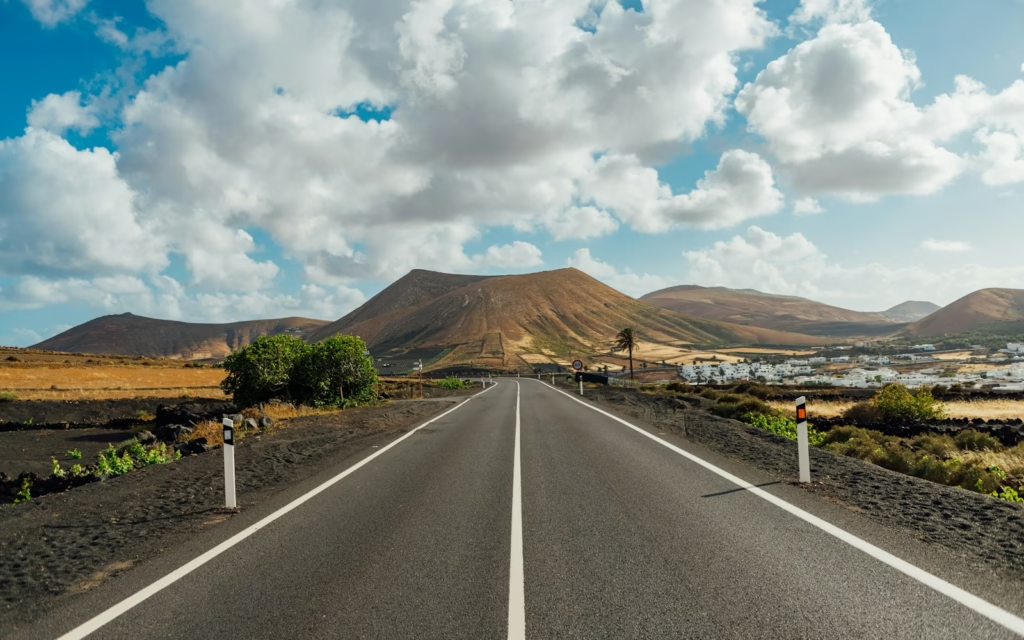
The landscape gives every ride a clear identity
The strongest argument for cycling in Lanzarote is the scenery. There are not many places where a normal road ride can take you past black lava fields, whitewashed villages, dry stone walls, volcanic vineyards, ocean viewpoints and desert-like interior roads in the same morning.
La Geria is the classic example. This wine-growing region is one of the island’s most recognisable landscapes, with vines planted in volcanic ash and protected by curved stone walls. For cyclists, it offers the perfect Lanzarote combination: rolling roads, open views, good surfaces and the feeling of riding through somewhere that could not be mistaken for anywhere else.
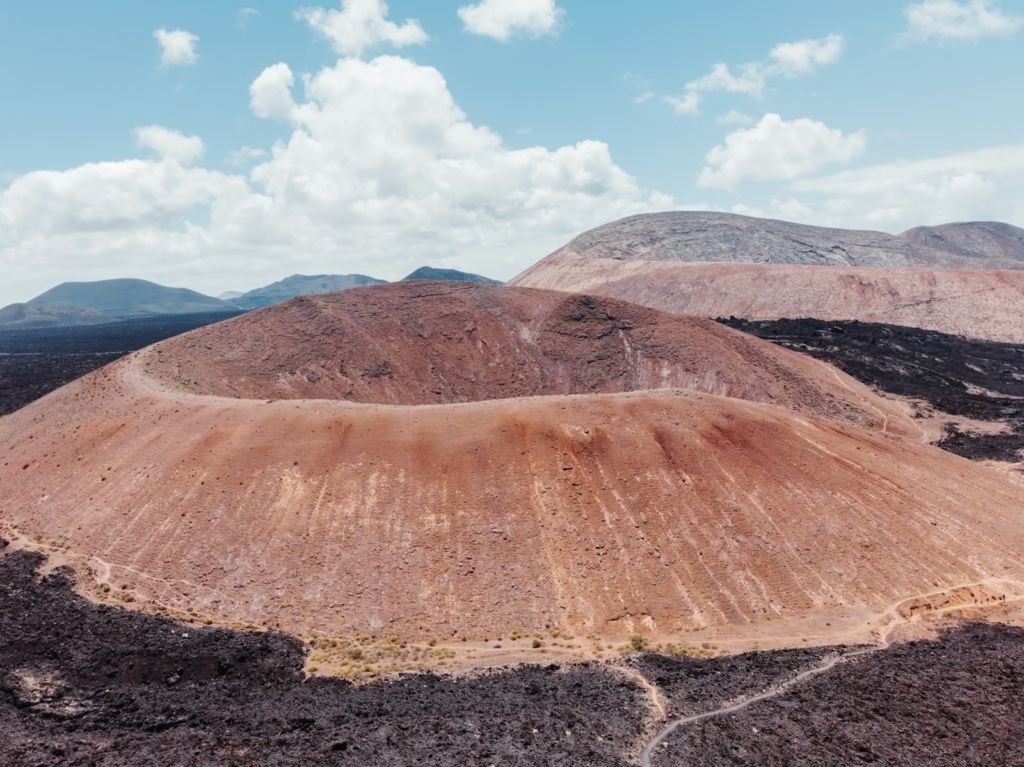
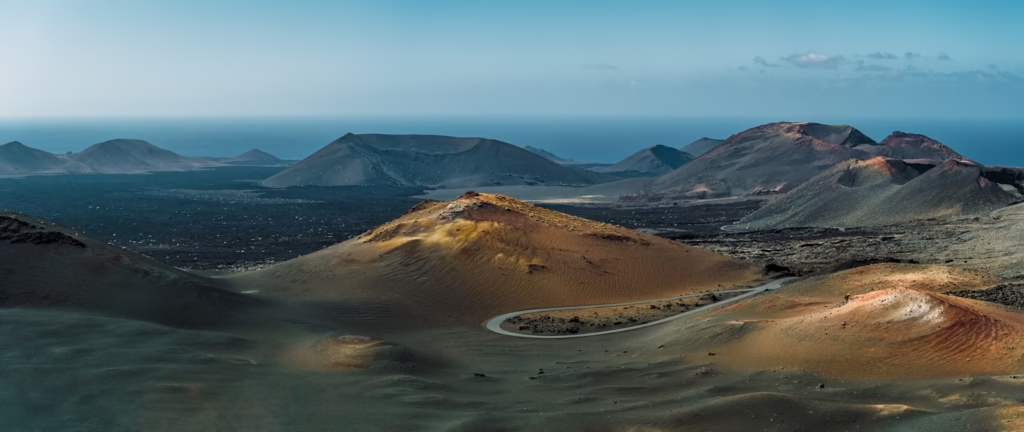
Timanfaya and the surrounding volcanic areas provide the other defining image. Riders do not need to chase extreme gradients to feel the drama of the place. The colour palette does most of the work: black, red, ochre, ash grey and deep blue sky.
This is where Lanzarote differs from many better-known cycling destinations in Spain. It is not built around one famous climb or one classic training town. It is built around an entire landscape that feels consistent, exposed and unusually raw.
The north gives Lanzarote its climbing character
If the south and centre offer heat, lava fields and rolling training roads, the north gives Lanzarote more of a climbing identity.
Haría, Tabayesco, Órzola and Mirador del Río are names that come up again and again for good reason. The north is greener, sharper and more dramatic. The roads begin to feel more like proper climbing terrain, especially around the route to Mirador del Río, where riders are rewarded with views across to La Graciosa.
That kind of ride is a good example of what Lanzarote does well. It is not about chasing a single famous ascent. It is about linking places together so that the whole ride has shape. You climb, descend, cross exposed sections, pass through villages and then find yourself looking out over a landscape that feels far bigger than the island’s compact size suggests.
The best northern rides feel like proper cycling days. There is climbing, descending, wind management, technical attention and enough visual reward to make the effort feel worthwhile.
The wind is part of the training
Nobody should write about cycling in Lanzarote without talking about the wind.
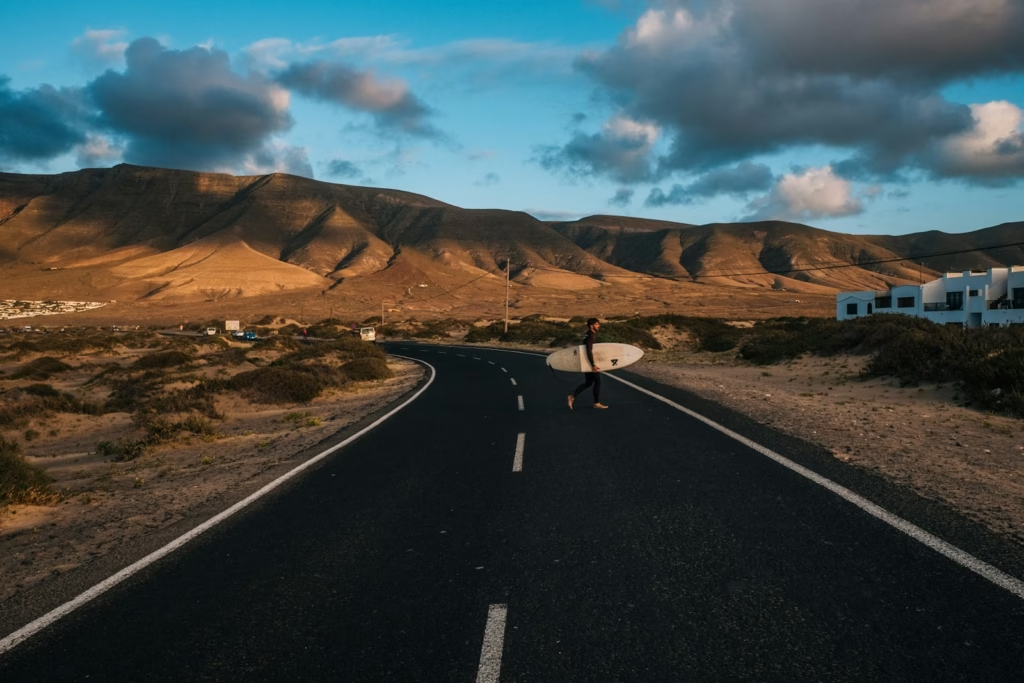
The wind can be your friend, your enemy and your coach all in the same ride. A section that feels effortless one way can feel like a time trial in reverse on the way back. It also means route planning matters. A casual loop can become a hard session if you misjudge direction and exposure.
This is not a reason to avoid Lanzarote. It is one of the reasons to go. Wind riding is a skill. It teaches you to hold position, relax your upper body, ride steadily and think about energy. For riders who spend much of the year on sheltered UK lanes, Lanzarote can be a useful shock to the system.
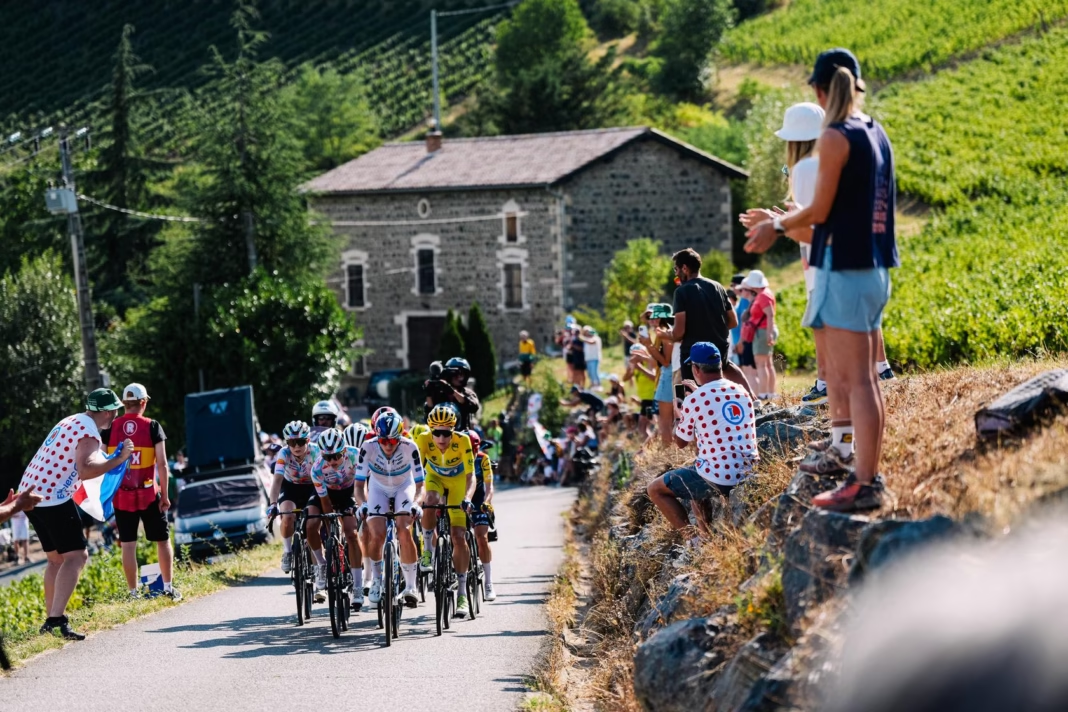
It also makes group riding more interesting. Echelons, shelter and wheel choice become part of the day, even on a holiday ride. You do not need a race number to learn something.
It works for different types of riders
Lanzarote’s strength is that it can be as serious or as relaxed as you want it to be.
A strong club rider can use the island for a proper training block, building long rides around the north, Timanfaya, La Geria and the exposed coastal roads. A newer rider can stay closer to base, choose shorter loops and still feel they have ridden somewhere special. A triathlete can combine road rides with running and swimming, while a sportive rider can use the terrain to prepare for rolling endurance events back home.
The island is not only for riders staying at dedicated sports resorts. Costa Teguise, Puerto del Carmen, Playa Blanca and other resort areas can all work well, depending on the style of holiday you want.
That flexibility is part of Lanzarote’s appeal. Like Girona or Mallorca, it can support a serious riding trip. Unlike those places, it has a more exposed, volcanic feel that makes the experience less familiar and more elemental.
Where to base yourself for cycling in Lanzarote
| Base | Best suited to | Cycling feel |
|---|---|---|
| Costa Teguise | First-time cycling trips, mixed holidays | Good access to central and northern routes |
| Puerto del Carmen | Convenience, bike hire, restaurants | Easy base for La Geria and southern loops |
| Playa Blanca | Warmer resort feel, steadier riding | Good for southern routes and Yaiza access |
| La Santa | Training camps and serious sport focus | Strong sports culture and direct route access |
| Arrecife | Practical stays and island access | More urban start, but central for transfers |
The best base depends on the balance you want. For a pure training trip, La Santa is the obvious reference point. For a cycling holiday with restaurants, beaches and a more conventional resort feel, Puerto del Carmen or Costa Teguise may suit better. For a quieter southern base, Playa Blanca gives good access to Yaiza and the roads around the south-west.
Best rides to put on your list
Lanzarote is compact enough that you can build several strong rides without needing long transfers. These are the areas that deserve attention.
La Geria and Timanfaya loop
This is the classic volcanic Lanzarote ride. Expect rolling roads, exposed sections, vineyards, lava fields and wide-open views. It is ideal as a first proper ride on the island because it gives you the visual identity of Lanzarote without requiring an all-day epic.
Haría and Mirador del Río
This is one for riders who want more climbing and a bigger sense of occasion. The roads around Haría and Mirador del Río bring more elevation and some of the island’s best views. On a clear day, the outlook towards La Graciosa is one of the great cycling rewards on the island.
Yaiza, El Golfo and the south-west
This area gives a slightly different rhythm, with coastal drama, volcanic backdrops and manageable roads that can be linked into longer loops. It is especially good if you are staying in Playa Blanca or Puerto del Carmen.
Tabayesco and the northern climbs
For riders who want a more structured climbing effort, the roads around Tabayesco and the northern interior are among the most satisfying on the island. The climbs are not huge, but they are long enough to test pacing and strong enough to expose poor rhythm.
What makes Lanzarote different from Mallorca?
Mallorca is broader, greener and has the Serra de Tramuntana for longer mountain days. Lanzarote is more exposed, more volcanic and more compact. Mallorca often feels like a classic European cycling destination. Lanzarote feels more like a training island.
That is not a criticism. It is exactly why Lanzarote stands out.
The riding is less about famous climbs and more about consistency. You go there to build form, enjoy the weather, work against the wind and come home with proper miles in the legs. It suits riders who enjoy simple, honest cycling: road, sky, wind, effort, coffee, repeat.
It also gives riders a useful contrast with the more established Spanish cycling bases. Mallorca may have the famous climbs, Girona has its professional cycling culture, and the Costa Blanca has reliable winter mountain roads. Lanzarote has something stranger and more stripped back. It feels less polished, but often more memorable.
When is the best time to cycle in Lanzarote?
For many UK riders, the best time to cycle in Lanzarote is between late autumn and spring. That is when the contrast with home is strongest. You can leave behind cold lanes, wet kit and short days, then ride in warm conditions with dependable light.
Summer can still work, but heat, sun exposure and hydration become bigger factors. Early starts are sensible, and riders should take the conditions seriously. Lanzarote may not have the oppressive humidity of some destinations, but exposed roads and strong sun can drain you quickly.
For training, January to April is especially useful. It gives you warm-weather volume at the point in the year when UK riding is often least reliable.
Practical tips before you ride
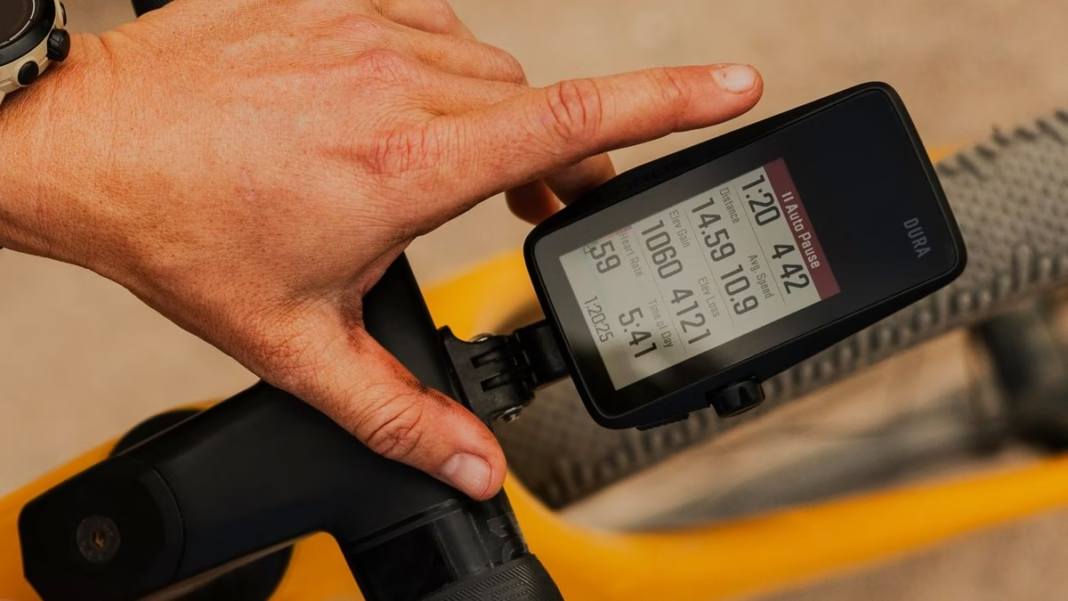
Lanzarote rewards preparation. Take sun cream seriously, even when the breeze makes the temperature feel comfortable. Carry more fluid than you think you need. Check the wind before committing to a route. Think about where you can refill bottles, especially on longer rides through exposed areas.
A compact chainset or sensible climbing gears are useful, not because the island is brutally steep everywhere, but because repeated drags and windy climbs can become wearing. Deep-section wheels may look good, but they are not always the most relaxing choice on gusty days.
The roads are generally well suited to cycling, but the same rules apply as anywhere else: ride predictably, respect local traffic, avoid drifting across the road when looking at the scenery and do not underestimate fatigue late in the ride.
-
 Photo Credit: A.S.O./Billy Ceusters
Why Lanzarote deserves a place on your riding list
Lanzarote deserves a place on your riding list because it offers something clear and different. It is not trying to be the Alps. It is not trying to be Mallorca. It is its own kind of cycling destination.
The island gives you warm weather, distinctive roads, volcanic scenery, proper training conditions and enough variety to fill a week without repetition. It can be a winter escape, a serious training block, a first cycling holiday abroad or a place to ride with friends when the UK weather has become hard work.
Most of all, Lanzarote feels like a place that makes riding simple again. You get up, check the wind, choose a loop, fill your bottles and head out into a landscape that still feels raw. For cyclists, that is more than enough reason to go.
Cycling in Lanzarote FAQs
Is Lanzarote good for road cycling?
Yes. Lanzarote is very good for road cycling, especially if you want warm weather, rolling terrain, volcanic scenery and strong training conditions. It is popular with club riders, triathletes and endurance athletes.
Is cycling in Lanzarote hard?
It can be. Lanzarote does not have huge Alpine climbs, but the combination of wind, exposure, rolling roads and steady ascents makes it more demanding than it may look on a route profile.
What is the best area for cycling in Lanzarote?
The north around Haría and Mirador del Río is best for climbing and views. La Geria and Timanfaya are best for volcanic scenery. Puerto del Carmen, Costa Teguise, Playa Blanca and La Santa are all practical bases depending on the type of trip you want.
Do you need to bring your own bike?
Not necessarily. Lanzarote has a strong cycling infrastructure and bike hire is widely available in the main resort areas. Bringing your own bike may suit serious training trips, but hiring can be easier for shorter holidays.
Is Lanzarote better than Mallorca for cycling?
It depends what you want. Mallorca has bigger climbs and more variety across a larger island. Lanzarote is more compact, more exposed and more volcanic, with excellent winter training conditions and a very distinctive riding feel.
What is the best month to cycle in Lanzarote?
For UK riders, the best months are usually from November to April, when Lanzarote offers warm-weather riding while northern Europe is colder and wetter. Spring is especially good for building fitness before the main cycling season.

