
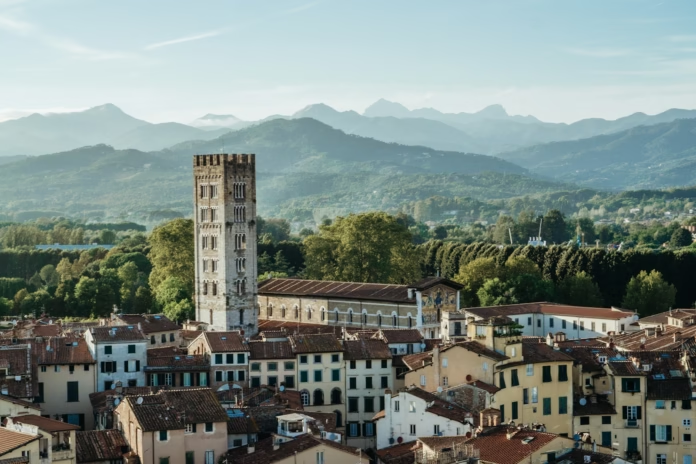
Lucca is one of those places that seems built for the slow roll before the serious ride begins. The old city sits behind its Renaissance walls, calm and self-contained, with terracotta rooftops, shaded streets and a broad tree-lined circuit around the ramparts that almost insists you arrive by bike. It is not a dramatic cycling base at first glance. That is part of the appeal.
Ride beyond the walls, though, and northern Tuscany opens with a rare mix of possibilities. One day can be gentle and cultural, following quiet roads through olive groves, villas and river paths. The next can point north towards the Garfagnana, where the road begins to rise properly under the Apuan Alps. Turn west and the landscape softens towards the Versilia coast, with Viareggio, Pietrasanta and Forte dei Marmi giving the region a completely different rhythm.
For riders who already know Tuscany only through the postcard version of rolling vineyards and white gravel roads, Lucca offers something more varied. It has the beauty, certainly, but it also has range. Flat warm-up loops, punchy climbs, long mountain days, coastal rides and gravel options all sit within reach of the same base.

Why Lucca works so well as a cycling base
Lucca’s great advantage is that it gives you a beautiful place to stay without trapping you inside a tourist centre. The city is compact, atmospheric and easy to navigate, but it also sits close to the kind of roads cyclists travel for. You can roll out from the walls and be into quieter countryside quickly, which makes it much more practical than a larger city base.
The first ride almost has to begin on the walls themselves. Lucca’s old ramparts form a broad, elevated circuit around the city, shaded by trees and used daily by locals walking, jogging and riding relaxed bikes. It is not a training loop in the serious sense, and it should not be treated like one, but it gives the city its cycling character from the first pedal stroke.
That small detail changes the mood of a trip. In many historic Italian cities, the bike feels like something you keep outside the centre and use only once you have escaped the traffic. In Lucca, cycling is already part of the city’s surface. The walls make the bike feel natural before the riding even begins.
For a wider look at where Lucca fits into the country’s riding landscape, ProCyclingUK’s cycling in Italy guide brings together the different styles of Italian cycling, from alpine climbs to rolling countryside and coastal roads.
The riding: gentle roads, hard climbs and proper variety
The best thing about riding from Lucca is the way the terrain changes without much warning. South and west of the city, the roads are flatter and more forgiving. These are the days for steady endurance riding, café stops and relaxed kilometres through low countryside, where the light feels warm even before the temperature rises.
Head north and the character changes. The roads towards the Garfagnana and the Apuan Alps bring longer climbs, narrower valleys and a more rugged feel. The gradients are not always famous in the way the Alps or Dolomites are famous, but they can be honest, irregular and physically demanding. You ride through villages that seem to sit half in the hillside, then look back and realise how quickly the plain has disappeared below.
West towards Versilia, the road begins to hint at the sea. Viareggio and the coast offer easier, flatter days, while the hills behind Pietrasanta, Camaiore and Seravezza can turn that same direction into something much harder. This is one of northern Tuscany’s strengths. You can choose the version of the ride you want, but the landscape always has another option waiting nearby.

Routes that make Lucca special
A first proper loop from Lucca can be kept deliberately simple. Ride towards the Serchio valley, let the road find its rhythm, and use the river and surrounding hills as a way into the countryside. These rides are not about ticking off one famous climb. They are about settling into the area, learning the road surfaces, and letting the edges of the city fade behind you.
The Lucca to Pisa loop is one of the most obvious longer options. It gives you a ride with a destination, passing through Tuscan countryside before reaching one of Italy’s most recognisable cities. It can be ridden as a moderate endurance day rather than a mountain test, and it has the advantage of feeling like a journey rather than just a loop drawn on a map.
Another rewarding direction is towards Lake Massaciuccoli and Torre del Lago. This is a softer ride, more open and reflective, with water, reeds and flatter roads replacing the hillier inland feel. It suits a recovery day or the kind of ride where the point is not average speed, but arriving somewhere with enough time to sit down properly afterwards.
For stronger riders, the Garfagnana is where the trip starts to become more serious. Routes towards Barga, Castelnuovo di Garfagnana and the slopes beneath the Apuan Alps give the area its mountain identity. The roads are quieter, the climbs more sustained, and the scenery more dramatic. It is still Tuscany, but not the soft-focus version. This is Tuscany with rock faces, forested slopes and villages that make you earn the view.
The Apuan Alps: northern Tuscany’s harder edge
The Apuan Alps give Lucca its wild card. They are not the highest mountains in Italy, but they rise sharply enough to change the whole feel of the region. Their pale limestone ridges and marble landscapes create a visual contrast with the softer hills closer to Lucca, and the riding can feel much more remote than the map suggests.
This is where a bike trip to Lucca starts to feel different from a standard Tuscan cycling holiday. The Apuan climbs do not always have the tidy rhythm of more famous cycling mountains. They can be rougher, quieter and more irregular. You may spend long stretches with very little traffic, hearing only your own breathing, freehubs, birdsong and the occasional small engine climbing out of a village.
There is a particular satisfaction in these roads because they do not feel staged. The climbing is not there for the benefit of cyclists. It is there because villages, quarries, valleys and ridges need to be connected. The bike simply becomes the best way of understanding how hard the landscape is.
If you want a more dramatic Italian mountain trip, ProCyclingUK’s guide to cycling in Cortina d’Ampezzo and the Dolomite passes gives the opposite end of the spectrum: higher, sharper and more obviously alpine.

Gravel, white roads and the pull of classic Tuscany
Lucca is not Siena, and it should not be sold as if every ride is a Strade Bianche tribute. The most famous white gravel roads sit further south, particularly around the Crete Senesi and the landscapes that have made Strade Bianche one of cycling’s most beautiful modern races. But northern Tuscany still gives gravel riders plenty to enjoy.
The appeal here is different. Gravel and mixed-surface rides around Lucca can feel quieter and less choreographed, moving between farm tracks, woodland lanes, river paths and hill roads. A gravel bike expands the map, especially if you want to link small roads without worrying every time the surface changes.
For riders who love the idea of Tuscany but do not want to spend the whole trip chasing the exact roads used by the professionals, Lucca is a more relaxed choice. It gives you enough gravel atmosphere without making the whole holiday depend on one specific image of Tuscany.
Riders who want the classic southern Tuscan version can compare the region with ProCyclingUK’s guide to Chianti’s rolling hills, Strade Bianche and vineyard routes, where the terrain has a more familiar white-road identity.
Why it is more than just a cycling destination
The best cycling bases work twice. They need to be good on the bike, but they also need to feel rewarding once the ride is over. Lucca does that beautifully. After a long day, you return not to a faceless resort or a traffic-heavy city, but to a walled historic centre where the evening can be as memorable as the riding.
There are piazzas that encourage you to sit longer than planned, narrow streets that stay cool in the heat, and restaurants where the day’s effort suddenly feels like preparation rather than punishment. The city has enough culture to occupy a non-riding afternoon, but it does not overwhelm the cycling purpose of the trip.
That balance is important. A week in Lucca can be built around serious riding, but it does not have to feel like a training camp unless you want it to. It can be a cycling holiday in the fuller sense: demanding roads, good food, historic surroundings, short transfers and enough variety to keep each day distinct.

When to ride in Lucca and northern Tuscany
Spring and early autumn are the best times for most riders. April, May, September and early October bring the most comfortable balance of temperature, daylight and road conditions. The hills are green, the coast is lively without being overwhelming, and the bigger climbs are usually more enjoyable than they are in the heat of high summer.
June can be excellent too, especially for riders who handle warmer weather well and like longer days. July and August are possible, but they change the rhythm of the trip. Early starts become essential, the coast is busier, and hard climbing in the middle of the day can quickly become more survival than pleasure.
Winter has its own appeal for experienced riders who are happy to adapt. The city is quieter and the lower roads can still be rideable, but the mountains are less predictable. For a first cycling trip to Lucca, spring or early autumn gives the best version of the region.
Who is Lucca best for?
Lucca suits riders who want more than one type of cycling holiday. It is ideal for road cyclists who like climbing but do not want every day to be a major mountain stage. It works well for couples or groups where not everyone wants the same level of difficulty. It is also a strong choice for riders who care about food, atmosphere and history as much as route statistics.
It may be less suited to someone who wants a pure high-altitude training block or a holiday built entirely around famous climbs. Lucca’s strength is not one headline ascent. It is the density of good riding around a beautiful base. The rewards build over the week: a new valley, a better café stop, a quieter road, a climb you had not heard of but will remember longer than expected.
For gravel riders, the area is best approached with curiosity rather than a fixed script. Bring tyres with enough volume, expect surfaces to vary, and let the ride become part exploration rather than a perfectly polished route plan.
-
 Photo Credit: quentinphotographiebe
 -
 Photo Credit: Getty


Practical information
Location
Lucca sits in northern Tuscany, inland from the Versilia coast and west of Florence. Pisa is the closest major airport, making the city relatively straightforward to reach for UK travellers. Florence is another option, especially if you want to combine Lucca with a wider Tuscan trip.
Riding
The riding ranges from flat and rolling roads near Lucca to harder climbing towards the Garfagnana and Apuan Alps. The coast adds easier kilometres around Viareggio and Forte dei Marmi, while the hills behind the coast can be used for tougher loops. Road bikes are the natural choice for most trips, but a gravel bike opens up more mixed-surface options.
When to go
April, May, September and early October are the strongest months for a cycling trip. Summer can work with early starts, but the heat should be taken seriously. Winter is quieter and can still be rideable, though the higher roads are more weather-dependent.
Accommodation
Staying inside or just outside Lucca’s walls gives the best mix of atmosphere and access. Inside the walls, you get the full historic-centre experience, but should check bike storage carefully. Just outside the walls can be more practical for parking, larger rooms and faster roll-outs in the morning.
For more destination ideas, ProCyclingUK’s travel and riding abroad section collects cycling-first guides across Europe and beyond, including Italian bases, Spanish training towns and high-mountain riding locations.

Why Lucca deserves a place on your riding list
Lucca deserves a place on your riding list because it offers something many cycling destinations struggle to balance: beauty without monotony, climbing without isolation, culture without complication. It is easy to reach, easy to enjoy and hard to exhaust.
The city gives you a gentle beginning, the countryside gives you rhythm, the Garfagnana gives you depth, and the Apuan Alps give you a sharper edge when you want to test yourself. Add the coast, the food, the history and the simple pleasure of returning through the walls after a long day, and Lucca becomes more than a convenient base. It becomes the kind of place that quietly improves every ride around it.
Northern Tuscany may not shout as loudly as the Dolomites, Mallorca or the most famous roads of Siena, but that is part of its charm. From Lucca, the riding feels discovered rather than consumed. For a cyclist, that can be the difference between a good trip and one that stays with you. ::contentReference[oaicite:0]{index=0}

