
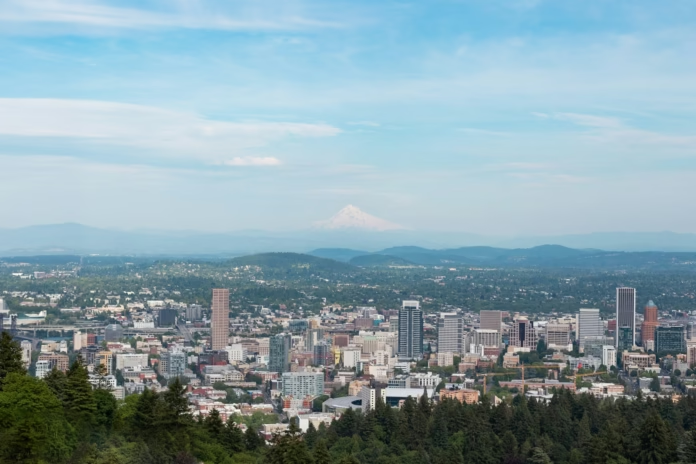
Portland does not introduce itself like a mountain town. It starts more quietly than that. The city sits low beside the Willamette River, its bridges crossing the water like useful pieces of street furniture, its neighbourhoods stitched together by bike lanes, greenways, coffee shops, food carts and old trees. Ride for half an hour and the city changes several times. One moment you are rolling beneath maples on a residential street, the next you are looking across the river towards downtown, then you are climbing into the West Hills with your breathing suddenly loud enough to drown out the traffic below.
That is the first thing that makes Portland interesting as a cycling base. It is not just a place with bike infrastructure. It is a place where cycling has become part of the city’s ordinary rhythm. The bike is transport, training tool, weekend escape and social signal all at once. You can ride to breakfast, ride to work, ride to the river, ride to a brewery, then ride straight into a climb steep enough to make your legs feel as if you have stepped into a different sport.
Beyond the city, Oregon opens out into a much bigger cycling landscape. The Cascades rise to the east and south, not as one neat block of mountains but as a long, varied spine of volcanoes, forests, rivers, passes and high desert. This is where the rides become more elemental. Portland gives you the culture. The Oregon Cascades give you the scale.
Portland as a cycling city
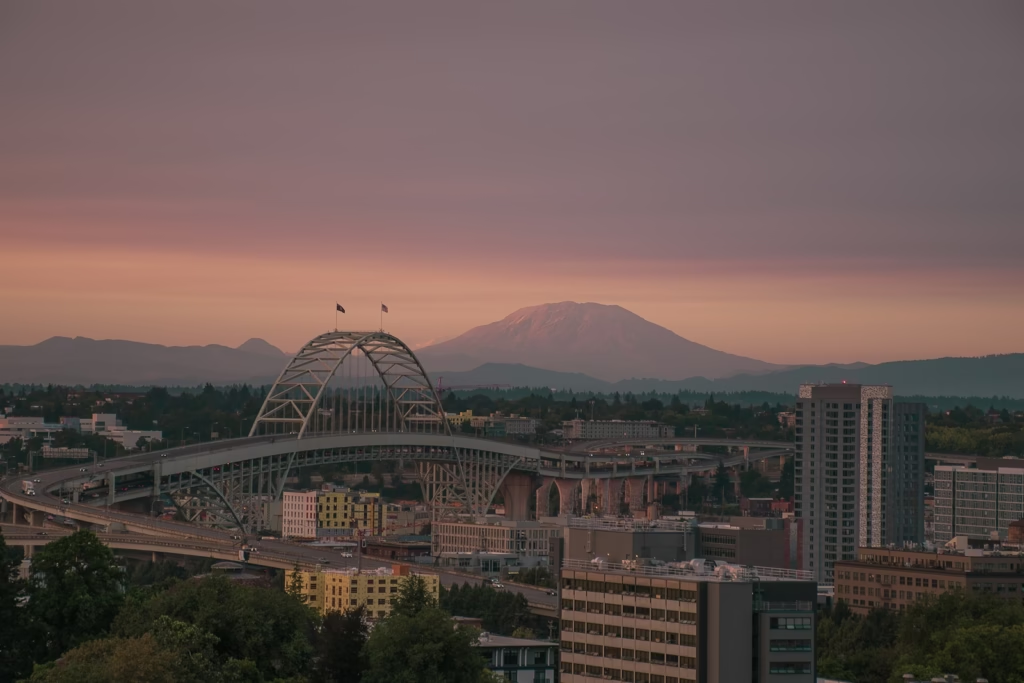
Portland’s cycling identity has been built over years rather than announced in one big gesture. The city’s best riding is not only on showcase paths or postcard viewpoints, although there are plenty of both. It is in the way the local network lets you move through neighbourhoods without constantly feeling pushed to the edge. Quiet streets, marked bike routes, bridges, river paths and greenways all help create a city that feels readable by bike.
There is a looseness to riding here that suits the place. You do not have to be on a full training ride to feel part of the cycling scene. Commuters, gravel riders, cargo bikes, e-bikes, tourists, club riders and people just getting across town all share the same wider ecosystem. Portland does not treat the bike as something unusual. It treats it as one of the ways the city works.
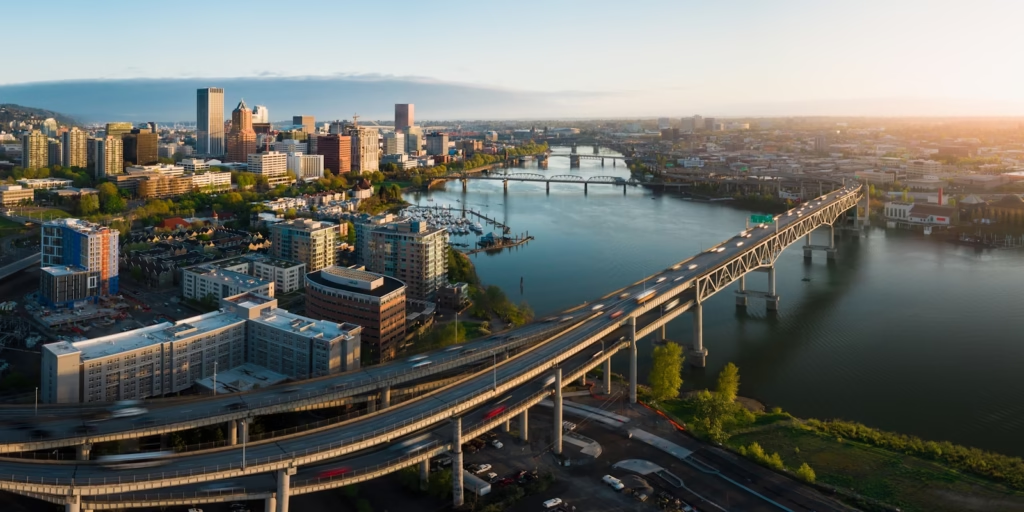
For a visiting road cyclist, the Willamette River is often the simplest starting point. The Eastbank Esplanade and riverfront connections give an immediate sense of the city, with water on one side and the skyline close enough to feel part of the ride. Tilikum Crossing, the car-free bridge carrying public transport, bikes and pedestrians, has become one of those small details that says a lot about Portland’s cycling culture. It is practical first, but it also gives the rider a moment of quiet elevation over the river.
The city’s real training character appears once you turn west.
The West Hills and the feel of Portland climbing
Portland’s climbs are not Alpine, but they are sharp, frequent and awkward in the best way. The West Hills rise directly from the city, giving riders quick access to gradients that bite. Council Crest is the obvious local reference point, sitting above southwest Portland with views that can stretch towards Mount Hood when the weather is clear. It is not a giant climb in European terms, but it has the rhythm of a real effort: urban ramps, bends through trees, changes in surface and that satisfying sense of climbing away from the noise.
The beauty of the West Hills is the density of options. You can thread together Council Crest, Washington Park, Pittock Mansion, Skyline Boulevard and the roads around Forest Park into a ride that feels far longer than its distance suggests. The climbs are often interrupted by turns, short descents and little ramps that break your rhythm. It is not a place for sitting in one gear and settling into a predictable tempo. Portland climbing is more restless than that.
Skyline Boulevard gives the riding a broader, rolling shape. It runs along the ridge above the city, connecting wooded sections, glimpses towards the valley and a sense of being very close to Portland while also partly removed from it. On damp days, the road can feel properly Pacific Northwest: wet tarmac, cedar scent, grey light, tyres hissing through fine spray. On clear days, the views open and the Cascades sit on the horizon as a reminder that the city climbs are only the warm-up.
The atmosphere is less polished than some famous cycling destinations, and that is part of its appeal. Portland riding can feel practical, lived-in and slightly eccentric. There is less of the curated training-camp mood of Girona or Mallorca, and more of a feeling that cycling has been absorbed into the city’s habits. It is not performative. It is just there.
Riding east towards bigger country
The transition from Portland to the Cascades is one of Oregon’s great cycling shifts. The city gives way to river corridors, forest roads, foothills and volcanic silhouettes. Mount Hood is the most obvious presence, a snow-covered cone that dominates clear views east of Portland. It gives the region its clearest mountain anchor, both visually and physically.
Riding towards Mount Hood changes the scale. The roads lengthen, the tree cover thickens and the weather starts to feel more consequential. In Portland, rain is part of the atmosphere. In the Cascades, it can shape the day. Snow can close high passes well into spring, and conditions can shift quickly with elevation. That seasonal edge gives Oregon riding a different character from warmer, more predictable cycling regions. You plan more carefully, carry more clothing and accept that the mountains keep some authority.
The Timberline Lodge climb is one of the most accessible big-mountain efforts near Mount Hood. Starting from Government Camp, the road climbs towards the lodge through alpine forest, with the mountain above and the air thinning into something cooler and sharper. It is not a long European pass, but the upper slopes have real mountain atmosphere. The road rises to around 6,000 feet, and the final approach towards Timberline feels like entering a different weather system.
It is the kind of climb where the scenery becomes part of the pacing. Forest first, then glimpses of snow, then the lodge, then the bulk of Mount Hood above you. The reward is not only the summit but the sense of having ridden from a ski-town base into the high volcanic landscape that defines the Oregon Cascades.
McKenzie Pass and the lava fields
If Portland gives Oregon cycling its culture, McKenzie Pass gives it one of its most unforgettable images. The route over Highway 242 from Sisters towards the McKenzie River side is one of those rides that feels almost unreal when the landscape changes. Forest roads and mountain air are expected. The lava fields are not.
The McKenzie Pass Scenic Bikeway is around 38 miles from Sisters to the McKenzie River community of Rainbow, and it carries riders through one of the most distinctive road landscapes in the United States. Near the top, the road cuts through black volcanic lava, with snow-streaked Cascade peaks beyond and thin lines of tarmac threading between the rock. It feels less like a normal mountain pass and more like riding across the surface of an old eruption.
The climb from the Sisters side begins in high-desert country, with dry air, open views and the kind of light that makes every pine shadow look sharper. As the road rises, the landscape becomes more volcanic and exposed. The Dee Wright Observatory, built from lava rock near the summit, gives the pass a strange architectural centrepiece, low, dark and perfectly matched to the ground around it.
Descending west, the environment changes again. The road drops through switchbacks into denser Cascadian forest, down towards the McKenzie River. That contrast is what makes the ride special. In one route, Oregon gives you high desert, lava, snow peaks, forest, river and hot springs country. It is not just a climb and descent. It is a crossing between climates.
McKenzie Pass also has a particular seasonal magic because the road is often closed to motor traffic before it fully opens for the summer. When cyclists get a window on the ploughed road before cars return, it becomes one of the great Oregon experiences: high snowbanks, quiet tarmac, thin air and a feeling of being allowed briefly into a place still half-held by winter.
Aufderheide and the deep forest
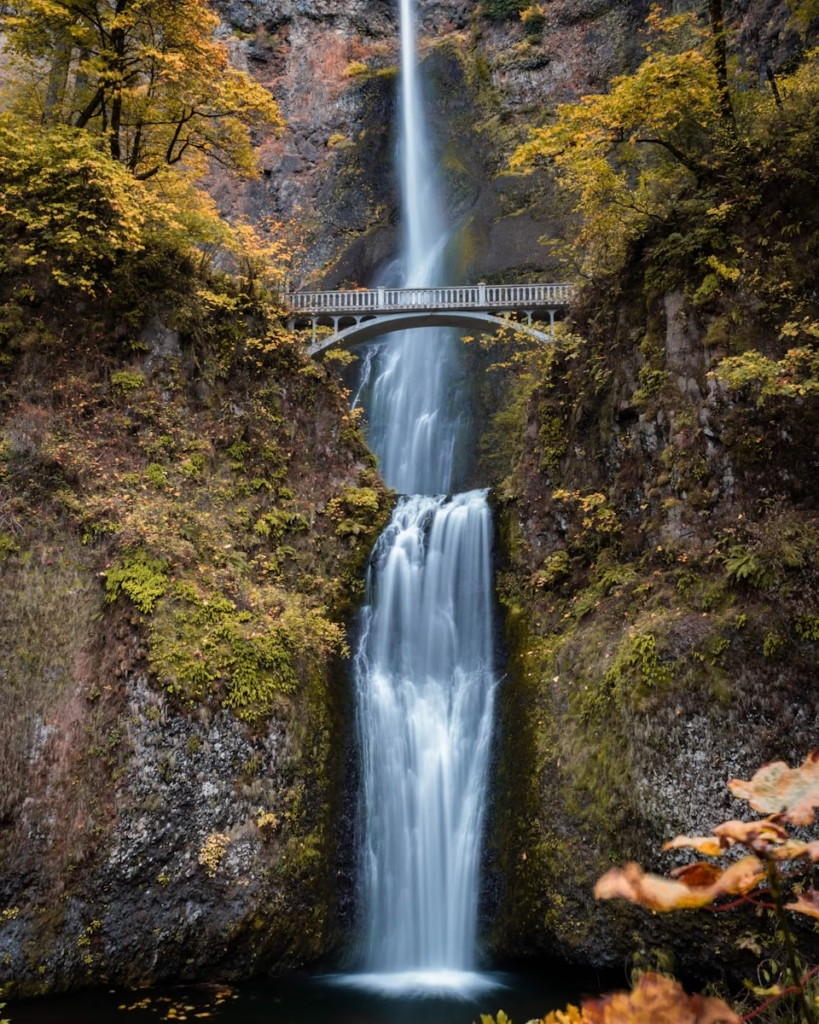
Aufderheide is a different kind of Cascade ride. It does not have the volcanic theatre of McKenzie Pass or the iconic profile of Mount Hood, but it has something quieter and deeper. The road links the Oakridge-Westfir area with the McKenzie River communities, running through forest, river valleys and long stretches where the ride feels absorbed by trees.
The route is around 60 miles of paved road and climbs close to 4,000 feet, but its difficulty is not only in the numbers. It is in the remoteness, the lack of interruption and the way the forest sets the tempo. This is a road for settling in, not chasing one headline summit. The climbs are sustained without feeling showy. The descents are long enough to cool the body and sharpen concentration. The river is often nearby, sometimes seen, sometimes just heard.
Oakridge has its own cycling identity, particularly through mountain biking, but for road riders the Aufderheide gives a sense of old Oregon: covered bridges, tall trees, damp shade, campgrounds, river pull-offs and a road that seems to ask for respect rather than speed. It is the sort of ride where food, water and weather matter. Once you are in it, you are in it for the day.
There is also a different sensory world here. McKenzie Pass can feel bright and exposed. Aufderheide feels enclosed, green and resonant. The air smells of wet bark and needles. Light arrives in columns through the canopy. The road surface changes with shade and moisture. It is not dramatic in a postcard way at every corner, but it builds a mood that stays with you.
Cascading rivers and remote road riding
Oregon’s Cascading Rivers route adds another layer to the region’s cycling appeal. Running from Estacada towards Detroit, it follows remote roads and river corridors through forested country. The name is accurate in the simplest possible sense: the ride is shaped by water.
This is where Oregon cycling starts to feel more like journeying than training. The road is not only something to climb or descend. It is a line following rivers, bridges, bends and small openings in the trees. The sound of water becomes part of the ride. On warmer days, the temptation to stop beside the river is strong, and the best days here are not necessarily the fastest ones.
The appeal is partly the distance from the city. Portland may be close enough to function as the start of the wider trip, but these roads feel far removed from urban riding. They ask for self-sufficiency. Services can be limited, mobile signal can be patchy and the weather can change with the valley. That is not a flaw. It is part of why the riding feels meaningful.
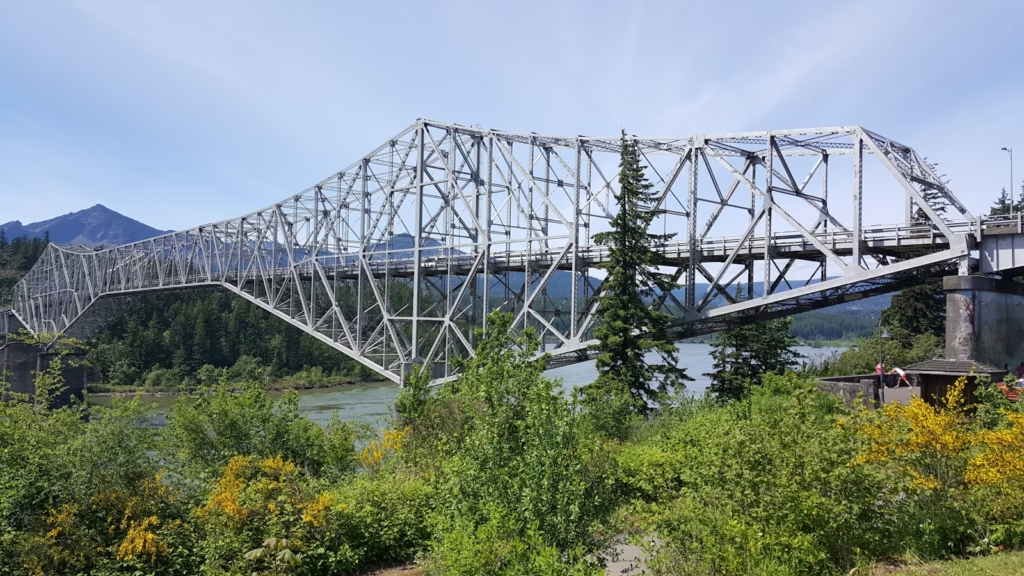
Central Oregon and the open road
East of the Cascades, the landscape changes again. Around Sisters, Bend and Smith Rock, Oregon becomes drier, wider and more open. The Sisters to Smith Rock Scenic Bikeway is not a huge climbing route compared with McKenzie Pass or Aufderheide, but it gives a different kind of pleasure. Rolling roads, high-desert views, ranchland, volcanic peaks and the dramatic rock formations of Smith Rock create a ride that feels distinctly Central Oregon.
This side of the Cascades is often where cyclists notice how varied Oregon really is. The west side is green, wet, forested and enclosed. The east side is brighter, drier and more spacious. Rides here can feel faster, with longer sightlines and fewer of the tight, damp corners that define some of the forest roads. The air is different too, thinner and cleaner, especially in the shoulder seasons when the heat has not yet settled in.
Bend and Sisters work well as riding bases because they offer access to several types of cycling in one trip. Road rides, gravel routes, mountain biking, scenic byways and high-country loops are all close. That variety is one of Oregon’s strongest selling points. It is not a single-discipline destination. It is a cycling state in the fuller sense.
Gravel, forest roads and the Oregon edge
No account of cycling in Portland and the Oregon Cascades feels complete without gravel. Even when the focus is road riding, the unpaved possibilities are everywhere. Forest roads climb away from river valleys. Gravel connectors cut through timber country. Old logging roads, fire roads and high-desert tracks give Oregon a wilder cycling edge.
This is one of the reasons the region suits riders who like a bit of uncertainty. A road bike can give you the classic Portland climbs, McKenzie Pass and Timberline Lodge. A gravel bike opens far more of the map. It lets you move between city greenways, forest service roads, Cascade foothills and Central Oregon tracks with the feeling that the state is bigger than any one planned route.
The atmosphere is different from European cycling destinations where the road network is ancient, village-led and densely settled. Oregon’s riding often feels younger, wider and less contained. There are fewer café stops in some areas, more distance between services and a stronger sense of being out in working landscapes: forestry, rivers, recreation, small towns and mountain weather.
That rougher edge is part of the appeal. Oregon rewards riders who enjoy planning, carrying layers, checking road conditions and accepting that a perfect day may still involve wet gloves, grit on the drivetrain or a long stretch without a shop.
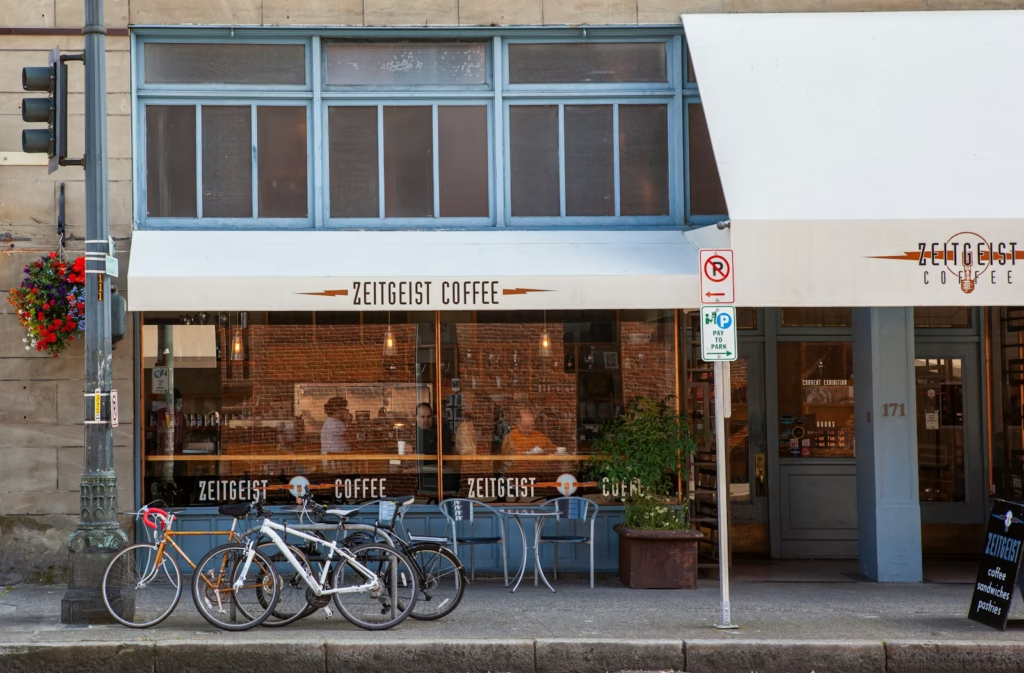
Food, coffee and the rhythm of the ride
Portland is one of the easier places to build a cycling trip around because the off-bike culture is strong. Coffee is not an afterthought here. Food carts, bakeries, breweries and neighbourhood restaurants turn rides into loose itineraries. You can plan a morning climb into the West Hills, roll back down for lunch, then cross the river and spend the afternoon moving between neighbourhoods rather than simply returning to a hotel.
That rhythm suits cycling travel. The best Portland days do not have to be epic. They can be built around small movements: a climb before breakfast, a river spin, a stop at Powell’s, a slow ride through leafy streets, a bridge crossing at sunset. It is a city where the bike helps you understand the place at the right speed.
In the Cascades, the food rhythm changes. Stops are more deliberate. A café in Sisters, a meal in Bend, a lodge near Mount Hood, a riverside stop on the McKenzie, a post-ride beer after a long day in Oakridge, these become anchor points rather than casual conveniences. The riding is bigger, so the pauses feel more earned.
When to ride
Late spring to early autumn is the broad window for most road cycling in the Oregon Cascades, but the exact timing depends heavily on elevation and snowpack. Portland itself can be ridden for much of the year, though winter and spring often bring rain, wet roads and cooler temperatures. The West Hills are beautiful in damp weather, but descents need care.
The high Cascades are more seasonal. McKenzie Pass, Timberline and other mountain routes can be affected by snow well into spring. Early summer can offer special conditions when roads have been cleared but traffic is still limited, while July, August and September are often the most reliable months for high-elevation riding. Autumn can be superb, with cooler temperatures and clearer light, but weather windows shorten.
Central Oregon is generally drier than Portland and the western Cascades, though summer heat can become a factor. Spring and autumn are often excellent for rides around Sisters, Bend and Smith Rock, especially for riders who prefer clear air and moderate temperatures.
-
 Photo Credit: Gaetan Flamme
Practical information for cyclists
Portland works well as the entry point. The city has a strong bike culture, hire options, public transport connections and enough short routes to make the first days easy to shape. It is a good place to acclimatise, build the bike, test equipment and get a feel for Oregon riding before heading to the Cascades.
For city riding, the West Hills, Council Crest, Washington Park, Skyline Boulevard, the Willamette river paths and the neighbourhood greenways are the obvious starting points. A gravel or all-road bike is useful if you want flexibility, but a standard road bike is enough for Portland’s paved climbs and the major Cascade road routes.
For Cascade riding, a car is often the simplest way to link bases such as Mount Hood, Sisters, Bend, Oakridge and the McKenzie River area. Distances are larger than they appear on a map, and public transport is limited once you move beyond the city. Riders should check road openings, weather, wildfire information and water availability before committing to high-country routes.
McKenzie Pass is one of the essential rides, especially for cyclists who want a route that captures Oregon’s volcanic character. Timberline Lodge gives a shorter but intense mountain experience near Mount Hood. Aufderheide suits riders looking for a remote forest road day. Cascading Rivers offers a longer river-led ride through deep Cascade country. Sisters to Smith Rock brings the high-desert contrast that makes Central Oregon feel so different from Portland.
The best bike depends on the trip. A road bike is ideal for McKenzie Pass, Timberline and the paved scenic bikeways. A gravel bike gives more freedom and is arguably the most versatile choice for Oregon as a whole, especially if you want to mix Portland, Cascade forest roads and Central Oregon tracks. Wider tyres are rarely a bad idea, even on paved rides, given the mix of surfaces, weather and debris.
Clothing should be planned for changeable conditions. Portland can be mild and wet. The Cascades can be warm in the valleys and cold near the top. Descents after long climbs can chill quickly, even in summer. Layers, gloves, a rain shell and enough food are not cautious extras here. They are part of riding properly in the region.
Why it stays with you
Cycling in Portland and the Oregon Cascades works because the contrast is so strong. Portland gives the trip its human scale: bridges, neighbourhoods, coffee, greenways, short climbs and a culture where bikes belong. The Cascades then stretch everything out: longer roads, deeper forests, snow lines, lava fields, rivers, high passes and mountain weather.
It is not a destination that feels polished into one simple cycling identity. That is what makes it interesting. Oregon can be damp and quiet, bright and volcanic, urban and remote, smooth and rough, all inside the same trip. You can ride beneath city trees in the morning and be thinking about snowbanks and lava rock by the next day.
The roads are not always easy, and the weather is not always generous. But the reward is a cycling landscape with texture. Portland gives you the everyday life of a bike city. The Cascades give you the reminder that a good road can still feel like a passage into somewhere older, colder and more powerful than the rider passing through it.

