
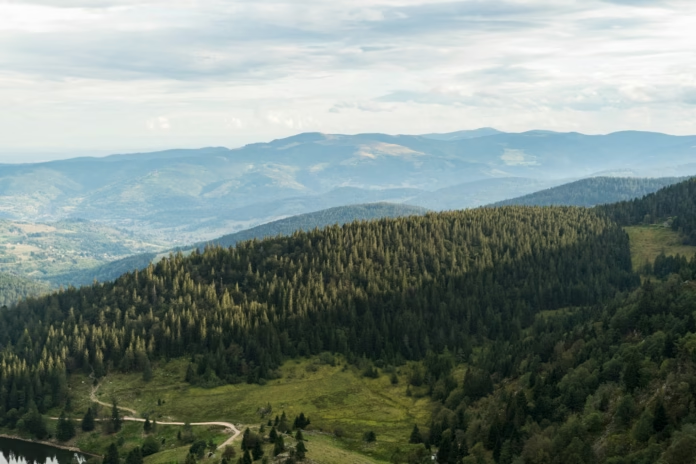
The Vosges do not have the altitude of the Alps, the celebrity of Mont Ventoux or the sheer scale of the Pyrenees. Look only at summit heights and it is easy to underestimate them. Spend a few days riding around Gérardmer and La Bresse, however, and that impression changes quickly.
The roads repeatedly climb out of deep green valleys, cross wooded cols and emerge onto the exposed high ridges of the Route des Crêtes. A summit might sit at only 900, 1,100 or 1,300 metres, but another descent and another ascent are rarely far away. The difficulty comes from accumulation. A 100km ride can contain a substantial amount of climbing without ever relying on one enormous Alpine pass.
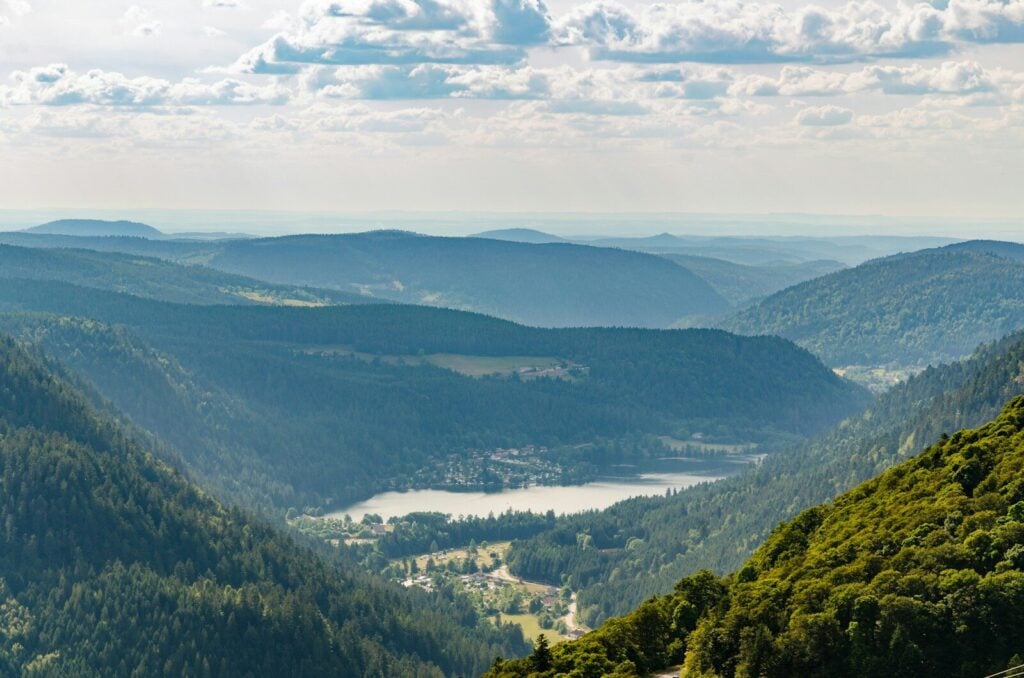
Then there is the atmosphere. Dark fir forest surrounds mountain lakes, the roads emerge onto open high pastures before disappearing into woodland again, and farmhouse inns sit on the ridges above the valleys. The whole region feels unmistakably French without resembling the country’s more familiar cycling destinations.
For anyone planning a wider French riding trip, the Vosges offer one of the most distinctive alternatives in ProCyclingUK’s Cycling in France guide. They provide serious climbing without requiring the enormous elevation or scale of the high Alps.
Gérardmer and La Bresse cycling at a glance
| Ride | Character | What makes it interesting |
|---|---|---|
| Col de Grosse Pierre | Accessible local climb | Natural link between Gérardmer and La Bresse |
| Col du Brabant | Short and steep | Immediate climbing from La Bresse |
| Croix des Moinats | Rolling mountain pass | Easy to combine with several other cols |
| Col de Bramont | Steadier ascent | Useful access towards the higher Vosges |
| Col de la Schlucht | Classic Vosges pass | Gateway to the Route des Crêtes |
| Route des Crêtes | High ridge riding | Open views, Hohneck and repeated climbing |
| Grand Ballon | Big-day objective | Highest summit in the Vosges massif |
| Le Markstein | Tour de France terrain | Historic high-road destination near Grand Ballon |
That list explains the basic appeal. You are not travelling to the Vosges for one famous climb that dominates the entire holiday. You come because a remarkably dense network of cols can be linked together from a compact base.
The same characteristics have made the region increasingly important to professional racing. ProCyclingUK’s Tour de France 2026 Vosges and Jura guide describes exactly why these lower but repeated climbs can be so difficult to control.
Gérardmer or La Bresse: which is the better cycling base?
Both towns work extremely well and sit close enough together that choosing one does not prevent you riding the roads around the other.
Gérardmer is probably the better base for a mixed holiday. The town sits beside Lac de Gérardmer, has the stronger conventional resort feel and gives direct access towards Xonrupt-Longemer, Col de la Schlucht and Col de Grosse Pierre. There is enough happening away from the bike that a rest day does not need to feel like an inconvenience.
La Bresse has a slight advantage if the trip is primarily about cycling. The town feels more immediately surrounded by climbing, with Col du Brabant, Croix des Moinats, Bramont and Grosse Pierre all available without a long approach. It is particularly easy to construct compact rides containing several ascents rather than spending the first hour travelling towards the mountains.
For a first visit where I intended to ride almost every day, I would probably choose La Bresse. If the bike were sharing the holiday with walking, restaurants and time beside the lake, Gérardmer would edge it.
The important point is that they effectively share the same riding area. A single col links the two.
Col de Grosse Pierre connects Gérardmer and La Bresse
Col de Grosse Pierre is one of the first climbs worth learning because it acts as the natural connection between the two principal bases.
From the Gérardmer side, the ascent is relatively gentle by Vosges standards, climbing for roughly nine kilometres to a summit just below 1,000 metres. That makes it useful rather than spectacular. It can form the centrepiece of an easier ride, become the first ascent of a longer day or provide the final climb back towards accommodation after several harder efforts.
More importantly, crossing Grosse Pierre effectively unlocks the road network on the opposite side. Riders staying in Gérardmer can reach La Bresse and its surrounding cols without a transfer, while anyone based in La Bresse can cross towards Gérardmer, Longemer and eventually Col de la Schlucht.
It may not be the climb that produces the defining photograph of the trip. It could easily become one of the roads you ride most often.
Col du Brabant gives La Bresse a much sharper option
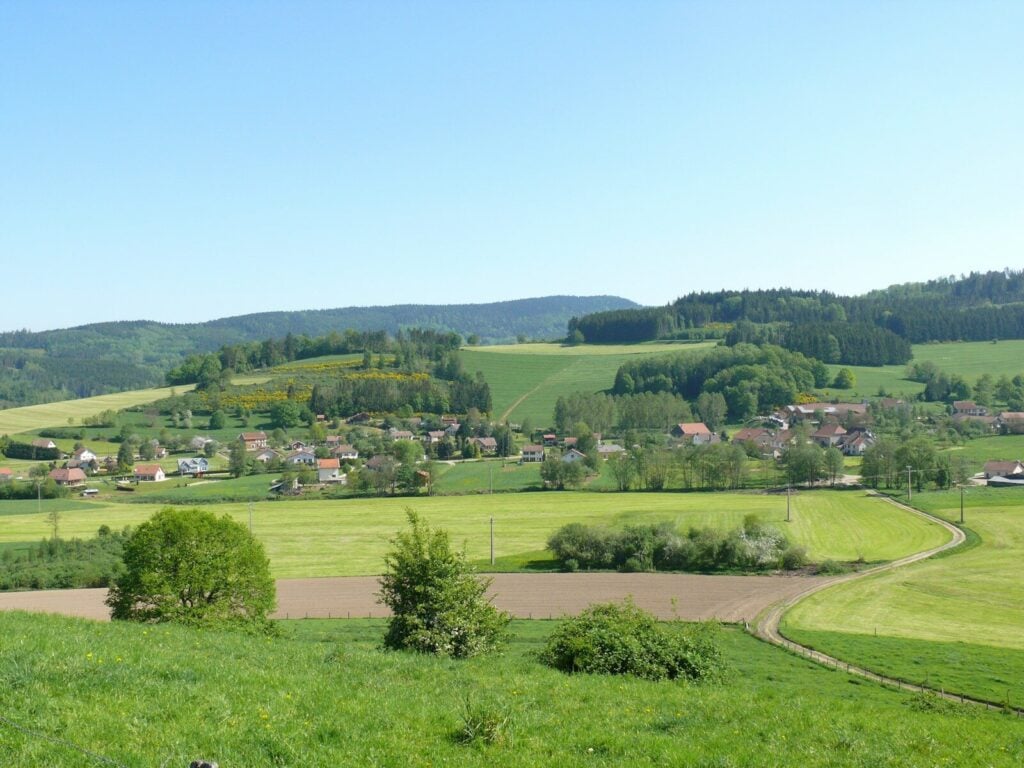
For something considerably less gentle, La Bresse has Col du Brabant almost on the doorstep.
The ascent is only around three kilometres long, but an average gradient close to 9% makes those kilometres count. It is exactly the kind of climb that defines the Vosges. There is no need for a long valley approach or an hour of steadily increasing altitude. The road simply begins going uphill and becomes difficult almost immediately.
That makes Brabant ideal for a short ride if the weather is uncertain, but it also fits naturally into a larger multi-col loop. The mistake is treating every climb of this length as a hill-climb competition. Going deep on Brabant can feel perfectly reasonable until another three or four ascents appear later in the day.
That is one of the first pacing lessons the Vosges teaches. Save something for the next climb because there is almost always another one.
Croix des Moinats shows why the Vosges are about linking climbs
The Col de la Croix des Moinats is another ascent whose statistics do not explain why it is useful.
From La Bresse, the climb is relatively moderate, rising for around six kilometres towards a summit just below 900 metres. On its own, it is unlikely to intimidate an experienced mountain rider. Its value comes from where the road takes you.
Cross the pass and another valley opens. From there, the route can be linked towards Vagney, Brabant, Grosse Pierre or other roads through the massif. Suddenly a modest-looking morning contains three or four named climbs and more elevation than expected.
That is the fundamental difference between much of the Vosges and a classic Alpine cycling day. In the Alps, one major pass can dominate the entire route. Here, the day’s difficulty often comes from repeatedly crossing between valleys until the elevation total has quietly climbed beyond 2,000 metres.
Col de Bramont is a useful route towards the high ridge
From La Bresse, Col de Bramont provides a steadier way out of the valley and works particularly well as part of a larger Route des Crêtes ride.
The climb itself is not especially severe. What makes it characteristic of the area is the environment: long sections of forest, limited visibility of the road ahead and a gradual sense that you are climbing into increasingly remote terrain.
In the high Alps, riders often have enormous visual references. You might see the road switching across a mountainside or know exactly where the summit lies several kilometres above. The Vosges frequently hide the landscape behind trees.
You climb through forest without seeing much beyond the next few bends, then suddenly the trees thin and the high ground appears.
That transition becomes one of the recurring pleasures of riding here.
Col de la Schlucht opens the door to the high Vosges
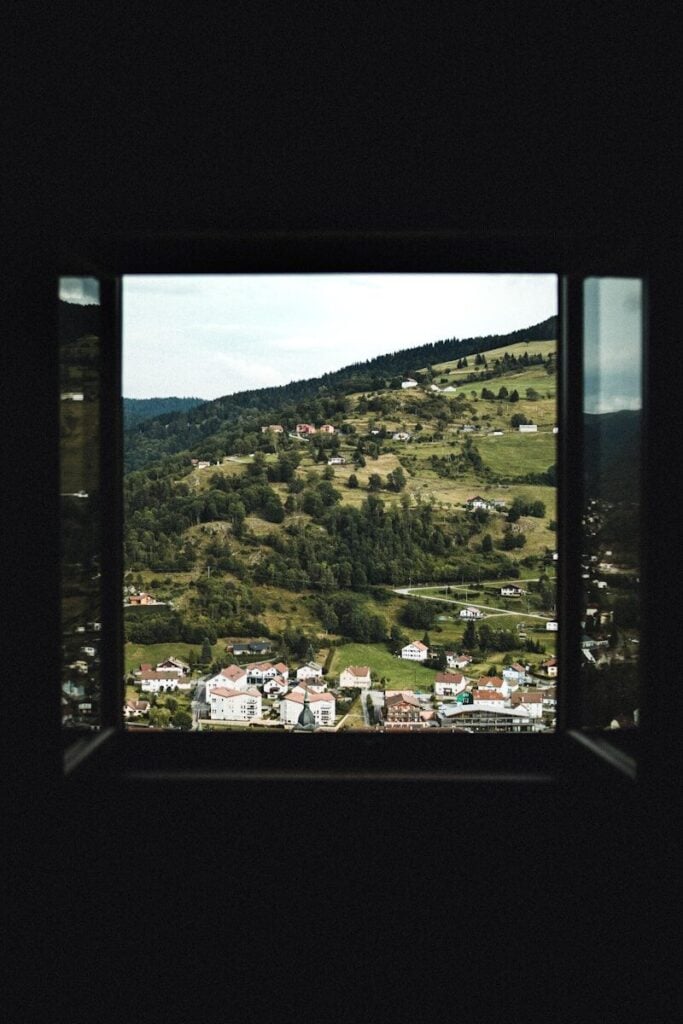
For anyone staying in Gérardmer, Col de la Schlucht is one of the most important roads in the region.
The climb from the Gérardmer side is long rather than particularly steep, making it ideal for settling into a rhythm. Xonrupt-Longemer provides another natural starting point, while riders approaching from La Bresse can reach the same pass from the south-west.
The real importance of the Schlucht becomes clear at the summit. Reaching the top does not feel like finishing the day’s major climb. Instead, it feels like arriving at the entrance to a completely different part of the mountains.
From here, the Route des Crêtes follows the higher spine of the Vosges towards the Hohneck, Le Markstein and Grand Ballon. Instead of immediately giving back all the elevation you have just gained, the road allows you to remain high and move along the ridge.
The Tour de France has repeatedly used Col de la Schlucht, including during the dramatic 2023 stage to Le Markstein when Giulio Ciccone secured the mountains classification there. ProCyclingUK covered that finale in its 2023 Tour de France Stage 20 report.
The Route des Crêtes is the road that defines a Vosges cycling trip
If one road justifies bringing a bike to the Vosges, it is the Route des Crêtes.
The lower climbs around Gérardmer and La Bresse are often enclosed by forest. On the high ridge, the landscape changes. The road crosses open mountain pasture, passes close to major summits and repeatedly reveals views into the valleys on either side of the massif.
It still is not flat. That is important. Reaching the ridge does not mean the climbing has finished, because the road constantly rises and falls as it follows the mountains. But the experience is very different from spending an hour enclosed by trees on the way up.
This is where the scale of the region becomes visible. On clear days the views can extend far beyond the immediate Vosges, while poorer weather can transform the same road into something much more exposed and atmospheric.
That variation is part of the appeal. The Route des Crêtes can feel bright, open and almost gentle in good weather, then surprisingly serious when wind and cloud move across the ridge.
The Hohneck is worth adding rather than bypassing
The Route des Crêtes passes close to the Hohneck, one of the highest and most recognisable summits in the Vosges.
A route-planning app concerned only with efficiency may keep you on the main road. A cycling holiday does not have to be designed like a logistics exercise.
Take the extra climb.
The Hohneck rises above the surrounding high pasture and provides the sort of expansive mountain views that are often hidden during the forested ascents below. It is a good place to stop, look back across the roads already ridden and appreciate just how much elevation can accumulate in a range whose summit heights appear modest on paper.
Those small detours frequently become the memorable parts of a cycling trip. Saving five minutes is rarely more valuable than actually seeing the landscape you travelled to ride through.
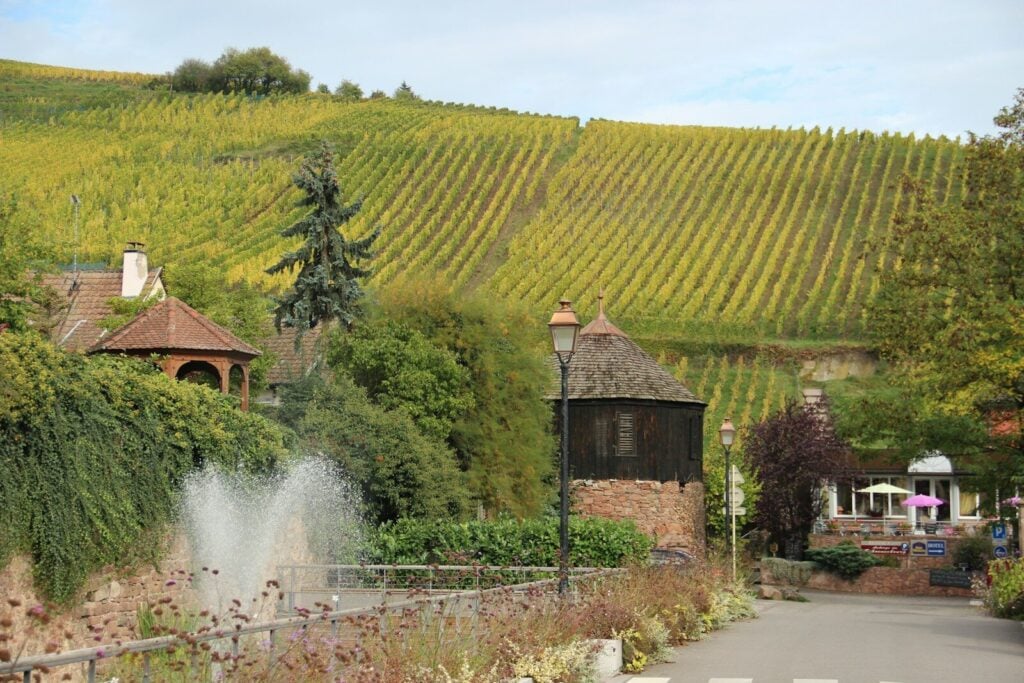
Grand Ballon is the obvious big-day objective
Eventually, most Route des Crêtes rides begin pointing towards the Grand Ballon, the highest summit in the Vosges massif.
From Gérardmer or La Bresse, reaching it requires more than simply climbing one mountain. The ride involves gaining the ridge, losing and regaining elevation, crossing additional high points and gradually travelling south towards the highest part of the massif.
That is exactly why Grand Ballon works so well as the centrepiece of the hardest day.
The climb also sits at the heart of the Vosges’ modern Tour de France identity. The 2026 Tour de France Vosges and Jura guide described Grand Ballon as the symbolic and sporting centre of the Vosges stage, while the 2026 race again demonstrated how the region’s difficulty comes from linking major climbs rather than relying on one summit finish.
A recreational rider gets exactly the same geographical challenge without needing race numbers. The Grand Ballon may be the destination, but everything required to reach it is what makes the ride.
Le Markstein has become an increasingly familiar cycling name
Near Grand Ballon sits Le Markstein, another location that has become increasingly prominent through the Tour de France.
It does not function like a conventional standalone summit climb. Le Markstein sits within a network of high Vosges roads, meaning race organisers can approach it using several different ascents and use the surrounding terrain to create very different stages.
That has made its Tour history more interesting than simply counting summit finishes. ProCyclingUK’s history of Le Markstein at the Tour de France follows its progression from part of the race’s mountain terrain into a modern Tour destination.
For a visiting cyclist, it reinforces the same lesson. The Vosges should be ridden as a network. Grand Ballon, Le Markstein, the Route des Crêtes and the surrounding cols make much more sense together than they do as isolated climbs to tick off a list.
The Col du Haag has added another serious modern climb
The 2026 Tour also introduced Col du Haag to a much wider audience.
Located near Grand Ballon and Le Markstein, it demonstrated that the Vosges can still produce new roads capable of changing how the range is perceived. The Tour used an 11.2km ascent averaging 7.3%, with the summit arriving less than six kilometres from the Le Markstein finish.
That is a very different proposition from the steadier roads around Gérardmer.
ProCyclingUK’s guide to the Col du Haag explains why the combination of steep sections, irregular gradients and surrounding climbs made it one of the hardest tests in the 2026 Tour.
For cyclists who associate the Vosges entirely with moderate forest cols, Haag is a useful correction. The range has plenty of roads capable of hurting properly.
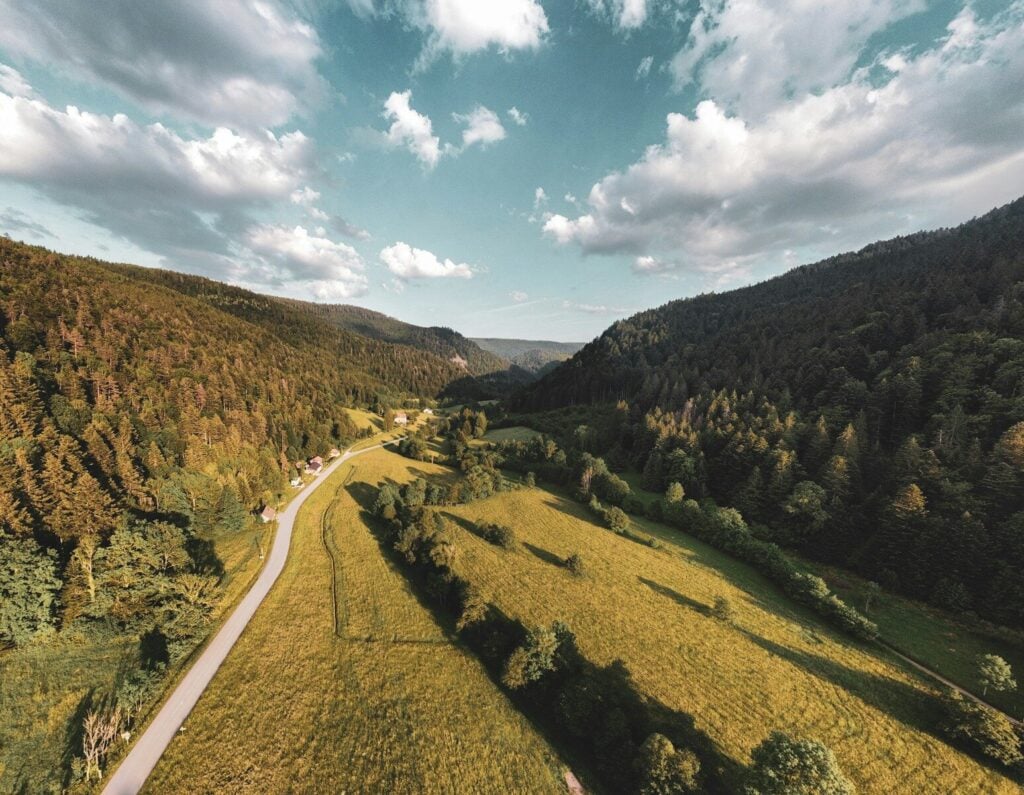
Tour de France history is everywhere without overwhelming the region
The Vosges have a much deeper connection with the Tour than the relatively low summit elevations might suggest.
The Ballon d’Alsace carries particular historical importance. It was used by the Tour in 1905 and is generally regarded as the first major mountain pass tackled by the race. More than 120 years later it remains capable of influencing professional racing, with the climb playing a decisive role again during the 2026 Tour.
The modern era has added a different set of landmarks. Le Markstein has become increasingly important, while La Planche des Belles Filles further south has developed into one of the most recognisable modern Tour climbs.
Most famously, Tadej Pogačar overturned Primož Roglič’s 57-second advantage during the 2020 Tour’s decisive time trial there, beginning the sequence that ultimately led to his five Tour victories. That moment is covered in ProCyclingUK’s complete story of Pogačar’s five Tour de France wins.
La Super Planche des Belles Filles then became the decisive final climb of the inaugural modern Tour de France Femmes in 2022, where Annemiek van Vleuten completed her dominant overall victory.
For someone based in Gérardmer or La Bresse, Planche des Belles Filles is better treated as a separate excursion than something casually added to a normal local ride. There is already enough climbing around the main bases to fill several days without turning every outing into a Tour landmark hunt.
The lakes give Gérardmer an excellent easier-day option
Not every ride needs to involve four or five cols.
The lakes around Gérardmer and Longemer provide a useful change of pace after a harder day on the Route des Crêtes. The terrain is still rarely completely flat, but the emphasis shifts away from chasing summit signs and towards rolling through forest and water-side scenery.
This is another reason Gérardmer works particularly well for a mixed cycling holiday. An easier day does not require spending several hours on an ugly valley road simply to avoid climbing. There are attractive shorter loops close to the town that still feel like part of the same mountain landscape.
Just be aware that the Vosges have a slightly warped definition of an easy ride. Even a route designed around the lakes can accumulate a respectable amount of elevation simply because genuinely flat roads are scarce.
The Vosges are much harder than their altitude suggests
This is the mistake most likely to catch out a first-time visitor.
Grand Ballon reaches a little over 1,400 metres. The Hohneck is lower. Col de la Schlucht is lower again. Compared with the highest Alpine roads, those figures look almost modest.
Summit altitude and total climbing during the ride are very different things.
The Vosges repeatedly send riders down into another valley before asking them to climb out again. The profile of a longer route can resemble a saw blade, with very little prolonged flat terrain between ascents.
The professional peloton encounters the same problem. Stage 14 of the 2026 Tour packed approximately 3,800 metres of climbing into 155.3km, using Grand Ballon, Col du Page, Ballon d’Alsace and Col du Haag before the finish at Le Markstein.
That is a serious mountain stage by any standard, despite never approaching the altitude of the Galibier or Col de la Loze.
For recreational riders, the lesson is straightforward: pace by the whole route rather than by the first climb.
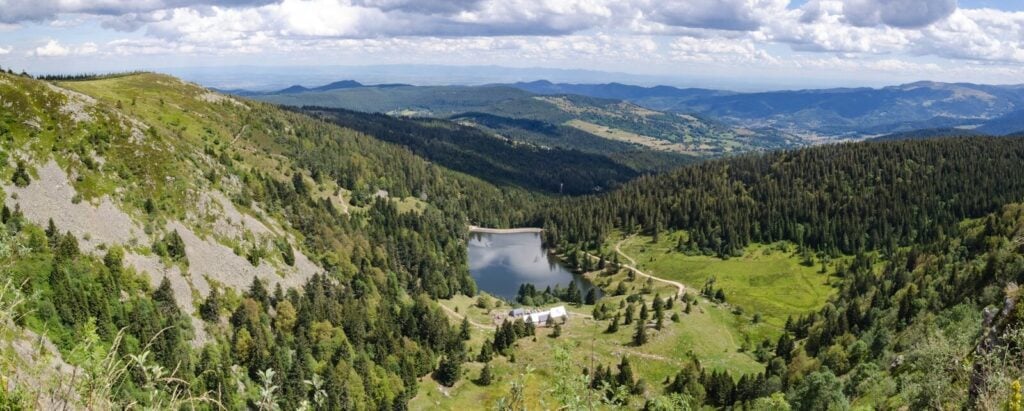
The roads feel more intimate than the high Alps
The difference is not only numerical.
Alpine valleys can feel enormous, with mountains towering thousands of metres above the road and major passes occupying an entire section of the day. The Vosges feel closer and more enclosed.
Forest crowds the roadside, corners arrive frequently and villages are usually much closer together. A descent can finish and the next climb begin almost immediately, without a long valley allowing the legs to reset.
That intimacy keeps the riding engaging even when gradients are relatively moderate. The scenery changes constantly rather than relying on one enormous mountain panorama.
Then, once the road reaches the Route des Crêtes, everything suddenly opens.
The contrast between those enclosed forest climbs and the exposed ridge is one of the strongest reasons to ride here.
Farmhouse inns belong in the experience
The fermes-auberges scattered across the high Vosges are another reason not to turn every ride into a training session.
This is mountain farming country, and the local food reflects it. Munster cheese is one of the obvious regional specialities, while blueberry dishes and substantial farmhouse meals provide a rather different refuelling strategy from another energy gel.
There is some tactical judgement involved. An enormous lunch halfway through a ride containing another three cols may not improve climbing performance.
Coffee and something sweet are easier to carry up the next ascent.
But stopping is part of the appeal. These establishments feel connected to the landscape rather than created specifically for cycling tourists, and they reinforce the sense that the Vosges are a living mountain region rather than a collection of famous Strava segments.
Weather on the Route des Crêtes deserves respect
The highest roads in the Vosges are much lower than the great Alpine passes, but they are exposed enough that weather can change dramatically between the valley and the ridge.
A sheltered climb through forest may feel warm. Reach the Route des Crêtes and wind, cloud or rain can make the temperature feel completely different. The same applies when a comfortable climbing effort is followed by a long descent.
Carry a lightweight windproof or waterproof layer on the bigger days, even when Gérardmer or La Bresse looks pleasant at breakfast.
The high-road cycling season is also naturally limited by winter. Snow affects access to the Route des Crêtes, so the region makes far more sense as a late-spring through early-autumn road-cycling destination than somewhere to assume will be fully rideable during March.
Summer is excellent, but early starts improve the famous roads
The principal riding season inevitably overlaps with the main tourist season.
Col de la Schlucht and the Route des Crêtes are scenic roads used by cars and motorcyclists as well as cyclists, so starting early can significantly improve the experience during busy summer weekends.
That does not mean the Vosges feel like riding on major Alpine transit routes. Much of the road network remains relatively quiet, particularly once you move away from the most obvious scenic corridors.
It is another advantage of having so many route options. If one road feels busy, there is usually another col available.
What bike and gearing should you use in the Vosges?
A standard modern road bike is ideal for the principal climbs and Route des Crêtes.
The more important decision is gearing. Because individual climbs are often relatively short, it is easy to assume that a harder setup will be fine. That argument becomes less convincing when a route has already accumulated 1,800 metres of climbing and another steep three-kilometre ascent appears.
For most recreational cyclists, a compact chainset with an 11-30, 11-32 or 11-34 cassette provides useful flexibility. Stronger riders can obviously use harder gearing, but there is little downside to having another gear available when Brabant appears towards the end of the day.
Modern 28mm or 30mm tyres are also ideal. They retain the speed of a normal road setup while adding useful comfort on smaller mountain roads.
-
 Photo Credit: quentinphotographiebe
 -
 Photo Credit: Getty
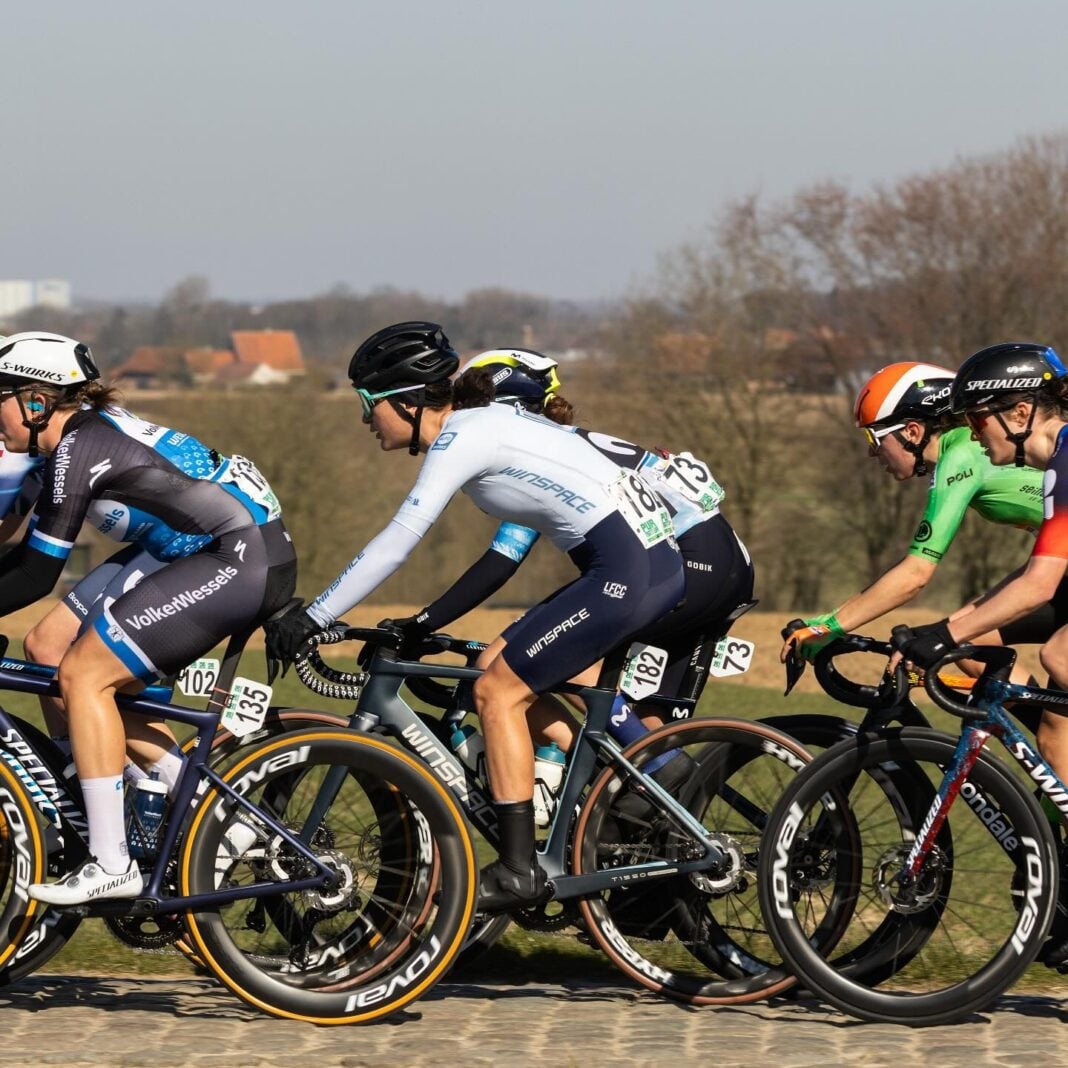


A five-day Gérardmer or La Bresse cycling plan
A first trip works best if the difficulty builds towards the Route des Crêtes rather than using the biggest ride immediately.
Day 1: Gérardmer, Grosse Pierre and La Bresse
Use Col de Grosse Pierre to connect the two main bases and learn the local road network. Keep the overall distance controlled rather than immediately adding every climb visible on the map.
Day 2: La Bresse local cols
Build a loop incorporating Col du Brabant, Croix des Moinats and Col de Bramont. Individually none needs to dominate the ride, but together they provide a proper introduction to the repeated climbing that defines the Vosges.
Day 3: Gérardmer and the lakes
Use the lake roads for the easier day. There will still be some climbing, but the emphasis can move towards recovery, scenery and keeping the legs turning rather than collecting cols.
Day 4: Col de la Schlucht, Hohneck and Route des Crêtes
This is the signature ride. Climb towards the Schlucht, join the ridge and include the Hohneck rather than simply following the most efficient road.
Day 5: Grand Ballon and Le Markstein
If the weather and legs cooperate, make the final day the big one. Link the Route des Crêtes towards Grand Ballon and Le Markstein, using the same mountain network that has repeatedly shaped Tour de France stages.
For more detail on how those roads fit together in professional racing, see ProCyclingUK’s Tour de France 2026 Vosges and Jura guide and history of Le Markstein.
Why the Vosges deserve more attention from British cyclists
The Vosges occupy an interesting middle ground between Europe’s famous high mountains and its smaller climbing regions.
They are serious enough to support a full week built around road cycling. There is no shortage of elevation, and riders determined to collect every nearby col can make the days as difficult as they want. At the same time, the massif is compact enough that Gérardmer and La Bresse remain useful bases throughout the trip. There is little need for long transfers or wasted kilometres simply to reach the good roads.
Then there is the landscape: mountain lakes below, dark forest on the climbs, open high pasture on the ridge and the Route des Crêtes running along the spine of the range. Add Grand Ballon, Col de la Schlucht, Tour de France history and a network of smaller climbs that rarely allow the legs to settle for long, and the region starts making a very persuasive case.
The Vosges are sometimes described as a smaller alternative to the Alps, but that undersells them. The cycling works differently here. The climbs are generally shorter, the roads feel more enclosed and the difficulty comes from stacking ascent upon ascent until a route that appeared fairly modest over breakfast has quietly accumulated 2,000 metres.
Stay in Gérardmer or La Bresse and the rhythm becomes familiar remarkably quickly: climb out of the valley, cross a wooded col, descend into the next one and start climbing again.
That is what makes cycling in the Vosges special.

