
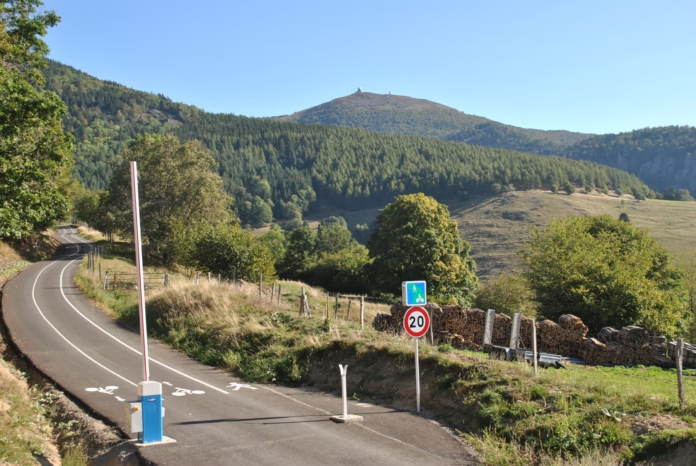
The Col du Haag will make its Tour de France debut on Stage 14, but it already looks capable of becoming one of the defining climbs of the 2026 race.
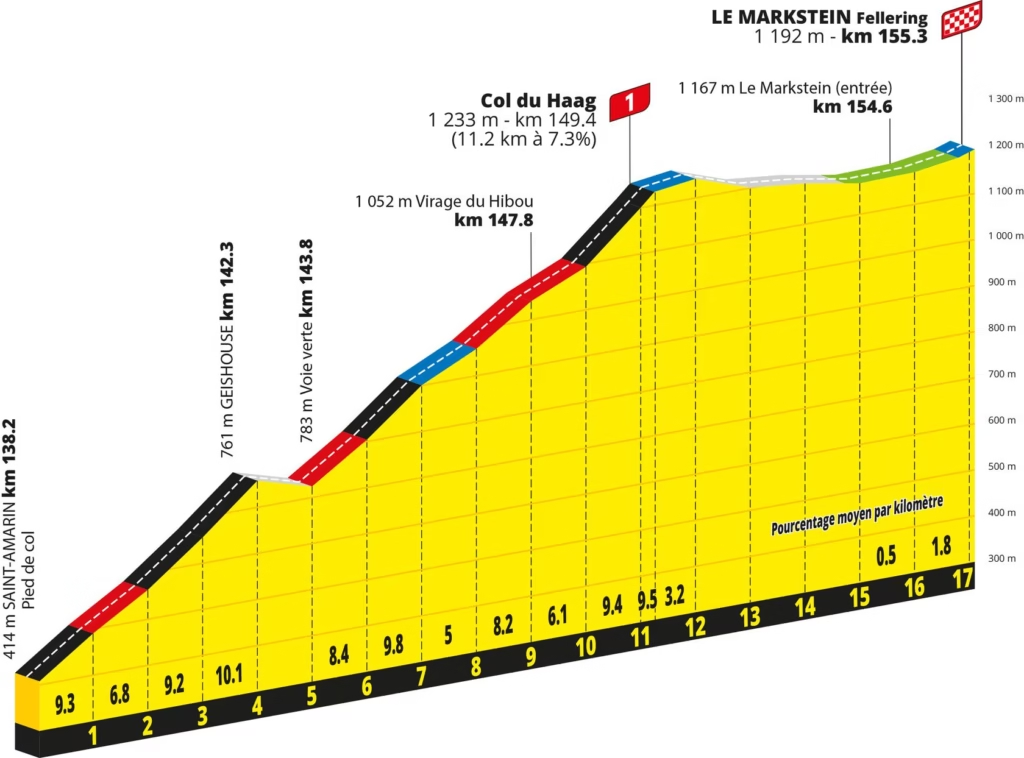
Officially, it is an 11.2km first-category ascent averaging 7.3%. Those figures alone place it among the harder climbs in the Vosges, but they do not fully explain its difficulty. The road is narrow, the gradient repeatedly changes and sections of 12% and 13% arrive deep into the ascent.
Its position could be even more important than its numbers.
The summit comes with only 5.9km remaining before the finish at Le Markstein. There is barely enough road for a dropped rider to recover, making the Col du Haag the real final climb of Stage 14 even though the finish line is located elsewhere.
Race director Thierry Gouvenou has described it as potentially the hardest climb in the Vosges. Tour organisers believe they may have uncovered a road capable of becoming a regular modern battleground, comparing its introduction with the first appearance of the Col de la Loze in 2020.
The Col du Haag is the climb that could decide whether Stage 14 becomes a general classification fight, a breakaway survival day or another controlled performance from Tadej Pogačar.
Where is the Col du Haag?
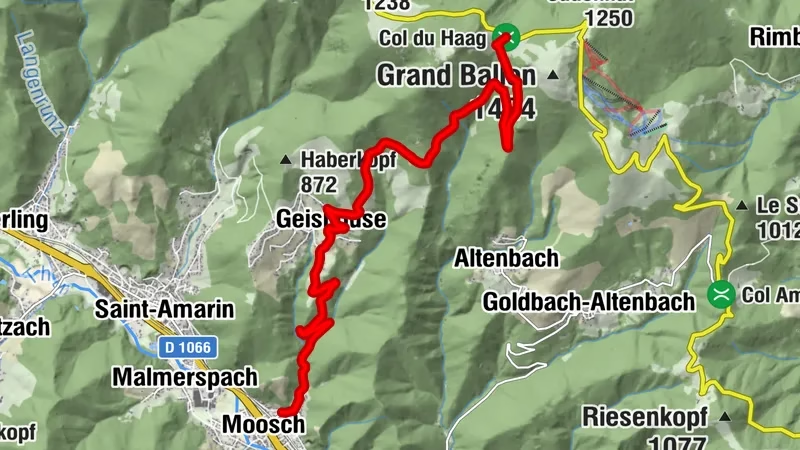
The Col du Haag is located in the Vosges mountains in eastern France, close to the Grand Ballon and the Le Markstein ski area.
Its summit stands at 1,233 metres above sea level. Although that is modest compared with the highest roads of the Alps or Pyrenees, altitude is not what makes the climb dangerous.
The Vosges offer a different type of difficulty. Climbs are often irregular, heavily wooded and connected by roads with little flat terrain between them. Riders can struggle to establish a rhythm, while the repeated changes in gradient encourage short attacks and sudden accelerations.
The road used by the Tour has an unusual history. It was opened to vehicles in 1960 before later being restored and converted into a greenway. The route has been accessible in its current form since 2022, with bringing the Tour de France to the climb reportedly part of the long-term ambition behind the work.
Gouvenou described it as a former forest path transformed into a cycle route, drawing a comparison with the Col de la Loze. That does not mean the two climbs are physically identical. The Loze is longer, higher and more extreme, but both roads give the Tour access to terrain that was not previously suitable for a normal race convoy.
How hard is the Col du Haag?
The official statistics are:
- Length: 11.2km
- Average gradient: 7.3%
- Summit altitude: 1,233 metres
- Classification: Category one
- Distance from the finish: 5.9km
An average of 7.3% across more than 11 kilometres is already enough to produce significant gaps after a hard stage.
The problem for the riders is that the gradient is not consistent.
Sections at 12% and 13% interrupt the climb, meaning the average conceals several much steeper passages. Gouvenou has described those ramps as opportunities for riders either to attack or to crack.
That distinction is important. A regular climb allows a strong team to set a controlled tempo and gradually reduce the group. An uneven ascent is harder to manage. Every steep ramp creates an opportunity for an acceleration, while every short reduction in gradient allows attackers to preserve momentum.
A rider who is already close to the limit can lose contact very quickly. Once a gap opens on a narrow road, team support may become difficult to organise.
The Col du Haag is therefore likely to reward riders who can repeatedly change pace rather than simply hold one sustained climbing effort.
It is one reason Stage 14 ranks among the hardest mountain stages of the 2026 Tour de France.
Why the Col du Haag is the real finish of Stage 14
Stage 14 is officially listed as finishing at Le Markstein, but the Col du Haag should determine the decisive selection.
The summit arrives at kilometre 149.4 of the 155.3km stage. From there, the riders have only 5.9km remaining.
That leaves very little time to recover from a bad moment.
A rider dropped near the summit may be able to limit the damage on the descent and approach to Le Markstein, but the road is not long enough for a large, organised chase. Small gaps of five or ten seconds could therefore survive to the line.
It also changes the value of attacking near the top.
On a climb followed by 20 or 30 kilometres of descending and valley roads, GC contenders may hesitate because cooperation becomes essential. On the Col du Haag, the finish is close enough for a rider to commit fully.
An attack inside the final two kilometres of the climb could carry directly to Le Markstein.
The finish itself should not be viewed as a conventional summit finish. The decisive climbing ends at the Col du Haag, followed by a short transition towards the line. Position over the summit could matter almost as much as raw climbing strength.
That unusual layout is part of what makes Le Markstein’s Tour de France history so interesting. The location has been used in different ways, but the Col du Haag gives the 2026 finish a completely new tactical character.
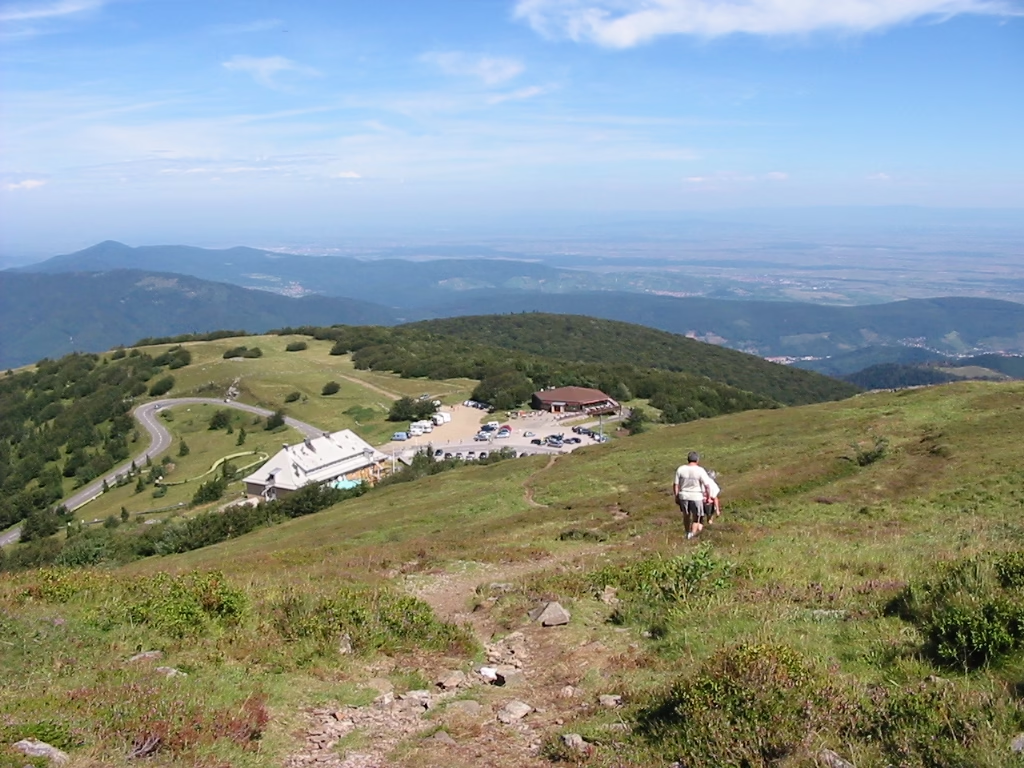
Stage 14 is hard before the Col du Haag begins
The final climb cannot be separated from everything that comes before it.
Stage 14 covers 155.3km from Mulhouse to Le Markstein and includes approximately 3,800 metres of climbing. The official route contains four major categorised ascents:
- Grand Ballon: 21.6km at 4.7%
- Col du Page: 9.8km at 4.7%
- Ballon d’Alsace: 8.9km at 6.9%
- Col du Haag: 11.2km at 7.3%
The Grand Ballon begins early enough to encourage a major fight for the breakaway. Its relatively moderate average gradient could disguise an aggressive opening, with climbers and stage hunters attempting to establish the day’s move.
The Col du Page adds another prolonged climbing effort before the race reaches the Ballon d’Alsace. By then, the peloton should already have been reduced and the breakaway may be beginning to fragment.
The Col du Haag therefore arrives after several hours of repeated climbing rather than as an isolated test.
Its steep ramps will feel considerably harder after the Grand Ballon and Ballon d’Alsace have already drained the riders’ legs.
The wider place of the stage within the race is covered in our Tour de France 2026 Vosges and Jura guide. Stage 14 is the central day of that overlooked mountain block and one of the last major tests before the second rest day.
Could the breakaway survive?
Stage 14 has the profile of a strong breakaway day, but the position of the Col du Haag makes the outcome difficult to predict.
A large group could gain significant time during the opening half of the stage. UAE Team Emirates-XRG may have little interest in controlling every move, particularly if none of the riders at the front threatens Pogačar’s yellow jersey.
That is why the stage appears prominently among the best breakaway opportunities of the 2026 Tour.
However, the final climb gives the general classification contenders a clear opportunity to race.
If Visma-Lease a Bike, Red Bull-Bora-Hansgrohe or another GC team increases the pace before the Col du Haag, the breakaway could lose time rapidly. The final 11.2km are steep enough for the strongest climbers to close a substantial gap.
The composition of the escape will be crucial. A group containing riders capable of surviving the Ballon d’Alsace and maintaining a strong tempo on the Col du Haag could still contest the stage.
A weaker or poorly organised break may find itself caught once the favourites begin attacking behind.
Stage 14 is therefore different from a conventional mountain breakaway day. The escape may be allowed several minutes, but the GC battle can still reach it during the final climb.
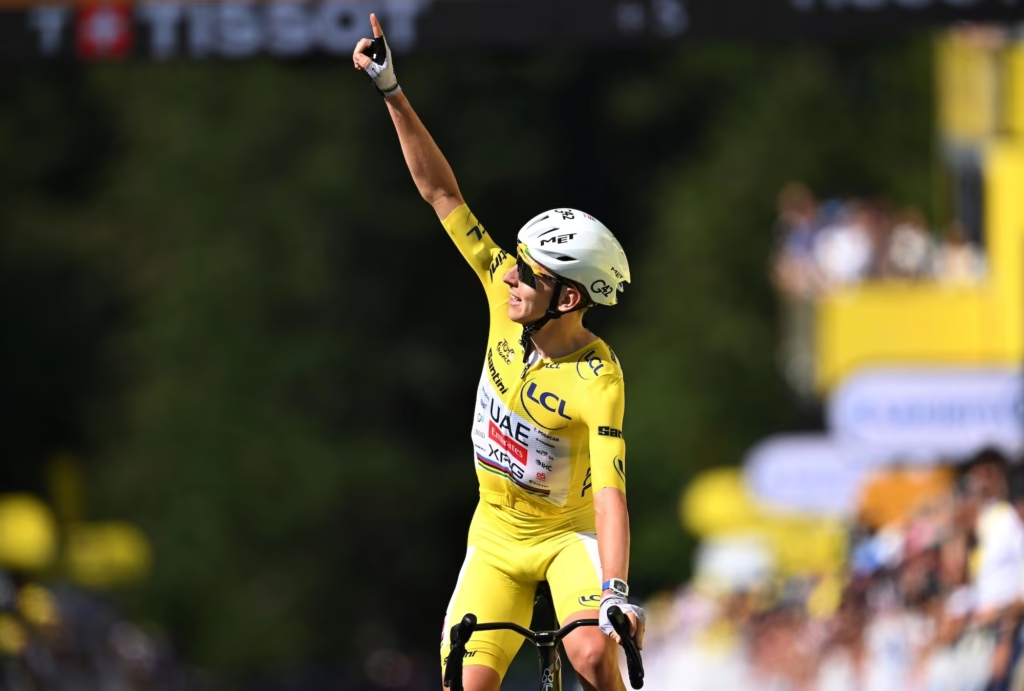
Why Pogačar may be difficult to dislodge
The Col du Haag appears well suited to Pogačar.
Its changing gradients allow him to use his acceleration, while the short distance from the summit to the finish reduces the need for a long solo attack. He could wait until one of the steepest late ramps, create a small gap and carry it to Le Markstein.
The climb also fits many of the strengths examined in our Tour de France 2026 profile of Tadej Pogačar. He is comfortable on irregular gradients, can respond quickly to changes of pace and does not need a long mountain to create meaningful separation.
Pogačar has already reconnoitred the final circuit and praised the roads, scenery and descents. Familiarity will matter on a climb the rest of the peloton has never raced at Tour speed.
UAE also has the option of controlling rather than attacking.
If the team sets a hard but measured pace, Pogačar can force his rivals to expose themselves. He does not need to take major risks while holding a comfortable advantage over Jonas Vingegaard.
That creates the possibility of another control job. UAE could keep the race together over the decisive section, neutralise attacks and allow Pogačar to respond only when necessary.
Vingegaard and Evenepoel may need to use the steep ramps
For Vingegaard, the Col du Haag provides one of the remaining opportunities to test whether Pogačar can be placed under sustained pressure before the Alps.
A single late acceleration may not be enough. Visma could attempt to make the entire stage difficult, reducing UAE’s support before the final climb and forcing Pogačar to respond to repeated attacks.
The changing gradients may help that strategy. Steep sections create natural launch points, while the narrow road could make it difficult for a team to maintain complete control.
Stage 14 is listed among the best days for GC attacks on the 2026 Tour route because the final sequence rewards ambition. A team can make the race hard from the Ballon d’Alsace before using the Col du Haag as the final launchpad.
Remco Evenepoel has a different concern.
Tom Pidcock is now only nine seconds behind him in the battle for third place. Evenepoel cannot focus only on Pogačar and Vingegaard. He must also monitor Pidcock, Juan Ayuso, Paul Seixas and Florian Lipowitz.
The Col du Haag may produce several races at once. The yellow jersey contest could develop at the front while the podium contenders fight over smaller gaps behind.
For Pidcock, the stage is the first major examination of whether his new Tour de France podium challenge can survive direct mountain racing.
-
 Photo Credit: Unipublic/Cxcling/Aritz Arambarri
 -
 Photo Credit: Cor Vos


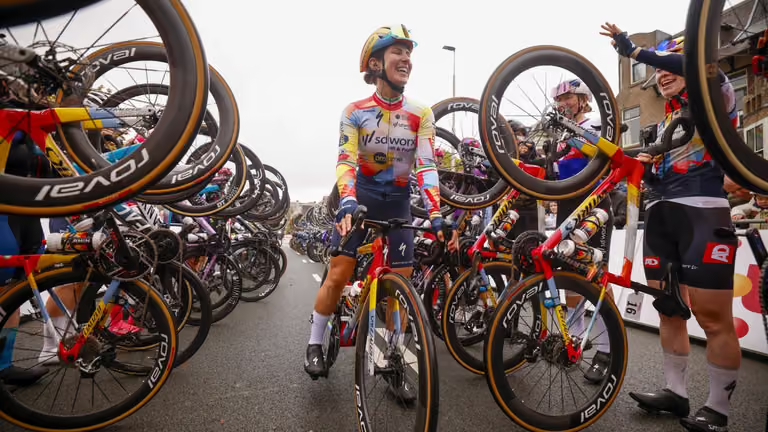
Why the Col du Haag could become a Tour regular
The Tour is constantly searching for roads that create a distinctive racing challenge.
The Col du Haag offers several attractive features. It is steep without being impossibly long, close enough to Le Markstein to decide a stage and connected to established Vosges climbs that allow organisers to build different approaches.
Its narrow, converted road also gives it a visual identity. Like the Col de la Loze, it feels different from the broad mountain passes used regularly by traffic.
It also adds another distinctive ascent to the major climbs of the 2026 Tour de France, a route that combines famous Alpine and Pyrenean names with less familiar roads in the Vosges and Jura.
Whether the Col du Haag becomes iconic will depend on the racing.
A climb earns its Tour reputation through what happens on it, not through its gradient alone. If the Col du Haag produces a major attack, a yellow jersey crisis or a dramatic stage-winning move on its debut, it will immediately become part of the race’s modern vocabulary.
The Tour can then return using different combinations of the Grand Ballon, Ballon d’Alsace and Le Markstein. That versatility may prove as valuable as the steepness of the climb itself.
Could the Col du Haag decide Stage 14?
The climb is almost certain to decide the shape of the stage, even if it does not determine the winner.
If the breakaway still holds a significant advantage at its foot, the Col du Haag becomes a survival contest between the strongest remaining escapees.
If the gap is small, it becomes the point where the favourites can catch and pass the break.
If the GC teams arrive together, its steep ramps offer the final opportunity to attack before Le Markstein.
That is what makes the new climb so important. The Col du Haag is not simply another ascent added to an already difficult day. Its gradient, irregular surface and position close to the finish make it the natural tactical centre of Stage 14.
The Tour has used the Grand Ballon, Ballon d’Alsace and Le Markstein before. The Col du Haag is the unknown road that changes how all of them will be raced.
By Saturday afternoon, it may no longer feel unknown.

