

There are some cycling destinations that earn their reputation because they are hard, some because they are historic, and some because they are simply beautiful. Queenstown and Central Otago stand out because they can be all three, depending on how you ride them. That is what makes the region such a compelling entry on any serious riding list. It is not built around one famous climb or one celebrated road. It is built around range, atmosphere and the sense that every day on the bike can take on a different character.
For readers exploring the wider riding side of the site, this piece sits naturally alongside the broader cycling travel hub and the Australia & New Zealand cycling travel guide.
Queenstown has the more obvious pull at first. It is dramatic, polished and lively, a place where the mountains crowd close to the lake and every ride seems to begin with the feeling that something good is about to happen. Central Otago broadens the picture. It is drier, quieter and more spacious, with a slower rhythm and a more understated beauty. Put them together and you get one of the most rounded cycling regions in the world, somewhere that can genuinely suit road riders, gravel riders, trail riders and mixed-ability groups without ever feeling like a compromise.
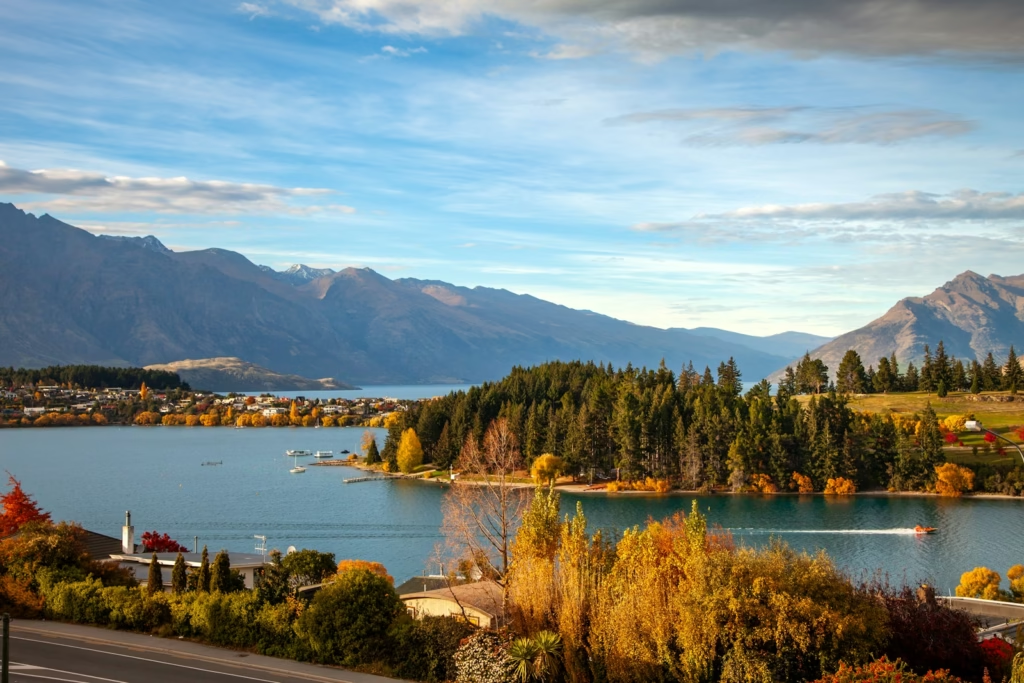
Why Queenstown works so well for cyclists
Queenstown’s biggest strength is not just that it is scenic. Plenty of places can offer scenic roads. What Queenstown offers is variety without friction. You can base yourself in one place and spend several days riding completely different kinds of terrain without long transfers, awkward logistics or the sense that you are repeating the same experience with a different backdrop.
One day can be shaped around the Queenstown Trail network, rolling beside the Kawarau River, through Gibbston wine country, over suspension bridges and into Arrowtown. Another can lean harder into mountain biking, with technical descending and a more adrenaline-heavy rhythm. Another can be built around a longer road outing, using the region’s mountain roads and open approaches to turn a scenic ride into something more physically demanding. That flexibility is a large part of what makes Queenstown feel so strong as a cycling base. It does not trap you in one version of yourself as a rider.
It also helps that the town understands the outdoors. That sounds obvious, but it matters. Places that are genuinely good for cycling usually make life easy in small ways. Bike hire is straightforward, transport links to trailheads are normal rather than niche, and cafés, wineries and accommodation all sit comfortably inside the shape of an active trip. Queenstown has that ease. You do not spend too much time forcing the destination to work. You spend more time riding.
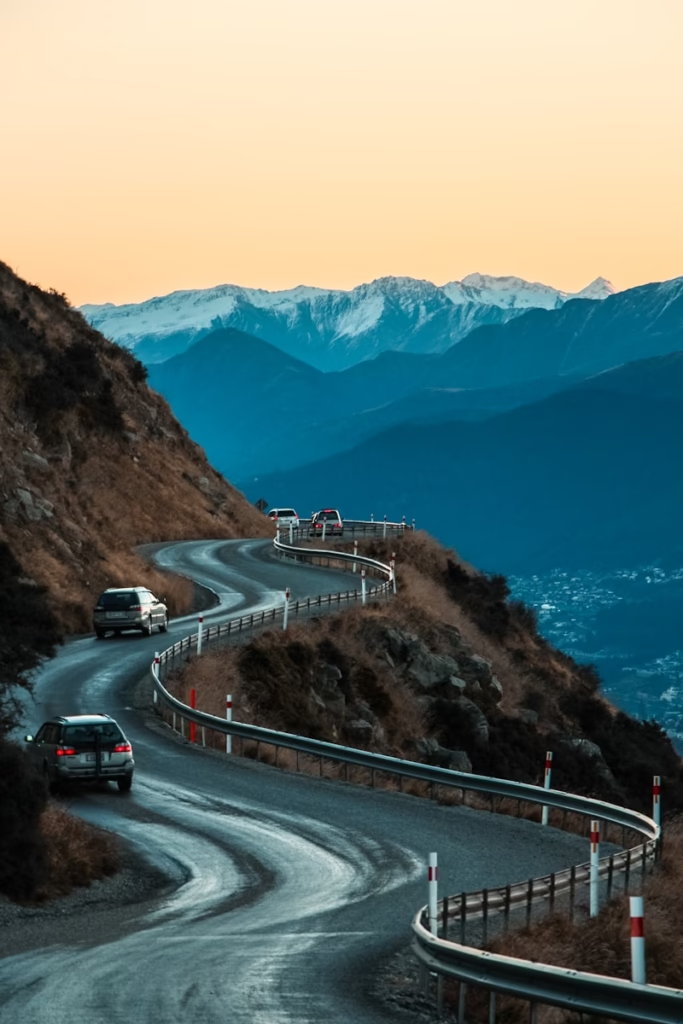
The trails make the area more accessible than it first appears
What often surprises people about Queenstown is that it is not only for the highly trained or technically fearless rider. The trail network softens the place in a good way. Yes, the scenery is big and the landscape can feel dramatic, but the riding does not always need to be. There are routes here that can be social, exploratory and relatively forgiving, which makes the region much more open than the postcard mountain setting might suggest.
That is important if you are travelling with a partner, friends or family who do not all ride in the same way. Queenstown can absorb that. One rider can go searching for something tougher, while another can enjoy a more relaxed trail day with coffee stops, vineyard views and a less pressured pace. Good cycling destinations rarely depend on everyone in the group being identical. Queenstown does not.
The same principle also makes it attractive for e-bike riders. In many destinations, e-bikes feel like an accommodation. Here, they feel like a natural part of the place. They widen the catchment of who can enjoy the region without reducing what makes the riding special.

Central Otago gives the trip more depth
If Queenstown is the energetic front door, Central Otago is where the trip deepens. This is where the riding becomes broader and calmer, where the horizons stretch out and the landscape starts to feel more elemental. The roads and trails carry a different mood. The mountains are still there, but the space between things feels more important.
That is one reason the Otago Central Rail Trail has such a strong reputation. It is not just a tick-box route. It works because it encourages the right pace. It invites multi-day riding, not through drama or fear, but through steady immersion. You ride through old railway infrastructure, dry open country, tunnels, cuttings and small settlements that give the route a strong sense of continuity. It feels like the sort of journey that settles you rather than tests you.
There is a temptation to reduce Central Otago to the rail trail alone, but that misses the point. The region’s appeal is larger than one route. What makes it special is the atmosphere of the riding as much as the named trails themselves. It has a weathered, patient quality that makes you want to stay out longer, ride a little farther and see what is around the next bend, even when the road ahead looks simple.
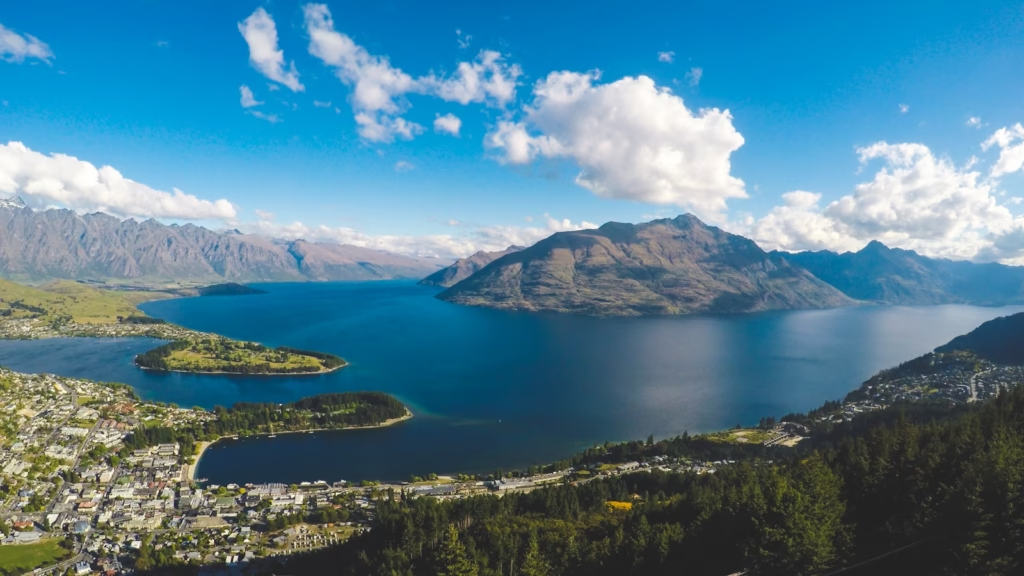
Why the Queenstown and Central Otago combination is so strong
A lot of cycling trips are built around a single idea. Queenstown and Central Otago are better because they offer contrast. You can start with Queenstown’s busier, sharper edge and then ease into the more expansive rhythm of Central Otago. Or you can begin with the long, measured days of the interior and then finish with a few more intense or varied rides around Queenstown. Either way, the region changes shape in a satisfying way.
That progression is one of the main reasons it deserves to be on a riding list. It is not just one good destination beside another. It is a combination that improves itself. Queenstown gives the trip energy and immediate visual impact. Central Otago gives it space and staying power. Together, they turn a good riding holiday into something far richer.
It is also one of the easier destinations to recommend to riders with slightly different motivations. Some want a trip full of photos, coffee stops and beautifully built trails. Some want hard riding and longer road days. Some want a mix of both. Queenstown and Central Otago can hold all of that without feeling disjointed.
The landscape has a different emotional pull from Europe
For riders used to Europe’s famous cycling regions, this part of New Zealand offers a very different emotional texture. There is less of the crowded historical layering you find in the Alps, Dolomites or Pyrenees. Instead, the appeal comes from openness, light and a sense of distance. The roads and trails feel less hemmed in by expectation. There is a freshness to them, not because the region lacks story, but because the story feels less over-told.
That can be deeply refreshing. You are not constantly riding through places already loaded with cycling mythology. You are allowed to make your own connection with the landscape. The lake, the dry hills, the wide valley floors and the old railway traces all work on you in a quieter way. That quieter pull is part of what makes the destination linger in the mind.
For anyone building a longer list of aspirational rides, it also provides a useful contrast to more established European targets. In that sense, it sits well alongside the wider planning approach used across the cycling travel hub, where the point is not only to find famous roads but to find places that offer a memorable riding experience.



It is not just a place to ride, it is a place to travel through properly
That distinction matters. Some destinations are excellent for single rides but weaker as overall travel experiences. Queenstown and Central Otago are stronger because the movement between riding, staying, eating and exploring feels natural. You can build a proper trip here, not just a training block.
Arrowtown brings heritage and character. Gibbston adds the easy appeal of vineyard country. The Central Otago towns give the trip shape and pause points. Queenstown itself has all the energy and convenience you could want at the beginning or end of a day. That makes the entire region feel like somewhere you travel through rather than somewhere you merely use.
For a cycling holiday, that is often the difference between a place you enjoy and a place you genuinely remember. The strongest destinations create a full atmosphere around the riding. Queenstown and Central Otago manage that without ever feeling contrived.
Why it deserves a place on your riding list
Queenstown and Central Otago deserve a place on your riding list because they offer more than one type of reward. They can be spectacular without becoming shallow. They can be varied without becoming messy. They can be ambitious without becoming exclusive. That combination is rare.
Queenstown gives you immediate access to riding that feels vivid and versatile. Central Otago gives you the slower-burn pleasure of distance, texture and space. Together, they create a cycling destination that can suit many kinds of rider while still feeling distinctive enough to stand among the best.
That is the real case for putting it on your list. Not because it is fashionable, and not because one route became famous, but because it offers the sort of riding trip that keeps unfolding as you move through it. The best destinations do that. Queenstown and Central Otago do it exceptionally well.
For readers mapping out future trips, this also fits naturally with the broader Australia & New Zealand cycling travel guide and the wider cycling travel hub.

