
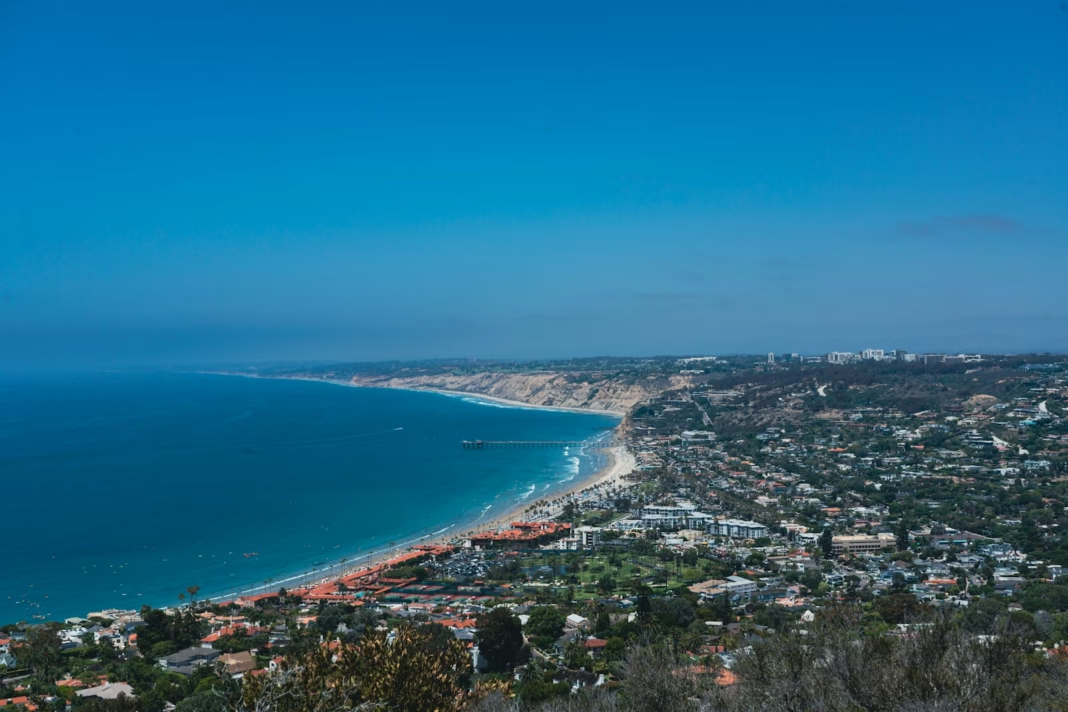
San Diego is easy to misunderstand as a cycling destination. From a distance, it looks like a coastal city first: beaches, surf towns, palm trees, long boulevards and the soft haze of the Pacific hanging over everything. Ride there for a few days, though, and the map begins to open up in a more interesting way. The coast is only the invitation. The real depth of San Diego cycling sits inland, where the roads lift away from the ocean, twist through dry canyons, climb towards pine forest and eventually reach the high, exposed country of the county’s eastern mountains.
That contrast is what makes riding here feel special. You can begin the day with salt in the air, gulls above the harbour and the lazy roll of beach traffic through La Jolla, Encinitas or Coronado, then finish it grinding through chaparral, granite, dust and warm inland wind. The change is not subtle. The light hardens, the smells shift from seaweed and coffee to eucalyptus, sage and sun-baked earth, and the roads become quieter, steeper and more serious.
San Diego is not a European climbing base in the obvious sense. It does not have one compact valley of famous cols or a neat list of passes where every café terrace is filled with cyclists in matching kit. Its appeal is more spread out and more Californian. The distances are bigger, the climate is drier, the traffic patterns need understanding and the best rides often begin with a drive or a careful route choice. But once you get beyond the city, the rewards are enormous.
For more riding ideas across North America, ProCyclingUK’s cycling in the USA and Canada hub brings together destination guides built around big landscapes, wide route choices and the kind of riding that can fill a full trip without repeating the same day twice.

Why San Diego works as a cycling base
The first advantage is climate. San Diego offers year-round riding in a way that many cycling destinations cannot. Winter can be mild, spring is often clear, autumn can feel endless, and even summer can be excellent if you respect the heat and start early. The coast has one temperature, the inland valleys another, and the higher mountains another again. That variety gives the area real range, but it also means the weather needs more thought than the tourist-board version of San Diego suggests.
On the coast, the morning can begin cool and grey, especially under the marine layer. Inland, the same day can become hot and dry by late morning. In the Laguna Mountains or around Palomar, the temperature can shift again with altitude. That makes San Diego a place where clothing, water and timing matter. A gentle coastal spin and a ride up Kitchen Creek are not the same kind of day, even if they sit within the same county.
The second advantage is terrain. San Diego gives you several cycling worlds in one region. There are flat coastal roads for easy spins, rolling inland lanes for endurance rides, punchy climbs around East County, and longer mountain ascents that feel far removed from the city. The roads can be wide and exposed, narrow and rural, smooth and fast, or broken and sun-bleached. The best routes have a rhythm that feels unmistakably Southern Californian: long drags, open turns, sudden ramps, big views, then fast descents back into dry valleys.
There is also a strong cycling culture, but it does not always announce itself loudly. You see it in early groups heading north along the coast, in riders gathering at coffee stops, in the steady trickle of cyclists on inland loops, and in the local reverence attached to climbs like Palomar Mountain, Mount Laguna and the Great Western Loop. These are not novelty rides. They are the kind of routes that regular local riders use to measure fitness, confidence and climbing condition.
The coast is beautiful, but inland is where the riding changes
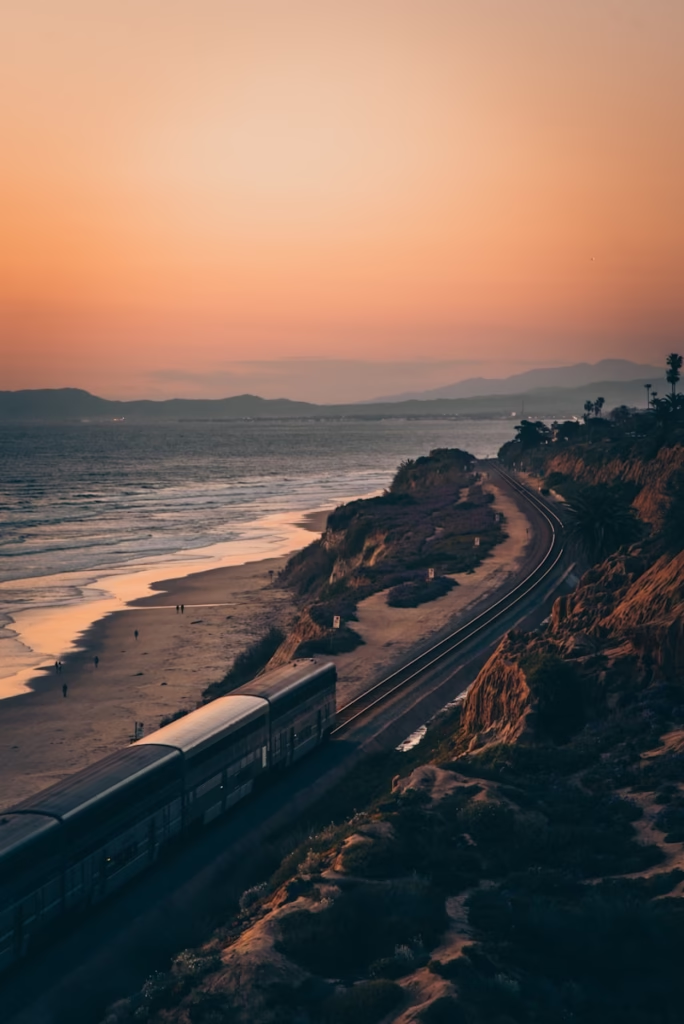
Coastal San Diego has obvious appeal. Riding along the Pacific, with the light breaking over the water and the road moving between beach towns, gives the area its postcard quality. La Jolla offers sea cliffs and expensive calm, Torrey Pines adds one of the more accessible climbs near the city, and the route north through Del Mar, Solana Beach, Encinitas and Carlsbad has the easy pleasure of ocean-side cycling.
Those rides are useful for arrival days, recovery spins and getting a feel for the region. They are also simply pleasant. There is something calming about rolling through the soft morning air with surfers already in the water and cafés opening onto the pavement. The pace feels loose at first, as though the whole city has not quite decided whether it is exercising or relaxing.
But the inland roads give San Diego its real cycling identity. Once you move east, the atmosphere changes. The ocean disappears behind you, the road begins to rise, and the land becomes rougher and quieter. The colours become sharper too: pale dust, dark scrub, gold grass, grey rock, the deep green of oaks in the shade and the blue-white glare of the sky above the ridgelines.
This is where the riding starts to feel less like a holiday spin and more like a proper day out. The roads ask more of you. The heat gathers more quickly. Services become less frequent. Descents can be fast and isolated. The climbs can be steady for long stretches before kicking up without much warning. It is beautiful, but it is not casual.
Palomar Mountain: San Diego’s benchmark climb
Palomar Mountain is the climb most visiting road cyclists want to talk about first, and with good reason. It has the reputation, the length, the switchbacks and the sense of occasion. The South Grade ascent is often described as Southern California’s answer to a European mountain road, not because it copies the Alps exactly, but because it offers that same feeling of climbing into a different world.
The lower slopes can feel hot and open, with dry air rising from the valley and the road turning gradually away from the flatter country below. As the climb continues, the switchbacks begin to stack up, the views widen and the effort becomes more measured. It is not just a question of surviving one steep ramp. Palomar asks for patience. It rewards riders who settle early, keep something back and accept that the mountain will take time.
The atmosphere changes as you climb. The road becomes cooler and more wooded, the corners more dramatic, and the noise of the lower roads fades away. Near the top, there is a sense of having earned distance from the coast and the city. San Diego suddenly feels much larger than it did when you were riding beside the ocean.
Palomar is not only a climb for bragging rights. It is a complete ride if planned properly, with the East Grade offering another side of the mountain and longer route options allowing riders to build a serious day around it. The descent demands respect, especially for those unfamiliar with the corners. This is not a climb to treat as a quick detour. It is a ride to plan around, fuel for and remember.

Mount Laguna and Kitchen Creek: the wilder inland experience
If Palomar is the famous benchmark, Mount Laguna and Kitchen Creek give San Diego its wilder edge. The riding east of the city feels more remote, more exposed and more elemental. You move towards the Cleveland National Forest, away from the comfortable coastal version of Southern California and into a landscape that can feel almost desert-like in heat and colour.
Kitchen Creek Road is one of those climbs that seems to change the mood of a ride completely. It is long, quiet and isolated, with sections that feel far removed from the city only an hour or so away. The lower slopes can be harsh in warm weather, with the road rising through dry, open terrain where shade is limited and the air has a baked, resinous smell. There is often a stillness to it, broken only by tyre noise, breathing and the occasional bird call from the scrub.
Higher up, the climb begins to feel more alpine in character, not because it looks like Europe, but because it has that same sense of transition. The trees become more present, the air cools, and the landscape softens into the Laguna Mountains. By the time you reach the higher roads, the effort has turned from survival into satisfaction.
This is the kind of San Diego ride that needs respect. Water, food, sun protection and route planning are not optional details. Services can be sparse, and the heat can become serious quickly. But for riders who want the deeper version of the county, the one beyond beaches and city roads, Mount Laguna is one of the most rewarding areas to explore.
The Great Western Loop: East County’s classic endurance ride
The Great Western Loop has a different character again. It is less about one headline climb and more about rhythm, repetition and the slow accumulation of work. The route through East County uses roads such as Willow Glen, Dehesa, Japatul, Lyons Valley and Jamul, creating a broad rural loop that feels like a local test piece.
What makes it special is the way the terrain keeps asking questions without always looking dramatic on paper. The climbing comes in stretches, the roads roll and twist, and the scenery shifts between open ranchland, rocky hillsides and quiet valleys. It has the feel of a ride that locals know intimately, where every bend and drag has acquired its own small reputation.
Honey Springs is often one of the defining sections, a climb that gives the loop real substance. It is not brutally steep all the way, but it has enough ramps and enough length to make riders settle into a proper climbing rhythm. The surrounding landscape is sparse and sunlit, with the road cutting through dry hills and the kind of silence that makes effort feel very honest.
The Great Western Loop suits riders who enjoy a full day on rolling inland roads rather than those chasing only one summit photo. It is a ride of pacing, heat management and concentration. Done well, it gives a strong sense of why San Diego’s inland riding has such a loyal following.
Torrey Pines and the accessible city climb
Not every San Diego climb requires a full expedition inland. Torrey Pines is the obvious city-adjacent climb, and it has its own role in the local cycling landscape. It is short compared with Palomar or Kitchen Creek, but it is beautifully placed, rising above the Pacific with views that make even a brief effort feel memorable.
For visiting riders, Torrey Pines is useful because it can be folded into a coastal ride without much complication. You can ride north from central San Diego, climb through the state reserve area, continue towards Del Mar and Encinitas, then return along the coast. It gives a taste of climbing without committing the day to the inland mountains.
The atmosphere is completely different from East County. Here, the sea is still present. The air is cooler, the views are broader, and the climb feels more social. There will usually be other riders, runners, walkers and cars nearby. It is not wild, but it is still one of the most recognisable cycling moments close to the city.
Torrey Pines works best as part of a lighter day or a first ride after arriving. It lets you feel the legs, understand the roads and settle into the San Diego rhythm before heading inland for the bigger climbs.
The roads, traffic and practical rhythm
San Diego cycling requires a little local intelligence. The region is large, car-oriented and varied. Some roads are excellent for bikes, others are functional rather than beautiful, and some are best avoided at busy times. The best riding is not always found by drawing the shortest line between two points.
Coastal roads can be busy but bike-aware in places, particularly where cycling is part of the local routine. Inland, traffic can be lighter, but speeds may be higher and shoulders can vary. Route planning matters more here than in compact European cycling towns. It is worth using established local routes, checking road conditions and being realistic about distances.
That is one of the biggest differences between San Diego and a place such as Girona, where much of the riding starts almost immediately from the city edge. ProCyclingUK’s cycling guide to Girona and the Costa Brava shows how a more compact European base can work, while San Diego asks for more planning in exchange for greater contrast between coast, canyon and mountain.
Early starts are a major advantage. They help avoid heat, reduce traffic stress and give the day a more peaceful shape. There is something special about leaving the coast before the city fully wakes, watching the light sharpen over the hills, then reaching the inland roads while the air is still fresh enough to climb well.
Water is the other essential detail. On coastal rides, cafés and shops are easy enough to find. On inland climbs, that changes quickly. A ride that looks manageable on the map can feel very different if the temperature rises and the next reliable stop is further away than expected. San Diego rewards self-sufficiency.
The atmosphere: coastal ease, inland severity
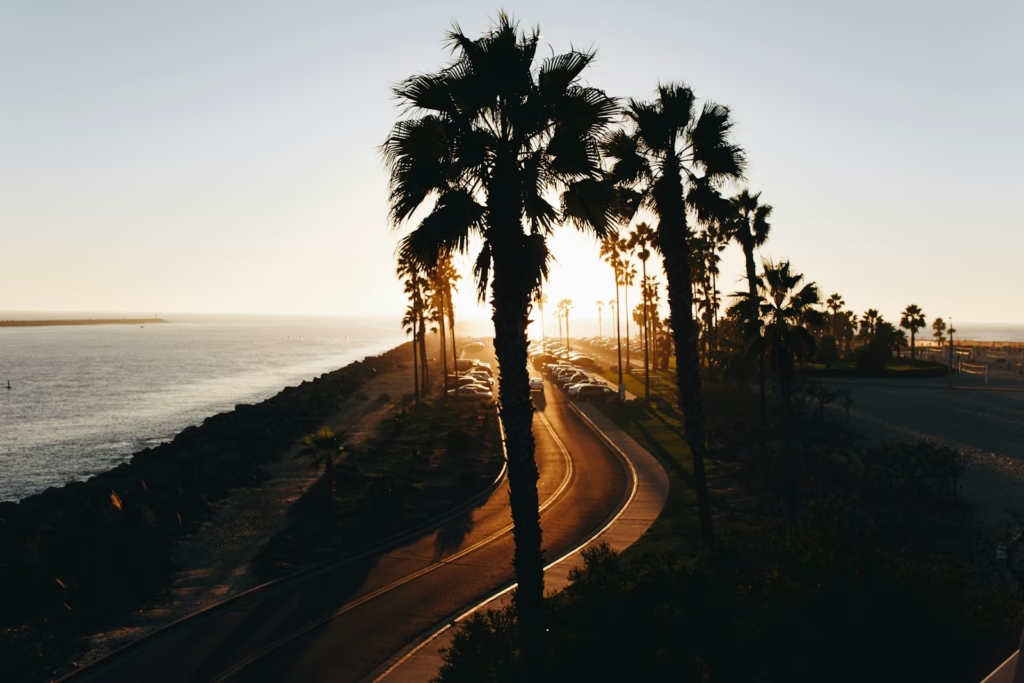
The thing that stays with you after riding in San Diego is the contrast. The coast has ease. It smells of salt, sunscreen, coffee and warm pavement. The light is soft in the morning, the ocean is always somewhere nearby, and even a hard ride can end with tacos, cold drinks and the slow satisfaction of being back among people.
The inland roads feel more severe. The air is drier, the sounds are fewer, and the landscape does not flatter you. Climbs like Palomar, Kitchen Creek or the roads around East County have a way of stripping the ride back to simple things: shade, gradient, water, cadence, breath. There is beauty there, but it is a harder beauty, one built from heat, distance and exposure.
That combination makes San Diego more interesting than a simple winter-sun cycling destination. It can be gentle when you want it to be, but it can also be demanding very quickly. You can ride socially along the coast one day and feel completely alone on a mountain road the next.
When to ride in San Diego
San Diego can work for cycling across much of the year, but the best period depends on the kind of riding you want. Winter and spring are often excellent for longer inland rides, with more manageable temperatures and clearer conditions. Autumn can also be superb, especially once the worst of the summer heat has passed.
Summer needs more caution. Coastal riding can still be enjoyable, especially early in the day, but inland climbs can become extremely hot. Kitchen Creek, East County and the lower slopes of Palomar are not places to underestimate in high temperatures. A ride that feels romantic in planning can become a grind if you leave too late, carry too little water or ignore the forecast.
The marine layer can make mornings near the coast feel cool and muted, but that should not lull riders into forgetting what waits inland. The difference between coastal grey and inland sun can be dramatic. Layers are useful, but so is restraint. The best San Diego riding often comes from choosing the right route for the day rather than forcing a plan onto the weather.
Who is San Diego best for?
San Diego is best for riders who enjoy variety. If you want a week of identical climbs from one small village square, there are better places. If you like a destination where every ride can have a different mood, it has enormous appeal.
Endurance riders will find plenty to work with. The inland loops are long enough and hard enough to build serious days, while the coastal roads provide easier recovery options. Climbers will want Palomar, Mount Laguna, Kitchen Creek and the East County roads. Riders who prefer atmosphere over pure climbing can stay closer to the coast and still have beautiful routes to explore.
It also works well for mixed trips. Not everyone needs to ride every day for San Diego to make sense. The city has beaches, food, neighbourhoods, parks and a relaxed outdoor culture that make it easier to combine training with travel. That is part of the appeal. A hard inland ride can end with the evening back near the ocean, legs heavy, salt on your face and the day softening into warm coastal light.
-
 Photo Credit: Gaetan Flamme


Practical information for cycling in San Diego
San Diego International Airport is close to the city, which makes arrival easier than in many US cycling destinations. The challenge is not getting there, but deciding where to base yourself. Coastal bases such as La Jolla, Del Mar, Encinitas or Carlsbad suit riders who want easy access to ocean roads and a more relaxed daily rhythm. Staying closer to the city works for shorter rides and general travel, while inland bases can make sense if the main aim is climbing.
A car is useful for many of the best inland rides. It is possible to ride out from the city, but San Diego County is large, and some of the best climbs sit far enough away that a drive makes the day safer and more enjoyable. Palomar, Mount Laguna and parts of East County are easier to approach with a proper plan rather than as improvised extensions to a city ride.
Road conditions vary. Some routes have excellent surfaces, others have rougher sections, debris or fast traffic. Tyres with a little extra resilience are a sensible choice, especially if you are planning long inland loops. Gearing should also be chosen with the climbs and heat in mind. A compact or climbing-friendly setup will make the steeper sections more enjoyable.
Food and water planning matters more inland than on the coast. Do not assume there will always be a shop around the next bend. On the bigger climbs and rural loops, carry enough to be self-sufficient between known stops. In summer or warm inland conditions, carry more than you think you need.
Why San Diego deserves a place on your riding list
San Diego deserves a place on a cycling list because it gives more than sunshine. The coast is beautiful, but the inland climbs give the region substance. Palomar offers the marquee mountain experience, Mount Laguna and Kitchen Creek bring remoteness and exposure, the Great Western Loop gives East County its classic endurance test, and Torrey Pines keeps a slice of climbing close to the city and sea.
What makes it memorable is the way those rides sit beside each other. Few places let you move so quickly from ocean air to dry canyon heat, from coffee beside the Pacific to a quiet mountain road where the only sensible thing to do is keep turning the pedals. The riding has glamour in places, but it also has grit. It can be social, scenic, lonely, hot, fast, slow and deeply satisfying, often within the same week.
For more cycling travel inspiration, ProCyclingUK’s wider travel and riding abroad section includes destination guides across Europe, North America and beyond, from compact cycling bases to big-landscape trips where the riding changes completely from one day to the next.
For riders who want a destination that combines atmosphere with proper roads, San Diego is more than a warm-weather escape. It is a place where the landscape changes the ride, where the climbs feel earned, and where the return to the coast at the end of the day can feel almost as good as the summit itself.

