
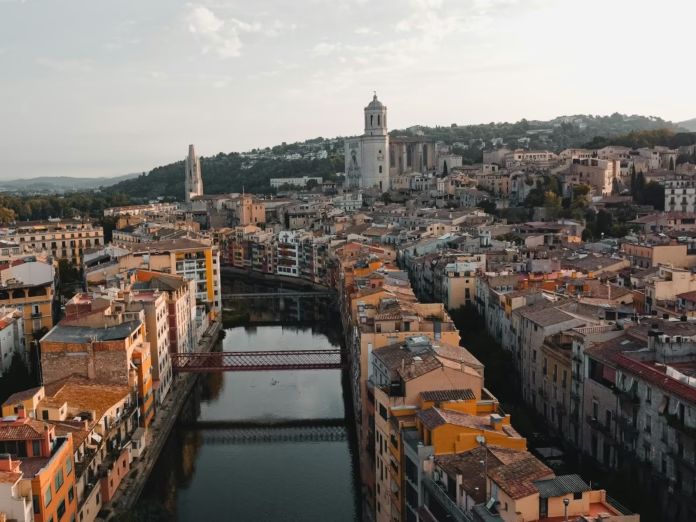
Girona and the Costa Brava have a particular pull for road cyclists: not just because the climbs are steep or the sea looks close enough to taste, but because the whole region reads as a connected system. Towns sit in valleys, roads switchback up and out of them, and the sound of chain links and wind breaks the silence between traffic gaps. You can ride from the bakery early-morning to late-afternoon lookout without ever needing a plan so strict it kills spontaneity. Even when the calendar turns unforgiving, the fundamentals stay consistent: warm light, durable tarmac in the places that matter, and a landscape that makes you want to look up.
For cyclists, Girona matters because it is built for repeatable riding. Routes start and end with real grit in the legs, yet the region also offers enough variety to keep your head switched on: rolling inland lanes, short punchy ramps that feel like local training sessions, long rhythm climbs where you learn how to ration your breathing, and descents that reward commitment. Add the coast in the mix, and you get the kind of day that changes character every hour, from sunlit vineyard slopes to salt-air headwinds that force you to stay patient.
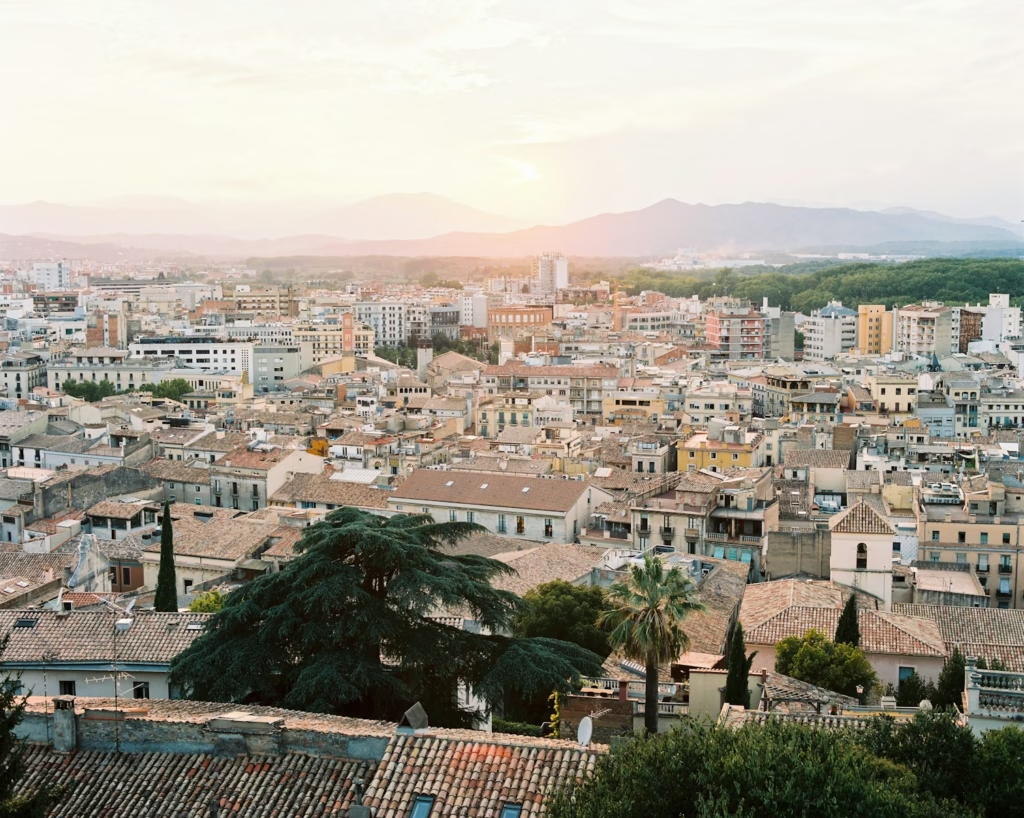
Why Girona and the Costa Brava make sense by bike
Most cycling destinations offer scenery. Girona offers terrain logic. The road network is dense enough to let you stitch together loops that match your day, and the gradients around the city encourage practical climbing habits: you can get a solid hit of hills without needing to commit to a full-on long-distance suffer-fest. The scale is also right. You can ride hard and still reach a café, a sea breeze, or a quiet roadside stretch for recovery without spending the entire day in transit.
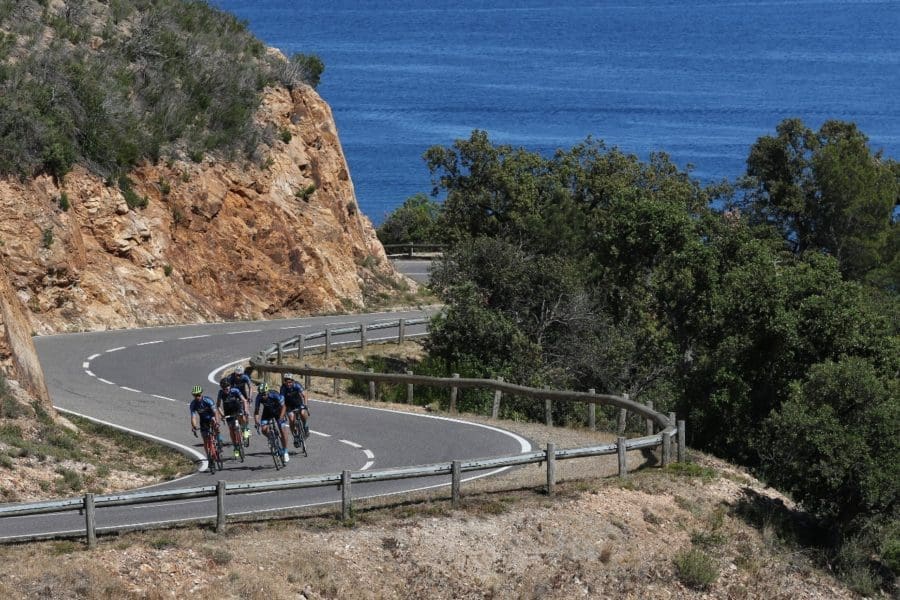
Then there is the Costa Brava element. It is not simply a flat seaside finish. The coast here is stitched to low mountain spines, which means the roads often climb away from the water, turn inland, and then drop back towards coves and ports. That creates a rhythm of efforts that suits road cyclists psychologically. You feel the work coming, you settle into cadence management, and you get rewarded with viewpoints and flowing descents when you have the legs to take advantage.
If you want more inspiration for structured routes and cycling-first planning, have a look at ProCyclingUK’s travel coverage. Girona is one of those places where good planning makes the riding feel effortless, not overcomplicated.
Road feel, terrain and route-building logic
Road surfaces can be patchy the moment you leave the main connectors, so it pays to think like a local. In and around Girona, the best riding tends to come from taking the primary roads for the few miles that matter, then dropping onto quieter climbs once you are sure you are on the correct valley line. The texture is often a firm, predictable tarmac that stays fast once you are rolling. In the more rural sections, you may find occasional rougher edges or resurfacing that changes grip slightly. That is not a deal-breaker, but it changes how you choose tyres and how you ride the descents.
Route logic in this region is about altitude management. If you keep returning to the city area, climbs tend to repeat in familiar ways. If you push out towards the coast, you end up with a different problem: more wind exposure, more frequent gradient changes, and descents that arrive sooner than you expect. The best days usually combine one significant ascent inland with a second, shorter climb after a change of scenery, rather than stacking three long grinders in a row. It keeps your pacing honest and prevents the day from turning into an emergency only you will understand later.
Riding psychology matters here because the climbs are varied. Some are steep enough to demand early commitment from the saddle, but the region also offers enough longer rises to let you settle into a controlled, sustainable effort. The coastline adds urgency. Even when gradients are modest, the headwind returns in waves. You learn to stay calm on the flat moments and treat them as breathing space, not chances to race the clock.
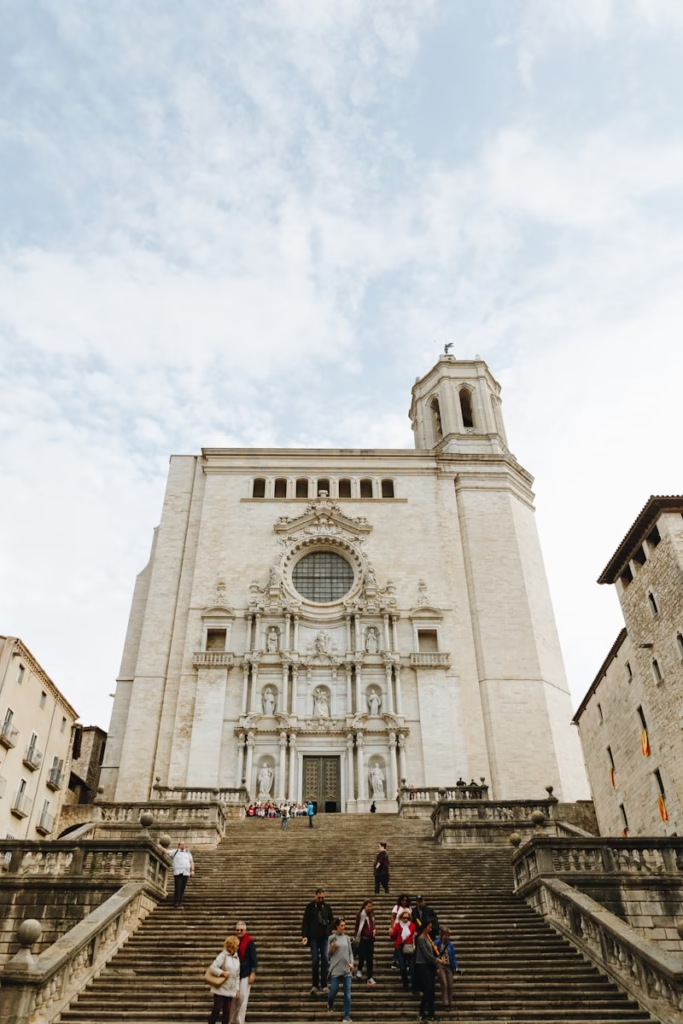
Scenery and day-to-day conditions on the road
In the hills around Girona, the land feels worked. Dry-stone walls, scrubby vegetation, and pockets of olive and vineyard country frame the road, with sudden openings that show the valley floor far below. As you climb, the air strips the sweat away, then warms again when you crest into sun. The contrast between shade and light is sharp. That shifts your comfort on the bike: you feel colder at first on a warm morning, then hit a sun-soaked zone where water and electrolytes matter more than comfort layers.
Near the coast, the palette tightens to rock, pines, and stretches of road that hug slopes above coves. The sea is not always visible all the way along, but it is present in the wind and the way the air feels. On exposed sections, gusts punish sloppy steering and reward smooth inputs. Even strong riders benefit from braking early before descent corners, because traffic and surface irregularities can appear without warning on the tighter bends.
Expect a few different kinds of days depending on the season. In calmer weather, descents are fluid and fast, with reliable visibility. On windier days the riding becomes more tactical: you shelter where you can, you time your efforts to avoid getting bounced off the pedals, and you accept that the fastest line is not always the one that looks most direct.
Climbs, descents and the kind of riding to target
The Girona area is a strong match for riders who like climbing but do not want every day to be a long, uniform grind. You can train threshold style efforts on longer climbs, then add intensity on short ramps. There are plenty of chances to practice pacing. The angles are often enough to test leg strength, while the length is enough to test decision-making: when to sit and when to push.
Descents here can feel like they come in chapters. You crest, roll into a clear line, and then the road starts doing small, fast changes in direction. That means confidence is about preparation more than bravery. Look far ahead, stay steady through the moment you lose a line of sight to oncoming traffic, and avoid chasing speed. The terrain rewards riders who are smooth, not those who straighten up to sprint through corners.
If you are building a week, a sensible pattern is to put your hardest climbing day inland or towards the higher spines, then follow with a coastal day that mixes shorter climbs with longer, recoverable descents. On recovery days, ride the flatter connectors early, then finish with a gentle loop inland. The goal is to keep your body moving while still giving your legs something to work on, rather than treating the week as a single long test.
For riders who favour steady tempo rather than repeated attacks, the longer inland risers offer the best match. For those who love punchy efforts, there are enough steep, short climbs to stack multiple “micro-events” into a single outing. And for cyclists who enjoy fast, technical descents, the coastal spines provide a satisfying blend of speed and caution.
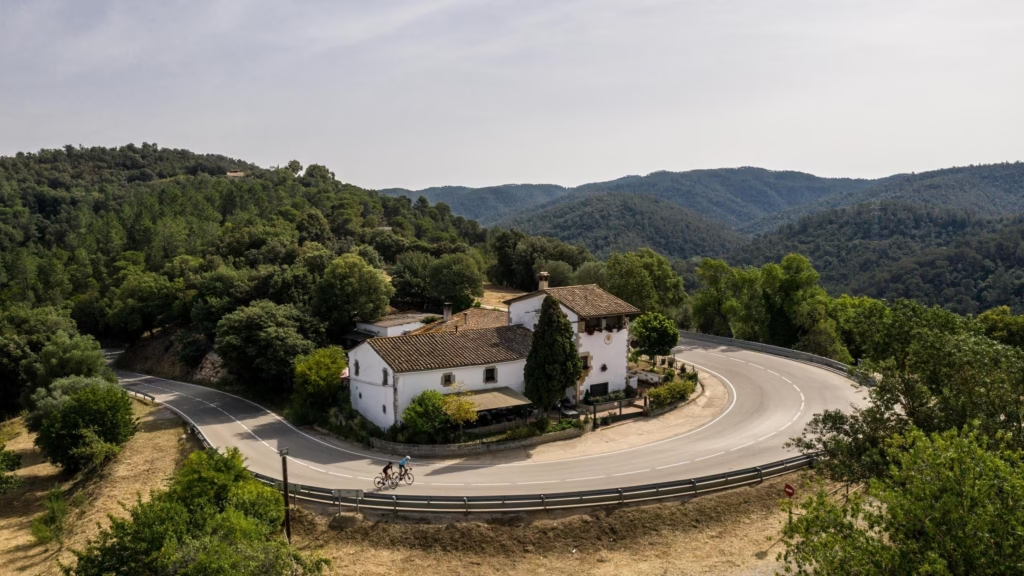
Who Girona and the Costa Brava suit best
Girona is particularly good for road cyclists who want structured variety: hills with logic, routes that can be adapted hour by hour, and a local cycling culture that makes it easier to pick a direction and trust it. It suits riders training for longer events, because the climb selection allows you to practise time-in-zone efforts and still keep a sense of control. It also suits riders who simply want good legs and good sunsets. The atmosphere makes it feel like the day has a rhythm, not a schedule.
If you are a mixed-strength rider, the region works because you can choose your battles. A loop that includes one major climb is far more realistic than trying to replicate mountain stages by stacking every difficult ascent available. The coast also offers an alternative objective. You can ride for views and flow on roads that are still challenging, even if they are not always the steepest.
Location
Base yourself in or near Girona city for maximum ride flexibility. It gives you quick access to inland climbs and straightforward routes towards the coast. If you prefer fewer ride-start logistics, staying closer to the Costa Brava coastline can reduce the friction of coastal days, but expect longer inland segments if you want the steeper options.
Riding
Choose routes with enough main-road time to protect your tyres and your focus. Surfaces can vary on smaller climbs, and the coastal descents are where confidence plays a bigger role than ego. Plan for wind on exposed coastal sections. If you are sensitive to crosswinds, be ready for them more than once per ride, not just on one stretch.
When to go
Spring and early autumn are the sweet spot for consistent riding comfort. Temperatures tend to suit longer climbs without the late-day heat that can arrive in mid-summer. Summer can work if you start early and accept that afternoons may bring stronger heat. Winter riding is possible, but be sharper about weather windows and wind.
Accommodation
Look for places that let you start cleanly and return with minimal fuss. Girona offers more choices for riders who want quick coffee and an easy morning routine. Coastal bases can be excellent for atmosphere, but factor in how you will get back after long inland days. Either way, prioritise secure bike storage and easy access to a route that gets you climbing rather than trapping you on flat traffic connectors.
Watch-outs
Watch for wind on coastal spines and for occasional rough patches on rural climb climbs. Descents can be busy on popular roads, particularly when holiday traffic thickens, so keep an eye on oncoming vehicles on tighter bends. In hot periods, treat hydration as part of pacing rather than a separate plan. If you ride early, still plan for strong sun once you get above the shaded valley pockets.
-
 Photo Credit: Getty
 -
 Photo Credit: Getty

Planning a week: how to sequence your rides
A strong itinerary keeps your legs fresh and your motivation aligned with the terrain. Day one should be about orientation. Ride a shorter loop that includes one meaningful climb so you learn how the roads feel in your position and what the surface is like under effort. Day two can be your longest or most climbing-heavy day, especially if you want to practise sustained pacing. Give yourself permission to shorten it if the weather turns. The region rewards consistency, not stubborn completion.
Day three is where Girona and the Costa Brava feel best together: include a climb that takes you inland, then keep the route logic so you drop back towards the coast with enough time to enjoy the final miles. If you have a “fast training” mindset, save your intensity for the inland sections where traffic is lighter and the road is calmer. Finish the day near the sea if you can. The cool air and softer light do more than make you feel better. They help you recover psychologically.
On the last day, aim for something that feels like a victory lap rather than a test. A relaxed loop that uses lower-gradient connectors, with a short climb at the end if you still have something in the tank, is a fitter way to close the week than forcing one last hard ascent you will regret halfway through.
Gear and small details that matter
Because surface quality can change, tyre choice is not just about speed. A slightly more robust tyre setup can protect you from the stress of chip-seal patches and rougher edges on smaller lanes. Carry a puncture kit you trust, and make sure the pump or CO2 is ready without fumbling. Girona is not a place where you want to spend half an afternoon waiting for the right kind of roadside assistance.
On windier days, clothing layers matter less than smooth rhythm. Keep a steady intake schedule because the effort can feel deceptive: some sections are short on paper but add fatigue through repeated turns, brief ramps, and headwind work. Sunscreen and glasses are essential in strong light, even if the morning feels comfortable. The region can shift quickly from mild to intense once the sun reaches the slopes.
Arrive with the ride plan flexible enough to respect conditions. The best Girona-Costa Brava days are often the ones where the wind tells you where to ride and you listen. When you do that, the landscape rewards you with clean lines of road, a steady chain of climbs and descents, and a finale that feels earned rather than improvised.
For more cycling-first route ideas across Europe, you can also browse ProCyclingUK’s travel section and match Girona with destinations that share similar riding styles and seasonality.
Girona Tourism can be useful for general logistics around getting around the city and finding the practical services that make cycling weeks smoother.
Visit Costa Brava provides helpful context on coastal towns and timing for sea-front areas, especially if you are planning accommodation around quiet start times.

