
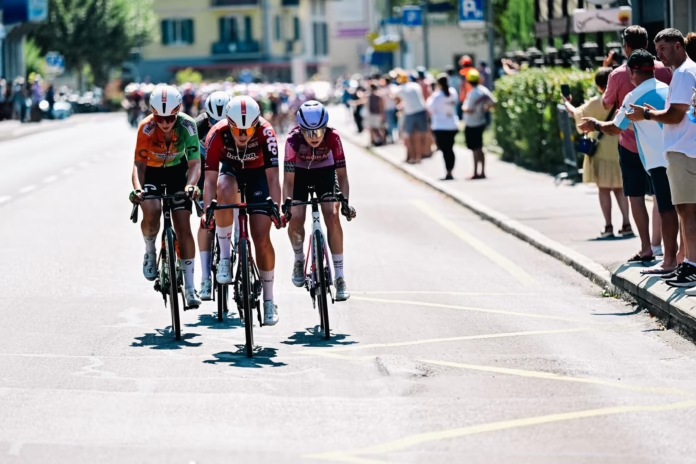
The Tour de France Femmes enters France on Monday 3 August with a demanding third stage from Geneva to Poligny, where Lorena Wiebes faces the first serious test of the yellow jersey she has held through two consecutive stage victories.
For UK viewers, the neutralised start is scheduled for 12:25 BST, with competitive racing expected to begin at approximately 12:45 BST. The finish is forecast for around 16:40 BST, although the exact arrival will depend heavily on how aggressively the Col de la Faucille is raced.
Stage 3 will be shown live in the UK through TNT Sports, with streaming available on HBO Max. Unlike the two opening stages, this is a day worth watching from the beginning. The hardest climb comes inside the opening 24km and could determine the breakaway, yellow jersey battle and mountains classification before the race has completed its first hour.
Anyone wanting to see whether Wiebes can defend yellow should aim to be watching by 12:35 BST. Viewers mainly interested in the stage-winning attacks should tune in by around 15:45 BST.
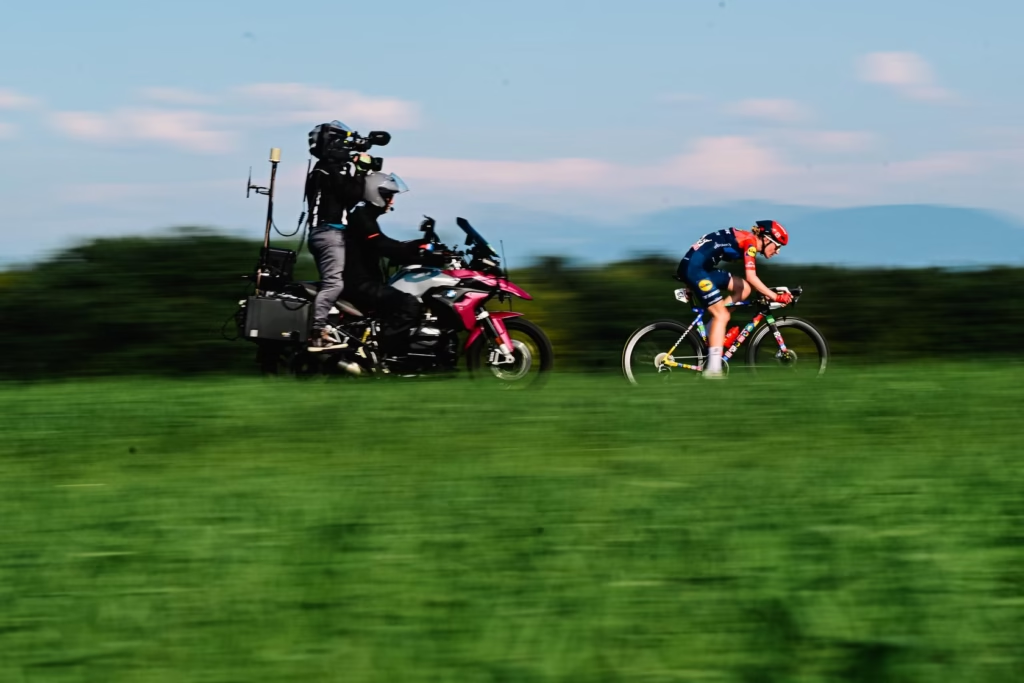
What time does Tour de France Femmes Stage 3 start in the UK?
The neutralised start from Geneva is scheduled for 13:25 local time, which is 12:25 BST in the UK.
The riders will complete a neutralised section through Geneva before reaching kilometre zero at approximately 12:45 BST. The route then crosses into France and begins climbing towards the Col de la Faucille almost immediately.
The key UK timings are:
Neutralised start: 12:25 BST
Expected racing start: approximately 12:45 BST
Col de la Faucille: during the opening hour
Best time to watch the early yellow jersey battle: 12:35 BST
Best time to begin watching the finale: 15:45 BST
Expected finish: approximately 16:40 BST
The finish time is based on the central schedule rather than a fixed arrival. An aggressive opening, strong breakaway or prolonged chase across the Jura could move the race outside that estimate.
The complete daily broadcast schedule is available in our guide to watching the 2026 Tour de France Femmes in the UK.
What channel is Tour de France Femmes Stage 3 on?
Stage 3 will be available live in the UK through TNT Sports, with the full stream carried by HBO Max.
HBO Max is now the streaming home of TNT Sports cycling coverage in Britain. Viewers can access the stage through the HBO Max app on compatible televisions, phones, tablets and computers.
The precise TNT Sports television channel and programme start can vary according to the wider live sports schedule, so viewers using a traditional television package should check the latest electronic programme guide. HBO Max remains the clearest option for finding the complete live stream.
Every stage of the 2026 race is available through the same broadcast package.
Is Tour de France Femmes Stage 3 free to watch?
There is no complete live free-to-air broadcast of Stage 3 in the UK.
Free evening highlights are available through 5, providing a later summary of the stage result, general classification changes and the main attacks for viewers without TNT Sports or HBO Max.
Stage 3 is less suited to a short highlights-only viewing experience than the two opening sprint stages. The Col de la Faucille appears so early that the race could be tactically transformed long before the final hour.
A breakaway formed on the opening climb could survive all the way to Poligny, while Wiebes could lose yellow before the television coverage reaches the final classified ascent.
What time should I start watching Stage 3?
The ideal viewing time depends on which part of the race matters most.
Anyone interested in the yellow jersey, breakaway formation and polka-dot competition should watch from around 12:35 BST. That should cover the end of the neutralised section and the approach towards the Col de la Faucille.
The category-one climb measures 11.4km at 6.3% and reaches its summit after only 23.9km. It is the first sustained mountain of the race and may immediately distance Wiebes and the pure sprinters.
Viewers mainly interested in the final attacks should tune in from approximately 15:45 BST. The peloton should then be approaching the Côte de Chaux-Champagny and the bonus point that follows it.
A practical final viewing window is 16:10 to 16:50 BST. Waiting until the final five kilometres would risk missing the move that decides the stage because the last classified climb tops out almost 25km from Poligny.
The wider tactical possibilities are covered in the full Tour de France Femmes 2026 Stage 3 preview.
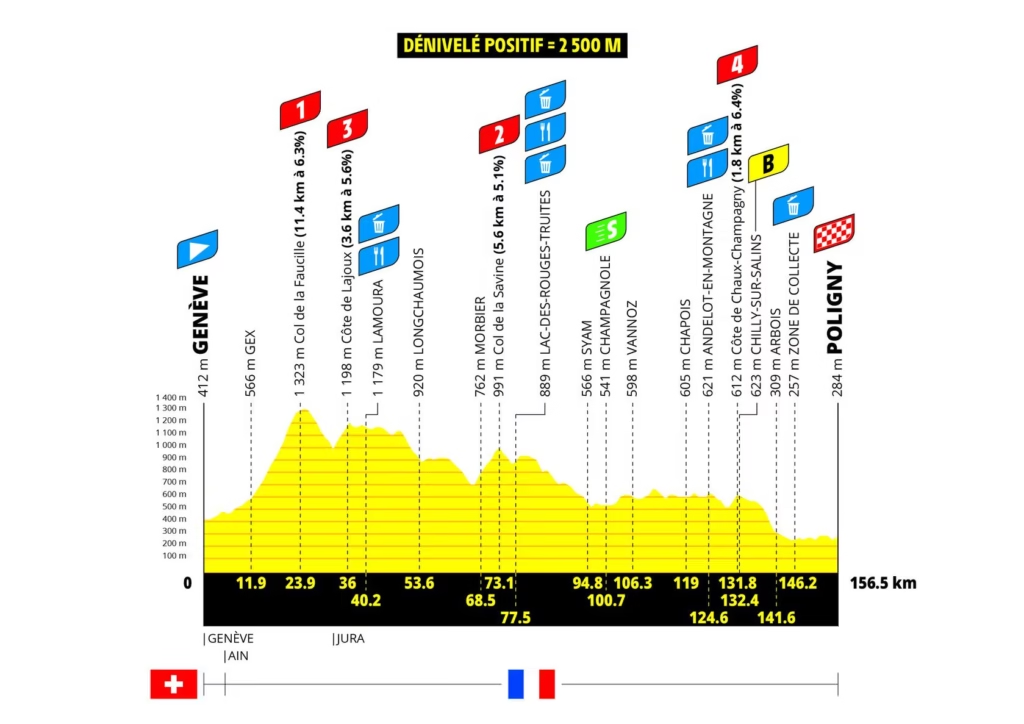
Stage 3 route from Geneva to Poligny
Date: Monday 3 August 2026
Start: Geneva
Finish: Poligny
Distance: 156.5km
Stage type: Hilly
Categorised climbs: Four
Neutralised start: 12:25 BST
Expected finish: approximately 16:40 BST
Stage 3 takes the Tour out of Switzerland and into France after two days around Lake Geneva.
The Col de la Faucille is followed by the Côte de Lajoux and Col de la Savine, keeping the route difficult even if dropped riders begin returning after the opening mountain. The final classified ascent is the Côte de Chaux-Champagny, a short climb positioned 24.7km from the finish.
A bonus point follows the final climb, offering six, four and two seconds. Another ten, six and four seconds are available at the finish in Poligny.
That combination gives the stage relevance to breakaway riders, fast puncheurs and the principal GC contenders. The complete shape of the nine-stage race is explained in the Tour de France Femmes 2026 route guide.
Why the Col de la Faucille makes the start essential viewing
The hardest climb of Stage 3 comes before the race has properly settled.
The Col de la Faucille is long enough to expose riders who survived the shorter climbs of the opening weekend through positioning and repeated bursts of power. It also arrives before a stable breakaway has necessarily formed.
Some riders will attack before the lower slopes in an attempt to begin the climb with an advantage. Others will wait for the gradient and use the ascent to create a stronger selection.
The mountains classification adds another source of aggression. Ten points are available at the summit, enough for a rider to move directly into the polka-dot jersey.
SD Worx-Protime must simultaneously decide whether to defend Wiebes, place a rider in the front group or allow the yellow jersey to pass to someone who poses little long-term GC danger.
That makes the opening hour potentially more important than the final climb.
Can Lorena Wiebes keep the yellow jersey?
Wiebes starts Stage 3 with a 14-second advantage over Kim Le Court-Pienaar and a 16-second lead over Demi Vollering.
Her margin has been created primarily through the ten-second bonuses collected from winning both opening stages. She has not gained meaningful time on the principal GC riders through climbing.
The Col de la Faucille is therefore the first obstacle capable of removing her from yellow.
Wiebes does not need to climb with Vollering, Pauline Ferrand-Prévot or the strongest riders. She needs to remain close enough for SD Worx-Protime to organise a pursuit after the summit.
The long distance remaining works in her favour, but the Côte de Lajoux and Col de la Savine complicate any regrouping. A chasing group cannot simply settle into one sustained flat effort after the first climb.
If Wiebes limits the gap to a minute or two, yellow may remain defendable. If the GC teams attack fully and she loses several minutes, the jersey is likely to change hands.
SD Worx-Protime also have alternatives through Lotte Kopecky and Anna van der Breggen. They do not have to sacrifice the entire team to Wiebes if another rider remains in the decisive front group.
Kim Le Court-Pienaar could take yellow
Le Court-Pienaar begins the day closest to Wiebes in the general classification.
The Mauritian climbs more strongly than the pure sprinters and has a faster finish than most of the GC contenders. That makes her one of the leading candidates to inherit yellow if Wiebes is dropped.
She does not necessarily need to win the stage. Finishing more than 14 seconds ahead of Wiebes could be sufficient, provided Vollering and the riders only a few seconds further back do not overtake her through the bonus point or finishing bonuses.
AG Insurance-Soudal can use Justine Ghekiere, Urška Žigart and Lore De Schepper to make the race difficult while protecting Le Court-Pienaar for the final 25km.
The late climb and bonus point should suit her combination of endurance and speed. A reduced finish in Poligny gives her a more realistic route towards victory than the conventional sprint she faced in Geneva.
Our profile of Kim Le Court-Pienaar and her Tour de France Femmes GC challenge explains why her Stage 1 performance was part of a wider rise rather than a one-day surprise.
Demi Vollering can add more bonus seconds
Vollering starts Stage 3 third overall, 16 seconds behind Wiebes and two behind Le Court-Pienaar.
She already gained four seconds by finishing third in Lausanne and could add more at either the late bonus point or the finish in Poligny.
There is little reason for Vollering to attack from the foot of the Col de la Faucille. The Dijon individual time trial comes on Tuesday and should naturally favour her against several of the stronger pure climbers.
A selective final 30km still suits her. Vollering has the speed to contest a reduced finish and can gain time without committing to a sustained long-range attack.
FDJ United-Suez also have Célia Gery and Juliette Berthet as stage options, allowing the team to enter moves without making Vollering responsible for every tactical development.
Puck Pieterse and Noemi Rüegg fit the stage
Puck Pieterse and Noemi Rüegg are two of the clearest contenders if a reduced group contests the finish.
Pieterse can survive sustained climbing, attack on the shorter final ascent and sprint quickly enough to beat many GC riders. Her handling should also help on the Jura descents and through any technical sections.
Rüegg begins Stage 3 fourth overall after finishing near the front on both opening days. She has enough climbing ability to remain involved without needing the race to become a complete GC battle.
Both benefit from a difficult but controlled version of the stage. They want the Col de la Faucille to remove Wiebes and the pure sprinters without allowing Vollering or Ferrand-Prévot to create a selection made entirely of the strongest climbers.
The Tour de France Femmes 2026 riders-to-watch guide covers their wider routes towards stage victories across the race.
Marianne Vos remains dangerous if the race regroups
Vos can still become a major factor because the hardest climb comes so early.
She may lose contact on the Col de la Faucille if the pace is high, but more than 130km remain after the summit. Visma | Lease a Bike can help her return if the initial gap stays manageable and the front group begins hesitating.
The later climbs are shorter and more suited to her strengths. If Vos reaches the Côte de Chaux-Champagny in the main selection, she becomes one of the strongest finishers still present.
Visma also need to protect Ferrand-Prévot’s GC position. The team can divide those objectives, with Ferrand-Prévot following the leading contenders while Vos targets the stage from any regrouped peloton.
The polka-dot jersey could change inside the opening hour
Océane Mahé begins Stage 3 with eight points and a one-point advantage over Anouska Koster in the mountains classification.
Ema Comte sits another point behind, meaning all three have a clear incentive to enter the breakaway or attack on the Col de la Faucille.
Ten points are available at the category-one summit. A rider currently outside the leading positions could therefore take the jersey immediately by reaching the top first.
Mahé’s most direct route towards retaining the polka dots is entering another early move. The problem is that the opening climb favours stronger sustained climbers than those required to contest the shorter ascents around Lausanne and Geneva.
The Tour de France Femmes 2026 jersey guide explains how the mountains points and jersey priority rules work.
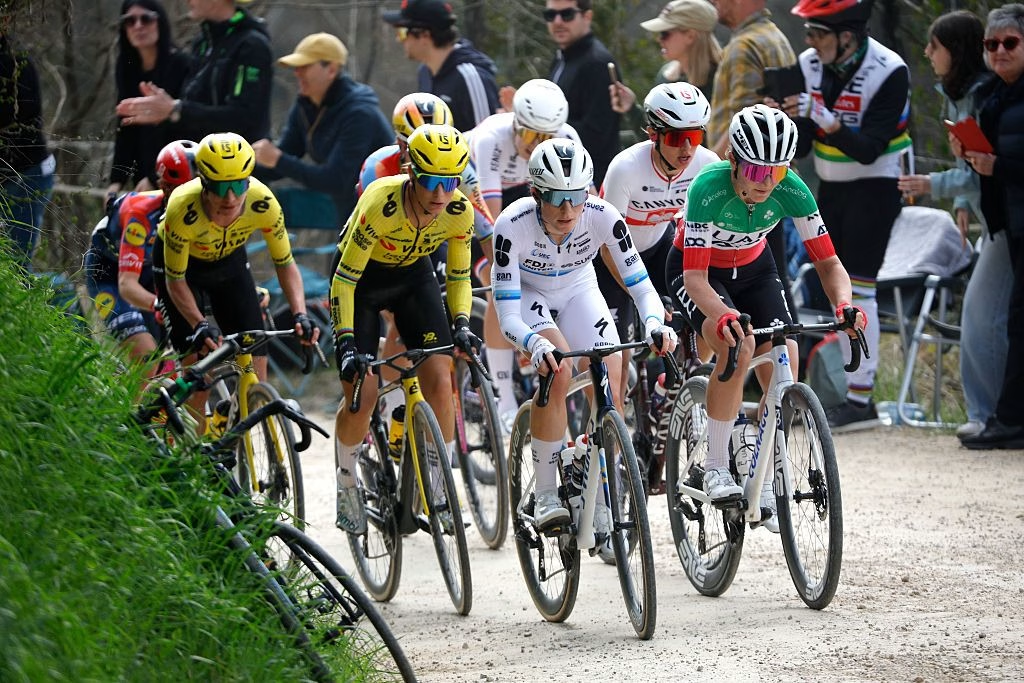

How the Stage 3 finale should unfold
The final classified climb is the Côte de Chaux-Champagny, measuring 1.8km at 6.4%.
Its category-four status understates its tactical importance. The riders reach it after more than 130km and three previous climbs, making it an obvious point for late attacks.
The nearby bonus point provides another incentive. Six seconds can be valuable to Le Court-Pienaar, Vollering, Kasia Niewiadoma-Phinney or Elisa Longo Borghini before the Dijon time trial.
Around 24km remain afterwards. That is too far for one short acceleration to guarantee victory, but close enough for a strong group to stay away if its riders cooperate.
Pieterse, Rüegg, Kopecky, Longo Borghini and Vos all want slightly different versions of the finish. Those competing interests should make the road into Poligny difficult to control.
A breakaway may already be fighting for the victory, but the GC and bonus-second contests can remain active behind even if the stage winner is further up the road.
Tour de France Femmes Stage 3 viewing times at a glance
Date: Monday 3 August 2026
Route: Geneva to Poligny
Distance: 156.5km
Stage type: Hilly
Categorised climbs: Four
UK neutralised start: 12:25 BST
Expected racing start: approximately 12:45 BST
Live UK television: TNT Sports
Live UK streaming: HBO Max
Best time for the Col de la Faucille: 12:35 BST
Best time for the finale: 15:45 BST
Expected finish: approximately 16:40 BST
Stage 3 is the first day of the 2026 Tour where the opening hour may matter as much as the final one.
The Col de la Faucille can remove Wiebes from the front, establish the successful breakaway and transform the mountains classification before the race has travelled 25km. The Côte de Chaux-Champagny and bonus point then create a second tactical contest before Poligny.
Wiebes controlled the Tour’s opening weekend through two different sprint victories. Monday asks whether SD Worx-Protime can control an entire day across the Jura rather than simply the final kilometres.

