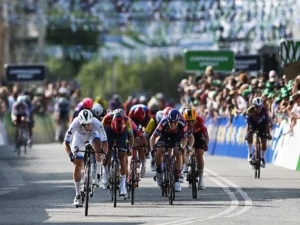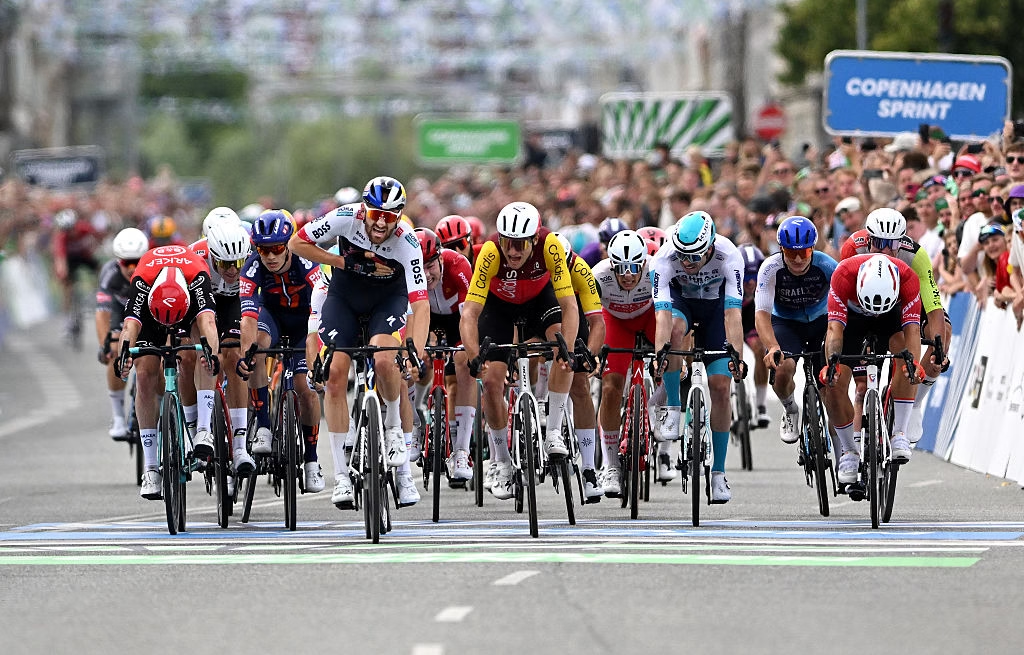
The full start list for Copenhagen Sprint Men 2026 brings together a field built for one of the fastest WorldTour one-day races of the season. The race takes place on Sunday, 14th June, with 228.2km from Roskilde to Copenhagen and a finishing circuit outside the National Gallery of Denmark.
This is only the second edition of the men’s Copenhagen Sprint, but the profile already gives it a clear identity. The route is flat, exposed and likely to favour the sprinters, with the possibility of wind and a technical city-centre finale adding just enough uncertainty before the expected bunch finish.
Jordi Meeus won the inaugural men’s edition in 2025, beating Alexis Renard and Émilien Jeannière in Copenhagen. That result set the early pattern for the race: fast roads, sprint-team control and a finale where positioning matters almost as much as top speed.
For more route detail, our Men’s Copenhagen Sprint 2026 route guide breaks down the Roskilde start, the Copenhagen finishing laps and the exposed Danish roads that could make the race more complicated than the profile suggests. Our how to watch Copenhagen Sprint 2026 in the UK guide covers the live coverage options.
Copenhagen Sprint Men 2026 start list
Data powered by FirstCycling.com
What the start list tells us about the race
The Copenhagen Sprint Men start list points towards a race shaped by the sprint teams. With a long, flat route into Copenhagen and five laps of the finishing circuit, this is one of the clearest opportunities of the WorldTour calendar for the fastest riders and their lead-outs.
That does not make it simple. A race of this distance on Danish roads can still be stressful. The exposed approach to Copenhagen gives rouleurs and organised teams a chance to put pressure on the bunch if the wind rises, while the city-centre finishing circuit makes positioning essential. Sprinters who are badly placed entering the final lap may struggle to move up again.
The balance of the field should make the final hour especially tense. Teams with pure sprinters will want a controlled race, but teams without a top-tier fast finisher may need to attack before the finish. That could make the circuit a constant fight between control and disruption.

Why Copenhagen Sprint suits fast finishers
Copenhagen Sprint is built around speed. The route does not include the climbs or repeated accelerations that usually remove the pure sprinters from contention. Instead, it asks teams to manage distance, wind, road position and the final lead-out.
That makes the race different from many other WorldTour one-day events. It is not a cobbled Classic, not an Ardennes-style attritional race and not a hilly semi-Classic where the sprinters are clinging on. It is a race where the fastest finishers should expect to be there, but only if their teams control the day properly.
The final laps in Copenhagen are likely to decide everything. The finishing circuit gives the peloton repeated looks at the same roads, but that also means every team knows where it needs to be. The closer the race gets to the finish, the more valuable position becomes.
Could the start list produce a surprise winner?
A surprise winner is possible, but the route makes it difficult. The sprint teams should be highly motivated because there are not many WorldTour one-day races this favourable for fast finishers. A breakaway will need either a strong tactical mix, poor cooperation behind or a wind-affected race to stay clear.
The most realistic alternative to a standard bunch sprint is a reduced sprint after crosswinds or late disruption. If the peloton splits before Copenhagen, the race could quickly become much harder for the pure sprinters’ teams to manage. In that scenario, powerful Classics riders and fast rouleurs become more dangerous.
Under normal conditions, though, the start list and the route both point towards a high-speed finish outside the National Gallery of Denmark.
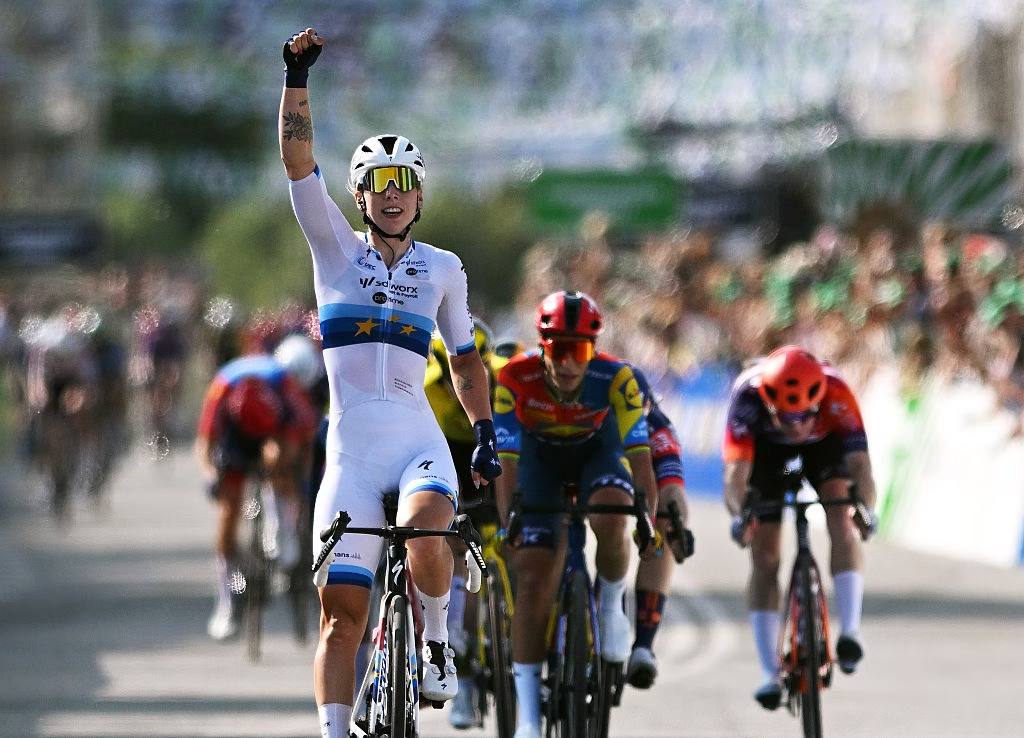
Copenhagen Sprint Men 2026 route summary
The men’s race starts at Stændertorvet in Roskilde and heads towards Copenhagen before entering the finishing circuit in the capital. The full distance is 228.2km, with around 176km of point-to-point racing before five laps of the 10km Copenhagen circuit.
The women’s race takes place the day before, on Saturday, 13th June, using the same broad Roskilde-to-Copenhagen identity but over a shorter distance. Our Copenhagen Sprint Women 2026 route guide explains how the women’s race uses the same city-centre sprint concept.
For the men, the extra distance should increase the fatigue and make the final circuit more demanding, but it does not change the basic expectation. Copenhagen Sprint Men 2026 should be a race for sprinters, lead-outs and the teams best able to handle speed under pressure.