

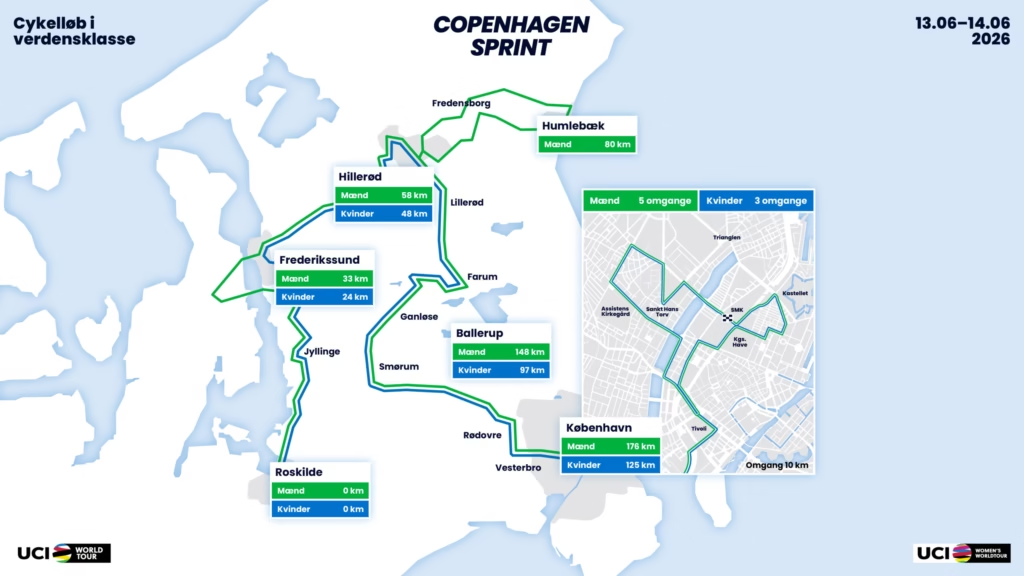
Copenhagen Sprint Women returns on Saturday, 13th June 2026 with a route that keeps the race’s identity clear: flat roads, fast approach kilometres and a technical city-centre finish in one of Europe’s great cycling capitals. The women’s race covers 156km, starting at Stændertorvet in Roskilde before heading towards Copenhagen and finishing outside the National Gallery of Denmark.
The structure is simple, but not dull. Around 125km takes the peloton from Roskilde to Copenhagen, before three laps of a 10km finishing circuit in the Danish capital. That makes the race one of the most sprint-friendly events in the Women’s WorldTour, but the final hour should still be tense because the circuit brings repeated corners, positioning fights and the pressure of a high-speed urban finale.
This is only the second edition of Copenhagen Sprint Women, but it already has a strong place in the calendar. The inaugural women’s race in 2025 was won by Lorena Wiebes ahead of Elisa Balsamo and Chiara Consonni, setting the tone for a race built around the fastest riders in the peloton.
For more background on the event, our beginner’s guide to Copenhagen Sprint Women 2026 explains how the race fits into the Women’s WorldTour, while our brief history of Copenhagen Sprint Women looks back at the first edition and why Denmark’s new top-tier race matters.
What is the Copenhagen Sprint Women 2026 route?
The Copenhagen Sprint Women 2026 route starts in Roskilde and finishes in Copenhagen after 156km. The first part of the race moves from the historic city west of the capital towards North Zealand and the Copenhagen approach roads, before the riders enter the final city circuit.
The route passes through a very Danish kind of racing landscape. There are no major climbs, no cobbled sectors and no obvious selective obstacles, but that does not mean the race is automatic. Open roads, exposed sections, road furniture and the constant battle for position can all make the race harder than the profile suggests.
Once the peloton reaches Copenhagen, the character changes again. The finishing circuit gives the sprint teams a repeated look at the final roads, but it also compresses the race. Every lap raises the urgency. Every corner becomes more important. Every team with a sprinter wants to be near the front, and there is rarely enough space for all of them.
Where does Copenhagen Sprint Women 2026 start?
The race starts at Stændertorvet in Roskilde, one of Denmark’s most historic cities. Roskilde gives the race a strong departure setting, with the city already closely tied to the event’s short history and the wider Danish cycling project behind Copenhagen Sprint.
From there, the race heads east towards Copenhagen. The opening phase should be about breakaway formation, early control and positioning through the smaller roads and towns before the race reaches the capital.
For the sprinters’ teams, the start is about calm management. They do not need to make the race hard immediately, but they do need to make sure the early move is controllable. A small breakaway with riders who are no threat in a sprint is ideal. A larger or stronger move could force teams into a longer chase than they want.
How does the route reach Copenhagen?
The women’s route covers around 125km before the finishing circuit begins. That approach section gives the race its shape. It is not mountainous, but it gives the peloton enough distance for wind, crashes, fatigue and tactical hesitation to matter.
The route moves through the municipalities west and north-west of Copenhagen before arriving in the capital. That matters because Denmark’s roads can be fast and exposed. If the wind is strong, even a flat route can become awkward, especially if teams decide to put the race under pressure before the circuit.
The most likely pattern is still control by the sprint teams. This is a race that encourages a bunch finish, and most teams will arrive with that expectation. But a flat route can still produce trouble if the peloton is complacent. The main danger before Copenhagen is not a long climb, but a split, a crash, or a breakaway that gets more time than expected.
What is the Copenhagen finishing circuit like?
The finishing circuit is the defining part of Copenhagen Sprint Women. The race ends with three laps of a 10km circuit in Copenhagen, finishing outside the National Gallery of Denmark.
This is where the race becomes more technical. The circuit is flat, but it includes enough turns and city-centre changes of direction to make positioning crucial. It is not just a straight drag race. Sprinters need a lead-out, but they also need composure, timing and the ability to hold position through repeated corners.
The repeated laps also change the psychology of the finale. Riders see the finish area more than once. Teams can learn where the wind bites, where the road narrows and where the final move up the bunch has to begin. By the last lap, there should be very little mystery, only execution.
Why the final circuit suits sprinters
The final circuit suits sprinters because it gives their teams a clear structure. Once the race reaches Copenhagen, the chase can become more organised, with lead-out trains using the laps to bring the breakaway back and move into position.
That structure is one reason Copenhagen Sprint Women feels different from a more chaotic rolling one-day race. The route does not ask sprinters to survive climbs or fight back after repeated accelerations. It asks them to stay safe, keep teammates around them and arrive at the final kilometre in the right place.
That is still a difficult skill. A flat race can be more stressful than a hilly one because more riders believe they can win. Instead of the field thinning naturally on climbs, the peloton can stay large deep into the finale. That increases the pressure on lead-outs, road position and decision-making.
Could the wind change the race?
Wind is the route’s most obvious wildcard. Denmark does not need climbs to make a race nervous. Exposed roads, especially before the peloton reaches Copenhagen, can create opportunities for teams to split the bunch.
If conditions are calm, the race should be easier to control. A breakaway goes, the sprint teams manage the gap, and the circuit brings everything back together. If the wind is strong, that changes. Teams with powerful rouleurs may try to use crosswind sections to put pure sprinters under pressure before the final laps.
The most dangerous moments may come when the peloton changes direction or moves from sheltered roads into more open areas. Those are the points where riders at the back can suddenly find themselves fighting to close gaps. A split there would not need to last long to change the race. Even 20 seconds at the wrong moment can force a team to burn through its lead-out before Copenhagen.
How hard is Copenhagen Sprint Women 2026?
On paper, Copenhagen Sprint Women is one of the least mountainous races on the Women’s WorldTour calendar. It is flat, fast and designed for sprinters. But flat should not be confused with easy.
The difficulty comes from speed and stress. A 156km women’s race at high pace is demanding, especially when so many teams are trying to save riders for the final circuit. The peloton will likely spend long periods at speed, with repeated fights for position into corners, roundabouts and urban road furniture.
The route also arrives at a time of the season when many riders have already gone through a heavy spring and early summer block. The strongest sprinters will have the target clearly marked, but the support riders will have to spend a long day controlling the race before the finish even begins.
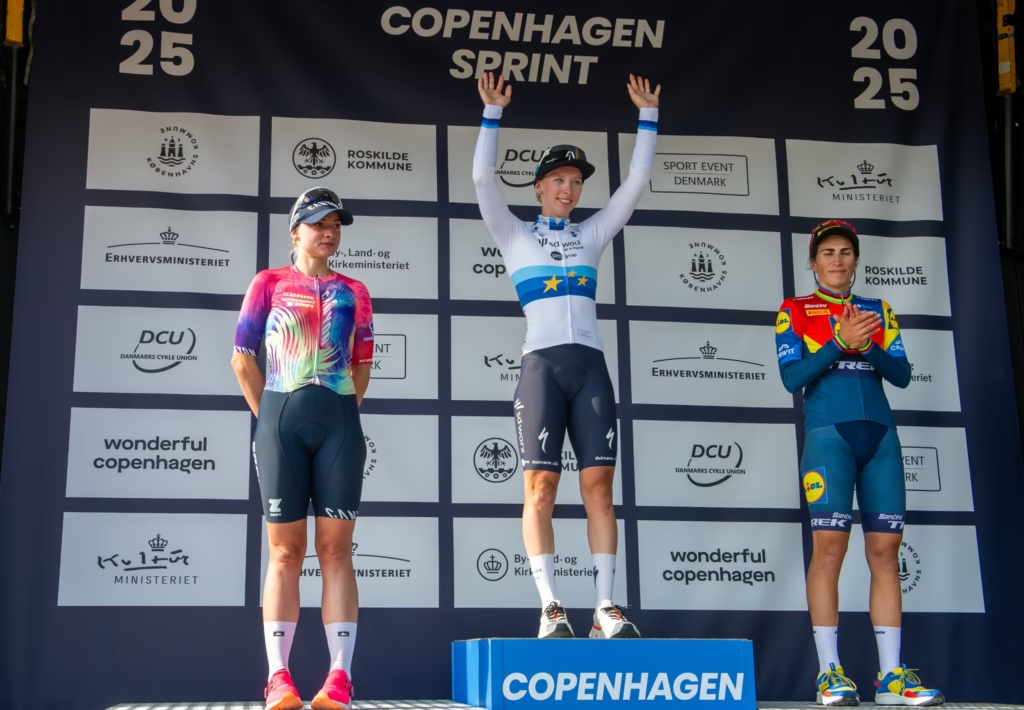 Photo Credit: Andreas Roungkvist
What happened on the 2025 route?
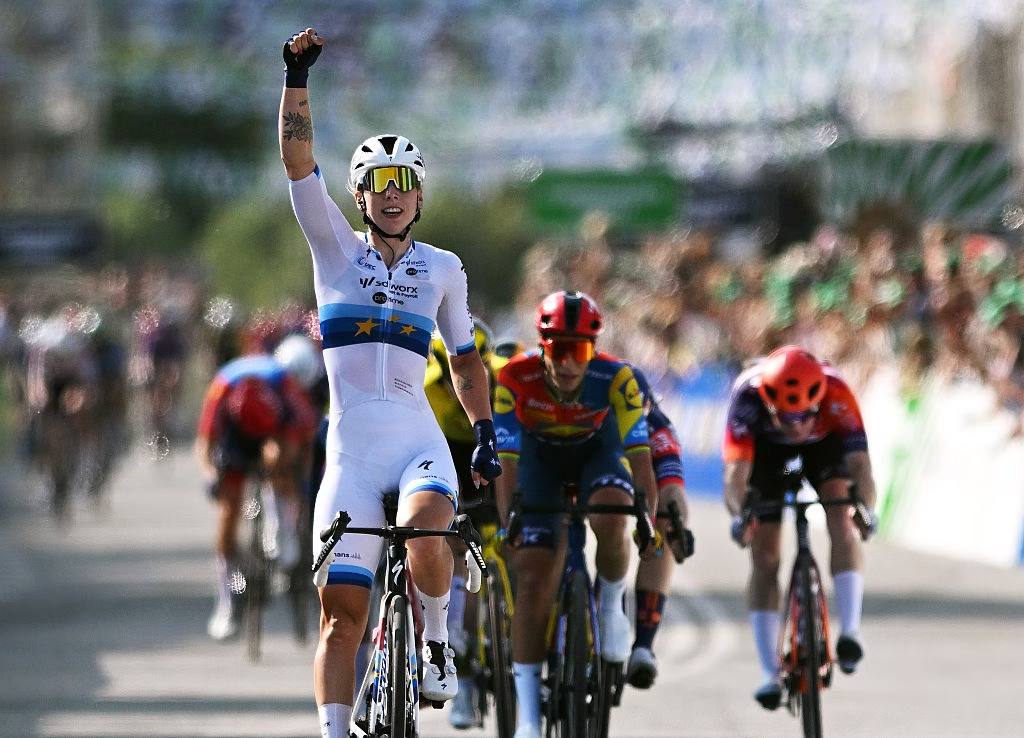
The first edition in 2025 confirmed the race’s sprint identity. Lorena Wiebes won in Copenhagen, beating Elisa Balsamo and Chiara Consonni after a fast finale. That podium told the story of the race immediately: this is a WorldTour stage for the best fast finishers in the sport.
The 2025 race also showed the risks. The finale was fast, technical and crash-affected, which is exactly the kind of pattern that can return on a route where the peloton remains large deep into the final laps. A sprinter may be the strongest rider in the race, but she still needs to survive the approach and trust her lead-out through the last circuit.
For 2026, the broad expectation remains the same. The route points towards a sprint. The question is not whether the sprinters should be there, but which team can control the chaos best.
Which riders does the route suit?
The route suits the pure sprinters first. Lorena Wiebes, Elisa Balsamo, Chiara Consonni, Charlotte Kool, Clara Copponi, Daria Pikulik and other fast finishers would all look at this course as a serious opportunity if they line up.
It also suits sprinters with strong lead-outs. Copenhagen is not likely to be won by a rider sitting anonymously in the bunch and appearing at the last second. The final circuit should reward teams that can hold position, absorb pressure and deliver their sprinter through the technical parts of the run-in.
There is also room for powerful rouleurs to influence the race. They may not be the obvious winners, but they can shape the final hour. A strong domestique who can keep the pace high on the circuit, shut down attacks and guide a sprinter through the corners may be just as important as the final lead-out rider.
Can attackers upset the sprint teams?
Attackers will need something unusual to beat the sprint teams. The route gives them space to try, especially before the race reaches Copenhagen, but the finishing circuit makes a full bunch sprint the most likely outcome.
The best chance for attackers is either wind or hesitation. If crosswinds split the peloton, a strong group could get clear with enough quality to stay away. If several sprint teams look at each other and no one takes responsibility, a late move on the circuit could also become dangerous.
Under normal conditions, the sprint teams should be too motivated. A Women’s WorldTour race this flat is rare enough that the fastest riders will not want to let it slip. The final laps give teams a clear chase target, and that usually works against solo attackers or small groups.
Where will Copenhagen Sprint Women 2026 be decided?
The race will almost certainly be decided in the final 10km, but the groundwork will be laid much earlier. The approach to Copenhagen determines which sprinters still have teammates. The first two circuit laps determine whether the breakaway is caught cleanly. The final lap decides who gets the right position.
The most important phase may be the entry into the last lap. That is when the sprint teams need to move from controlling the race to controlling the road. Being 20 wheels too far back at that point could be fatal, because the circuit is technical enough to make late surges difficult.
The final kilometre should be about timing. A team that launches too early risks exposing its sprinter. A rider who waits too long may never find clear road. In a race like this, the difference between first and fifth can come from a single corner taken in the right position.
-
 Photo Credit: A.S.O./Billy Ceusters
How the route compares with the men’s race
The women’s and men’s races share the same broad identity: Roskilde to Copenhagen, then finishing laps in the capital. The difference is distance and the number of laps. The women race 156km with three circuit laps, while the men cover 228.2km with five laps.
That gives the weekend a neat structure. The women’s race on Saturday establishes the sprint template, while the men’s race follows on Sunday with a longer version of the same idea. Both races are designed to showcase Denmark’s cycling culture, Copenhagen’s city-centre setting and the kind of fast, organised racing that suits sprint specialists.
Our Men’s Copenhagen Sprint 2026 route guide breaks down the longer men’s course and how the extra distance may change the balance of the race.
Copenhagen Sprint Women 2026 route prediction
The route points strongly towards a bunch sprint in Copenhagen. There is enough distance for a breakaway to form and enough exposed road for wind to matter, but the lack of major climbs and the structure of the finishing circuit give the sprint teams every reason to control the race.
The winner will need more than raw speed. She will need a team capable of guiding her through the approach, holding position on the circuit and delivering her into the final corners without panic. That makes Copenhagen Sprint Women a clean sprint race on paper, but a much more demanding one in practice.
Prediction: a reduced but still sizeable bunch sprint outside the National Gallery of Denmark, with the strongest lead-out likely to decide the winner as much as the fastest legs.

