

The Men’s Copenhagen Sprint 2026 is built around speed, but it is not quite as simple as its name suggests. This is a WorldTour one-day race shaped by flat Danish roads, exposed terrain, repeated positioning battles and a finishing circuit in Copenhagen where sprint teams will need to be organised long before the final kilometre.
The race takes place on Sunday 14th June, with the peloton starting at Stændertorvet in Roskilde and finishing outside the National Gallery of Denmark in Copenhagen. The total distance is 228.2km, with the riders covering a long point-to-point section before five laps of a 10km city circuit in the Danish capital.
For newer fans, our beginner’s guide to Copenhagen Sprint 2026 explains how the race fits into the calendar, while our brief history of Men’s Copenhagen Sprint looks back at how this new WorldTour event has started to establish its identity.

Where does the Men’s Copenhagen Sprint 2026 start?
The race begins in Roskilde, one of Denmark’s most historic cities, with the 2026 start set for Stændertorvet. It is a fitting opening point for a race that wants to feel both Danish and modern. Roskilde gives the event a recognisable identity before the route pushes out into Zealand and North Zealand, using open roads rather than climbs to create the first tactical questions.
There is no mountain challenge here. Instead, the early kilometres should be about control, positioning and avoiding unnecessary stress. Sprint teams will want a manageable breakaway, but they will also need to stay alert. On flat Danish roads, the biggest danger is often not gradient but exposure. Wind, road furniture and narrow sections can all make the day more complicated than the profile suggests.
This is the section where the breakaway should form, but it is unlikely to be given much freedom. With a WorldTour sprint opportunity available, the major sprint teams will not want to let the race drift.
How long is the Men’s Copenhagen Sprint 2026 route?
The Men’s Copenhagen Sprint 2026 route is 228.2km in total. That is long enough to create fatigue before the final sprint, even if the terrain itself is not especially selective. The race is not decided by climbing legs, but by how well riders manage a long day at speed.
The key route details are:
- Race date: Sunday 14th June
- UCI category: 1.UWT, UCI WorldTour
- Start: Stændertorvet, Roskilde
- Finish: National Gallery of Denmark, Copenhagen
- Total distance: 228.2km
- Point-to-point section: around 176km from Roskilde towards Copenhagen
- Finishing circuit: five laps of a 10km circuit in Copenhagen
The distance is important because this is not a short criterium-style sprinter’s race. The winner will need a proper endurance base, especially if the race is ridden hard through the exposed middle phase or if teams start fighting early for position before Copenhagen.
That gives Copenhagen Sprint a different character to some other one-day sprint races on the calendar. It sits as a fast, modern WorldTour event, but the length still makes it a meaningful test of stamina, team structure and late-race execution. More route-focused men’s race coverage can be found in our men’s cycling route guide hub.
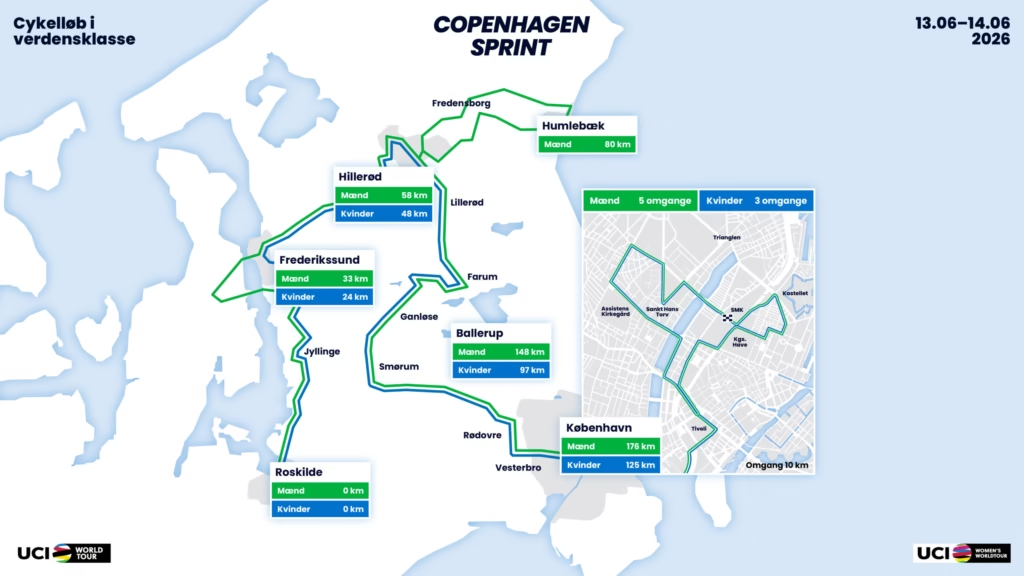
The route from Roskilde to Copenhagen
After leaving Roskilde, the race moves through the Zealand landscape and heads towards North Zealand before turning back towards Copenhagen. The route passes through several municipalities before the capital, giving the race a wide geographical spread before the final urban circuit.
This also means the bunch will experience several changes in road character. There will be open roads, town passages, direction changes and stretches where teams can test each other without needing a climb to do it.
In tactical terms, the long run-in has three likely phases. The opening phase should be about allowing the early move to go. The middle phase is where the strongest sprint teams begin managing the gap. The final approach into Copenhagen is where the race becomes increasingly nervous, because the peloton knows the circuit will reward those already near the front.
That is where Copenhagen Sprint becomes more subtle. The profile says sprint finish, but the route says position, patience and timing.
Why the open roads still matter
Denmark’s flat roads can create a misleading impression. A race does not need categorised climbs to become difficult. If the wind is present, especially on exposed sections, the bunch can stretch quickly. Even without full echelons, the repeated pressure of holding position can drain riders before the finishing laps.
This matters for the pure sprinters. A rider who can win a clean boulevard sprint may still struggle if they spend the final 40km fighting from too far back. Lead-out trains will need to be switched on long before the final lap. The danger is not only being dropped. It is being trapped behind splits, crashes or poorly timed accelerations at the wrong moment.
The roads into Copenhagen should therefore suit the most organised sprint squads. Teams with several strong rouleurs, not just a fast finisher, will have a clear advantage.
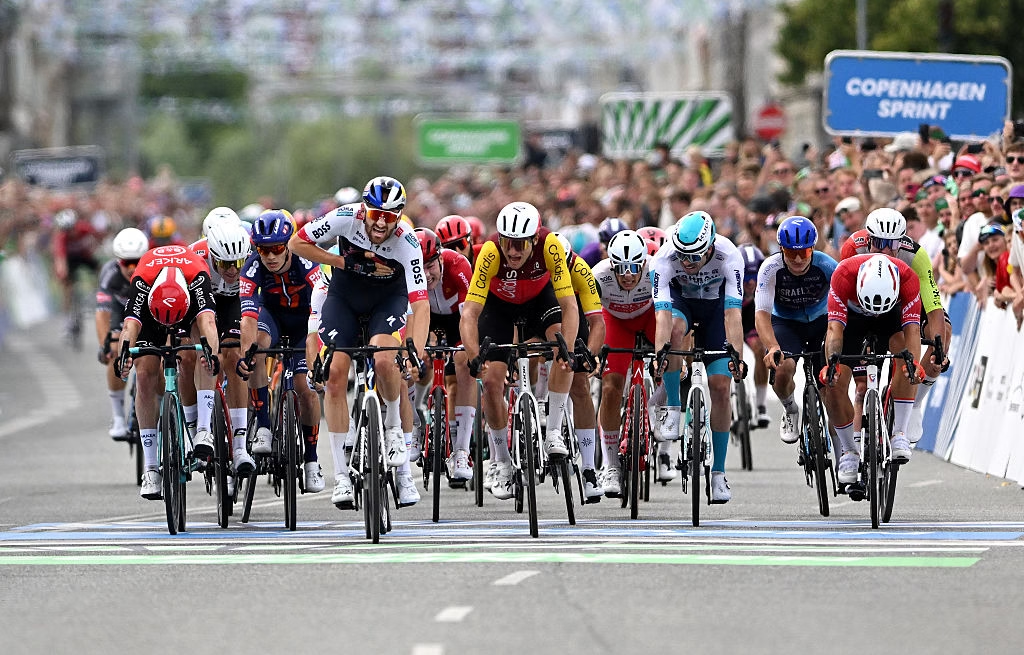
The Copenhagen finishing circuit
Once the race reaches Copenhagen, the route finishes with five laps of a 10km circuit. The riders enter the city before joining the finishing loop, with the race ending outside the National Gallery of Denmark. It gives the event a central and visually recognisable finale, but it also raises the technical demand after more than 200km of racing.
The circuit is likely to be the defining part of the race. Five laps give teams repeated chances to learn the corners, road widths and key positioning points, but it also increases the stress. Every lap gives the peloton another opportunity to stretch, compress and reshuffle. That can be tiring, particularly after the long approach from Roskilde.
This is where the race should become more aggressive without necessarily becoming selective. Attacks may come, especially from riders who know they cannot beat the fastest sprinters, but the flat nature of the circuit means any move will need hesitation behind to survive.
The more likely outcome is a high-speed chase into a bunch sprint. The final lap should be about control. The final kilometres should be about placement. The final few hundred metres should be about timing.
Where can the route be won or lost?
The most obvious answer is the final sprint, but the route can be lost much earlier. Copenhagen Sprint is the sort of race where a contender can be out of contention before the TV camera fully realises it.
The main danger points are likely to be:
- exposed roads through Zealand and North Zealand
- town passages where the bunch narrows
- the approach into Copenhagen
- the first lap of the finishing circuit, when teams fight for control
- the final two laps, when lead-out trains begin committing riders
- the last kilometre, where positioning will decide who actually gets to sprint
For the sprinters, the ideal race is controlled and predictable. For opportunists, the best chance may come from disruption. A crash, split, hesitation or badly organised chase could briefly open the door, but the route is designed to pull the race back towards the fastest finishers.
What type of rider does the route suit?
The Men’s Copenhagen Sprint 2026 route suits sprinters, but not every sprinter in the same way. This is not a steep uphill finish, nor is it a selective Classics course. It is a long, fast, flat one-day race where the best candidate is a sprinter who can handle stress, hold position and still produce a full-power effort after more than 220km.
Pure speed matters, but so does durability. The winner will need to survive the early fight for position, trust their lead-out, stay calm on the city circuit and launch at the right moment. The route should also suit riders who come from a Classics background and can sprint after a messy day, particularly if conditions make the road sections more nervous.
It is less suited to climbers, puncheurs or riders who need a hard uphill selection. Their best hope is to use the circuit, road furniture and late hesitation to create chaos. Even then, the sprint teams should have the numbers and motivation to bring it back.
-
 Photo Credit: A.S.O./Billy Ceusters
How the 2025 edition shapes expectations
The first men’s edition in 2025 gave a useful indication of what this race wants to be. Jordi Meeus won that inaugural WorldTour edition in a mass sprint after a long route from Roskilde across North Zealand and into Copenhagen. Alexis Renard and Émilien Jeannière completed the podium, reinforcing the race’s identity as a high-speed sprinter’s event rather than a day for climbers or late solo attackers.
The 2026 route follows the same broad logic. It is adjusted, but the central idea remains intact: start outside Copenhagen, use the flat Danish road network to build tension, then decide the race on a repeated urban circuit in the capital.
That gives the race a clear place in the calendar. It is not a Monument, not a climbing race and not a technical cobbled Classic. It is a modern sprint-focused WorldTour race where the difficulty comes from distance, speed, exposure and the constant fight for road position. For wider context on where it sits in the season, our men’s cycling race hub brings together the latest guides, previews and race coverage.
Men’s Copenhagen Sprint 2026 route summary
The Men’s Copenhagen Sprint 2026 route is built for a bunch sprint, but it is not a passive course. At 228.2km, it has enough distance to make the final meaningful. The long approach from Roskilde to Copenhagen gives the race room for wind, positioning battles and tactical stress, while the five laps of the Copenhagen circuit should create a fast, nervous and visually strong finale.
For sprint teams, this is a major opportunity. For lead-out trains, it is a test of timing and control. For outsiders, the hope is that the route becomes messier than expected. The profile points towards a sprint, but the road into Copenhagen should decide which sprinters are still in the right place when the race reaches its final turn.

