
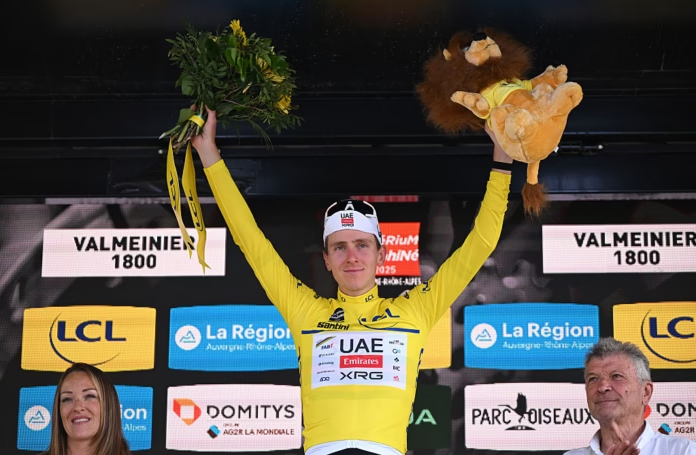
The Tour Auvergne – Rhône-Alpes 2026 start list gives the race the feel of a proper Tour de France form check. Formerly the Critérium du Dauphiné, the race now carries its new regional identity, but the sporting role is familiar: a demanding June WorldTour stage race where the Tour contenders, mountain domestiques, time trial engines and ambitious young riders all get tested before July.
The 2026 edition runs from Sunday, 7th June to Sunday, 14th June, beginning in Vizille and finishing at Plateau de Solaison. With a team time trial on stage 3 and three uphill finishes in the final three stages, the race should reward riders who can climb, recover and hold a strong collective structure deep into the week.
The provisional start list is already strong. Isaac del Toro, João Almeida, Paul Seixas, Oscar Onley, Wout van Aert, Mattias Skjelmose, Tobias Halland Johannessen, Dorian Godon, Matthew Riccitello and Ion Izagirre are among the names expected to shape the race, either in the general classification, on the harder stages or through selective breakaways.
For a broader look at the terrain, ProCyclingUK’s Tour Auvergne – Rhône-Alpes 2026 full route guide breaks down the eight stages, including the decisive final weekend.
Tour Auvergne – Rhône-Alpes 2026 start list
The full provisional start list for the Tour Auvergne – Rhône-Alpes 2026 is below. The list can still change before the race begins, especially as teams finalise their Tour de France preparation blocks and adjust plans around injury, illness or form.
Data powered by FirstCycling.com
Which riders stand out on the Tour Auvergne – Rhône-Alpes 2026 start list?
The strongest general classification interest sits around UAE Team Emirates-XRG and Decathlon CMA CGM. UAE are expected to bring major stage-race quality through João Almeida and Isaac del Toro, giving them two riders who can be dangerous in different ways. Almeida offers experience, climbing consistency and time trial strength, while Del Toro brings the kind of attacking confidence that can make him especially dangerous on a mountainous route with several opportunities to create splits.
Decathlon CMA CGM’s interest is obvious through Paul Seixas, one of the most watched young French riders in the peloton. A race like this is a major test of his stage-race ceiling because it combines climbing, pressure, time trial structure and WorldTour depth. Matthew Riccitello and Aurélien Paret-Peintre also give the team useful options for the harder stages, which makes Decathlon one of the teams most likely to shape the race rather than simply follow it.
Team Visma | Lease a Bike bring a different kind of intrigue. Wout van Aert is not here as a pure GC rider, but his presence changes the race. He can target stages, support teammates, influence breakaways and test form before July. If the route produces harder reduced finishes or crosswind pressure, Van Aert is exactly the kind of rider who can turn a transition stage into something more selective.
Oscar Onley gives Team Picnic PostNL a genuine climbing card. The British rider has already shown that he can be relevant on WorldTour mountain stages, and the uphill finishes in the final three days should give him the terrain to test himself against a strong field. For British interest, he is one of the most important names on the start list.
Mattias Skjelmose is another rider who fits the race well. He has the punch, climbing ability and stage-race experience to be involved across several different types of day. The team time trial could also be important for his overall prospects, because any GC rider who loses ground there will be under pressure before the final mountain block even begins.
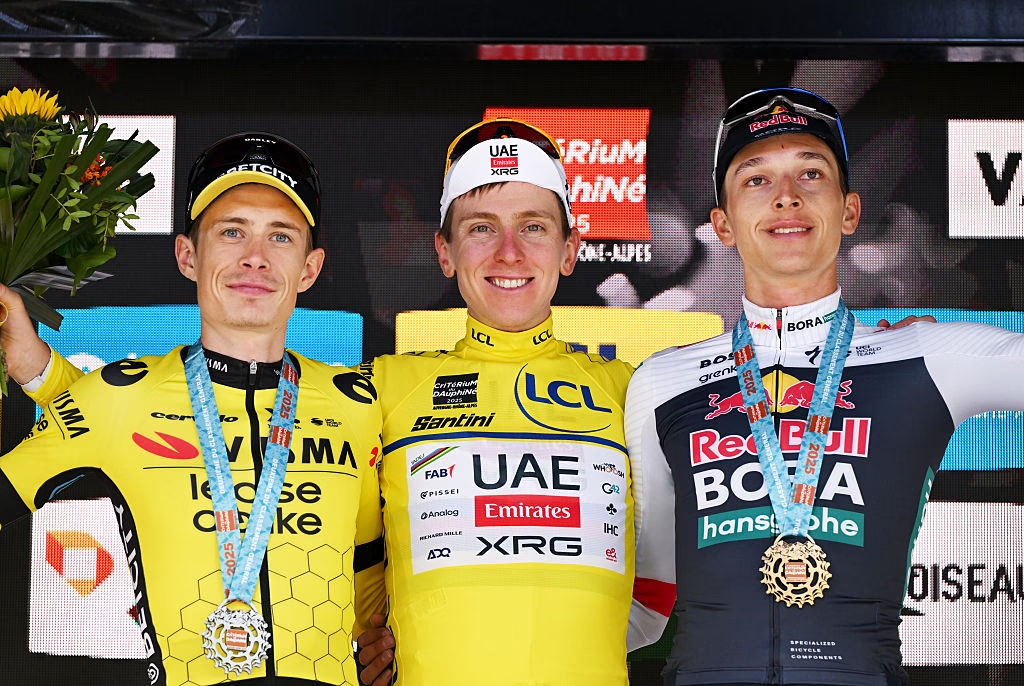
Why the start list matters for the race
The Tour Auvergne – Rhône-Alpes is not just a preparation race in name. It often tells us which riders are already close to Tour de France condition, which teams have settled on their climbing hierarchy and which riders still need work before July. That makes the start list unusually important.
The 2026 route makes that even clearer. A team time trial on stage 3 means squads need collective strength, not just one leader. The final three uphill finishes mean climbers will have repeated chances to show themselves, but also repeated chances to crack. The race is difficult enough that a rider cannot simply hide for a week and claim the form is coming later.
It also gives younger riders a more serious platform. Seixas, Del Toro, Riccitello, Onley and other emerging stage-race names can all use this week to show whether they are ready for a heavier role in July or later in the season. Against more established riders, that makes the race a useful measure of where the next generation really stands.
Which teams look strongest?
UAE Team Emirates-XRG look like one of the strongest teams on paper if Almeida and Del Toro both start. That gives them more than one route into the general classification, plus enough depth to make the race difficult when the road climbs.
Decathlon CMA CGM should also be central, particularly with Seixas and Riccitello. The French team have several riders who can thrive on mountainous terrain, and a strong performance here would carry extra weight in a race that now has a more clearly regional French identity.
Team Visma | Lease a Bike may not be built purely around one obvious GC favourite, but any line-up including Van Aert will have stage-race influence. Their collective strength also makes them dangerous in the team time trial and on days where positioning and control become decisive.
Lidl-Trek, Uno-X Mobility, Team Picnic PostNL, Movistar Team and Groupama-FDJ United also bring riders capable of affecting the overall race or targeting stage wins. With a hard route and several different stage types, the strongest team may not simply be the one with the best climber. It may be the one that can place riders in the right moves, limit losses in the team time trial and still have support left on the final climbs.
-
 Photo Credit: Cor Vos
 -
 Photo Credit: Zac Williams/AusCycling
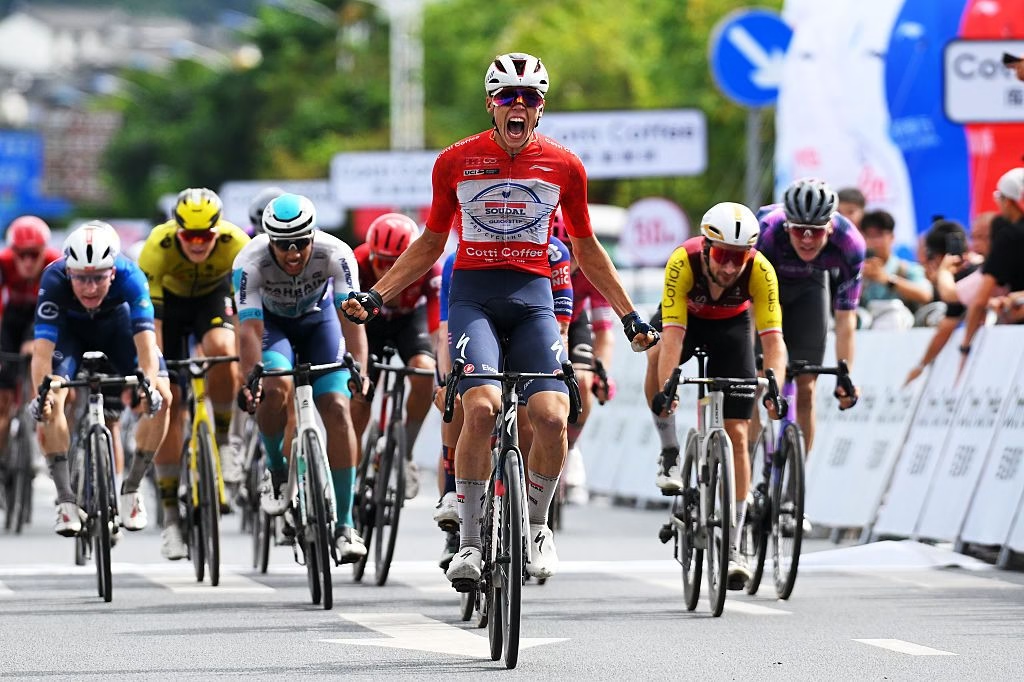
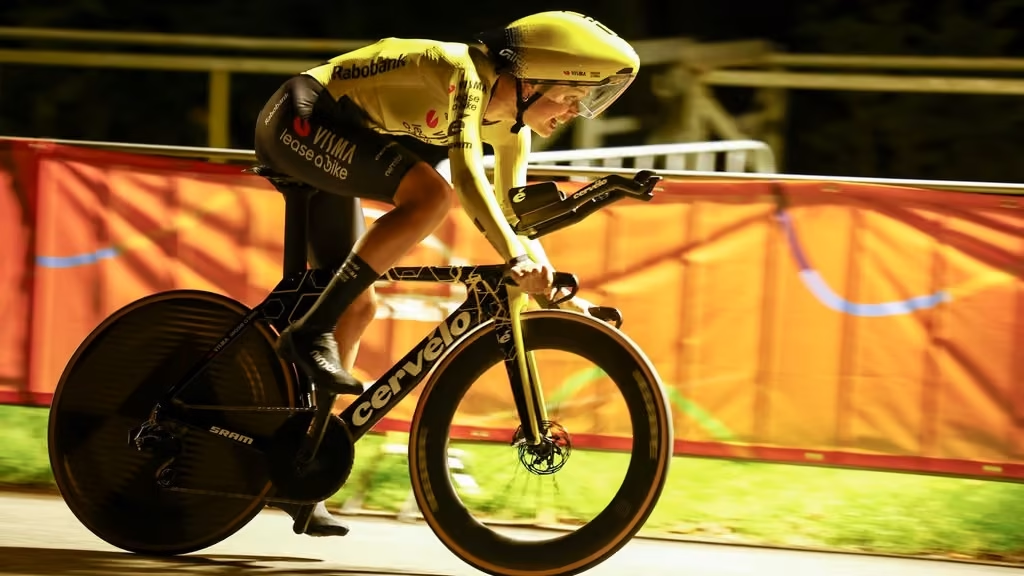
What kind of rider does the start list favour?
The 2026 start list feels built for complete stage racers rather than pure specialists. Sprinters will have limited chances, and even the flatter days could be shaped by teams trying to save energy for the mountains. The team time trial gives powerful squads an early chance to create separation, while the uphill finishes should bring the climbers forward later in the week.
That mix favours riders who can do several things well. Almeida fits because he climbs and time trials. Del Toro fits because he can attack and handle difficult terrain. Seixas fits because the climbs give him space to show his level. Onley fits because the final weekend should suit pure climbing rhythm. Van Aert fits because he can influence almost any kind of stage that is not a pure high-mountain GC showdown.
It also means that domestiques will matter more than usual. A leader isolated before the final climb will be vulnerable, especially on the harder mountain days. The full start list therefore matters beyond the headline names. The race could be decided as much by team depth as by one spectacular attack.
Tour Auvergne – Rhône-Alpes 2026 start list verdict
The provisional Tour Auvergne – Rhône-Alpes 2026 start list gives the race a strong blend of Tour de France contenders, rising GC riders, stage hunters and versatile all-rounders. That suits the route. This is not a race designed around easy sprint stages or a single mountain day. It is an eight-stage test with enough variety to expose weak teams and reward riders who can stay sharp across the whole week.
The headline battle should come from the general classification names, but the most interesting stories may sit just below that level. Seixas, Del Toro, Onley and Riccitello all bring future-facing intrigue, while Van Aert adds stage-hunting and tactical weight. If the final three uphill finishes are raced hard, the start list has enough quality to make the 2026 edition one of the clearest Tour de France form indicators of the summer.

