
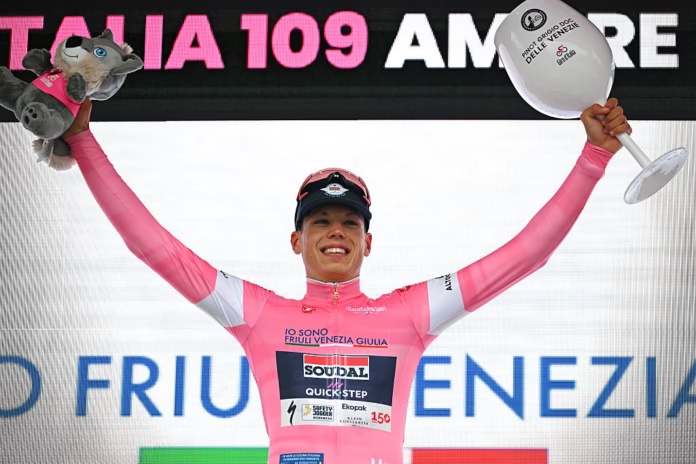
The men’s Giro d’Italia 2026 stays in Bulgaria on Saturday, 9th May with Stage 2 from Burgas to Veliko Tarnovo, a 221km hilly stage that immediately changes the tone after the flat opening sprint on the Black Sea coast.
Paul Magnier starts the day in the maglia rosa after winning Stage 1 in Burgas, where he avoided the late crash and beat Tobias Lund Andresen and Ethan Vernon in a disrupted sprint. Magnier also leads the points and young rider classifications, while Diego Pablo Sevilla begins Stage 2 in the mountains jersey after taking points from the breakaway.
Stage 2 is a very different kind of test. It is long, rolling and increasingly awkward, with a late climb close enough to the finish to give puncheurs, strong sprinters and ambitious GC riders a reason to believe. This is not a pure mountain day, but it is hard enough to make the first pink jersey defence far from straightforward.
For the full three-week picture, our men’s Giro d’Italia 2026 full route guide breaks down all 21 stages from Bulgaria to Rome.
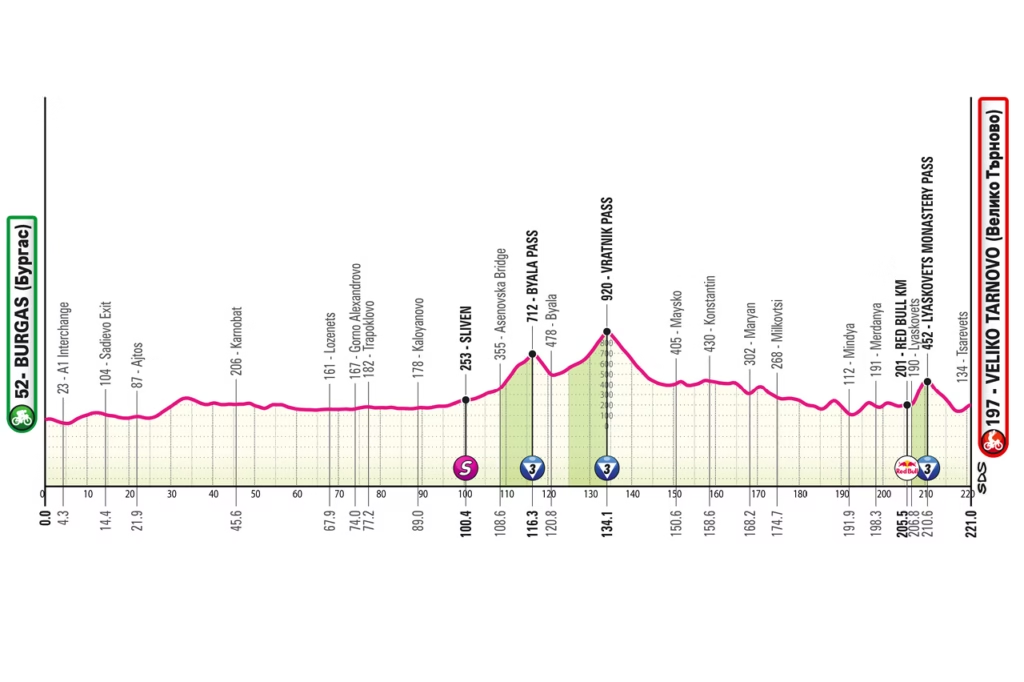
Giro d’Italia 2026 stage 2 route
Stage 2 runs from Burgas to Veliko Tarnovo over 221km. After the coastal opener, the race turns inland and heads west across Bulgaria towards one of the country’s most historic cities.
The distance is the first major feature. At more than 220km, this is a long day so early in the Giro, especially after the nerves and crashes of Stage 1. It may not have the altitude of the mountain stages to come, but the accumulated fatigue will matter by the time the race reaches the final hour.
The route is classed as hilly, with more than 2,400 metres of climbing across the day. Much of that difficulty comes through rolling terrain rather than one huge ascent, but the late climb near Lyaskovets Monastery is the key point. It comes close enough to the finish to change the race and should be hard enough to remove some of the pure sprinters if the pace is high.
Veliko Tarnovo is also a finish that suits tension. The city’s hilltop setting means the run-in is not a simple drag-strip sprint. Positioning, timing and the ability to handle a long day before a sharp finale should matter more than raw speed alone.
What time does stage 2 start?
Stage 2 starts at 11:50 local time in Bulgaria, which is 09:50 in the UK. The finish is expected at around 17:15 local time, or 15:15 UK time.
Key stage details:
- Date: Saturday, 9th May
- Route: Burgas to Veliko Tarnovo
- Distance: 221km
- Stage type: Hilly
- Estimated climbing: around 2,400 metres
- Key late feature: Lyaskovets Monastery climb
- Stage start: 09:50 UK time
- Expected finish: around 15:15 UK time
- Race leader: Paul Magnier
UK viewers can follow the race through TNT Sports and HBO Max. Our guide to watching the Giro d’Italia 2026 in the UK covers the wider broadcast picture across all 21 stages.
Why stage 2 matters
Stage 2 matters because it is the first day where the Giro becomes harder to control. Stage 1 was built for the sprinters, even if the final kilometre became chaotic. Stage 2 is longer, hillier and more open. That gives more teams a reason to race.
For Magnier, the stage is a difficult first defence of pink. He has the speed and confidence after winning Stage 1, but a long hilly day into Veliko Tarnovo is not as straightforward as the Burgas sprint. Soudal Quick-Step will need to decide whether they commit to controlling the race for him or allow the stage to become more open.
For riders such as Lund Andresen, Corbin Strong, Kaden Groves, António Morgado, Madis Mihkels and even Jonathan Milan, the stage offers different possibilities. Some will hope to survive for a reduced sprint. Others may try to make the final climb too hard for the pure fast men. The result may depend less on who is quickest and more on who reaches the final kilometres with the right position and enough energy left.
For the GC contenders, the stage is mainly about staying safe, but it is not neutral. Jonas Vingegaard, Jai Hindley, Egan Bernal, Adam Yates, Ben O’Connor and the other overall contenders will want to avoid splits, crashes and unnecessary stress. A late climb close to the finish always brings danger because sprint teams, puncheurs and GC squads all fight for the same road at the same time.
For more on the race favourites, our Giro d’Italia 2026 contenders preview looks at the main names chasing the maglia rosa.
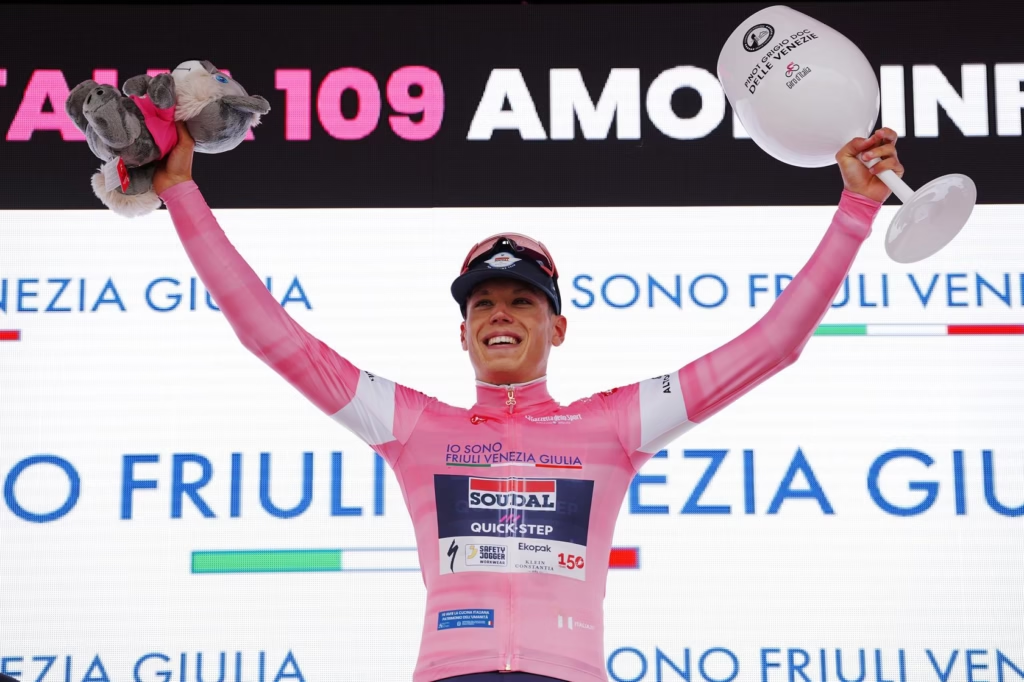 Photo Credit: RCS
How stage 1 changed the race
Stage 1 gave Soudal Quick-Step the perfect start. Magnier won in Burgas, took the maglia rosa, moved to the top of the points classification and also became the first leader of the young rider competition. That is a huge opening result for both rider and team.
The sprint was heavily disrupted by a crash inside the final kilometre, which affected several expected contenders. Milan still finished 4th, but the finale was not the clean sprint Lidl-Trek would have wanted. Groves was also unable to turn the stage into the result Alpecin-Premier Tech had targeted.
Lund Andresen’s 2nd place gave Decathlon CMA CGM Team a strong early position, while Vernon’s 3rd was a useful result for NSN Cycling Team. Sevilla and Manuele Tarozzi also benefited from the day’s breakaway and bonus seconds, leaving the first GC standings shaped by sprint bonuses and intermediate rewards rather than true selection.
Stage 2 should now test whether Magnier’s opening lead can survive terrain that is less predictable.
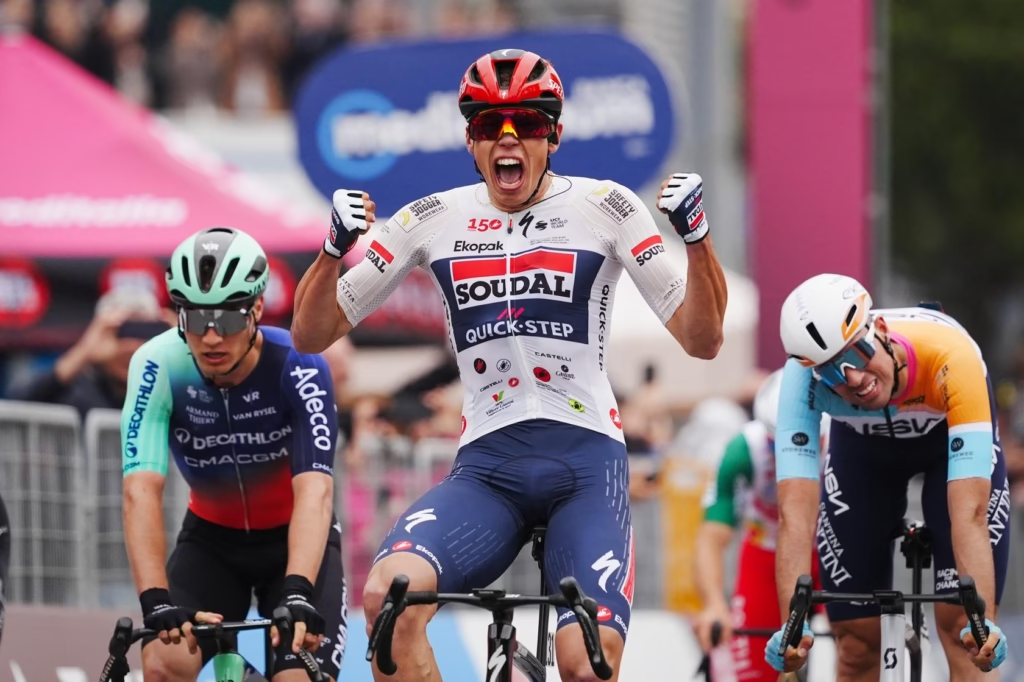 Photo Credit: RCS
Contenders to watch on stage 2
Paul Magnier has to be included because he starts in pink and has already shown his form. The question is whether he can handle the distance and late climbing well enough to sprint again. If he survives the final climb near the front, he has the speed to win another stage.
Tobias Lund Andresen looks like one of the most logical contenders. He was 2nd on Stage 1 and should be well suited to a harder, reduced sprint. Decathlon CMA CGM Team also have a reason to keep the race controlled because Lund Andresen is only four seconds off pink.
Corbin Strong is one of the most interesting names for this stage. NSN Cycling Team have Ethan Vernon for pure sprint days, but Strong’s strength on rolling terrain makes him a better fit for Veliko Tarnovo if the finale becomes too hard for the fastest riders. A long hilly day with a late climb is exactly the sort of stage where he can become dangerous.
Kaden Groves should also be watched. Stage 1 did not go his way, but Stage 2 may suit him better if the final climb removes some of the pure sprinters. Groves is strong enough to handle tougher finishes and experienced enough to survive a messy finale.
Jonathan Milan is the big question. On raw sprint power, he remains one of the strongest riders in the race, but the long distance and late climb may make life harder for Lidl-Trek. If Milan survives in the front group, he is always a threat. If the pace is hard on the climb, he could be distanced before the sprint.
Madis Mihkels could be a useful outsider after finishing 5th on Stage 1. EF Education-EasyPost do not have to control the race, which may allow him to follow moves or position more freely in a reduced finale.
António Morgado is another rider who makes sense if the stage becomes more selective. UAE Team Emirates XRG may be more focused on keeping Adam Yates safe, but Morgado’s punch and ability on rolling terrain give him a chance if the finale becomes more aggressive than controlled.
Giulio Ciccone, Magnus Sheffield and Jhonatan Narvaez are names to watch if the race becomes much harder. None of them needs to go all-in this early, but the late climb could tempt a strong attack if the sprint teams lose control.
-
 Photo Credit: A.S.O./Gaëtan Flamme
Tactical outlook
Stage 2 should produce a more complicated race than Stage 1. The early breakaway is almost certain to go, especially with the mountains classification still open and Sevilla in the blue jersey. Riders from ProTeams and stage-hunting squads will see this as a better opportunity than the flat opener.
The sprint teams will have to decide how much responsibility they want. Soudal Quick-Step have pink with Magnier, Decathlon CMA CGM Team have Lund Andresen close to the lead, and Alpecin-Premier Tech may see the finish as a chance for Groves. Lidl-Trek will need to judge whether the stage is worth committing to for Milan or whether the final climb makes control too risky.
The late climb near Lyaskovets Monastery is the tactical centre of the stage. If it is ridden steadily, a reduced sprint is the most likely outcome. If UAE Team Emirates XRG, INEOS, Lidl-Trek through Ciccone, or another ambitious team lifts the pace, the race could split and turn into a puncheur’s finish.
GC teams will not want chaos, but they cannot sit too far back. The combination of a long stage, possible rain near the finish and a technical finale into Veliko Tarnovo means positioning will matter. Even if there are no major GC attacks, the final 30km should be stressful.
Prediction
Stage 2 looks too hard for a completely straightforward bunch sprint, but not hard enough to guarantee a GC-style selection. That makes a reduced sprint or late attack the most likely outcome.
Lund Andresen is the pick. He showed his speed on Stage 1, the harder finale should suit him, and the four-second gap to Magnier gives Decathlon CMA CGM Team a clear incentive to race for both the stage and the maglia rosa. Strong, Groves and Magnier are the most obvious dangers if the front group stays together, while Morgado and Narvaez become more interesting if the final climb is raced aggressively.
Milan can still win if he survives, but the stage is less cleanly suited to him than the Burgas opener. A breakaway has a chance if the sprint teams hesitate, but with pink still so close and several strong reduced-sprint options in the race, the most likely outcome is a controlled but tense finale in Veliko Tarnovo.

