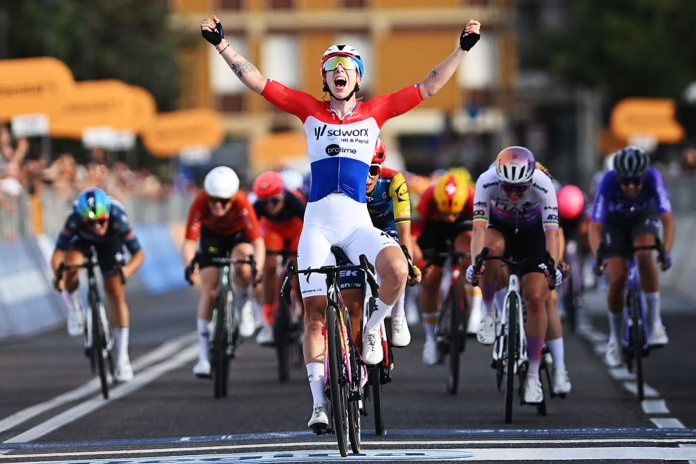
Lorena Wiebes opened the 2026 Giro d’Italia Women with a commanding sprint victory in Ravenna, launching from around 300 metres out and holding off Elisa Balsamo and Lara Gillespie to take the first maglia rosa of the race. The SD Worx-Protime rider had to improvise in the final kilometre after her lead-out became stretched, but once she opened her sprint, nobody could come around her.
Balsamo finished second for Lidl-Trek, Gillespie took third for UAE Team ADQ, and Chiara Consonni was fourth for CANYON//SRAM. Georgia Baker completed the top five for Liv AlUla Jayco, with Charlotte Kool sixth after Fenix-Premier Tech had worked hard to keep her in position through the technical Ravenna circuit.
The opening stage from Cesenatico to Ravenna was always expected to favour the sprinters. There were no classified climbs, only around 250 metres of elevation gain, and a long flat run through Emilia-Romagna before the race reached its finishing circuit. The complication came late, with three full laps of a technical 13.2-kilometre city circuit in Ravenna, featuring 11 bends, a dead turn, seven roundabouts and several narrow sections. On a day where the first stage winner would also wear pink, positioning became almost as important as speed.
An all-Italian break gives the Continental teams a platform
The race rolled out from Cesenatico in warm conditions, with temperatures around 28°C and the possibility of thunderstorms later in the day. After 3.8 kilometres of neutralised riding, the official start was given, but the opening phase was calmer than many sprint stages at this level. The route headed inland before turning towards Alfonsine for the intermediate sprint and then south-east towards Ravenna.
The first successful break came from the Italian Continental teams. Valeria Curnis of Isolmant-Premac-Vittoria, Sharon Spimi of Top Girls Fassa Bortolo and Sofia Arici of Vini Fantini-BePink went clear, while Ilaria Marinetto of Mendelspeck-E Work was briefly caught in between. Marinetto tried to bridge alone but was eventually brought back by the peloton, leaving three riders at the front.
It was an important moment for the lower-tier squads in the race. Five Continental teams started this Giro, and four had representation either in the move or in the chase, with only Aromitalia Vaiano missing from the early action. Curnis, Spimi and Arici quickly built their lead to around 2 minutes, then pushed it towards 4 minutes as the peloton allowed the stage to settle.
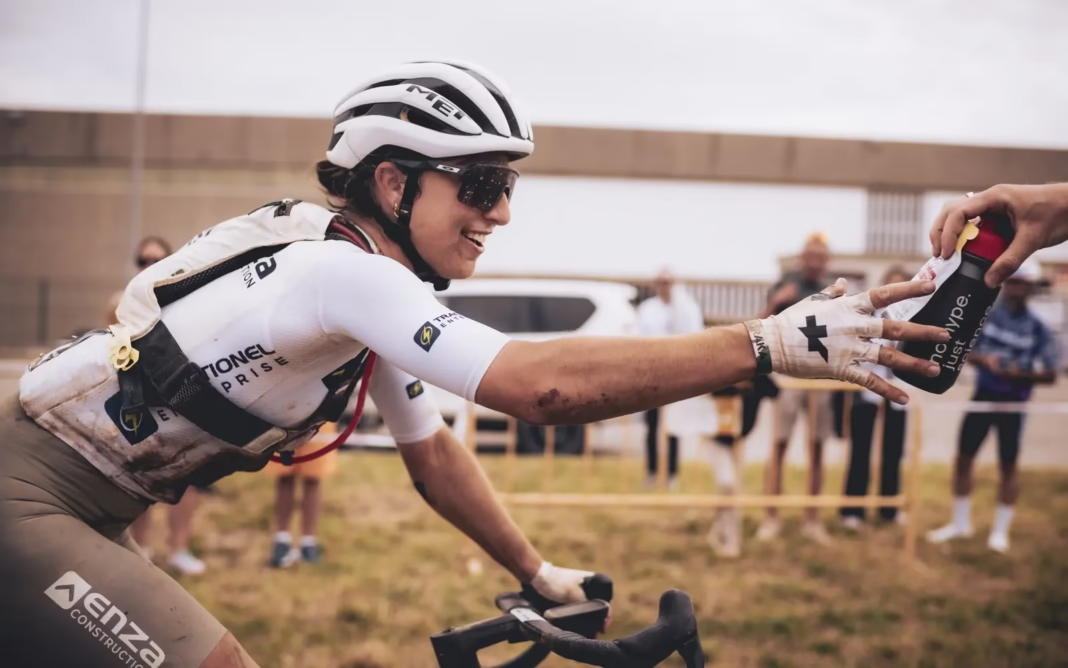
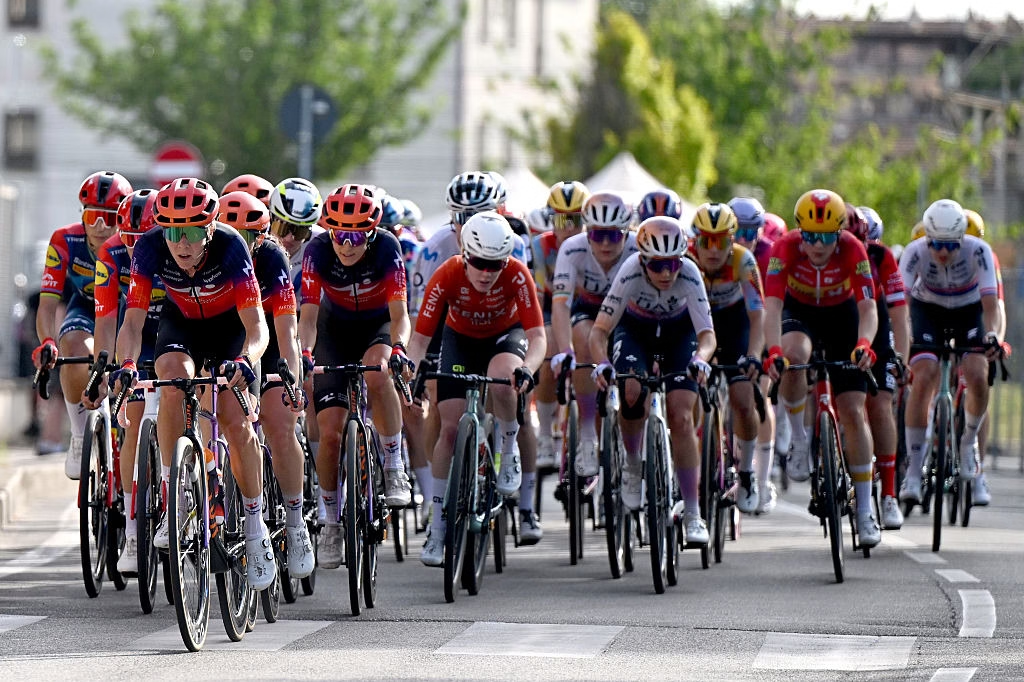 Photo Credit: Getty
Arici takes the intermediate sprint before the catch begins
The gap reached around 4 minutes with just under 100 kilometres remaining, but the peloton began to reduce it before the intermediate sprint at Alfonsine. There were 6, 4 and 2 bonus seconds available there, and for a while it looked as though the bunch might bring the break back in time to contest them.
That did not happen. The three leaders still held more than a minute as they approached the sprint, and Arici crossed the line first. It was just as well the bunch did not arrive at full speed, because the sprint came on a bend after a roundabout, a detail that would have made a full peloton contest far more awkward.
After the sprint, the race settled again. Curnis, Spimi and Arici were back together and held around 1:20, with the peloton keeping them close rather than rushing the catch. UAE Team ADQ were among the most visible teams at the front, working for Gillespie, while Human Powered Health were also present for Maggie Coles-Lyster.
Crashes and Ferguson abandon before Ravenna
The run towards Ravenna was not without incident. There were crashes in the peloton, including one with two riders down around 50 kilometres from the finish, though they were able to get back up and continue. The more significant news was the abandon of Cat Ferguson, who left the race after crashes earlier in the day.
That immediately changed Movistar’s options. Without Ferguson, their focus shifted towards keeping Marlen Reusser safe and supporting Arlenis Sierra if the sprint opened in her favour. On a day that had looked like a straightforward sprint opportunity on paper, the repeated road furniture and growing fight for position had already made the stage more stressful.
Spimi was the last of the breakaway to be caught, just before the race reached Ravenna and the finishing circuit. From there, the pace and tension both increased sharply.
Ravenna circuit turns the race into a positioning battle
The final circuit around Ravenna changed the whole feel of the stage. The road repeatedly widened and narrowed, allowing riders to move up before squeezing them back into the pack. The dead turn came 2.2 kilometres before the finish line, while the final right-hand turn was positioned 900 metres from the line. There was also a left-right kink at around 400 metres to go, meaning sprinters needed to already be on the right wheel well before the launch.
The race also had a 5-kilometre safety zone for GC times, which slightly reduced the risk for the general classification riders but did not make the finale calm. Teams still needed to protect their leaders, place sprinters and avoid being caught behind crashes or splits.
UAE Team ADQ spent long periods on the front, with defending champion Elisa Longo Borghini even appearing at the head of the bunch in support of Gillespie. Movistar, Team Visma | Lease a Bike, Human Powered Health, FDJ United-SUEZ, Lidl-Trek and Fenix-Premier Tech were all visible as the bunch swept through the final laps.
FDJ United-SUEZ were working to protect Demi Vollering while also keeping Ally Wollaston in play for the sprint. Wollaston had been further back earlier in the finale but moved up smoothly as the pace increased. Lidl-Trek came forward for Balsamo on the final laps, while Fenix-Premier Tech did a strong job guiding Kool through the chaos with a smaller, more flexible lead-out unit.
SD Worx take over late but Wiebes has to freelance
SD Worx-Protime were not always the dominant train in the final 20 kilometres, but they moved up when it mattered. Anna van der Breggen came to the front late, using her strength to keep the pace high, with Barbara Guarischi and Wiebes behind her.
The plan did not quite run cleanly through the final kilometre. Guarischi hit the front early, and Wiebes was forced to freestyle the final 900 metres rather than sit inside a full, controlled lead-out. Van der Breggen had already been pushed back by UAE, and the final sequence of turns meant there was little time left to reorganise.
At 400 metres to go, Wiebes no longer had the perfect lead-out, but she did have position. She launched from around 300 metres, committing to a long sprint rather than waiting and risking being boxed in. It was a bold decision, but Wiebes had the speed to make it work.
Balsamo tried to come through for Lidl-Trek, Gillespie held her line for third, and Consonni was close behind, but Wiebes had already opened the decisive gap. The Dutch champion crossed the line first and took the first pink jersey of the race.
Wiebes takes control as sprinters fill the top places
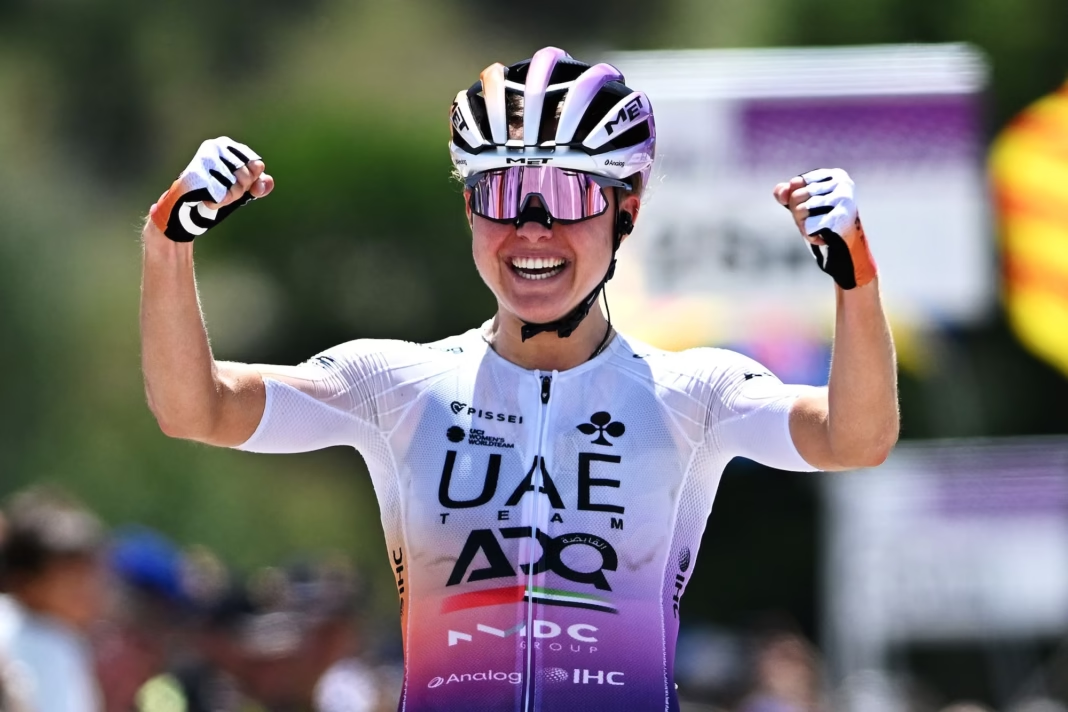
The result gave Wiebes 50 UCI points, the stage victory and the first race lead of the 2026 Giro d’Italia Women. Balsamo’s second place was an important result for Lidl-Trek after a winless start to her season, while Gillespie confirmed UAE Team ADQ’s strong positioning work with a podium finish.
Behind the first three, Consonni and Baker reinforced the depth of the sprint field. Kool finished sixth, Linda Zanetti seventh for Uno-X Mobility, Gladys Verhulst-Wild eighth for AG Insurance-Soudal, Célia Gery ninth for FDJ United-SUEZ and Lily Williams 10th for Human Powered Health.
There were also strong finishes just outside the top 10, with Alessia Vigilia 11th, Alison Jackson 12th, Cristina Tonetti 13th, Elisa Longo Borghini 14th and Alexandra Volstad 15th. Margaux Vigié, Marta Bastianelli Sierra, Marina Garau Roca, Anna van der Breggen, Thalita de Jong, Irma Siri, Mavi Garcia, Barbara Malcotti, Carlotta Cipressi and Demi Vollering all finished in the front group too.
For the GC contenders, the key task was staying safe. Vollering, Van der Breggen, Longo Borghini, Reusser and Garcia all came through the stage without losing time, while the 5-kilometre safety zone helped protect the overall race from being shaped too heavily by late crashes or mechanicals.
The first day of the Giro d’Italia Women did what an opener should do. It gave the breakaway a visible role, tested the sprint teams on a technical city circuit, created early drama through crashes and positioning battles, and then delivered the expected favourite in pink. Wiebes was the rider everyone was watching, but she still had to solve a messy finale herself. She did, and Ravenna gave the race its first clear leader.
Giro d’Italia Women 2026 stage 1 result
| Position | Rider | Team | Time/gap |
|---|---|---|---|
| 1 | Elisa Balsamo | Lidl-Trek | 3:18:22 |
| 2 | Lara Gillespie | UAE Team ADQ | same time |
| 3 | Chiara Consonni | Canyon SRAM | same time |
| 4 | Georgia Baker | Liv AlUla Jayco | same time |
| 5 | Charlotte Kool | Fenix-Premier Tech | same time |
| 6 | Linda Zanetti | Uno-X Mobility | same time |
| 7 | Gladys Verhulst-Wild | AG Insurance-Soudal Team | same time |
| 8 | Célia Gery | FDJ United-SUEZ | same time |
| 9 | Lily Williams | Human Powered Health | same time |
| 10 | Alessia Zambelli | Top Girls Fassa Bortolo | same time |
Main photo credit: Getty
-
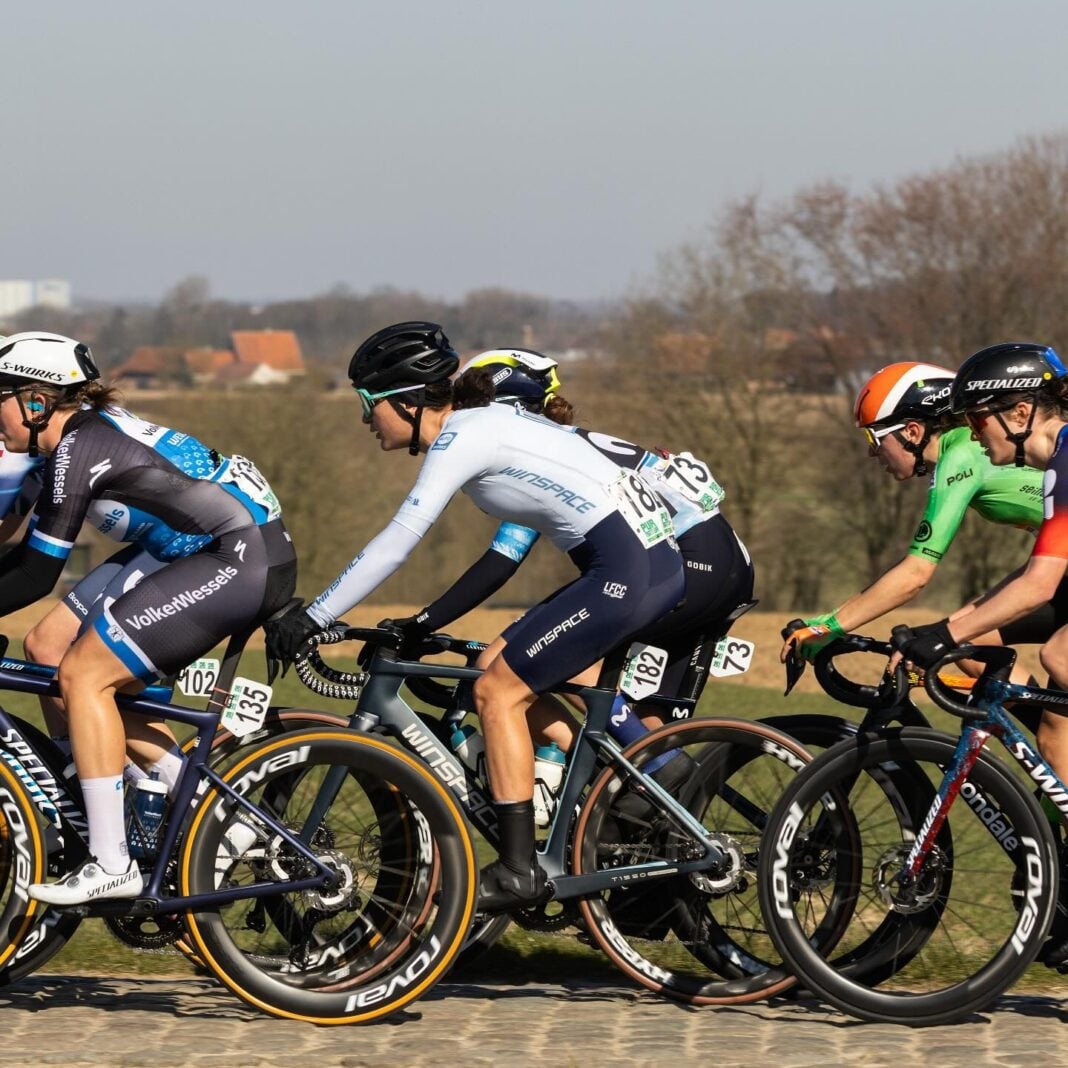
 Photo Credit: quentinphotographiebe
 -
 Photo Credit: Getty