
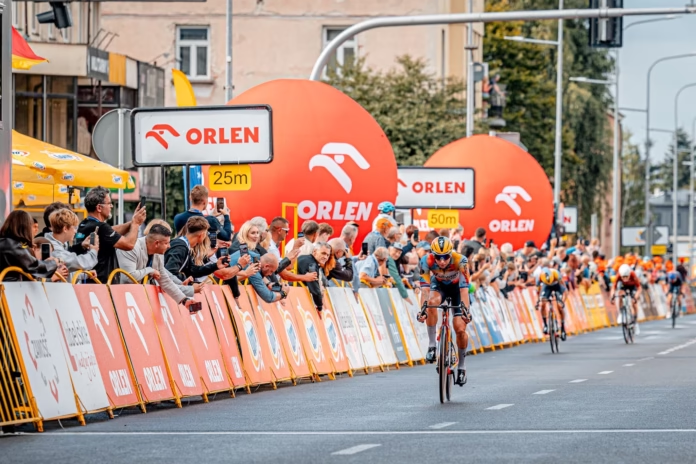
The Tour de Pologne Women 2026 is only three days long, but its position in the calendar gives it more importance than the distance suggests.
Held from 24 to 26 July, the race sits immediately before the Tour de France Femmes begins in Switzerland on 1 August. That creates an unusual split in purpose. For some riders, Poland is a final competitive tune-up before the biggest race of the summer. For others, particularly those not selected for the Tour, it is a major opportunity to turn strong July form into results while much of the peloton is already looking towards Lausanne.
The route reinforces that identity. There is no long mountain stage or individual time trial, so the Tour de Pologne Women cannot tell us who is ready to challenge Demi Vollering or Pauline Ferrand-Prévot on Mont Ventoux. Instead, its rolling opening stage, flatter second day and punchier finale suit sprinters, Classics riders and aggressive all-rounders.
That makes Poland less a miniature Tour de France Femmes than a snapshot of the wider women’s peloton at a crucial point in the season.
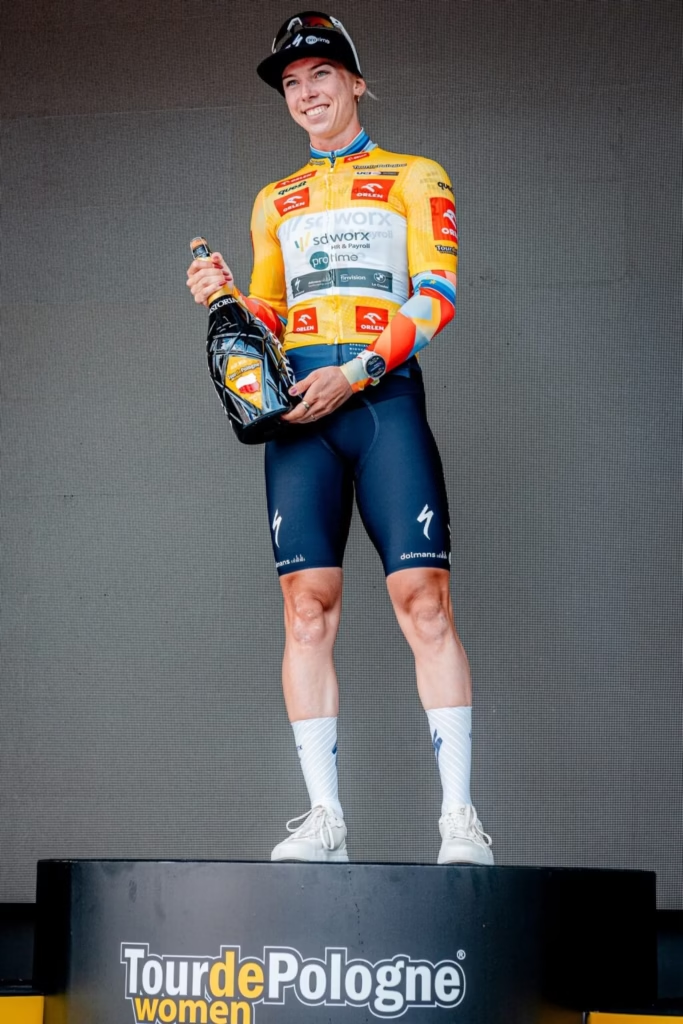
Its position before the Tour de France Femmes changes everything
The most important thing about the 2026 Tour de Pologne Women is the date.
The race ends on Sunday 26 July. Six days later, the Tour de France Femmes begins in Lausanne.
A rider heading to the Tour can use Poland as a final block of high-intensity competition, particularly if the stages replicate the role they are expected to perform in August. A sprinter can sharpen positioning and lead-out work, a Classics rider gets repeated hard efforts and chaotic finales, while a domestique can arrive at the Tour having recently raced rather than completing another controlled training block.
For a serious GC contender, the calculation is different. The Polish route lacks the sustained climbing and time trialling that will decide the Tour, whose 2026 route includes a 21km individual time trial, Mont Ventoux and a difficult final weekend around Nice.
That helps explain why Poland should not be treated simply as a form ranking for the Tour. Some riders need it. Others are better served by recovering, training and arriving fresh.
Poland can tell us more about sprinters than GC contenders
The Tour de Pologne Women 2026 route is deliberately compact.
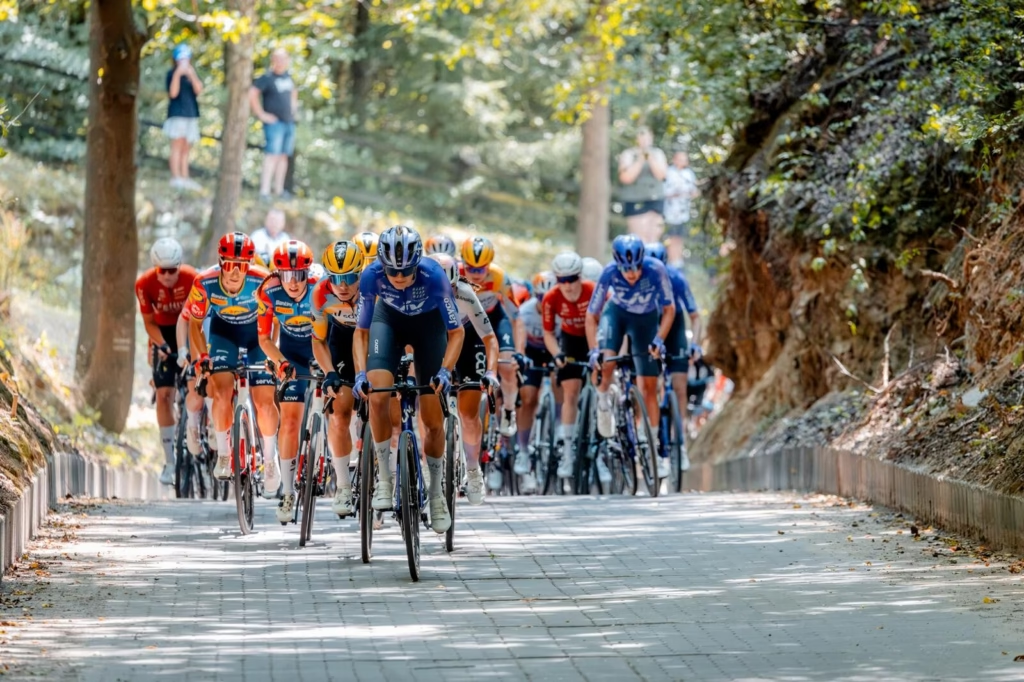
Stage 1 from Tomaszów Lubelski to Zamość covers 141.8km over rolling terrain. Stage 2 from Włodawa to Lubartów is the clearest sprint opportunity, before Stage 3 from Janowiec to Lublin adds enough climbing and a punchier character to make the general classification more complicated.
There is no long mountain, no summit finish and no time trial.
That limits what the race can tell us about the major Tour de France Femmes GC contenders. A rider can be outstanding in Poland and still have no realistic chance of following the best climbers on Mont Ventoux.
For sprinters and puncheurs, however, the evidence is much more useful. Positioning, acceleration, repeatability and the ability to survive short climbs after fast racing all transfer directly into the opening week of the Tour.
That is why Poland may offer a better guide to Lorena Wiebes’ readiness than it does to the yellow jersey hierarchy.
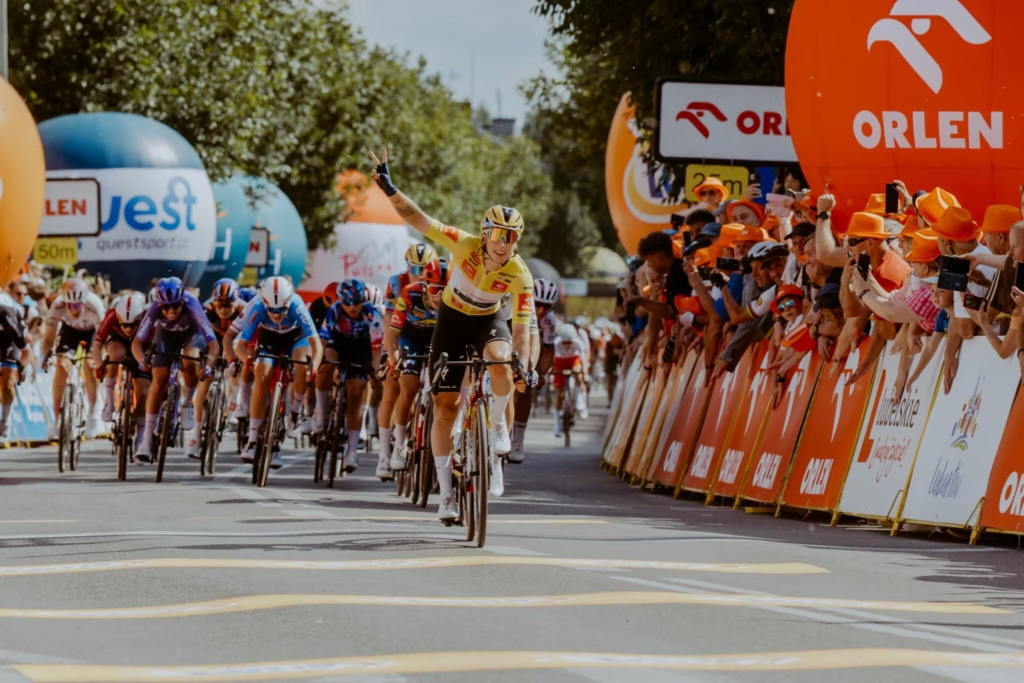
Wiebes has exactly the sort of reason to race here
Lorena Wiebes is the clear sprint benchmark heading into the Tour de France Femmes, where our riders to watch guide identifies her as the leading favourite for both sprint victories and the points classification.
For a rider with those objectives, the Tour de Pologne Women is useful because it tests more than pure speed.
Three days of positioning, lead-outs, repeated accelerations and dealing with imperfect race situations offer something a training block cannot completely reproduce. If the sprint train is disrupted, riders have to improvise. If a stage becomes harder than expected, Wiebes has to decide how much energy to spend staying in contention.
Those are exactly the decisions that will matter in Switzerland and France a week later.
The result in Poland is therefore only part of the story. How Wiebes and her teammates arrive at the sprint is potentially more revealing.
The final stage may tell us the most about late-summer form
The first two days can reward outright speed, but the final stage into Lublin should be more useful for assessing riders who sit between sprinter and climber.
At 101.4km, the stage is short enough to encourage aggressive racing. The rolling terrain also gives teams opportunities to make the race difficult before the finish rather than simply waiting for a conventional sprint.
That makes it ideal ground for Classics riders and stage hunters.
A strong performance there may matter more than the final GC position itself. In a three-day race, bonus seconds can heavily influence the standings, so first and fifth overall may be separated by relatively little actual difference in performance.
Watching who can follow repeated attacks, who still has acceleration late and which teams retain several riders near the front gives a better indication of what might carry into August.
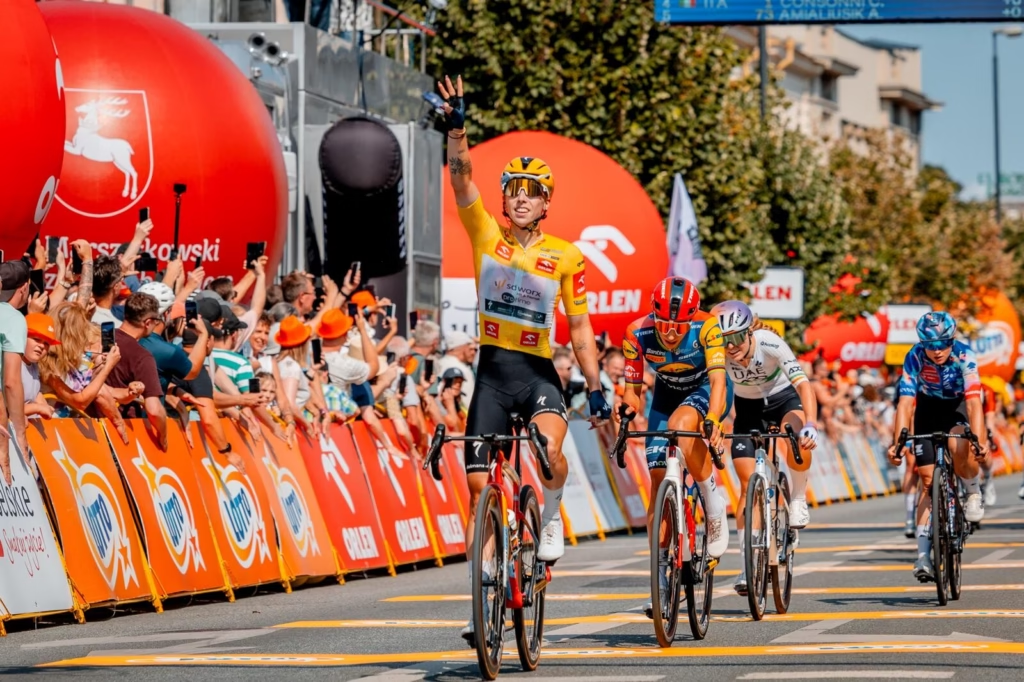
The race matters enormously for riders missing the Tour
The Tour de France Femmes dominates attention, but only a limited number of riders can start it.
For everyone else, the Tour de Pologne Women has a very different value.
It is now a UCI Women’s ProSeries event with strong international participation, television exposure and enough depth for stage victories or overall results to matter. Riders outside their team’s Tour selection can use Poland to make their own case rather than disappearing from view during the biggest part of the summer.
That is particularly important for younger riders and those without protected status. A strong result can influence leadership opportunities later in the season, strengthen a rider’s internal standing and add useful evidence during a period when teams are also thinking about future contracts.
The full Tour de Pologne Women 2026 start list reflects that opportunity. WorldTour riders are mixed with ProTeam, Continental and national-team riders, giving the race a broader competitive structure than a simple rehearsal for the Tour.
Poland can launch a rider into the second half of the season
Chiara Consonni’s 2025 victory is a useful example of what this race can reward.
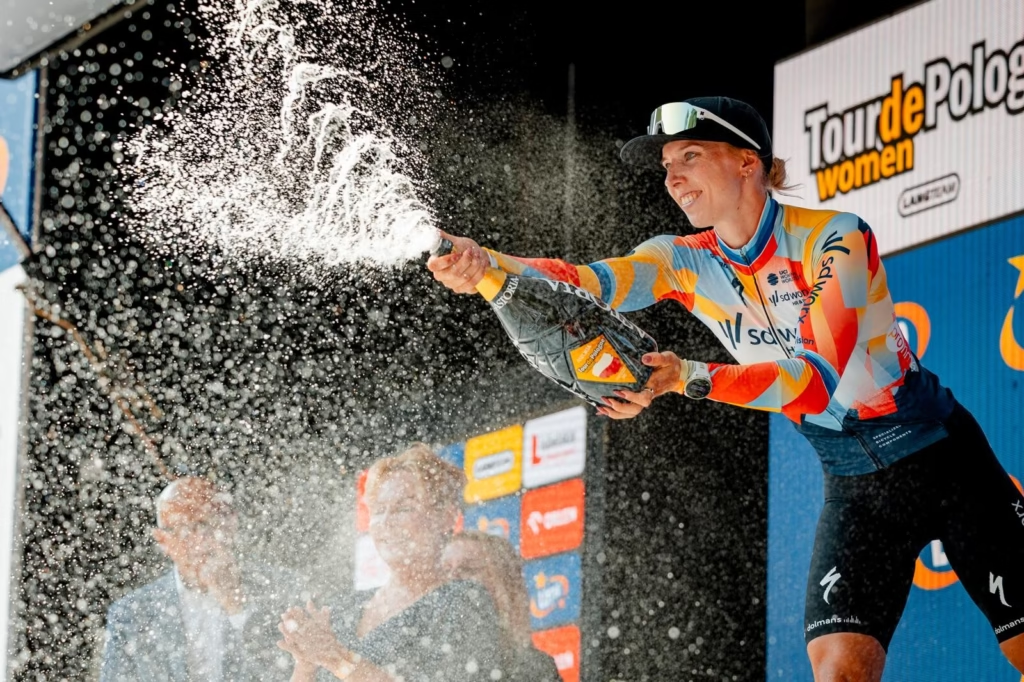
Consonni won two stages and the overall classification, using sprint speed and bonus seconds rather than conventional mountain-stage dominance to control the race.
That points towards an identity that can work well for the Tour de Pologne Women.
The season does not end with the Tour de France Femmes. There are still major stage races, one-day events and championships to come, and a rider who finds form in Poland can carry confidence and leadership into that block.
The race therefore sits at a useful hinge point.
For some riders, it is preparation for August.
For others, it is the beginning of the second half of the season.
The ProSeries step matters for the race itself
The 2026 edition is important beyond the immediate results because the modern Tour de Pologne Women is still defining where it belongs in the women’s calendar.
The race returned in 2024, developed further in 2025 and has stepped up to UCI Women’s ProSeries level for 2026. Our history of the Tour de Pologne Women traces its more complicated lineage, from earlier editions through the 2016 return and the modern relaunch.
That history matters because the present race is not simply continuing an uninterrupted tradition. It is rebuilding one.
The next challenge is establishing a clear sporting identity strong enough that teams actively build programmes around Poland rather than treating it as a convenient race before something bigger.
Its calendar position creates difficulties, but it can also help define what the event becomes.
It does not need a huge mountain to matter
There is an understandable temptation for stage races to demonstrate their importance by becoming harder.
Tour de Pologne Women does not necessarily need to do that.
The 2026 route works because it gives different riders a realistic chance of winning. Bonus seconds matter, positioning matters and one small split can decide the race.
A sprinter who climbs well can become a GC contender.
A puncheur who cannot beat the fastest riders in a full bunch sprint has to find somewhere else to create separation.
That produces a different type of stage race from the Tour de France Femmes, where the biggest climbs and time trial create a much clearer pathway for specialist GC riders.
The women’s calendar benefits from having both.
A stronger Polish race matters beyond Niewiadoma
Kasia Niewiadoma-Phinney is the obvious name associated with modern Polish women’s cycling, so attention naturally focuses on whether she starts her home stage race.
The long-term significance of Tour de Pologne Women cannot depend on one rider.
A strong home race creates visibility for the wider Polish peloton. It gives national-team riders an opportunity to race against international professional opposition and brings women’s cycling in front of a domestic audience already familiar with the Tour de Pologne name.
That structural value is more important than securing one superstar every year.
The beginner’s guide to Tour de Pologne Women 2026 explains how the modern race has grown around the Lubelskie region and why the move into ProSeries status matters.
WorldTour teams can use Poland to test their depth
The Tour de Pologne Women is short enough that teams can arrive with several plausible objectives.
One rider may target the sprints.
Another can chase the overall classification.
A young rider who would normally spend a WorldTour stage race working for a major leader can receive tactical freedom.
That matters because a successful season cannot revolve around the seven riders selected for the Tour de France Femmes.
The strongest teams have deeper rosters and need to turn that depth into results across the whole calendar. Poland gives them an opportunity to promote riders who might otherwise remain domestiques during the biggest races.
For those riders, being protected for three days can be valuable experience even if the final result is not a win.
Tour selections give the same race different meanings
The calendar position also creates an unusual motivational split.
Some riders in Poland already know they are going to the Tour de France Femmes.
Others know they are not.
The first group may be racing with August in mind, testing form without wanting to empty themselves. The second may see Poland as one of the most important opportunities available to them during the summer.
That means performances require context.
A rider heading to Lausanne does not need to demonstrate peak condition on every stage in Poland. A rider missing the Tour may be racing much more aggressively because there is no reason to save anything for the following week.
The same result can therefore mean very different things depending on the rider’s programme.
Transfer season adds another layer
Late July is also a period when teams are shaping future rosters, whether or not deals have been publicly announced.
That gives results at ProSeries level additional value.
A rider without long-term security can show that they deserve a bigger role. A younger Continental rider can demonstrate that their domestic results translate against WorldTour opposition.
One three-day race will not determine a contract by itself, but the quality of performances matters. Winning from a reduced group, repeatedly surviving late selections or positioning well against established WorldTour riders can add evidence to a wider season.
For riders outside the Tour spotlight, Poland offers visibility at exactly the point when much of the cycling world is preparing to watch women’s racing every day.
It can bridge the gap between development level and the WorldTour
The mixed field is one of the strongest features of the Tour de Pologne Women.
The Tour de France Femmes is concentrated almost entirely at the top of the sport. Poland offers more crossover between WorldTour, ProTeam, Continental and national-team riders.
That gives developing riders a direct comparison.
A rider can discover that the jump to WorldTour level is smaller than expected, or learn precisely where stronger riders create the difference. In a three-stage race, that comparison is particularly useful because performance has to be repeated rather than produced once.
The start list is therefore part of the sporting value, not just a collection of names. The 2026 start list page gives the clearest picture of how different levels of the women’s peloton come together in the same race.
Strong Poland form can shape autumn leadership
The next major question after the Tour de France Femmes is who carries strong form into the rest of the season.
Not every rider will leave the Tour fresh.
Some will finish exhausted after nine hard days.
Others may have spent the race almost entirely in support roles.
That creates opportunities for riders whose summer has been structured differently.
A rider leaving Poland with strong form, confidence and a result may be better positioned for leadership later than somebody recovering from a heavy Tour workload.
That is one reason a stage win or podium here can matter beyond the points attached to the race.
It can change what a rider is allowed to race for next.
-
 Photo Credit: Getty



The 2026 edition is a test of the race’s future identity
Tour de Pologne Women is still young enough in its modern form that each edition contributes to defining what sort of race it will become.
It could develop into a final tune-up for sprinters before the Tour de France Femmes.
It could become a three-day GC race for Classics riders and puncheurs.
It could eventually add more climbing and move towards a conventional stage-race hierarchy.
The 2026 route suggests there is no need to rush towards the final option.
A compact race where bonus seconds, short climbs and positioning keep several rider types involved has its own place in the calendar.
Women’s cycling does not need every stage race to identify the strongest pure climber.
It matters because the season is bigger than the Tour
The Tour de France Femmes will dominate the next part of the women’s season, and rightly so. The 2026 riders to watch include the strongest GC riders, sprinters and stage hunters in the peloton, and the nine-stage route will shape how much of the summer is remembered.
But the peloton is bigger than the Tour start list, and careers are built across an entire season rather than nine days in August.
That is where the Tour de Pologne Women fits.
For Tour-bound riders, it can sharpen race form.
For riders missing the Tour, it provides a major opportunity while attention around women’s cycling is high.
For younger riders, it creates a bridge towards WorldTour level.
For teams, it gives another set of leaders the chance to race for themselves.
For the Tour de Pologne Women itself, 2026 is another step towards establishing a stable place in the international calendar.
Three stages are not enough to define the season.
They can still influence what happens next.

