
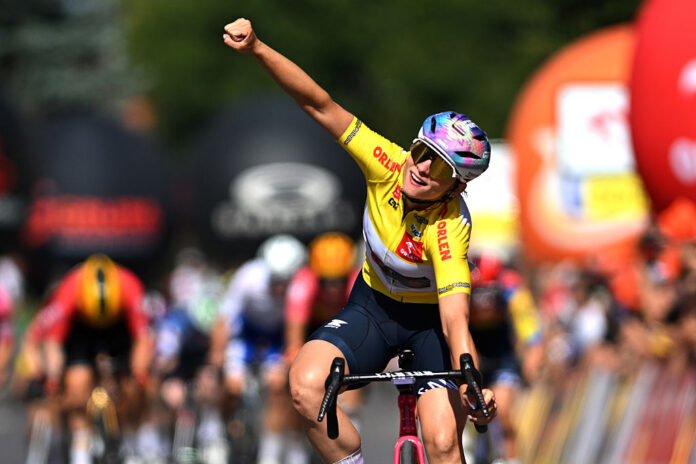
The Tour de Pologne Women 2026 returns as a compact three-day race in eastern Poland, but the route is more layered than its short format suggests. Based in the Lubelskie region, the race moves from the rolling roads around Tomaszów Lubelski and Zamość, through the flatter Polesie terrain between Włodawa and Lubartów, before ending with a punchier final stage into Lublin.
That structure gives the race a clear sporting shape. Stage 1 should immediately test positioning, punch and race control. Stage 2 looks like the most obvious sprint day. Stage 3 has the profile to decide the overall classification if the race is still close.
The result is a route that should suit fast classics riders, resilient sprinters, puncheurs and aggressive all-rounders. It is not a mountain race, but it is not a simple sprinters’ race either. For newer viewers, our beginner’s guide to Tour de Pologne Women 2026 explains the race format, why it matters and what to watch across the three stages.
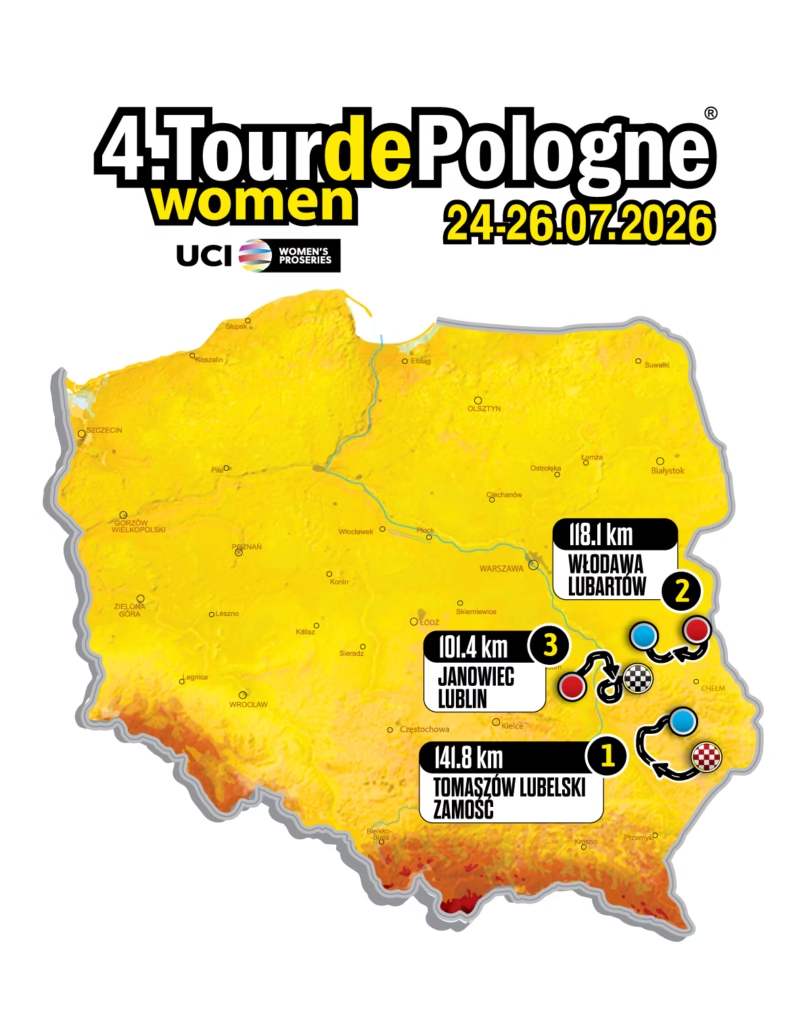
Quick answer: what is the Tour de Pologne Women 2026 route?
The Tour de Pologne Women 2026 is a three-stage race held from 24-26 July in Poland’s Lubelskie region. Stage 1 runs from Tomaszów Lubelski to Zamość over 141.8km, stage 2 goes from Włodawa to Lubartów over 118.1km, and stage 3 finishes the race with 101.4km from Janowiec to Lublin.
| Stage | Date | Route | Distance | Likely race type |
|---|---|---|---|---|
| Stage 1 | 24 July | Tomaszów Lubelski to Zamość | 141.8km | Rolling stage, classics riders and strong sprinters |
| Stage 2 | 25 July | Włodawa to Lubartów | 118.1km | Flat stage, likely bunch sprint |
| Stage 3 | 26 July | Janowiec to Lublin | 101.4km | Hilly finale, GC and puncheur stage |
The route at a glance
The 2026 route is short, but its sequencing is smart. There is no individual time trial, no summit finish and no long mountain stage. Instead, the organisers have built a route around terrain that can create uncertainty across three days.
Stage 1 is long by the standards of a three-day women’s stage race and includes enough undulation to make the opening day more than a simple sprint lead-out. Stage 2 gives the fast riders their clearest opportunity, with a flatter run from Włodawa to Lubartów. Stage 3 then adds the most decisive-looking finale, with several climbs before a slightly uphill finish in Lublin.
That means the general classification should remain alive until the final day. Bonus seconds, intermediate sprints, small splits and positioning into the final kilometres could all matter. In a race this short, there is very little time to recover from a mistake.
The race also sits inside a broader moment for the women’s calendar, where shorter stage races are increasingly being shaped by sharper route design rather than relying only on prestige or duration. That wider theme is explored in our feature on how race routes are shaping women’s cycling in 2026.
Stage 1: Tomaszów Lubelski to Zamość, 141.8km
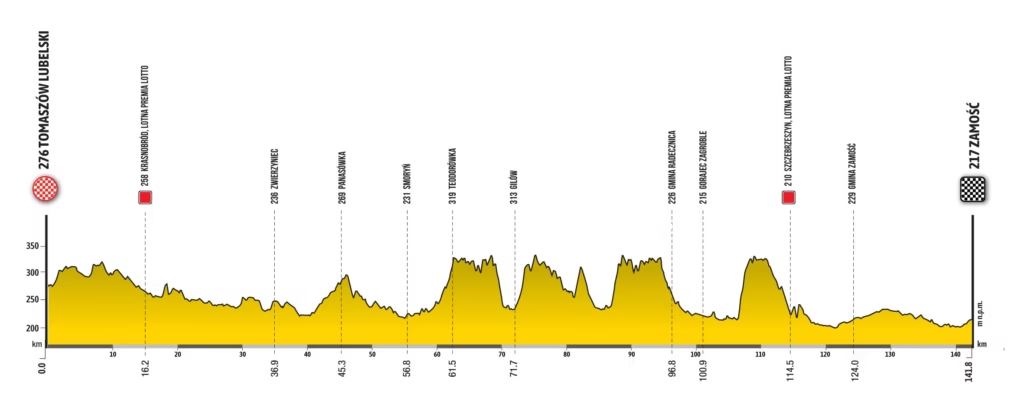
Stage 1 is the longest day of the race and should immediately give the 2026 Tour de Pologne Women its first shape. The route runs from Tomaszów Lubelski to Zamość, taking the peloton over rolling terrain with short climbs and enough changes in rhythm to unsettle teams hoping for a controlled sprint.
The official race announcement describes it as a nearly 142km stage on a rolling route with a few short climbs. That is exactly the kind of opening day that can become awkward. It is not hard enough to guarantee major time gaps, but it is difficult enough to expose teams who are not organised, riders who are badly positioned, or sprinters who prefer flatter finales.
The intermediate primes in Krasnobród and Szczebrzeszyn add another layer. In a short race, every bonus second can influence the overall classification. Teams with GC ambition cannot simply ignore those moments, especially if their leader has a fast finish.
Zamość is an attractive finish location, but from a racing point of view the key question is how much the rolling terrain has taken out of the sprinters before the final. If the strongest teams keep things together, the stage could still end in a reduced bunch sprint. If attacks go late, a classics-style rider could use the repeated changes in pace to steal the first leader’s jersey.
Stage 1 profile and tactics
Stage 1 should favour riders who combine endurance, positioning and a strong finish. It is not an obvious day for pure climbers, but it may be too draining for some pure sprinters.
Expect early breakaway attempts, especially from teams that know their best chance of visibility may come before the race settles. The bigger teams will then need to decide whether to control for a sprint or make the stage harder in the middle phase.
The first leader’s jersey is often one of the most valuable prizes in a short race. That should keep the racing sharp. No team can afford to let a dangerous group take too much time on day one.
Stage 2: Włodawa to Lubartów, 118.1km
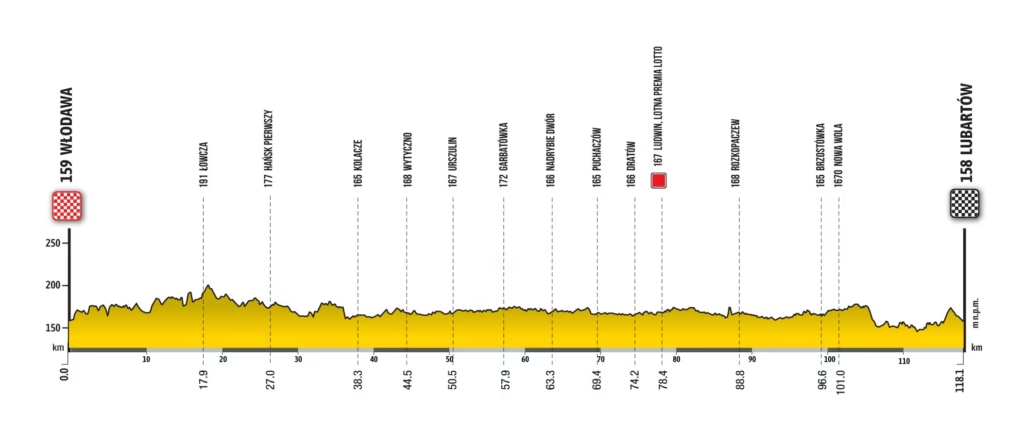
Stage 2 is the clearest opportunity for the sprinters. The 118.1km route from Włodawa to Lubartów is described by the organisers as flat, and the official profile suggests a much more controlled day than stage 1.
That does not mean it will be easy. Flat stages in short races can still be nervous because every rider understands the importance of staying out of trouble. There may also be wind exposure depending on conditions, while the run-in to Lubartów should place a premium on positioning.
The intermediate prime in Ludwin gives teams another chance to chase bonus seconds or points. If the overall classification is still tight after stage 1, those seconds could matter. A rider who finishes second or third on stage 1 could use the intermediate sprint to move closer to the race lead before the finale.
Still, this looks like the stage where the fastest riders should have their best chance. Teams with pure sprinters will not want to waste it.
Stage 2 profile and tactics
The most likely scenario is a controlled bunch sprint, but the stage will depend on how confident the sprint teams feel. If the strongest fast riders have survived stage 1 well, their teams should work to keep the race together.
For breakaway riders, the challenge is simple: the terrain does not offer many obvious launchpads. A move can still go clear early, but it will need poor organisation behind or strong cooperation to survive.
The final kilometres are likely to be tense. Teams that missed out on stage 1 will see Lubartów as a reset. Teams protecting GC riders will want to stay near the front without wasting energy. That mix often makes flat days more stressful than the profile suggests.
Stage 3: Janowiec to Lublin, 101.4km
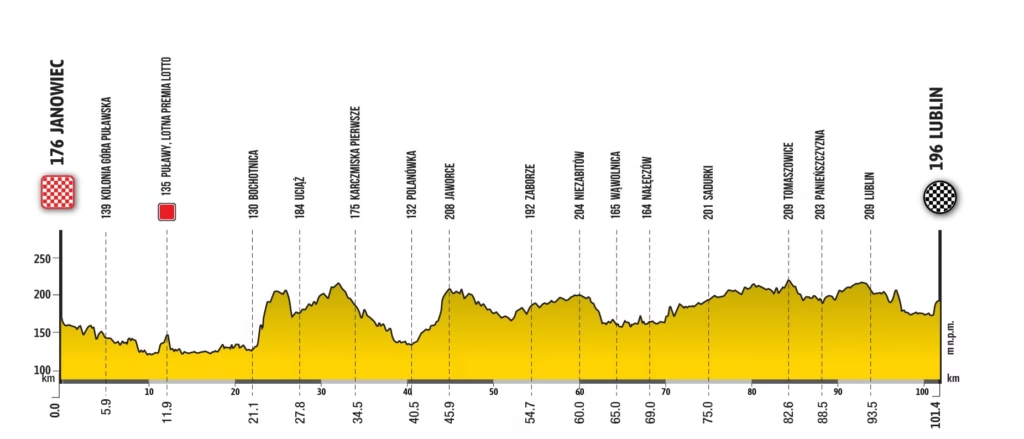
Stage 3 gives the 2026 race its decisive finish. At 101.4km, it is the shortest road stage of the race, but it has the most obvious general classification potential. The route runs from Janowiec to Lublin, with several climbs before the finish in the regional capital.
The official race announcement describes the final stage as dynamic, with several climbs and a slightly uphill finish in Lublin. That matters. A short, hilly final day can become very difficult if teams start racing early, particularly when the overall classification is still close.
The stage also passes through Puławy, where the only LOTTO Sprint Prime of the day is located. Again, bonus seconds may be important. If the race leader has only a small advantage, the intermediate sprint could become part of the GC battle rather than a side contest.
Lublin gives the race a strong final image, but it is also a finish that should suit punchy riders. The uphill drag near the end means the fastest pure sprinter may not necessarily be the favourite. A rider with a strong one-minute effort, good positioning and a classics background could be ideal.
Stage 3 profile and tactics
Stage 3 is the day most likely to decide the overall. The route is not long enough for teams to wait forever, and the climbs give attackers a natural way to test rivals.
If the GC is close, expect the strongest teams to make the stage hard before Lublin. A rider who needs time cannot rely only on the final uphill finish. She may need to attack earlier, force a split or use a teammate in the breakaway.
The finish should reward timing. Go too early and the road could drag enough to punish the move. Wait too long and a stronger finisher may come past. It is the kind of ending where confidence, team positioning and knowledge of the final kilometre all matter.
Where the race could be won
The 2026 Tour de Pologne Women could be won in several ways.
A powerful sprinter with climbing resilience could win stage 1, survive stage 3 and collect enough bonus seconds to take the overall. A classics-style rider could use the rolling opening stage and hilly finale to build small gaps. A GC-minded all-rounder could stay consistent, avoid trouble and use the Lublin finish to take control at the last opportunity.
The race is unlikely to be decided by large mountain gaps. It is more likely to be decided by seconds: bonus seconds, small splits, reduced bunch finishes and positioning into the final climbs.
That makes the route tactically interesting. The strongest rider may not simply ride away. She may need to read the race better than everyone else.
That also fits the race’s recent history. Laura Molenaar won the 2024 edition after a decisive solo move, while Chiara Consonni took the 2025 title through speed, consistency and stage-winning execution. For the wider background, see our brief history of Tour de Pologne Women.
Best stage for sprinters
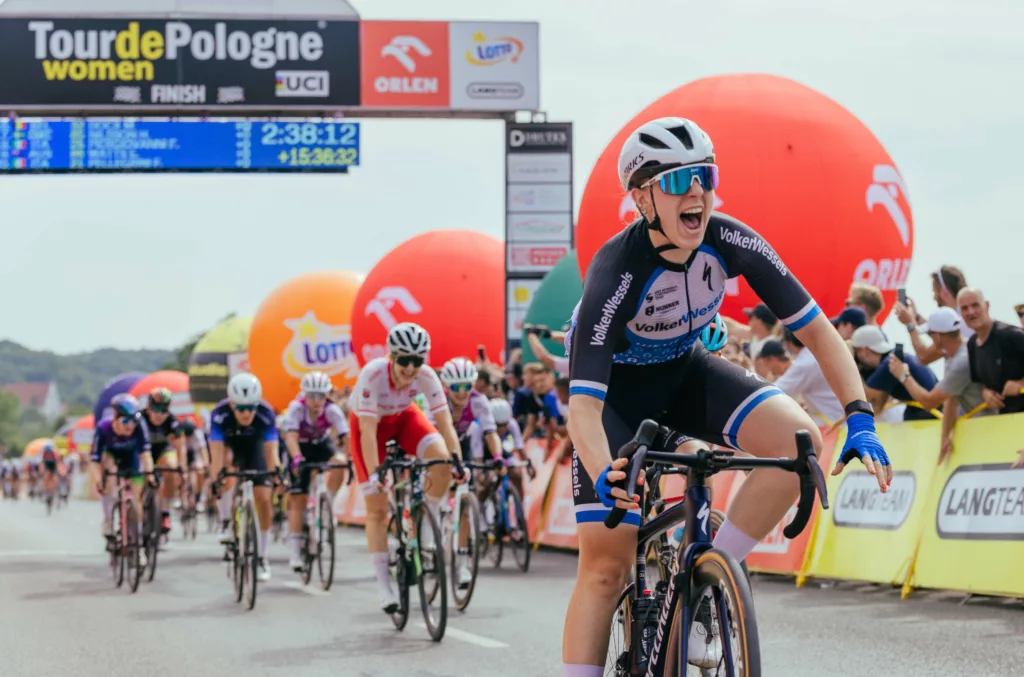
Stage 2 from Włodawa to Lubartów is the best stage for sprinters. It is the flattest stage, the most controllable on paper and the one where sprint teams should have the clearest incentive to chase.
Stage 1 may still end in a sprint, but the rolling terrain makes it less predictable. Stage 3 is much more suited to puncheurs and strong all-rounders.
That structure is important because the 2026 start list is strong for a three-day ProSeries race, with several Women’s WorldTour teams confirmed. Our piece on the Tour de Pologne Women 2026 team list looks at why the field should give the route more tactical depth.
Best stage for GC riders
Stage 3 from Janowiec to Lublin is the most important stage for the general classification. The climbs, shorter distance and uphill finish give riders the chance to create separation late in the race.
Stage 1 could also matter if the rolling roads create splits or if bonus seconds are taken by GC contenders. But stage 3 is the obvious day for anyone who needs to change the overall standings.
That is the key difference between this route and longer women’s stage races such as the Giro d’Italia Women 2026 or the Tour de Suisse Women 2026, where there is more time for the GC to settle across multiple climbing and time-trial days. At Tour de Pologne Women, the margin for delay is much smaller.
 Photo Credit: Tour de Pologne
Best stage for breakaways
Stage 1 looks like the best breakaway opportunity. It is the longest stage, the terrain is rolling, and the race will still be tactically unsettled. Teams may be reluctant to commit too early if they are unsure how the final will play out.
Stage 3 could also work for an attacking group, especially if GC teams use the climbs to break the race apart. Stage 2 is the least favourable breakaway day because the flatter profile should help sprint teams organise the chase.
What type of rider does the route suit?
The 2026 Tour de Pologne Women route suits fast all-rounders more than pure climbers or pure sprinters.
The ideal winner needs to handle rolling roads, contest or survive sprint finishes, position well on technical run-ins and still have enough punch for the Lublin finale. A rider with strong classics instincts should be very dangerous. So should a sprinter who can climb short hills and recover well across three consecutive days.
This is also a good route for teams with multiple cards. A squad with both a sprinter and a puncheur can race flexibly. They can target stage 2 with a pure fast rider, while keeping a stronger all-rounder protected for the overall.
How the route compares with recent editions
The modern Tour de Pologne Women has developed quickly since its return. The 2026 edition feels like another step in that progression, especially with the race now sitting in the UCI ProSeries category.
Rather than building the route around one decisive time trial or one clear mountain day, the organisers have created a short, varied race that should remain open across all three stages. That is useful for television, for spectators and for the sporting story. Each day has a distinct identity.
Stage 1 introduces the race with distance and rolling terrain. Stage 2 gives the sprinters their platform. Stage 3 then shifts the balance back towards the puncheurs and GC riders.
For a three-day event, that is a sensible structure. It also gives the race a different identity from longer British and European events, such as the Tour of Britain Women 2026, where an extra two stages allow more time for the route to develop.
Tour de Pologne Women 2026 route verdict
The Tour de Pologne Women 2026 route is compact but well balanced. It does not need high mountains to create interest because the race is short enough for small gaps to matter.
Stage 1 should reveal who has arrived ready to race. Stage 2 should give the sprinters their clearest chance. Stage 3 should decide the overall if the race is still close, with the slightly uphill finish in Lublin offering the final selection point.
The likely winner will not only need speed or climbing ability. She will need consistency, positioning, recovery and tactical sharpness. In a race of just three days, one mistake can be enough to lose the overall.
That should make the 2026 Tour de Pologne Women a sharp, watchable race from the first kilometre in Tomaszów Lubelski to the final metres in Lublin.
For more route-focused women’s cycling coverage, see the women’s cycling route guide hub.
-
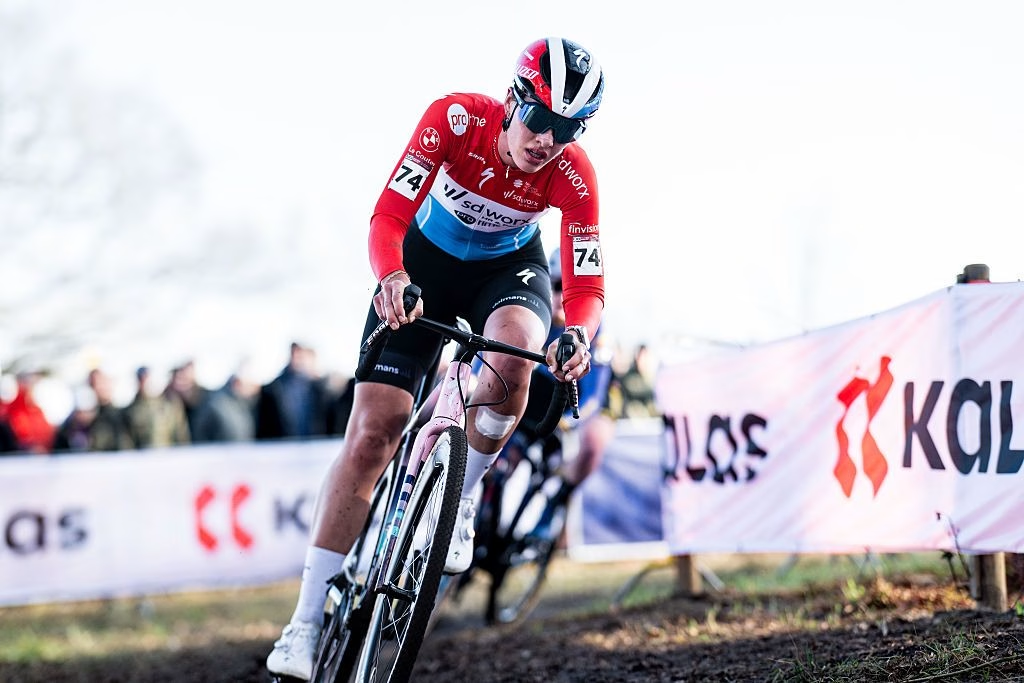
 Photo Credit: Billy Ceusters / Getty Images


FAQs: Tour de Pologne Women 2026 route
When is the Tour de Pologne Women 2026?
The Tour de Pologne Women 2026 takes place from 24-26 July 2026.
How many stages are in the Tour de Pologne Women 2026?
There are three stages in the 2026 Tour de Pologne Women.
Where does the Tour de Pologne Women 2026 start?
The race starts in Tomaszów Lubelski with a 141.8km opening stage to Zamość.
Where does the Tour de Pologne Women 2026 finish?
The race finishes in Lublin at the end of stage 3.
What is the hardest stage of the Tour de Pologne Women 2026?
Stage 3 from Janowiec to Lublin looks like the hardest and most decisive stage because it includes several climbs and a slightly uphill finish.
Which stage is best for sprinters?
Stage 2 from Włodawa to Lubartów is the clearest sprint stage.
What type of rider can win the Tour de Pologne Women 2026?
The route suits fast all-rounders, punchy sprinters and classics-style riders who can handle rolling terrain and short climbs.

