
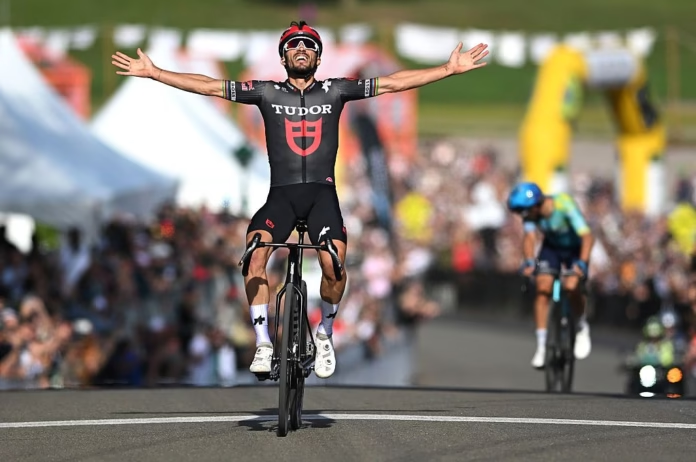
The Grand Prix Cycliste de Montréal 2026 starts at 15:15 BST on Sunday 13 September, with the complete race available to UK viewers on HBO Max from 15:00 BST.
TNT Sports 3 is scheduled to join much later, at 20:00 BST, after its coverage of the final stage of the Vuelta a España. That should still leave around 45 minutes of GP Montréal before the expected 20:45 BST finish, but anyone wanting to see how the decisive selection forms will need HBO Max rather than waiting for the linear television coverage.
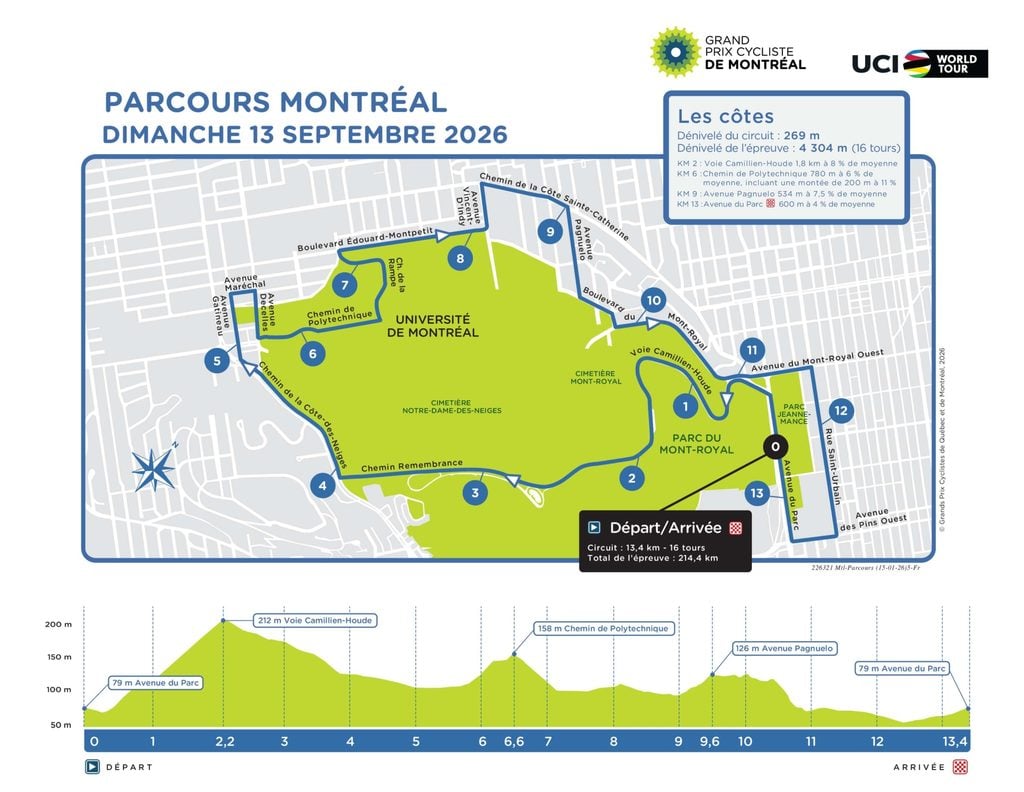
The race covers 214.4km across 16 laps of a 13.4km Mount Royal circuit, accumulating approximately 4,304 metres of climbing. Remco Evenepoel arrives after winning Friday’s GP Québec, while Isaac del Toro, Tom Pidcock, Paul Seixas and defending champion Brandon McNulty headline a particularly strong field.
For the full broadcast breakdown, our guide to watching GP Montréal 2026 in the UK covers the television and streaming options in more detail.
GP Montréal 2026 start time and viewing details
- Date: Sunday 13 September 2026
- Start and finish: Montréal, Canada
- Distance: 214.4km
- Circuit: 16 laps of 13.4km
- Elevation gain: approximately 4,304 metres
- Local start: 10:15 EDT
- UK start: 15:15 BST
- HBO Max coverage: 15:00 BST
- TNT Sports 3 coverage: currently listed from 20:00 BST
- Expected finish: approximately 20:45 BST
- Podium ceremony: around 21:00 BST
- Defending champion: Brandon McNulty
Montréal is five hours behind the UK while Britain remains on BST, so the 10:15 local start becomes 15:15 for British viewers.
How to watch GP Montréal 2026 in the UK
HBO Max is the best option if you want the complete race.
Its dedicated GP Montréal stream starts at 15:00 BST, 15 minutes before the riders begin the first of their 16 laps.
The situation is different on conventional television. TNT Sports 3 is currently scheduled to show the Vuelta a España during the afternoon before switching to Montréal at 20:00 BST.
By then the race should already be well inside its final hour.
That creates two clear options:
- HBO Max: watch from the start at 15:00 BST
- TNT Sports 3: join the closing stages from 20:00 BST
There is no free-to-air live UK broadcast currently listed.
What time should you start watching GP Montréal?
Five and a half hours of repeated Mount Royal circuits will not appeal to everyone.
If you want to see the full race develop, start at 15:00 BST.
For a shorter viewing window without missing the important tactical work, 19:15 BST is the better target. By then the riders should have completed most of the 16 laps, accumulated well over 3,000 metres of climbing and begun losing many of the domestiques capable of controlling attacks earlier in the afternoon.
If you mainly want the attacks likely to decide the race, aim for 19:30 BST at the latest.
Waiting for the TNT Sports 3 coverage at 20:00 should still produce a strong final 45 minutes, but Montréal does not require its winners to wait for the final lap. A move with 30 or 40km remaining can become extremely difficult to chase once the peloton has been reduced.
GP Montréal 2026 key UK viewing times
| Race point | Approximate UK time |
|---|---|
| HBO Max coverage begins | 15:00 BST |
| Race starts | 15:15 BST |
| Halfway point | around 18:00 BST |
| Five laps remaining | around 19:00 BST |
| Recommended time to join | 19:15 BST |
| Final 50km | around 19:30 BST |
| Three laps remaining | around 19:40-19:45 BST |
| TNT Sports 3 coverage begins | 20:00 BST |
| Final lap | around 20:20-20:25 BST |
| Expected finish | around 20:45 BST |
| Podium ceremony | around 21:00 BST |
The lap timings are estimates rather than fixed appointments. A particularly aggressive race can move the schedule forward, while a more controlled opening can push the important laps later.
The start and projected finish leave one useful rule: be watching by 19:15 BST if you want to understand how the winning group forms rather than simply see the final attack.
Why GP Montréal is much harder than GP Québec
Friday’s GP Québec offered repeated short climbs but still left faster puncheurs with a realistic route to the finish.
Montréal demands considerably more.
The GP Montréal 2026 route contains around 4,304 metres of elevation gain, spread across 16 repetitions of the same Mount Royal circuit.
Each lap begins its climbing almost immediately with Camillien-Houde. The ascent is approximately 1.7km at a little over 7%, long enough for a team to sustain pressure rather than simply produce one short acceleration.
Chemin de Polytechnique follows later in the lap, only 780 metres long but containing a section around 11%. Avenue Pagnuelo provides another 534 metres at roughly 7.5% before the riders descend towards Avenue du Parc.
None of those climbs would define a major Classic by itself.
Riding all of them 16 times is the problem.
By the final hour, a rider is no longer responding to one 1.7km climb. He is responding after more than 200km and thousands of metres of accumulated climbing.
That is why Montréal has increasingly favoured riders with genuine Grand Tour climbing strength rather than simply fast Classics specialists.
The final three laps should be worth watching in full
Three laps amount to just over 40km.
That should take the race from approximately 19:40 BST through to the expected 20:45 finish.
The important point is that the final lap is not automatically the decisive one.
Teams with several strong riders can begin applying pressure earlier, knowing every hard passage of Camillien-Houde removes more support from their rivals.
A strong group going clear on the penultimate lap can be particularly difficult to chase. Once the main teams have riders represented ahead, the reduced peloton behind quickly runs out of organisations willing to work.
That makes the transition from five laps remaining to three laps remaining at least as important as the final ascent itself.
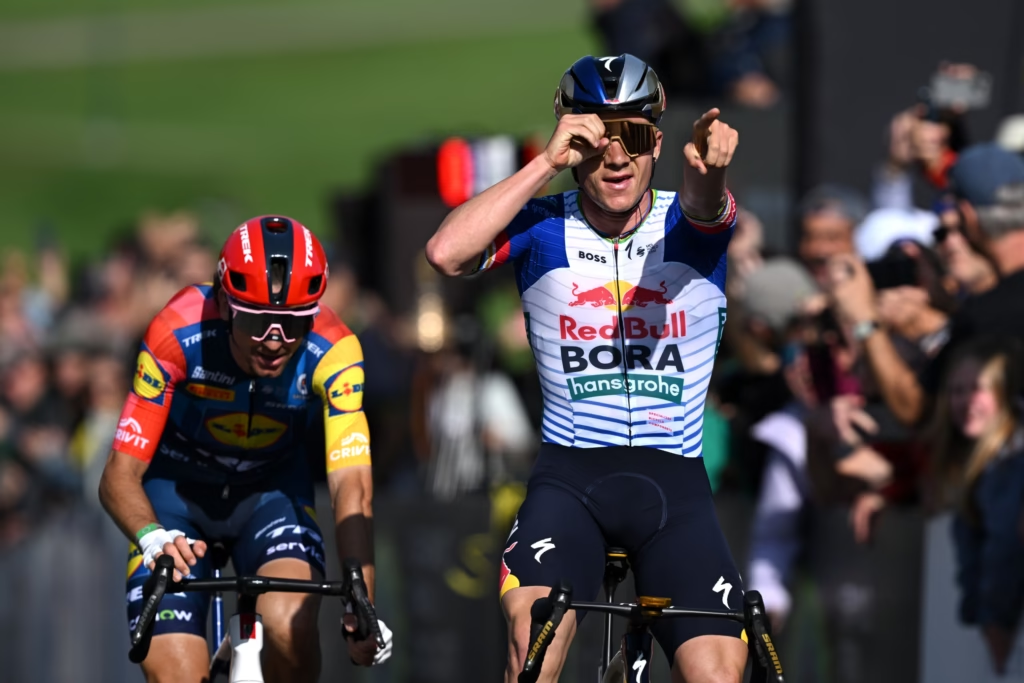 Photo Credit: Getty
Evenepoel arrives with Québec already won
Evenepoel could hardly have had a better first half of his Canadian weekend.
He won GP Québec on Friday after getting clear with Giulio Ciccone late in the race and beating the Italian to the finish.
Montréal should suit him even better.
The greater climbing total makes it harder for riders with a faster sprint to remain present, while the repeated Mount Royal ascents create several opportunities for Evenepoel to turn a hard acceleration into a sustained effort.
The tactical question is when he chooses to move.
Waiting for the final uphill run towards Avenue du Parc risks leaving him with riders such as Pidcock or Maxim Van Gils who have a sharper sprint from a small group.
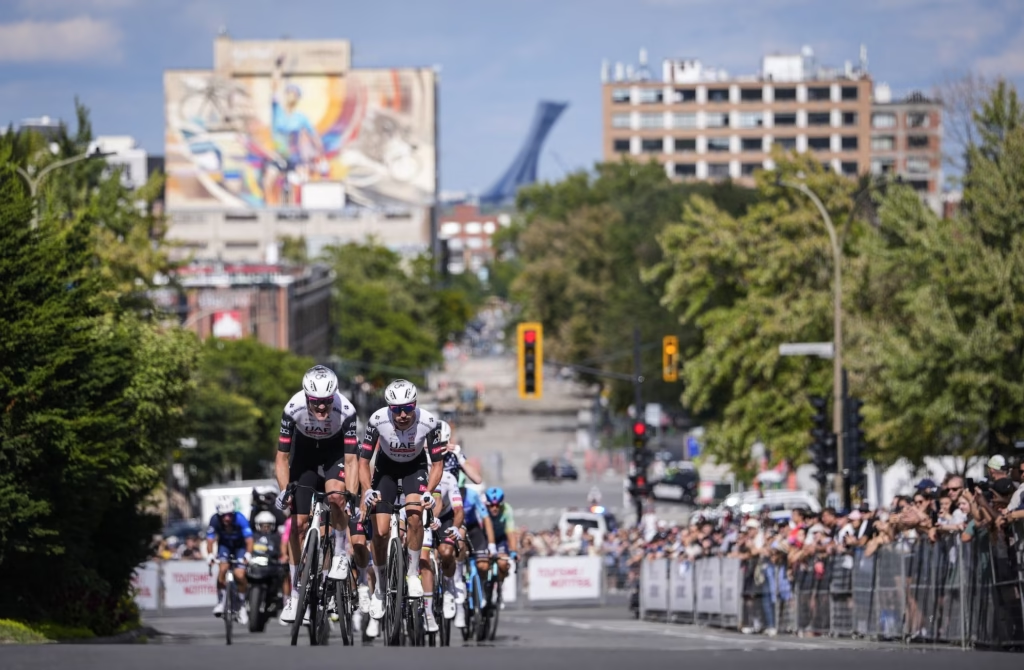
A longer attack removes that problem but exposes him to UAE Team Emirates-XRG’s superior numbers.
Red Bull-Bora-hansgrohe’s advantage is that Evenepoel does not have to cover every move himself. Van Gils gives them another genuine card if the race remains more tactical than anticipated.
UAE have enough options to make Evenepoel chase repeatedly
The GP Montréal start list gives UAE Team Emirates-XRG the deepest set of potential winners in the race.
McNulty returns as defending champion after leading a UAE one-two in 2025.
Del Toro gives the team another rider capable of winning if the repeated climbing creates a particularly severe selection.
Jhonatan Narváez, Tim Wellens and Adam Yates add further attacking strength.
That depth can be used more aggressively than simply protecting Del Toro until the final lap.
If McNulty attacks with 40km remaining, Evenepoel cannot assume UAE will chase their own rider.
If Narváez follows a dangerous move, the same applies.
Every response made by Red Bull, Pinarello-Q36.5 or Decathlon CMA CGM preserves another UAE rider behind.
Our GP Montréal 2026 team-by-team guide goes through how each squad can use the circuit, but UAE’s numerical strength is the clearest tactical advantage on the start line.
Pidcock does not need the race to become completely fragmented
Tom Pidcock has a different route to victory from Evenepoel.
He can attack on Camillien-Houde, but he does not necessarily need to turn the last two laps into an individual pursuit.
Pidcock remains one of the quickest finishers among the riders likely to survive more than 4,000 metres of climbing.
A group of six or eight reaching Avenue du Parc can therefore be perfectly acceptable for him, provided it does not contain somebody substantially faster.
That allows him to be more selective when the attacks begin.
Following every UAE move wastes the sprint he wants to preserve. Allowing Evenepoel to establish a meaningful gap is equally dangerous.
Pinarello-Q36.5 need Pidcock close enough to the front to respond without turning him into the rider responsible for repairing every split.
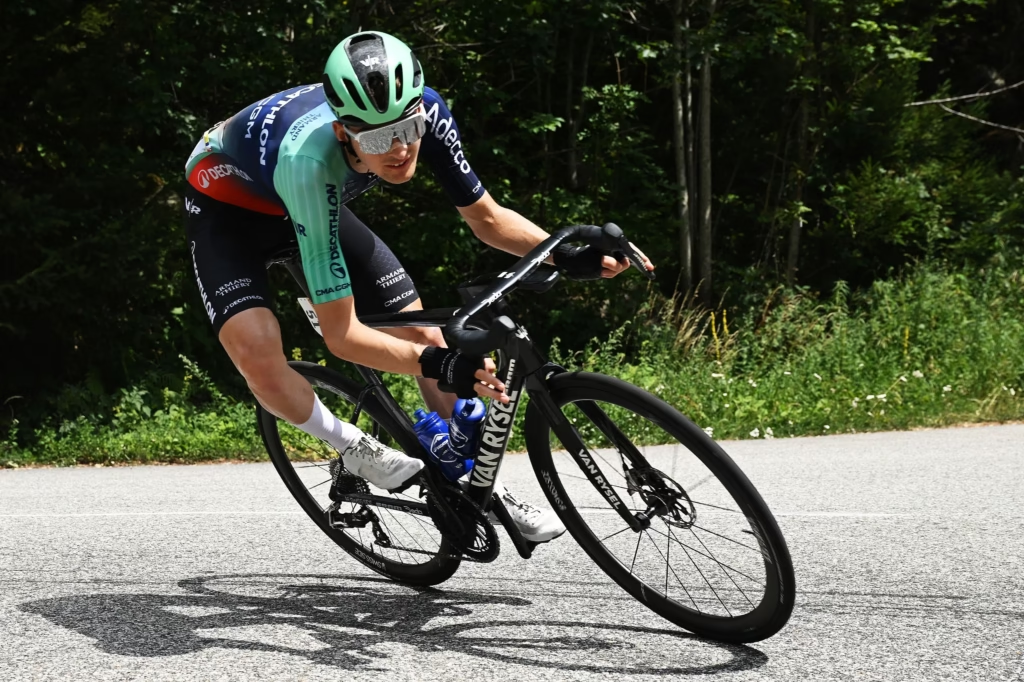 Photo Credit: Getty
Paul Seixas should prefer Montréal to Québec
The harder the race becomes, the more naturally the course moves towards Paul Seixas.
Québec still offered faster riders a viable route through the repeated climbing. Montréal contains substantially more elevation and longer sustained efforts.
That should suit Seixas.
The complication is that climbing strength alone is unlikely to win the race. Seixas needs to use it at a moment when Evenepoel, UAE and Pidcock are also forced to commit.
An attack too early risks becoming something the larger teams simply use.
Waiting too long leaves him competing against riders with stronger finishing speed.
The repeated circuit gives Decathlon CMA CGM plenty of opportunities to test which of those scenarios is developing before committing their leader.
McNulty already knows how to win in Montréal
Brandon McNulty returns to the race he won in 2025.
That victory came as part of a dominant UAE performance, with Tadej Pogačar alongside him as the pair rode clear of the rest of the field.
Pogačar is absent this year, but UAE’s strength has not disappeared.
McNulty is particularly useful because his threat begins before the obvious favourites normally want to make their decisive move.
He can attack from distance, sustain a gap alone and remain dangerous from a small group.
A McNulty move with several laps remaining therefore cannot simply be treated as softening-up work for Del Toro.
He can win from it.
Montréal is also a full-speed World Championships rehearsal
The 2026 edition carries more significance than usual because the UCI Road World Championships begin in Montréal a week later.
The elite men’s road race takes place on 27 September, with the final part of the World Championships route using the same 13.4km Mount Royal circuit.
The Grand Prix riders complete it 16 times on Sunday.
The elite men will return to ride it 12 times during the World Championship road race.
That makes GP Montréal far more useful than a conventional reconnaissance.
Evenepoel, Pidcock, Seixas and the other rainbow jersey contenders can learn how Camillien-Houde behaves when it is raced hard repeatedly, where the technical parts of the descent become important and whether Pagnuelo offers enough road for an attack to survive towards Avenue du Parc.
Our beginner’s guide to GP Montréal 2026 explains the connection with the World Championships and why Mount Royal has become such an important part of the late-season calendar.
The race itself still comes first.
Nobody will sacrifice a WorldTour victory merely to collect information for two weeks later.
How to watch GP Montréal in Canada
Canadian viewers have domestic coverage through CBC Gem and TVA Sports.
The race begins at 10:15 EDT and is expected to finish at approximately 15:45 EDT.
CBC Gem provides the English-language streaming option, while TVA Sports carries French-language coverage.
For anyone actually in Montréal, the circuit format also makes this one of the easier WorldTour races to watch roadside, with the peloton passing the same parts of Mount Royal 16 times.
How to watch GP Montréal in the United States
US viewers can watch the race through HBO Max.
Coverage begins at approximately 10:00 EDT, ahead of the 10:15 race start.
The main US times are:
- HBO Max coverage: 10:00 EDT
- Race start: 10:15 EDT
- Final phase: from approximately 14:15 EDT
- Expected finish: approximately 15:45 EDT
-
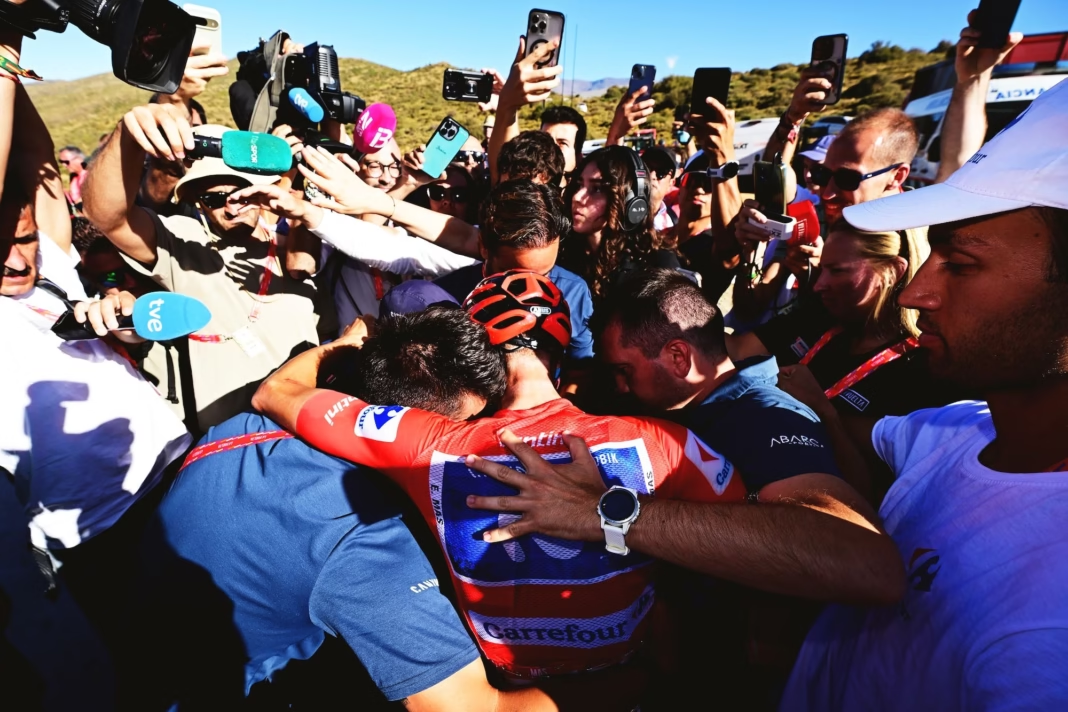 Photo Credit: Getty
A race with more history than its 2010 start suggests
The modern GP Montréal only dates from 2010, but major international racing on Mount Royal goes much further back.
The city hosted the 1974 World Championships, where Eddy Merckx won the elite men’s road race, before later hosting the Grand Prix des Amériques.
The current WorldTour race revived that tradition and has since produced winners including Peter Sagan, Simon Gerrans, Tim Wellens, Michael Matthews, Adam Yates, Tadej Pogačar and McNulty.
Our history of the Grand Prix Cycliste de Montréal looks at how those different eras connect.
The recent winners also underline how much the event has changed. Pogačar, Yates and McNulty have shifted the race firmly towards elite climbers capable of handling a one-day format.
More than 4,300 metres of climbing in 2026 should continue that trend.
The GP Montréal viewing times to remember
For UK viewers, the practical schedule is simple:
- 15:00 BST: HBO Max coverage begins
- 15:15 BST: GP Montréal starts
- 19:15 BST: best time to join for the full decisive phase
- Around 19:30 BST: final 50km
- 20:00 BST: TNT Sports 3 joins the race
- Around 20:45 BST: expected finish
Anyone watching Stage 21 of the Vuelta earlier in the afternoon should have time to move across to Montréal before the most important laps begin.
If GP Montréal is the priority, do not wait for the TNT Sports television handover.
By 20:00 BST, Evenepoel, UAE and the other favourites may already have spent several laps trying to decide which riders will be allowed to reach the final Mount Royal ascent with a chance of winning.

